Get in Touch with Liehuang Company

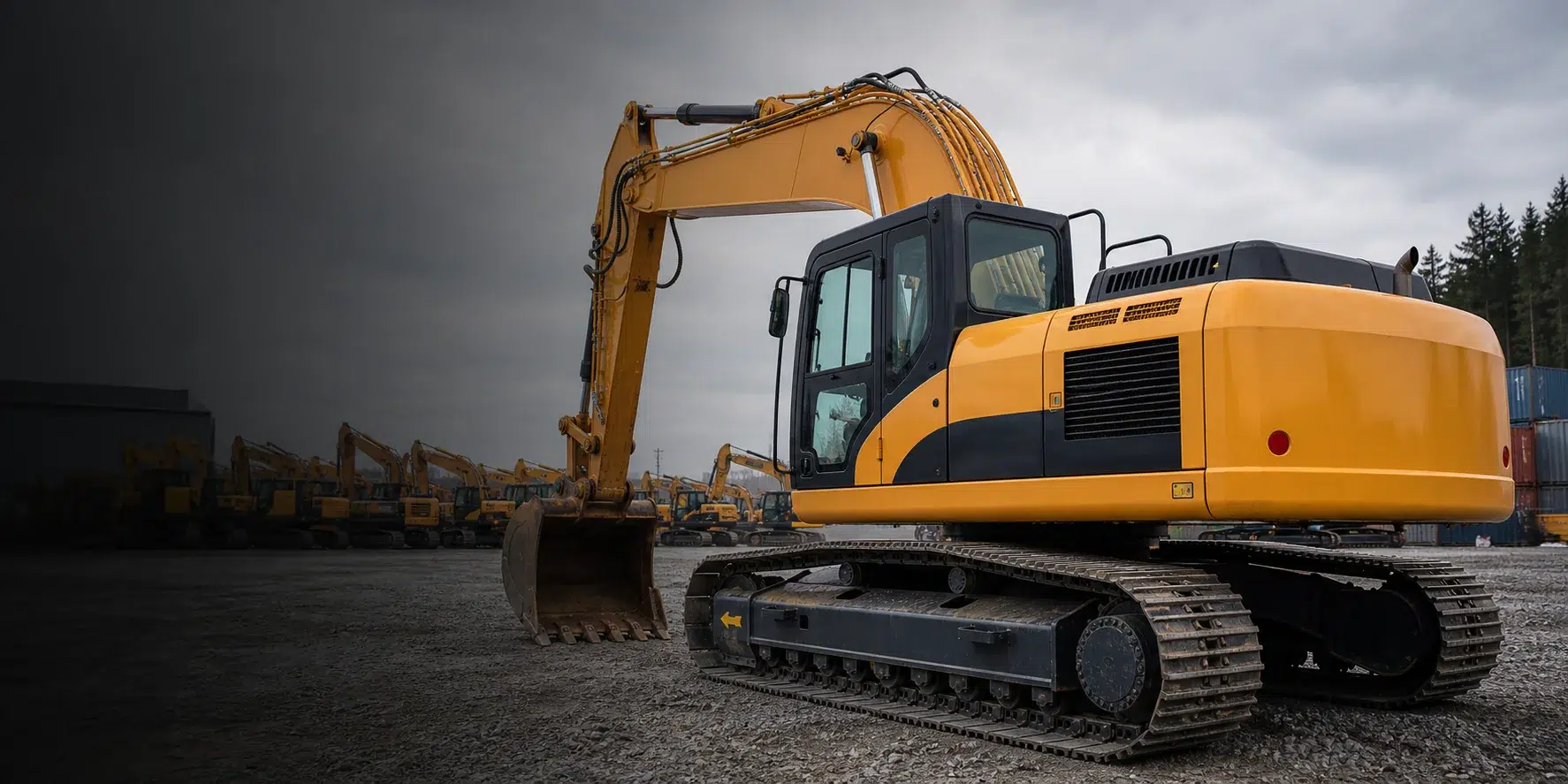
Used Hyundai Excavators
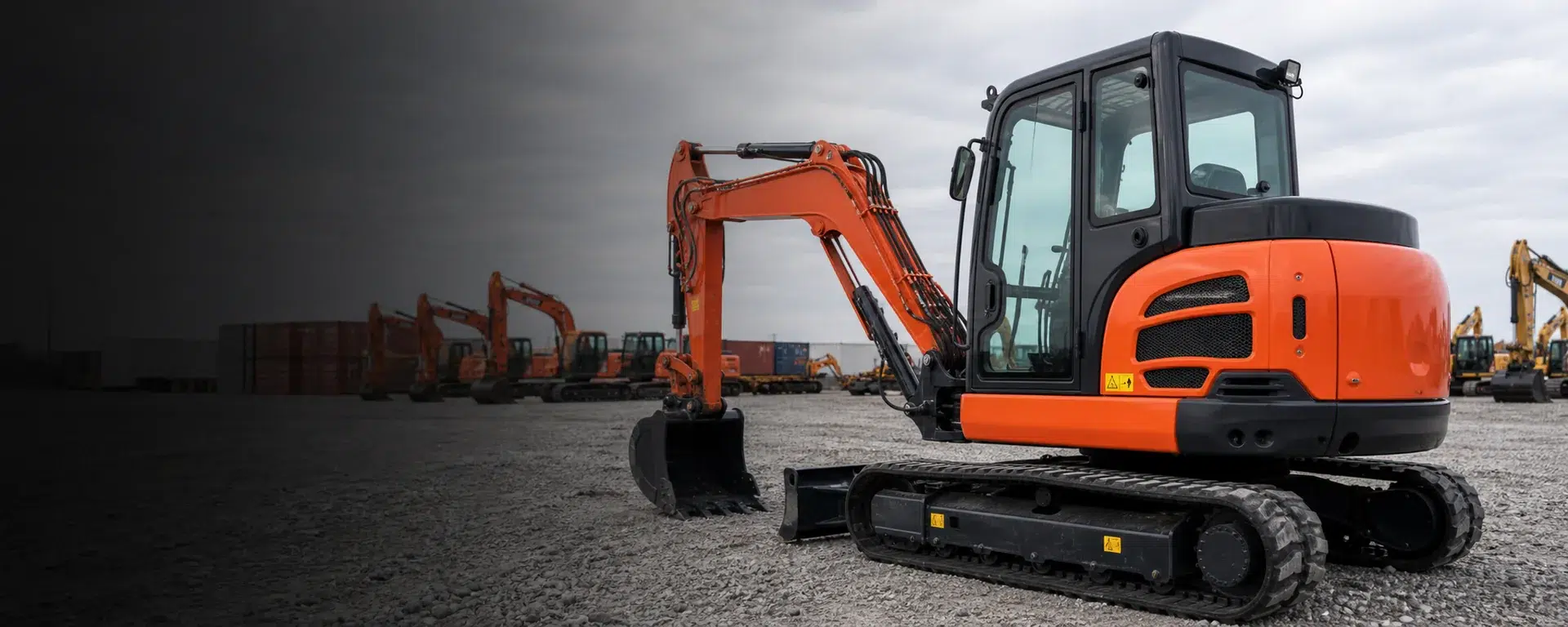
Used Kubota Excavators
4 products
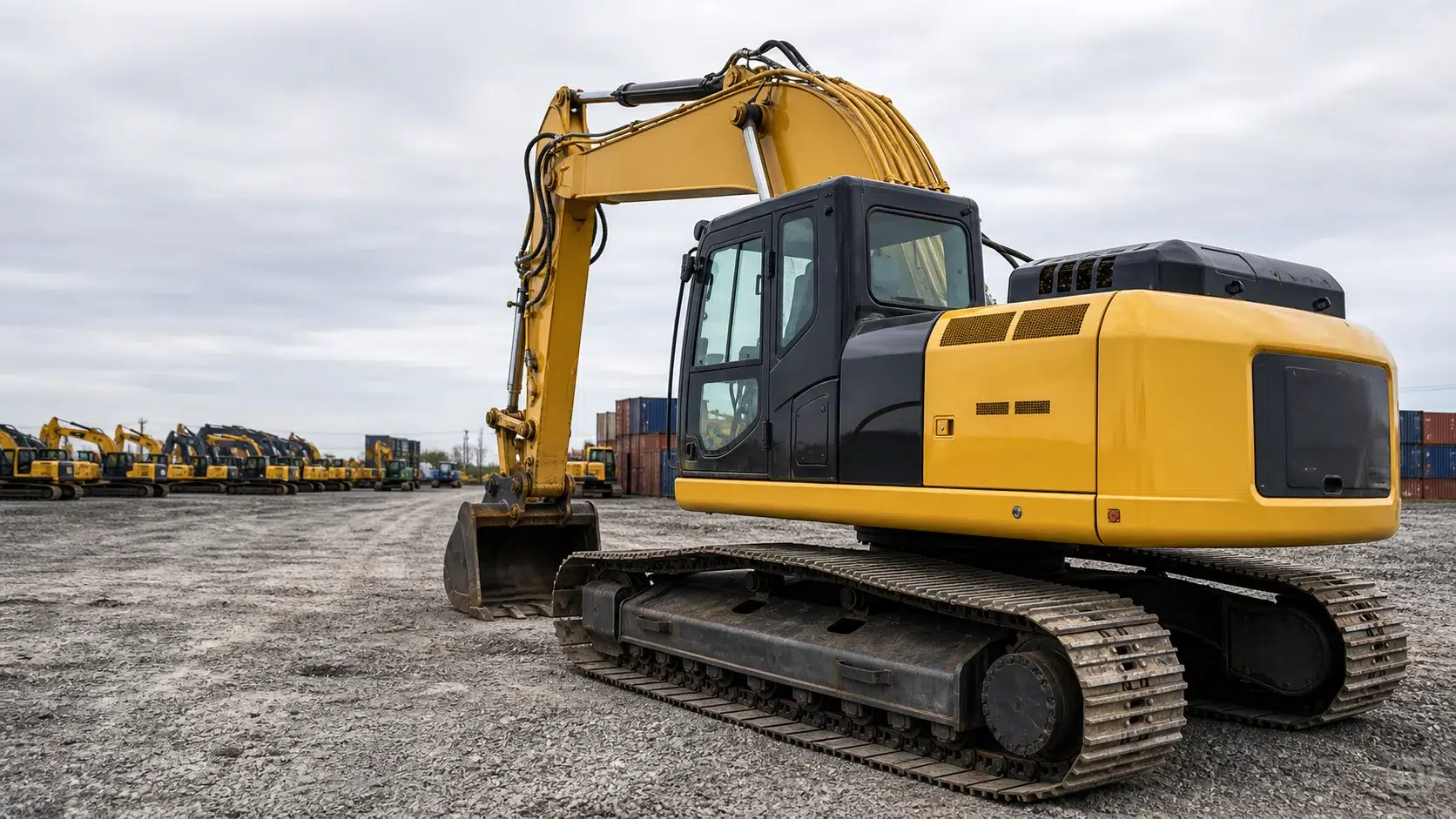
Used Volvo Excavators
9 products
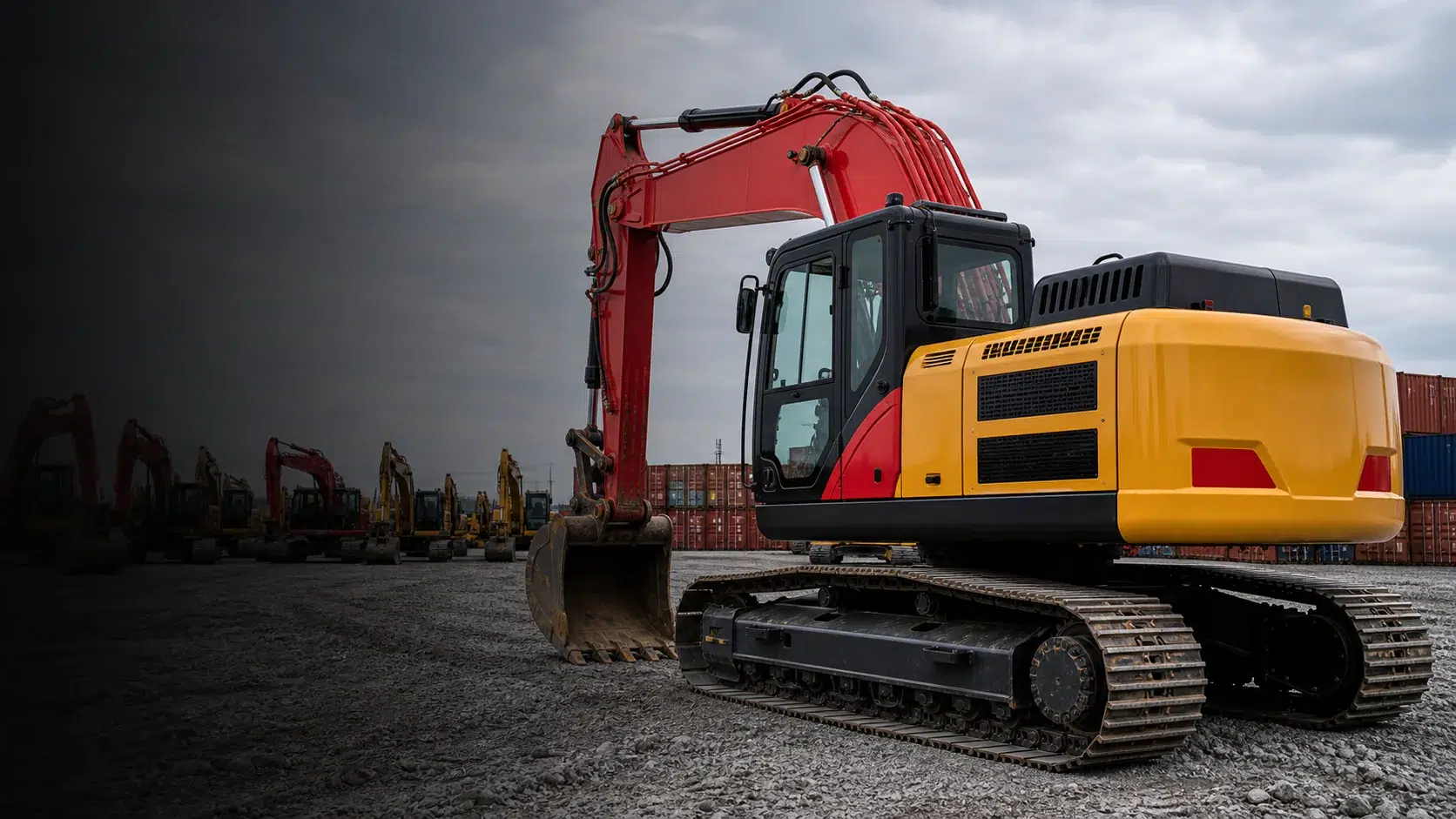
Used Sany Excavators
9 products
Used Komatsu Excavators
13 products
Used Kobelco Excavators
4 products
Used Hyundai Excavators
5 products
Filter
Showing all 5 results


Payment protected by staged delivery proof
Pay the balance after machine proof, not on blind trust.
Used excavator buyers need more than a product photo. Liehuang uses a staged payment workflow: deposit to reserve the machine, inspection evidence before balance, and export documents plus shipment tracking before release.
Verified machine videoLoading and customs filesBalance paid after confirmation
Quote & machine selectionChoose the model, hours, attachments and export destination before we reserve stock.
Deposit to lock stockA deposit holds the exact machine while inspection media and documents are prepared.
Inspection proof sentReceive walkaround video, hour-meter photos, serial details and loading plan.
Balance after confirmationPay the remaining balance only after you confirm the machine condition and export evidence.
Shipment & customs trackingWe share loading photos, bill of lading progress and customs support until release.
For high-value used equipment, trust is built by evidence. Ask for the current stock list, payment schedule and export document sample before you decide.Request stock proof
Used Hyundai Excavators for Sale — Inspected & Export-Ready R-Series and HX Models
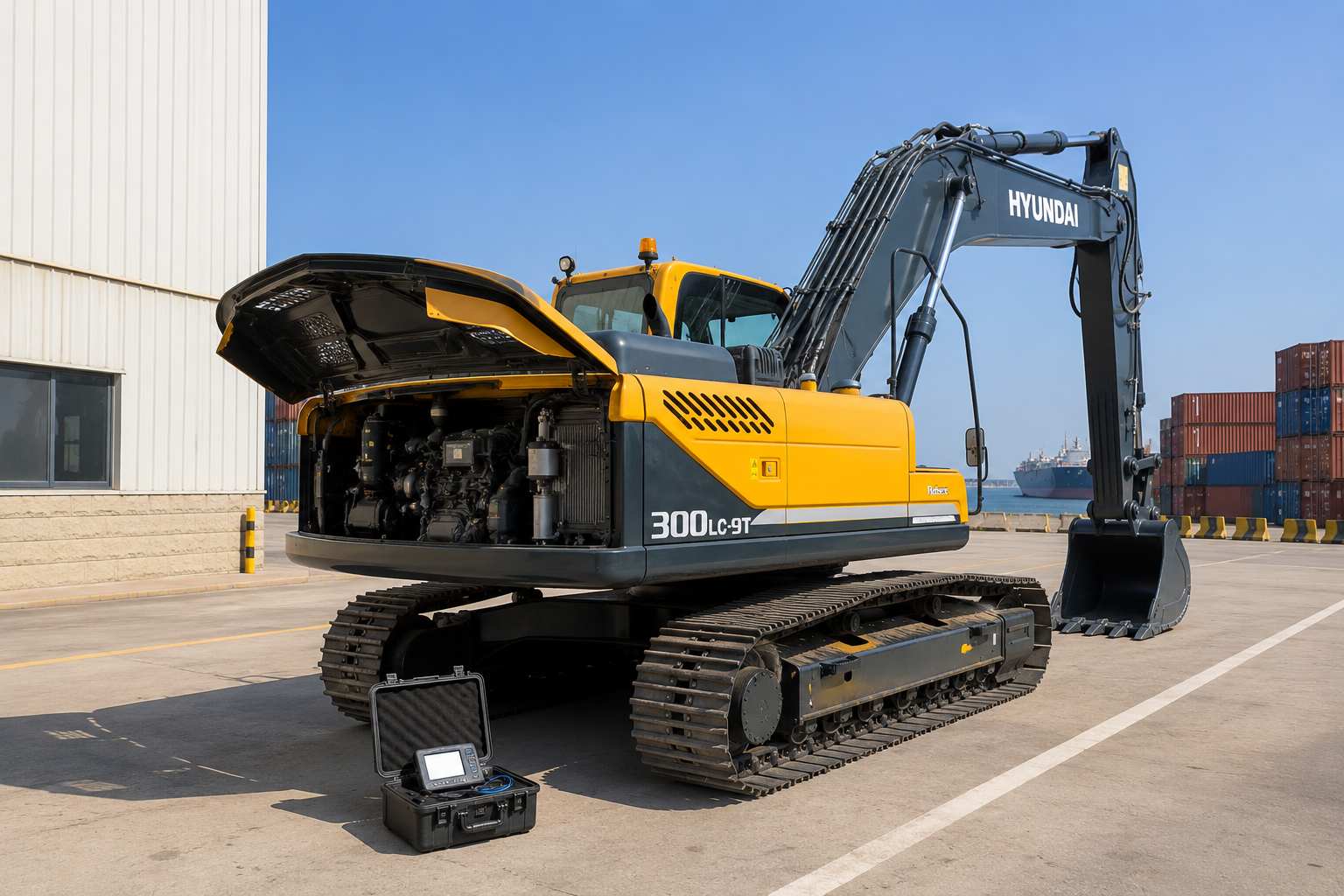
We sell inspected, export-ready used Hyundai excavators to importers and distributors worldwide, from the 22-ton R220LC-9A up to the 48-ton R480LC-9, with Verified Hours-Meter Reading, Component-Wear-Grade Report, Serial-Number Validation, and Photo/Video of the Actual Machine Before You Wire a Deposit.
Request Live Machine List & FOB/CIF Quote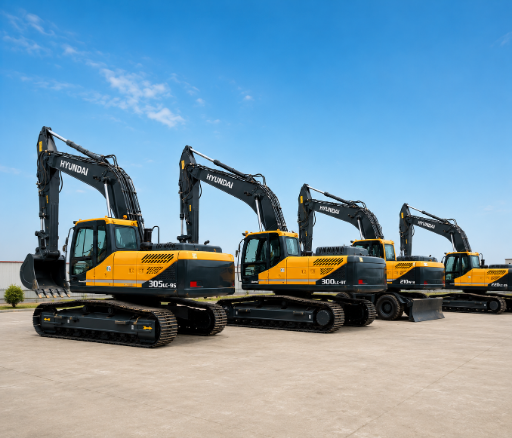 R35Z–R520
- 3.5 to 52 t Hyundai models stocked
- 22.4–48.1 t R220LC-9A to R480LC-9 core band
- Tier 3 -9 / -9A engines, no DEF/SCR needed
- Verified hours + serial-number + EPA family
- A/B/C condition grade per machine
- $15k–$33k typical R220-class used band*
Why a Used Hyundai Excavator Is a Smart Buy, and Where Importers Get Burned
Here is the paradox that gets so many buyers taken to the cleaners: on a used hyundai excavator shipped from China, anything under 1,000 hours is usually a tell-tale sign of trouble. In fact, the higher the quoted hours the better value on a used Hyundai excavator. The "low hours = high price" buying method is a sure path to ruin for unwary buyers, because "950 hours, 2021, fresh paint job" is in many cases a 4-to-9k hour unit that's had its hour-meter "reset." An hour count means something only once it's been verified against visible wear - a fact that most cheap exporters conveniently ignore.
used hyundai machines excel on a price-vs- warranty basis rather than any pedigree-focused merits. Smart operators consider them a "value brand." Their operating costs are a fraction that of premium makes like Caterpillar and Komatsu, the Hyundai factory warranty is excellent, and on 9-series units with their Cummins power, virtually any shop anywhere can perform the routine maintenance. They're certainly not premium brand in terms of used market demand, and anyone claiming otherwise would be disingenuous, but that low depreciation also means they deliver more heavy equipment muscle for your dollars than a marquee brand or unproven model ever will. It should be said upfront that the standard issue, four-track crawler excavator class it falls into is specified the same, regardless of model or year, under ISO 6165 earth-moving nomenclature, so consider the information you read below to apply to any Hyundai machine we offer, then narrow by actual condition.
A great deal on a used hyundai excavator-and there are a number of truly stellar ones to be found if you know where to look-comes down to just three very basic questions that the actual price tag doesn't account for. At Used-Robex, we view every machine as a case for each point on the Used-Robex Buy-Right Triangle, which are the risk-moving aspects of the business:
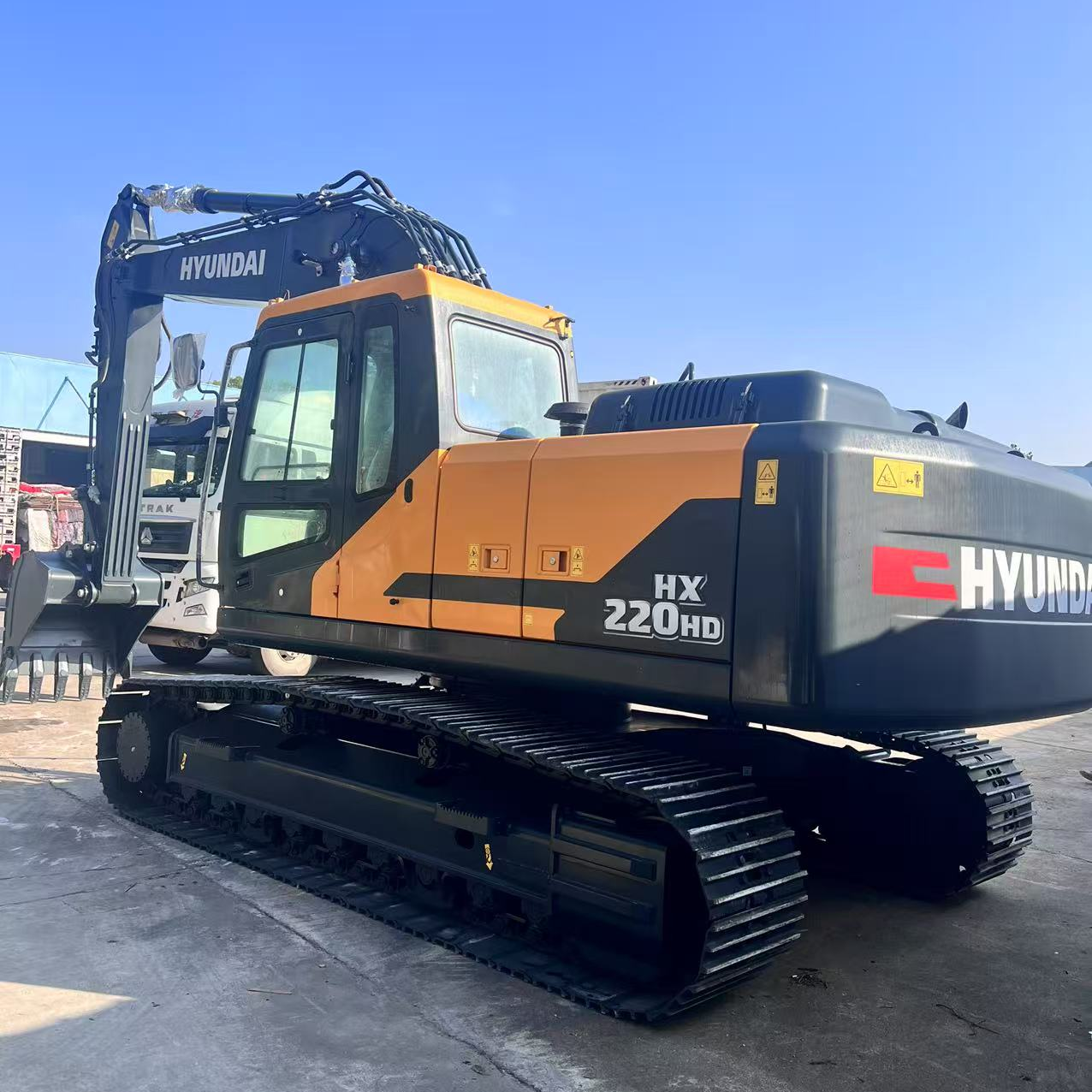
Nail down these three risk factors correctly and a used used hyundai excavator for sale is among the soundest investment opportunities for any equipment fleet, regardless of size. Nail them incorrectly and a supposedly "950-hour" workhorse that needs a hydraulic pump similar to the last machine, which already had 5,000 hours on it, renders even substantial initial cost savings meaningless. Everything below details how we evidence all three axes of risk.
Already know the model and budget you want?
Send it over for a graded shortlist →Hyundai R-Series & HX Crawler Excavator Models, Generations & Specifications
An insider’s quickest grasp of a Hyundai excavator’s basics comes by decrypting the model number alone. In the R220LC-9A, 220 denotes the approximate operating-weight class (22 tonnes), LC denotes a long, heavy-duty crawler undercarriage, and -9A designates the emission tier/generation, which directly dictates the underlying power plant. A Hyundai excavator importer need to know little more than this model code; more than any image it instantly conveys its general class. For this reason, we’ve developed the Robex R-Series Generation Ladder, as this information is what most of our clients are seeking more than any other-a reference chart delineating Hyundai excavator models, sizes and how much “used” one should expect for all models from smallest to largest in the Hyundai line, spanning emission class and engine family for ease of purchase and resale comparisons.
| Model (R-series) | Class / op. weight | Generation & era | Emission tier | Engine family | Typical used hours |
|---|---|---|---|---|---|
| R35Z-9 / R35Z-9A | Mini ~3.5 t | -9 (2011–) zero-tail | Tier 4 Interim* | Yanmar/Mitsubishi | 1,500–6,000 |
| R55-9 / R60CR-9A | Mini ~5.5–6 t | -9 / -9A | Tier 3 / 4i* | Yanmar/Cummins | 2,000–7,000 |
| R130LC / R140LC-9 | Compact ~13–14 t | -9 (2011–) | Tier 3 | Cummins | 3,000–9,000 |
| R160LC-9 | Medium ~16 t | -9 | Tier 3 | Cummins | 3,000–9,000 |
| R210LC-9 | Medium ~21 t | -9 | Tier 3 | Cummins QSB6.7 | 4,000–10,000 |
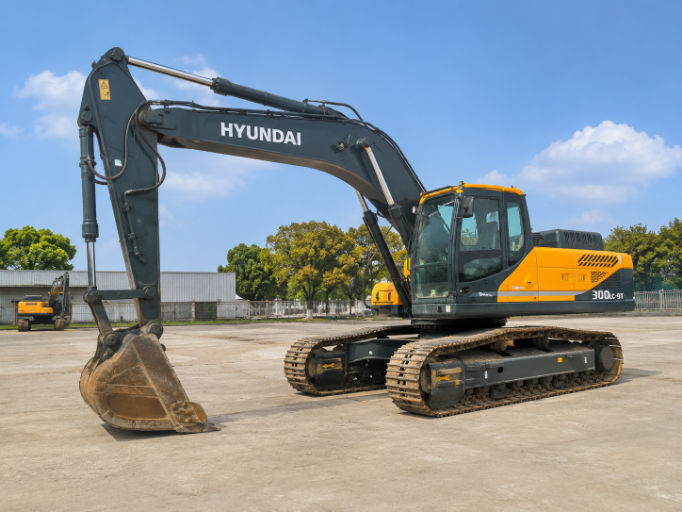
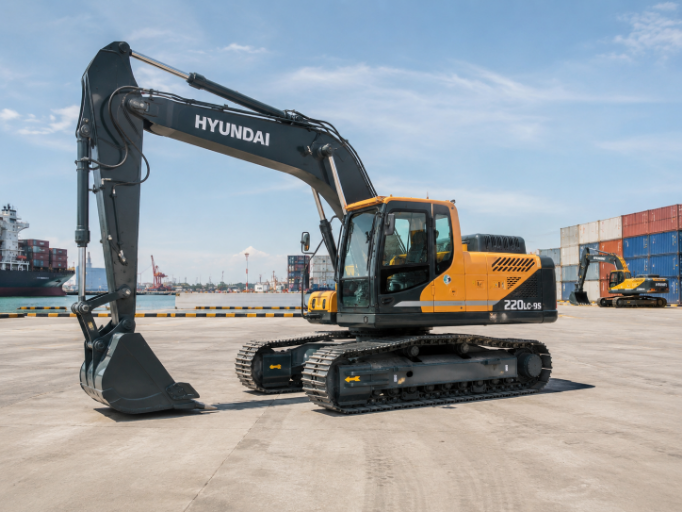
| R220LC-9A | Medium 22.4 t (49,273 lb) | -9A (workhorse) | Tier 3 | Cummins QSB6.7, 167 hp | 4,000–10,000 |
| R235LCR-9 | Medium reduced-tail ~23.5 t | -9 | Tier 3 | Cummins | 3,500–9,000 |
| R290LC-9 | Medium-large ~29 t | -9 | Tier 3 | Cummins | 4,000–11,000 |
| R305LC-7 | Large 29.4 t (64,816 lb) | -7 (earlier gen) | Tier 2/3* | Cummins C8.3-C, 255 hp | 5,000–12,000 |
| R380LC-9 | Large ~38 t | -9 | Tier 3 | Cummins | 4,000–11,000 |
| R480LC-9 | Heavy 48.1 t (106,042 lb) | -9 | Tier 3 | Cummins QSM11, 356 hp | 5,000–12,000 |
| R520LC-9 | Heavy ~52 t | -9 | Tier 3 | Cummins QSM11 | 5,000–12,000 |
Hyundai R220LC-9A; R305LC-7; R480LC-9. operating weight is grouped into the standard Hyundai model designation (Model Number Tonnes) and specific models include; R220LC-9A, R305LC-7, and R480LC-9; sourced directly from RitchieSpecs / Hyundai-CE. * Emission Tier subject to Build year, Market destination; (-7/-9/-9A generations precede T4 Final and EU Stage V) Hours per unit; are always individually verified and aren't presumed across a band.
Two facts that translate to serious dollars for importers;
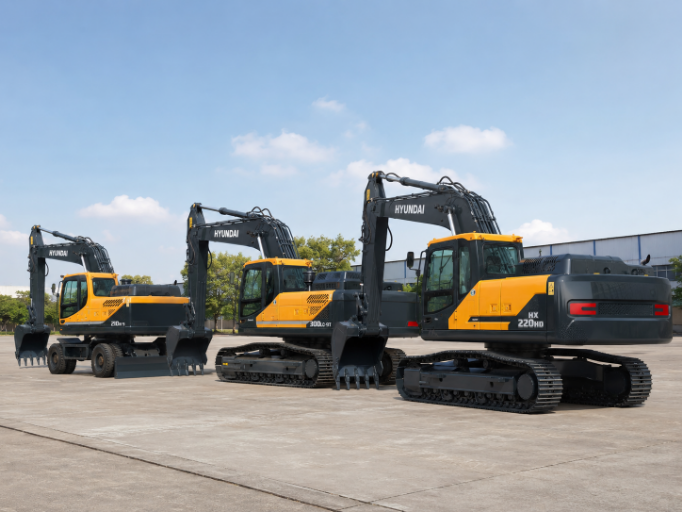
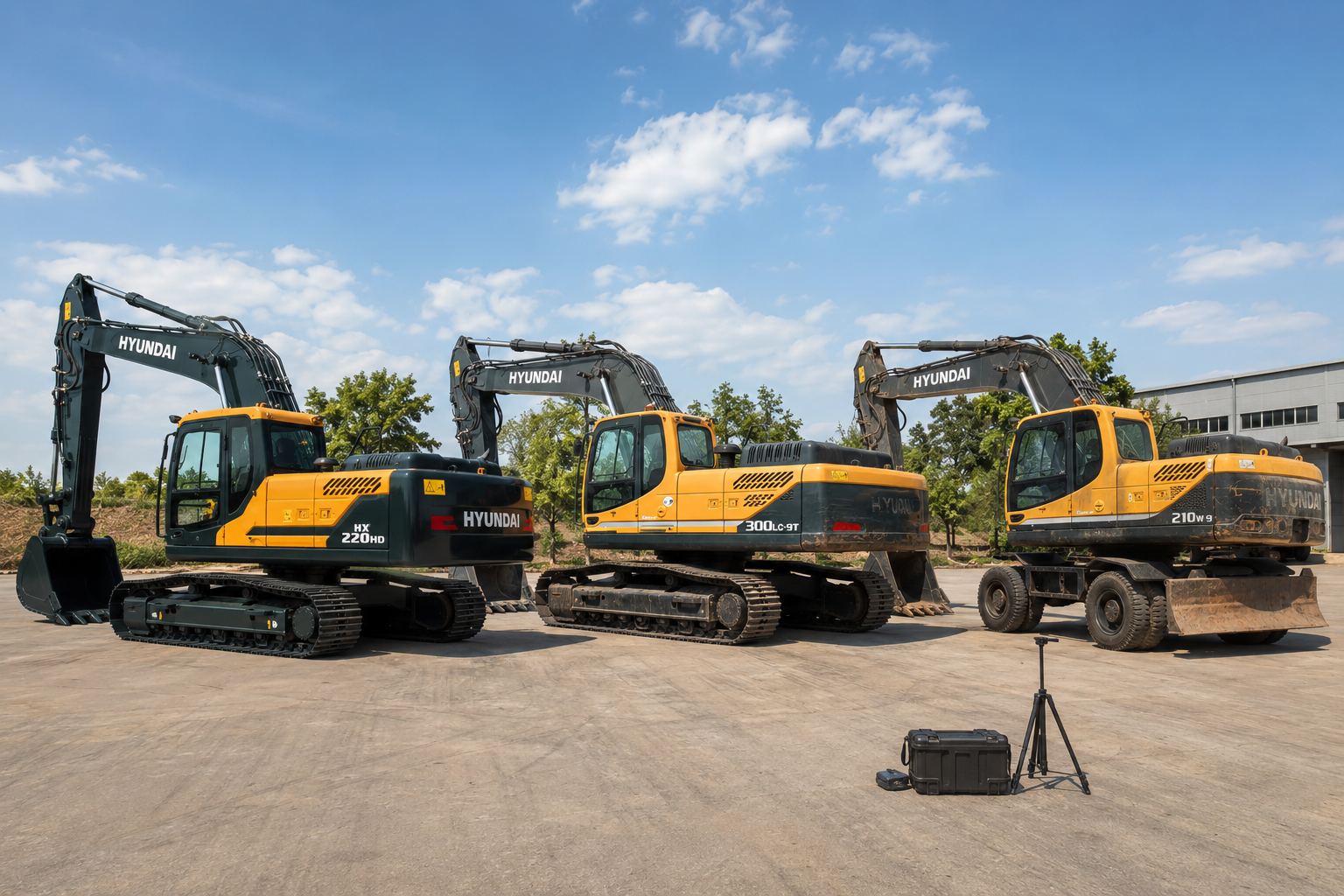
The Hyundai 220, HX210s, and Hyundai 35z 9a, searches show a wide price range primarily determined by model generation, not just equipment size: A Hyundai R220LC-9A, for instance, is a Tier-3 unit that's functionally equivalent to a Tier-4-Final HX220, so the appropriate option is dictated by your market’s fuel-use and emissions standards.
Your choice of the engine has a service impact: Most R-9 generation mid-sized equipment uses standard Cummins diesel-driven grade-control hydraulics, readily serviceable by almost any independent diesel facility globally, however, other build combinations pair proprietary Mitsubishi engine systems paired with specially manufactured hydraulic motors that service-oriented mechanics may have difficulty maintaining - be advised prior to purchasing.
 Medium workhorse
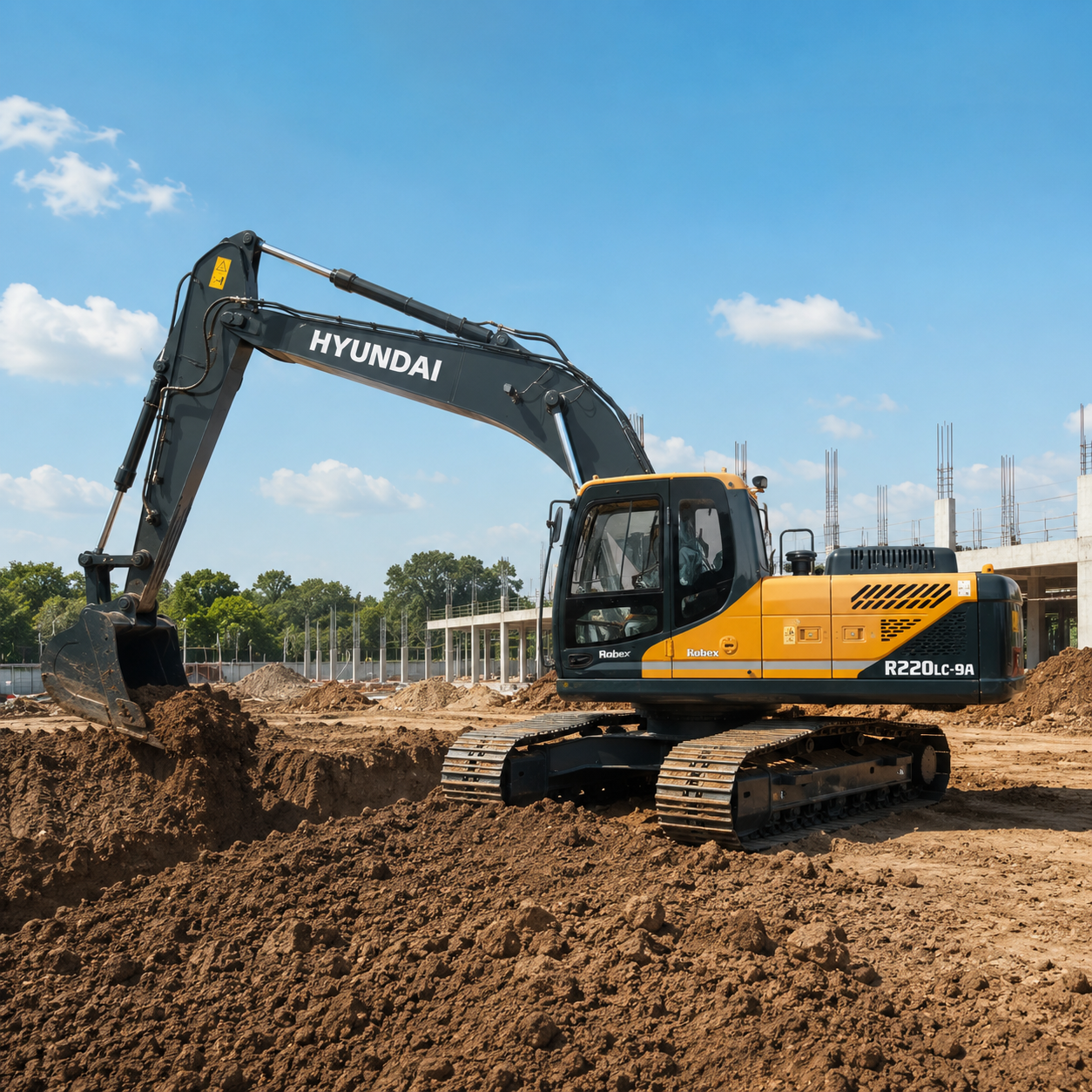
R220LC-9A
Medium workhorse
R220LC-9A
- 22.4 t / 49,273 lb
- Cummins QSB6.7, 167 hp
- 20.4 ft dig depth
- 29,980 lbf bucket breakout
- 60 gal/min hyd. pump flow
- Tier 3 · pre-DEF
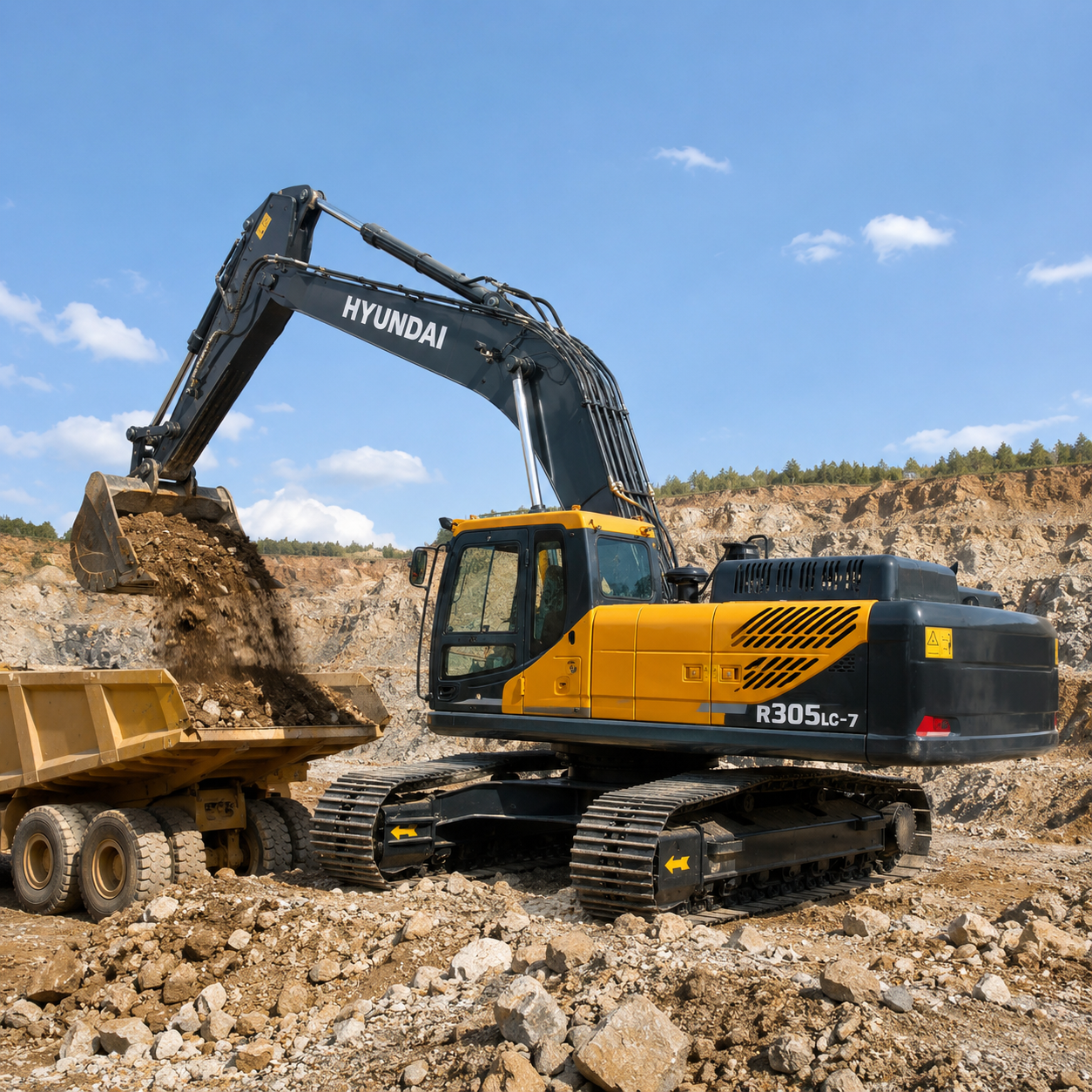 Large production
R305LC-7
Large production
R305LC-7
- 29.4 t / 64,816 lb
- Cummins C8.3-C, 255 hp
- 24.6 ft dig depth
- 1.9 yd³ bucket
- Tier 2/3 era
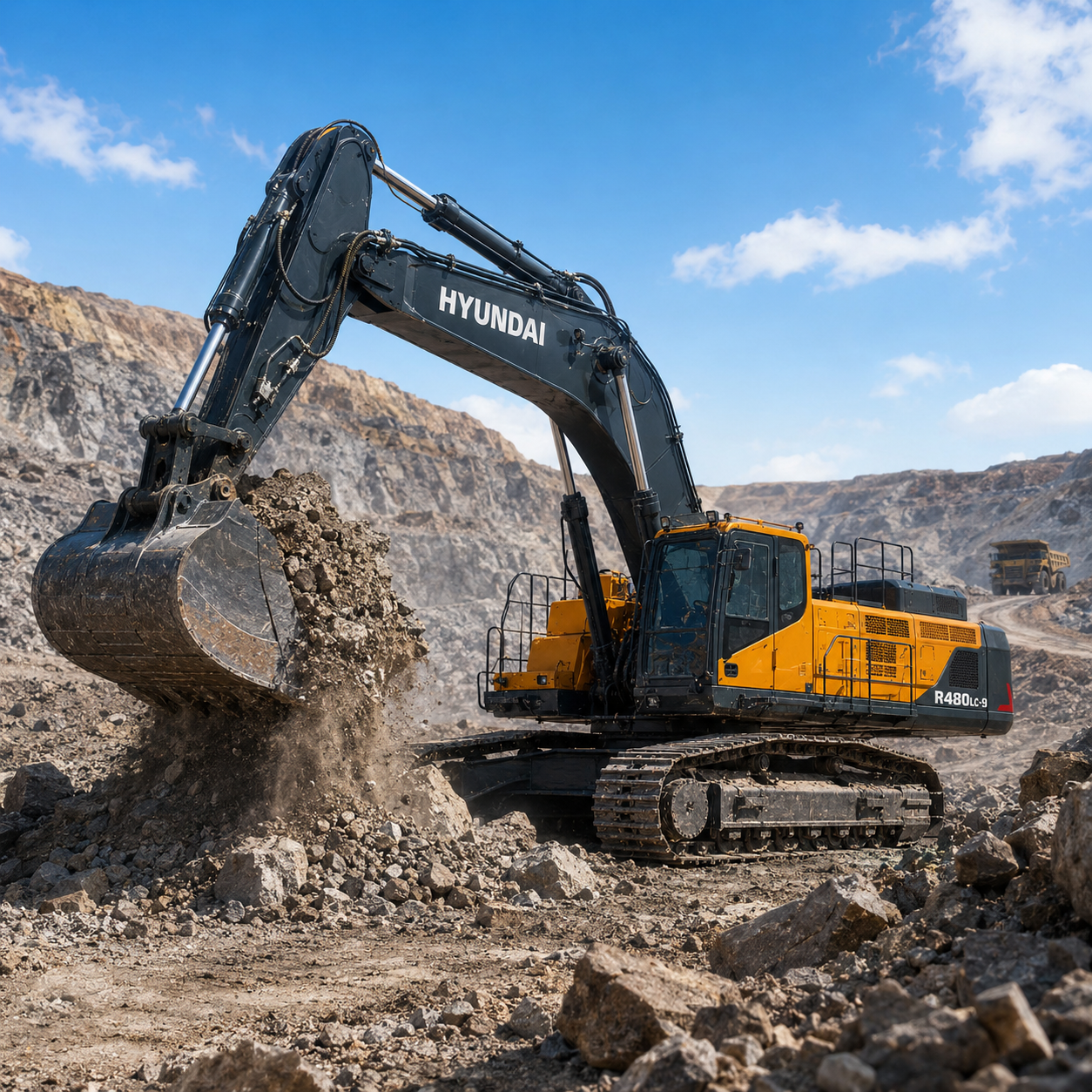 Heavy / mining-grade
R480LC-9
Heavy / mining-grade
R480LC-9
- 48.1 t / 106,042 lb
- Cummins QSM11, 356 hp
- 25 ft 7 in dig depth
- 2.81 yd³ bucket
- Tier 3 (Hyundai-CE official)
Each card lists the features buyers weigh most, operating weight, engine power, dig depth, bucket capacity and lift, so you can match a compact excavator or a full-size crawler to the productivity your infrastructure project demands.
Is Hyundai now "Develon"? No, and the difference matters
Purchasing a second-hand Hyundai R-series machine is like taking on ownership of machinery from Hyundai’s authentic bloodline excavator. Develon is the latest incarnation-or the 2023’s new branding of- Hyundai’s earlier acquisition: the Doosan product line which became part of the HD Hyundai’s empire in 2021, so while both Hyundai and Develon have been established as sibling brands; Develon isn't a rebranded Hyundai (refer to HD Hyundai Infracore documentation) even though both brands now fall under a singular umbrella known as HD Construction Equipment as of early 2026; with plans to keep them separate from an outward perspective of the Develon badge and that of the Hyundai badge. Assuming Hyundai and Develon are one is factually incorrect.
In addition to its popular tracked R-series lineup primarily imported by clients, Hyundai manufacture and supply wheeled excavators in the HW-series for contractors and other construction work. Our used mini excavator lineup covers compact sizes across the 0-10 tonne range; if you require a heavier-duty solution in excess of 30 tonnes, be sure to investigate our heavy excavator page, or compare alternative manufacturers such as our used Caterpillar range if you're contemplating a multibrand approach. Unlike third-party listing marketplaces that simply offer a listing service, every Hyundai we offer goes through a thorough in-house inspection under our own mechanics before they’re presented for sale, enabling you to convey your project needs to us and get a tailor-made solution rather than simply searching for a numerical model.
Want the full spec sheet on a specific R-series or HX model?
Request the hyundai excavator models & spec pack →Condition, Inspection & the Hour-Life Benchmarks We Grade Against
Customers worry that what they see in listing-based photographs may not reveal important underlying problems, such as a rolled-back hours meter, or cosmetic repairs to a potentially catastrophic issue that could bleed them of their earnings. We make these issues irrelevant through the detailed inspection reports from our internal examination chamber rather than displaying prices upfront: A faulty main hydraulic pump in a 20-ton machine represents thousands of dollars of expense, a figure completely undetectable on an advertisement, whereas worn equipment tracks represent the single biggest investment a new owner assumes at an unknown point in the ownership term. Each unit is calibrated, photographed, and measured against the Used Hyundai Hour-Life Benchmark Band the life span we expect from the parts that decide the fair purchase price.
| Component | Healthy band | Inspect closely | Red-flag / price it in |
|---|---|---|---|
| Undercarriage (rails, rollers, sprockets) | < 4,000 h, >60% life | 5,000–6,000 h, moderate wear | > 8,000 h or <30% grouser height |
| Hydraulic main pumps | < 5,000 h | 5,000–8,000 h | > 10,000 h or low cycle pressure |
| Hydraulic cylinders | No drift | Minor weep | Measurable drift > spec in 5 min |
| Engine (Cummins diesel) | < 6,000 h, clean blow-by | Turbo watch 5,000–7,000 h | Excess blow-by, coolant in oil |
| Swing bearing | Minimal play | Detectable play one quarter | Play at all four quarters |
| Full machine | < 5,000 h verified | 5,000–9,000 h verified | Unverified meter at any reading |
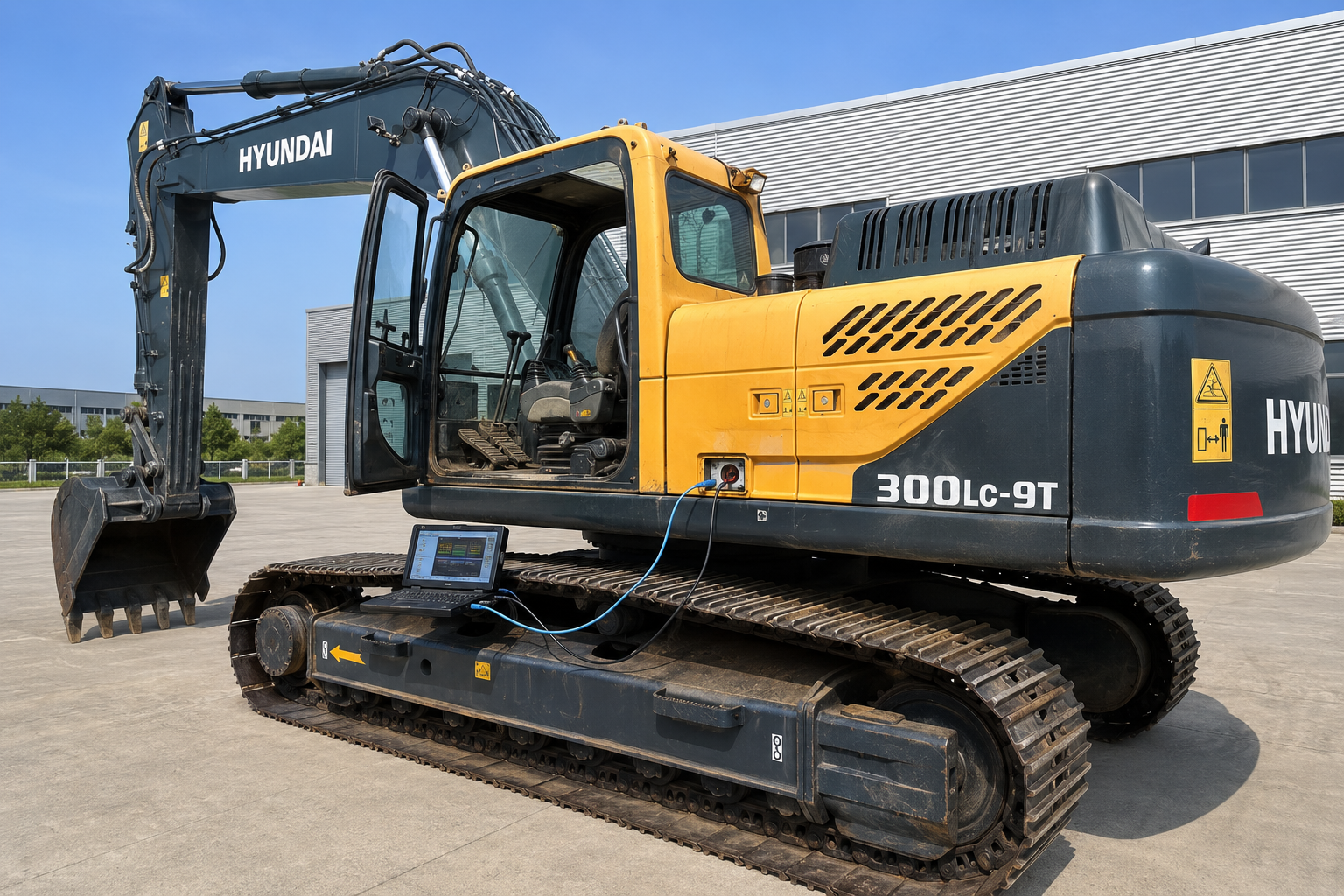
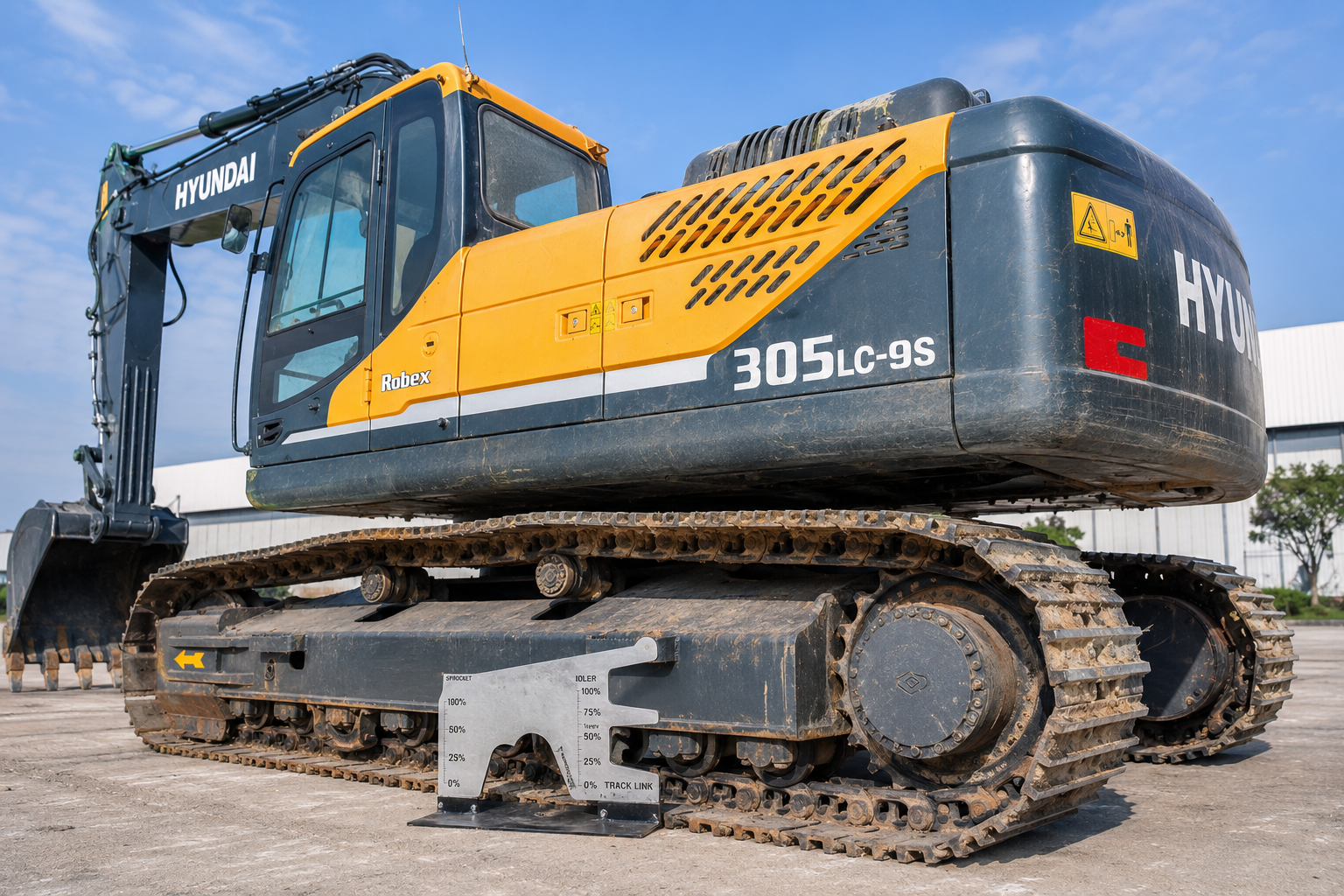
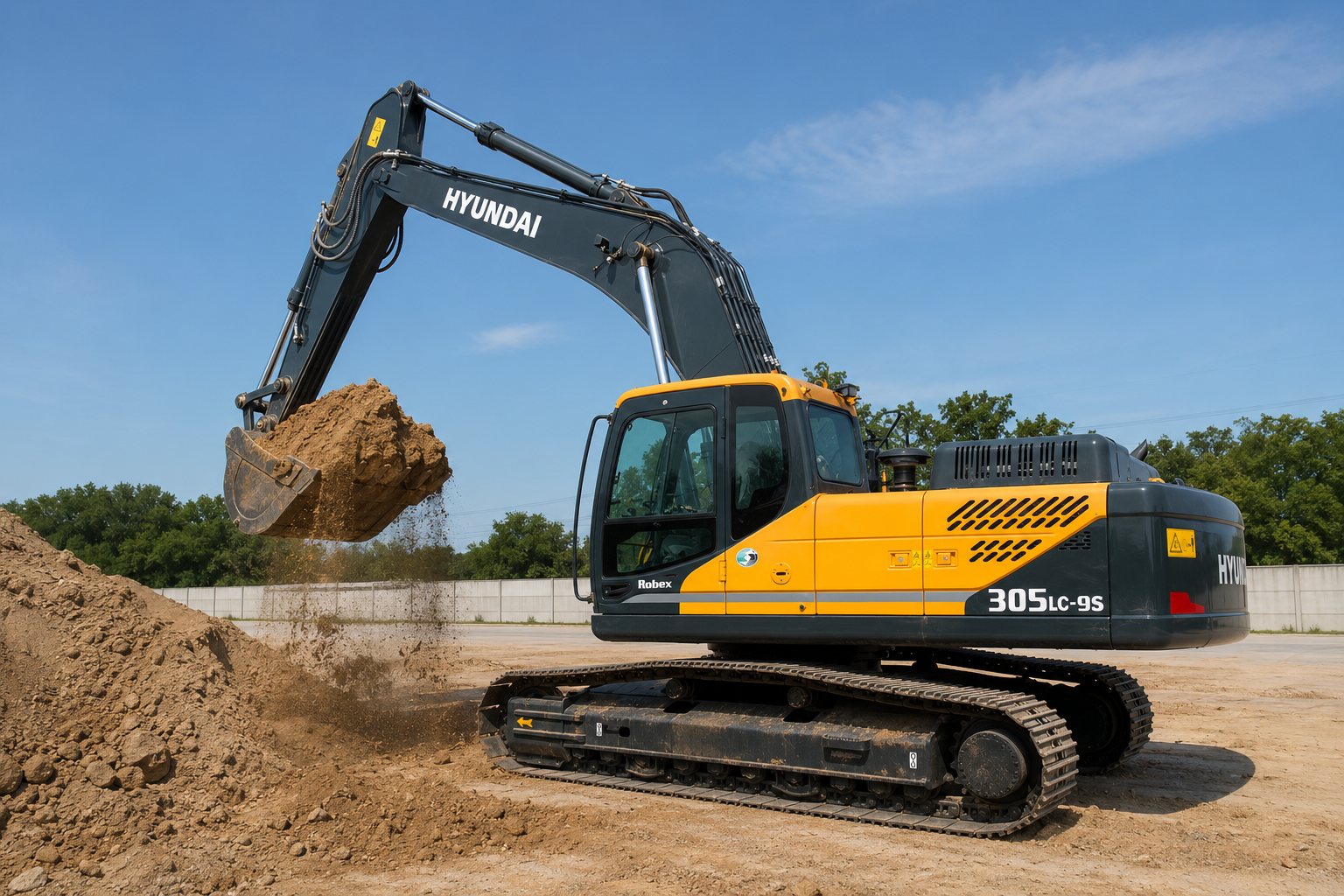
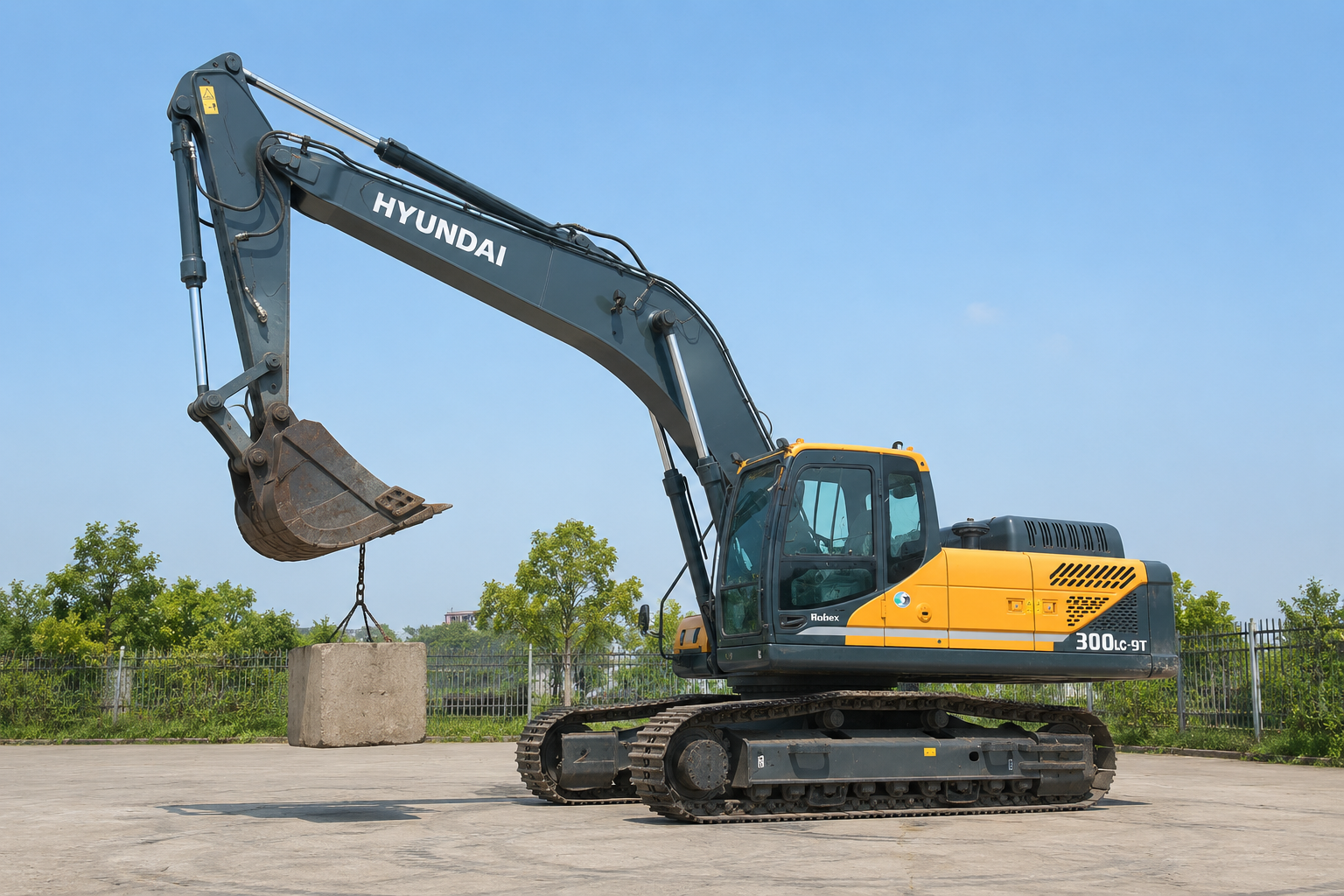
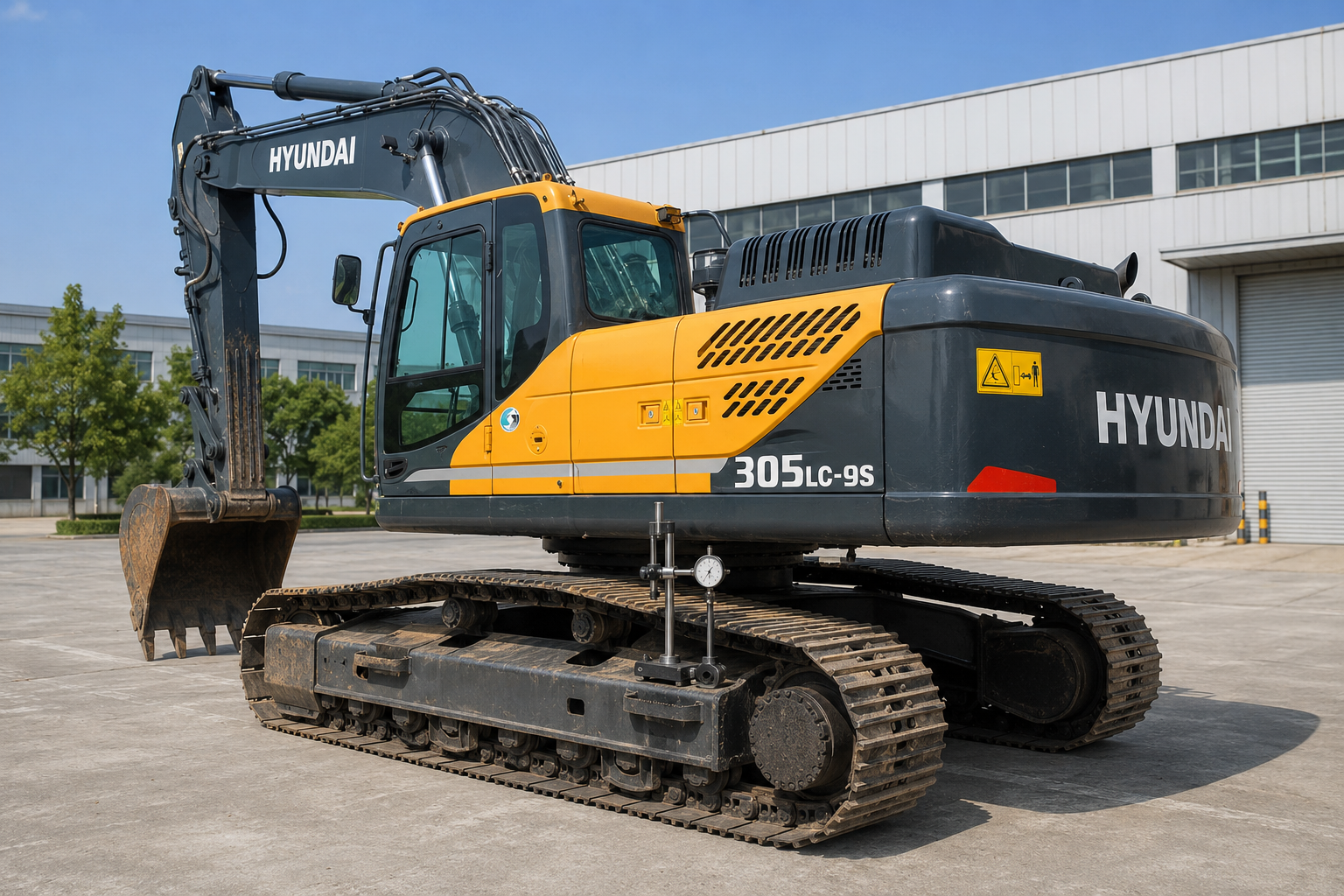
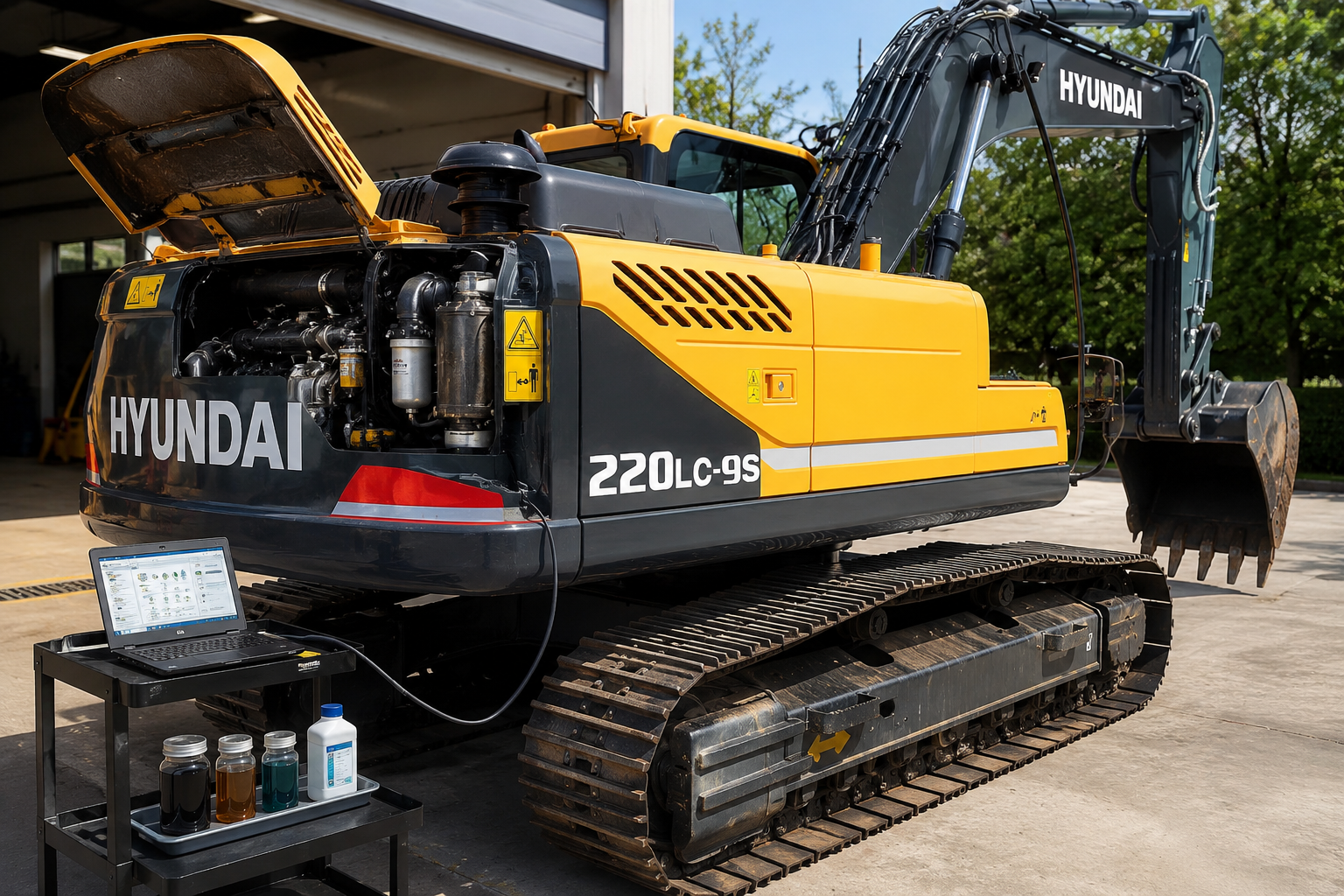
SEQ 01 / 09
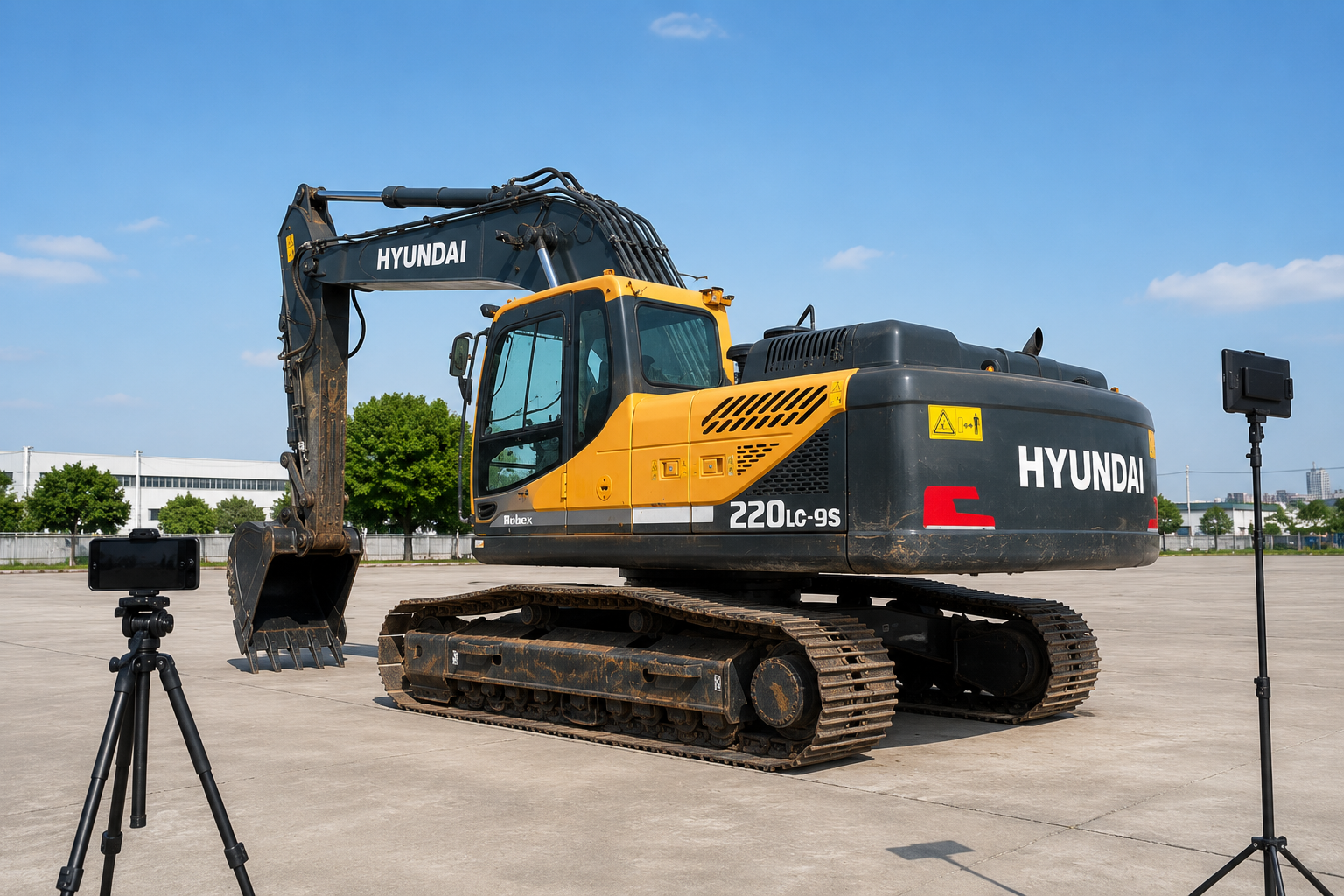
Hour-meter authenticity check
Compare displayed hours with joystick/pedal/seat wear; brittle wiring; engine ECM history (a "low-hour" claimed unit failing this check is rejected).
SEQ 02 / 09
Undercarriage component wear analysis
Compare life left of grousers, links, rollers, idlers, sprockets against Hyundai factory standards (% remaining).
SEQ 03 / 09
Hydraulic test
Measure boom, arm, and bucket hydraulic cycle times against specified performance figures; detect weak hydraulic pump or leaking valve bypass.
SEQ 04 / 09
Cylinder drift test
Loaded condition, engine off, over 5 minutes, to detect internal cylinder bypass.
SEQ 05 / 09
Swing-bearing play test
Using a dial indicator, to establish level of play.
SEQ 06 / 09
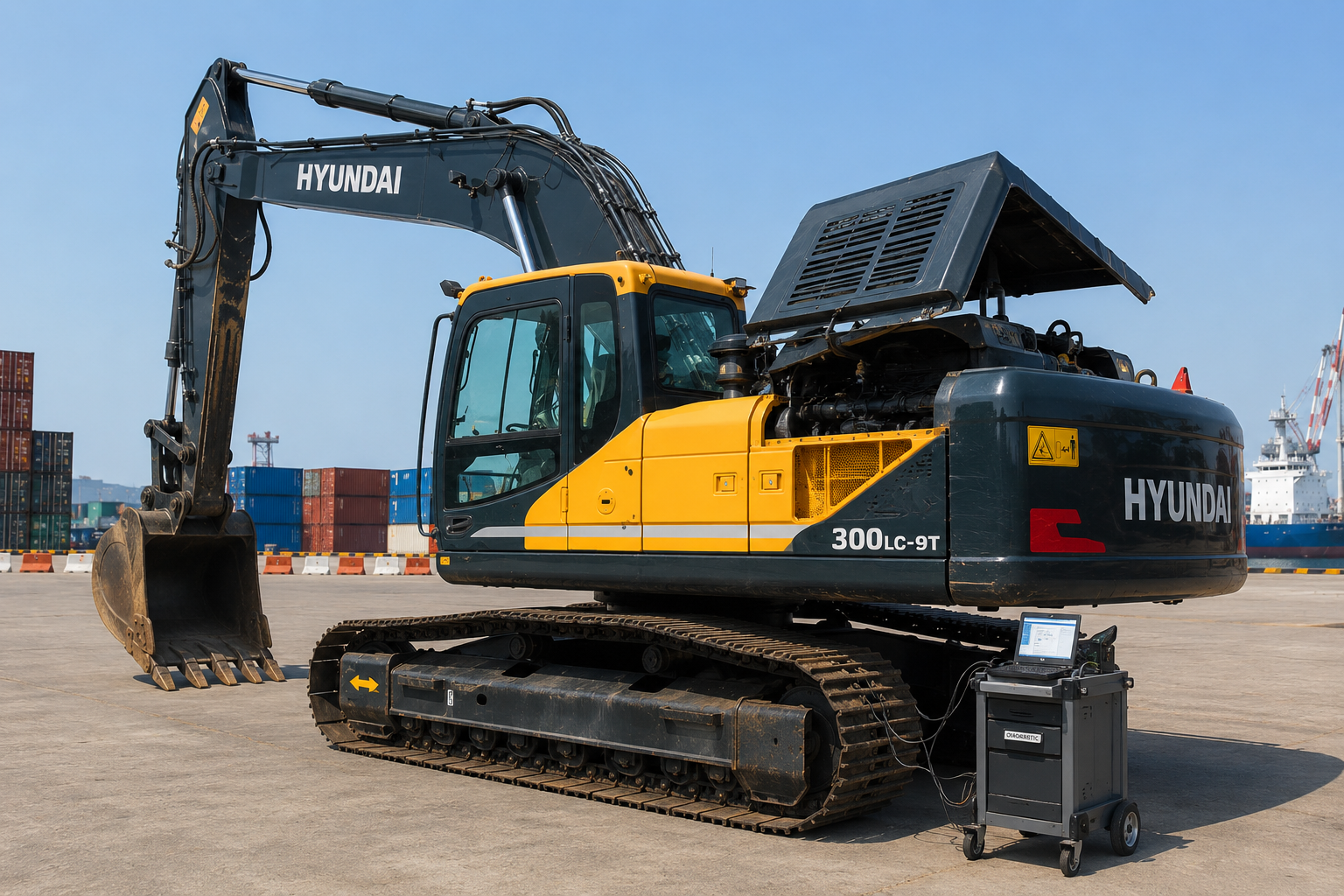
Engine & E-Control scan
Including Cummins blow-by test, oil and coolant analysis; report Cummins ECM faults and historical fault data.
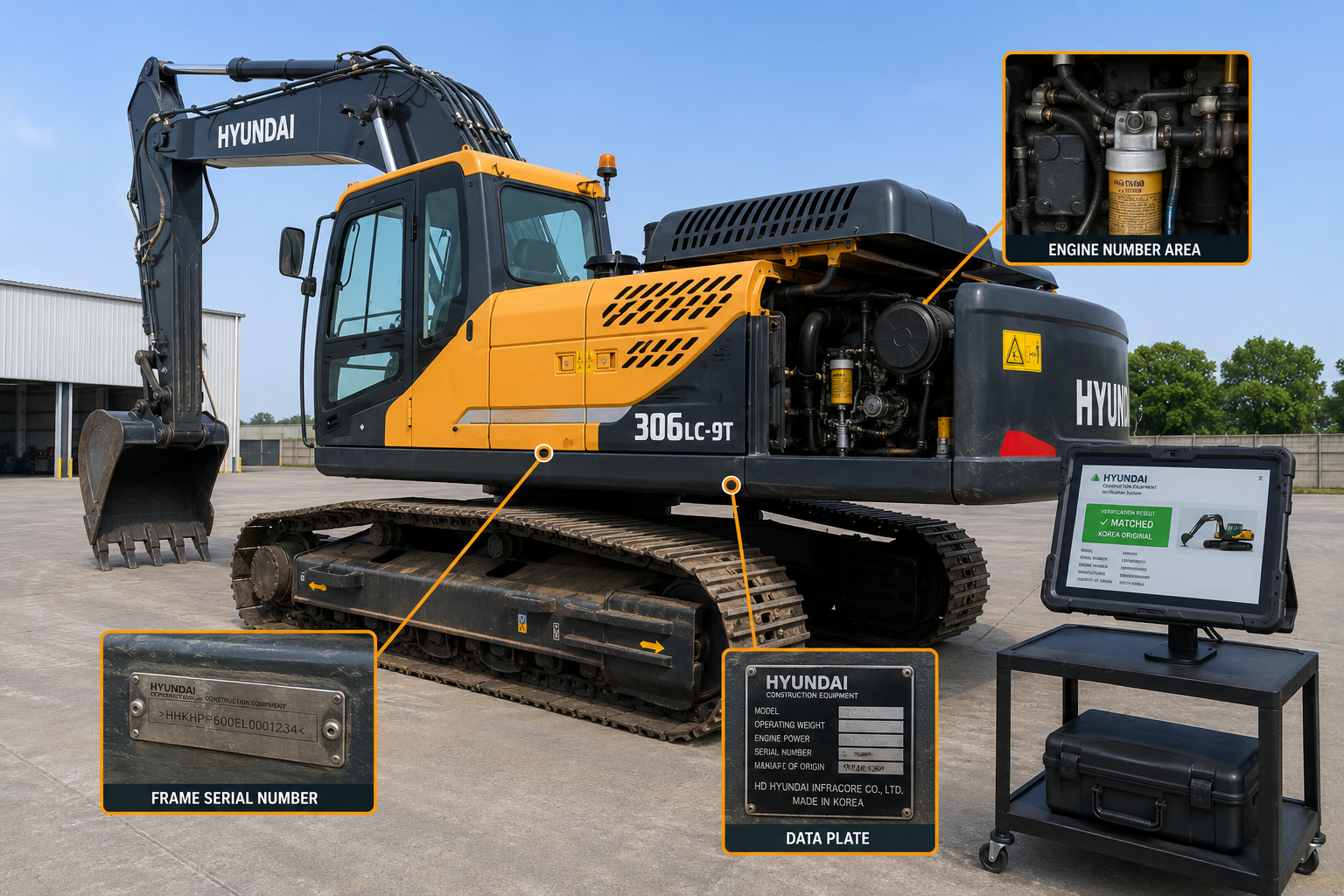
SEQ 07 / 09
Serial-number and OEM traceability verification
Frame, engine, and data-plate number against database to assure Korea-manufactured original; rule out re-shelled or re-tagged machines.
SEQ 08 / 09
EPA engine-family declaration
Verifying the EPA nonroad engine database to confirm the unit clears US customs.
SEQ 09 / 09
Condition rating
Classifying the unit with an A/B/C rating, supported by a photos and videos.
"We reject more 'low-hour' machines than we list. If a meter reads 900 hours but the joystick grips are polished smooth and the wiring is brittle, that machine is not a 900-hour machine, and we will not put our grade on it. The buyer gets the wear percentages, the serial-number check, and the walk-around video before any deposit moves."
"Where we refurbish, we explicitly tell you what’s refurbished and what’s left alone - a newly painted boom isn't an inspected and tested, certified-rebuilt boom and we don't call them as such. Buyers who want added peace of mind can have their own third party inspector or escrow company inspect at our yard before submitting payment, and we welcome it; we grade to this standard. That's the differentiator between us and any other seller of used machinery; as flippers tend to be cagey about specifics. As we say: If you can’t inspect it yourself - or can’t get somebody you trust to inspect it for you, walk away, that includes us. It's the best advice for buying ANY piece of used machinery on the market."
Used Hyundai vs New Budget-Brand vs Local-Dealer Used, Value & Reliability
Buying used isn’t an argument rooted in anything beyond economics. As it goes with excavator, the highest rate of depreciation is lost in the first year. And this depreciation come, invariably, at no charge for anyone purchasing a second-hand vehicle.
Hydraulic excavators will typically come out of primary production around the 9,800 operating hour mark, so a proven under-5,000-hour Hyundai will still have more than half of its primary useful life on the clock, and that's the whole argument for brand vs. meter. That trap overseas buyers rightly fear - "cheap machine, no parts" - is a real concern with anonymous equipment, but with a Cummins-powered Hyundai, whose engine you'll find parts for nearly anywhere on the globe, that’s not a worry. Emissions tier matters to value too: a machine that matches your market's EPA nonroad emission tier stays legal to run and resell, while a mismatch can be turned back at customs. The hyundai excavator price you see on the listing is just the tip of the iceberg; the table below is how you protect your margin over the next five years:
~32%
A crawler excavator typically depreciates about 32% over its first three years, then the curve flattens, which is why a 3-year-old, verified machine is the value sweet spot: the first owner already absorbed the steepest loss.
Industry average for crawler excavators (Certitrek/NEBB; ConExpo-ConAgg). Qualified market data, not a Liehuang guarantee.
| Factor | Used Hyundai (inspected) | New budget / no-name | Local-dealer used |
|---|---|---|---|
| Acquisition cost | Lowest, first-year drop absorbed | Low list price | Highest, dealer margin + retail |
| Engine serviceability | Cummins, globally serviceable | Unproven / limited parts | Cummins, but dealer-priced |
| Resale retention | Solid (known brand demand) | Weak | Solid but off a higher base |
| Condition transparency | Graded report + evidence pack | New but unproven brand | Varies by dealer |
| Import / tier control | Tier-3 matched to your market | May not meet local tier | Often over-spec for your market |
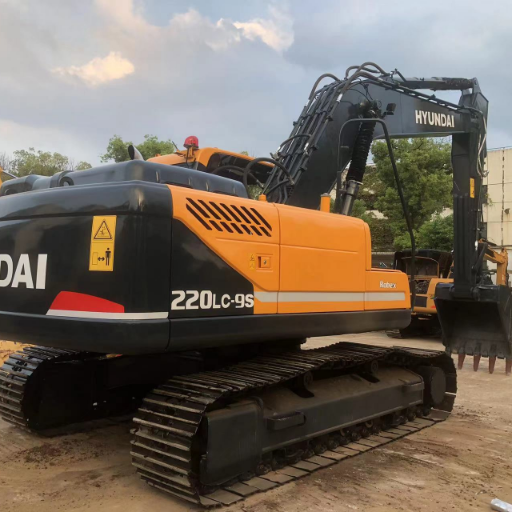
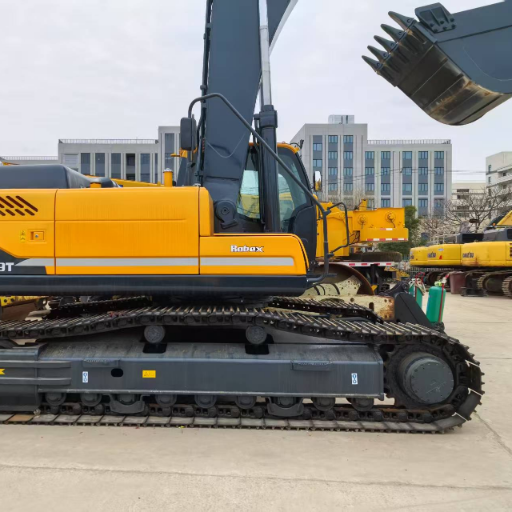
What It Costs to Import, Used Price Bands & FOB/CIF Landed Cost
A cheap sticker price out of China is quite often the most expensive machine you’ll take delivery of, and that's the contradiction that new importers often pay a premium to learn. An upfront purchase price is rarely your real expense. The actual cost you need to factor in is your “landed cost” and the delta between the two is precisely where a dealer who actually ships machines make their margin. Used R220-class Hydais trade in an unusually wide band, so we quote based on your destination rather than a generic sticker. Our China-to-Site Landed-Cost Ledger can be found above and is constructed line by line to calculate this overall cost:
| Cost line | R220-class (~22 t) | R305-class (~30 t) | R480-class (~48 t) |
|---|---|---|---|
| Used machine FOB band | ~$15,000–$33,000 | ~$28,000–$55,000 | ~$55,000–$110,000 |
| Export mode | Flat-rack / RoRo | Flat-rack / breakbulk | Breakbulk / RoRo, oversize |
| Ocean freight | Quoted by lane | Quoted by weight + port / Project freight quote | |
| Import duty | Tracked excavators 0% standard US duty (HTS 8429.52.10.00); country-of-origin tariffs may apply | ||
| Clearance + storage risk | Budget for it: missing docs can hold a machine for weeks, adding 5–10% in storage fees | ||
| What we control | Correct HS code, EPA family evidence, full doc set, and a real FOB/CIF number you can budget against | ||
*Price bands are approximate ranges based on current listings on MachineryTrader, Machineryline, and China-export listing sites and are dependent upon specification, operating hours, and year, but aren't an official Liehuang price.
Analysis Worked example, R220-class to a developing-market port
Take a graded R220LC-9A at approximately a $24,000 FOB price. Add in standard flat-rack sea freight, a reasonable amount of marine insurance (approx. 1-2%), your destination clearance fees, and the cost of inland transit, and you'll find that the all-in landed price is considerably less than what you would pay for a similar unit from your local dealer - while still leaving the duty,VAT/GST to be handled according to your country's own regulations. Danger in this process isn't the shipping itself, but the documentation required. Missing or wrong paperwork is what ties your machine up in customs, turning what should be a straightforward transaction into an expensive storage arrangement. Before shipment, we ensure the machine's engine label matches the EPA import requirements as well as those specific to your country.
opt for FOB If you've your own forwarding agents, or CIF If you’d prefer that we ship the machine to your port. First-time importers often make the mistake of assuming that an exporter who has never shipped anything beyond the port has any idea of the actual landed cost; we move flat-rack units every month, so when we provide an FOB/CIF quote, you'll know it's something you can bank on, rather than an optimistic estimate that suddenly expands at the destination port.
Want the all-in number, not just the machine price?
Request an FOB/CIF landed-cost quote to your destination port →How to Buy from Liehuang, Order Flow, Payment, Warranty & Parts Procurement
You should never have to wonder what’s included in a quote or how the entire process unfolds. A marketplace provide a price and a shrug; we, on the other hand, reveal the underlying structure that determines both of these, because experienced importers are seldom the ones who get fleeced - it's typically the ones who can't clearly see where the risks lie. Protect the payment is by far the most common piece of advice on all the import forums and this is exactly what we do, by structuring the payment around mutually agreeable milestones rather than simply sending the funds and hoping for the best.
What drives the quote, and how the order runs
Model and generation, knowing hours and the A/B/C grade, specs and supplies (quick coupler, bucket, thumb), renovated parts, FOB or CIF, destination port, and origin-country tariff keep the numbers moving. Your order: a deposit for the unit while you wait for your final prep and docs, then balance against the Bill of Lading, or larger orders using a letter of credit / documentary collection so neither party is exposed. Buy all your attachments in the same Shipment since adding attachments to the same delivery cost almost nothing, since they share container or deck space.
As it regards parts and support, the honest stance is the stance which plays it safe for you: because the 9-series runs Cummins engines, everyday wear parts, filters, gaskets, seals and undercarriage parts get sourced from a global pool of quality dealers, rather than supported by any one local dealer, and that is for one of the many reasons a used Hyundai out-services a no-name machine overseas. Sometimes Hyundai’s own dealer net is even thinner than Caterpillar’s in some quarters, and all last year we check with you before selling you a specific takeout whether you need parts for it and your country and period of import. Terms of warranty, with regard to aftersales, will be set at the time of your order based on grade. Refurbishment work follows ISO 9001 quality principles
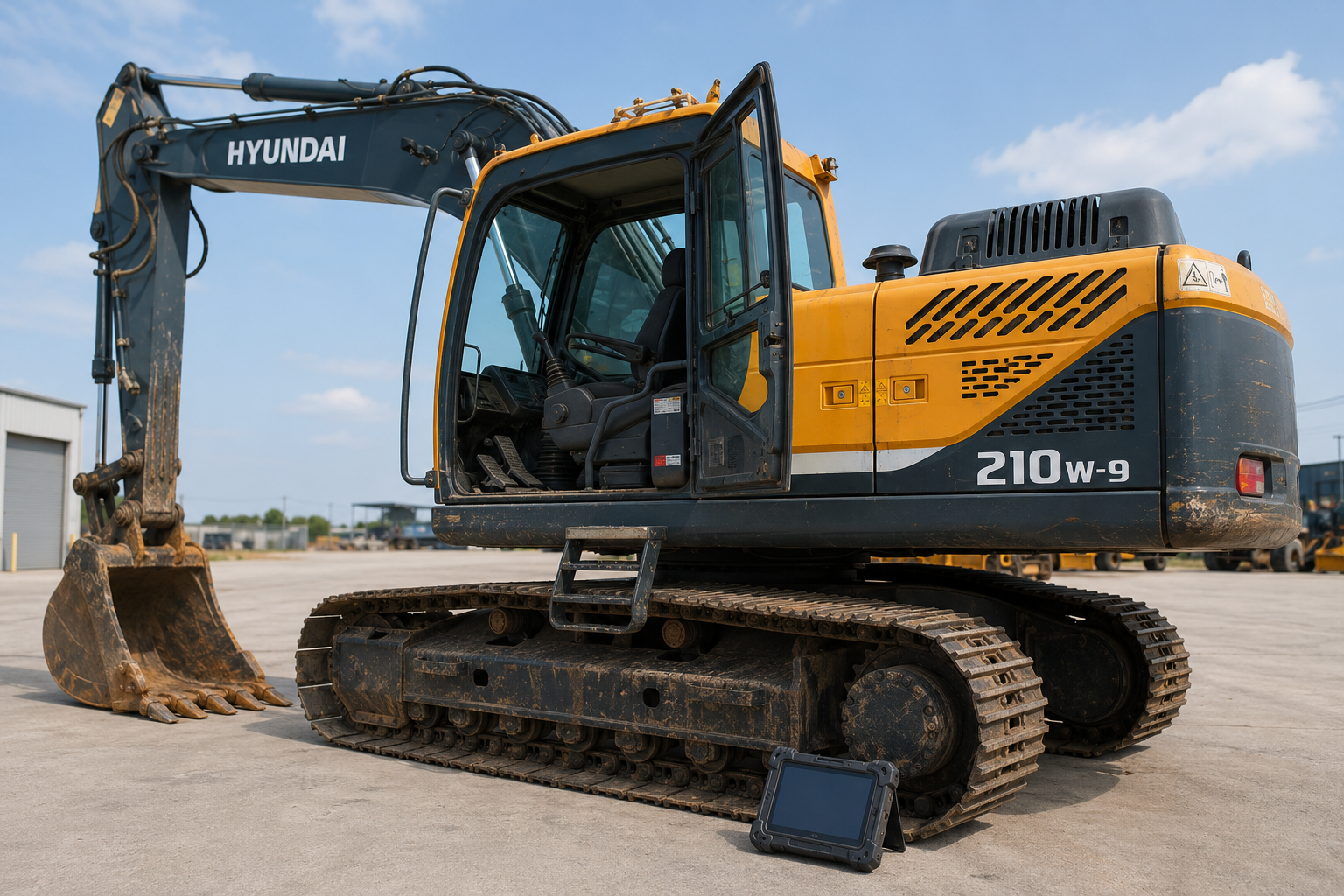
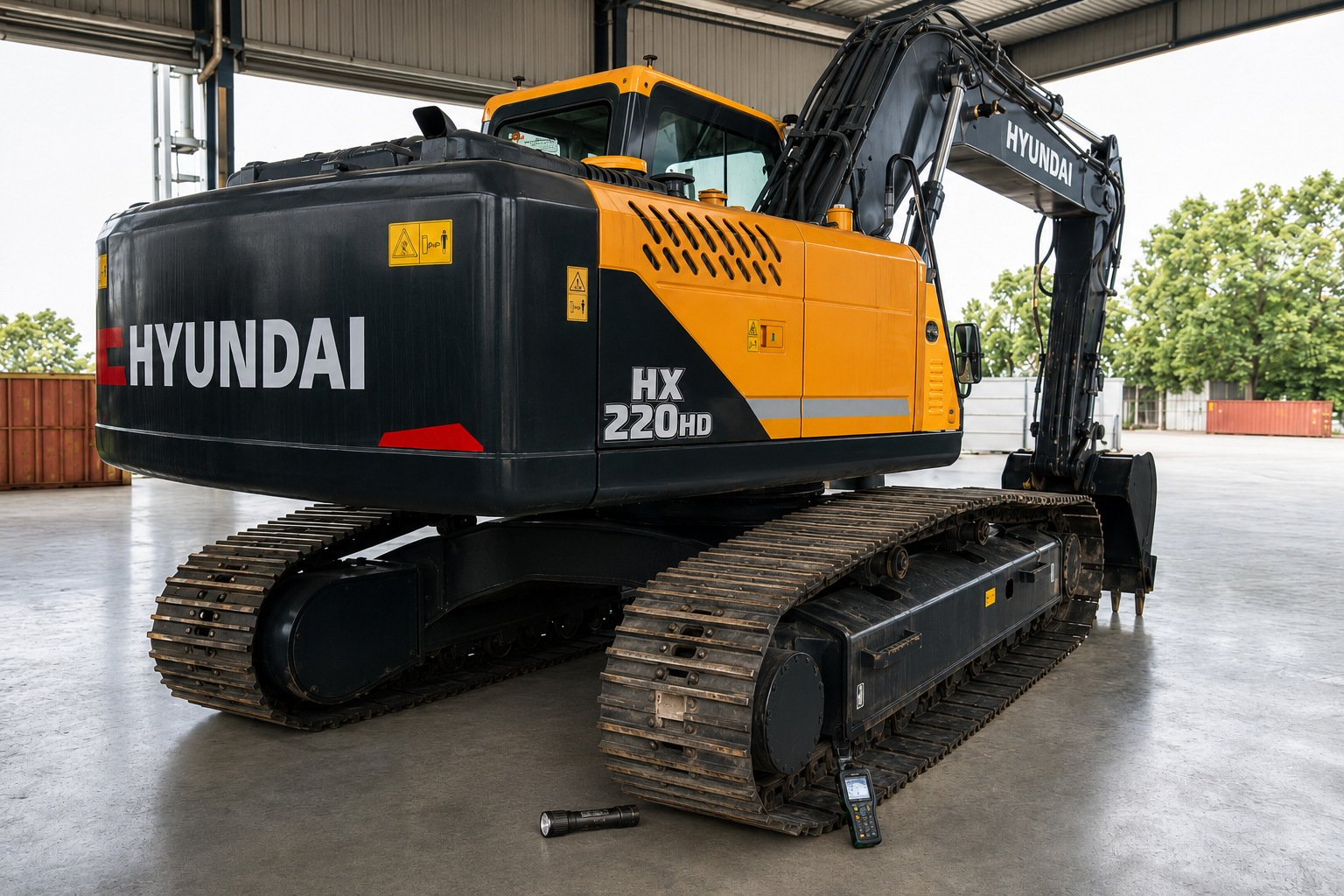
Frequently Asked Questions
Who actually makes Hyundai excavators, and is Hyundai now Develon?
Hyundai excavators are built by HD Hyundai Construction Equipment and still carry the Hyundai badge. Develon is a separate brand: it's the 2023 rename of the former Doosan line, which HD Hyundai acquired in 2021. As of January 2026 both brands sit under one parent, HD Construction Equipment, but they remain distinct, so a used Hyundai R220LC-9 is a genuine Hyundai-lineage machine, not a re-badged Develon. Anyone telling you "Hyundai is just Develon now" is mistaken.
Are used Hyundai excavators reliable and any good?
Operators treat them as a strong value brand: competitive price, good factory warranty, and Cummins engines on the 9-series that are easy to service worldwide. They rank below Caterpillar and Komatsu on resale value and dealer-network depth, which is the honest trade-off, but a well-kept, verified Hyundai is a reliable working machine and usually more capability per dollar than a premium badge or an unproven no-name unit.
What are the most common problems with Hyundai excavators?
On the newer Tier-4 / common-rail machines, DEF and emissions-system faults and the odd electronic gremlin are the most-cited issues, which is part of why many export buyers prefer the pre-emission R-9 Tier-3 machines that have none of that hardware. Across all used excavators, the wear points to check are hydraulic and pilot-control leaks, undercarriage wear, and turbocharger life around 5,000–7,000 hours. Our inspection targets exactly these.
How many tons is a Hyundai R220 (220) excavator, and what engine?
An R220LC-9A has an operating weight of about 22.4 tonnes (49,273 lb) and runs a Cummins QSB6.7 diesel rated 167 hp gross / 157 hp net, with roughly 20 ft of dig depth. The "220" in the model code is the weight class; the same logic gives you ~30 t for an R305 and ~48 t for an R480.
How much does a used Hyundai excavator cost?
A used R220-class (~22 t) Hyundai typically trades in the range of about $15,000–$33,000 depending on year, hours, configuration and condition, with China-export FOB units clustering around $22,000–$28,000. Larger R305 and R480 machines run higher. What matters is the landed cost to your port, which we quote per unit.
What's the difference between Hyundai Robex (R-series) and HX models?
Robex is Hyundai's R-series naming; the R-7/-9/-9A generations are the older, pre-emission machines (Tier 2/Tier 3, no DEF). HX-series machines are the current generation, Tier 4 Final / EU Stage V, with after-treatment that needs ultra-low-sulfur diesel. For most developing-market imports the R-9 Tier-3 machine is the better fit; for regulated EU/US markets you need an HX.
Can I import an older Tier-3 Hyundai into a Stage-V or Tier-4 country?
Generally no, a Tier-3 R-9 machine is built for markets that haven't adopted Tier 4 Final / EU Stage V. That's exactly why we match the generation to your destination: Tier-3 R-series for Africa, much of Asia, the CIS and Latin America, and HX-series where regulated tiers apply. We confirm your destination's emission and fuel rules before the machine ship.
How do I know the hour meter wasn't rolled back?
We cross-check displayed hours against physical wear, pedal and joystick polish, wiring condition, undercarriage wear, and ECM fault history, and supply the meter photo plus the walk-around video. Be skeptical of any seller quoting "under 1,000 hours" without that evidence; on China-export machines a suspiciously low reading is a warning sign, and a verified higher-hour machine is the safer buy.