Get in Touch with Liehuang Company

THUMBS
ISO 9001 Certified
Excavator Thumbs
Excavator Thumbs, Hydraulic & Mechanical Thumb Attachments for Every Excavator
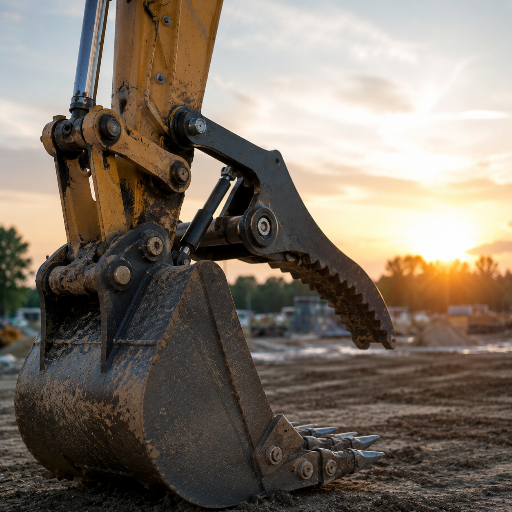
An excavator thumb is a hydraulic or mechanical attachment that works opposite the bucket to clamp logs, rock, stumps, pipe and demolition debris a plain bucket can’t hold, turning a digger into a precise material handler. Liehuang manufactures and provides in AR400 steel Hydraulic, Mechanical and Progressive Link thumbs, fit to all mini, midi and standard excavators from 1 to 50+ tons on Caterpillar, Komatsu, Volvo, Hitachi, Kubota, Hyundai, Doosan, Sany and Kobelco, sold directly to the importers, distributors and contractors around the globe.
Factory-direct: Export pricing & logistics
Request a Factory-Direct Quote
HEAVY DUTY
1–50+ t
Machine weight classes fitted
AR400
Abrasion-resistant tine steel
≤180°
Progressive-link rotation
9 brands
Cat → Kobelco fitment
Why Add a Thumb to Your Excavator
An excavator thumb earns its place because a bare bucket can only scoop, it can’t grip a boulder, a log or a slab of concrete, so those loads roll out or get rigged by hand. A thumb clamps them against the bucket, which turns one machine into a material handler instead of a digger alone.
Operators are blunt about it: “I wouldn’t get an excavator without a hydraulic thumb.”
Because the limiting factor is grip, not the sheer lifting power of the excavator arm or bucket, it’s the opposing thumb that solves the grip-related challenges, not a bigger bucket. As opposed to the minimal contact points a bucket offer to a chunk of pipe, a Liehuang thumb is constructed from hardened AR400 steel at the digging face to withstand the constant abrasion involved.
This guide is for excavator owners weighing whether to add a thumb. It explains what a thumb does and how to buy, specify, fit and maintain one direct from a manufacturer like Liehuang, and how to avoid the usual traps. The most common mistake is buying from an unknown supplier and only then finding out whether the thumb actually fit the machine the seller specified. We cover all of it below.
While a bucket excavates and transports loose material, it doesn’t grip. Uneven objects – a rock or log or pipe section or broken up concrete – will either roll away or require difficult and dangerous manual handling. That gap is filled by an excavator thumb, which turns the excavator’s digging power into powerful gripping force through an opposing thumb-to-finger mechanism. It gives an excavator an equivalent of hands and makes it a versatile material handler without need for an additional attachment or ground staff.
Bucket-to-Material-Handler Capability Map
| Load | Bare bucket | Thumb-equipped | Why it matters |
|---|---|---|---|
| Loose soil & aggregate | Holds | Holds | No change — the bucket already does this |
| Boulders 100–400 lb | Rolls out | Clamps & lifts | Hand-rigging a 300–400 lb rock is slow and a real injury risk |
| Logs, brush, stumps | Slides off | Grips & stacks | One pass instead of a ground crew chasing the load |
| Concrete slab & rebar | Cannot separate | Lifts & sorts | Separates rebar from concrete during demolition |
| Pipe & riprap | No control | Places precisely | Sets pipe in a trench or riprap on a slope — no second machine |
Types of Excavator Thumbs, Hydraulic vs Mechanical, Pin-On vs Weld-On, Progressive Link
One honest caveat from the field: a manual thumb isn’t always the cheap compromise it looks like. “You’ll quickly come to regret a manual thumb” only holds if you switch tasks constantly, unlike a hydraulic, a fixed thumb has nothing to break.
Most ‘wrong thumb’ regret starts here, so it pays to be precise. Thumbs split along two independent axes: how they’re actuated (mechanical vs hydraulic) and how they’re linked (standard vs progressive link), plus how they mount, on the main bucket pin, on the stick, or through a quick coupler; pinned or welded. Get the actuation, linkage or mount wrong and you lose the reach and control that make a thumb worth having.
Read More ▾
Mechanical (manual) thumb
It locks into one of three or four pinned positions, with no hydraulic line and a top rotation around 120 degrees. That makes it the cheapest and the strongest option, with no hoses, fittings or cylinders to fail, which is why many production crews running the same repetitive job still run mechanical thumbs. The trade-off is honest: you must leave the cab to reposition it, and operators who switch tasks constantly come to resent that, because at some point you simply won’t climb down to move it to the right position.
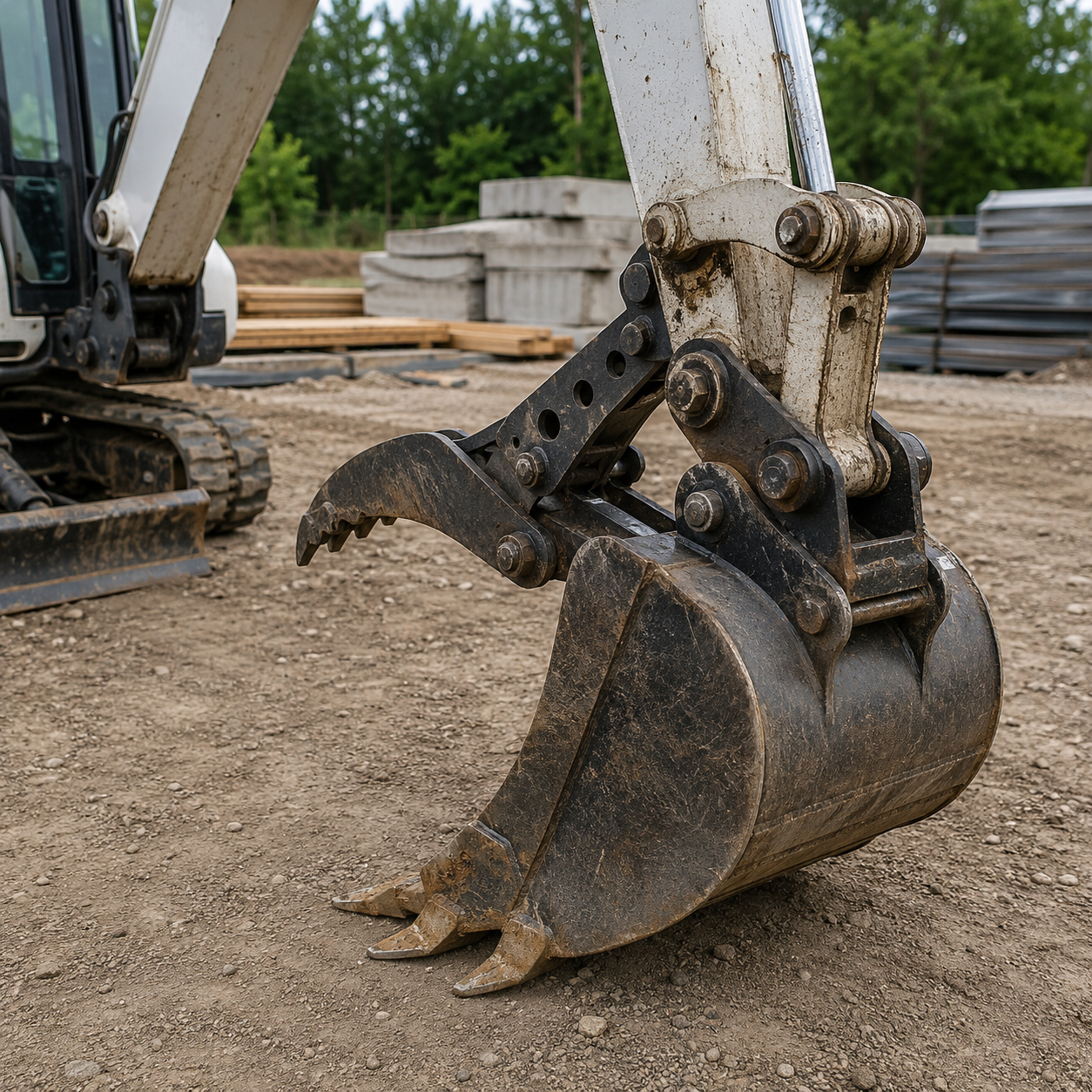
MECHANICAL / MANUAL
Hydraulic thumb
A cab-controlled cylinder opens and closes the thumb on demand, with a typical range of motion around 130 degrees. From the seat the operator gets adjustable clamping force at any opening angle, a secure hold on irregular material that cuts drop risk, and no need to leave the cab. The cost is the cylinder itself plus double-acting auxiliary hydraulic lines, which the machine must already have or have added. For varied work, demolition, land clearing and precise placement, this is the one.
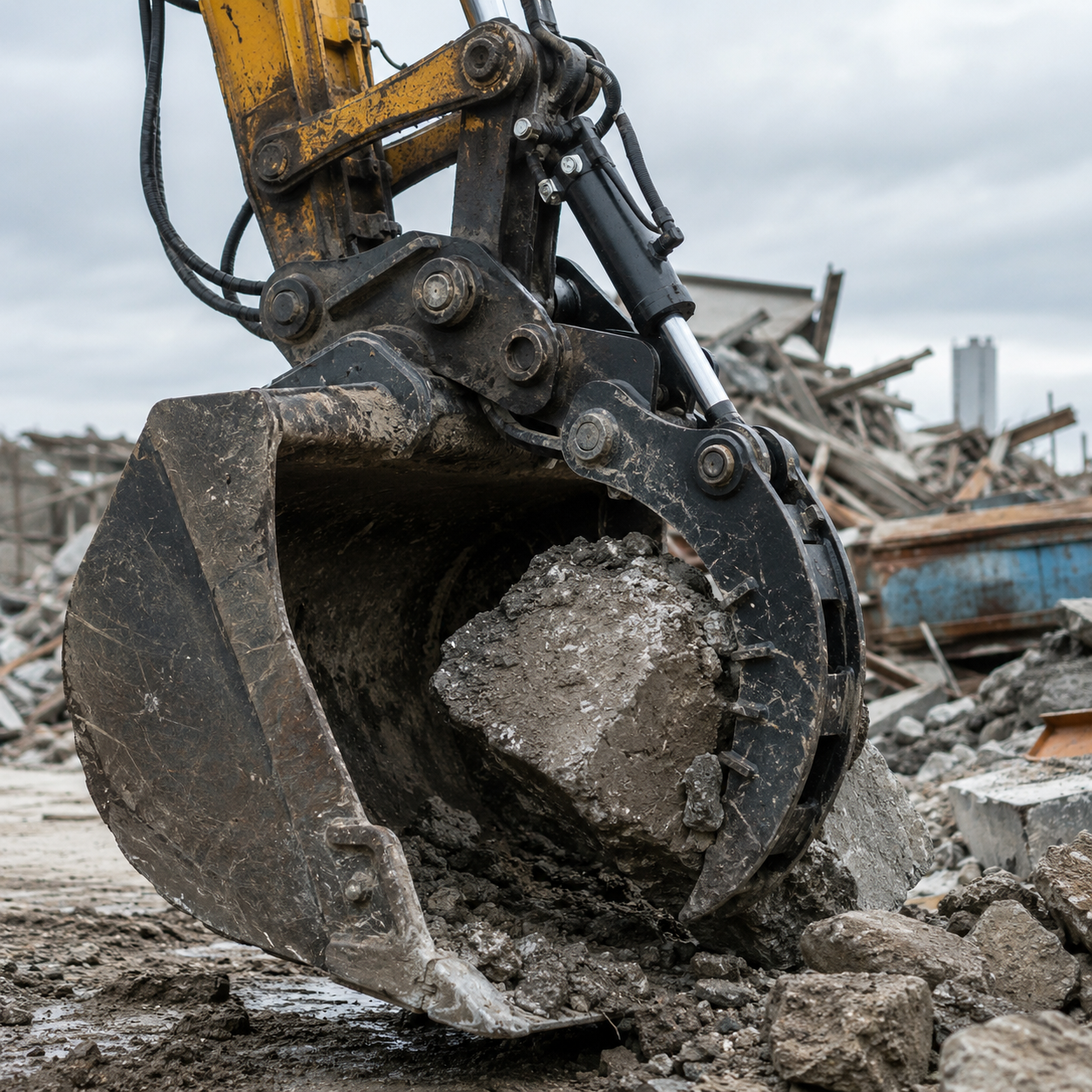
HYDRAULIC MAIN-PIN
Progressive link & rotator
A standard main-pin hydraulic thumb runs out of travel before the bucket is fully curled. A progressive link adds linkage from the cylinder to the thumb so that it follows the bucket through a full 180° arc (about 162° of usable arc with a quick coupler) so you can grab at full reach and work closer to the cab. A rotator design holds that same wide arc with constant clamping force and no exposed cylinder. These are the heaviest and most expensive thumbs, they’re worth it on a full size machine taking everyday material handling jobs.
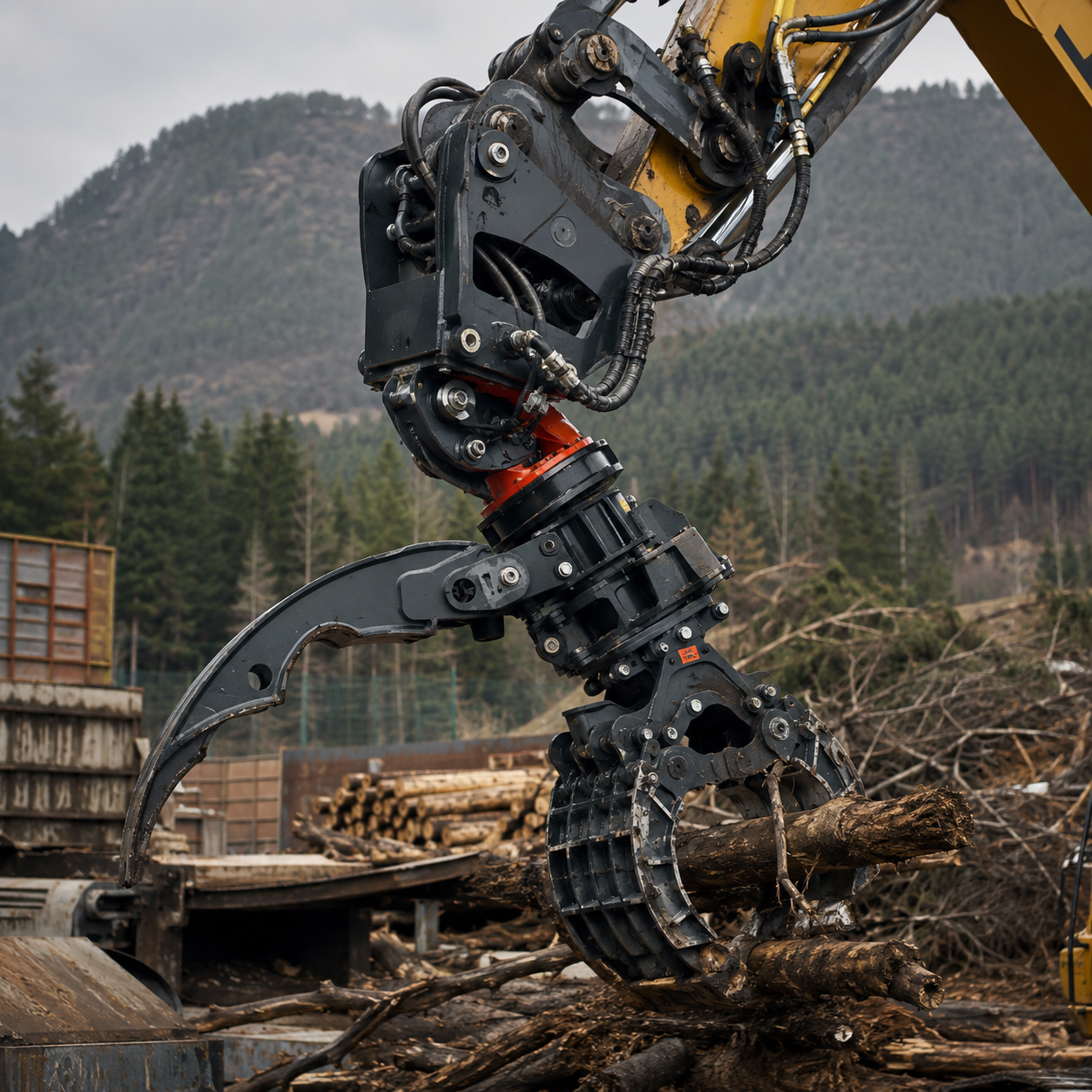
PROGRESSIVE LINK & ROTATOR
Authority Hook A, Liehuang Thumb Type Decision Matrix
| Type | Rotation | Control | Relative cost | Install | Best for |
|---|---|---|---|---|---|
| Mechanical / manual | ≤120°, 3–4 fixed positions | Out-of-cab, pinned | Lowest | Weld-on, hours | Repetitive uniform handling; reliability-critical clearing |
| Hydraulic main-pin | ~130°, continuous | In-cab, variable grip | Mid | Aux lines + mount, ~1 day | General-purpose dig + grab; the all-round pick |
| Progressive link | ≤180° (≈162° w/ coupler) | In-cab, follows bucket | High | Coupler + aux lines | Full-size daily handling; demolition; max reach |
| Rotator | ≤180°, constant force | In-cab, hydraulic lock | Highest | Coupler + aux lines | Heavy sorting where holding force matters most |
Rotation figures are accepted industry standard windows corroborated by all manufacturer engineering guides (see References). One of their few un-stated guide lines: a thumb’s pinch strength is 2-3 times higher close to the stick (curled). It has always been the concept behind progressive-link and rotator finger designs.
Read that last point twice, because it kills a common assumption: more rotation doesn’t mean more grip. Rotation range and clamping force are separate. A 180-degree rotator’s driving force is only on par with a conventional thumb; what it adds is consistent holding force across the whole arc. Choose rotation for reach and reach-down geometry, and choose tine count, thickness and steel for grip strength.
Control-system patent: USPTO US7457698B2 (NPK) covers hydraulic excavator-thumb control.
Liehuang Excavator Thumb Range, Sizing & Fitment by Machine Weight Class
Contrary to the common assumption, a bigger thumb isn’t always better. Unlike a one-size stock unit, the right thumb is matched to the machine’s weight class (1–6 t mini up to a 30-ton standard) and to the bucket, ask us for the best thumb for mini excavator owners in your class.
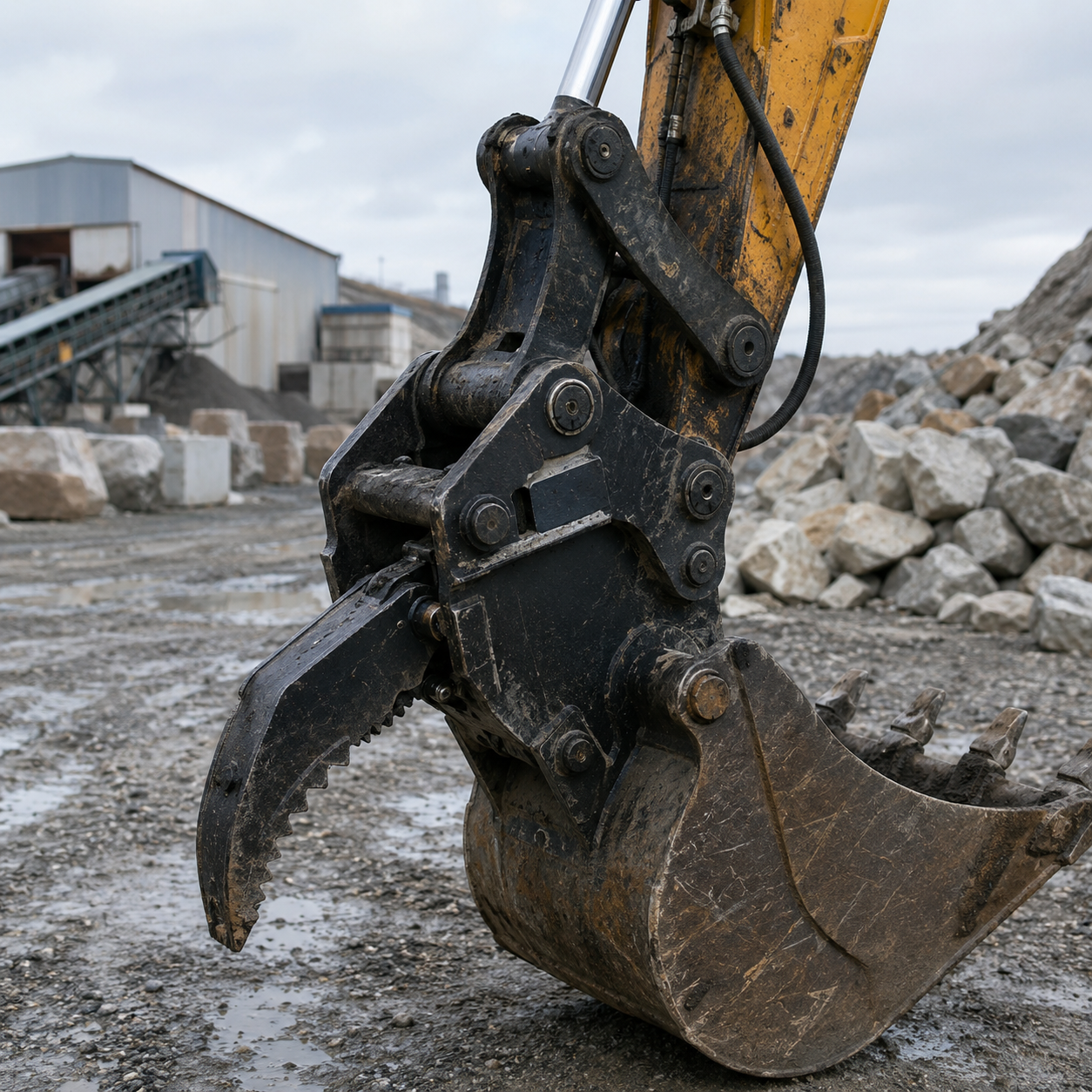
Authority Hook B, Weight-Class-to-Thumb Sizing Chart
| Machine class | Operating weight | Typical thumb width × length | Tine thickness | Tines | Example fitments |
|---|---|---|---|---|---|
| Mini / compact | 2,000–13,000 lb (1–6 t) | 8″×21″ – 11″×30″ | 1/2″ | 2 | Kubota U10–U55, Cat 301.7–305, Bobcat E20–E35, JD 35G |
| Midi | 13,000–22,000 lb (6–10 t) | 10″×35″ – 12″×40″ | 5/8″ | 2 | Cat 308, Takeuchi TB290, Komatsu PC78 |
| Standard | 22,000–40,000 lb (10–18 t) | 14″×40″ – 18″×50″ | 3/4″–1″ | 2–3 | Cat 320/323, Komatsu PC200, Hitachi ZX210, Volvo EC220 |
| Large | 40,000–100,000 lb (18–45 t) | 24″×58″ – 30″×62″ | 1″–2″ | 3–4 | Cat 330/349, Komatsu PC360, Sany SY500 |
Widths, tine thickness and pin diameters follow standard industry scaling: about 1/2in tines on mini excavators up to ~2in on the heaviest carriers, with ~2-3in pins on the largest machines. Individual dimensions are built to your machine, ask for the spec sheet for your exact model.
Weight class is also a moving target that catches many buyers, and not just those looking at the price tags of excavators. While there are broad categories established by the Association of Equipment Manufacturers, none are firm. Dealers will call anything under seven tons is “mini”, then begin the “standard” category at seven tons without a mid-range group. So the same machine may be labeled “mini” by one seller, and “standard” by another. That’s why we match your thumb to the operating weight and bucket configuration of your specific excavator. Just give us the specs of a mini excavator, a heavy excavator or any machine in between, and we’ll spec a thumb based on its real-world operating weight.
FITMENT_
Fitment for Every Major Brand, Cat, Komatsu, Volvo, Hitachi, Kubota, Bobcat & More
Buyers tell us the same thing: “If the seller can only say ‘fits your excavator’ but can’t give dimensions or photos, I would pass.” The mistake is shopping by brand, not geometry, unlike one-size sellers, we build to your bucket.
There’s almost certainly one question that every buyer brings into this process, from every make of excavator: “I need a thumb for a Cat 320.” Or a Kubota U10-5, a Takeuchi TB250, a John Deere 35G. Fit is the question. After getting the right size, the thumb itself must interface properly with your bucket – the curvature, tooth count and spacing – as well as mount properly to the geometry of the excavator stick. Anything less means missed material and unbalanced wear.
We engineer to the machine and the bucket-because fit is geometry, not brand-so we fabricate each of our thumbs in-house for your bucket’s tip radius and tolerance and mate with all nine major makes: Caterpillar, Komatsu, Sany, Volvo, Hyundai, Doosan, Kubota, Hitachi and Kobelco. And where those domestic suppliers will quietly stop producing older and regional models and make it hard for you to find thumbs, we keep thumbs for all of them, plus the backhoe loaders, whose double, opposing thumbs follow the same geometric principle. So many buyers err by choosing thumbs based on the machine maker rather than on geometry alone.
You don’t have to buy the bucket and thumb together and from the same company; an OEM bucket coupled with a properly measured, non-OEM Liehuang thumb can give you a precise fit. We follow a simple rule that seasoned operators use for toothed buckets: use an odd-toothed bucket with an even-toothed thumb so the tines can nestle between the teeth. A five-tooth bucket need a four-tine thumb.
How we confirm fitment before you order
Give us the make, model and serial range of your machine, as well as your bucket pin diameter, ear width, pin-centre distance, bushing size and brand of coupler, if any. We’ll get back to you with a fitment confirmation outlining the precise thumb dimensions-width, length, tine count and mount style-ensuring that what arrives is what works. It’s the only specification that distinguishes a productive thumb from one that keep you waiting around all day Saturday with a drill and welding rig.
Hydraulic vs Manual Thumb, and Thumb vs Grapple vs Claw
The manual vs hydraulic thumb call is honest, not one-sided: “Definitely get the thumb. It’s cheaper, allows more clearance while open, works with different buckets,” buyers say of the thumb over a grab, yet a fixed thumb isn’t always the wrong answer for repetitive work.
Generally, we help you resolve two purchases. First, we’ll explain the mechanics-manual versus hydraulics-and second, whether it even makes sense to look for a thumb rather than opting for a grapple or a “claw.” Instead of advocating the higher price tag we’ll supply all information and explain the give and take.
| Attribute | Mechanical / manual thumb | Hydraulic thumb |
|---|---|---|
| Positions | 3–4 fixed (pin) | Continuous, in-cab |
| Rotation | ≤120° | ~130° (≤180° progressive) |
| Reposition | Operator leaves cab (~2–5 min) | Instant, from the seat |
| Hydraulics | None required | Double-acting aux lines |
| Fail points | None (no hoses/cylinder) | Hoses, fittings, cylinder, seals |
| Best fit | Repetitive uniform loads; reliability-first clearing | Varied / demolition / precise placement |
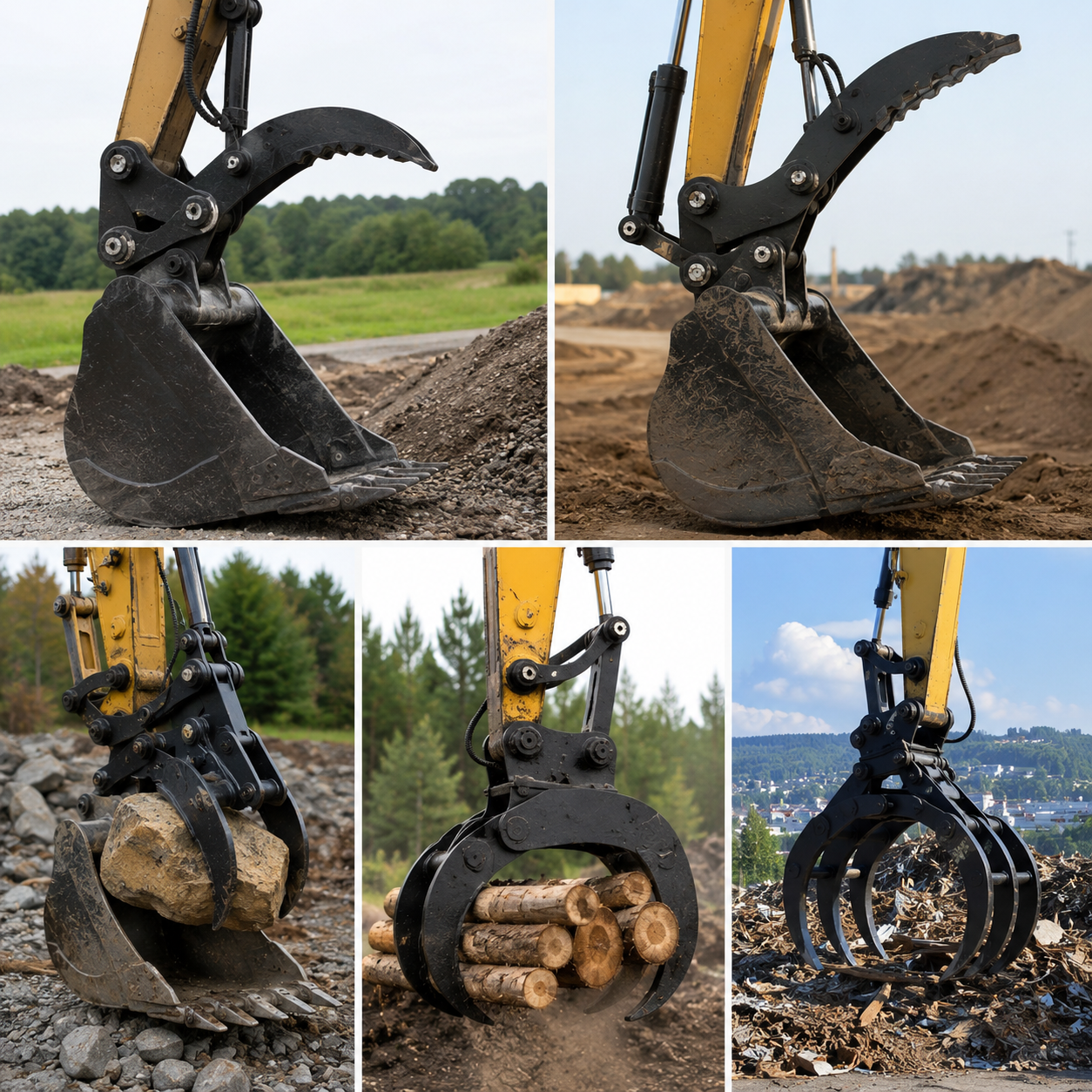
When trying to decide between a mechanical or hydraulic thumb there’s no right or wrong, it all depends on how often you intend to switch from excavating to picking. If you’ll be performing both operations on very few occasions then the less expensive and more rugged mechanical choice can still make the difference in both value and longevity-although we acknowledge that cab control for frequent toggles is quickly worth every cent.
Thumb versus grapple versus claw.
For large-scale debris removal and material loading operations, a grapple-sometimes referred to as a “claw”-is ideal; it attaches in lieu of a bucket and perform such tasks at an exceptionally efficient pace. However, a thumb’s advantages-its relatively low cost, superior ground clearance while opened, highly precise grab strength, and ability to work across different buckets-and retention of the existing bucket all make it the preferred choice for tasks requiring delicate precision and multi-bucket use. Experienced operators accurately put it this way: the thumb win on precise digging and grabbing specific objects, but the grapple dominates the competition where massive cleanup is involved. For a contractor that still excavates, a thumb represents a sounder, more versatile investment, and indeed, the positive opinions given by those that bought this thumb over a claw or a grab bucket generally sum up as: “You can’t go wrong buying the thumb; it’s affordable, opens very wide, and can work on other buckets.”
Grapple geometry: USPTO JPH05248160A (Caterpillar) shows why a grapple differ from a thumb.Buying Excavator Thumbs from China, Factory-Direct Pricing, Export & Used-Excavator Bundles
The trade itself says it plainly: “the Chinese have come a long way… many are now putting out quality attachments,” and “China can make super high quality stuff, the cheap stuff is because the buyers don’t pay for QC.” Unlike a no-name lowest bid, that’s exactly what we document.
Addressing the “Soft Steel” Objection
Let’s deal with the objection directly as every shrewd buyer is thinking of it – isn’t a thumb from China soft bendy steel? Yes, if you source off the bottom bid from some obscure factory where the QC has packed up and gone home. That’s a supplier problem though, not a country problem, and people who rebuild and fix attachments as a trade are saying so now.
Here’s a Canadian fabricator, “Chinese have come a long way… many are now putting out quality attachments… life-cycle cost is usually better than the North American.” And he has the same thing to say about the cheapest versions, “They can produce high quality things in China, but a lot of the cheapest stuff available out there’s because the purchasers don’t want to spend money for QC and good material.”
The “Right” Way to Evaluate
So the “right” way to evaluate a thumb is by evidence – not birthplace – steel and plate thicknesses where it really counts, (where the ears and tines are and at the cylinder mount points) quality of welds at points of stress,pin geometry,and what to do about it later (replacement parts available?)
The most likely places for failure (bad pin geometry, thin material around the mounting ears, no spare-part “stream”) outweigh any notion of “soft” steel – far more. When you order a thumb from us we include the evidence (AR400 tines and main body structure), (the actual as painted “before & after” paint photos of the completed thumb for your review before it ship, photos of welds, & if you want an actual material certs & all the info on spare pins and seals).
How to Add a Thumb to Your Excavator, Measuring, Mounting & Installation
Adding a thumb means matching the mount to your machine: a main-pin thumb pivots on the existing bucket pin, a quick-coupler thumb mounts through the coupler, and a stick-mounted thumb welds to the arm. Confirm the mount style, the auxiliary hydraulics and the metric line fittings before you order, that’s how to install excavator thumb kits without losing a weekend to mismatched parts.
Almost all excavators can have a thumb attached to them. The challenge is figuring out the mounting method, and if your machine has the hydraulic capabilities. The three mounting methods are as follows: Main-Pin (mounted using the existing bucket pin; the easiest way to add a thumb), Quick Coupler-mounted (which will mesh above the bucket when attached, therefore requiring a longer thumb than main-pin mount, however allow for the easy changing of a bucket without having to move the thumb), and Stick-mounted (mounted directly to the stick; the most work as two weld-on joints have to be fabricated for the thumb and bucket.
Engineering note, the fitment traps that cause re-orders
All of our mini excavator thumb cylinders come in either a 3-hole L-bracket mount that will weld on, or a 2-hole Pin On mount; choose the wrong one, and your thumb won’t physically fit between your mounting pads. Most foreign hydraulic thumb cylinders also use metric M14 connections at the thumb and M16 at the machine on DIN 2353 L-series threads that the local hydraulics shop isn’t going to stock, and very low-budget kits don’t always arrive with the right fittings to adapt your hose to the thumb. We confirm your machine mount size and send the proper adapter fittings with every kit.
Steel Grade, Quality Assurance & Warranty
Here’s the honest version: a higher Brinell number isn’t always better. Unlike sellers who chase the hardest steel, we spec AR400 (360–440 BHN) because AR500 and AR600 crack under impact, that’s how to choose steel for a thumb.
Tines and the high-wear structure are AR400 abrasion resistant steel – a quenched and tempered, through hardened alloy with 360-440 Brinell hardness (400 targeted), the steel grade the industry has settled on for wear-and-impact service.
It’s not the hardest steel on the market, as is intentional: Ar400 is tougher, hence more resistant to fracture, than higher hardnesses of abrasion resistant steels (ar500, ar600); they’re very hard and will chip or crack on impact such as field welding a thumb to rock or rebar and subject to damage from excessive abuse of the arm and bucket.
At the same time, AR400 is significantly tougher and much more weldable in the field with standard low hydrogen electrodes.
Instead of sellers chasing a high Brinell rating, AR400 is the correct call for your thumb on your machine, whether it’s for occasional rock or constant demolition work.
Since “AR400” specifies a hardness range rather than an exact chemistry, two suppliers’ AR400 are not necessarily identical — that’s why we back ours up with a material cert and weld documentation instead of just saying they are.
Brinell hardness is measured to ASTM E10 method. Hardened alloy steel machine pins and a high-wear version are constructed ofbox section steel.
AR400
360–440 BHN tines & structure
ASTM E10
Brinell hardness verified
Material Cert
MTR + weld photos on request
CE / ISO 9001
Export-grade documentation
1-Year Warranty
+ stocked spare pins & seals
Excavator Thumb Fitment & Selection Tools
Excavator Thumb Fitment Selector
Match a Liehuang thumb to your machine in two steps
Hydraulic vs Mechanical Thumb Chooser
Answer four questions — get the honest recommendation, not the priciest one
Tine-to-Tooth Mesh Checker
The #1 fitment failure is a thumb that won’t mesh with your bucket. Check it first.
Excavator Thumb FAQ
The accessory that work like a thumb against your bucket’s fingers, clamping and holding objects that can’t be properly gripped by the bucket alone such as rocks, logs, stumps, debris from demolitions, effectively turning a digger into a material handler.
Manual (or mechanical)thumbs pin in a handful of positions and you must leave the cab to change position; they’re more affordable with less to go wrong. Hydraulic thumbs can be continuously adjusted and opened and closed from the cab to grab on command. Manual thumbs suit jobs with a repetitive object shape; hydraulic fit cases where the work involve a lot of varied pieces to pick up and reposition accurately.
While both are called“claws,” a thumb pairs with your excavator’s bucket to pick and place whereas a grapple is a two-jawattachment that can operate independently of the bucket and work much more effectively in high volumes; when it’s necessary to also dig, choose a thumb.
Virtually all of them, yes – across all major excavator manufacturers and their older models, as well as backhoe loaders. However, the fit is determined by main pin, coupler orstick attachment and it needs sufficient double-acting auxiliary hydraulics for remote operation.Send us you model for confirmation.
You’ll gain nearly 180 degrees of range over standard thumbs, because this model provide a connecting linkage so it travels in concert with the bucket through its arc and isn’t limited by the cylinders maximum extension. It’s worth while for excavators full-size and over to have at daily capacity and demolitions, as on full size excavation, full use of the arm and therefore travel of the bucket come in to play more than on smaller machines when simple excavation is done.
That’s totally factory and spec-not country-dependent. A failed thumb is the result of incorrect pin geometry, weak ears, thin plate, or a lack of spare parts, not “Chinese steel.” Proof: Request the grade of steel, plate thickness, welding details, and material certification for your exact machine unit, a standard on all units we ship.
Yes-we’re factory direct and serve international importers, distributors and contractors worldwide, providing consolidated sea-freight service and full export paperwork. For larger, full-container orders we’ll install your custom thumb onto your machine(s) at the factory prior to loading, so it ships for free.
Size for the machine operating weight class first, then to the specific bucket you use with it. The tines must be designed to mesh well with the bucket teeth: compare the radius of your bucket, the number of teeth and spacing. Based on your measurements we can specify a thumb that will mesh effectively with just the one or two buckets you use most.
Patent reference: USPTO US7457698B2excavator-thumb control prior art.
Payment protected by staged delivery proof
Pay the balance after machine proof, not on blind trust.
Used excavator buyers need more than a product photo. Liehuang uses a staged payment workflow: deposit to reserve the machine, inspection evidence before balance, and export documents plus shipment tracking before release.
Verified machine videoLoading and customs filesBalance paid after confirmation
Quote & machine selectionChoose the model, hours, attachments and export destination before we reserve stock.
Deposit to lock stockA deposit holds the exact machine while inspection media and documents are prepared.
Inspection proof sentReceive walkaround video, hour-meter photos, serial details and loading plan.
Balance after confirmationPay the remaining balance only after you confirm the machine condition and export evidence.
Shipment & customs trackingWe share loading photos, bill of lading progress and customs support until release.
For high-value used equipment, trust is built by evidence. Ask for the current stock list, payment schedule and export document sample before you decide.Request stock proof