Get in Touch with Liehuang Company

Medium Excavators for Sale (10-30 Ton) — Used, Inspected & Export-Ready
Liehuang supplies multi-brand used crawler excavators in the 10-30 ton mid-size class – Caterpillar, Komatsu, Hitachi, Volvo, Doosan and more – each one inspected, hour-verified, and prepared for ocean export to importers and dealers worldwide.
Request an Export Quote
10-30 t
Mid-size class range
9 brands
Cat · Komatsu · Hitachi · Volvo · Doosan · Hyundai · Kobelco · Kubota · Sany
12-point
In-house inspection & grading per unit
CIF / FOB
Export terms + full document set
~6 m
Typical max dig depth, 20-t class
Worldwide
RoRo & container shipping from China
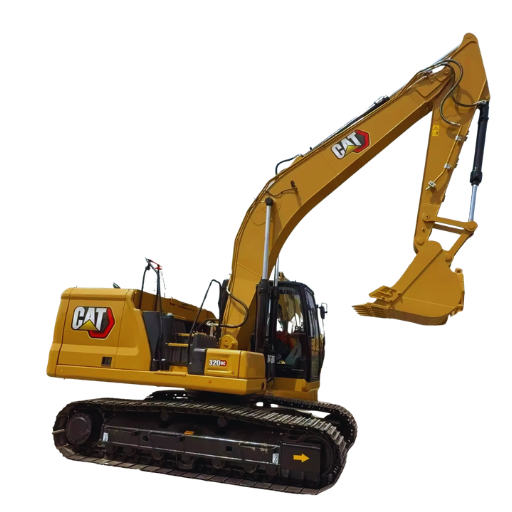
Why Importers Buy Used Medium Excavators (10-30 Ton)
Market Value
Sourcing medium excavators for sale in the 10-30 ton class is where most contractors and dealers spend their money – and where the most money gets lost on the wrong machine. A mid-size crawler excavator is the general-purpose workhorse: heavy enough for foundation digging, utility trenching, pipeline work, road building, demolition and bulk grading, yet light enough to move on a standard lowboy trailer. Buying used rather than new is the default because the depreciation math is decisive – a well-kept machine does the same work for roughly 40-50% less capital. That versatility – one machine handling trenching, grading and demolition – keeps crew productivity high across a mixed jobsite, which is why mid-size units hold the strongest resale among used construction equipment and heavy equipment.
Risk Mitigation
The problem isn’t finding a listing; it’s verifying a machine you can’t stand next to. The reason that risk matters so much for an importer is structural: an undocumented unit with a freshly-painted boom can hide a worn undercarriage, an engine near rebuild, or an hour meter that doesn’t match its life – and you only discover it after it lands. Unlike a marketplace listing that ends at “for sale,” Liehuang grades, documents and exports each unit so you buy on evidence, not on a photo. Every claim on this page is something you can ask Liehuang to prove with a per-unit inspection report.
Equipment Range
If you need something smaller for landscaping or tight urban work, see our mini excavators and compact units (0-10 ton); for mining and mass earthmoving, see heavy excavators (30 ton and up), or browse the full range of used excavators for sale. Liehuang’s used medium excavators for sale sit in the middle – the size class that fits the widest range of jobs.
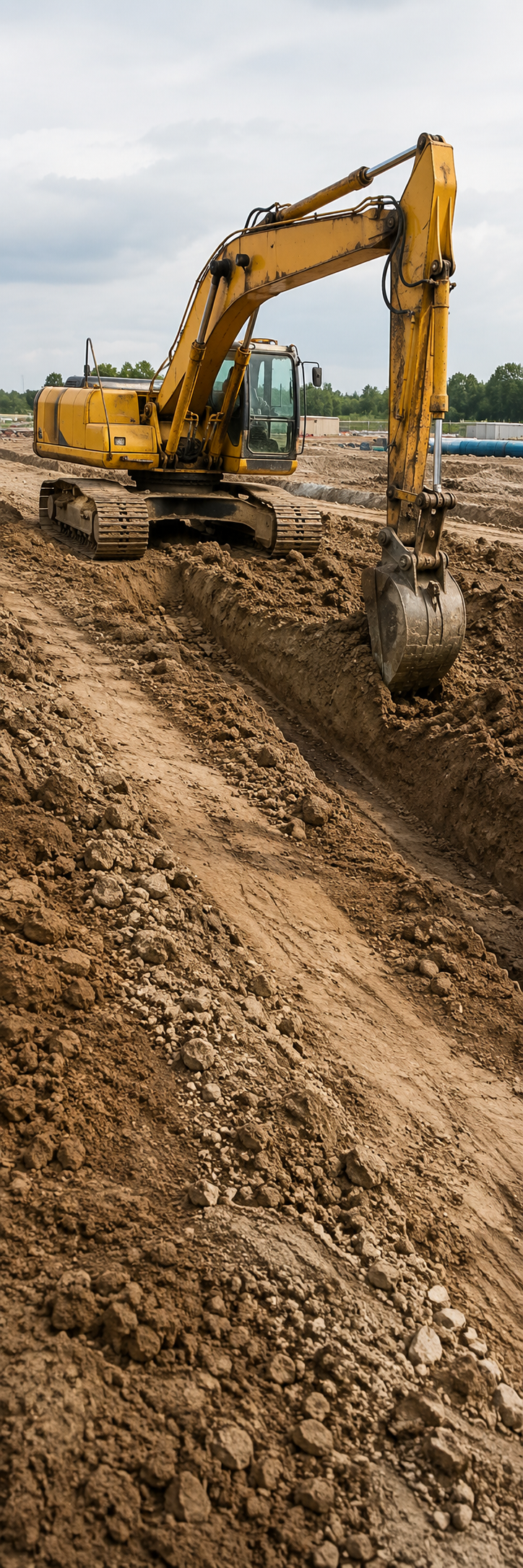
40-50%
Less Capital
“…buy on evidence, not on a photo.”
Per-unit inspection reportMedium Excavator Size & Tonnage Guide (10-30 Ton)
[DOC.REF-01] TONNAGE AMBIGUITY
“Medium” isn’t a precise number, and that ambiguity is a real procurement trap – a quote can arrive a full size class off-spec. The industry runs two overlapping schemes: Caterpillar and most dealers treat mini as under ~7-10 t and large as over 45 t, whereas John Deere defines its mid-size crawler line as 16,500-90,000 lb (7.5-40.0 t); the underlying machine-type classification is set by the ISO 6165 earth-moving machinery standard. More useful than a generic excavator size chart is matching tonnage tier to job. The reason is simple physics: over-sizing burns fuel and trailer permits, while under-sizing slows cycle times on every pass. Picking the right excavator starts with size category, not brand: this medium size range spans a wide weight range and a real spread in horsepower, dig depth and reach, so the type of excavator that suits utility work on tight construction sites is not the one built for mass excavation. Use Liehuang’s 10-30 Ton Class-to-Job Matrix below to match class to work before you match brand to budget.
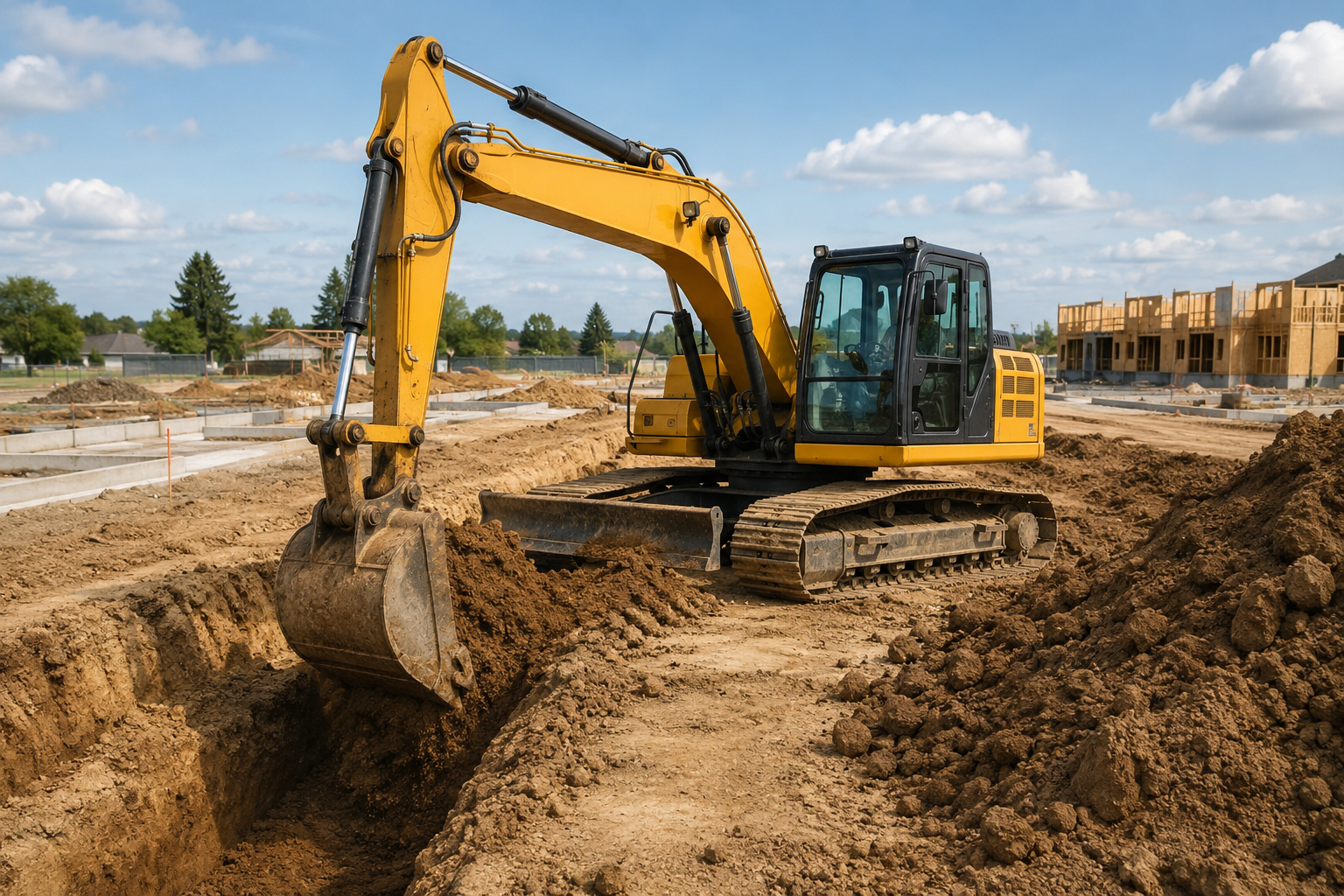
10-30 Ton Class-to-Job Matrix
[SPEC-MATRIX]| Tonnage tier | Operating weight | Typical max dig depth | Best-fit work | Transport |
|---|---|---|---|---|
| 10-14 t (compact-medium) | ~22,000-31,000 lb | ~5.0-5.5 m | Urban utility, residential foundations, tight-access trenching | Standard trailer |
| 15-22 t (core mid-size) | ~33,000-48,000 lb | ~5.8-6.5 m | General construction, pipeline, road work, the broadest job range | Lowboy |
| 23-30 t (heavy-medium) | ~50,000-66,000 lb | ~6.7-7.3 m | Mass excavation, demolition, deep foundations, quarry support | Lowboy + permit |
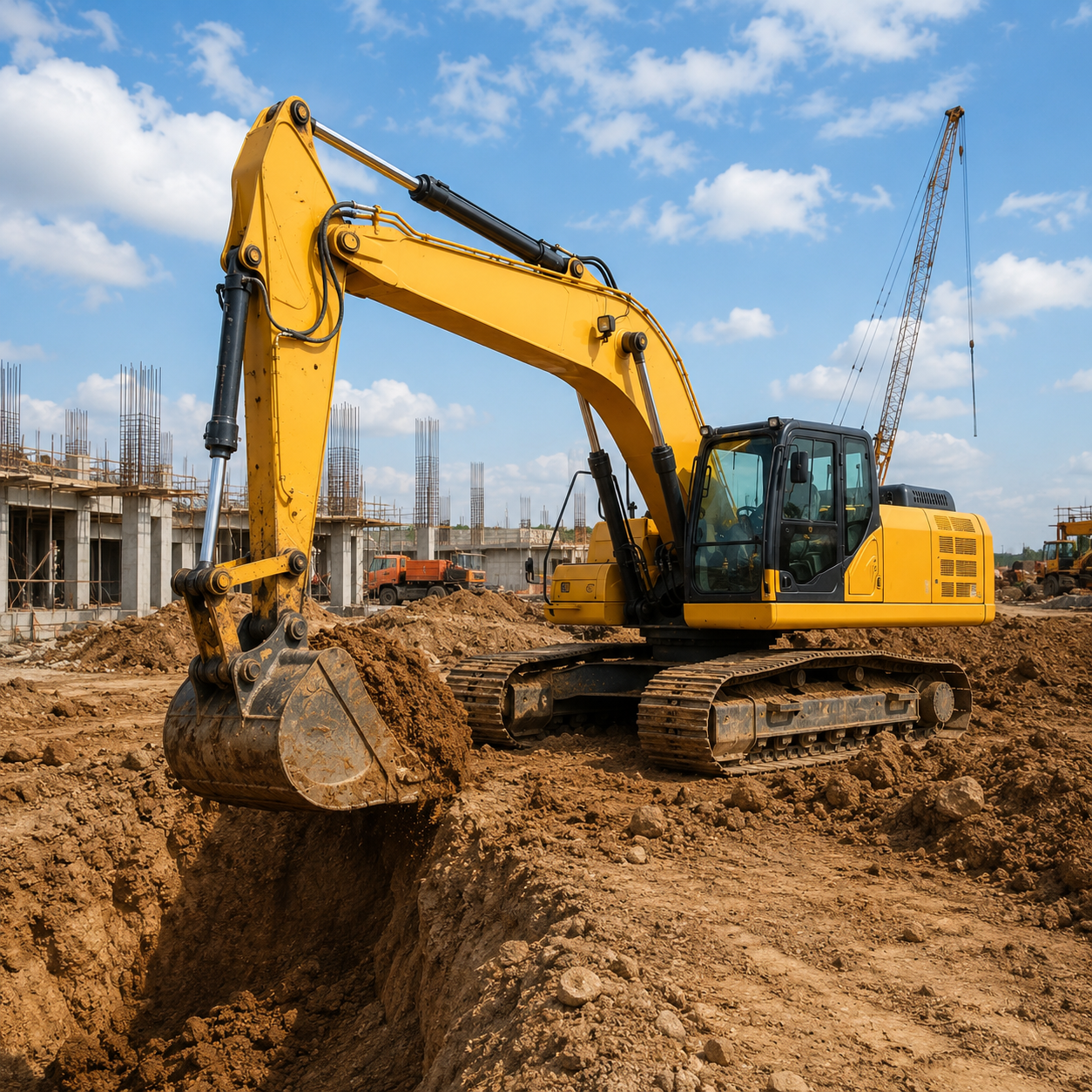
The 15-22 ton core mid-size tier is where most buyers should start, because it carries the widest range of applications without the permit and transport overhead of the heavy-medium tier. A representative 20-ton machine — a Komatsu PC200-class — runs about 44,000 lb operating weight, roughly 6 m (20 ft) of max dig depth, and a 1.1-1.4 yd³ bucket in real field use. Beyond weight and dig depth, the specs that decide real productivity are digging force, tail-swing radius, torque, fuel efficiency, and whether a unit runs a quick coupler for fast attachment swaps — every Liehuang spec sheet lists them per machine, in both ton and tonne, with the hydraulic-system condition graded on inspection. A 20 ton excavator for sale in this tier is the safest default spec for a mixed fleet. Send Liehuang your job profile and we confirm the tier against the work, not the other way around.
Not sure which tonnage fits? Send your job spec and Liehuang will recommend a class & sample specs
Get RecommendationsBrands We Stock, Cat, Komatsu, Hitachi, Volvo & More
In the 10-30 ton class, brand choice is less about raw capability — for comparable machines, digging force and cycle times between the major brands are closely matched — and more about parts availability and resale strength in your region. The reason experienced buyers weigh brand so heavily is not whether Brand A digs better than Brand B; it is whether Brand A has an undercarriage roller or a hydraulic seal on the shelf three years from now. Liehuang carries the brands with the deepest global parts networks, because a machine bought in one market has to stay serviceable in another. Read like-for-like with the Cross-Brand Medium Excavator Spec Comparison before you commit.
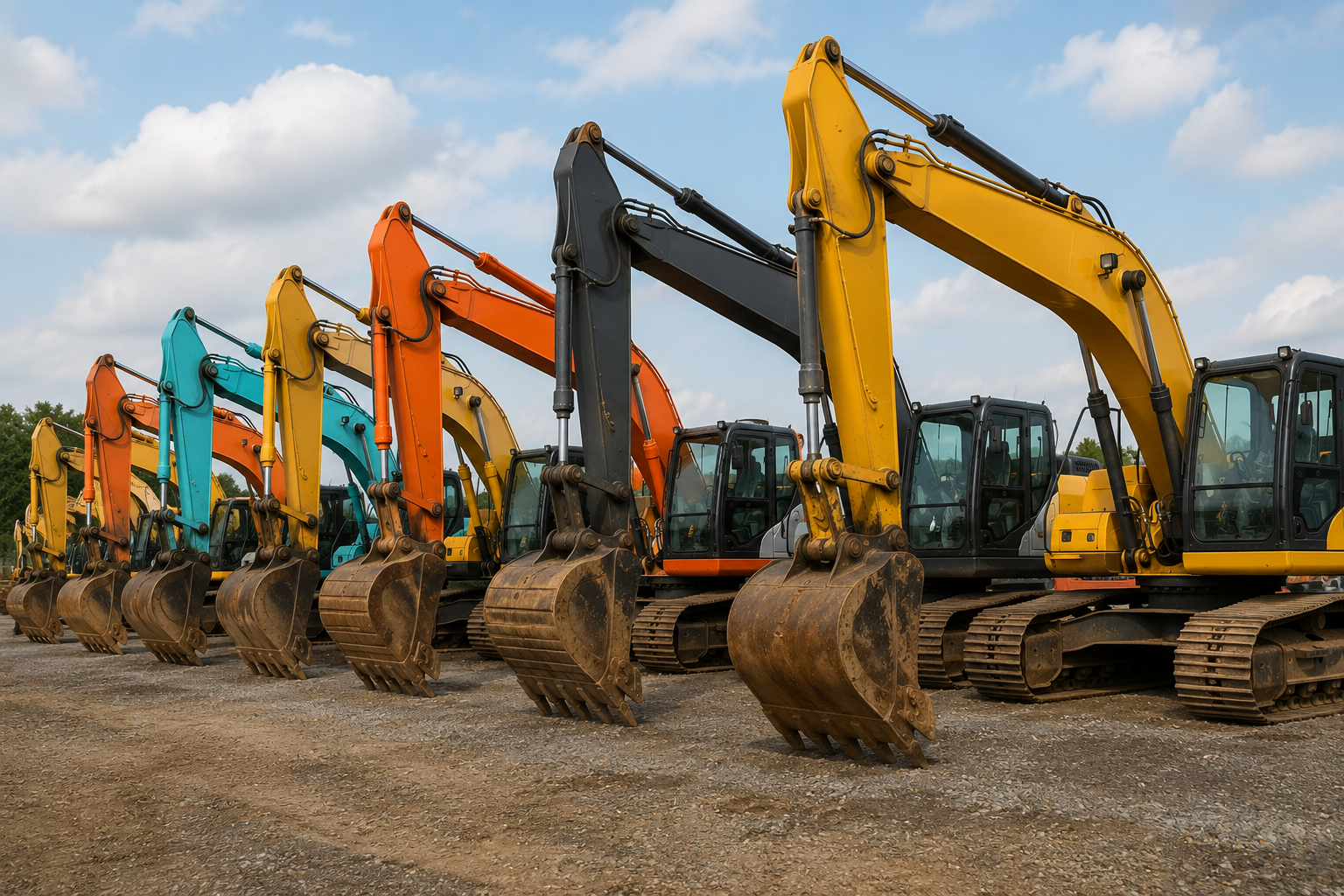
CROSS-BRAND SPEC COMPARISON [20-T CLASS]
STATUS: ONLINE // ISO 7451
| Model (20-t class) | Operating weight | Max dig depth | Reference bucket | Net power |
|---|---|---|---|---|
| Komatsu PC200-8 | ~44,100 lb (20.0 t) | 6.1 m (20 ft) | 1.4 yd³ | 148 hp |
| Hitachi ZX200-class | ~43,900 lb (19.9 t) | ~6.1 m | 1.1 yd³ | 147 hp |
| Caterpillar 320 | ~22.2 t | ~6.7 m | ~1.2 yd³ | ~158 hp |
| Volvo EC210 | ~21 t | ~6.0 m | 0.92 m³ | ~157 hp |
| Doosan DX225 | ~22 t | ~6.7 m | ~1.2 yd³ | ~148 hp |
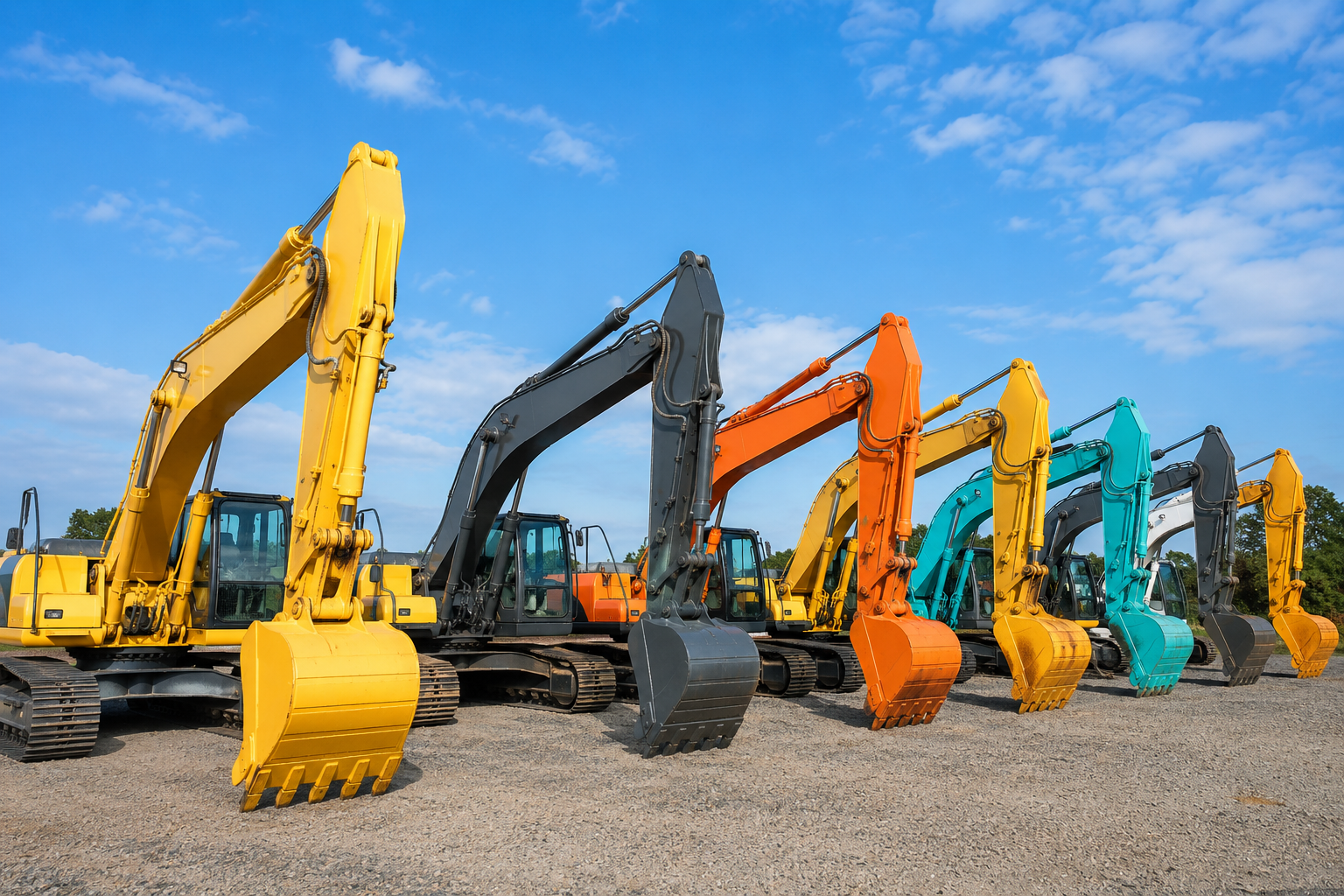
These are class-representative figures for comparison; exact numbers vary by production year and configuration, which is the trade-off of buying a machine type rather than a single unit — so every machine Liehuang quotes carries its own verified spec sheet, with bucket capacities rated to ISO 7451. Beyond Cat, Komatsu and Hitachi, Liehuang regularly stocks Volvo, Hyundai, Doosan, Kobelco, Kubota and Sany in this class. Across this range of models, maneuverability and job site productivity are closely matched between makers — the real separation is parts support and resale. Reputation around any single origin is genuinely mixed in the trade; the mistake buyers make is judging on the badge instead of the documentation behind the individual unit, which the next section covers.
Want current stock with photos and verified specs?
Download Liehuang’s medium-excavator stock list & spec sheetTCO ANALYSIS
Used vs New, Total Cost of a 10-30 Ton Machine
The case for used in this class rests on the depreciation curve, not on a slogan. A new excavator loses roughly 20-25% of its value in the first year and 5-10% per year after, so a well-maintained machine still retains about 50-60% of value at the five-year mark. That curve is the buyer’s opening: buy a five-year-old, properly serviced mid-size excavator, let the first owner absorb the steepest depreciation, and take a machine with most of its economic life ahead of it. The trade-off is that the savings are conditional on condition — which is exactly where Liehuang’s grading earns its keep. Emissions tier moves value too: pre-Tier 4 machines often sell cheaper but can face import limits under EPA Tier 4 Final rules in regulated markets.
The reason Liehuang grades total cost of ownership rather than sticker price is that a machine at 4,000-6,000 verified hours with clean service history typically has thousands of productive hours left at a price well below new — but only if the undercarriage and powertrain are sound. Compare the dimensions that actually move five-year cost on a 20-ton unit:
| Cost dimension | New mid-size excavator | Inspected used (5-yr, ~5,000 h) |
|---|---|---|
| Capital outlay | Full list price | ~40-50% lower (depreciation curve) |
| First-year value loss | 20-25% | Already absorbed by first owner |
| Remaining economic life | Full | Most of 7,000-10,000 h band |
| Lead time | Order + build queue | In stock, ships on inspection clearance |
| Largest cost risk | Depreciation | Undercarriage + powertrain condition |
The discount is real, but conditional — which turns the buying decision into an inspection decision, where most of a used machine’s true cost is actually decided.
7,000-10,000 h
Typical economic service life of a mid-size excavator — well-maintained, top-brand units routinely exceed it before major overhaul.
Source: industry service-life data (fivestarequipment.com); machine values drop more sharply after ~6,000 hours (forconstructionpros.com / RDO). Figures are indicative, not unit-specific.
Comparing landed cost against a domestic used unit?
Get a detailed total-cost-of-ownership estimate for your spec →What “Inspected” Actually Means, Our Inspection & Grading
Here is the finding that reframes the used-equipment decision, and it runs against most buyers’ instinct: a well-maintained machine with higher hours is usually a better buy than a poorly-maintained machine with low hours — so hours alone are not always the right filter. Seasoned buyers say it plainly: consider the history as much as, if not more than, the hours. The reason is mechanical — missing maintenance and a neglected undercarriage retire a machine, not the meter. That is why Liehuang grades documented condition first, and will not claim a low-hour unit is sound when no maintenance records back it.
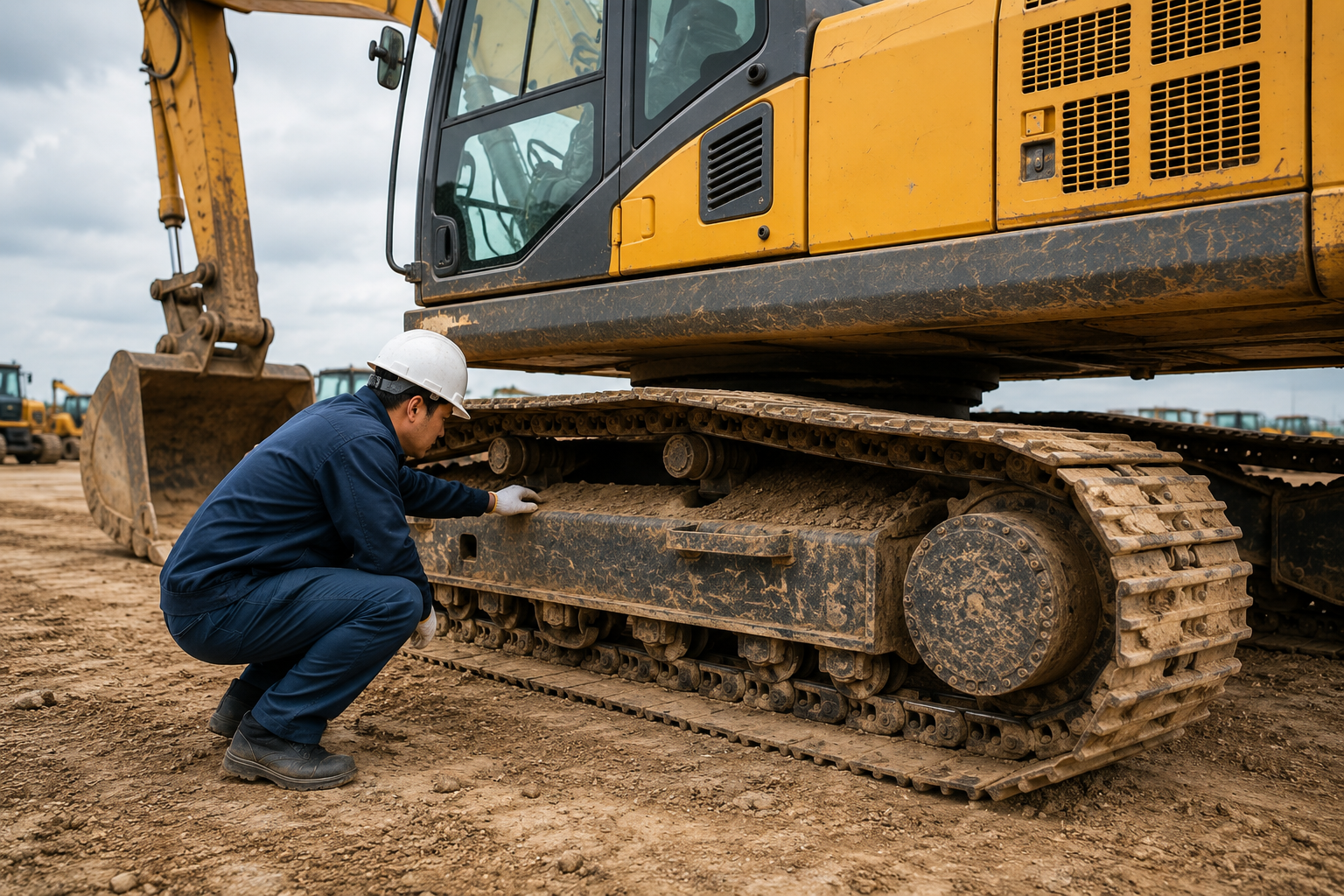
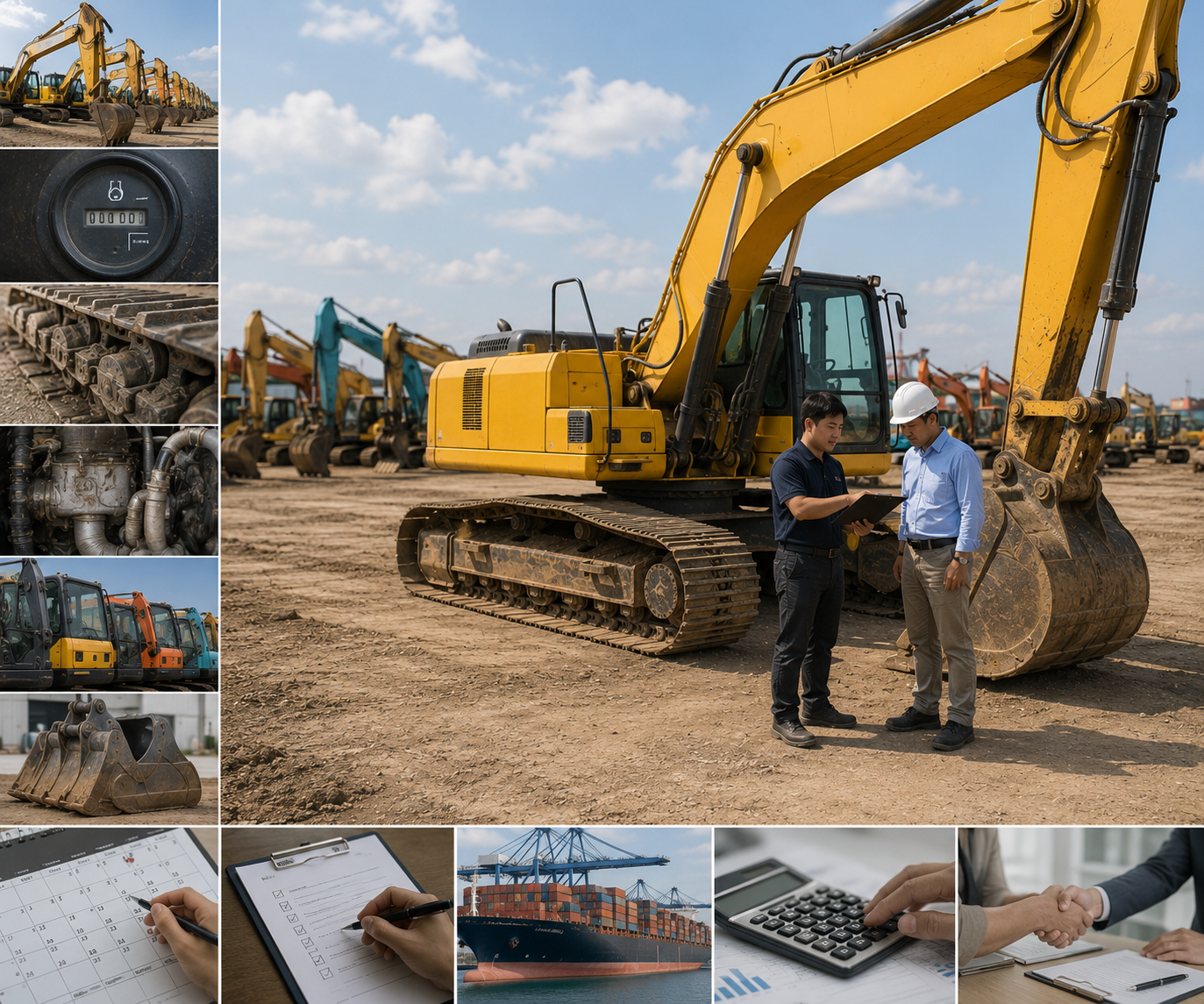
The single largest hidden cost on a used excavator is the undercarriage — tracks, rollers, sprockets, idlers, pins and bushings — which can represent 40-50% of a machine’s wear-replacement cost. A repainted machine tells you nothing; a measured undercarriage tells you everything. The hour meter is a known weak point too: a Made-in-Spain aftermarket sprocket on a machine claiming 3,800 hours is a signal the true figure could be higher — no maintenance records is the same red flag in another form. Liehuang defends against this with serial-number verification and physical wear measurement, so the number you buy on is the number you can trust.
DIAGNOSTIC_IMAGING_MODULE // ACTIVE
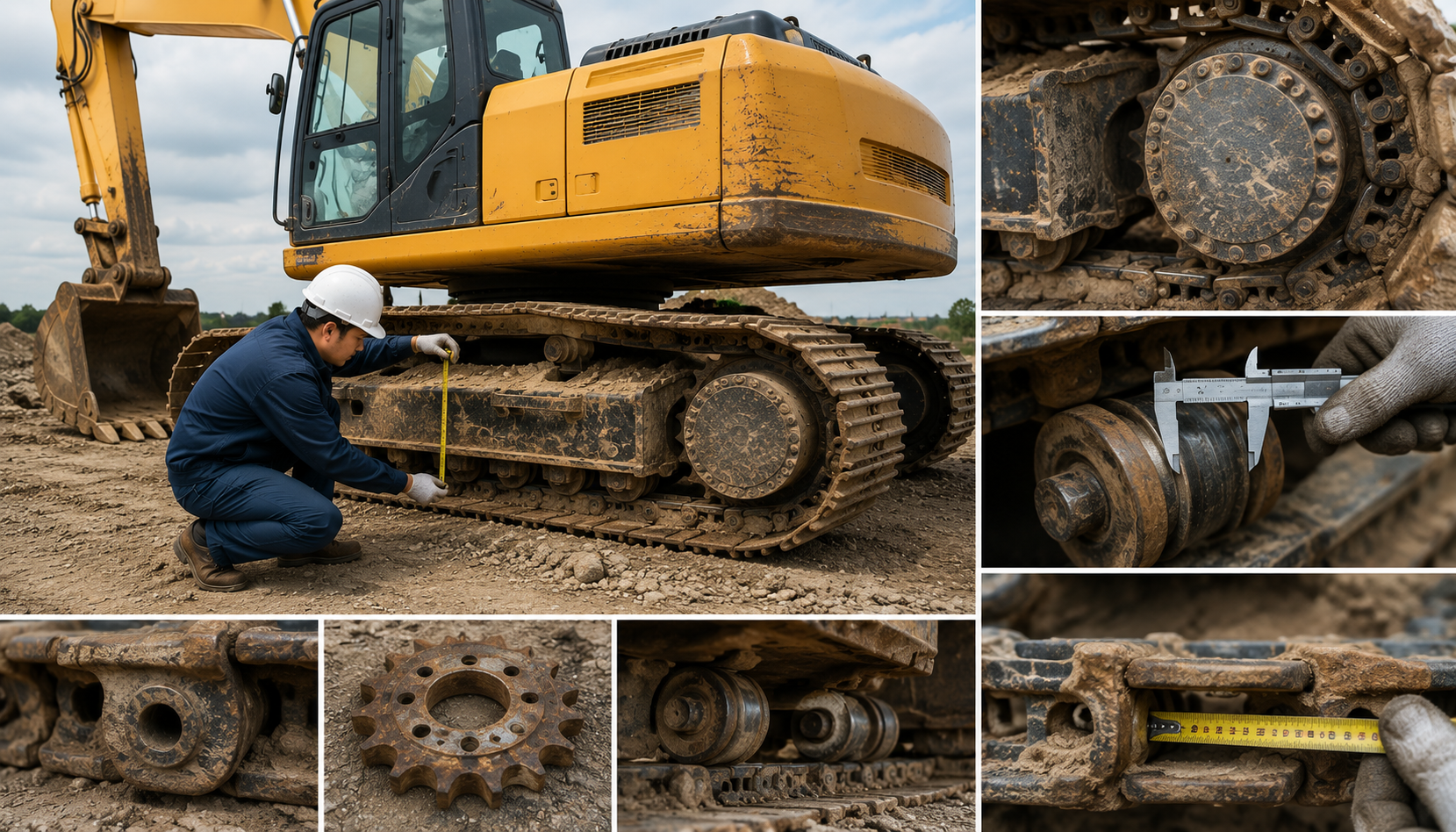
The 12-Point Used Excavator Inspection Scorecard Liehuang’s in-house team applies to every machine covers:
- 01 Serial-number & build-year verification against the hour meter
- 02 Undercarriage wear — tracks, rollers, sprockets, idlers (graded %)
- 03 Engine compression, blow-by & cold-start behaviour
- 04 Hydraulic pressure test, cycle times & leak check
- 05 Boom, stick & bucket pin/bushing play
- 06 Swing bearing & slew motor condition
- 07 Structural inspection, boom, stick, frame for cracks/repairs
- 08 OEM-vs-aftermarket parts audit (flags prior major repairs)
- 09 Fluids analysis & cooling-system check
- 10 Electrical, cab & control function
- 11 Service-record review & ownership history
- 12 Operating test under load + photo/video documentation
“We grade a machine the way we would buy it for ourselves, the hour meter is the last thing we look at. A documented owner-history unit at 6,000 hours beats a ‘low-hour’ machine no one can vouch for, every time. If a sprocket has been swapped to an off-brand part, we want to know what else was done before that number on the meter.”
— Liehuang Used-Equipment Inspection Team
A pre-purchase inspection of this depth mirrors the pre-operation equipment checks expected under OSHA equipment rules (29 CFR 1926.602). Every graded machine ships with its inspection report, condition grade, and supporting media, so an importer buying sight-unseen is buying on documented evidence — the differentiator a marketplace listing cannot match.
ACTION_REQUIRED //
Want to see the format before you buy?
Request a sample inspection & grading reportGLOBAL LOGISTICS
Export-Ready, Shipping, Documentation & Worldwide Delivery
For a cross-border buyer, the machine that never clears customs is more expensive than the machine that costs more — so Liehuang starts export readiness with paperwork, not freight. The hard gate is compliance documentation: destination markets can hold or ban a unit that arrives without the right certificates, and engines may need to meet standards such as EPA Tier 4 Final for import into certain markets. Secure CE certificates and engine-compliance papers before payment, or the machine can be stopped in customs or banned from use. Overlooking transport logistics is the classic importer mistake; Liehuang’s Export-Readiness Checklist closes it:
You buy equipment from a marketplace, but take care of crossing the border alone, which is where a machine, the customs formalities and transport form a cohesive system, through which years of Liehuang’s used equipment export experience can pay off – also the bit where an experienced importer can come a cropper.
Shipping to a specific port?
Request a landed-cost & document estimate for your destination →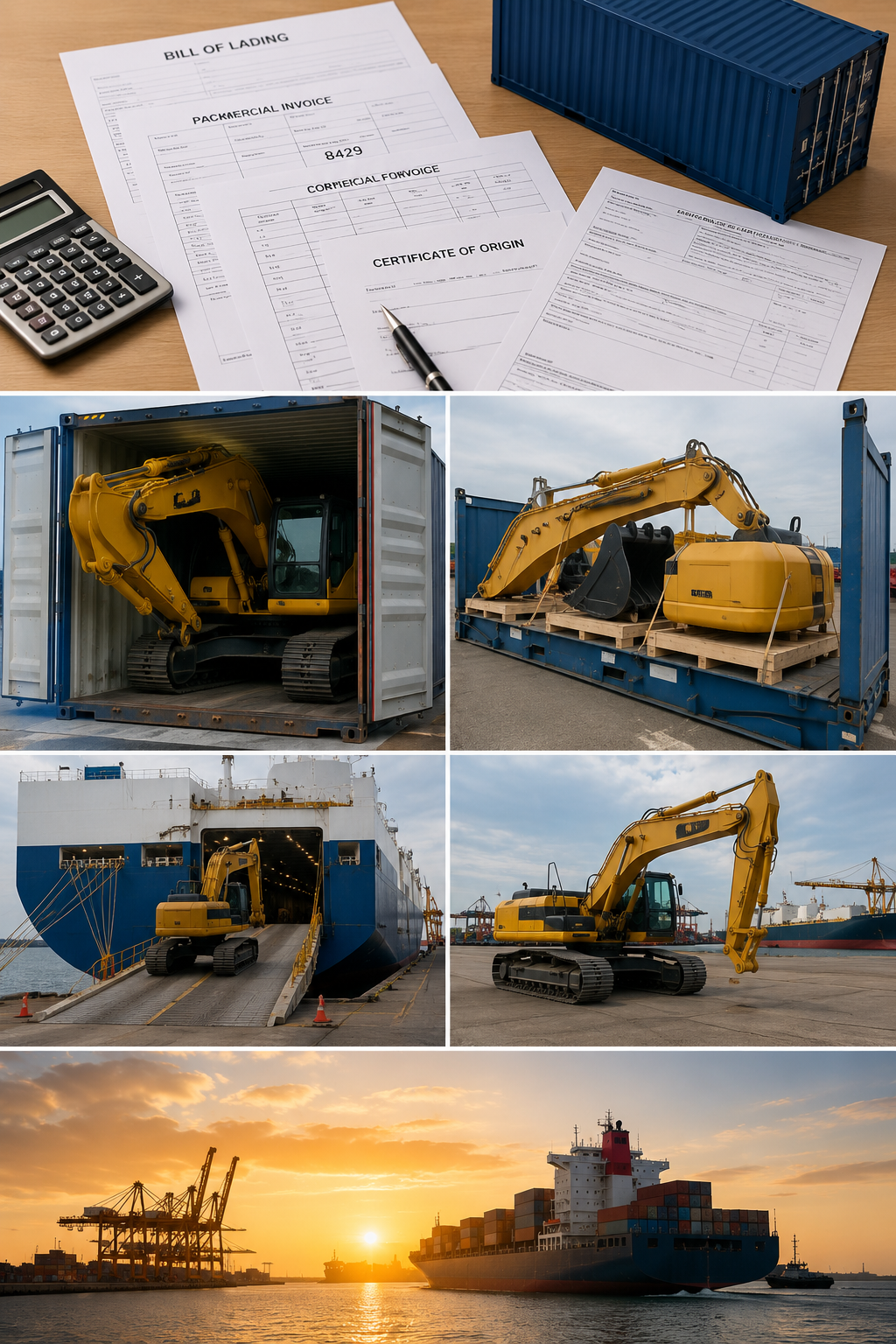
Export-Readiness Checklist
- Documents: Bill of Lading (ocean B/L, the title document) · Commercial Invoice with HS code 8429 (the heading for excavators, which sets duty) · Packing List with gross/net weight and dimensions · Certificate of Origin for preferential duty · plus destination-specific emissions/compliance certificates.
- Shipping method: A 20-ton excavator is within a 40-ft container’s weight limit (~32 t payload) but is generally too tall and long to drive into a closed box — so it ships either by RoRo (roll-on/roll-off) or in a 40-ft high-cube/flat-rack after the boom and counterweight are removed and crated. Liehuang advises the lower-cost method per unit and handles disassembly where required.
- Timeline: Ocean transit from China runs roughly 15-40 days depending on destination, with typical customs clearance of about two to three weeks on top — planned for, not discovered at the port.
How to Buy, Pricing, Lead Time & Getting a Quote
Liehuang quotes transparently because opaque pricing is the trade’s worst habit and the most common buyer complaint. The honest answer to “what does it cost” is that the price of any used mid-size excavator is driven by a handful of factors, and understanding them lets you read any quote — ours or anyone’s — without guesswork. The market moves, too: the average used machine peaked around US$159,000 in mid-2025, which is the reason a like-for-like quote matters more than a headline number.
What drives a used mid-size excavator’s price
Tonnage class (15-t vs 25-t base cost) · verified engine hours against age · undercarriage condition (the single biggest swing) · brand & model (parts/resale) · year & emissions tier · attachments included · and landed cost — freight plus duty (often modest; US import duty on this category is typically around 2.5% under the US Harmonized Tariff Schedule) plus clearance. The unit price is only part of the total cost of ownership.
Since no machine and place are the same, instead of playing trickery of one-size-fits-all policy, Liehuang delivers guaranteed per-unit quote to clients. Mail to us target tons, preferred brand, port of destination, so a solid spec quotation including landing-cost advisory and lead time is confirmed. Individual order for contractor as well as large amount order for dealers is open for handling.
-
Process
12-Point Inspection
Graded & documented per unit
-
Hour-Verified
Serial-number cross-check
-
Export Docs Handled
B/L · CO · HS 8429 · compliance
-
9 Major Brands
Global parts availability
-
Worldwide Shipping
RoRo & container from China
Get a Verified-Spec Quote on a 10-30 Ton Excavator
Give us tonnage class, brand, and destination. we’ll get you stock information now, inspection report, landed cost calculation.
Medium Excavator Evaluation Tools
TOOL 01
Tonnage Class Selector
TOOL 02
Inspection Checklist
TOOL 03
Landed Cost Estimator
Frequently Asked Questions: Buying Used Medium Excavators
[SYS] KNOWLEDGE_BASE_ACCESS //
The in-between excavator, usually between the mini types (around 7,000 kg / ~7 to 10 t) and large excavators (45t+), fall between 10-30 ton of operating weight. The range will however overlap, as some manufacturers will call a medium range anywhere between 7.5 t to 40 t, John Deere for example. Stick to a model ton value to fit the job more then you stick with labels.
It varies with tonnage, hours, year, condition and brand; the average used machine traded around US$159,000 in mid-2025, but a 10-30 ton unit spans a wide range below that. Price follows the depreciation curve — a five-year-old machine is commonly 40-50% below new — and undercarriage condition is the single biggest swing. Liehuang quotes per verified unit rather than a one-size figure.
There is no hard cutoff. Mid-size excavators typically deliver 7,000-10,000 economic hours, and values drop more sharply after about 6,000 hours — but a documented, well-maintained machine at higher hours is often a better buy than an undocumented low-hour one. Judge hours against age, service records, and undercarriage wear, not in isolation.
It can be, as long as the transaction is put in writing. But most common sources of concern to buyers — condition falsification, hour-meter mileage fraud, customs issues — can be mitigated by means of the serial-number verification, a unit-specific inspection report and a full package of export paperwork. Liehuang only markets big-brand machines, such as Caterpillar, Komatsu and Hitachi and others, based on corroborated proof rather than mere pictures found on sales ads.
In order of cost impact: maintenance and service history, undercarriage condition (up to 40-50% of wear-replacement cost), engine and hydraulic health, structural integrity of boom and stick, and verification that the hour meter matches the machine’s wear and parts. Liehuang’s 12-point inspection covers each of these and ships with the machine.
The 20t can stay within the weight limit in a 40’ container; however, its size almost never allows it to be loaded in one piece. In cases where we can’t use the RoRo service, we either ship it in a 40’ high-cube/flat rack with the counterweight and the boom removed and packed in crat, and ship in two parts or by a conventional 40’ flat deck as an exception, considering the higher prices.
The basic documents are Bill of Lading, Commercial Invoice(HS code 8429), Packing List, Certificate of origin and, possibly, emissions certificate/compliance documents specific to the receiving destination-some markets require EPA Tier 4 Final engine certifications. Liehuang makes them out prior to the shipment to obviate customs delays.
Both. Contractors often order single machines from Liehuang directly and this comes with bulk orders to dealers and distributors as does export shipping. You can send your target specs to us and we’ll give you a per machine price.
Payment protected by staged delivery proof
Pay the balance after machine proof, not on blind trust.
Used excavator buyers need more than a product photo. Liehuang uses a staged payment workflow: deposit to reserve the machine, inspection evidence before balance, and export documents plus shipment tracking before release.
Verified machine videoLoading and customs filesBalance paid after confirmation
Quote & machine selectionChoose the model, hours, attachments and export destination before we reserve stock.
Deposit to lock stockA deposit holds the exact machine while inspection media and documents are prepared.
Inspection proof sentReceive walkaround video, hour-meter photos, serial details and loading plan.
Balance after confirmationPay the remaining balance only after you confirm the machine condition and export evidence.
Shipment & customs trackingWe share loading photos, bill of lading progress and customs support until release.
For high-value used equipment, trust is built by evidence. Ask for the current stock list, payment schedule and export document sample before you decide.Request stock proof