Get in Touch with Liehuang Company

Heavy Excavators for Sale (30+ Ton)
Heavy Excavators for Sale (30+ Ton)
— Mining & Demolition Grade
Liehuang lists inspected, exportable heavy excavators available in the 30-to-80-ton range, caterpillar, komatsu, Volvo, hitachi, kobelco, Doosan, Hyundai and Sany crawler machines designed for exploration support, mine quarrying, demolition and heavy-duty construction. Each unit is graded before it ships, and each specs we publish are sourced from an OEM source, not a sales puff.
Get a CIF Landed-Cost Quote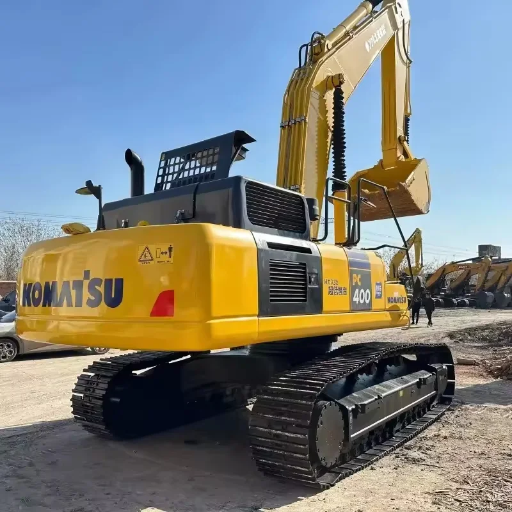
30–80+ t
Operating weight class
8 brands
CAT · Komatsu · Volvo · Hitachi · Kobelco · Doosan · Hyundai · Sany
7-Point
Inspection grade per machine
RO-RO / FCL
Worldwide export shipping
Report + video
Bound to the exact PIN
Single unit
to full-container MOQ
Importing a 30–80 Ton Used Excavator Is High-Stakes, Here’s How We De-Risk It
A used heavy excavator, a crawler-mounted, tracked machine of 30 tons and up, costs actual money the moment it arrives: a tired undercarriage, an overrolled hour meter, or a cracked-and-repainted boom turn a gift into a burden before the first load of dirt. That’s why most importers pay too much to a local dealer rather than source straight. The reason is simple: heavy iron purchased sight-unseen across the ocean provide little way of the buyer to check condition. One operator summed up the danger plainly:
“A fresh paint job can make a tired excavator look export-ready in photos; the real risk shows up later in the undercarriage, pins, hydraulics and boom.”
Liehuang closes that gap with three things each listing carries:
- an OEM-backed spec sheet
- a 7-point condition grade tied to the machine’s serial/PIN plate
- an export plan with the papers a customs broker actually asks for.
Specifications
Engine power on these machines below are built to the ISO 9249 net-power standard, the same one the OEMs publish to, so a Cat 336’s 223.5kW means the same on our sheet as on Caterpillar’s. ISO 9249 explains that net-power number; we don’t have a louder one.
Heavy Excavator Inventory, Brands, Models & 30–80 Ton Classes
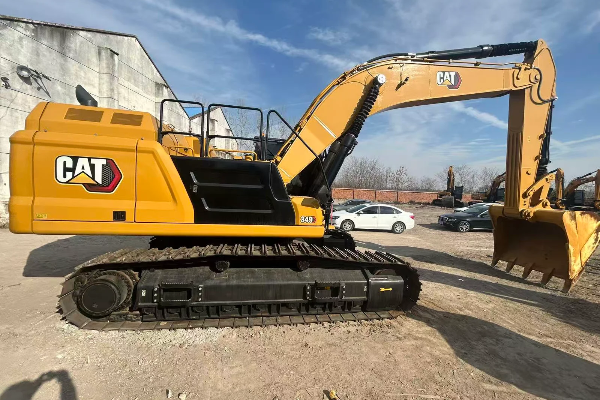
30–80 Ton Tracked Classes
Liehuang’s range runs from the mini excavator classes and compact excavator, engineering equipment for landscaping and light utility, up to the 80-ton range, but this page is about the those over 30-tonne tracked excavators, these are the tracked machines commonly constructed for mass earthmoving, trenching and demolition rather than small-project excavation; the machines; that caterpillar, komatsu, Volvo, hitachi, Doosan, Hyundai, kobelco, Sany and john deere buy for big jobs.
Inventory & Quality Grade
Most of our used heavy inventory fits broadly between 2015 to 2023 model years, with good shares in the 2018-2021 band, and most of it ships in the LC (long-carriage) configuration, the longer, wider undercarriage that provides a 30-tonne-plus diesel machine with stability on uneven ground. These are heavy-duty machines and used heavy equipment in the best sense: a tired final drive or a weathered diesel engine of this size is a five-figure repair, which is why each tracked excavator we list goes through a grade before it ships rather than sold on a photo.
Cross-Brand Matching
The marketplaces win the “used excavator for sale” option on listing frequency; what they can’t give you is an easy, cross-brand method of matching a weight to a task. The chart below is our answer, each operating weight and engine figure is the OEM-published value (ISO 9249 net power, bucket volume rated to ISO 7451), and bucket sizes are displayed as ranges because they vary with the stick and counterweight you order.
Whether you are hunting a large excavator for sale, a crawler excavator for sale, or a used Komatsu excavator, the gap is the same: listing count without condition proof. Every machine here is a tracked excavator built for earthmoving and heavy construction work — large excavators and crawler excavators we grade as well-maintained, A-grade iron before listing, with the digging bucket, hydraulics and diesel engine all checked.
| Brand | Model | Op. weight | Net power (ISO 9249) | Bucket (ISO 7451) | Best-fit duty |
|---|---|---|---|---|---|
| Caterpillar | 330 | 31.4 t | 203.7 kW / 273 hp | ~1.0–1.6 m³ | General / mass dig |
| Caterpillar | 336 | 36.8 t | 223.5 kW / 300 hp | ~1.0–2.5 m³ | Quarry / mass excavation |
| Caterpillar | 349 | 50.1 t | 316 kW / 424 hp | up to ~3.3 m³ | Hard rock / quarry |
| Komatsu | PC300-8 | ~32 t | 184 kW / 246 hp | 0.52–1.8 m³ | General / utility |
| Komatsu | PC360LC-11 | 36 t | 192 kW / 257 hp | 0.68–1.96 m³ | Mass dig / demolition base |
| Volvo | EC350E | 36.3 t | D13 (Tier 4F/Stage V) | 0.87–1.92 m³ | Mass excavation |
| Hitachi | ZX350LC | ~35 t class | OEM sheet on req. | per config | General / mass dig |
| Doosan / Develon | DX380LC | ~38 t class | OEM sheet on req. | per config | Quarry / civil |
| Hyundai | HX480L | ~48 t class | OEM sheet on req. | per config | Quarry / high-reach base |
| Kobelco | SK850LC-11 | 85 t | OEM sheet on req. | heavy rock bucket | Quarry / hard rock |
| Your job | Class to buy | Typical models | Key attachment |
|---|---|---|---|
| General construction / site prep | 30–35 t | Cat 330 · Komatsu PC300 | GP bucket + hydraulic thumb |
| Mass excavation / deep civil | 36–50 t | Cat 336/349 · PC360/PC490 | Heavy-duty digging bucket |
| Quarry / hard rock | 45–85 t | Cat 349 · Kobelco SK850 | Rock bucket / hydraulic breaker |
| Ground-level demolition | 30–36 t | Cat 330 (straight boom) | Breaker · shear · grapple |
| High-reach demolition | 36–85 t + HR boom | Volvo EC480 HR · PC490HRD | High-reach boom + shear |
[01] INVENTORY STATUS
[02] UNDERCARRIAGE SPECS
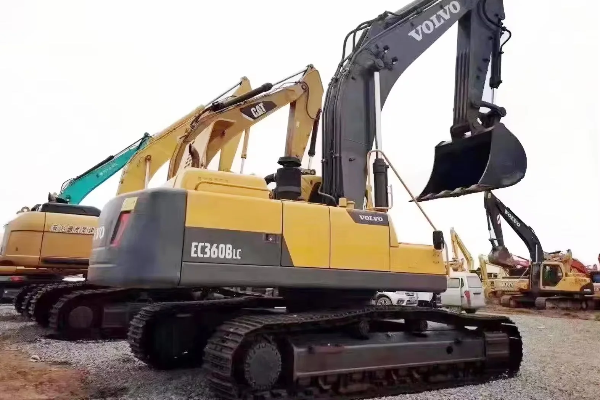
How We Inspect, Grade & Refurbish Every Machine
01
The “Low Hour” Trap
There’s nothing more misleading than low hours in the heavy-equipment game; the “low hours are good” rule of thumb is one of the oldest but most financially painful clichés when buying used gear. excavators that have sat unused for years might have dry and seized-up seals, suffered from the damage incurred by frequent cold starts and developed a rotten slew bearing-all hidden beneath an attractive “low hour” Sticker. Conversely, a 12,000 hour machine with impeccable and complete service records has demonstrated its reliable core mechanics over the long haul.
02
Condition Trumps Readings
According to established field wisdom, the engines that stand up past 12,000 hours usually tend to be the more reliable ones, so as counter-intuitive as it sounds, condition and proven repair history trump meter reading-not vice versa. There’s a strong current of industry thought: “you’d be better off taking a 10,000-hour excavator with full, clear maintenance history over a poorly documented, low-hour 6000-hour excavator.” It’s why we’ve all of our machines graded on condition and the quality of their documentation- not merely on their hour meters. ( beware of meter roll-back: worn pedals that are unrelated to hour history )
03
Verify Before Deposit
The best advice seasoned, long-time heavy machine purchasers ever give each other come down to a simple mandate: verify hour-history, undercarriage wear, and leak status prior to engaging in any deposit exchanges; additionally, always obtain and submit a fluid analysis sample for laboratory examination where permissible. Get the hours, the undercarriage and the leak status verified before any deposit; the honest trade-off on used iron is condition risk for a lower price, and that is exactly what the grade settles.
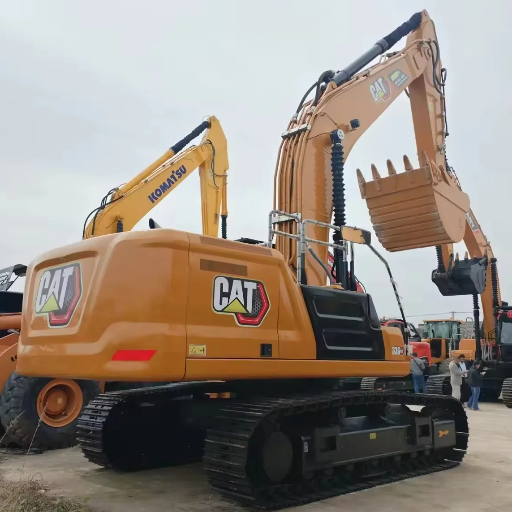
REF: MAC-80T / OPTIMAL
The Liehuang Heavy-Iron Buy-or-Walk Grade Gate
The machines in this class (30-80t) are all thoroughly evaluated against each of the seven systems, with our assessment data being conveyed to customers via the machines’ permanent Serial or PIN plates:
| ID | System Component | Verification Protocol | Value Impact Analysis |
|---|---|---|---|
| [01] | Engine | Smoke color, leaks, oil condition, cold start, blow-by, hot & cold oil pressure | The one component lifecycle data shows is rebuilt latest — verify it lasts |
| [02] | Hours vs records | ECM reading cross-checked against the mechanical meter and service log | Catches meter tamper / rollback |
| [03] | Hydraulics | Cylinders, hoses, pumps, valve blocks, quick coupler, drift & pressure test | Slow or drifting functions = pump/valve wear |
| [04] | Undercarriage | Track tension, rollers, idlers, sprockets, triple grouser shoes | Up to 40% of replacement cost lives here |
| [05] | Structure & welds | Boom, stick, frame, articulation joints — fresh paint over crack repairs flagged | Reinforcement plates & re-welds reveal abuse |
| [06] | Pins, bushings & swing bearing | Linkage play, slew-ring play, final drives | The slew ring is one of the costliest parts to replace |
| [07] | Live function test | Lift, travel, swing, steering, auxiliary hydraulics under load | A static start-up is never enough |
Tension alone would likely earn its own patent; the pressure-hose mechanisms used in accumulator tensioners (see US Patent US20050035654A1) must be filled periodically, so tension is read, not guessed. But since not every buyer can be flown to the lot, a dated picture of the hour-meter and a fresh video of a cold start all serve as insurance-and that kind of certainty sells deposits.
“We pull a fluid sample and read the undercarriage before a machine ever gets photographed. If the sprockets look like knives or the welds have been ground and repainted, it doesn’t get an A, and we’d rather tell you it’s a C and price it as one than lose you on the second machine.”
Used vs New, Why a Refurbished 30–80 t Machine Wins on Total Cost
The new price point doesn’t always bring the best deal, nor does simply being new. The first owner of an excavator suffers the steepest depreciation; the second owner buys the devalued machine with most of its usable life left. Your main trade-off is machine-condition risk – precisely why we grade on the scale you see above. Asset-lifecycle thinking – the discipline formalized in ISO 55000 asset management – judges the machine over its whole working life, not just the sticker price.
The Heavy Excavator Lifecycle-Cost Curve
~9,800 h
is where the average hydraulic excavator leaves primary production — yet a well-maintained 30–80 t machine runs well past 15,000 hours. The gap between those numbers is the used buyer’s margin.
Industry survey: Construction Equipment lifecycle data (~6 yr / 9,800 h economic life; ~14,500 h by year 10) · makana.com (15,000 h+ for maintained large machines).
Cost factor
New 30–80 t excavator
Inspected used (Liehuang)
-
Year-1 value loss20–30% depreciation absorbed by youAbsorbed by the first owner
-
Usable life aheadFull, at full price15,000 h+ achievable if maintained
-
Lead timeFactory order / waitlistIn stock — ship on confirmation
-
Undercarriage exposureNew, but ~40% of future costGraded & priced in before you buy
-
Parts networkOEMCAT/Komatsu/Volvo global parts — a reason we stock the majors, not house brands
Built for Mining Support, Quarrying & Demolition
You might think only a beast machine get any work done in an iron mine, but we find the costliest mistakes typically occur when buyers mismatch a carrier to its demolition attachment and, with a few months’ work, destroy a slew bearing. And while “mining-and-wrecking grade” has a ring to it, it’s truly about matching the machine to the task at hand and your job requirements. In a rock quarrying environment, most excavators in the 45-to-85-tonne weight range will use a hydraulic rock bucket and the machine will handle a reasonably hefty 12,000 foot-pound class breaker, such as the Furukawa Fx800, which requires carriers between 48.5 and 83 tonnes to handle safely.
For building demolition and high-rise wreckage removal, ground-level activity calls for 30- to 36-tonne machines armed with a shear, grapple or hydraulic pulverizer. Demolishing multi-story buildings will require larger-than-normal equipment – 36- to 85-tonne carriers paired with a long reach demolition boom. (The Metrodome was pulled down, in part, with a high reach 48-tonne Volvo.)
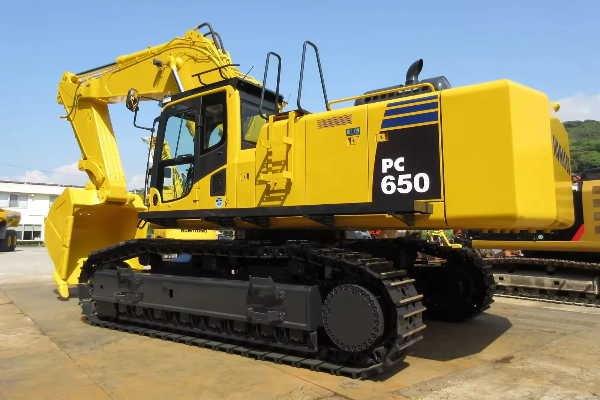
FIG. 01 / CARRIER REF
Certifications & Documentation We Provide
PIN-bound report
Serial-plate inspection grade
Cold-start video + full walkaround
Cold-start video + full walkaround
Emission tier
Engine tier on request (EPA/EU)
3rd-party option
SGS / BV pre-shipment
Clear title
Bill of sale + lien check
Field note, match the carrier to the tool, not the other way round
A mobile shear requiring a 105,000lb (48t) machine on the second member will overload a 36t carrier and chew its slew ring. Let’s know the attachment and the duty cycle and we’ll size the carrier – a hydraulic hybrid swing drive (see Patent WO2014120930A1) lasts longer under the constant slewing demolition demands, another reason swing-bearing condition is on the inspection grade.
Demolition also carries a safety-and-compliance layer that buyers under estimate: U.S. demolition work falls under OSHA 29 CFR 1926 Subpart T, and high-reach configurations have their own stability rules. We won’t ship a carrier rated below the attachment you describe – versatility is good, but an under-spec machine on a demolition site is a liability, not a saving.
Most sellers ship whatever crawler excavator is on the lot; we size the carrier to your attachment, your rock and your duty cycle before we quote – which is why a high reach demolition excavator request gets a different machine than a bulk-dig one.
The Heavy Excavator Export Procurement Playbook
Run it on a typical 30-ton machine: RO-RO ocean freight is roughly $80-180 per CBM and machinery import duty is often just 0-3% – adders that rarely erase the 20-30% a new buyer loses to first-year depreciation alone. We quote that as one CIF landed-cost figure up front, not an FOB price that balloons at your port. Buyers comparing “30 ton excavator price” across sellers almost never get this breakdown.
The objection we hear most is that a Chinese-exported used Cat or komatsu can’t really be cheaper once freight, duty and risk are added. The landed-cost math says otherwise for most destinations – but you deserve the factors, not a fake number, because duty and freight move with your country, route and season.
Landed Cost Factors
FactorOcean freight (RO-RO)
Basis~$80–180 / CBM · 30–45 days
NotesRO-RO is the standard method for self-propelled excavators
FactorOversize / dismantled
BasisFlat-rack / break-bulk
NotesMany 30–80 t machines exceed container limits
FactorImport duty (machinery)
BasisOften ~0–3% (destination-dependent)
NotesConfirm your local tariff; US adds Section 301 up to 25% on Chinese origin
FactorIncoterms
BasisFOB or CIF/DDP
NotesWe quote CIF landed so there are no surprises
FactorPayment protection
BasisT/T · L/C · escrow
NotesBalance released on inspection / arrival
FactorCargo insurance
Basis~0.5–1% of value
NotesYour recourse if the machine is damaged in transit
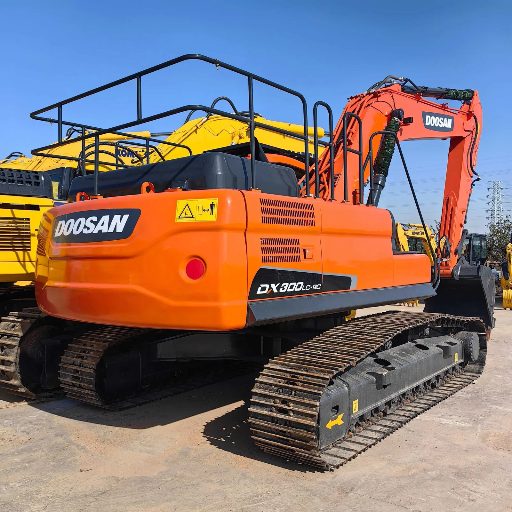
The hidden deal-breaker most listings ignore is emission admissibility: an engine that doesn’t meet the destination’s tier can be blocked at the border. Importing into the U.S. requires EPA documentation for nonroad engines (e.g. Form 3520-21), and the EU applies Stage V.
A quick field check: a komatsu/Cat model suffix of -10 or -11 generally indicates a current emission tier. We confirm the engine tier and supply the document set – Bill of Lading, commercial invoice, packing list, certificate of origin, and the engine emission paperwork – before the machine sails.
On Shipping Honesty
One importer’s warning sums up the fear: if you’ve no proper control over every single step, an overseas supplier can cheat you – and one buyer’s unit “took 4x longer to ship” than promised. The complaint we hear is rarely the machine itself – it’s the moving ship date (“week after week… some things didn’t arrive”).
We commit a vessel and a cut-off in writing, and the inspection-release payment structure means you aren’t fully exposed until the machine is verified.
Heavy Excavators (30+ Ton) Engineering & Cost Evaluation Tools
-
01
ton class application selector
Match the optimal excavator tonnage with your specific engineering requirements and operational conditions.
-
02
cif landed cost estimator
Estimate total landed costs including ocean freight and insurance to your targeted destination port.
-
03
used vs new tco calculator
Analyze total cost of ownership between used and new heavy machinery to evaluate financial ROI.
-
04
engine hours inspection check
Verify equipment wear and remaining operational life based on certified machine hours and history.
01
How much does a used 30-ton excavator cost?
How much does a used 30-ton excavator cost?
It depends on brand, year, engine hours and condition grade. Published cat 336 specs won’t tell you the hours or undercarriage wear on a specific unit, so rather than post a misleading single price we quote CIF landed cost for the exact machine and your port. Ask for the live stock list and we attach an indicative price band to each unit.
02
Are Chinese-exported used excavators reliable?
Are Chinese-exported used excavators reliable?
Reliability comes from the machine and the supplier’s controls, not the country of shipment. We trade mainstream Cat, Komatsu, Volvo, Hitachi and Kobelco iron, grade each unit on seven systems, and bind a cold-start video and inspection report to the serial/PIN. The thing buyers say protects them, proof tied to the exact machine, is the thing we build every listing around.
03
What engine hours are acceptable on a used heavy excavator?
What engine hours are acceptable on a used heavy excavator?
Hours matter less than records. A well-maintained large excavator runs well past 15,000 hours, and a 10,000-hour machine with a full service history is usually a safer buy than a 6,000-hour machine with none. We show hours and the maintenance record, and our grade reflects condition, not just the meter.
04
Which brand of heavy excavator is best for mining or quarry work?
Which brand of heavy excavator is best for mining or quarry work?
For 30–80 t quarry and hard-rock duty, the Cat 349 (50 t / 316 kW), Komatsu PC490 and Kobelco SK850 (85 t) are common choices because of bucket capacity, breaker compatibility and global parts support; for ground-level demolition a 30–36 t Cat 330 or Komatsu PC360 fitted with a shear or pulverizer is usually the right call. True ultra-class mining shovels (100 t+) are a different machine category altogether, if your job genuinely needs that class, we’ll tell you rather than oversell a 50-tonner you would have to baby on hard rock.
05
How do you ship a 30–80 ton excavator overseas?
How do you ship a 30–80 ton excavator overseas?
Self-propelled machines ship RO-RO (drive-on/drive-off); oversize or dismantled units go flat-rack or break-bulk. Typical transit is 30–45 days. We quote CIF and handle the export documentation, including the engine emission paperwork your customs broker needs.
06
Will the machine clear customs and emission rules in my country?
Will the machine clear customs and emission rules in my country?
That’s the import-admissibility check most sellers skip. We confirm the engine emission tier (EPA tier for the U.S., Stage class for the EU) and provide the documentation set before shipping, so an older-tier engine doesn’t get blocked at your border.
07
Can I get an inspection before I pay?
Can I get an inspection before I pay?
Yes, every machine ship with the 7-point grade, a dated hour-meter photo, a cold-start video and a walkaround, plus an optional independent SGS or BV pre-shipment inspection.
08
Do you sell attachments with the excavator?
Do you sell attachments with the excavator?
Yes, buckets, hydraulic breakers, grapples, shears, pulverizers and high-reach booms, sized to the carrier. Tell us the duty cycle and we match the attachment to the machine’s weight class so you don’t overload the slew ring.
Payment protected by staged delivery proof
Pay the balance after machine proof, not on blind trust.
Used excavator buyers need more than a product photo. Liehuang uses a staged payment workflow: deposit to reserve the machine, inspection evidence before balance, and export documents plus shipment tracking before release.
Verified machine videoLoading and customs filesBalance paid after confirmation
Quote & machine selectionChoose the model, hours, attachments and export destination before we reserve stock.
Deposit to lock stockA deposit holds the exact machine while inspection media and documents are prepared.
Inspection proof sentReceive walkaround video, hour-meter photos, serial details and loading plan.
Balance after confirmationPay the remaining balance only after you confirm the machine condition and export evidence.
Shipment & customs trackingWe share loading photos, bill of lading progress and customs support until release.
For high-value used equipment, trust is built by evidence. Ask for the current stock list, payment schedule and export document sample before you decide.Request stock proof