Get in Touch with Liehuang Company
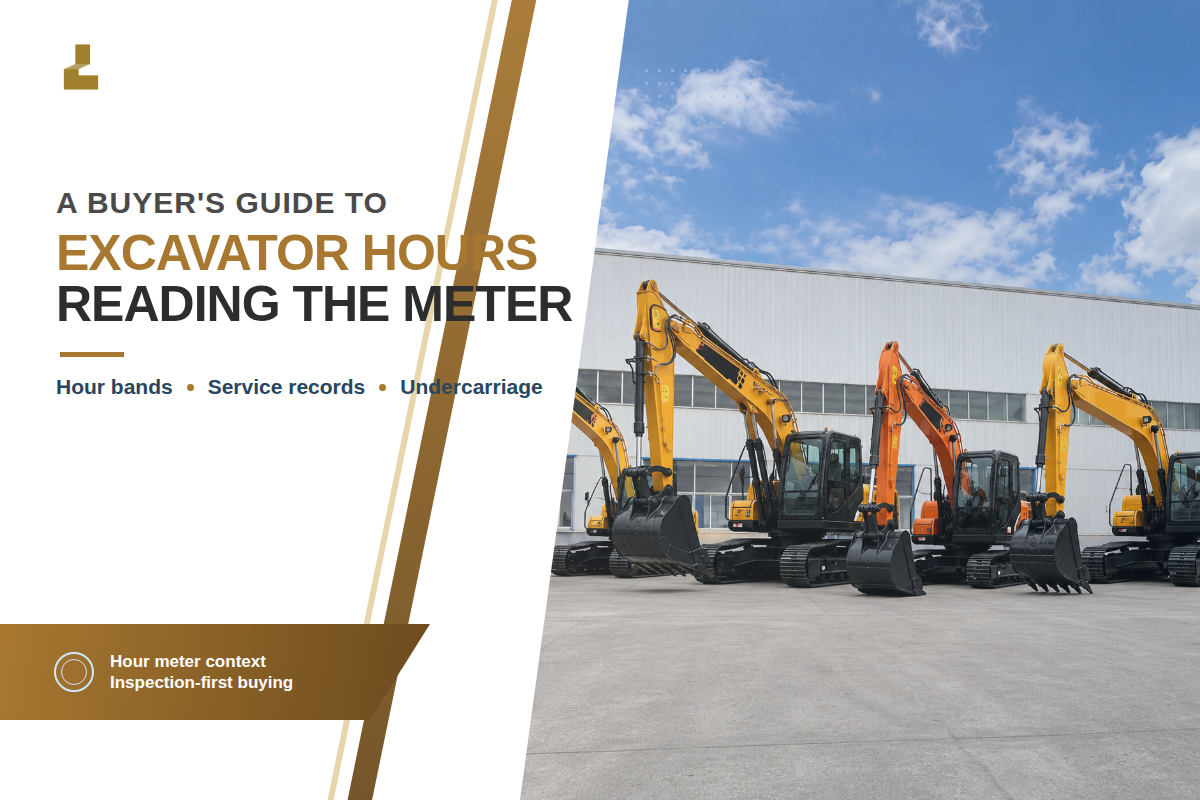

How many hours is too many on an excavator? Ask ten people who buy equipment and you’ll get ten answers. There isn’t a firm number. But most people agree that you start seeing a lot of hours somewhere between 6,000 and 10,000 on the hour meter. Use the hour meter as your starting point, but do not treat it as the defining characteristic of an excavator. If you know the service history, how much wear and tear is on the undercarriage and how much of the hours were logged under heavy loads, then you will have a better idea of how much life is left in an excavator than you will from simply looking at the number. Here’s a guide that gives you the hour benchmarks by class of machine, the rationale behind those benchmarks, and a practical process for determining a used excavator’s potential remaining life.
Quick Specs: Excavator Hours at a Glance
| Low hours | Under 3,000 hrs — early life, premium price |
| Value sweet spot | 3,000–6,000 hrs — broken in, plenty of life left |
| High but workable | 6,000–10,000 hrs — a strong buy if well serviced |
| High-hour / rebuild zone | 10,000+ hrs — can still earn with maintenance and budget |
| Typical design life | ~10,000–15,000 hrs before a major overhaul |
| Annual accrual | ~1,000–2,000 hrs/year on a working machine |
What Machine Hours Actually Measure (and Why They Beat Age)
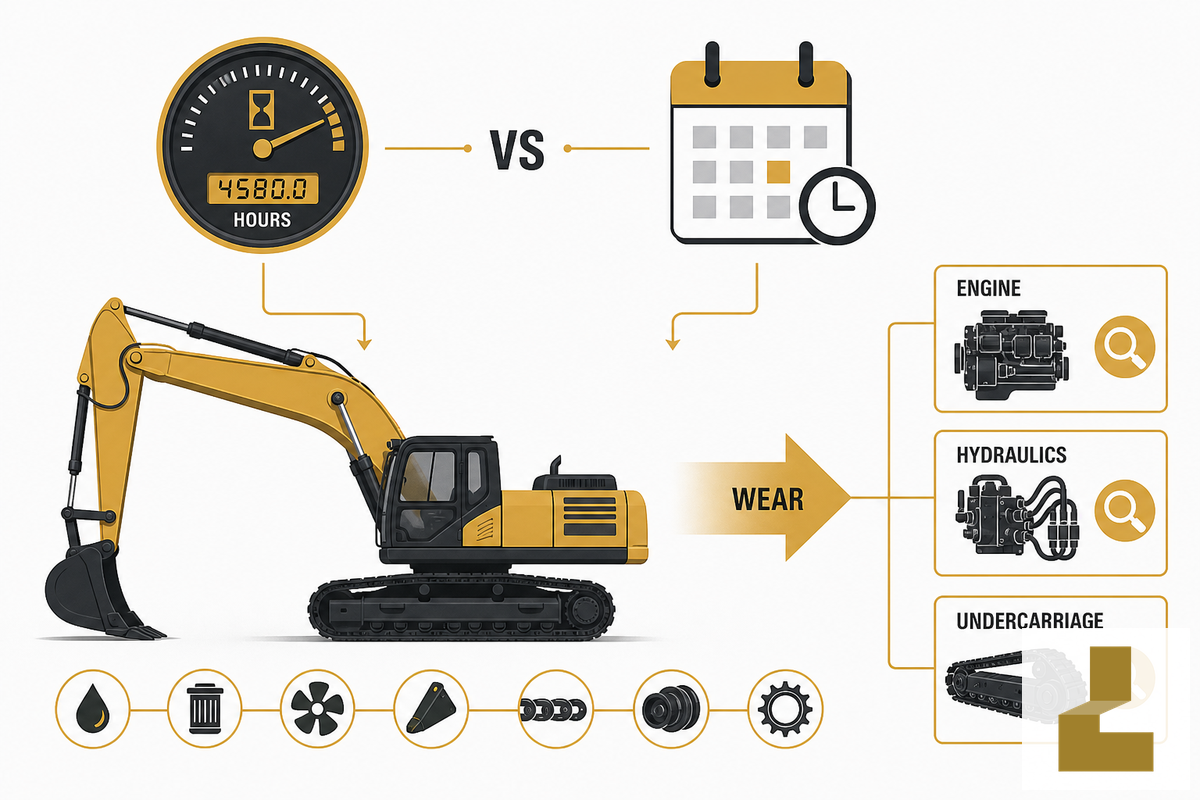
What do those numbers actually mean? An excavator’s hour meter counts only the time the engine was running, not how far the machine has traveled. So an hour logged on the hour meter means the engine was on for 60 minutes whether the machine was grinding through dirt, operating the hydraulic system or just idling in the lot. This means the hours are a crude indicator of wear on the engine and hydraulic system, and the undercarriage, which is why buyers start looking at the hour meter in the first place. However, unlike the mileage on a car’s odometer, hours do not directly measure the stress the machine was under while the engine was running.
Logged hours on an excavator are a better indicator of wear and tear than calendar age. It’s entirely possible for an excavator to sit unused in a storage yard for several years and have very low hours on the clock, or it’s possible to run an excavator constantly and log 3,000 hours in one year. As a rule of thumb, excavators generally accumulate between 1,000 and 2,000 hours per year of operation. So if you find a 10-year-old excavator with 8,000 hours on it, that’s likely had a pretty standard working life for a piece of equipment of its age, operating roughly 800 hours a year. However, if a five-year-old machine has the same 8,000 hours, that indicates it has been worked very hard. Government entities formalize these guidelines; for instance, the St. Mary’s County, Maryland, purchasing guidelines state that the decision to replace motorized equipment should be based on “engine hour operations” rather than “age as a primary criterion.”
💡 Key takeaway
You must keep in mind that hour meters estimate wear and tear, but they don’t directly measure it. That’s why you can have two excavators with 8,000 hours on their meters and have a 10-year age difference in their condition based on how those hours were spent.
So, How Many Hours Is “Too Many”? The Threshold Bands
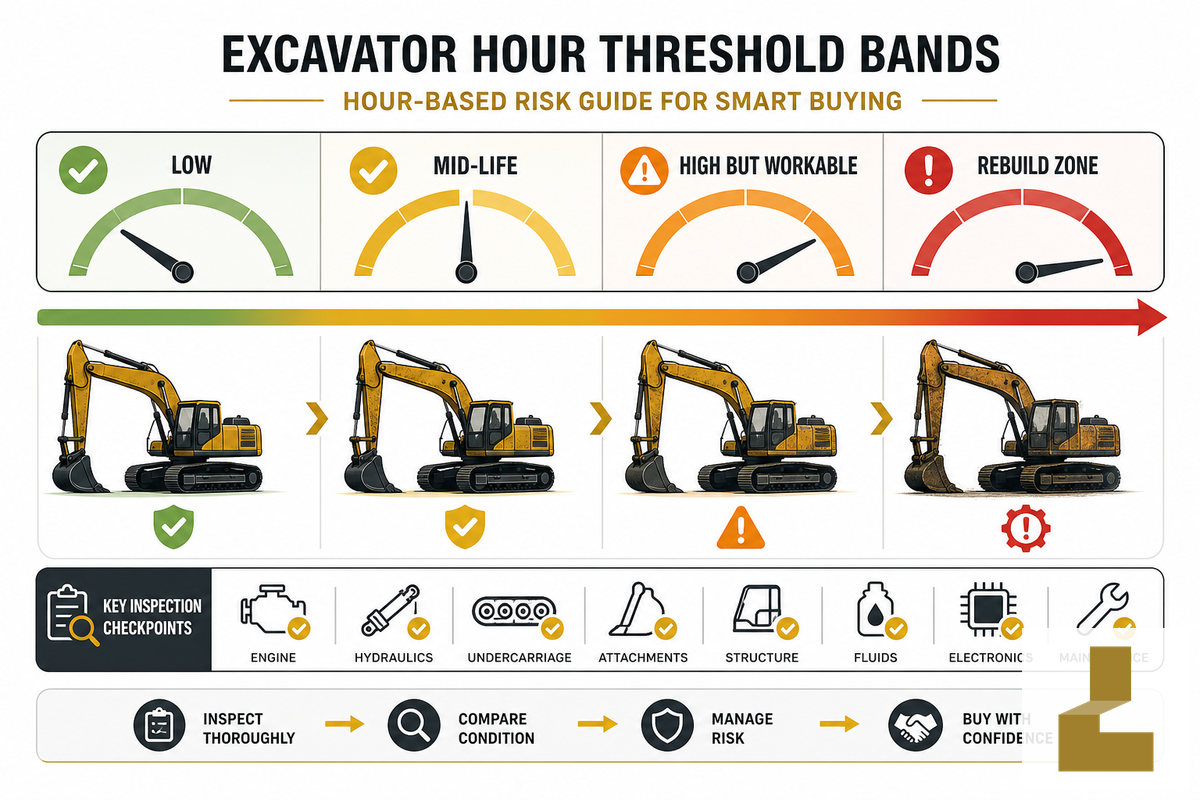
Standard full-size excavators (10-ton to 30-ton classes) usually see general agreement among fleet data providers and dealers. Below is a standard band chart most professional buyers refer to, with what each range typically signifies in terms of pricing and potential risk.
| Hour band | Rating | What to expect |
|---|---|---|
| Under 3,000 | Low | Minimal wear; premium price near new. Confirm it was serviced, not just parked. |
| 3,000–6,000 | Mid-life | Usually the value sweet spot. Major components still well inside service life. |
| 6,000–10,000 | High but workable | Sound buy if serviced. Budget for wear items (hydraulic pump attention, undercarriage) as they come due. |
| 10,000–15,000+ | High-hour | Can still make money with good records. Expect a major rebuild in your ownership window. |
Those bands are not simply an educated guess. In fact, public-sector fleet policy such as the one published for St. Mary’s County, Maryland, set out county fleet replacement guidelines that call for motor graders, dozers and excavators to be replaced at 15 years or 9,000 hours, with an industry standard of 10 years or 7,000 hours. St. Mary’s also notes that equipment is “normally at a point of wear that merits retirement at around 6,000 to 7,000 hours, although 10,000 hours may be possible with proper maintenance.” A public entity retiring equipment at 7,000 hours isn’t implying the equipment is ruined, they are simply stating that for them, that is the point of wear that outweighs the cost of maintenance and repair. For private sector buyers, the typical limit can go much higher.
Is 10,000 Hours a Lot on an Excavator?
Yes and no. Ten thousand hours puts a standard excavator at the edge of its typical design life, which most major brands engineer for roughly 10,000 to 15,000 hours before a major overhaul becomes likely. At this point the engine may still start and run cleanly, but the hydraulic pump, swing bearing, and undercarriage have all done real work and may be near a service event. A 10,000-hour machine with a full logbook and a fresh undercarriage can be a smart buy at the right price. That same reading on a machine with no records is a gamble – you are buying the unknown, and you should price it that way. By itself, the number is not disqualifying; the missing history is.
Hour Thresholds by Machine Class: Mini vs Standard vs Large
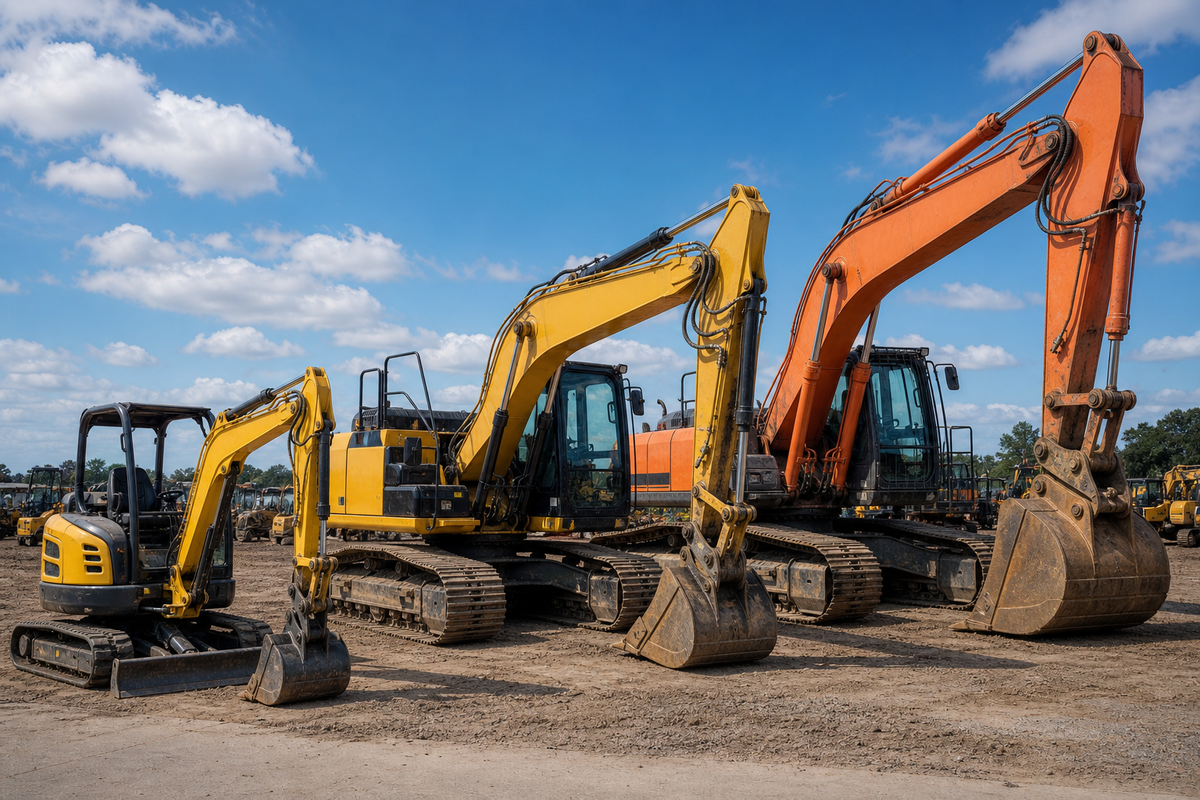
“Too many hours” shifts with machine size, and the shift is not the one most people expect. Mini excavators reach “high hours” earlier than full-size machines, even though minis usually do lighter work. Use this class comparison to place any listing correctly.
| Class | Value sweet spot | “High hours” begins | Notes |
|---|---|---|---|
| Mini (0–10 t) | 1,000–3,000 hrs | ~5,000–6,000 hrs | Lighter build, smaller components, less rebuildable. Concern grows toward 7,000–10,000. |
| Medium (10–30 t) | 3,000–6,000 hrs | ~6,000–10,000 hrs | Heavier-duty components; strong rebuild ecosystem. The reference case for the bands above. |
| Heavy (30 t+) | 4,000–8,000 hrs | ~10,000–12,000 hrs | Built for overhaul; some quarry/mining units are rebuilt at 15,000–20,000 hrs. |
⚠️ The counterintuitive part
You might assume a mini’s lighter duty buys it more hours. It works the other way.
Because minis are built lighter and are harder to rebuild economically, they cross into “high hours” sooner than a medium machine – despite often working softer ground. Judge a mini’s meter against the mini scale, not the full-size one.
Is 4,000 Hours a Lot for a Mini Excavator?
On a mini, 4,000 hours is moderate – past the ideal 1,000 to 3,000 range but short of the 5,000-to-6,000 point where the heavy-equipment world starts calling a mini “high-houred.” At 4,000 hours you should expect to start replacing wear items: tracks, pins, hoses, and possibly a hydraulic component or two. It is far from too many if the machine has records and clean hydraulics. What matters at this stage is the inspection: undercarriage condition, boom and bucket pin slop, and how smoothly the machine cycles. A documented 4,000-hour mini from a careful owner will usually outlast a neglected 2,500-hour one.
Why Hours Aren’t Created Equal: Work Severity Changes Everything
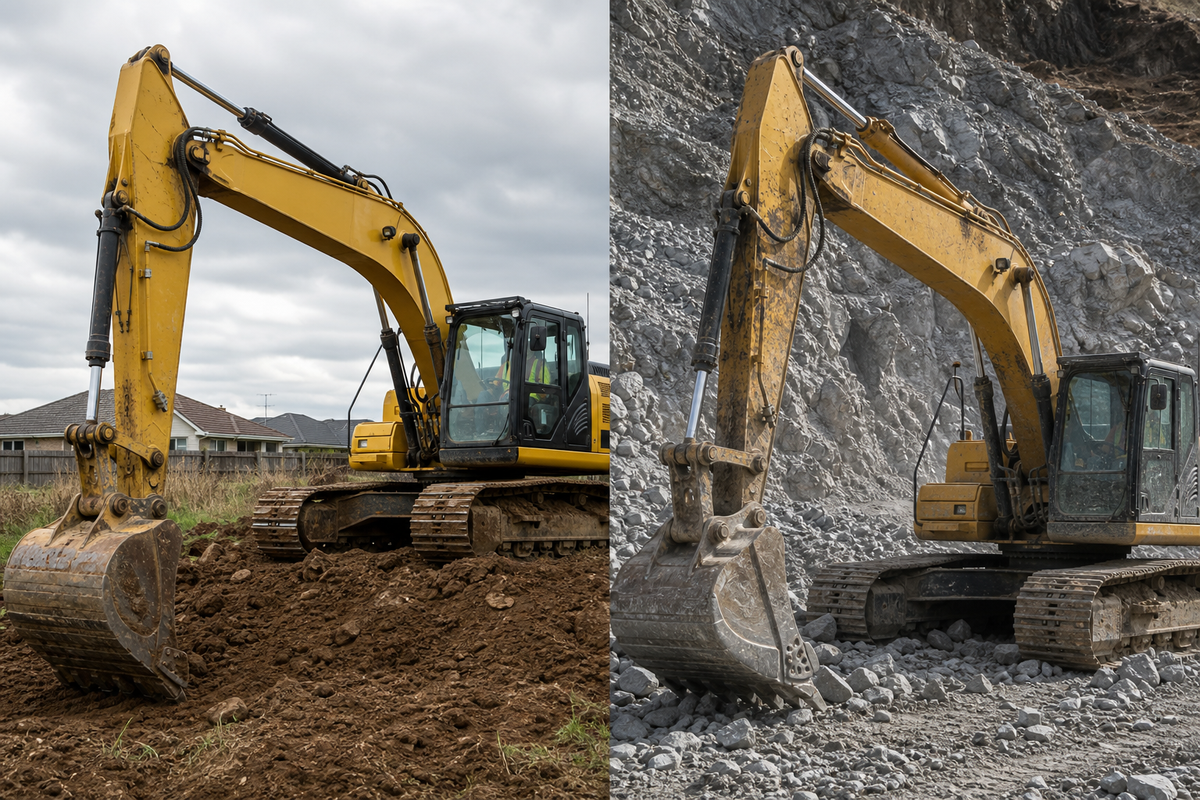
Here is the single idea that separates confident buyers from nervous ones: hours are a footnote, not a verdict. Two excavators can show identical 5,000-hour readings and be in completely different condition, because the meter does not record how hard each hour was. A machine that spent 5,000 hours digging soft topsoil in residential yards has lived an easy life. A machine that spent 5,000 hours ripping shale in a quarry, running a hydraulic breaker, or handling abrasive material has been punished – its boom and arm see shock loading, its hydraulic oil collects debris, and its undercarriage grinds down fast.
Wheel loaders or skid steer loaders will have different patterns of wear, but on an excavator the torture ends up concentrated in the hydraulics, swing gear, and undercarriage — the systems that determine whether high hours are survivable. That’s why smart dealers will happily buy a tidy 12,000-hour machine and decline a beaten-up 4,000-hour rig. Operator skill also magnifies wear. Careful, methodical operation extends life; nonstop counter-rotating and shocking add to it. Whenever you’re shopping used, be sure to ask what the machine dug, what it powered, and what a typical day looked like. That gives you the best idea of what the hours really mean.
As much as anything else, wear is a function of speed and distance traveled. Operating deliberately and with fewer long runs or pushes will help extend undercarriage life.
What Matters More Than the Number: The 3-Filter Hour Check
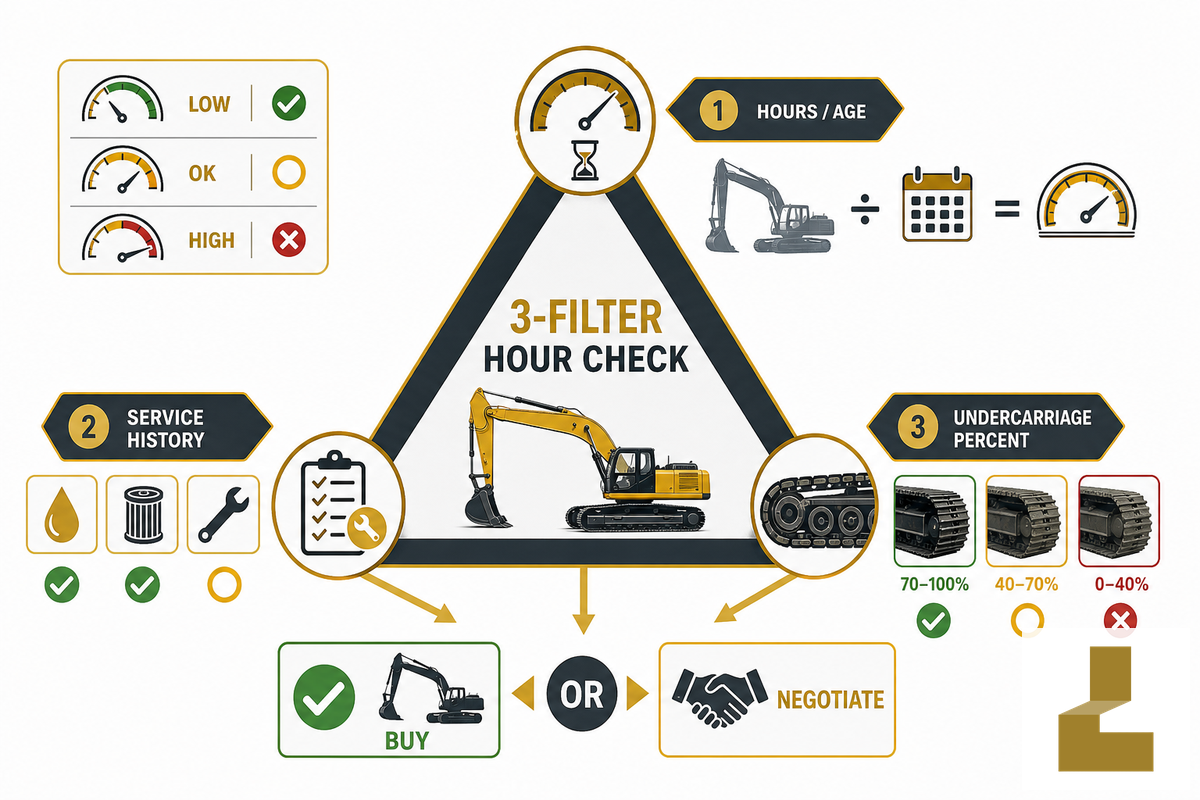
If hours alone don’t answer the question, what should you be looking at instead? Take each listing and run it through three checks. If it passes all three, the hour reading has context; if it fails one, low hours will not rescue it.
The 3-Filter Hour Check
- Hours ÷ Age. Divide the machine’s age in years into its meter. Around 1,000 to 2,000 hrs/year means the wear is normal. Anything significantly above that may suggest it had a tough life on a job site. And anything way down below around 500 hrs/year should also give you pause, since machines that sit for a while are prone to condensation and the drying out of seals and oil from sitting idle.
- Service history. A logbook with date of each oil, filter and hydraulic change is better than a low mileage reading. Genuine recorded maintenance can considerably lengthen the service life of a component; no service history means it’s an educated guess and the machine should be priced accordingly.
- Undercarriage percent. Assess the remaining life of undercarriage components such as tracks, sprockets, idlers, rollers, pins and bushings. This is the single largest cost of wear for a tracked machine; therefore, an aged undercarriage should be factored into the cost of the equipment.
Third on the filter’s priority list is the biggest financial cost. Undercarriage accounts for between 40 percent and 60 percent of an excavator’s lifetime owning and operating costs, Equipment World reports. A full undercarriage can cost thousands of dollars so if your prospective equipment requires it soon, shave that cost off your bid instead of relying on it holding up.
📐 Engineering Note
It isn’t an even distribution of undercarriage wear, either. Digging backwards nearly doubles your rate of undercarriage wear over forwards. This is due to the 50 percent fewer teeth-to-bushing engagement points when reversing. Asymmetric wear also is accelerated through repetitive directional turns or counter rotation. When examining a machine, also check left to right track wear and sprocket tooth condition. Worn “hooking” on teeth clearly indicate that the chain is worn and that the machine was worked hard.
Reading and Verifying the Hour Meter
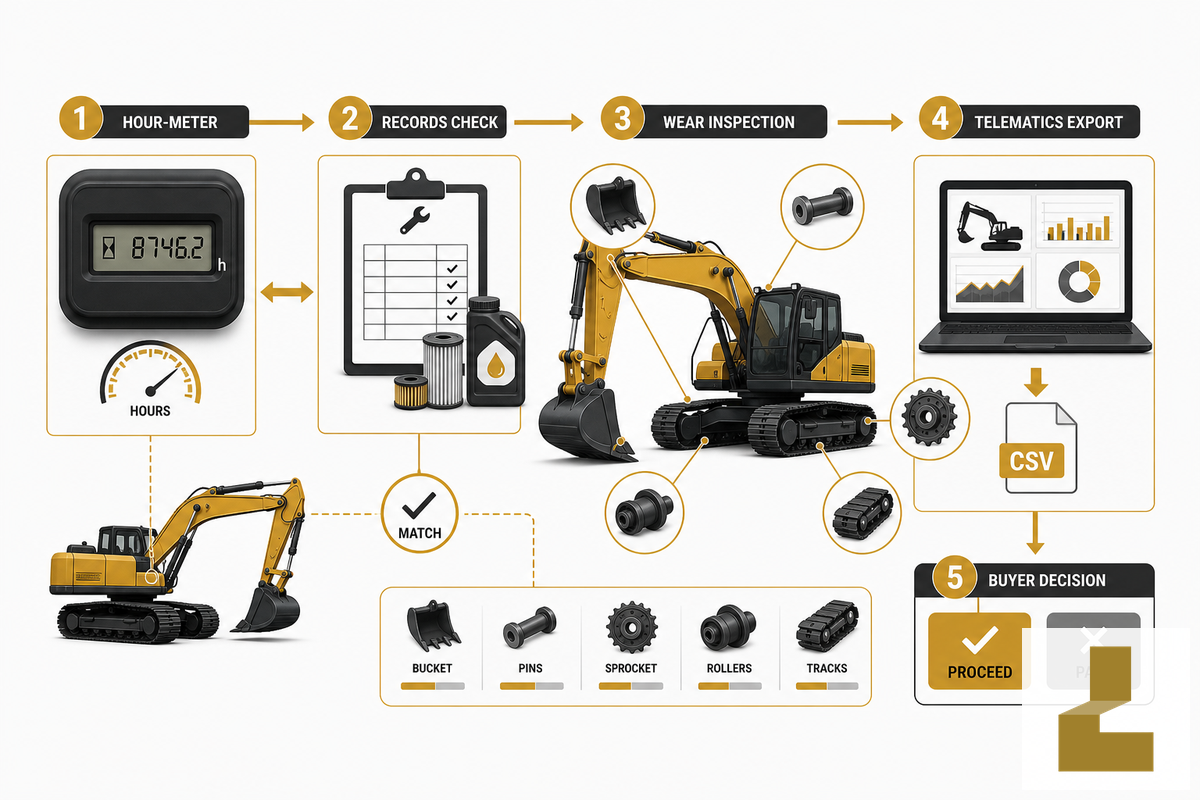
Where is the hour meter? On the control system, on the dash or on the diagnostic port. With most modern excavators, total hours will also show up through a telematics system. The catch is that when repairs are made on excavators, hour meters are sometimes replaced and other times set back, making them about as trustworthy as the wear around them.
Cross-check the figure three ways: against the maintenance records (invoices should logically add hours); against the wear and tear (a 5,000 hour meter doesn’t quite align with a sloppy seat, loose pins and a tired undercarriage); and against performance (check for hard starting, smoking, blow-by, and sluggish hydraulics before it warms up at the seller’s shop). If the evidence points in two directions, trust the wear.
Is 5,000 Hours a Lot for a Digger?
The value of a 5,000-hour standard-sized excavator is about halfway between brand new and scrap – a “sweet spot” where you pay much less than for a low-hour machine and still have 50% or more of its original useful life. On a mini, 5,000 hours puts it in the “high-hour zone” and necessitates careful inspection. In either case, a meticulously maintained, clean, tight 5,000-hour excavator can be a better buy than a neglected 3,000-hour machine.
The Economics: Rebuild Cost, Repair Curve, and Resale Value
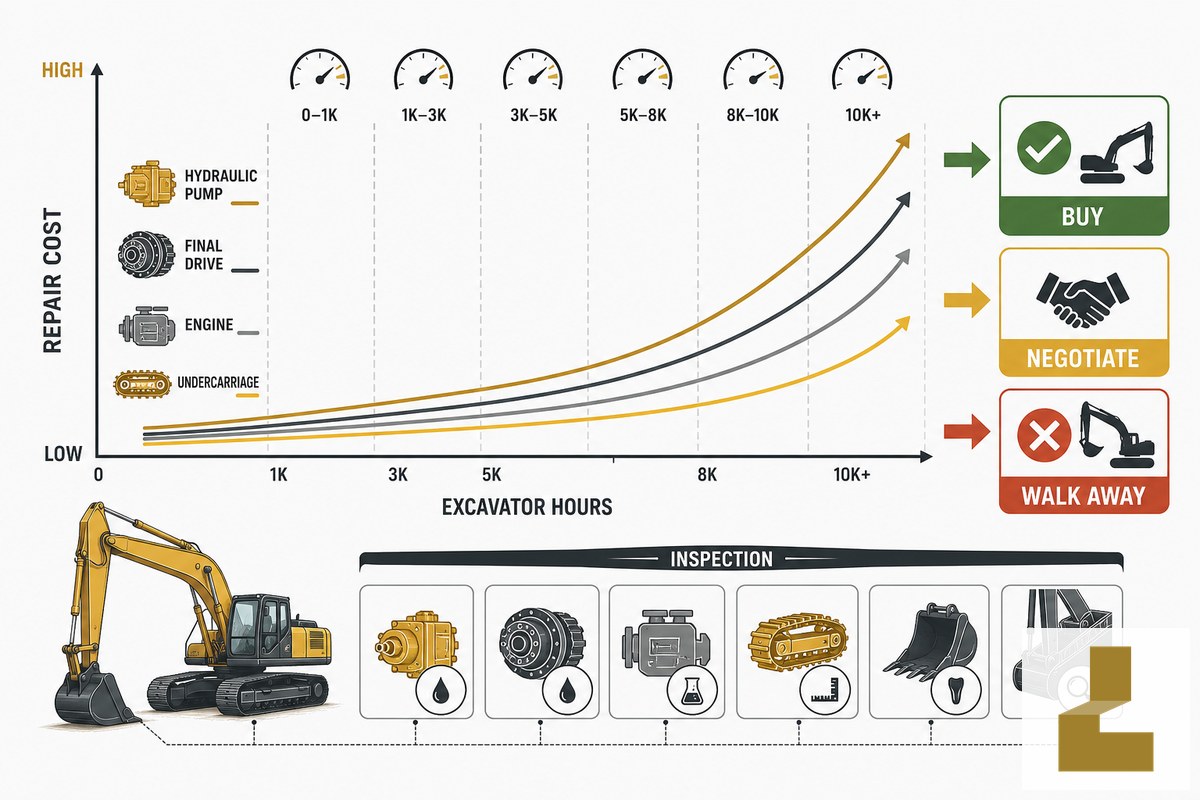
Higher hours means a different, not necessarily bad, deal. A steeper purchase price discount raises the probability of major repairs. In practice, it’s a math problem: purchase price plus anticipated future repairs divided by how much you’ll earn over its remaining life and the value of your trade-in. Total ownership cost always catches up with the sticker price.
This is because major components such as hydraulic pumps and undercarriages can be extremely expensive to replace. Academic fleet research frames the timing precisely: a machine’s economic life is the point where keeping it costs more than replacing it, not a fixed number on the meter. And because the initial purchase price is only about a quarter of the total cost a machine incurs over its useful life, per Minnesota DOT fleet analysis, a low sticker price on a high-hour machine can be deceptive once repairs are added. Use the chart below as a guide to make the right purchasing decisions based on hours and wear.
| Hours + condition | Decision |
|---|---|
| Any hours + full records + sound undercarriage/hydraulics | Buy at a fair price for the band. |
| High hours + one worn big-ticket item (undercarriage OR hydraulics) | Negotiate — deduct the full repair cost from your offer. |
| Low hours + no records + signs of neglect | Negotiate hard or pass — you are buying the unknown. |
| High hours + no records + worn undercarriage + tired hydraulics | Walk away — that trio is how a cheap machine becomes a money pit. |
Making Hours Last: Maintenance That Extends Useful Life
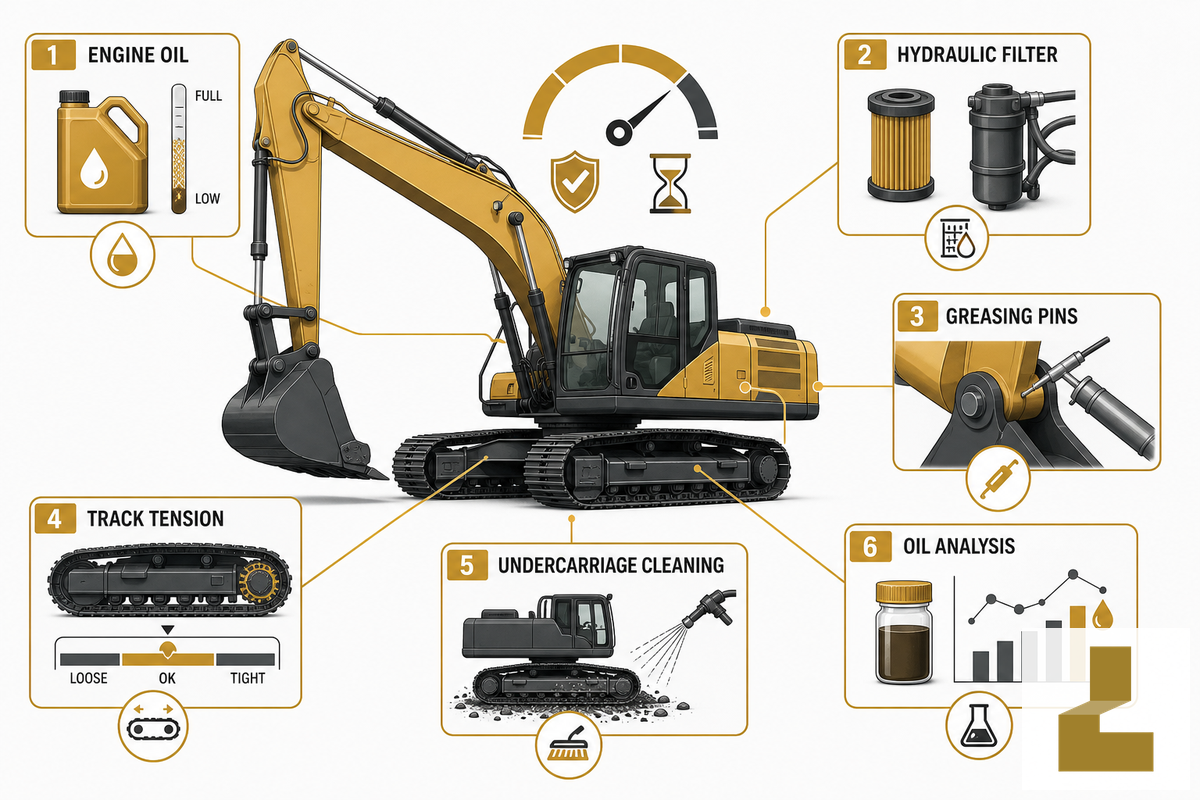
Whether you’re buying or already own one, the same discipline is what pushes an excavator past its expected hours. These are the unglamorous, everyday habits: change engine oil and filters at the manufacturer’s suggested intervals, do your hydraulic service and filter changes regularly, grease your pins and bushings daily, and keep your undercarriage clean so dirt packed against the rollers and idlers doesn’t become a highly effective grinding compound. You probably don’t know this, but the daily tracking inspection and adjustment you do will mean more to component wear than perhaps anything else you do – if you don’t get the adjustment right, the wear can escalate dramatically or, if it’s too loose, can de-rail.
- ✔ Consistent oil and hydraulic-filter changes with dated records.
- ✔ Daily greasing of pins, bushings, and the swing bearing.
- ✔ Undercarriage cleaned daily and measured periodically to plan replacement.
- ✔ Oil analysis to catch pump wear (iron/chromium) and poor filtration (silicon) early.
When you’re shopping, this is exactly the paper trail to look for. If the seller can show you a meticulously organized maintenance binder for a particular machine, he’s told you more about its next 5,000 hours than the meter ever could. We ensure the service history and wear information travels with every one of the inspected used excavators for sale in our inventory, for that very reason.
Buying Used in 2026: Telematics, Transparency, and Outlook
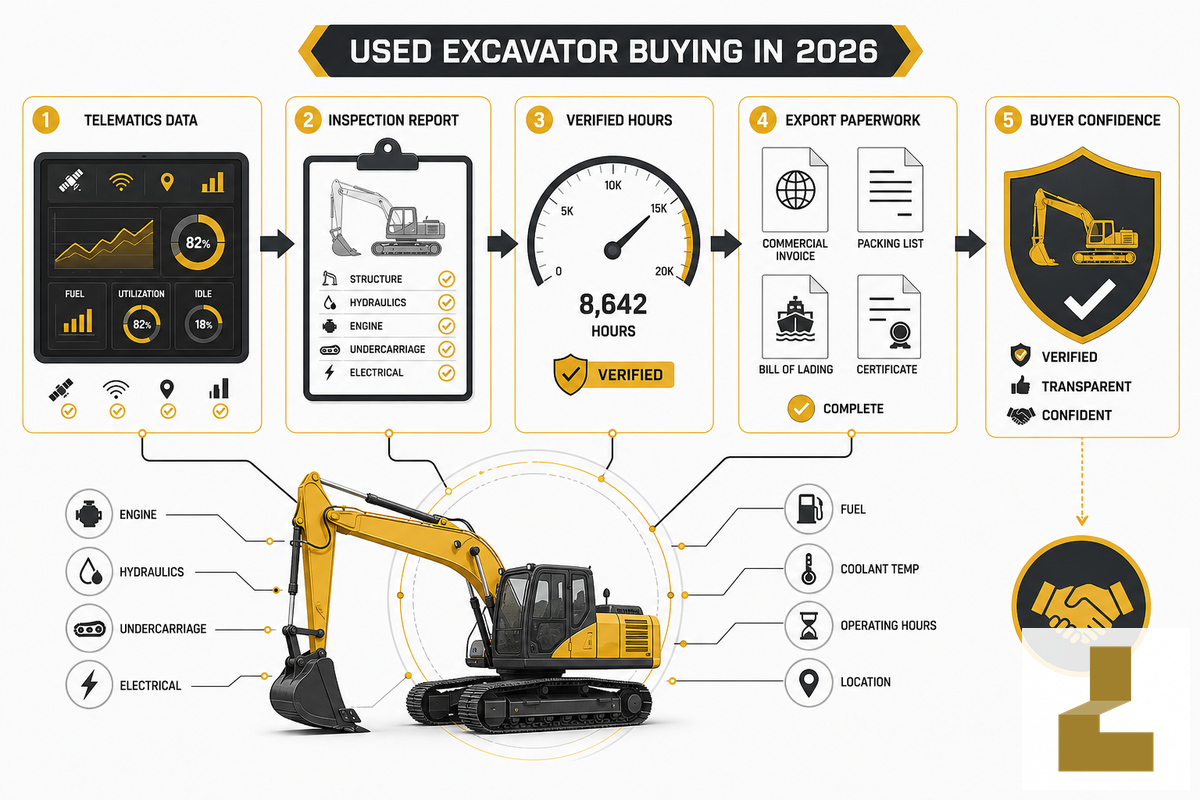
The used equipment market continues to expand, and as such, industry analyses project that the global used construction equipment market was valued at roughly $119 billion in 2025, growing at about 6.6% annually through the mid-2030s. More machinery exchanging hands will undoubtedly mean more high-hour machines being offered, making hour literacy a useful, if not necessary, skill to have as a buyer.
A more significant trend has been the increased transparency of equipment information. One of the fastest-growing segments within the industry, telematics for heavy equipment is predicted to grow at double-digit annual rates through 2035. With most new machines equipped with factory-installed telematics, a buyer may now have the ability to obtain a telematics export detailing verified hours and maintenance events rather than relying solely on mechanical meters. If you are in the market for an excavator for a 2026 project, incorporate hour-verification and the machine’s inspection report into your due diligence, even before you put a deposit down. These machines are getting tougher, the data better, and buyers who pay attention will win on price.
Ready to put these thresholds to work?
We inspect, refurbish, and test every machine we sell — listing its hours, maintenance records, and undercarriage condition honestly — across mini, medium, and heavy excavators from all the major brands.
Browse Inspected Used Excavators →Frequently Asked Questions
Is 6,000 hours a lot for an excavator?
View Answer
For most standard excavators, 6,000 hours falls in the “high but working” category. This is not necessarily too high if the machine has been well-maintained; many can perform well in excess of 15,000 hours. However, on a mini excavator, 6,000 hours represents genuine usage and a thorough inspection should be performed regardless.
What is considered high-hour usage for a mini excavator?
View Answer
A mini excavator is usually referred to as ‘high-houred’ after it surpasses 5,000 to 6,000 hours, especially if it has been subjected to poor maintenance. Many will continue to work for many years beyond that figure. However, your chances of experiencing problems with the hydraulics, undercarriage, and pins are higher above that point and the machine’s overall condition is extremely important.
Do excavator hours or age matter more when buying used?
View Answer
Generally, engine hours are more significant than calendar age, given that a machine might sit in the same spot for years and have few hours logged on the clock, or work constantly and accrue hundreds of hours each year. State fleet guidelines actually prioritize engine hours over age in vehicle and equipment replacement decisions. Having said that, an elderly low-houred machine can conceal degraded seals and water damage accumulated from years of inactivity – so weigh the hours, age and condition together.
How many hours does an excavator last on average?
View Answer
The majority of excavators are built to last for approximately 10,000 to 15,000 hours before needing a major engine overhaul; machines in good condition can last 15,000 hours and up. Smaller light-duty machines have even been known to reach beyond 20,000 hours, whereas units used for heavy-duty work in demolition and quarry applications may have seen the end of their useful lives around 6,000 hours.
Can a high-hour excavator still be a good buy?
View Answer
The answer is often ‘yes.’ A high-houred excavator that comes with excellent service records, has no major hydraulic problems and no undercarriage wear can provide many more years of use at significantly less cost than a low-houred machine – so long as you are willing to invest in routine maintenance and wear components as they require attention. Beware of the trap of high hours coupled with little or no service records and significant undercarriage and hydraulic issues. One or two issues might be easily remedied, but all three would be a reason to walk away from the deal.
About This Guide
Our team inspects and exports used mini, medium, and heavy-duty excavators to importers and dealers all over the world, and our expertise lies in assessing hour meters and undercarriages day in, day out. This report integrates our experience working directly with these machines with industry data on fleet replacement practices, equipment manufacturing specifications, and industry best practices, rather than solely presenting one viewpoint. When a specific figure is based on practical experience in the field rather than an official guideline, we’ve clearly noted it.
References & Sources
- Fleet Replacement Guidelines – St. Mary’s County, Maryland, Department of Public Works
- Major Equipment Life-cycle Cost Analysis – Iowa State University, Center for Transportation Research and Education
- Fleet Management Tools for Local Agencies – Minnesota Department of Transportation
- Heavy Equipment Utilization and Replacement Handbook – U.S. Fish & Wildlife Service
- How to Take Care of Your Construction Equipment’s Undercarriage – Equipment World

![Excavator Bucket Manufacturers: Buyer Evidence [Guide]](https://lhusedexcavator.com/wp-content/uploads/2026/08/excavator-bucket-manufacturers-r2-featured-768x512.png)