Get in Touch with Liehuang Company

ISO Certified
Excavator Quick Couplers
Excavator Quick Couplers: Pin Grabber, Hydraulic & Tilt Couplers for 1–85 t Machines
Swap a bucket for a breaker, grapple or grading attachment in seconds instead of grinding out greasy pins by hand, and keep your operator in the cab while you do it. Liehuang supplies excavator quick couplers across every machine class and all the major OEM brands, each one built to the ISO 13031 dual-lock safety standard.
Request a Quote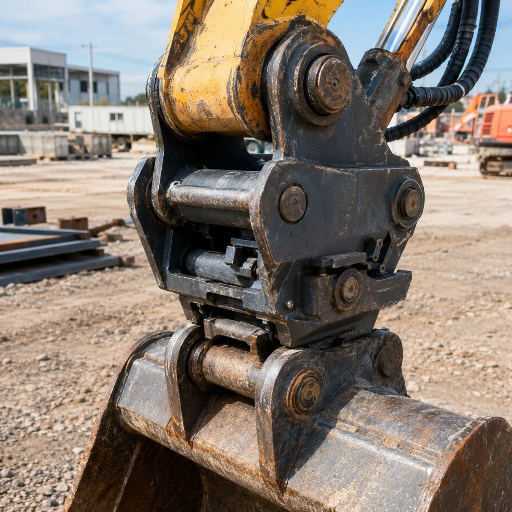
5
Coupler Types: Manual, Hydraulic, Pin Grabber, Wedge, Tilt
1–85 t
Machine Classes Covered, Mini to Heavy
9+
OEM Brands Fitted: CAT, Komatsu, Volvo, Hitachi & More
ISO 13031
Dual-Lock Safety Standard for Quick Couplers
~15 s
Hydraulic Attachment Change vs. 10–20 Min by Hand
180°
Side-to-Side Rotation on Tilt Couplers
Stop losing hours, and risking a dropped bucket, on attachment changes
Safety context: OSHA Safety & Health Information Bulletin on unintended attachment release.
An excavator quick coupler connects your dipper arm to the bucket, breaker or grapple, and lets the operator change attachments from the cab instead of prying pins out with a hammer on the ground beside the machine. There’s nothing efficient about disconnecting specialised tools the old manual way. That all adds up two basic inefficiencies. First, there’s time. Industry experts are quick to quote an estimated 10-20 minutes for manual’s manual process versus a coupler estimate of 20-90 seconds. Second, there’s far more to consider here. One bucket – at 36-inches long – weighs 45 kilos, a considerable amount of weight to be manually manhandled. Most construction-site accidents involve personnel manhandling objects over 25 kilos, which is exactly what the operator does kneeling beside a suspended attachment, fighting a seized pin to free the existing bucket.
For a crew swapping attachments six times a shift, that is about an hour of billable machine time recovered every day — you drop the second helper, the walk around the machine, and the fight with a pin that will not budge.
Safety is the deeper reason a coupler matters: a bucket that slips off kills, which is why the ISO 13031 standard exists and why a coupler decision should start there, not at the price. Liehuang has pulled buckets off these same excavators through years of used-machine export, so — unlike a generic number off a chart — we size each coupler to your machine’s real pin geometry and the ISO 13031 lock minimum before dispatch.
Four decisions are what a buyer really weighs before purchasing any coupler: which coupler type matches your operation, whether it will physically fit, how to make sure the bucket never falls, and the real payback of the swap.
Types of excavator quick couplers: manual, hydraulic, pin grabber, wedge & tilt
MECH_REF: USPTO US 6,422,805 B1quick coupler that changes attachments without leaving the cab.
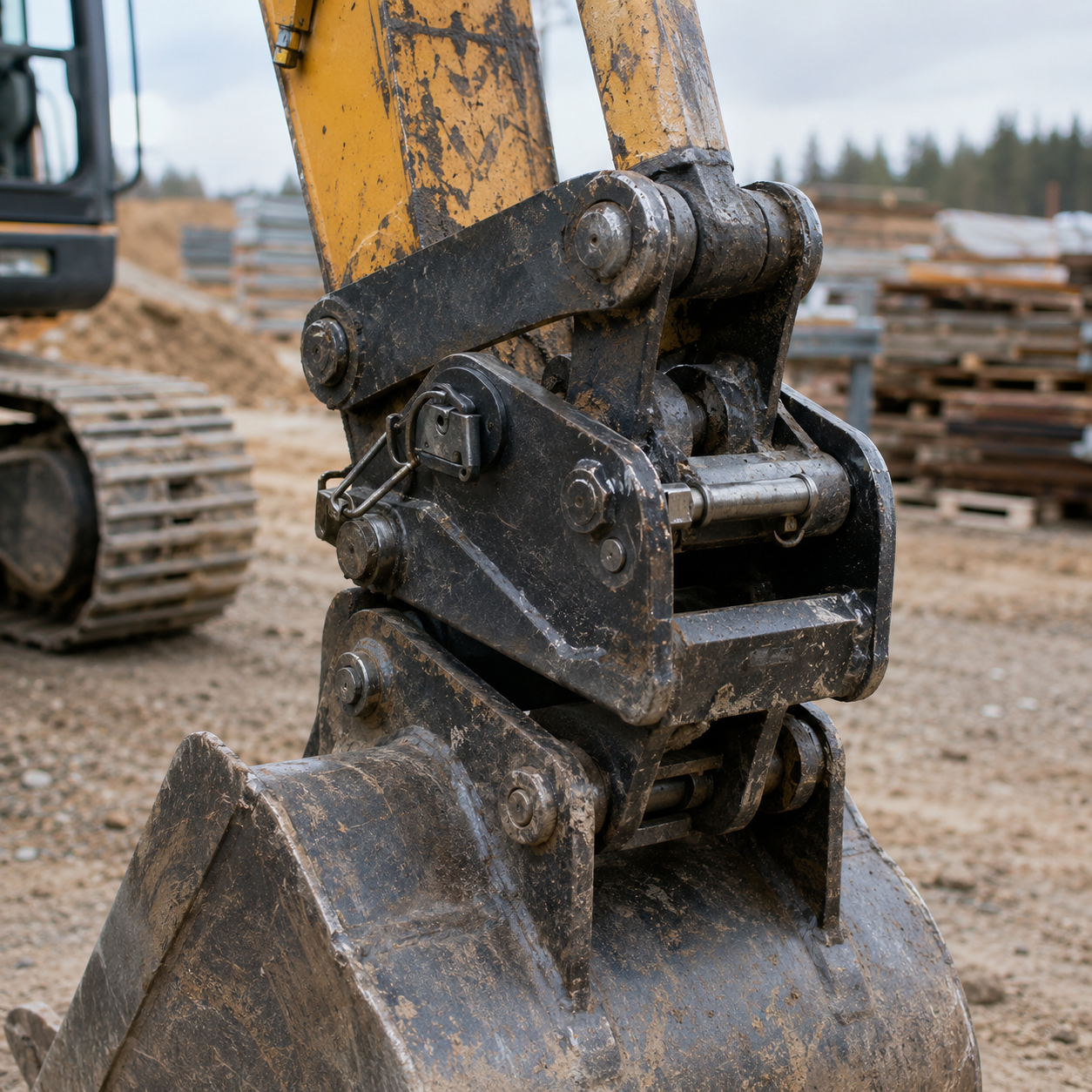
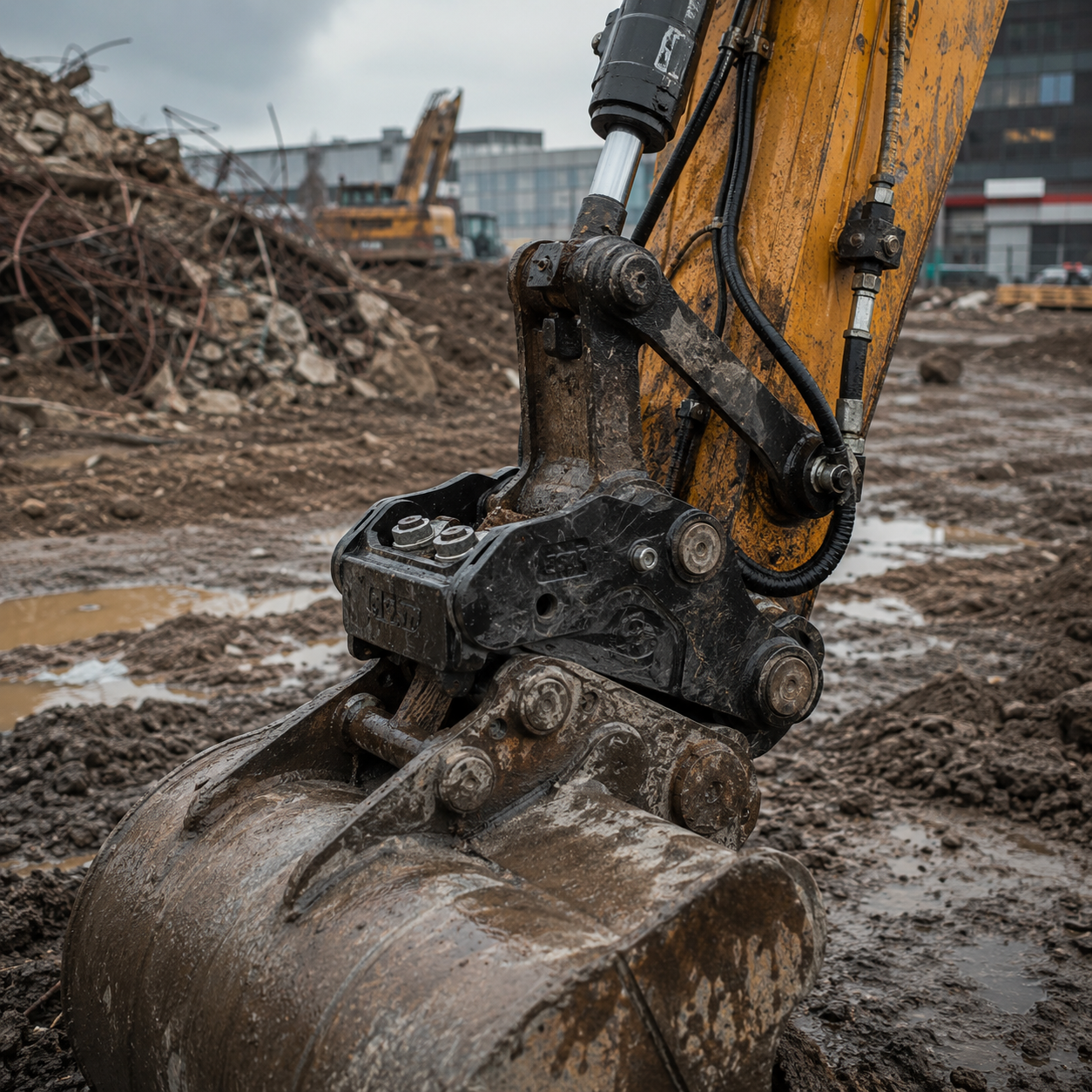
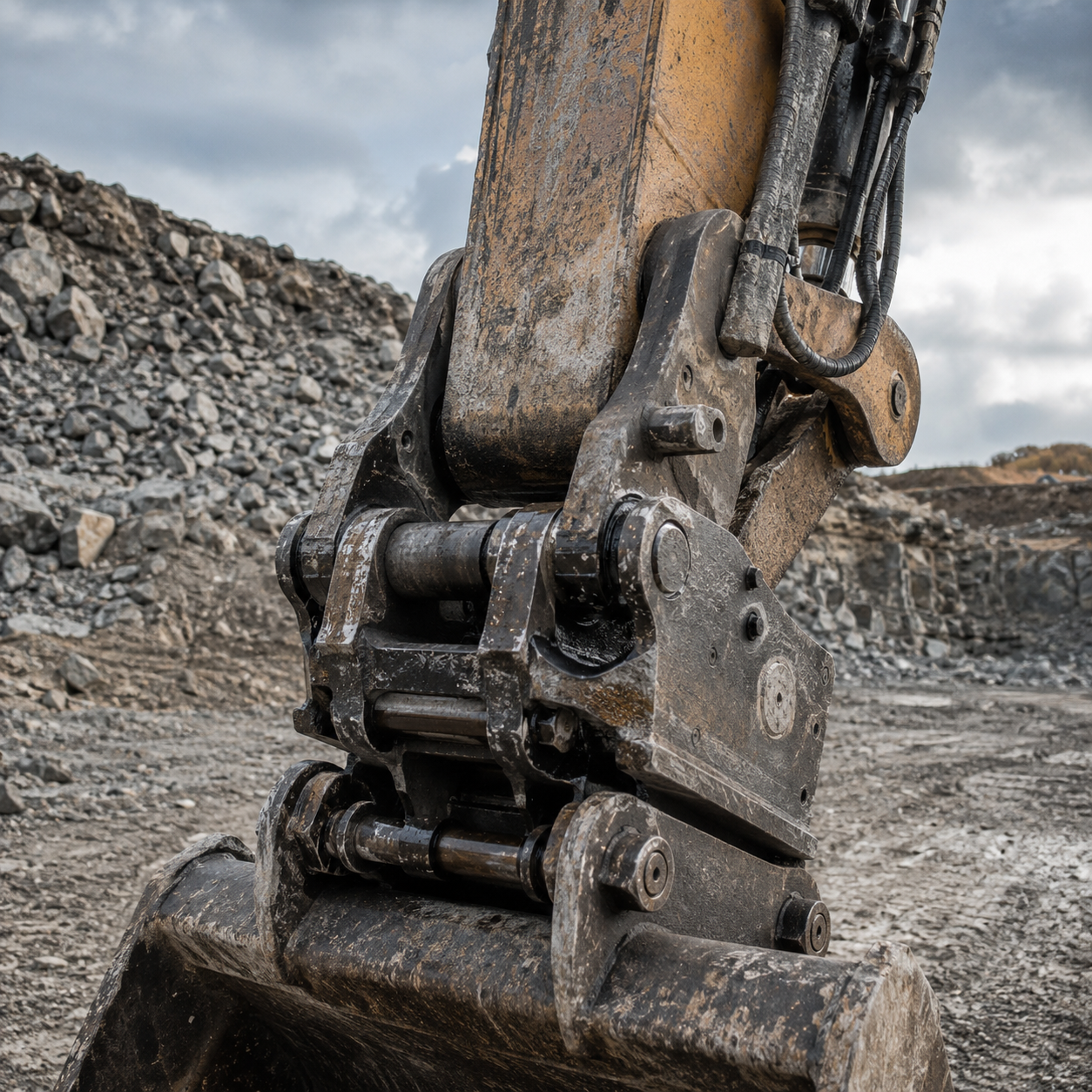
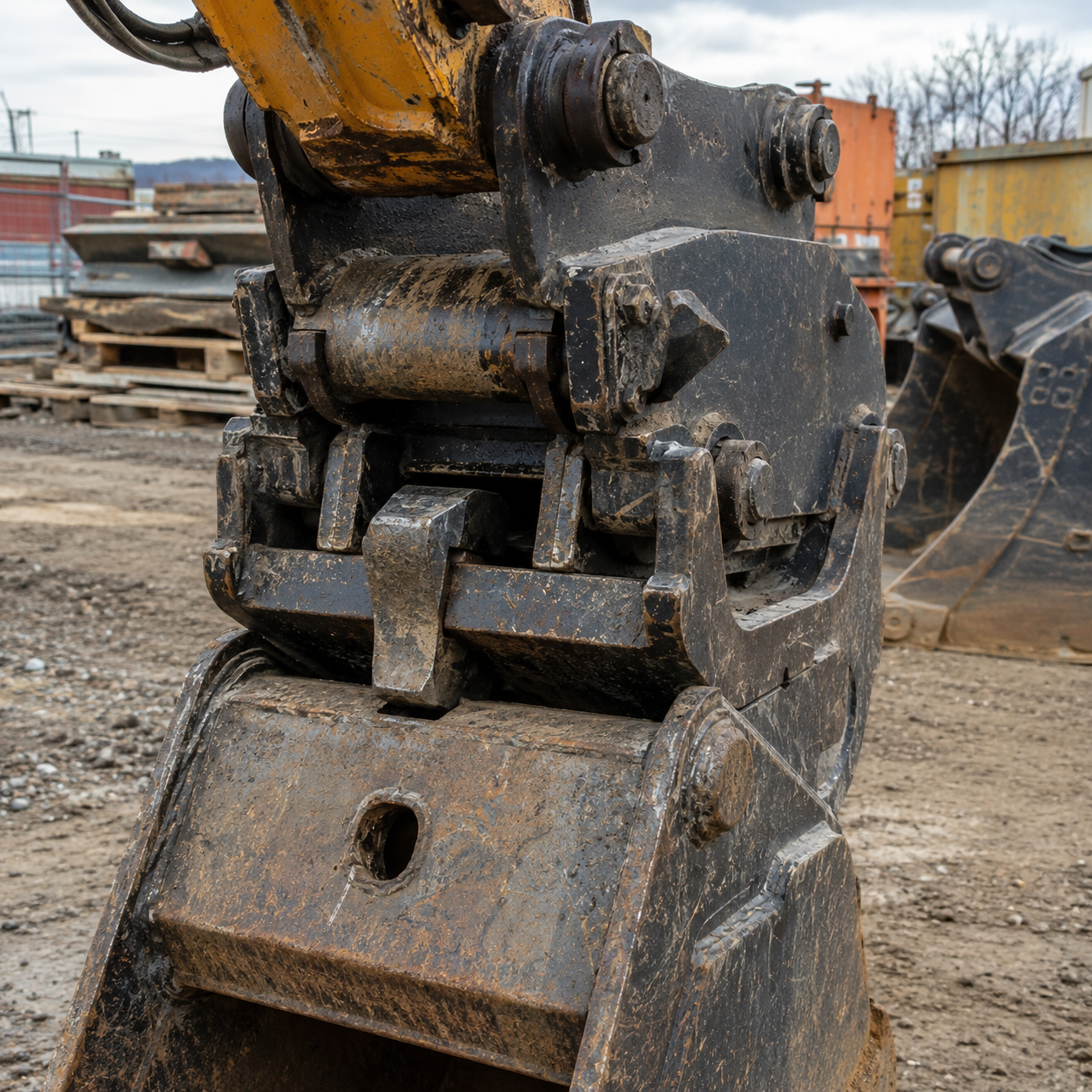
Five main types of quick couplers — manual, hydraulic, pin grabber, wedge and tilt — each suit a different job, and the quick coupler you pick should follow the work, not the spec sheet.
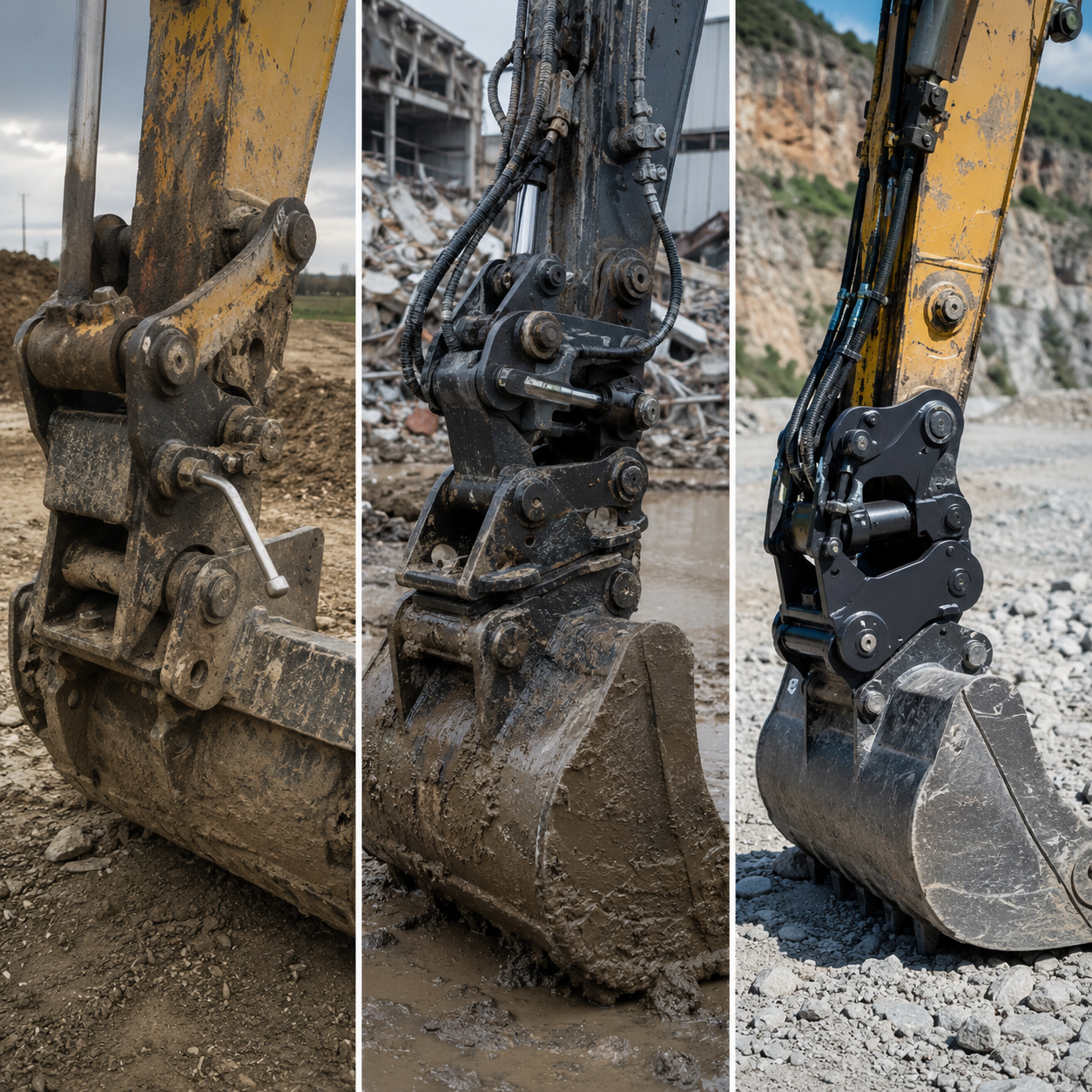
Manual and mechanical quick couplers use a safety pin that’s manually inserted to lock the attachment, so the operator leave the cab to set it in the open position before switching buckets, simple, but time-consuming. Hydraulic and hydraulic tilting couplers handle that manual operation from the seat: a tilting quick action helps with grading, while a pin grabber let you excavate against walls and unlock, reverse and switch buckets and attachments swiftly without leaving the cab. These quick coupler systems, the quick hitches of UK and Australian yards, cut the manual handling that injures operators.
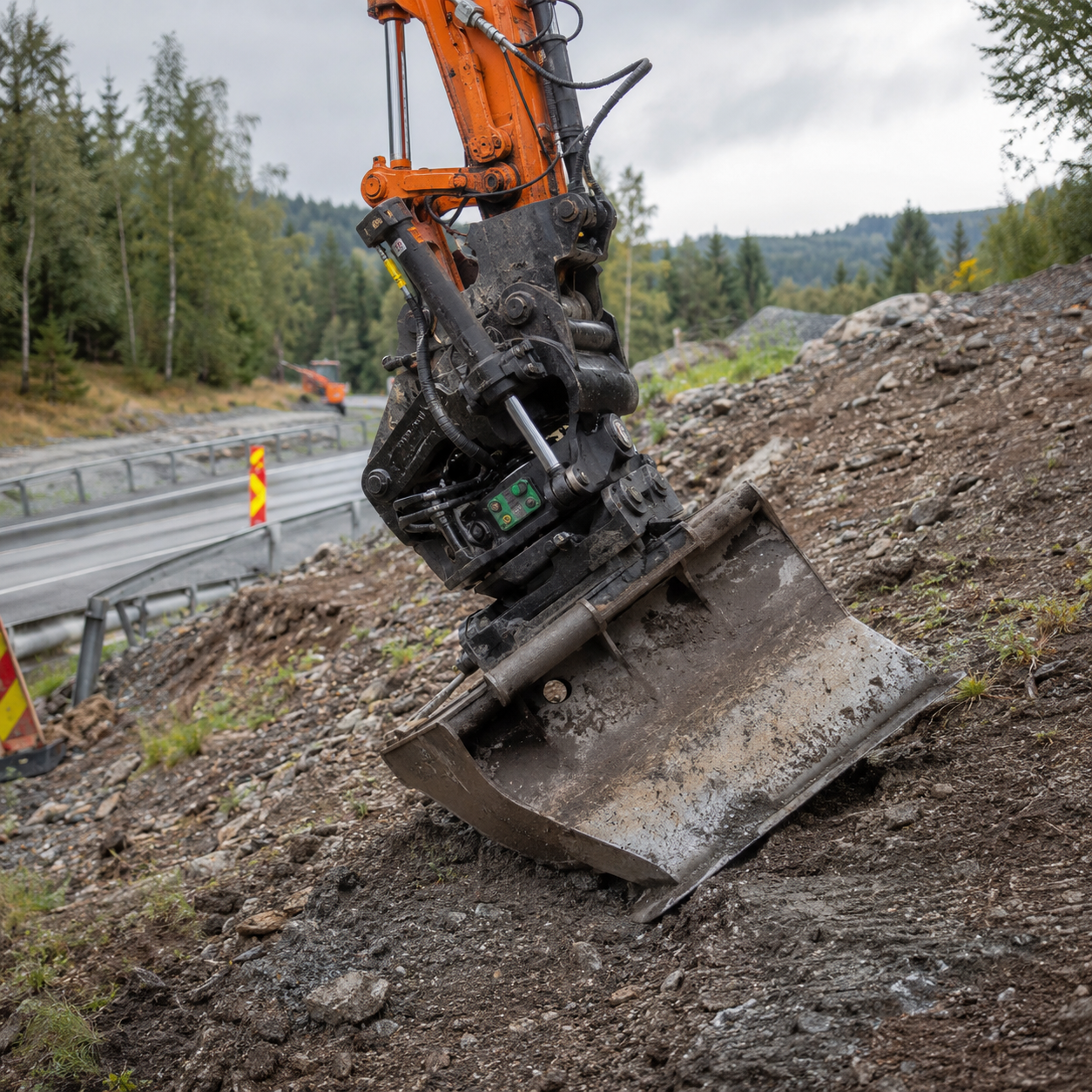
There are five types of quick coupler commonly used, and this divides down into two camps. They’re, either, via actuation manual -where the operator leave the cab to manually set a pin or screw in a wedge- or hydraulic, where an internal, in-cab button actuates a locking cylinder. Within the locking geometry, they’re further classed as either pin grabbers, which grip a bucket’s pins and are adjustable to accommodate various pin centres and may incorporate multi-pin pickup, or wedge/S-types which locate into and clamp a special purpose designed wedge. hydraulic coupler comprise in essence, four operating elements working in harmony: a locking cylinder, hydraulic hoses connected to the machine circuit, a solenoid valve and a switch in the cab (top-spec units also include visual and acoustic lock confirmation.
Pin grabbers have gained dominance in new fleets due to range. Pin-grab couplers with variable pin centres cover the broadest range of OEM attachments – including buckets with different pin diametres – and allows a bucket to be reversed for digging along walls and under pipe which a wedge coupler can’t. Wedge couplers confine you to one wedge attachment and can also wear out or jam with such force that operators claim to have required a jackhammer to free it. Pin grabbers also encourage operators into one bad habit: using a bucket to scoop (flipping it to gain an easier initial tilt on the attachment). “It wasn’t designed for that, and you’re placing all of the breakout force on the hydraulic lock cylinder,” one forum veteran wrote-which can send a lock cylinder to the scrap heap.
The 5-Path Coupler Type Selector
Use this selector to map the coupler to your task. We reference your current attachment-change frequency and machine size.
| Coupler type | Best machine class | Change frequency it suits | What it wins on | Watch-out | Indicative price band* |
|---|---|---|---|---|---|
| Manual pin / pull-pin | 1–4 t mini | < 3 / week | Lightest, cheapest, no plumbing | Operator out of cab; frozen pins | $400–900 |
| Manual screw / wedge | 2–8 t | 1–3 / week | Strong clamp, low weight | One bucket family; can seize | $600–1,400 |
| Hydraulic pin grabber | 5–85 t | ≥ 3 / day | In-cab swap, reversible bucket, widest attachment range | Adds 50–200 lb; needs a spare circuit | $1,500–7,500 |
| Hydraulic wedge / S-type | 8–40 t | ≥ 3 / day | Compact, sits close to pin centres | No bucket reversal; wedge wear | $1,500–6,500 |
| Tilt coupler (hydraulic) | 2–33 t | Grading / sloping work | 180° side-to-side for grading without repositioning | Extra lines; higher cost | $3,000–9,000 |
*Industry standards. Prices only; don’t includeLiehuang costs. Figures based on aggregated market (ztsupplychain.com, rhinox-group.us) – confirm price with your dealer quote.
Under 3 changes per week, your manual coupler is the better fit: no extra weight and saved capital. Above 3 changes daily between 2-3 attachments, a hydraulic pin grabber should amortise through labor savings (see below).
Liehuang coupler range: tonnage-to-pin fitment & brand compatibility
Machine-class basis: ISO 13031:2016 defines coupler safety for the earth-moving machine classes in ISO 6165.
Read More
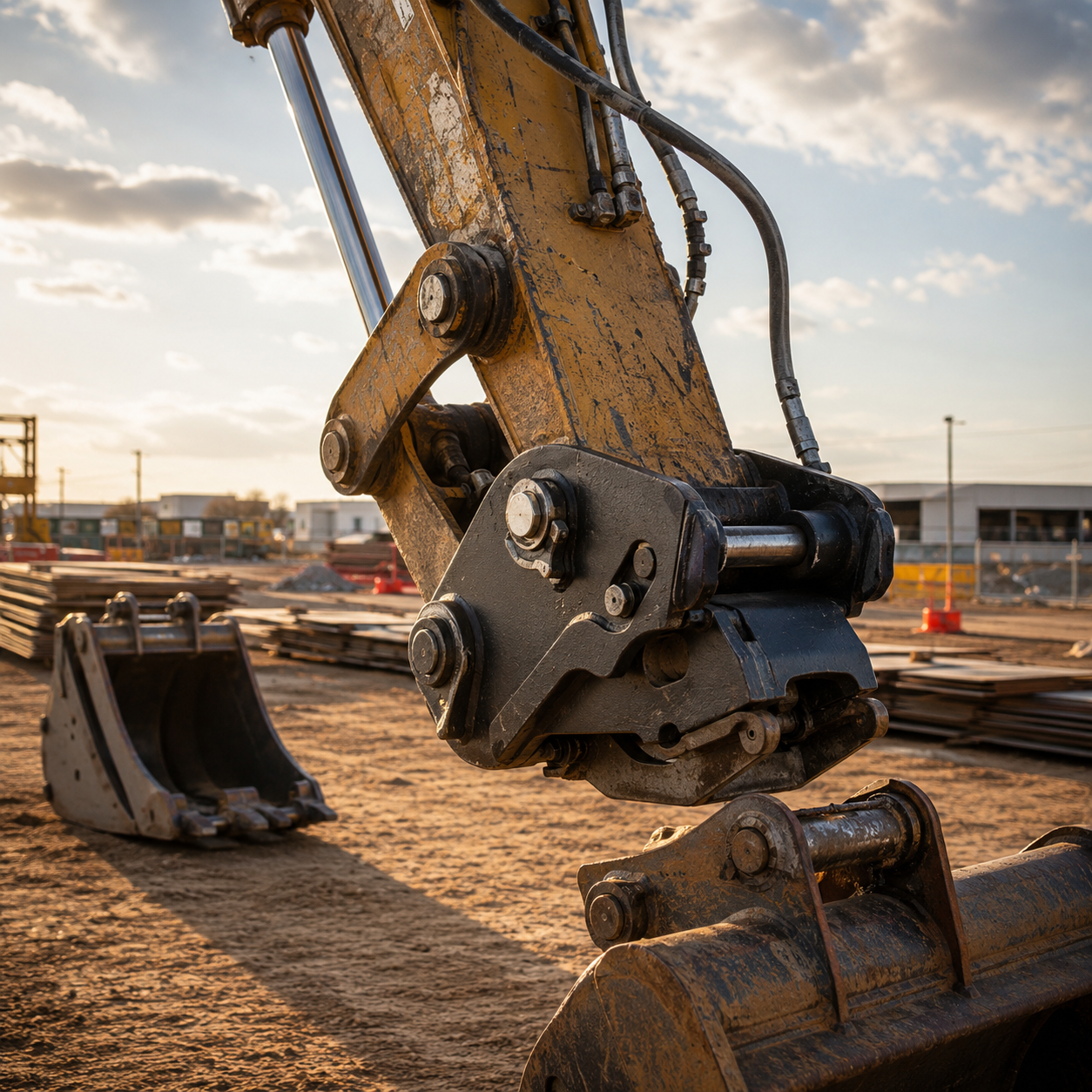
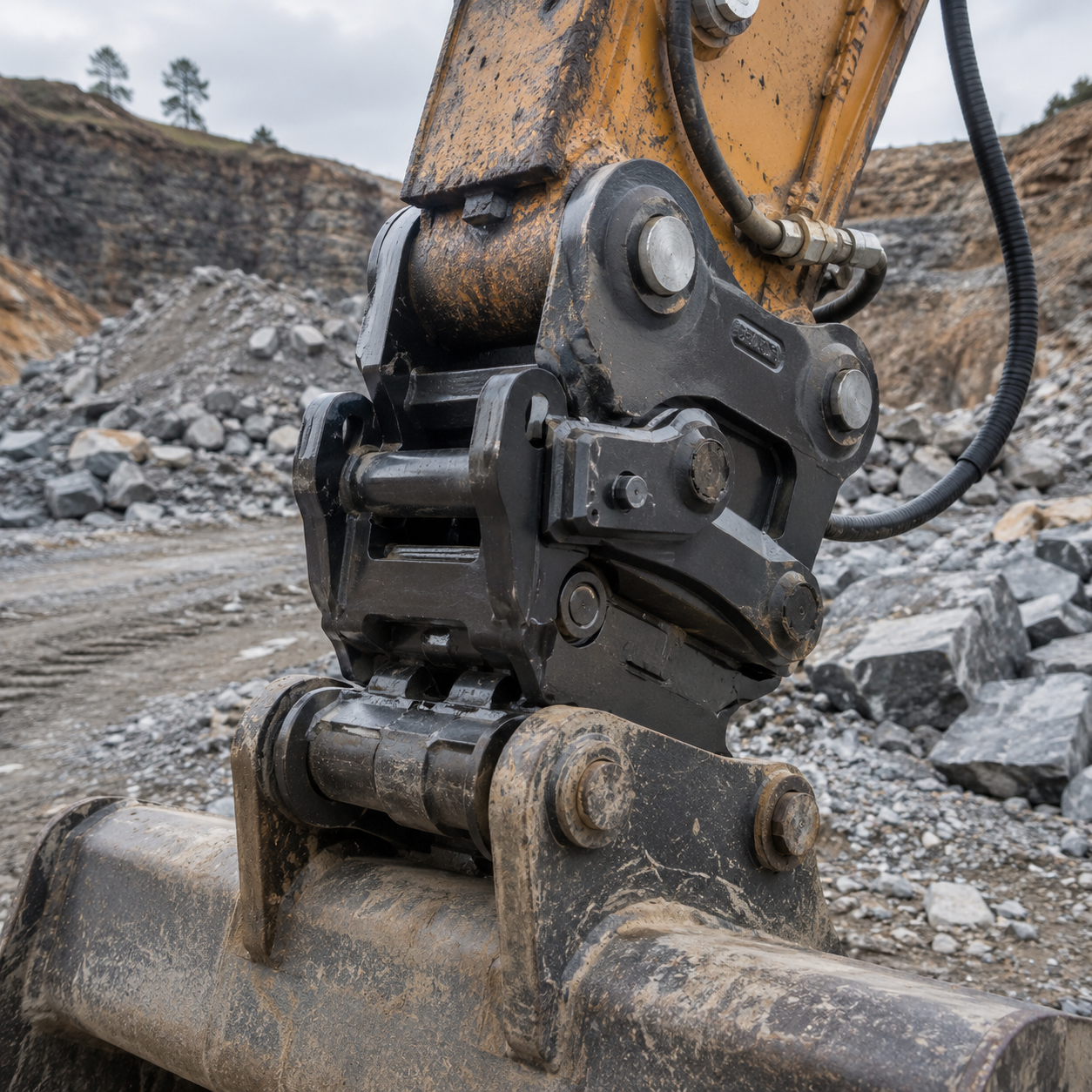
Fitment-or incompatibility-is the No. 1 cause of coupler ordering failures. It comes down to three parameters on every job: the pin diameter, the pin centre distance and the space available between the dipper/arm that your coupler has to straddle. Get any of these wrong and it will either mount not-at-all, or won’t pick up your existing buckets. Every excavator manufacturer uses unique pin diameters and centres – so a 5-ton Cat, for example, isn’t compatible with a 5-ton Komatsu out of the box; tonnage class is only a guide.
App // 01
Sys.chk // Ok
Coord: 48.2, -12.9
Coord: 48.2, -12.9
Ø Fitment
ISO: 13031
Dtl // Pins
Diam: 80mm
Tol: ±0.05
Tol: ±0.05
Match your machine class to corresponding pin parameters that couplers within that class are often configured for with this size matrix as a guide. (Actual pin measurements will be collected for your specific machine prior to shipment.)
| Machine class | Typical pin Ø (mm) | Typical pin centres (mm) | Common coupler style | Approx. coupler mass |
|---|---|---|---|---|
| 1.0–2.0 t | 25–30 | 90–180 | Manual / mini pin grab | 18–35 kg |
| 2.0–3.5 t | 30–35 | 150–230 | Manual / hydraulic pin grab | 35–60 kg |
| 3.5–6.0 t | 35–40 | 180–275 | Pin grabber | 60–110 kg |
| 6.0–9.0 t | 40–45 | 220–300 | Pin grabber / S-type | 110–170 kg |
| 9.0–13 t | 45–50 | 250–340 | Hydraulic pin grabber | 170–260 kg |
| 13–16 t | 50–60 | 300–380 | Hydraulic pin grabber | 260–360 kg |
| 16–20 t | 60–65 | 340–430 | Pin grabber / tilt | 360–480 kg |
| 20–25 t | 65–70 | 380–460 | Hydraulic pin grabber | 480–620 kg |
| 25–30 t | 70–80 | 420–500 | Hydraulic pin grabber | 620–800 kg |
| 30–40 t | 80–100 | 480–560 | Heavy pin grabber | 800–1,150 kg |
| 40–55 t | 100–110 | 540–640 | Heavy pin grabber | 1,150–1,500 kg |
| 55–70 t | 110–120 | 620–720 | Heavy pin grabber | 1,500–1,950 kg |
| 70–85 t | 120–140 | 700–820 | Heavy pin grabber | 1,950–2,600 kg |
Indicative pin diameters and centres based on commonly available OEM and coupler maker products (Geith, JMA, Cat). Always confirm by measurement on your machine – pins may differ within a class.
A variable-centre pin grabber is designed to be brand-agnostic; that’s precisely why fleets standardize on it. This grid shows where Liehuang couplers fit on the brands we already export machines for.
| Excavator brand | Pin-grabber fit | Reversible bucket | Fitment note |
|---|---|---|---|
| Caterpillar | Variable-centre pin grab | Yes | Confirm CW vs pin-grab pin spread by model |
| Komatsu | Variable-centre pin grab | Yes | Pin centres differ from CAT at same class |
| Volvo | Pin grab / S-type | Yes (pin grab) | S-series wedge can jam — pin grab avoids it |
| Hitachi | Variable-centre pin grab | Yes | Wide pin-centre window suits ZX range |
| Doosan / Develon | Variable-centre pin grab | Yes | Standard DX pin geometry |
| Hyundai | Variable-centre pin grab | Yes | HX/R-series pins verified per order |
| Kubota | Mini pin grab / manual | Yes | U/KX minis — watch cab clearance |
| Sany | Variable-centre pin grab | Yes | SY range, common Chinese-fleet pins |
| Kobelco | Variable-centre pin grab | Yes | SK pin centres confirmed per order |
| JCB / Takeuchi | Pin grab / manual | Yes (pin grab) | Common in rental fleets |
Two fitment traps the spec sheet never shows you
Fit isn’t just about the pins. Because a coupler extends the stick, it pushes the bucket farther from the stick and creating two problems operators have paid to fix:
Cab Interference
As operators note, some “manual quick couplers extend the buckets down just far enough for a tooth to collide with the cab when the stick is pulled to full stroke.”
Thumb Interference
If you run a thumb on your stick, some couplers may reconfigure the geometry enough that the thumb impacts the bucket; we’ve seen one operator end up cutting, re-drilling, re-welding, and lining bore the thumb mount after an after market swap.
Tell us if you run a thumb or a tight-tail machine and we can check clearances before we give a quote.
×
Pin grabber vs wedge, hydraulic vs manual: why “more breakout force” is the wrong question
Locking-geometry reference: USPTO US 8,347,974 B2 quick-coupler safety locking device.
Here’s the trade-off the spec sheet hides: a pin grabber give up a few percent of breakout force but earns it back in versatility, and used wrong, “it wasn’t designed for that and you’re placing all the breakout force on the hydraulic lock cylinder.” The honest answer is to match the coupler to the work.
| Factor | Manual / mechanical | Hydraulic pin grabber | Hydraulic wedge / S-type |
|---|---|---|---|
| Attachment change time | 5–20 min | 20–90 sec | 20–90 sec |
| Operator effort | Out of cab, often 2 people | In-cab button | In-cab button |
| Breakout-force impact | Minimal | 5–15% (less if compact) | 5–12% |
| Reverse a bucket? | No | Yes | No |
| Attachment range | One family | Widest (variable centres) | Wedge-matched only |
| Lock for ISO 13031 | Manual pin + latch | Dual + front lock + cylinder check valve | Wedge + secondary lock |
| Added mass | Lightest | 50–200 lb | 50–180 lb |
| Best for | One tool, tight budget, remote sites | Frequent changes, mixed yards, rental fleets | Compact reach, dedicated buckets |
The ROI of fast attachment swaps: the downtime payback model
Operator-exposure basis: NIOSH (CDC) documents struck-by fatalities from quick-coupler bucket release.
When is saving time, saved money? This requires looking at your own bottom line, not just the savings per quick swap out. Coupler payback equals “savings per swap” x “number of swaps per month” x “hourly cost of operator+machine”-less the slightly higher upfront cost of maintaining a hydraulic system.
~50–60 min/day
recovered at six attachment changes a day, swapping ~10 minutes of manual pin work for under a minute each
The Fast-Swap Downtime Payback Model
Indicative, based on aggregated industry time data (ztsupplychain.com). Run your own rate below.
Use this framework with your real numbers:
Annual saving = (minutes saved per change ÷ 60) × changes/day × working days × $/hr − maintenance premium
- “ Savings per swap”: take a conservative 10-minute figure (manual 10-20 min/swap versus hydraulic 20-90 secs/swap).
- $/hour: Combine operator labor costs with your machine rates, if applicable.
- Working days: 200–250 for most construction operations.
Example: 6 swaps/day x 10 min = 60 minutes of lost work time daily. At an aggregate $100-120/hour, this is equivalent to a substantial amount in the range of $9,600 to $14,400 annually, offset by an investment in a high-usage coupler and installation cost that pays for itself in a few months. For less frequent users, the case for the investment isn’t so strong – and we’ll tell you so.
(These are illustrative figures, generated from industry standard ROI models, your actual payback is entirely dependent on how often and how fast you’re changing attachments.)
Honestly, a coupler is a sensible purchase for a crew changingattachments three or more times daily, on the edge for three or so changes per week, and flat wrong for a machine that only require one-attachment change. Wear items contribute too. Hydraulic couplers run about $300-600 a year in seals and hoses. Manual couplers: under $100 a year. Couplers subjected to demolition and breaking will naturally wear faster and run counter to many warranties, so we would rather correctly dimension it than over-supply you a hydraulic model you’ll barely use.
Excavator Quick Coupler Selection & Verification Tools
Excavator Coupler Fitment & Pin Checker
Find your likely coupler type and the three pin dimensions to confirm before you order.
Fast-Swap Downtime Payback Calculator
Put in your real numbers and see whether a hydraulic quick coupler pays back for your operation.
5-Path Coupler Type Selector
Answer four questions and get the coupler type that fits your work — not the spec sheet.
ISO 13031 Coupler Safety Spec Checklist
Tick what a supplier can actually evidence. A dropped bucket is a fatal failure — score the coupler before you buy.
Excavator quick coupler FAQ
These come straight from operators, starting with the quick coupler vs quick hitch question and the pin grabber vs wedge debate.
What is the difference between a quick coupler and a quick hitch?
A note on quick coupler vs. quick hitch – it’s the same part under two regional names; quick coupler is a more common North American usage and quick hitch is commonly referred to as such in Britain and Australia. This device mounts to the end of the dipper arm of a bucket or attachment to allow the driver to change his operator from the cab. You’ll also hear of a “quick attach”.
What is the difference between a pin grabber and a wedge-style coupler?
The pin grabber take care of both pins on the bucket at once, and its wide range of variable centres allows it to tackle most attachments and a reversed bucket. A compact, but limiting, wedge coupler clamps the purpose built wedge fitting, and locks you to wedge matched attachments. Wedge on paper generates slightly higher breakaway torque than pin, but pin’s return value comes in sheer flexibility – that’s why mixed fleets largely go that way.
Which excavator quick coupler is right for my machine?
Begin with two measurements: your machine’s class of weight, plus change over frequency. Three changes a day and higher says your hydraulic is a pin grabber – below three a week is more typical of a manual coupler. Simply confirm the pin dimensions and you’ve a coupler sized for your machine; use the tool above as a sizing tool for starting the point.
Will a Liehuang coupler fit my CAT, Komatsu, Volvo or Hitachi excavator?
Our variable centre pin grabbers offer the perfect bridge across brands, and we stock every major OEM for whom we export machine! Be warned, a coupler suitable for a 5-ton CAT machine won’t necessarily suit a 5-ton Komatsu as different OEMs operate at different pin centres in terms of tonnage, we confirm your pin configuration before we make.
Manual or hydraulic quick coupler, which should I choose?
Hydraulic If you change attachments often and your machine is a 5 ton or bigger, and your hydraulic is configured with a standby circuit then time saved and safety will pay back for cost. manual If you run one type of attachment primarily, your machine is the 1 to 4 ton size, or you’re on job sites that aren’t within easy reach of technical support and the added ease of use is a definite bonus.
Are excavator quick couplers safe?
A correctly manufactured and operated couplers is considerably safer than manual pin changing. The operator remains inside the cab, the danger can only arise from couplers that fail to “catch” on the secondary lock (this is why individuals have lost their lives to such incidents). Don’t even think of buying a couplers unless it incorporates dual lock, with a front lock, and an in-cab indicator and that the lock check is performed on every load.
What pin sizes and machine tonnage do your couplers cover?
1ton minis on 25-30mm pins, through to 85ton machines on 120-140mm pins, including manual, hydraulic pin-grabber, wedge, and tilt styles. The fitment matrix above indicates pin shape by class; the precise pin dimensions for your specific machine would be verified upon ordering.
Can I use a quick coupler on demolition or rock-breaking work, will it void the warranty?
Sure you can but do so selectively. Repeated harsh work – for a hydraulic, rock breaker, skeleton buckets etc – speeds the wear on a coupler to a rate where the warranty has become void with some builders in coupler that way. For really hard hitting work we can certainly suggest heavier duty equipment and manage your expectations in the sales process.
Payment protected by staged delivery proof
Pay the balance after machine proof, not on blind trust.
Used excavator buyers need more than a product photo. Liehuang uses a staged payment workflow: deposit to reserve the machine, inspection evidence before balance, and export documents plus shipment tracking before release.
Verified machine videoLoading and customs filesBalance paid after confirmation
Quote & machine selectionChoose the model, hours, attachments and export destination before we reserve stock.
Deposit to lock stockA deposit holds the exact machine while inspection media and documents are prepared.
Inspection proof sentReceive walkaround video, hour-meter photos, serial details and loading plan.
Balance after confirmationPay the remaining balance only after you confirm the machine condition and export evidence.
Shipment & customs trackingWe share loading photos, bill of lading progress and customs support until release.
For high-value used equipment, trust is built by evidence. Ask for the current stock list, payment schedule and export document sample before you decide.Request stock proof