Liehuang Used Excavators https://lhusedexcavator.com Inspected Used Excavators & Attachments for Global Buyers Wed, 12 Aug 2026 02:34:18 +0000 en-US hourly 1 https://wordpress.org/?v=7.0.3 https://lhusedexcavator.com/wp-content/uploads/2026/06/liehuang-logo-150x150.png Liehuang Used Excavators https://lhusedexcavator.com 32 32 Used Kobelco Excavators: SK55 to SK350 Buying Guide for Export Buyers https://lhusedexcavator.com/blog/used-kobelco-excavators/ Wed, 12 Aug 2026 01:40:30 +0000 https://lhusedexcavator.com/?p=4524


Used Kobelco Excavators: SK55-SK350 Buying Guide


Export buyer guide

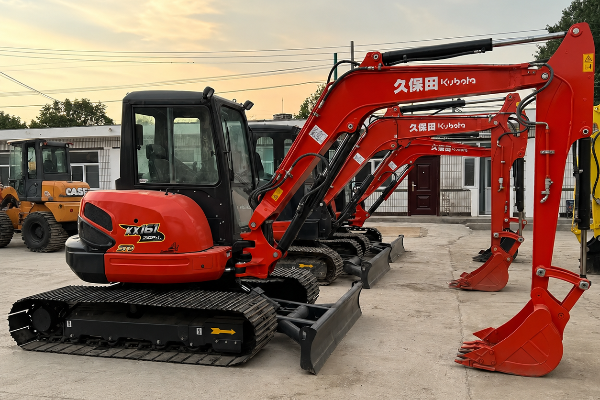
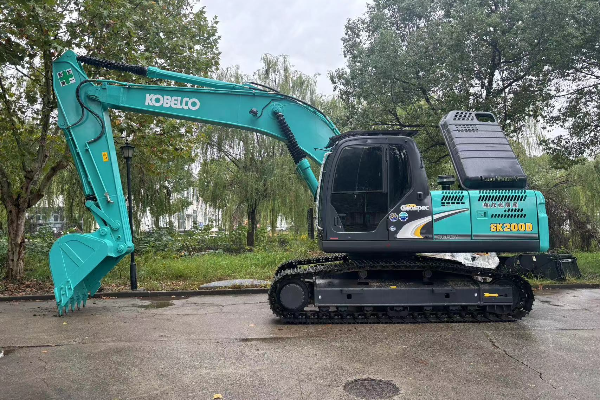
Used Kobelco Excavators are previously owned Kobelco machines that buyers compare by machine identity, condition proof, export documents and clear FOB or CIF terms. They can be a strong shortlist when the seller connects the quoted machine to current stock photos and inspection proof. Price matters, but proof decides whether the machine is ready for payment.

Reviewed by the Hefei Liehuang Machinery Co., Ltd. technical team. Last updated: August 11, 2026.

Fast Answer for Buyers

Fast Answer for Buyers — Liehuang Used Excavators

That proof-first approach means that, when comparing a used Kobelco excavator for sale from China, start with the machine class and then ask for proof. SK55 fits compact jobs, SK200 and SK210 fit common road and building work, and SK350 fits heavy digging. Model name alone is not enough because year, serial range, arm length, undercarriage type, bucket, hydraulic condition and export scope can change the real value.

Live stock buyers should request current photos and quote evidence from the Used Kobelco Excavators category, or open the quote popup here: Request current stock proof.

Used Kobelco Excavators: Start With Proof, Not Only Price

Used Kobelco Excavators: Start With Proof, Not Only Price — Liehuang Used Excavators

Many search results for Kobelco excavators are marketplaces, dealer listings and category pages. That tells you something practical: buyers want stock, photos, prices and a fast quote. A blog article should not pretend to replace inventory. Its job is to help you read a quote before you send a deposit or balance payment.

Low FOB price can be real, but it can also hide missing inspection media, unclear attachments, weak document support, extra loading cost, local port charges or destination-market compliance risk. A higher quote with machine identity, clear inspection media and export documents may be the safer buy. That difference is not always visible on the first price line.

Liehuang Used Excavators, operated by Hefei Liehuang Machinery Co., Ltd., sells inspected used excavators and attachments from China with sourcing, inspection, refurbishment, testing, export and document support. In this Kobelco guide, the key commercial route is the current used Kobelco excavator stock page. Use that page for live availability, then use this guide to decide what evidence to request.

Start with one safer buying question: can the seller connect the quote to one actual machine? That means serial plate, engine plate, hour-meter photo, current yard photos, cold-start video, operation video, undercarriage close-ups, hydraulic cycle video, loading plan and export-document scope. Missing pieces or mismatched media should pause the purchase until the seller clarifies the file.

SK-Class Fit Ladder: SK55, SK200, SK210, SK350

SK-Class Fit Ladder: SK55, SK200, SK210, SK350 — Liehuang Used Excavators

These values are Liehuang page and stock-reference values captured for this buying guide. Those figures are not universal Kobelco factory specifications. Confirm the actual machine by year, serial number, regional designation, boom and arm setup, bucket, track width and visible condition before you treat any number as final.

Model class Page-reference size FOB reference range Best buyer fit Proof to request first
Kobelco SK55 5.5 ton short-radius mini, 5,500 kg operating weight, 0.24 m3 bucket, 34.7 kW power US$16,000-26,000 Urban work, utilities, landscaping, small job sites, tight access Tail panels, counterweight, swing bearing play, boom base, dozer blade linkage, meter-panel photo
Kobelco SK200 20 ton crawler, 20,700 kg operating weight, 0.80 m3 bucket, 124 kW power US$28,000-62,000 General construction, road work, foundations, fleet replacement Hydraulic pump response, final drives, engine smoke, track chain, swing motor, operation video
Kobelco SK210 21-22 ton crawler, 21,500 kg operating weight, 0.80-1.00 m3 bucket, 124 kW power US$32,000-68,000 A 20 ton class upgrade path when reach, bucket and reserve matter Year, hours, undercarriage, hydraulic load video, serial and engine plate photos
Kobelco SK350 35-38 ton crawler, 36,700 kg operating weight, 1.40-1.60 m3 bucket, 198 kW power US$48,000-80,000 Heavy digging, quarry support, large earthmoving and production work Boom and arm cracks, pump load, final drives, cooling packs, cold-start footage, hydraulic cycle videos

Use the ladder to choose a first-choice model and one backup model. Trenching around buildings may make the SK55 a better fit than a larger machine that costs more to move. General-purpose construction and road work usually put SK200 or SK210 in the first quote request. Production digging puts SK350 into a separate shipping and repair-reserve discussion because transport, bucket size, fuel use and component cost all rise with size.

For a tighter RFQ, convert the size ladder into a proof ledger before deposit:

Evidence item Specific value range to confirm Decision use
SK55 size proof US$16,000-26,000; 5,500 kg; 0.24 m3; 34.7 kW Checks compact budget against lift, bucket and power reserve.
SK200 size proof US$28,000-62,000; 20,700 kg; 0.80 m3; 124 kW Checks roadwork quote value against the common 20 ton purchase target.
SK210 size proof US$32,000-68,000; 21,500 kg; 0.80-1.00 m3; 124 kW Checks the upgrade reserve against reach, bucket and hydraulic evidence.
SK350 size proof US$48,000-80,000; 36,700 kg; 1.40-1.60 m3; 198 kW Checks heavy digging value against transport and repair exposure.
Hour record Current meter photo plus serial plate in the same file Prevents a low-hour claim from floating away from the quoted unit.
Undercarriage reserve Track chain, sprocket, roller, idler and shoe close-ups Shows whether the price leaves room for wear parts.
Hydraulic reserve Boom lift, arm cycle, bucket curl and travel under load Shows whether the machine can work beyond idle video.
Shipping reserve FOB quote, CIF quote if needed, destination port and loading plan Separates machine price from freight, insurance and port assumptions.
Document reserve Commercial invoice, packing list, bill of lading and engine plate photos Gives finance, broker and operations teams the same evidence file.

As a faster first pass, compare the model against Liehuang’s Used Kobelco Excavator Model Selector, then ask for machine-specific proof on the model page that matches your job.

Search labels can hide the same buying question. A request for a Kobelco SK200 for sale or a Kobelco 210 excavator for sale should quote the exact unit, not only the model family. Compact-budget buyers can compare Kobelco mini excavator price against SK55 proof and repair reserve. Plain Kobelco excavator price searches should lead back to machine-specific evidence, not a fixed model-wide number. Buyers who call these machines second hand Kobelco excavators should still request current stock proof, an inspection report, operating weight, bucket capacity, engine power, attachment scope, hour proof and pending repair notes.

Kobelco Proof-to-Port Matrix: The Hidden Bottleneck Between FOB and Landed Cost

Kobelco Proof-to-Port Matrix: The Hidden Bottleneck Between FOB and Landed Cost — Liehuang Used Excavators

FOB price is only one part of the decision. It usually tells you the seller’s price before freight and destination charges. CIF pricing adds freight and insurance to the destination port. Neither term, by itself, proves that the excavator is mechanically sound, importable, or correctly documented.

Before comparing two offers, ask both sellers for the same proof-to-port evidence. A lower number without machine identity, video proof, shipping method or document scope may not be the better buy.

Useful RFQ discipline separates four numbers: machine FOB price, estimated freight, CIF price when requested, and buyer-side landed cost items that sit outside the seller quote. That split helps finance teams compare cash exposure without confusing port freight with local tax, broker fees, unloading, inland transport or first-service parts. Mixed quote lines should be revised into line items before comparison with another supplier.

Keep the final quote, proof media list and agreed loading evidence in the same purchase file so later disputes stay factual.

Bottleneck type What to ask Why it changes the real cost
Machine identity Serial plate, engine plate, current yard photos, invoice name Prevents paying for a machine that is not the machine in the quote.
Hour proof Meter-panel photo and walkaround video in the same session Hours affect risk, finance review and price, but must be tied to the actual unit.
Inspection media Cold start, idle, swing, travel, digging and hydraulic cycle videos Shows whether repair reserve should rise before shipment.
Undercarriage reserve Track chain, sprocket, roller, idler and shoe close-ups High wear can turn a cheap machine into an expensive first-month repair.
Hydraulic reserve Pump response under load, leaks, cylinder chrome, cycle time Weak hydraulics can limit production even if the engine starts well.
Attachment and coupler fit Bucket size, pins, quick coupler lock proof, attachment limits Wrong fit can create safety, productivity and extra-parts problems.
Shipping mode Flat rack, bulk, roll-on/roll-off or container plan where possible Loading method changes freight, disassembly, port handling and timing.
Destination documents Commercial invoice, packing list, bill of lading scope, engine/emissions evidence where required Missing documents can delay customs or make the unit unsuitable for the destination.
Payment timing Deposit terms, pre-shipment proof, balance trigger, loading photos Ties cash release to evidence, not only to a sales promise.

When the machine is small, the hidden bottleneck may be shipping and loading. When the machine is large, the hidden bottleneck may be undercarriage, hydraulics, final drives or port handling. Use Liehuang’s landed cost estimator and container loading calculator as planning tools, then confirm the final quote with a sales engineer.

Remote Inspection Red-Flag Map for Used Kobelco Excavators

Remote Inspection Red-Flag Map for Used Kobelco Excavators — Liehuang Used Excavators

After quote and loading costs are mapped, remote buyers need a practical way to decide whether photos and video are good enough. Do not rely on a repaint, a clean cab photo or an hour meter by itself. Evidence should show expensive components under load and from more than one angle.

Undercarriage

Ask for track chain, sprocket, roller, idler and shoe close-ups. Treat photos angled away from wear points, or photos that show only one side, as a warning.

Hydraulic system

Check pump response, boom lift, arm in/out, bucket curl and travel under load. Treat idle-only video as a warning.

Final drives and travel

Require straight travel, turning, uphill movement where safe, and leak close-ups. Short travel video is a warning.

Boom, arm and frame

Ask for weld areas, boom base, arm nose, bucket linkage and crack-prone points. Fresh paint that hides welds is a warning.

Cold start

Get a true cold-start clip with exhaust, idle, panel and first hydraulic movement. An already-warm engine is a warning.

Coupler and attachments

Confirm bucket pins, lock proof, attachment model and compatibility evidence. Unclear bucket or coupler history is a warning.

Hour-meter readings belong in the inspection file, but it is not a buy/pass rule. A lower-hour machine with weak proof can be riskier than a higher-hour machine with service records, clean cold-start video, measured undercarriage evidence and clear hydraulic performance. That topic gets more detail in Liehuang’s guide to excavator hours.

SK55 mini units deserve extra attention to the dozer blade, compact tail panels, boom base and swing bearing play. SK200 and SK210 deserve early hydraulic pump response, final drives, track chain and swing motor deserve early proof. SK350 carries larger repair exposure, so boom and arm cracks, final drives, cooling packs, undercarriage and cold-start footage should be checked before you release balance payment.

Import, Safety, and Modification Checks Before You Commit

Import, Safety, and Modification Checks Before You Commit — Liehuang Used Excavators

After the inspection file looks strong, every used Kobelco quote remains incomplete until it fits the destination market. US-bound buyers should treat EPA import guidance as part of quote review because nonroad diesel engines and equipment must conform or qualify for an exemption before import. Buyers outside the United States should ask a customs broker or local authority for the matching destination-market rule before they treat a quote as purchase-ready.

Modification discipline also applies to modifications and attachments. Repaired boom, changed counterweight, added coupler or unusual bucket may affect safety, capacity or the machine’s working limits. Under 29 CFR 1926.602, the US equipment rule gives a useful safety boundary:

“No modifications or additions which affect the capacity or safe operation” may be made without manufacturer written approval.

Export buyers should translate that quote into a purchase habit: ask what has been modified, repaired or added, and ask for photos of the plates, coupler, bucket, pins, weld areas and safety labels. OSHA’s quick-coupler bulletin also shows why attachment locking cannot be treated as a minor detail. If the bucket or quick coupler does not lock as intended, the safety risk is real.

Separate three things with the seller in writing: what the machine is, what the seller includes, and what the destination requires. US-bound purchases can include engine plate photos, model year evidence and emissions or exemption review. Other markets may require local used-equipment age limits, emissions paperwork, inspection certificate needs, port rules and any broker-specific document list.

When To Buy, Consider, or Pass on a Used Kobelco

When To Buy, Consider, or Pass on a Used Kobelco — Liehuang Used Excavators

After import and document requirements are written down, a good used Kobelco purchase is not the machine with the shortest sales message. It is the machine where job fit, condition proof, quote scope and export path line up. Use this matrix before you send money.

Decision Conditions Next action
Buy Model class fits the job, photos match the quoted unit, serial and engine proof are clear, cold-start and load videos are acceptable, undercarriage and hydraulics support the price, FOB-to-CIF math is clear, and export documents are defined. Request final proforma invoice, balance-payment trigger, loading schedule and pre-shipment proof.
Consider Machine fit is good, but one proof area is incomplete. Common gaps include missing hour proof, partial undercarriage photos, vague attachment scope, or freight estimate without port detail. Request the missing evidence before deposit or lower the offer to reflect the added risk.
Pass Photos do not match, serial proof is absent, the seller refuses cold-start or load video, shipping assumptions are hidden, safety modifications are unsupported, or destination import requirements are ignored. Do not send payment. Request another stock unit or compare another supplier.

Current stock checks work best when you send your job type, target model, destination port, budget range and required delivery date through the Kobelco category quote popup. Specific requests work better: “I need an SK200 or SK210 for roadwork, destination Port of Mombasa, please send current yard photos, serial plate, engine plate, hour proof, cold-start video, hydraulic cycle video, undercarriage close-ups, FOB and CIF quote.”

3-Part RFQ Rule for Used Kobelco Excavators

Part 1 is job fit. Tell the seller the work type, ground conditions, bucket task, transport limit and target model class. Roadwork SK200 or SK210 requests need a different proof pack from a buyer asking for SK55 for compact utility work or SK350 for quarry support.

Part 2 is machine proof. Create one folder that ties serial plate, engine plate, hour photo, walkaround video, cold start, hydraulic cycle, travel movement, undercarriage close-ups, cab photos, bucket pins and quick coupler evidence to the same machine. Do not accept a sales collage where photos could come from different units.

Part 3 is export path. Include FOB price, CIF price if needed, loading method, planned port, document scope, payment trigger and destination compliance notes. This makes the quote easier for finance, customs broker and operations teams to review before deposit.

If you are still comparing brands, see the broader used excavator buying guide. If you are already set on Kobelco, stay on the Kobelco stock path and use this article as your evidence checklist.

FAQ

Are used Kobelco excavators reliable?

Used Kobelco excavators can be reliable when the exact machine has proof behind it. Do not judge reliability from the model name alone. Request cold-start footage, hydraulic cycle video, travel video, undercarriage close-ups, service evidence where available, serial and engine plate photos, and a clear repair or refurbishment description. Well-documented SK200 or SK210 may be a better working asset than a cleaner-looking machine with no load video or hour proof.

How much is a used Kobelco excavator?

Price depends on model class, year, hours, condition, bucket and attachment scope, undercarriage wear, hydraulic condition, shipping method and destination. Liehuang page-reference FOB ranges captured for this guide run from US$16,000-26,000 for SK55, US$28,000-62,000 for SK200, US$32,000-68,000 for SK210, and US$48,000-80,000 for SK350. Treat those as stock-reference ranges, then request a current FOB or CIF quote for the exact available unit.

Which used Kobelco model is best for general construction?

Many general construction buyers put SK200 and SK210 on the natural first shortlist because they sit in the common 20 ton class used for foundations, roadwork, site preparation and fleet replacement. SK55 is better for compact work and lower transport burden, while SK350 is better for heavier production digging. Model choice still depends on bucket needs, ground conditions, lifting needs, transport limits and the proof quality of the actual machine.

What proof should I request before paying for a used Kobelco excavator?

Request a proof pack that ties one quote to one machine: serial plate, engine plate, current yard photos, hour-meter photo, cold-start video, hydraulic cycle video, travel video, undercarriage close-ups, boom and arm photos, cab and monitor photos, bucket and quick-coupler evidence, repair notes, loading method, export-document scope and final payment trigger. If the machine is US-bound, add engine and emissions import review before payment. Use one dated message for the evidence, then require the seller to answer in the same thread or document folder. That creates a cleaner audit trail for your finance team and customs broker. It also helps your technician compare the video sequence against photos and plate data. If the seller updates the quote, ask what changed: machine, attachment, shipping mode, refurbishment promise or document scope.

Can Liehuang provide FOB and CIF pricing?

Liehuang can quote used excavators from China with export support, and the category page invites buyers to request current stock proof and pricing. To get a useful answer, send the target model, destination port, preferred shipping timing, attachment needs and any import-document requirements. Start with FOB so you can see the machine price, then ask for CIF or landed-cost planning so freight, insurance and port assumptions are visible.

Request a Kobelco proof pack

Request a Kobelco proof pack — Liehuang Used Excavators

Send your target model, destination port and job requirements. Request current photos, inspection media, FOB price, CIF option and export-document scope before you compare offers.

Open Kobelco quote request

References & Sources


]]>
The Complete Guide to Buying a Used Komatsu Excavator https://lhusedexcavator.com/blog/used-komatsu-excavators-guide/ Tue, 11 Aug 2026 12:45:13 +0000 https://lhusedexcavator.com/?p=4490

Updated August 2026

Used Komatsu Excavators are pre-owned Komatsu machines spanning compact, crawler, construction, quarry, and mining classes. They cover jobs from landscaping and utility work to heavy civil construction. The badge on the counterweight is only the start of the decision. A sensible purchase also has to match the machine class, exact configuration, hydraulic condition, undercarriage wear, documentation, and rules in the destination country.

This guide gives you a practical way to narrow the model range, interpret an asking price, inspect a candidate machine, and decide whether the evidence is strong enough to move forward. It is a buying guide rather than an inventory page. When you are ready to compare available units, use Liehuang’s Komatsu excavator inventory as the commercial next step.

The short version: choose the smallest class that can safely meet your reach, lift, production, and attachment requirements. Then buy the best-documented machine in that class—not simply the one with the lowest hours or newest-looking paint.

For a US-bound unit, do not treat a dash number such as “-8” or “-11” as proof of emissions eligibility. Verify the engine label, model year, engine family, certificate or exemption route, and import declaration before paying a deposit.

Quick Specs: Komatsu Excavator Sizes at a Glance

The Complete Guide to Buying a Used Komatsu Excavator

Komatsu’s PC naming usually gives a rough clue to size class: a PC35 is a compact machine, a PC200 is in the familiar 20-ton crawler class, and a PC400 is a heavy excavator. It is not an exact operating-weight code, and suffixes vary by generation and market. Letters such as LC, US, MR, or additional configuration codes can describe long-carriage, compact-radius, or other variants.

That is why the Komatsu PC Naming Decoder has one important rule: use the model name to shortlist, then use the machine and engine plates to verify. A marketplace listing that says only “PC200-8” is incomplete. Ask for the full model, serial number, plate photos, boom and arm configuration, shoe width, bucket or coupler details, auxiliary hydraulics, and destination-market documents.

Komatsu Excavator Top Models: From PC01 to PC400

The Complete Guide to Buying a Used Komatsu Excavator

The table below summarizes nine practical classes represented in Liehuang’s published lineup. It is not a complete global Komatsu catalog. Actual specifications differ by dash generation, undercarriage, boom, arm, bucket, guarding, and regional configuration, so confirm the specification sheet for the serial-numbered machine.

Model Practical class Published example data Good fit Main limitation to check
PC01 Micro Verify exact plate data Gardens, indoor access, very light trenching Reach, lifting reserve, and transport stability
PC35 About 3.5-ton mini Verify exact plate data Landscaping, utilities, residential work Tail swing, auxiliary circuit, blade wear
PC60 6-ton midi 6,260 kg; 40 kW; 4.69 m dig depth Utility trenches and compact construction sites Transport width and hydraulic attachment demand
PC78 8-ton compact 8,250 kg; 51 kW; 4.66 m dig depth Roadside, urban, and confined-site work Compact-tail damage and service access
PC130 13-ton crawler 13,000 kg; 72.5 kW; 5.52 m dig depth General earthwork without a 20-ton transport burden Lift chart, counterweight, and ground conditions
PC200 20-ton crawler Configuration-dependent General construction, loading, and mass excavation Large condition and price spread between generations
PC300 30-ton crawler 33,400 kg; 186.43 kW; 6.54 m dig depth Heavy earthmoving and quarry support Transport, fuel, and undercarriage replacement cost
PC360 36-ton crawler 35,600 kg; 192 kW; 7.38 m dig depth High-production excavation and quarry work Haulage permits and site utilization
PC400 40-ton crawler 41,200 kg; 214.02 kW; 9.26 m dig depth Mining, quarry, and heavy civil production Mobilization cost and job continuity

Dealer and auction listings may also show variants such as PC170LC-11, PC240LC-11, PC290LC-11, PC30MR-5, PC88MR-10, or PC88MR-11. Their presence does not mean they are interchangeable with the nine models above—or that Liehuang has one in stock. Treat every listing as a serial-numbered configuration.

What sizes does Komatsu make?

Komatsu makes excavators across compact, mid-size, large, and mining classes. The useful buying question is not the full catalog range; it is which weight and geometry class fits your site. For tight residential access, a PC35-type mini may be logical. A contractor who needs stronger production without moving to the full 20-ton class may prefer a PC130-type machine. Quarry and mining work can justify PC300–PC400 machines only when transport, utilization, and support are already planned.

How to Choose the Right Size Class

The Complete Guide to Buying a Used Komatsu Excavator

Start with the hardest task the machine must perform regularly—not the rare maximum. Write down required digging depth, dumping height, working radius, lift at radius, material density, bucket target, and daily production. Then add the limits: gate or road width, overhead clearance, ground bearing pressure, trailer capacity, local axle rules, and available service support.

If your priority is… Shortlist Verify before choosing
Restricted access and light utility work PC01 / PC35 Minimum width, tail swing, blade, reach, auxiliary flow
Compact sites with more digging reserve PC60 / PC78 Transport weight, bucket choice, breaker circuit
General earthwork with manageable transport PC130 Lift chart, boom/arm combination, shoe width
Fleet-standard general construction PC200 Generation, hydraulic performance, tool compatibility
Heavy production, quarry, or mining support PC300 / PC360 / PC400 Utilization, haulage, fuel, parts, undercarriage budget

Oversizing can be just as expensive as undersizing. A heavy crawler that spends most days idling on small jobs adds mobilization, fuel, track wear, and capital cost without creating proportional output. On the other hand, a machine that is constantly operated at its lift or hydraulic limit can lose productivity and accelerate wear. Use the Komatsu model guide to narrow the class, then validate it against the actual job data.

Komatsu vs. Volvo, Hitachi, Kobelco, and Cat

The Complete Guide to Buying a Used Komatsu Excavator

A used-equipment comparison should begin with equivalent configurations, not brand stereotypes. Match production year, operating-weight class, boom and arm, bucket, auxiliary hydraulics, guarding, emissions market, and hours. Then compare condition evidence, local parts lead time, technician familiarity, diagnostic access, and attachment compatibility.

For example, Komatsu’s North American PC360LC-11 page lists 192 kW and an operating-weight range of 35,627–36,535 kg. Hitachi publishes different numbers for the ZX350LCH-5A and ZX350LC-6, while Kobelco’s SK350LC-11 and Volvo’s older EC360 sit in a broadly comparable heavy class but come from different production periods and markets. Those official figures are useful for building a shortlist; they do not predict the condition or lifetime cost of a used unit.

  • Choose Komatsu when the exact machine is well documented and your region has suitable parts, service, and diagnostic support.
  • Choose an alternative when a comparable Volvo, Hitachi, Kobelco, or Cat has materially better condition evidence, local support, or attachment fit at the same total landed cost.
  • Do not pay only for brand preference. A worn premium-brand machine can be a worse purchase than a properly maintained alternative.

Is Komatsu better than Cat for excavators?

Neither brand is automatically better in every fleet. A clean comparison needs equivalent models, configuration, emissions market, support, and condition. Liehuang already has a detailed Caterpillar vs. Komatsu excavator comparison, so this guide avoids repeating its PC200-versus-Cat-320 analysis before you choose a fleet standard.

What Does a Used Komatsu Excavator Cost in 2026?

The Complete Guide to Buying a Used Komatsu Excavator

The table below is the 9-Model Komatsu FOB Price Ladder. These are Liehuang’s client-published FOB reference ranges captured on August 7, 2026. They are not an independent market appraisal, a guaranteed selling price, or a landed-cost quote. Currency, machine condition, generation, configuration, included bucket or quick coupler, refurbishment scope, loading port, and availability can change the number.

Model Published FOB reference (USD) Context
PC01 $13,000–$16,000 Micro class
PC35 $9,000–$15,000 3.5-ton mini class
PC60 $15,000–$26,000 6-ton midi class
PC78 $18,000–$30,000 8-ton compact class
PC130 $28,000–$45,000 13-ton crawler class
PC200 $25,000–$58,000 20-ton crawler class
PC300 $38,000–$60,000 Confirm current page and quote
PC360 $42,000–$75,000 Confirm current page and quote
PC400 $48,000–$84,000 40-ton heavy class

Data note: the PC300 and PC360 source pages showed inconsistent price blocks when captured. The table uses the range repeated in the page’s primary data, but the current serial-numbered quotation controls. This inconsistency should be corrected on the product pages.

Ask every seller to separate the machine price from the landed-cost estimate. Freight, marine insurance, inspection, cleaning, port handling, broker charges, duty or tax, inland transport, and compliance work can materially change the budget. Compare quotations using the same Incoterm and the same list of included items. Liehuang’s broader used excavator price guide explains the other cost layers.

Attachment and Quick Coupler Compatibility

The Complete Guide to Buying a Used Komatsu Excavator

A bucket described as “for a Komatsu PC200” may still be wrong for your machine. Pin diameter, ear spacing, pin-center distance, bucket width and capacity, coupler geometry, arm end, and intended material all matter. For a hydraulic thumb, breaker, shear, or rotating grapple, you also need auxiliary flow and pressure, return-line requirements, case drain where applicable, control wiring, and the machine’s safe lift capacity.

  1. Record the full machine model, serial number, boom and arm configuration.
  2. Measure the existing attachment interface instead of relying on a model label.
  3. Get the attachment weight and hydraulic requirements in writing.
  4. Confirm that the quick coupler has the correct locking system and a usable inspection record.
  5. Run the attachment under load and check temperature, leaks, speed, noise, and control response.

A blade, backup camera, cab with AC, tooth bucket, or EROPS-style enclosure may improve suitability, but each item needs a function test. Accessories should never distract from the condition of the diesel engine, hydraulics, slew system, final drives, and track components.

Inspecting a Used Komatsu Excavator Before You Buy

The Complete Guide to Buying a Used Komatsu Excavator

The best inspection starts before the engine is warm. Komatsu’s own used-equipment material covers the engine, electrical system, hydraulics, chassis and undercarriage, attachments, safety, and appearance. Its certified and condition-monitoring programs add service history, performance evaluation, diagnostic operations, oil analysis, and undercarriage reporting. That is a useful model for any purchase, even when the machine is not sold under a Komatsu program.

Cold-Start-to-Contract Checklist

  1. Identity: match the model and serial plates to the quotation, inspection report, and export documents. Photograph the engine and emissions labels.
  2. True cold start: touch-check the engine before start. Record cranking time, smoke, idle stability, abnormal noise, warning lamps, and blow-by indicators.
  3. Fluid and leak check: inspect engine oil, coolant, hydraulic oil, final drives, swing drive, cylinders, hoses, pumps, and belly guards before and after operation.
  4. Full-function test: cycle boom, arm, bucket, swing, travel, blade, auxiliary circuit, and installed attachment. Check drift, hesitation, chatter, heat, and weak combined movements.
  5. Structural check: look for cracks, fresh welds, distorted panels, loose pins, excessive bushing movement, boom-foot damage, counterweight impact, and inconsistent paint.
  6. Undercarriage measurement: measure chain, bushing, sprocket, idler, roller, shoe, and track-tension condition. Do not accept “70% remaining” without the measurements and reference limits behind it.
  7. Evidence review: compare hours with service records, controller data if available, component dates, wear, oil samples, and the seller’s condition report.
  8. Contract: identify the exact machine, included equipment, inspection evidence, acceptance standard, Incoterm, loading method, payment milestones, and remedy for material mismatch.

There is no universal “too many hours” number. A higher-hour machine with traceable maintenance, measured undercarriage, stable hydraulics, and clean oil evidence can be easier to price than a low-hour machine with no records. Conversely, a replaced hour meter or attractive repaint can create false confidence. For a fuller procedure, see the used excavator inspection guide.

Reliability, Common Risks, and When Not to Buy

The Complete Guide to Buying a Used Komatsu Excavator

Komatsu has a strong presence in construction equipment, but reliability is not transferable from the brand to an unknown individual machine. Maintenance history, duty cycle, operator behavior, climate, previous repair quality, and component condition decide the risk you are actually buying.

Watch for slow or uneven hydraulics after the oil is hot, excessive cylinder drift, pump noise, play at pins and bushings, swing-bearing movement, weak travel, final-drive noise, contaminated fluids, cooling-system neglect, cracked structures, missing guards, electrical faults, and undercarriage wear that is not reflected in the price. On compact machines, inspect the blade, slew area, boom offset, and damage caused by tight-site operation. On quarry or mining machines, look harder at guarding, structural repairs, bucket linkage, track wear, and high-load heat history.

Walk away or pause the purchase when the serial plate is unreadable or conflicts with the documents; the seller refuses a cold start or third-party inspection; the engine label required for your destination is missing; major welds are unexplained; oil shows coolant or heavy contamination; multiple functions weaken when hot; undercarriage measurements are withheld; or the contract does not bind the advertised condition to the delivered machine.

A warranty can reduce some risk only if its provider, territory, covered components, exclusions, claim process, and duration are written and usable in your country. Never assume that a manufacturer’s certified-used program or dealer warranty automatically follows an unrelated export machine.

Emissions Compliance: The Engine Label Matters More Than the Dash Number

The Complete Guide to Buying a Used Komatsu Excavator

For the United States, EPA states that Clean Air Act requirements can apply to used nonroad engines and equipment as well as new units. A machine must conform to the applicable requirement or qualify for a valid exemption. EPA’s certificate guidance points to the engine model year and engine-family number shown on the emissions label, and its forms page identifies Form 3520-21 for nonroad engines and equipment containing them.

This changes the buying sequence. Before paying, get a clear, unedited photo of the full engine label and record the engine manufacturer, model, serial number, model year, engine family, and certification wording. Check the appropriate certificate record or establish the exemption route with a qualified broker or compliance specialist. Make sure the declaration and supporting documents match the same machine and engine.

A newer suffix such as LC-11 may indicate a later product generation, and a North American model page may show a Tier 4 Final configuration. It still does not prove that a particular used machine in another region has the same engine or is importable. Likewise, an older dash generation is not a complete legal conclusion by itself. The serial-numbered equipment and its documentation control.

Rules differ outside the US. Ask the destination authority or an experienced importer about emissions, safety, cleaning or biosecurity, age limits, road-use restrictions, and required conformity documents. This section is an operational checklist, not legal advice.

Importing a Used Komatsu Excavator from China

The Complete Guide to Buying a Used Komatsu Excavator

An auction, private-owner advertisement, marketplace listing, dealer, and direct exporter create different evidence and remedy paths. An auction may offer price discovery but limited inspection time or post-sale recourse. A private listing can expose the machine’s operating history but requires careful identity and payment controls. A direct exporter can coordinate inspection, refurbishment, loading, and shipping, but those services must be defined rather than assumed.

  1. Define the machine: model, serial number, configuration, bucket and attachments, cabin, guarding, shoe width, and any refurbishment.
  2. Define evidence: cold-start video, full function video, plate photos, emissions label, undercarriage measurements, fluid or oil reports, diagnostic data, and third-party inspection access.
  3. Define commercial scope: Incoterm, port, currency, validity date, included spares, dismantling, cleaning, loading, marine insurance, and expected shipping dimensions.
  4. Define compliance: destination-specific engine, customs, safety, and biosecurity documents before booking freight.
  5. Define acceptance: which conditions are material, when inspection occurs, who pays for corrections, and what happens if the delivered unit does not match the contract.

Do not send a deposit based only on a polished walk-around video. The quotation, inspection report, plates, contract, and loading evidence should all point to one machine. Liehuang’s excavator import guide covers the wider freight and transaction process.

Frequently Asked Questions

Can I safely buy a used Komatsu excavator on Craigslist?

Yes, but only if you can verify the seller and the serial-numbered machine independently. Inspect it cold, confirm ownership and plate data, review service and condition evidence, and use a written sale agreement. Do not send irreversible payment because an advertisement looks local. A private listing provides less process control than a seller that supports third-party inspection, export documents, and loading evidence.

Is Komatsu better than Cat for excavators?

Not in every situation. Compare equivalent models and consider the actual machine’s condition, local dealer or independent service, parts lead time, diagnostics, operator familiarity, attachments, and total cost. A well-maintained Komatsu may be the better purchase in one market, while a Cat with stronger support and evidence may win in another. Use the dedicated brand comparison for a fuller model-level analysis.

How much does a used Komatsu PC200 cost?

Liehuang’s published August 2026 FOB reference range is $25,000–$58,000, but the real quote depends on dash generation, configuration, condition, hours and service evidence, undercarriage, bucket or coupler, refurbishment, and availability. Compare a serial-numbered quotation, not only a model-wide range, and add inspection, freight, insurance, port, tax, compliance, and inland-delivery costs.

Should I buy from a private owner instead of a dealer or exporter?

Buy from the channel that provides the best verifiable machine, contract, and remedy—not the most reassuring label. A private owner may have useful operating history. A dealer or exporter may handle inspection, preparation, finance options, or logistics. Verify every claim and compare the total landed scope on the same basis.

What sizes does Komatsu make?

Komatsu spans compact excavators through large construction and mining machinery. In this lineup, the practical range runs from PC01 and PC35 compact classes through PC60, PC78, PC130, and PC200 to PC300, PC360, and PC400 heavy crawlers.

Which Komatsu dash generation should I buy for emissions compliance?

Do not choose compliance by dash generation alone. For a US import, verify the actual engine label, engine model year, engine family, applicable certificate or exemption, and Form 3520-21 path. Other countries use different rules. Get destination-specific confirmation before deposit and freight booking, even when a listing describes the machine as Tier 4 or shows a newer suffix.

A Better Buying Decision

The Complete Guide to Buying a Used Komatsu Excavator

The right used Komatsu is not necessarily the newest, cheapest, or lowest-hour listing. It is the machine whose size fits the work and whose identity, condition, attachments, service history, documents, price scope, and destination compliance can all be verified before the contract becomes irreversible.

Shortlist by job class, inspect from a true cold start, quantify expensive wear, and bind the evidence to one serial number. If those checks hold, move from research to the current Komatsu category and request a machine-specific quotation and inspection package.

References & Sources

Source and scope note: Technical and inspection points were checked against current Komatsu product, used-equipment, certified-program, and KOWA materials. US import points were checked against EPA guidance. Liehuang price ranges are dated first-party FOB references and must be confirmed in a current quotation.

Primary references: Komatsu used equipment; Komatsu KOWA; Komatsu PC360LC-11; Komatsu PC138USLC-11; EPA import overview; EPA certificate guidance; EPA import forms.

]]>
Used Volvo Excavator Buyer Guide: Models, Hours, and Proof https://lhusedexcavator.com/blog/how-to-choose-used-volvo-excavator/ Tue, 11 Aug 2026 08:17:59 +0000 https://lhusedexcavator.com/?p=4506

Reviewed by the Hefei Liehuang Machinery Co., Ltd. technical team. Updated August 2026.

Used Volvo Excavators are second-hand Volvo excavator units that should be matched to job fit, condition proof, seller documents, and landed cost before quote approval. For export and fleet buyers, a Volvo excavator can be a good used equipment purchase when the model class, hours, hydraulic condition, bucket setup, seller documents, and landed cost all point to the same machine story.

Used Volvo excavators prepared for stock inspection and export quote review
Visible stock evidence should help the buyer ask for exact machine proof, not replace inspection.

This guide is written for buyers comparing used Volvo excavators for sale, especially export buyers who need proof before deposit, balance payment, port booking, or funding approval. It uses Liehuang’s public Volvo EC-series pages, Volvo CE official material, inspection sources, market data, and safety guidance. It does not replace customs-broker, duty, local-charge, emissions, funding, or freight-coverage advice.

Key takeaway

Quote comparison is ready only after job fit, condition proof, seller identity, importability, and landed-cost timing have all been checked against the exact stock unit.

Buying a Used Volvo Excavator: Is It the Right Choice?

Buying a Used Volvo Excavator: Is It the Right Choice? — Liehuang

For a buyer with repeat work, a used Volvo excavator is the right choice when the machine has documented condition, expected annual use, parts access, and a landed cost that still leaves cash for repairs. Brand name alone is weaker proof when work is short term, local service is thin, or the quote depends on trust instead of documents.

Start by deciding whether ownership beats rental or a new excavator for this workload. Jobsite access, transport plan, and capital timing should guide that decision before a buyer compares second-hand Volvo quotes. Heavy equipment buyers often skip this step because a clean repaint and a low FOB number feel easier to compare than duty cycle.

Used Volvo excavator choice screen before quote review
Option Best fit Proof needed When to avoid
Used Volvo Repeat excavation, loading, trenching, quarry, demolition, or fleet replacement work Hours, service records, test video, hydraulic cycle, undercarriage, serial and shipping terms One-off work, unknown import rules, or no repair reserve
Rental Short project, uncertain schedule, or no maintenance staff Rental day count, delivery cost, attachment access, damage terms Predictable 200+ working days per year
New excavator Warranty certainty, dealer support, emissions paperwork, long holding period Dealer quote, warranty scope, delivery timing, funding terms Budget cannot absorb depreciation or long delivery

Are Volvo excavators a good choice for buying?

Used Volvo excavators can be a sound construction equipment choice when the buyer checks the exact machine, not only the sales photos. Long service life depends on duty history, maintenance, parts access, and the right bucket for the work. Volvo CE used-equipment total cost guidance points buyers toward ownership cost, operating cost, fluid analysis, vehicle history, parts availability, warranties, and telematics rather than a simple brand answer. Used-equipment TCO guidance supports that method.

Fleet owners should decide what failure would stop the deal. Procurement may worry about seller identity, the budget owner may worry about deposit and balance timing, and operators may worry about visibility, balance, cabs, bucket response, and service access. Strong used Volvo offers answer all three groups before price negotiation, including durability, productivity, loader support, and total cost of ownership questions.

Choosing the Right Volvo Excavator With the EC-Series Job-Fit Card

Choosing the Right Volvo Excavator With the EC-Series Job-Fit Card — Liehuang

The EC-series shortlist should match tonnage, digging depth, truck loading, attachment plan, transport limits, and parts support before any buyer asks for a final quote. Choosing the right Volvo excavator also means separating mini excavators and compact excavators from heavy production machines. Liehuang’s current used Volvo category shows EC55, EC60, EC140, EC210, EC300, EC380, EC480, EC750, and EC950 stock paths, but exact specs still belong to the actual unit.

Generation suffix matters. Official EC210 pages from Volvo CE show different weights, power, and bucket capacity between current and B Prime examples, which is enough to prove that EC210 is not a single fixed specification. Apply the same rule to EC480 and EC950 comparisons: treat model names as a starting point, then ask for the machine’s year, generation, configuration, and serial plate.


EC-Series Job-Fit Card for first quote screening
Model group Typical buyer use First inspection focus Quote question When not to buy
EC55 / EC60 compact excavators Limited space, small excavation, utility work Pins, bucket, rubber tracks, hydraulic seepage Which bucket and quick coupler are included? Work needs long reach or heavy lifting capacity
EC140 General construction, road work, lighter earthmoving Undercarriage, swing, pump response Can you show current hours and undercarriage percentage? Truck loading or quarry work needs a larger size class
EC210 / EC220 The common 20-24 ton class for digging, loading, site prep Hydraulic pump, final drives, control valves, swing bearing Is this EC210 generation B, C, D, E, or another market variant? Buyer assumes EC210 and EC220 are interchangeable without proof
EC300 / EC380 / EC480 Heavy digging, production loading, stone, demolition support Boom and arm cracks, pump noise, track frame, cooling system Which boom, arm, shoe width, bucket and counterweight are installed? Transport, permits, or repair reserve cannot support the class
EC750 / EC950 Mining, quarry and high-volume earthmoving Car body, final drives, cooling, bucket wear package, structural welds Can you provide actual-machine video, year, hours, undercarriage and port quote? Mining buyers need to avoid this class when shipping and repair risk are too high

Liehuang’s public EC210 listing gives a 22-24 ton crawler excavator class and an estimated FOB reference of US$26,000-48,000. For EC950, treat the listing path as a mining-class quote request that needs current stock confirmation for operating weight, bucket package, digging depth, and FOB price before budget approval. These are seller reference values for stock context, not global Volvo OEM specifications or market prices.

Read Hours as Context, Not a Pass-Fail Number

Read Hours as Context, Not a Pass-Fail Number — Liehuang

Excavator hours should filter risk, not decide the purchase alone. Low-hour units with poor oil, harsh breaker work, and loose pins can be worse than higher-hour machines with service records, clean hydraulics, stable final drives, and undercarriage measurements.

Treat hour bands as screening context, not a verdict. MWTM frames under 3,000 hours as low, 3,000-6,000 as mid-life, 6,000-10,000 as high but workable, and 10,000-15,000+ as condition-first. AGRORIG adds another useful point: engine hours and working hours can tell different stories, and service records should line up with both.


EC-Series Job-Fit Card for first quote screening
Model class Public reference value Type of work First inspection focus Quote question When not to buy
EC55 visible stock card Compact class, exact current-stock specs must be verified Limited-space excavation, utility trenches, small jobsites Rubber tracks, pins, bucket, engine start, cab controls Which bucket, coupler, hours and shipping dimensions are attached to this unit? Project needs long reach, heavy lifting capacity, or rock production
EC60 visible stock card Compact class, exact current-stock specs must be verified Small construction machinery support, landscaping crews, light excavation Track wear, boom foot, blade function if equipped, hydraulic seepage Can the seller show current hours, attachment list and transport width? Buyer needs a 20 ton class machine or high-volume truck loading
EC140 B/C/D listing class 14 t class, about 31,000 lb, listing reference about US$12k-US$28k General construction, road work, lighter earthmoving Undercarriage, swing, pump response, bucket pins Can you show current hours and undercarriage percentage? Truck loading or quarry work needs a larger size class
EC210 / EC220 Liehuang EC210: 22,000-24,400 kg, 123-129 kW, 6.60-6.80 m dig depth, 0.80-1.20 m3 bucket, US$26k-US$48k FOB reference 20-24 ton digging, loading, site prep, utility work Hydraulic pump, final drives, control valves, swing bearing Is this EC210 generation B, C, D, E, or another market variant? Buyer assumes EC210 and EC220 are interchangeable without proof
EC300 visible stock card Mid-heavy class, exact current-stock specs must be verified Heavier excavation, truck loading, demolition support Pump noise, boom and arm welds, track frame, cooling package Which boom, arm, shoe width and bucket package are installed? Transport route or repair reserve cannot support the class
EC380 visible stock card Heavy class, exact current-stock specs must be verified Earthmoving, quarry support, heavy truck loading Boom, arm, bucket linkage, final drives, cooling system Can the seller provide undercarriage percentage and working video under load? The job needs easier transport or low ground impact
EC480 D/E Liehuang EC480: 48,000-51,000 kg, 270 kW, 7.70-7.80 m dig depth, 2.10-3.00 m3 bucket, US$55k-US$95k FOB reference Heavy digging, stone, production loading, large demolition support Primary pumps, swing motor, final drives, boom cracks, track frame Which boom, arm, shoe width, bucket and counterweight are installed? Permits, port costs, or repair reserve cannot support 48-50 ton class
EC750 visible stock card Large mining class, exact current-stock specs must be verified Mine loading, quarry benches, high-output earthmoving Car body, swing, final drives, track frame, cooling and bucket wear package Can the seller quote RORO/loading path, destination port and spare parts plan? Buyer needs a cost-effective general construction hoe
EC950 listing class 90-ton mining class; verify operating weight, 450 kW / 603 hp power class, dig depth, bucket package, and current FOB quote against the actual stock unit Mining, quarry and high-volume earthmoving Car body, final drives, cooling, bucket wear package, structural welds Can you provide actual-machine video, year, hours, undercarriage and port quote? Mining buyers need to avoid this class when shipping and repair risk are too high

Is 3000 hours a lot for an excavator?

Three thousand hours is not usually high for a used excavator, but it still needs context. During review, ask whether the machine dug soil, handled rock, carried a breaker, sat idle, or worked long shifts. Clean hour readings should match service intervals, fluids, undercarriage wear, cylinder seals, bucket pins, and engine start behavior.

Procurement teams should write hours into the proof pack, not into a one-line reject rule. The budget owner can accept a higher-hour unit when the price, expected workload, and reserve cash explain the risk. Maintenance should get the same proof before shipment, not after a container or RORO booking.

Ask for the Volvo Proof-to-Price Ladder

Ask for the Volvo Proof-to-Price Ladder — Liehuang

Price proof for a Volvo quote works best as a ladder: job fit, condition, seller identity, export readiness, and landed cost. It keeps a used Volvo excavator quote from becoming a beauty contest between repaint quality and the lowest FOB number.

Liehuang’s category page already pushes the right buyer behavior with stock-proof and landed-cost CTAs. Better buyer control comes from treating those requests as stages. If a seller cannot show the exact machine, test operation, service evidence, document consistency, or port quote, the price should carry more risk or the buyer should walk away.

Proof table: Volvo Proof-to-Price Ladder
Stage Proof required Price risk if missing Buyer action
1. Model-class proof EC55/EC60 compact, EC140, EC210/EC220, EC480, or EC950 shortlist Wrong size class for transport, reach, or truck loading Match the model class to the job before deposit
2. Generation proof Year, suffix, serial plate, market variant, and actual configuration Two EC210 offers may not carry the same weight, power, or bucket setup Ask for the serial plate and actual-machine spec sheet
3. Hours proof Hour meter, service records, 4,000-8,000 hour context, and 8,000-10,000 hour risk notes Clean hours can hide breaker work or poor maintenance Compare hours with service interval and duty history
4. Hydraulic proof Cold start, cycle video, pump response, cylinder views, and two-way travel Repair reserve may erase the FOB discount Request video and inspection report before balance
5. Undercarriage proof Track links, rollers, idlers, sprockets, shoe wear, and percentage estimate Arrival repairs can consume the first cash reserve Price the repair reserve before approving shipment
6. Attachment proof Bucket m3 range, pin diameter, pin spacing, S60/S70 interface, and coupler family A good carrier can still fail the attachment plan Verify bucket and quick-coupler fit before quote approval
7. Seller proof Stock photos, current test date, invoice name, document match, staged terms Payment and identity risk Pay balance after machine proof, not blind trust
8. Export readiness proof HS code, port path, RORO/container choice, broker view, and Form 3520-21 context where relevant The unit may miss import or loading requirements Verify importability before deposit or port booking
9. Landed-cost proof FOB-to-Landed-Cost Worksheet with freight, port, local charges, reserve cash, and timing A US$26k-US$48k or US$55k-US$95k FOB reference can become a weak delivered deal Approve the purchase only after the worksheet fits the target port

Volvo CE’s demonstration guidance tells buyers to prepare owner, fleet manager, operator, and service manager questions before evaluating a machine. That idea matters for remote export buying because one buyer’s missing question can become another buyer’s repair invoice. Demonstration guidance from Volvo CE supports a multi-stakeholder proof review.

Inspect Hydraulic, Undercarriage, and Final Drive Risk

Inspect Hydraulic, Undercarriage, and Final Drive Risk — Liehuang

Expensive hidden failures usually sit in hydraulics, undercarriage, final drives, swing parts, cooling, structural welds, and attachment pins. Repainted low-price machines can still be poor purchases when paint hides pump weakness, track-frame damage, loose pins, or final-drive warning signs.

Practical inspection starts with proof media. Request cold start video, idle sound, hydraulic cycle, boom and arm movement, travel in both directions, swing function, bucket curl, cylinder seal views, track tension, sprocket and roller condition, and close-ups of welded areas. Heavy Equipment College’s checklist covers work area, walkaround, undercarriage, fluids, hydraulic system, cab, and test operation, which maps well to remote review. Excavator inspection checklist.

Risk-zone board for used Volvo excavator inspection
Risk zone What to see Warning sign Go/no-go action
Hydraulic system Pump response, cylinders, hoses, oil condition, control valves Slow cycle, visible leak, foamy or dirty oil Ask for pressure test or third-party inspection
Undercarriage Track links, rollers, idlers, sprockets, shoe wear, track frame Uneven wear, loose track, cracked frame, missing rollers Put repair reserve into landed-cost worksheet
Final drives and travel Both-side travel, oil leaks, case drain clues, noise One side weak, metal debris, cracked cover, abnormal sound Stop blind balance payment until inspected
Structure and pins Boom, arm, bucket, pins, bushings, swing bearing Fresh paint over welds, loose bucket, visible crack Request close-up media and repair disclosure

What to look for when buying a second hand excavator?

Start with identity and condition proof: serial plate, hour meter, engine start, hydraulic cycle, boom and arm cracks, undercarriage wear, final drive sound, bucket pins, oil leaks, cab controls, and test video. Then check seller documents, payment schedule, shipping plan, and repair reserve so the quoted price reflects real buyer risk.

One Heavy Equipment Forums thread about cracked Volvo EC460B final drive covers cannot predict every Volvo machine, but it illustrates why final-drive warning signs deserve early attention. Forum evidence belongs in the inspection file, not in a universal Volvo failure claim.

Check Bucket, Coupler, and Attachment Fit Before Quote

Check Bucket, Coupler, and Attachment Fit Before Quote — Liehuang

Attachment fit can defeat an otherwise good used Volvo purchase. Before quote, the buyer needs proof of bucket size, pin diameter, pin spacing, quick-coupler family, hydraulic flow, breaker or thumb needs, transport width, and connection-test procedure.

Earthmoving equipment safety still depends on the exact machine and attachment setup.

OSHA 1926.602 gives the jobsite safety context for material handling and earthmoving equipment. Quick-coupler pages from Volvo CE show why attachment proof matters: universal, Steelwrist Symmetrical, and S-type couplers use different interface logic, and compatibility can depend on pin sizes, pin spacing, S60/S70 interface, or a dedicated coupler and bucket.

Quick-Coupler Compatibility Proof Card
Proof item Ask the seller Why it matters
Coupler family Universal, Steelwrist Symmetrical, S-type, or another unit? One bucket that locks on one family may not fit another
Pin and spacing data What are the pin diameter, pin center distance, and ear width? Pin mismatch stops the attachment plan
Hydraulic needs What flow and pressure are needed for breaker, thumb, or compaction wheel? Carrier strength can be enough while hydraulic plumbing is not
Connection test Can the seller show the approved safety check and lock indicator? Operator and site safety depend on engagement proof

Normalize FOB, Port, Repair Reserve, and Cash Timing

Normalize FOB, Port, Repair Reserve, and Cash Timing — Liehuang

Compare a used Volvo excavator quote by landed cost, not FOB price alone. Often, the hidden bottleneck sits outside the machine: freight, port handling, broker fees, duty and local charges, import admissibility, emissions rules, inspection cost, repair reserve, and cash tied up during delays.

For U.S. import checks, EPA material covers nonroad engines and equipment and points to Form 3520-21 context for heavy-duty and nonroad engines. China Customs public declaration-form guidance supports commodity name, specification/model, and HS-code fields, but this run did not find an official China Customs page saying engine number, chassis number, and serial number are mandatory in the exact way some commercial export sources describe. Request those three IDs as buyer proof, then verify current rules with your exporter and customs broker.

Do

  • Ask for a port-specific landed-cost estimate.
  • Check destination-country admissibility before deposit.
  • Hold reserve cash for undercarriage, fluid, hose, bucket, or final-drive work.

Don’t

  • Compare one seller’s FOB price with another seller’s CIF or delivered quote.
  • Treat commercial blog cost numbers as duty or local-charge advice.
  • Release balance payment without matching machine identity and shipping documents.
Hidden Bottleneck Map for landed-cost review
Cost or gate Data to request Bottleneck if ignored Owner/cash action
FOB machine price Exact machine quote, year, hours, included bucket, payment terms Wrong price basis Compare only with same quote basis
Freight and port RORO/container path, origin port, destination port, inland transport Low FOB becomes high delivered cost Get a port-specific seller or broker estimate
Duty, local charges, emissions, customs HS code, broker opinion, destination importability, EPA or local rule check Machine cannot clear or needs extra process Verify with broker or authority before payment
Inspection and proof Third-party report, video, serial, engine/chassis/serial proof where relevant Payment dispute or wrong-unit shipment Tie balance to proof delivery
Repair reserve and delay cash Undercarriage, fluids, hoses, bucket teeth, pins, timeline Cash gap after arrival Approve purchase only with reserve cash

A simple worksheet is: landed cost = machine price + freight + port and clearance costs + inland transport + inspection + repair reserve + cost of delay. Use Liehuang’s used excavator cost structure for the internal link, then validate live charges with the seller, broker, and current port quote.

Choose the Seller Path for Second-Hand Volvo Excavators for Sale

Choose the Seller Path for Second-Hand Volvo Excavators for Sale — Liehuang

Seller type changes proof access more than many buyers expect. Marketplaces may show many used excavators for sale, an equipment dealer may provide local support, and exporters may be better at port paperwork. Choose the seller that can prove the exact machine and the exact delivery path, because buying quality used construction machinery is mostly a proof problem.

For export buyers, communication speed and document discipline can matter as much as the listed price. Procurement should ask who owns the stock, who issues the invoice, who controls inspection access, who arranges loading, and when the balance payment is due. Sellers unwilling to show stock identity create bigger risk than sellers with slightly higher prices and cleaner proof.

Marketplace or auction

  • Good for price discovery and broad equipment market signals.
  • Inspection access and export support vary by seller.
  • Payment terms may be less flexible for overseas buyers.

Exporter or stock dealer

  • Better when the buyer needs stock proof, loading media, and port quote support.
  • Quality depends on actual machine access and document discipline.
  • Request serial proof, test video, staged terms, and shipping path.

Seller comparison can start from current used Volvo excavators in stock, then ask for the same proof from every seller. Equal proof makes price comparison cleaner; unequal proof means the lower quote carries hidden risk.

Decide Whether the Best Volvo Path Is to Buy, Rent, or Fund the Purchase

Decide Whether the Best Volvo Path Is to Buy, Rent, or Fund the Purchase — Liehuang

Buying a used Volvo makes more sense when annual use is predictable, rental access is costly, the repair reserve is funded, and the buyer can keep the machine working. Renting deserves a full comparison when the job is short, intermittent, or outside the buyer’s maintenance comfort zone.

$719/dayDOZR 2026 average excavator rental
$5,108/moDOZR 2026 average monthly rental
200+ daysbuying threshold signal in DOZR guide

DOZR’s 2026 rental guide lists average excavator rental values of $719 per day, $2,021 per week, and $5,108 per month. It frames renting as stronger below 150-180 days per year and buying as stronger near 200+ predictable days per year. A 2026 Volvo CE buy-or-rent article uses utilization and a 60-70% ownership tipping point as another decision lens; see the buy/rent source.

Buy, Rent, or Fund the Purchase Threshold Table
Scenario Annual work signal Stronger path Funding question
Short project Under 150 days or uncertain schedule Rent first, price purchase later Would storage, transport and idle time waste cash?
Repeat work 150-200 days, stable operator, repair reserve available Compare used purchase with rental and funding Can the machine earn while reserve cash stays available?
Fleet replacement 200+ predictable days, known workload, maintenance staff Used Volvo can be a strong candidate Do deposit, balance, port delay, and repair reserve fit cash timing?

Can buying an excavator make a strong business case?

Buying can make a strong business case when use is steady, job revenue is tied to machine availability, and the buyer controls maintenance. It is weaker when the machine sits idle, attachment fit is uncertain, import checks are unresolved, or funding payments leave no cash for repairs after arrival.

What Is Changing for Volvo Buyers in 2026?

What Is Changing for Volvo Buyers in 2026? — Liehuang

In 2026, the picture is mixed, so buyers should not treat market headlines as proof that every used Volvo price is rising. Broad equipment activity, crawler-excavator inventory shifts, new-machine Volvo data, and small regional used-program signals can guide questions, but they do not replace machine-level inspection.

Ritchie Bros.’ May 25, 2026 market report described earthmoving strength in the United States and Canada, while Sandhills’ June 4, 2026 report said used crawler excavator inventory was down 1.41% month over month and 11.55% year over year, with asking values down 1.75% month over month and 3.02% year over year. Those numbers are useful background, not a Volvo-specific forecast.

On July 17, 2026, Volvo CE’s Q2 release reported Volvo-branded machine deliveries up 14%, order intake up 8%, and service sales up 9%. On June 16, 2026, a Volvo Region Asia release also described the first Approved Used Equipment Program deliveries in Malaysia, involving two EC350DL units. These are company and program signals, not guarantees for independent used/export stock.

  1. Check importability first – confirm destination rules, emissions status, HS code, and broker view before landed-cost math.
  2. Treat listings as stock evidence – use model pages to form questions, then verify actual machine data.
  3. Demand proof before balance – tie payment to videos, serial, condition, documents, and shipping readiness.
  4. Keep the 2026 market view balanced – use broad market signals as timing context, not as price proof for a single unit.

In 2026, Volvo buyers should be more careful about proof, not more willing to guess. Strong offers explain model generation, condition, attachment fit, import path, and landed cost before the buyer has to defend the purchase to budget owners or operations.

Model-Match Notes: Mini Excavators, Landscape Work, and Versatility

Model-Match Notes: Mini Excavators, Landscape Work, and Versatility — Liehuang

Use this final screen when the buying team is comparing Volvo with Caterpillar equipment, rental, or another used equipment path. The best Volvo choice is not a generic model name; it is the best fit for your business, your operator, and your specific applications. Compact work, utility repair, and landscape jobs may value maneuverability, a smaller operating footprint, and a machine that is easier to transport more than raw horsepower, torque, or digging power. Quarry, demolition, and mass excavation work push buyers toward large models, stronger attachments, and a repair plan that protects uptime and machine lifespan.

A high-quality used unit can help upgrade your excavator fleet only when the proof packet supports the claim. Volvo cabs, visibility, attachment versatility, fuel costs, less fuel use, and downtime risk should be checked against the actual machine video, service record, bucket and coupler data, and expected duty cycle. If the project needs to excavate deep trenches, load trucks all day, or shift between tools, ask Liehuang’s team of knowledgeable experts to compare the current stock unit with the workload before treating price as the deciding factor.

FAQ

What is the best year to buy a used Volvo?

Best-year selection depends on service, configuration, and inspection proof.

Newer used Volvo machines can still be risky if the seller cannot show hours, service records, hydraulic function, undercarriage condition, serial identity, and export documents. Older EC-series units can be stronger when the duty history is clear, the bucket and coupler match the job, the repair reserve is funded, and the price basis is honest. Model year matters after proof, not before it, because heavy-duty excavation history can age two machines in different ways.

Are Volvo excavators a good choice for buying?

Used Volvo excavators can be a good used-equipment choice when the exact machine is documented, inspected, priced by landed cost, and matched to the work.

Decision quality depends on condition, job fit, parts support, hydraulic response, operating costs, and landed cost. Request engine start, hydraulic cycle, undercarriage media, bucket and coupler details, service history, serial proof, and quote basis. Machine-level evidence is what makes the Volvo name useful for procurement, especially when fuel efficiency or fuel consumption claims appear in a seller pitch.

What to look for when buying a second hand excavator?

Look for identity proof, hydraulic and structural condition, undercarriage wear, attachment fit, seller documents, and landed-cost proof before price comparison, port booking, or deposit approval.

Start with serial plate, hour meter, cold start, smoke, oil condition, hydraulic speed, cylinder leaks, final drive sound, travel in both directions, swing function, boom and arm cracks, bucket pins, coupler interface, undercarriage wear, cab controls, invoice name, export documents, and port quote. Clean paint is not a proof category.

What are common problems with Volvo equipment?

Used-machine risks are system risks, not automatic Volvo flaws.

Check hydraulic leaks, worn tracks, loose pins, final drive noise, cooling issues, electrical faults, swing play, cracked welds, and inconsistent service records. Use warning signs to guide inspection.

What are the most reliable used Volvo models?

Reliable used Volvo units are the ones whose history, condition, configuration, parts access, and workload fit are proven for the target job before shipment approval.

Public sources in this run do not prove one used Volvo model is always the most reliable. EC210, EC480, and EC950 examples serve different workloads. Reliability should be judged through maintenance history, actual hours, duty cycle, hydraulic condition, undercarriage, final drives, and parts access.

Is it smart to buy a used Volvo?

Buying a used Volvo is smart when use is steady, proof is strong, landed cost leaves repair cash, and the seller can document the machine.

It is less smart when the buyer needs warranty certainty, fast local dealer support, short rental-like use, or a machine that has not passed document and condition checks.

Request Current Volvo Stock Proof

Share your model class, target port, attachment needs, and expected work. Liehuang can reply with current stock proof, quote basis, machine photos, video, and landed-cost discussion for available used Volvo excavators.

Request stock proof

References & Sources

  1. Used Volvo Excavators category page – Liehuang Used Excavators
  2. Volvo EC210 used excavator listing – Liehuang Used Excavators
  3. Volvo EC950 used excavator listing – Liehuang Used Excavators
  4. Volvo EC480 used excavator listing – Liehuang Used Excavators
  5. Volvo EC210 official specification example – Volvo Construction Equipment
  6. Volvo EC210 B Prime past product page – Volvo Construction Equipment
  7. Used-equipment total cost guidance – Volvo Construction Equipment
  8. Excavator demonstration tips – Volvo Construction Equipment
  9. Excavator inspection checklist – Heavy Equipment Colleges of America
  10. Material handling and earthmoving equipment rule – OSHA
  11. Crawler excavator quick couplers – Volvo Construction Equipment
  12. Importing vehicles and engines – U.S. Environmental Protection Agency
  13. China Customs declaration-form guidance – General Administration of Customs of China
  14. Excavator hours explained – MWTM Group
  15. Machine hours on excavators explained – AGRORIG
  16. Excavator rental cost guide – DOZR
  17. Buy or rent construction equipment – Volvo Construction Equipment
  18. May 2026 market trends report – Ritchie Bros.
  19. June 2026 used heavy-duty construction equipment report – Sandhills Global
  20. Volvo CE Q2 2026 release – Volvo Construction Equipment
]]>
Used Hyundai Excavators: How to Shortlist the Right Machine Before You Ask for Price https://lhusedexcavator.com/blog/used-hyundai-excavator-buying-guide/ Tue, 11 Aug 2026 06:32:16 +0000 https://lhusedexcavator.com/?p=4473

Used Excavator Buying Guide

Used Hyundai Excavators are easy to compare by price and hard to compare by proof. Before a buyer reserves stock, the stronger question is whether the exact machine has verifiable identity, hours, hydraulics, attachment fit, export documents, and quote terms that match the destination port.


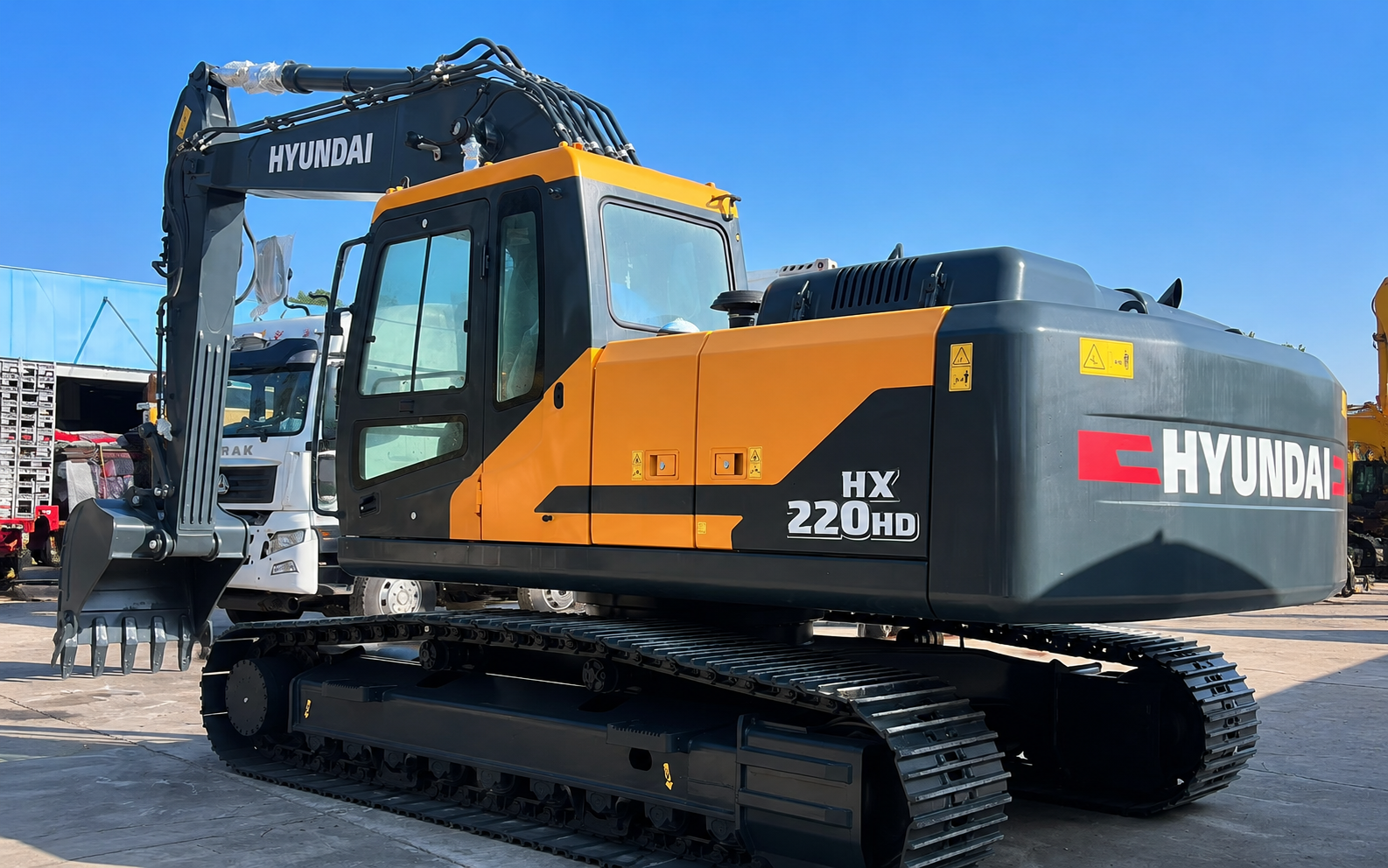
Public product page image of a used Hyundai HX220HD crawler excavator example

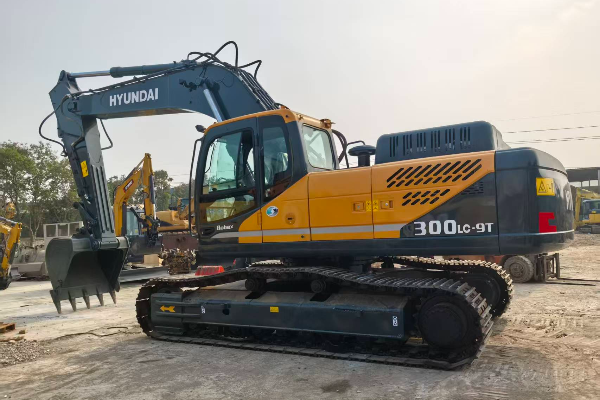
Public product page image of a used Hyundai 300LC-9T crawler excavator example

Public product page image of a used Hyundai 210W-9 wheeled excavator example
Public product-page images are used here as model-class examples only. Current stock, year, hours, attachments, and quote terms must be confirmed against the available unit before payment.

Why the Best Used Hyundai Excavator Is Not Always the Cheapest Listing

Why the Best Used Hyundai Excavator Is Not Always the Cheapest Listing — Liehuang

Search results for used Hyundai excavators are dominated by inventory and listing pages. That is useful for seeing what the market calls a machine, but it does not prove that one Hyundai excavator is ready for export, suitable for the job, or safer than another unit with the same model name.

Liehuang’s used Hyundai category page is built around inspected, export-ready machines and a staged proof process: deposit to reserve, inspection evidence before balance, loading evidence, bill of lading progress, and customs support until release. That structure matters because a remote buyer is not only buying a diesel machine. Instead, the buyer is buying a machine, a proof trail, and a shipping handoff.

A low listing price can still be expensive if it hides worn hydraulics, weak travel, missing serial details, undercarriage wear, incorrect aux pipe setup, or a vague quote that never states whether the price is FOB, CIF, or a landed-cost estimate. A better first screen is not “which one is cheapest?” It is “which one can be proven before I transfer the balance?”

Buyer rule

Treat a listing as the start of the conversation. Treat serial detail, hour-meter evidence, video, hydraulic function, attachment fit, export terms, and loading documents as the buying decision.

For remote procurement, a missing proof pack is not a discount signal. It is a payment-stage risk that should be solved before the balance transfer.

3-Model Hyundai Shortlist Proof Matrix: Match Model Class to the Job Before You Compare Price

3-Model Hyundai Shortlist Proof Matrix: Match Model Class to the Job Before You Compare Price — Liehuang

3-Model Hyundai Shortlist Proof Matrix separates model class, job duty, page-level quote examples, and the proof needed for the exact unit. Use the table below as a way to structure that screen with public Liehuang Hyundai pages. Treat the price figures as page-specific examples, not universal market prices or live offers.

Hyundai example Public specs to confirm Best-fit buying question Proof to request before balance
Hyundai HX220HD
22 ton class crawler excavator
22,500 kg operating weight, 115 kW / 154 HP at 2,000 rpm, 0.92-1.10 m3 bucket, estimated FOB example of US$25,000-35,000. Do you need a general crawler for digging, loading, trenching, and contractor resale where transport weight stays manageable? Serial plate, meter photo, cold start, hydraulic cycle, swing/travel video, undercarriage close-ups, bucket and line details.
Hyundai 300LC-9T
30 ton class crawler excavator
30,200 kg operating weight, 196 kW / 263 HP at 1,900 rpm, 1.40-1.60 m3 bucket, estimated FOB example of US$35,000-48,000. Will the buyer use the extra reach, bucket volume, and production enough to justify heavier shipping and site access needs? Boom and stick photos, undercarriage wear, hydraulic drift check, leak check, fresh inspection photos, and video before payment.
Hyundai 210W-9
21 ton wheeled excavator
20,500-21,500 kg operating weight, 115-129 kW power range, 0.80-1.05 m3 bucket, estimated FOB example of US$55,000-75,000. Does the job reward road mobility, pavement travel, outrigger stability, and tire condition more than crawler traction? Cold-start video, hydraulic cycle, swing video, tire close-ups, steering/brake checks, outrigger deployment video, and cab function checks.

Read the matrix as page-level examples inside the proof workflow. With quote caveats, the Liehuang HX220HD page provides a 22,500 kg operating-weight example, a 115 kW power example, a 0.92-1.10 m3 bucket example, and an estimated US$25,000-35,000 FOB example with quote caveats. With a condition-verification caveat, the Liehuang 300LC-9T page provides a 30,200 kg operating-weight example, a 196 kW power example, a 1.40-1.60 m3 bucket example, and an estimated US$35,000-48,000 FOB example with condition-verification caveat. Liehuang’s 210W-9 page provides the wheeled 20,500-21,500 kg example.

This matrix also protects the sales conversation. When a buyer asks for used Hyundai excavators for sale, the comparison may put a crawler beside a wheeled machine without revealing that cost is not only the price difference. Hidden cost may come from tire wear, flat-rack dimensions, RoRo availability, site access, operator skill, or the attachment circuit required for the first job.

Marketplace language can be noisy. Some buyers type “hyundai excavators for sale near me” or “find used” when they really need export-ready Hyundai excavators available with verifiable documents. Public listing platforms such as Machinery Pete, MachineryTrader.com, and Machinery Trader pages can show useful listing fields, but they are not technical authorities for the final buying decision.

Model or listing phrase you may see How to use it safely
New and used Hyundai excavators, new and used listings, top models Use the phrase to widen research, then return to exact current stock, serial proof, and export terms.
2019 Hyundai, 2021 Hyundai, 2022 Hyundai, 2023 Hyundai HX160AL, new Hyundai HX160AL, 2023 Hyundai HX210AL Treat year and model language as a starting filter; request meter photos, serial details, and fresh video for the exact unit.
2024 Hyundai HX85A, Hyundai HX145A LCR, Hyundai HX145 LCR, new HX145 LCR, Hyundai HX220AL, Hyundai HX350AL, 2023 Hyundai HX480AL Use the wording to clarify size class and market vocabulary, not as evidence that Liehuang currently has that model in stock.
15’1, 8’6, 9’7, 9’10, 2pc boom 8’6, 10 ft stick Ask whether those dimensions apply to the exact boom, arm, stick, and attachment configuration being quoted.
Tier 4 final, 4 final, 4 final diesel engine, Cummin/Cummins, fingertip controls, fuel, air conditioning Confirm emissions wording, diesel engine family, cab functions, spelling, and regional specification against the machine plate and supplier media.
2025 Hyundai, 2025 Hyundai HX55, 2026 Hyundai Use future-year or late-model wording only as market vocabulary until the actual unit, year, and availability are confirmed.
Rear view camera, 360 deg camera, backup camera, halogen cabin lights Ask for a cab walkaround video so the visibility and electrical options are not just copied from a listing template.
Hydraulic quick coupler, hydraulic thumb, qc piping, auxiliary hydraulic plumbing Tie every attachment phrase back to installed hardware, hose routing, pins, locks, and a working video.

Hyundai Motor Company naming, Hyundai Robex history, compact excavator phrases, and even unrelated terms such as railway coupling can appear in search data. Keep them as search signals. Any machine you buy must still be checked by serial details, condition proof, and current stock evidence.

Crawler vs Wheeled Hyundai Excavator: The Decision Split Buyers Miss

Crawler vs Wheeled Hyundai Excavator: The Decision Split Buyers Miss — Liehuang

Hyundai 210W-9 should not be compared directly with crawler models such as the HX220HD or 300LC-9T as if all three machines do the same job. Wheeled excavators solve a different bottleneck. It can make sense for road work, urban utility support, paved sites, and jobs where a machine must reposition without a low-bed trailer. Crawler machines earn their place where traction, digging stability, undercarriage contact, and rough ground matter more.

Hidden bottleneck Choose a crawler path when… Choose a wheeled path when… Proof that changes the quote
Ground condition Site has soft ground, slopes, excavation faces, or repeated heavy digging. Site is paved, compacted, urban, or road-connected. Track shoe, triple grouser shoes, tire close-ups, leak checks, and travel video.
Mobility Machine works in one production zone and is transported between projects. Operator must move between short work zones during the day. Travel motor video for crawlers; steering, brake, and road-travel checks for wheeled units.
Stability proof Stability depends on track condition, undercarriage wear, and counterweight match. Stability depends on outrigger deployment, tire condition, brake function, and ground setup. For the Hyundai 210W-9, request swing and outrigger deployment video with the exact available unit.
Shipping and resale Crawler demand is broad, but freight and track condition affect resale margin. Wheeled demand can be stronger in specific municipal or road markets, but weaker in pure earthmoving markets. FOB port, CIF destination, tire/track proof, machine dimensions, and loading mode.

This is why a value & landed-cost breakdown is more useful than a quick price comparison. The right machine is the one whose mobility, ground fit, attachment plan, inspection evidence, and shipment route all point in the same direction.

What Inspection Proof Should Come Before a Deposit

What Inspection Proof Should Come Before a Deposit — Liehuang

Remote equipment buying works best when every payment stage has an evidence stage. Deposit reserves the machine. Balance should wait until identity, condition, and export readiness are clearer than a listing title and aligned with the supplier’s current proof media before funds move.

6-Point Hyundai Quote Evidence Pack What to ask for Why it matters
1. Identity Model suffix, serial plate, cab plate, and current stock photos. It prevents confusion between similar Hyundai Robex, HX, LC, crawler, wheeled, and regional configurations.
2. Meter and start Hour-meter photo, cold-start video, engine sound, smoke check, diesel leak check. Meter reading is one input, but the start and engine response show whether the number fits the condition.
3. Hydraulics Boom, arm, bucket, swing, travel, auxiliary hydraulic plumbing, hyd line condition, and drift video. Hydraulic repairs can erase the advantage of a cheap listing quickly.
4. Ground contact Undercarriage close-ups for crawler units; tire, axle, brake, and outrigger proof for wheeled units. Crawler and wheeled excavators fail in different places; the photos should match the machine type.
5. Attachment readiness Bucket size, hydraulic quick coupler, hydraulic thumb, qc piping, aux lines, pipe condition, and attachment fit. NIOSH guidance warns that quick coupler failure can let an attachment fall suddenly; check lock condition and wear before use.
6. Export handoff Loading plan, loading photos, bill of lading progress, customs-support scope, and destination terms. It links the machine proof to the shipment proof, not only to a warehouse photo.

If a quote says “ready to ship” but cannot provide the evidence pack, slow down. Proper stock proof request is not a lack of trust; it is normal procurement discipline for an imported used excavator.

Hyundai Hours, Year, and Condition: How to Read the Meter Without Overtrusting It

Hyundai Hours, Year, and Condition: How to Read the Meter Without Overtrusting It — Liehuang

Liehuang’s used Hyundai category page gives typical used hours of 4,000-10,000 for the category. That is a useful screening range, but it is not a universal good-or-bad threshold. Even a 3000 hour claim, a 2021 machine, a 2022 machine, or a 2023 Hyundai listing still needs service context, meter proof, wear photos, and functional video.

According to EquipmentWorld’s 2025 market pulse, Fusable financing data showed all-brand used excavator sales rising by 5.3% while new excavator sales fell 4.1%; the same report listed 12,548 used financed units and an average used-excavator age moving from 7.1 to 7.7 years. Use this as broad market context only, not as a Hyundai-specific or Liehuang-specific claim.

The practical lesson is simple: hours are a filter, not a verdict. Sometimes, a higher-hour excavator with clean hydraulic video, steady travel, detailed service history, honest wear photos, and a quote that reflects condition may be a safer purchase than a lower-hour unit with missing documents, fresh paint over stress areas, or weak proof.

Meter-reading checklist

  • Ask for a clear hour-meter photo taken with the current machine, not a catalog image.
  • Compare hours with pedal wear, seat condition, joystick play, boom/stick wear, paint, and undercarriage or tire condition.
  • Use cold-start and hydraulic-cycle video to test whether the meter story feels coherent.
  • Ask whether the diesel engine family, control pattern changer, rear view camera, air ride seat, halogen cabin lights, backup camera, and cab functions match the listed configuration.

How to Compare FOB, CIF, and Landed-Cost Quotes for a Used Hyundai Excavator

How to Compare FOB, CIF, and Landed-Cost Quotes for a Used Hyundai Excavator — Liehuang

Two used excavators can look similar online and still produce very different landed cost. Your quote must state the actual unit, model suffix, year, hours, attachment list, proof status, FOB port, CIF destination option, freight validity date, document scope, loading method, and payment-stage evidence.

Quote field Minimum detail Why finance cares
Machine identity Exact unit, model, serial detail, year, hours, current photo set. Prevents paying for a vague category listing instead of a reserved machine.
Configuration Bucket, long arm if applicable, 10 ft stick if listed, dozer blade if fitted, aux pipe, hydraulic lines, quick coupler, rear view equipment, cab options. Lower prices can become higher cost if the attachment package is wrong.
Trade term FOB China main port and optional CIF destination quote with validity date. Lets finance compare freight, timing, and cash requirement instead of only unit price.
Shipping mode Flat-rack, RoRo, breakbulk, oversize plan, loading photos, and tie-down expectations. Liehuang’s category page names loading plans, loading photos, and bill of lading progress as part of the proof chain.
Risk reserve Budget for local inspection, port fees, inland freight, attachment changes, wear parts, and service after arrival. Landed-cost planning keeps the cheapest FOB quote from becoming the highest total-cost purchase.

For a cleaner comparison, use a common template for every supplier: same destination port, same stock-proof requirement, same inspection video standard, same attachment request, same freight validity window, and the same payment evidence threshold.

Attachments, Quick Couplers, and Hydraulic Lines Are a Safety Check, Not Just an Option List

Attachments, Quick Couplers, and Hydraulic Lines Are a Safety Check, Not Just an Option List — Liehuang

Used excavators often trade on visible extras: bucket, hydraulic thumb, quick coupler, long arm, auxiliary hydraulic plumbing, rear view camera, 360 deg camera, control pattern changer, air ride seat, 24 in triple grouser shoes, and other listing details. Those features can increase value, but only if they are complete, matched to the carrier, and safe to operate.

NIOSH Publication 2024-102 is guidance, not a regulation. Its relevance here is the failure mode: a quick coupler problem can let a bucket or attachment fall suddenly. For a remote Hyundai buyer, that means the coupler, lock, pins, wear points, hose routing, and attachment fit should be shown clearly before the machine is accepted.

For U.S. jobsite contexts, OSHA 29 CFR 1926.602 covers earthmoving-equipment requirements such as seat belts, braking systems, horns, and reverse signal alarms. Buyers outside the United States should treat that as a U.S. compliance reference and still check local rules, but the underlying inspection logic is useful: cab, brake, horn, alarm, visibility, and operator-protection functions should not be ignored because the engine and hydraulics look strong.


For mechanism background only, the Google Patents quick-coupler locking-device record helps explain why lock engagement matters. A Spring 2024 Local 4 training update also reinforces inspection emphasis, without replacing manufacturer instructions, site policy, or local rules.

Attachment acceptance rule

Do not pay extra for a hydraulic quick coupler, breaker line, thumb, or bucket package until the seller proves that it is installed on the actual machine, compatible with the machine class, and visible in the inspection media.

Red Flags That Should Pause a Used Hyundai Excavator Purchase

Red Flags That Should Pause a Used Hyundai Excavator Purchase — Liehuang


Pausing is not the same as rejecting the machine. It means the buyer needs proof before the next payment step. These issues should slow the process until the supplier fills the evidence gap.

Missing identity
No clear serial plate, model suffix, current machine photos, or matching quote line.
Weak hour proof
Hour-meter photo is blurry, old, cropped, or inconsistent with wear.
No functional video
No cold start, hydraulic cycle, travel, swing, outrigger, brake, or leak check video.
Surface-only condition
Fresh paint is visible, but pins, bushings, boom, stick, undercarriage, tires, and leak areas are not shown.
Attachment ambiguity
Quote mentions quick coupler, hyd lines, pipe, dozer blade, breaker, thumb, or bucket but does not show installation.
Quote ambiguity
Price omits FOB port, CIF option, destination, freight validity, loading method, or document scope.

Most red flags follow the same pattern: a sales line tries to close the deal before the proof pack is complete. Strong sellers can usually provide fresh media and a clear quote. Weak offers rely on urgency, generic photos, and a low number.

Where Liehuang Fits: Use the Category Page for Current Stock, Not Static Blog Prices

Where Liehuang Fits: Use the Category Page for Current Stock, Not Static Blog Prices — Liehuang

Liehuang buyers can use this guide to decide what proof to ask for before they compare live stock. Current machine list belongs on the Used Hyundai Excavators category page, because stock, years, hours, attachments, shipping mode, and price examples change by available unit.

Use the article this way: identify the crawler or wheeled path, define your target working weight, write the evidence-pack requirements, and then request the live machine list and FOB or CIF quote. If you need a broader inspection process, read the used excavator inspection guide. If hours are your main concern, compare the proof logic in how many hours are too many for an excavator. For work-tool planning, review excavator attachments. For quote comparison, use the used excavator landed-cost estimator.

Request Live Machine List and FOB/CIF Quote

Send your target model class, destination port, attachment needs, proof requirements, and budget range. Ask for current stock photos, serial details, meter proof, inspection video, and a quote valid for your shipment window.

Request Hyundai stock proof

FAQs About Used Hyundai Excavators

Are used Hyundai excavators worth buying?

Yes, when the exact machine has verifiable hours, identity, condition video, hydraulic proof, undercarriage or tire evidence, and quote terms that match the destination port. For importers, contractors, and resale buyers, a Hyundai crawler or wheeled unit can be a strong value purchase when the proof pack supports the price. Look beyond one clean photo. Ask whether the serial plate, meter reading, hydraulic video, undercarriage or tire images, attachment details, and FOB or CIF terms all point to the same machine. Low pricing without current proof is not enough.

What should I check before buying a used Hyundai excavator?

Check serial plate first. Then ask for year, model suffix, hour-meter photo, cold start, hydraulic cycle, swing or travel behavior, ground-contact proof, attachment lines, bucket and coupler fit, export documents, loading plan, and quote terms. A short but current proof set beats a large gallery of old catalog photos because it proves the machine being quoted now.

Which used Hyundai excavator model should I choose?

Start with the job, not the model name. Road maintenance, municipal work, and paved-yard tasks may point toward a wheeled Hyundai; earthmoving, trenching, and rough ground often point toward a crawler. Compare operating weight, bucket capacity, hydraulic output, transport limits, ground condition, attachment plan, local service support, and verified condition before choosing a specific stock unit. If resale is the goal, also check which class your buyers can service locally.

How many hours are too many for a used Hyundai excavator?

No single cutoff works. Use the meter as a screen, then compare service history, undercarriage wear, hydraulic performance, engine condition, and price. Higher hours with clean proof can beat low hours with weak identity.

How do I ask for a used Hyundai excavator quote from China?

Send model class, target working weight, attachment needs, destination port, budget range, preferred shipping mode, and proof requirements. Ask for photos, meter proof, serial details, inspection video, FOB and CIF options, quote validity date, and loading or document evidence before balance payment. For a dealer or importer, the request should also state resale market, preferred year band, accepted wear level, and whether the buyer needs crawler traction or wheeled mobility. Strong quotes are specific enough for procurement and finance to compare total landed cost.

References & Sources

]]>
Mini Excavator Buyer Guide: How to Choose a Used 0-10 Ton Machine https://lhusedexcavator.com/blog/mini-excavator-buyer-guide/ Mon, 10 Aug 2026 11:24:10 +0000 https://lhusedexcavator.com/?p=4458

Mini Excavator Buyer Guide is a job-first framework for matching a used 0-10 ton excavator to access, depth, hydraulic flow, inspection proof, quote terms, and shipping plan. Good buying decisions start with the work, not the badge on the counterweight.

Bottom line: choose the smallest machine that can prove the work, not the cheapest machine on the list.

For international buyers, the best used mini excavator is the unit that fits access, transport, depth, attachments, operator comfort, local support, and documentation. If the seller can’t show proof before deposit, the quote isn’t ready.

Quick Specs and Evidence Boundaries

Buyer Question Use This Evidence Carefully Practical Action
What counts as a mini excavator? Use 0-10 tons as a practical buyer range, not a universal formal definition. Liehuang’s mini excavator page is scoped to used machines from 0-10 tons. Confirm actual operating weight, width, dig depth, and transport limits.
What does price mean? Liehuang lists example FOB ranges such as CAT 303.5 at US$16,000-28,000 and Kubota U17 at US$16,000-22,000. These are estimated page examples, not a guaranteed current quote. Ask for current stock, year, hours, condition, and route-specific freight terms.
What is the main safety citation? NIOSH Publication 2024-102 warns that quick-coupler failure can allow an attachment to fall suddenly. Verify coupler, pins, locking, bucket fit, and auxiliary hydraulic lines.

Why a Mini Excavator Buyer Guide Starts With the Job, Not the Brand

Why a Mini Excavator Buyer Guide Starts With the Job, Not the Brand — Liehuang Used Excavators

Start with this mini excavator question: “What work must this compact excavator do every week?” Landscape contractors, utility crews, rental yards, farms, small demolition teams, and export dealers may all say they need a mini ex, but they often need different operating weight, cab setup, boom swing, auxiliary hydraulics, blade width, transport width, and bucket package.

Terminology note: ISO earth-moving machinery terminology is a category reference only; job-fit proof still comes from the machine’s dimensions, hydraulics, and inspection package.

A brand-first search also hides the cost of mismatch. Famous machines that can’t pass through the job site gate are too large. A low-hour compact machine that lacks the hydraulic flow for a breaker or auger are too limited. Cheap used mini excavators with no cold-start video, undercarriage proof, or documents aren’t yet real offers. In construction equipment buying, the right machine is the one whose project requirements, depth and reach, hydraulic excavator setup, and maintenance points can be verified before money moves.

Use the job as the first filter: access width, ground condition, dig depth, reach, lift capacity, attachment demand, operator comfort, downtime tolerance, and local parts support. Then compare Kubota, Cat, Bobcat, Komatsu, Hitachi, JCB, Yanmar, John Deere, and other excavator models inside that fit window.

Mini vs Compact Excavator: What the 0-10 Ton Range Really Means

Mini vs Compact Excavator: What the 0-10 Ton Range Really Means — Liehuang Used Excavators

In buyer language, mini excavator and compact excavator often overlap. Liehuang’s public mini excavator category covers used mini excavators from 0-10 tons and lists brands such as Kubota, Caterpillar, Komatsu, Volvo, Hyundai, Doosan, Hitachi, Kobelco, and SANY. Treat that 0-10 ton range as a practical shopping frame for international buyers, not as a universal formal standard.

Definition boundary: ISO 6165 terminology is used only to keep mini/compact excavator language grounded; Liehuang’s 0-10 ton page remains a buyer scope, not an official standard.

Machine class still needs exact specs. For example, a 1.7 ton Kubota U17 and a 3.5 ton class CAT 303.5 can both be compact machines, but they don’t solve the same work envelope. Liehuang’s Kubota U17 page lists 1,650 kg operating weight, 10.1 kW engine power, 2.31 m maximum dig depth, and 0.04 m3 bucket capacity. Liehuang’s CAT 303.5 page lists 4,475 kg operating weight, 45 hp power, and 3,510 mm maximum dig depth.

That’s why operating weight, maximum dig depth, machine width, tail swing, horsepower, hydraulic flow, bucket size, cab condition, and auxiliary lines matter more than the word “mini” by itself.

0-10 Ton Hidden Bottleneck Map: Match Size to Access, Transport, Depth, and Attachments

0-10 Ton Hidden Bottleneck Map: Match Size to Access, Transport, Depth, and Attachments — Liehuang Used Excavators

Useful size charts should show what can go wrong. Choosing the wrong small excavator may let the machine fit the lane but miss production targets. Choosing the wrong larger machine may bring better lift capacity but create transport, unloading, and confined spaces problems. Use the map below before asking for a quote, especially if you’re purchasing your first mini excavator model and need to choose the right mini excavator for mixed jobs.

Safety boundary: when the map reaches buckets, couplers, and attachments, NIOSH quick-coupler guidance is the reason to request coupler proof instead of relying on an attachment name.

Machine Type / Size Band Good Fit Hidden Bottleneck Proof to Request
Micro / under 1.5 ton Very narrow access, light landscape touch-up, indoor demolition cleanup Low lift capacity and limited additional reach Width, track condition, blade play, trailer loading width
1-2 ton Landscaping, tight yards, light trenching, confined spaces Limited lift capacity, slower cycle time, small bucket Width, blade, tracks, dig depth, bucket fit, hydraulic cycle video
2-3.5 ton Utility laterals, small foundations, drainage, rental fleet core use Compact machines can still be underpowered for breaker work Horsepower, auxiliary hydraulics, swing radius, bucket and coupler photos
3.5-5 ton Utility work, drainage, residential construction, small site prep Attachment demand can outrun auxiliary flow Auxiliary flow, coupler, breaker lines, undercarriage and swing check
5-6 ton General contractor work where output matters but space is still limited Transport width and loading height start to matter more Spec sheet, maximum dig depth, loading video, cab condition
6-8 ton Roadside work, heavier trenching, small commercial sites, loading support Transport width, loading height, ground pressure, repair cost Transport dimensions, boom/stick proof, final-drive noise, leak video
8-10 ton Higher productivity where site access still favors compact construction equipment May no longer behave like a small excavator for shipping or access Exact operating weight, route plan, loading plan, service history
Electric mini excavators or electric models Indoor, emissions-sensitive, or noise-sensitive work where charging support exists Power and economy claims depend on duty cycle and support Battery condition, charger, runtime, service support, reliable performance proof

If the machine will work beside a skid steer, loader, truck, or trench crew, include that workflow in the RFQ. Right-fit mini excavators match the crew’s sequence, not just the best standalone spec sheet.

Used vs New vs Rent: When Buying a Mini Excavator Does Not Pencil Out

Used vs New vs Rent: When Buying a Mini Excavator Does Not Pencil Out — Liehuang Used Excavators

Buying a mini excavator makes sense when the machine will serve repeated jobs, when schedule control matters, when rental availability is unreliable, and when the buyer can verify condition before payment. Buying a used machine can also make sense for dealers and rental fleets that know their repair support and resale channel.

Risk boundary: used-versus-new math should not dilute safety proof; NIOSH quick-coupler guidance keeps coupler and attachment evidence on the buying checklist.

Renting may be better for a one-off job, an unfamiliar attachment, a special ground condition, or a project where the operator will only need the machine for a few days. New machines may be better when warranty coverage, emissions package, local dealer support, 500 hours of low-risk early service, or exact configuration matters more than purchase price. Used buyers must stay on top of maintenance, routine maintenance records, and wear evidence because downtime can erase the savings.

Do

  • Define repeated work before choosing the machine.
  • Reserve budget for service, attachments, and wear parts.
  • Compare landed cost, not only FOB price.
  • Ask for inspection proof before deposit.
Don’t

  • Buy only because the machine is cheap.
  • Ignore transport and unloading limits.
  • Assume low hours means good condition.
  • Accept vague freight terms as a final quote.

Used Mini Excavator Inspection Checklist Before Any Deposit

Used Mini Excavator Inspection Checklist Before Any Deposit — Liehuang Used Excavators

Serious used mini excavator inspection checklists need a sequence. First confirm identity: model, year where available, serial plate, engine plate, hour meter, and seller ownership path. Then confirm startup: cold-start video, idle sound, smoke, warning lights, and display panel. Then test work functions: boom, arm, bucket, blade, swing, travel, auxiliary circuit, and drift. Finally inspect wear: tracks, rollers, idlers, sprockets, pins, bushings, cylinders, hoses, pump response, leaks, welded repairs, and fresh paint over cracks.

Inspection boundary: NIOSH quick-coupler guidance is not a used-equipment price source, but it justifies treating coupler, pins, locks, and bucket fit as safety-critical proof.

Final-drive and track maintenance sources reinforce why undercarriage proof matters. Track tension that’s too tight or too loose can increase wear and damage risk around final drives, pins, bushings, idlers, rollers, and seals. Use those sources as inspection context, not as a statistic about every used machine.

“Steel doesn’t have much mercy.”

Howard Abell, cited by Equipment World in used excavator inspection guidance

For Liehuang stock examples, the CAT 303.5 page lists checks such as hydraulic pump response, final drives, swing play, undercarriage percentage, boom pins, engine smoke, and oil leaks. Liehuang’s Kubota U17 page asks buyers to look at tracks, blade play, slew looseness, hydraulic hose leaks, engine start, bucket fit, trailer loading width, cold-start footage, hydraulic cycle video, swing and travel video, undercarriage close-ups, and meter-panel photo.

Proof-Before-Balance Checklist

  1. Identity proof: model, serial plate, engine plate, hour meter, and current photos.
  2. Cold start: smoke, idle sound, display warnings, throttle response.
  3. Hydraulic cycle: boom, arm, bucket, blade, auxiliary line, and holding power.
  4. Travel and swing: forward and reverse travel, final-drive howl, slew play, and straight tracking.
  5. Undercarriage: track pads, chain, rollers, idlers, sprockets, leaks, tension.
  6. Attachments: bucket, coupler, pins, and any breaker or auger circuit by request.
  7. Loading proof: container or truck loading picture, shipping documents before payment.

Quote Math: FOB, CIF, Freight, Duties, and Landed Cost Without Guesswork

Quote Math: FOB, CIF, Freight, Duties, and Landed Cost Without Guesswork — Liehuang Used Excavators

Mini excavator pricing can look simple until shipping is added. FOB isn’t landed cost. Landed cost can include FOB price, ocean freight, insurance, filing, broker fees, duties or tariffs where applicable, destination handling, clearance, and last-mile delivery. Toolio and iContainers both support the principle that landed cost is the total expense of buying and getting goods to the destination, not only the product price.

Scope boundary: landed-cost explainers price the transaction; ISO terminology is referenced only so the article does not turn a cost quote into a machine-definition claim.

Liehuang’s 0-10 ton category page gives rough cost-planning language and buyer tools, but the final number still depends on stock, year, hours, condition, accessories, container plan, destination, route, freight date, insurance, duties or tariffs where applicable, port fees, inland delivery, and current exchange assumptions. Don’t reuse old freight estimates as if they’re live quotes.

RFQ checklist — copy these into your quote request:

Parameter Recommended input Why it matters How to verify
Model/year/hours Exact stock unit Avoids generic price quotes Serial, plate, hour-meter photo
Tonnage/job fit Access, depth, reach, lift Prevents wrong size Spec sheet and work video
Inspection proof Cold start, hydraulics, undercarriage Separates value from cosmetic cleanup Photo/video proof pack
Attachment/coupler Bucket, breaker, auger, thumb, coupler Changes hydraulic and safety checks Pins, hoses, coupler and flow proof
FOB/CIF/landed cost State requested delivery term Prevents false price comparison Line-item quote with date
Payment-document evidence Deposit, balance, loading, documents Controls transaction risk Loading photos and shipping papers

Attachments, Couplers, and Hydraulic Flow: The Safety Check Buyers Miss

Attachments, Couplers, and Hydraulic Flow: The Safety Check Buyers Miss — Liehuang Used Excavators

Mini excavator attachments can include buckets, breakers, thumbs, augers, grapples, compactors, and specialized tools. Attachment lists aren’t enough. Buyers need to verify pin size, coupler type, auxiliary flow, auxiliary hydraulics, line condition, control setup, weight, and whether the operator can use the attachment safely on the job site.

Safety boundary: NIOSH quick-coupler guidance and the ISO quick-coupler page support the proof request for pins, locks, bucket fit, auxiliary lines, and coupler condition.

NIOSH Publication 2024-102 is the safest buyer-facing external citation here. It describes fatality and injury risk from excavator quick coupler failures and recommends prevention steps for employers, supervisors, equipment operators, and suppliers. Buyer takeaway: ask for coupler and attachment proof, not just an attachment name in the listing.

ISO 13031:2016 is titled Earth-moving machinery, Quick couplers, Safety, and the ISO page lists Amendment 1, Edition 2025. Use that as standards-status context only; most buyers will not have the standard text. For practical purchasing, request photos and video of the coupler, locking condition, pins, bucket ears, auxiliary lines, and any breaker or auger operation.

Brand and Model Shortlist: How to Compare Kubota, Cat, Bobcat, Komatsu, Hitachi, JCB, and Yanmar

Brand and Model Shortlist: How to Compare Kubota, Cat, Bobcat, Komatsu, Hitachi, JCB, and Yanmar — Liehuang Used Excavators

Brand reputation matters because parts, resale, operator familiarity, and dealer support matter. But there’s no universal best mini excavator for every buyer. Kubota U17 units may fit tight access. CAT 303.5 class machines may give more dig depth and power. Bobcat Company, Komatsu Limited, Hitachi, JCB as a heavy equipment manufacturer, Yanmar, John Deere, Volvo Construction Equipment, Case Construction Equipment, Develon, Takeuchi, SANY, Hyundai, and Doosan models can all be reasonable in the right condition and support context.

Comparison boundary: brand names are shortlisted only after job fit; ISO terminology is a category reference, not a ranking source for Kubota, Cat, Bobcat, or other brands.

Use a four-layer shortlist: job fit, condition proof, support confidence, then price. If a machine fails the first two, the logo shouldn’t rescue it. If two machines pass the first two, compare parts supply, operator comfort, enclosed cab or canopy condition, suspension seat condition where fitted, service points, service intervals, diesel engine condition, hydraulic system response, transport size, and resale expectations. Top mini excavators for one buyer may be the wrong machine for another because project requirements change.

For Liehuang stock examples, start with the used mini excavators for sale 0-10 ton page, then ask for exact stock proof rather than assuming the page examples are still available.

Red Flags That Should Pause a Used Mini Excavator Purchase

Red Flags That Should Pause a Used Mini Excavator Purchase — Liehuang Used Excavators

Red flags don’t always mean “walk away.” They mean stop moving money until the seller resolves the risk. Missing nameplate, no live video, inconsistent hours, hidden serial details, slow hydraulics, final drive noise, hydraulic leaks, hot-start problems, fresh paint over cracks, heavy undercarriage wear, vague attachment claims, unclear freight terms, or no loading-document process should slow the purchase.

Safety boundary: NIOSH quick-coupler guidance supports pausing any deal where coupler, pin, lock, or bucket evidence is missing.

Forum and operator discussions often mention hydraulics, pins, bushings, slew ring, undercarriage, final drives, and cold start because those are the problems buyers feel after delivery. Use that buyer language as a checklist prompt, not as a hard statistic.

Pause the purchase if the seller cannot show:

  • Clear serial plate, engine plate, hour-meter photo, and current machine photos.
  • Cold-start, warm operation, swing, travel, and hydraulic cycle video.
  • Undercarriage and final-drive close-ups with visible wear points.
  • Attachment and quick-coupler compatibility details.
  • Line-item quote separating FOB, freight, destination assumptions, and validity date.
  • Loading photos and shipping document process before final balance.

How Liehuang Structures a Safer Used Mini Excavator Buying Process

How Liehuang Structures a Safer Used Mini Excavator Buying Process — Liehuang Used Excavators

Liehuang Used Excavators is the export brand of Hefei Liehuang Machinery Co., Ltd., focused on inspected used excavators and worldwide shipping support. Treat all brand claims as attributed first-party claims unless another source independently verifies them. Buyer value comes from the process: stock selection, inspection proof, video proof, quote clarification, loading evidence, and export-document coordination.

Process boundary: Liehuang’s proof pack is a first-party process claim; NIOSH quick-coupler guidance explains why coupler and attachment proof belongs in that process.

For mini excavator buyers, that means the RFQ shouldn’t be “Send your cheapest 3 ton.” Better wording is: “Send current 3-5 ton stock for utility trenching, with year, hours, operating weight, maximum dig depth, auxiliary hydraulic details, undercarriage proof, cold-start video, bucket/coupler photos, FOB price, CIF estimate to my port, quote date, and loading-document process.”

Request current stock and a proof pack

Send your target tonnage, job type, destination, attachment plan, and inspection-proof requirements. Ask Liehuang Used Excavators for matching stock and a current quote with route/date assumptions.

Request Mini Excavator Stock

Mini Excavator Buyer Checklist and RFQ Scorecard

Mini Excavator Buyer Checklist and RFQ Scorecard — Liehuang Used Excavators

Use this 7-field scorecard to compare suppliers. High scores don’t guarantee the best machine, but they make weak quotes visible before the deposit.

Scoring boundary: the attachment/coupler field should be checked against NIOSH safety context and ISO quick-coupler terminology, while price fields remain quote-specific.

Field Score 0-2 What Good Looks Like
Model/year/hours 0 unknown, 1 partial, 2 proved Clear stock unit, plate, hour meter, current photos
Tonnage/job fit 0 mismatch, 1 possible, 2 matched Operating weight, width, dig depth, reach, lift, bucket match
Inspection proof 0 none, 1 photos, 2 photo plus video Cold start, hydraulics, swing, travel, undercarriage, leaks
Condition risk 0 unclear, 1 visible, 2 explained Wear, repairs, repaint, final-drive noise, service notes disclosed
Attachments/coupler 0 vague, 1 listed, 2 verified Pins, coupler, hydraulic flow, auxiliary lines, bucket/breaker proof
FOB/CIF/landed cost 0 sticker only, 1 FOB, 2 line-item quote Machine, freight, destination, document, validity date separated
Payment-document evidence 0 none, 1 promised, 2 process shown Loading photos, shipping documents, balance-stage proof process

Scores below 10 out of 14 don’t automatically kill the deal, but they tell you where to ask for more proof. Scores below 7 usually mean the quote is too early for payment.

Key takeaway

The safest used mini excavator quote is not the lowest FOB price; it is the quote where job fit, machine condition, attachment setup, landed-cost assumptions, and payment-stage proof are all visible.

FAQs

Is buying a used mini excavator worth it?

It can be worth it when you have repeated jobs, can verify the machine’s condition, and compare landed cost instead of sticker price. It isn’t worth it for a one-off job with no inspection access, no repair reserve, no local parts support, or no proof pack before deposit. For export buyers, documentation should carry the decision.

What should I look for in a used mini excavator?

Look for year where available, hours, serial plate, cold-start behavior, smoke, hydraulic system response, swing, travel, final drives, undercarriage, bucket, pins, leaks, repaint, nameplate, mini excavator attachments, cab or canopy condition, and payment-stage documents. Follow a sequence instead of a random checklist: identity first, startup second, working functions third, wear points fourth, and quote documents last. For cross-border purchasing, ask the supplier to organize those proof points into one dated package before you compare offers, because missing evidence changes the real price. This mini excavator buyer’s guide uses that order because a pretty machine with no serial proof or operating video is still only a sales claim.

What size mini excavator do I need?

Match size to access width, transport limits, dig depth and reach, lift capacity, soil, attachment demand, operator comfort, and support. Use 1-2 ton, 2-3.5 ton, 3.5-5 ton, 5-6 ton, 6-8 ton, and 8-10 ton bands as a planning map, then confirm the exact machine specs, trailer limits, and working room around walls or foundations.

What mini excavator has the best resale value?

Major brands can hold value better, but final resale depends on condition, hours, service history, local parts support, documents, attachment setup, mini excavator market timing, and whether the next buyer trusts the proof pack. A well-proved used machine can be easier to resell than famous but poorly documented machines.

Should I buy or rent a mini excavator?

Rent for short, uncertain, or one-off work. Consider buying when the same machine will serve repeated landscaping, utility, trenching, demolition, farm, or rental-fleet work and when downtime control matters. Buying used adds inspection risk, so request proof before deposit and keep a repair reserve. This buyer’s guide can narrow the choice, but only your job count, operator availability, service access, and cash-flow plan decide whether owning beats renting.

What attachments can be used on a mini excavator?

Buckets, breakers, thumbs, augers, grapples, compactors, and other tools may fit, but pin size, coupler, weight, hydraulic flow, auxiliary hydraulics, and operator safety must be verified before shipping. Ask for attachment photos, pin measurements, hose routing, and a short working video. Don’t buy the attachment list first and the machine second.

How much does a used mini excavator cost after shipping?

Final landed cost is FOB price plus freight, insurance, destination fees, duties or tariffs where applicable, clearance, inland transport, and any inspection or parts work. Every route needs a current quote and date-stamped assumptions. Liehuang can give directional tools and current-stock quotations, but old freight numbers shouldn’t be reused as live landed cost. Ask for the quote date, destination port, delivery term, loading assumption, and documents before comparing suppliers.

References & Sources

]]>
Used Excavator Supplier Guide (2026): How to Vet a Supplier Before You Pay https://lhusedexcavator.com/blog/used-excavator-supplier-guide/ Mon, 10 Aug 2026 09:54:28 +0000 https://lhusedexcavator.com/?p=4441

Reviewed by the Hefei Liehuang Machinery Co., Ltd. technical team

A used excavator supplier guide is a buyer checklist for judging machine-level proof, export-document readiness, and total landed-cost clarity before comparing the final FOB number. Low-priced used excavator offers can become expensive when the serial plate, inspection media, hydraulic system evidence, undercarriage condition, and import paperwork plan arrive too late.

This guide is written for contractors, fleet owners, import managers, and used equipment traders who need to buy a used excavator from an overseas supplier without treating every dealer, auction listing, or inventory page as equal evidence.

Used CAT 336 excavator inspection photo from Liehuang supplier stock
Example product evidence: Liehuang’s CAT 336 page lists a 36-38 ton crawler excavator with inspection cautions for boom cracks, main pump exposure, swing bearing play, final drive noise, track chain stretch, roller wear, cooling package condition, and hydraulic oil clarity.

Short Answer: Vet the Proof Packet Before the Price

Proof packet fields buyers should vet before price comparison

Reliable used excavator suppliers connect one real machine to one clear proof packet: identity photos, operating hours, inspection media, hydraulic and undercarriage evidence, export documents, payment milestones, and landed-cost assumptions. Buyers aren’t trying to find a perfect used machine; they’re avoiding payment for a machine whose condition, ownership trail, or import path is still vague.

Search-demand data supports this split. The exact guide query showed a guide-like result pattern, while high-volume variants such as used excavator dealer and used excavator for sale were mostly transactional inventory or dealer pages. That means this article should help buyers make a supplier decision, then point ready buyers to real stock through the used excavators for sale inventory.

For overseas buyers, the first filter is evidence timing. Suppliers who give machine proof before the balance payment are usually easier to audit than sellers who give a price first and proof later. Staged payment doesn’t eliminate fraud or quality risk, but it gives the buyer a control point before money moves.

Decision rule

Ask for the proof packet first, compare the FOB quote second, and calculate landed cost third. If any one of those three steps is missing, pause the deal instead of negotiating a lower price.

Supplier, Dealer, Auction, or Marketplace: What Are You Really Buying?

Supplier channel comparison with evidence guardrails

Used excavator buyers often compare a supplier, a dealer, an auction result, and a marketplace listing as if they’re the same type of offer. They aren’t. Seller type changes more than brand choice. It’s who controls the machine, who can inspect it, who can answer document questions, and who carries the communication load after deposit.

Dealer networks may offer parts and service benefits. An auction can expose market pricing, but unreserved public auctions may leave buyers with less time for inspection or export planning. Global suppliers of used excavators should be judged by proof depth, stock access, shipping support, and whether they can explain the machine’s condition in enough detail for a remote buyer.

This distinction matters more in international procurement. Liehuang Used Excavators describes itself as an exporter of inspected used excavators and attachments from China, with machine checks, quote support, logistics documentation, and worldwide shipping. The buyer still has to verify the individual used machine, but a supplier process gives you more checkpoints than a one-line listing.

Supplier type Useful when Evidence to request Buyer guardrail
Supplier of used excavators Export buyer needs stock access, inspection media, and shipping coordination. Machine identity, video, photos, inspection reports, document plan, payment terms. Ask whether serial-linked proof can be sent inside a buyer-defined 24 hours before deposit.
Used excavator dealer Local buyer wants after-sales support, dealer network, parts and service access. Service records, warranty wording, local support scope, stock inspection window. If warranty is offered, write the covered parts and whether it means 30 days or 90 days.
Auction or marketplace Buyer is tracking price ranges, availability, and machine types. Terms of sale, inspection rights, buyer fee, export support, payment deadline. Set the inspection decision clock in hours, not vague phrases like soon or later.
Broker or sourcing agent Buyer needs help finding stock across yards but still wants supplier accountability. Original yard contact, commission basis, media source, and who controls the machine. Require one named owner for each file before any 48 hours inspection window starts.
Brand-authorized used equipment dealer Buyer values service support, parts history, and local warranty administration. Dealer certificate, inspection scope, service records, warranty boundary, parts lead time. Confirm whether support applies to the destination market for 30+ ton heavy equipment.
Refurbished equipment yard Buyer accepts cosmetic repair but needs to separate paint from mechanical work. Before-and-after photos, repair list, replaced parts, test video, and paint disclosure. Treat fresh paint as neutral until hydraulic, engine, and undercarriage proof is dated.
Export consolidation yard Buyer is combining machine, attachments, spare parts, and loading support. Packing list, loading photos, bucket or breaker list, insurance decision, document owner. For U.S. shipments, ask the broker about the 15 days entry-filing context before sailing.
Machine-class specialist Buyer is comparing mini, medium, and heavy crawler excavators for one work type. Model range, class fit, bucket match, hydraulic line setup, and parts availability. For a 36-38 ton class example, compare FOB and landed cost before choosing the model.
Inventory-only listing site Buyer wants a broad market scan before contacting the real seller. Listing date, seller identity, proof source, fee policy, and whether export support exists. Do not compare one FOB example with an all-in landed price.

Use a sharper supplier question than “Are you trusted?” It’s “Which files can you send before I release the next payment?”

The 7-File Supplier Evidence Scorecard

Seven supplier evidence files for one used excavator quote

With the 7-File Supplier Evidence Scorecard, supplier trust becomes a document request. It’s built from first-party Liehuang process pages, product-page inspection cautions, and third-party inspection categories such as walk-around, undercarriage, fluids, hydraulic system, cabin, and equipment testing.

Use this table before you buy used equipment from an overseas supplier. Each file should connect to the same serial number and the same machine. Mixed photos, unclear dates, or generic stock videos weaken the file even when the seller’s price looks attractive.

File What it should prove Buyer action
1. Serial and nameplate photos The quoted Caterpillar, Komatsu, Volvo, Hitachi, Sany, Doosan, Kobelco, Hyundai, or Kubota machine is the same unit shown in later media. Reject a quote where the serial identity is delayed until after deposit.
2. Hour-meter photo and dashboard video Operating hours and basic instrument status match the quote. Ask for a same-day video that starts at the exterior and moves into the cabin.
3. Walkaround video Boom, arm, counterweight, house, cabin, panels, bucket, and visible leaks can be checked remotely. Look for uninterrupted footage and the same serial plate in the same clip.
4. Undercarriage image set Track chain stretch, rollers, sprockets, idlers, pads, and final drive exposure are visible enough to discuss wear. Request left and right side photos, close-ups, and a repair estimate if wear is material.
5. Hydraulic system proof Hydraulic oil clarity, pump behavior, cylinder leakage, hose condition, and attachment function are reviewed. Ask for function video under load, not only idle startup.
6. Service and maintenance records Past maintenance records, rebuild notes, or repair receipts explain condition and resale value more clearly than age alone. Treat missing records as a price and inspection issue, not automatic rejection.
7. Export document plan Commercial invoice, packing list, bill of lading, certificate of origin, and destination-specific import needs are discussed before loading. Confirm who prepares each document and what the importer must file locally.

Suppliers don’t need to present every file in a polished brochure. Plain evidence is fine when it’s consistent. Simple file format isn’t the warning sign. Unmatched proof is the warning sign: a file that can’t be tied to the machine you’re paying for.

Scorecard accountability is practical: finance can hold payment, the equipment manager can request extra inspection, and the import manager can identify missing documents before the machine leaves the yard.

Balance-Payment Release Gate

Balance payment release stages and signoff owners

Balance-payment release is a procurement control, not a promise that risk disappears. Liehuang’s public process references staged payment and balance after confirmation; that structure is useful because the buyer can request proof before the final release.

For U.S. imports, CBP’s public article also shows why document timing matters. CBP says formal and informal entries “must be filed within 15 days” of the goods arriving. That quote is a U.S. context point, not a worldwide rule. Other destination countries have their own import and emissions requirements.

“must be filed within 15 days” – U.S. Customs and Border Protection, Article 1180.

Payment stage Release condition Who signs off
Before deposit Serial identity, model, year or stated age basis, operating hours, FOB quote, and seller company details received. Procurement manager
Before inspection approval Walkaround, undercarriage, hydraulic system, cabin, engine startup, attachment operation, and maintenance records reviewed. Equipment manager
Before balance payment Loading plan, export document plan, agreed accessories, attachment list, and destination compliance responsibilities confirmed. Owner or finance lead
Before shipment release Bill of lading path, commercial invoice details, packing list, certificate of origin, insurance decision, and importer filing plan checked. Import manager or broker

Write the gate into the purchase conversation. Staged-proof suppliers are easier to manage than sellers who ask for trust as a substitute for evidence.

Hidden Bottleneck Map: The Quote Line That Can Break the Deal

Hidden quote bottlenecks that can delay a used excavator deal

In used construction equipment procurement, the hidden bottleneck is rarely the headline price alone. It’s the quote line that no one owns until the machine is already reserved. Even when a used heavy equipment buyer likes the machine and accepts the FOB price, a document, freight, inspection, or attachment question can still delay the deal when no one owns it early.

Bottleneck Why it matters Control question
Machine identity A quote without serial-linked photos can drift from one used machine to another. Can the serial plate appear in the same video as the hour meter?
Hydraulic proof Hydraulic oil, pump behavior, cylinders, and final drive symptoms can drive repair exposure. Can the supplier show function under load and visible oil condition?
Undercarriage wear Track chain, rollers, pads, sprockets, and idlers affect near-term repair budget and downtime. Are both sides photographed close enough for wear discussion?
Attachment and coupler fit ISO 13031 is quick-coupler safety context, not whole-machine certification; attachment fit still needs machine-specific confirmation. Which bucket, breaker, coupler, pins, and hydraulic lines are included?
Import filing A supplier can help prepare export papers, but the importer remains responsible for destination compliance. Which forms and filings does the destination country require?

This map gives each buyer role a place to intervene: the fleet owner checks condition, finance checks payment exposure, procurement checks supplier evidence, and the import manager checks paperwork timing.

Export Landed-Cost Cross-Check

Landed cost fields to compare beyond FOB price

Supplier quotes for used excavators should separate the machine price from the cost of getting the machine into service. Liehuang’s landed-cost tools expose the right buckets: FOB price, destination region, shipping method, import duty, ocean freight, port and clearance, marine insurance, and inland delivery.

Here’s the practical difference. Liehuang’s CAT 336 page may show a 36-38 ton class and an estimated FOB range of US$48,000-85,000. That FOB range is useful, but it isn’t the landed cost for a contractor in a specific port, with a specific duty rate, shipping mode, insurance decision, and inland haul.

Cost field Question to ask Risk if missing
FOB machine price What machine, attachment list, and loading condition are included? Accessories, bucket, breaker, or loading terms may be assumed but not priced.
Ocean freight Which port, shipping mode, and expected sailing window are quoted? Freight can shift by port, season, and machine size.
Duty and tariff Who confirms the HS code and destination duty rate? A buyer may compare FOB quotes without comparing import exposure.
Port, clearance, and bond Which local broker or importer handles entry documents? Customs delays can erase the savings of a cheaper machine.
Inland delivery How far is the jobsite or yard from the arrival port? Oversize haul, permits, or local transport can change the final budget.

EquipmentWorld’s 2025 market context also shows why buyers should keep price in scope: it reported U.S. financed used excavator sales up 5.3% year over year while new financed sales fell 4.1%, with average used pricing around US$155,000-159,000 in the covered period. This is U.S. financed activity only, not a global price rule, but it reinforces the need to compare total cost rather than one quote line.

A buyer’s landed-cost sheet should separate at least 5 lines: FOB machine price, ocean freight, duty rate, port and clearance, and inland delivery. If finance uses a contingency line, label it as an internal buffer, not a supplier quote. If the supplier offers a 7 days quote lock or a 72 hours inspection hold, put those timing limits in writing before deposit.

Brand and Model Fit Still Matter

Brand and model fit checks that still matter after supplier vetting

Supplier vetting doesn’t replace model selection. A good supplier process still has to lead to the right excavator for the work: mini, medium, or heavy-duty construction equipment; crawler or wheeled machine; bucket, breaker, or other attachment; and parts access in the destination market.

Common used excavator brands include Caterpillar, Komatsu, Volvo, Hitachi, Sany, Doosan, Kobelco, Hyundai, and Kubota. Brand reputation for durability can matter, and some trusted brands may hold their value over time better in certain markets. But resale value isn’t a universal property of a logo. It depends on equipment condition, operating hours, local parts availability, model demand, maintenance records, and whether the buyer can prove the machine is what the listing says it’s.

Buyers comparing top brands like Caterpillar and Komatsu excavators should still ask the same evidence questions. For example, a certified used label, a refurbished paint job, or a clean set of photos is weaker than specific project requirements tied to inspection reports and maintenance records. Certified used can be meaningful when the warranty, inspection scope, and issuing organization are clear. It isn’t meaningful when it’s only a marketing adjective.

Use Liehuang’s used excavator solutions page to match machine class and export support, then check active stock on used excavators for sale. Buyers comparing parts, breakers, buckets, and couplers can also review excavator attachments before finalizing the RFQ.

Search Language Buyers Should Translate Before Comparing Suppliers

Search phrases buyers should translate into proof requirements

Different buyers use different phrases for the same sourcing problem. Used excavator manufacturers, used excavator suppliers, trusted dealers, and trusted used excavator sources can all appear in search results, yet the buyer still has to decide whether the company controls the machine, only brokers the lead, or acts as the right used excavator manufacturer contact for a specific export project.

Procurement teams may search for a second-hand excavator, pre-owned excavators, pre-owned construction equipment, or a quality used machine when the real goal is to avoid costly mistakes. Phrase differences matter less than proof quality: high-quality used listings, quality used stock, and used excavators from reputable sources should still provide the same seven evidence files before payment.

Market language also needs translation. The used market, used excavator market, market for used construction equipment, used construction equipment market, used equipment market, and broader equipment market can point to different data sets. Some articles compare machines compared to new models; others focus on benefits of buying from reputable sources, strong resale value, fuel efficiency, operator comfort, or known for durability claims. Treat those as topics to verify, not automatic proof.

For buyers buying used excavators across borders, search language can mix English, brand names, and translated labels. Lieferant, Maschine, Liste von Baumaschinen und Baugeräten, and Bagger translate back to supplier, machine, construction equipment list, and excavator. Do not let translated labels replace machine proof. Advanced technology, ergonomics, reliability engineering, accuracy and precision, manufacturing origin, original equipment manufacturer background, investment logic, and market economics are useful research prompts only when tied to inspection evidence. Caterpillar Inc., Komatsu Limited, Rhinox Group, and Rhinox-style guide pages can help build a shortlist, but they cannot prove the condition of one export unit or its global logistics support. Ignore false friends such as landing gear; excavator undercarriage is the relevant inspection area.

Auction searches create another split. IronPlanet and Ritchie Bros can help buyers read auction activity, while cat excavators, Volvo Construction Equipment, equipment manufacturers, and brand pages can help with parts fit and model background. A construction equipment guide can inform the shortlist, but inspection tips, telematics records, maintenance evidence, and supplier document discipline decide whether to choose a manufacturer contact, dealer, auction, or export supplier for the final purchase.

Walk-Away Supplier Signals

Supplier proof gaps that justify pausing a used machinery purchase

Supplier-guide rejection rules should be plain. Buyers do not need a dramatic warning story to pause a used machinery purchase. If the supplier cannot provide the proof needed for the next payment stage, the buyer has enough reason to stop and request clarification.

  • Supplier refuses serial-linked media before deposit.
  • Videos show a machine running, but not the same machine named in the quote.
  • Undercarriage photos are distant, cropped, or only from one side.
  • The hydraulic system is discussed only as “good condition” without function proof.
  • Warranty language is vague: no duration, no covered parts, no claim process, no location boundary.
  • Seller can’t explain export documents, loading plan, or destination compliance boundaries.
  • The quote pushes immediate balance payment before inspection media is complete.

These signals don’t prove bad intent. They prove the buyer lacks enough evidence to move safely. A reliable used supplier should understand why serious buyers ask for machine identity, proof media, and document clarity.

Buyers who want a broader machine-selection view can compare this supplier guide with Liehuang’s used excavator buying guide and used excavator inspection guide. Import process questions belong with how to import an excavator from China.

What to Send in the First RFQ

First RFQ fields that force a machine-specific supplier answer

Better first RFQs make the supplier easier to test. Instead of asking only “best price?” send a short requirement sheet that forces a machine-specific answer. This helps separate a real excavator supplier from a seller who’s forwarding vague stock photos.

RFQ fields to include

  • Machine class: mini, medium, or 30+ ton heavy equipment.
  • Preferred brands: Caterpillar, Komatsu, Volvo, Hitachi, Sany, Doosan, Kobelco, Hyundai, Kubota, or other trusted brands.
  • Project use: trenching, roadwork, quarry support, demolition, foundation work, or rental fleet.
  • Attachment needs: bucket size, hydraulic breaker, quick coupler, lines, pins, and spare parts.
  • Evidence request: serial photos, hour-meter photo, walkaround video, undercarriage close-ups, hydraulic function video, inspection report, and maintenance records.
  • Quote basis: FOB, CIF, destination port, shipping mode, insurance, duty assumption, and inland delivery if needed.
  • Payment gate: deposit terms, inspection review step, balance after confirmation, and document release timing.

Add buyer-defined numeric fields where they matter: maximum hour-meter reading such as 5,000 hours, minimum startup video length such as 2 min, walkaround video length such as 3 min, hydraulic function clip length such as 5 min, attachment test such as 2 min, cab control check such as 1 min, loading clip such as 1 min, inspection review window such as 48 hours, quote validity such as 7 days, and warranty wording such as 30 days or 90 days if offered. These are comparison thresholds set by the buyer, not universal industry rules.

This RFQ protects both sides. Buyers get comparable evidence. Suppliers avoid vague back-and-forth and can show commitment to quality through files, not slogans.

Request a Machine-Level Proof Packet

Machine-level proof packet request fields for Liehuang Used Excavators

Send your target model, destination port, attachment needs, and inspection priorities. Liehuang Used Excavators can reply with available stock, machine proof, export quote assumptions, and a staged payment discussion.

Request Proof Packet

Frequently Asked Questions

How do I know if a used excavator supplier is reliable?

Reliable supplier screening starts with one specific machine, not a company slogan. Request serial photos, operating hours, inspection media, undercarriage evidence, hydraulic system proof, export documents, and payment-stage clarity, then check whether every file points to the same unit. Reputation helps, but evidence timing matters more. Before deposit, before inspection approval, and before balance payment, ask exactly what the supplier can provide and who signs off internally. Keep the exchange tied to the quoted serial number from the first message.

Should I buy from a dealer, auction, or overseas supplier?

Dealer, auction, and overseas supplier channels solve different problems. Dealers help when local service matters. Auctions support price discovery. Export suppliers matter when stock access, global logistics, and documents are central. Choose by inspection rights, import path, support needs, and condition uncertainty.

What documents should I check before importing a used excavator?

Start with the commercial invoice, packing list, bill of lading, certificate of origin, loading evidence, and destination-specific import or emissions paperwork. For the United States, CBP Article 1180 discusses EPA Form 3520-21, CBP 7501, bill of sale or lading, customs bond, and emissions conformity context. Importer responsibility varies by country, so confirm local off-road construction equipment rules with a licensed broker before payment release.

Is a lower FOB price always better?

No. Compare machine proof, freight, duty, port and clearance cost, insurance, inland delivery, inspection risk, warranty wording, and parts availability before choosing the lower FOB. A higher FOB can still win when the supplier gives clearer loading support and import assumptions.

References and Sources

  1. Liehuang Used Excavators About Us
  2. Liehuang Used Excavator Solutions
  3. Used Excavators for Sale
  4. Used CAT 336 Excavator Product Page
  5. Used Excavator Landed Cost Estimator
  6. CIF Landed-Cost Estimator
  7. Heavy Equipment College Excavator Inspection Checklist
  8. U.S. Customs and Border Protection Article 1180
  9. ISO 13031:2016 Quick Coupler Safety
  10. EquipmentWorld/Fusable 2025 Excavator Sales Trends
]]>
Excavator Depreciation Rate: A Used Buyer Guide to Real Machine Value https://lhusedexcavator.com/blog/excavator-depreciation-rate/ Mon, 10 Aug 2026 07:07:49 +0000 https://lhusedexcavator.com/?p=4424

Used excavator valuation guide

Excavator Depreciation Rate refers to how quickly an excavator loses value across tax records, resale markets, and proof-adjusted buyer risk. There is no single rate for every machine. For a used buyer, the practical question is which value curve is being used: tax schedule, market residual value, or condition proof.

Liehuang used excavator inspection and export yard showing machines prepared for overseas buyers
Use visible machine proof, not only a generic annual rate, when judging used excavator value.

Quick Take: Tax depreciation methods stem from IRS code, including MACRS, Section 179, and bonus depreciation. For offers, market price reflects hours, model year, size, brand demand, condition, and proof quality. Accounting uses its own depreciation curve, but it cannot substitute for an hour-meter photo, undercarriage photos, hydraulic tests, engine service proof, serial details, or shipping papers.

What is the excavator depreciation rate?

What is the excavator depreciation rate? — Liehuang Used Excavators

“Depreciation” can have three distinct implications. Your finance department may care about tax schedules. A fleet owner might care about how much book value has decreased from the purchase price. And a purchaser may wonder how much resale value they should shave off a used excavator offer because there’s missing proof.

A published CONEXPO-CON/AGG lifecycle-cost benchmark, including a cited 32% drop in years 1-3 and another 23% from years 3-7, is useful as a reference point, but it still needs machine-specific proof before a buyer turns it into an offer. While you’ll find broad depreciation rates online, consider them a starting point, not a rule. New excavators tend to depreciate sharply initially and then follow a flatter curve over the machine’s lifespan. A quality used excavator with extensive proof may have a higher market value than a lower-priced machine with hidden risks in the engine, hydraulics or undercarriage. Offering value shifts dramatically after proof is introduced.

When buying Liehuang used excavators, think about depreciation in two steps. First, consider the typical market and tax narratives. Next, factor in the proof of equipment status – the hour meter, videos, serial number verification, specific wear points, service history, attachment fitment, loading plan and if the equipment is ready for export.

Tax depreciation vs. market resale value

Tax depreciation vs. market resale value — Liehuang Used Excavators

Tax depreciation applies to a filing question: What’s the dollar amount a business can expense over a year? Resale market value answers a buyer’s question: What’s a piece of machinery worth if its ownership changes hands? The values found in used equipment marketplaces won’t always align perfectly with the depreciation guidelines for tax purposes. A low book value could still command a strong resale price due to high market demand and the availability of thorough proof.

IRS Publication 946 explains depreciation deductions for business or income-producing property, including MACRS, Section 179, and special depreciation allowance. IRS Form 4562 instructions give the filing context for Section 179 and other basis reductions. These sources are useful for tax planning. They do not say what a buyer should pay for a used excavator.

Value question What it measures Good source Buyer risk if confused
Tax depreciation Deduction timing for business property IRS Publication 946 and Form 4562 Buyer treats a tax write-off as a market discount
Book value Accounting value after recorded depreciation Company accounting records Buyer misses a machine that still works well
Market depreciation Resale value change in the used equipment market Recent listings, auction data, dealer quotes Buyer ignores demand, season, and brand support
Proof-adjusted value Risk deduction after inspection evidence Photos, videos, serial details, test results Buyer pays for a clean story without proof

3-Curve Excavator Depreciation Map

3-Curve Excavator Depreciation Map — Liehuang Used Excavators

An easier approach to avoid using one rate for all decisions is the 3-Curve Excavator Depreciation Map, which places the tax depreciation schedule, resale market residual values, and the proof-adjusted residual value on distinct paths, empowering you to ask the right questions to the right specialists – your accountant, appraiser, fleet manager, or supplier.

Price indexes need a lane of their own, too. FRED WPU112 series, sourced from the U.S. Bureau of Labor Statistics, tracks construction machinery and equipment producer prices; the latest observation found during this workflow was June 2026 at 324.493, index 1982=100, not seasonally adjusted. The BLS WPU112 table lists the same figure for June 2026. That is a clue that replacement-cost pressure may be high. It is not proof that one excavator avoided service hours.

Curve Question it answers Best evidence Decision output
1. Tax schedule How should the equipment cost be treated for tax purposes? IRS guidance, accountant review, placed-in-service date Deduction plan and filing position
2. Market residual value What are similar excavators selling for now? Recent resale listings, model demand, auction data, supply pressure Offer range before inspection adjustment
3. Proof-adjusted condition What risk remains after proof is reviewed? Walkaround video, hydraulic test, undercarriage proof, serial details, export plan Final negotiation points before deposit or balance

Hours-to-Residual Value Ledger

Hours-to-Residual Value Ledger — Liehuang Used Excavators

Hours matter because they represent work already taken from the asset. Still, the hour meter is only one field. Hours cannot show whether the machine spent its service life in trenching, quarry loading, demolition, wet soil, rental fleet work, or light farm use. Hours also cannot show whether maintenance was skipped.

Construction Equipment reported that contractors take the average hydraulic excavator out of primary production at about 6 years or 9,800 hours, with about 14,500 hours by year 10 in the cited economic-life analysis. Use that as a checkpoint. Never treat that benchmark as a rule that every machine at 9,800 hours is bad, or that every 4,000-hour machine is safe.

Equipment World reported that used excavator sales rose 5.3% year over year in 2025, with 12,548 used excavators financed and an average used-excavator age rising from 7.1 years to 7.7 years in the cited period. The same article described a 4.1% decline in new excavator sales and a 419,468-listing EquipmentWatch database, both useful as market context rather than quote guarantees. If older machines are selling, proof quality becomes even more valuable.

Ledger field What to record What the buyer learns Action before quote
1. Model year Year, model, serial number Age and parts support baseline Ask for serial photo
2. Hours Hour-meter photo plus video Use intensity and resale value range Match meter to serial record
3. Application history Digging, quarry, demolition, utility, rental, agricultural equipment use Whether normal value loss may be steeper Ask where the machine worked
4. Undercarriage Track chain, rollers, sprockets, idlers, pads High-cost wear risk that can affect resale value Request close photos and wear notes
5. Hydraulics Pumps, cylinders, hoses, swing, boom response Repair risk hidden by low hours Request video under load
6. Engine Cold start, smoke, leaks, idle, fault codes Service life and near-term replacement risk Ask for start and idle video
7. Attachments Bucket, breaker, quick coupler, auxiliary lines Whether a machine fits paid work on day one Match attachment to job and carrier size
8. Records Maintenance notes, inspection sheet, repair history Whether tracking depreciation is backed by facts Price missing records as uncertainty
9. Export path Loading plan, customs support, bill of lading progress Whether value is protected before release Hold balance until proof is clear

Proof-Adjusted Depreciation Sheet

Proof-Adjusted Depreciation Sheet — Liehuang Used Excavators

The Proof-Adjusted Depreciation Sheet converts machine proof into buyer action. This sheet does not replace a formal appraisal. Instead, it gives the buyer a disciplined way to ask for evidence and separate real value from sales talk.

According to Liehuang Used Excavators, its process checks the engine, hydraulics, undercarriage, and attachments, then provides inspection video, hour-meter photos, serial details, and a loading plan before balance payment. That process gives the buyer raw material for a proof-adjusted offer.

Proof item Acceptable evidence If proof is strong If proof is missing
1. Identity Serial plate and model photo Quote can refer to exact machine Do not compare price yet
2. Hours Clear meter photo plus video Use hours in the residual value ledger Ask for re-shot proof
3. Undercarriage Track-frame and wear-surface photos Lower uncertainty on near-term equipment cost Hold price reserve for parts
4. Hydraulics Boom, arm, bucket and swing test video Condition supports the resale price Ask for test under load
5. Engine Cold start, idle, exhaust, leak check Service-life claim has evidence Add repair-risk questions
6. Attachments Bucket or tool photos and fit details Used equipment is closer to job-ready Separate carrier price from attachment price
7. Records Maintenance and repair notes when available Market value can hold value better Do not overpay for a clean story
8. Export documents Invoice, packing or loading plan, shipment steps Finance can release payment with less blind trust Keep balance pending
9. Demand fit Brand, size class, parts supply, project fit Machine may depreciate slower in active demand Check alternatives before deposit

Need a proof-based valuation packet? Send Liehuang the model, target hours, job application, attachment needs, destination port, and preferred proof items. The team can respond with machine evidence before you make a balance-payment decision.

Request a proof-based used excavator valuation

Hidden Bottleneck: Proof Gaps That Distort Depreciation

Hidden Bottleneck: Proof Gaps That Distort Depreciation — Liehuang Used Excavators

The hidden bottleneck is not the formula. Missing evidence creates the real bottleneck. Spreadsheets can calculate depreciation, annual depreciation amount, salvage value, straight-line depreciation, accelerated depreciation, or declining-balance depreciation. No formula can tell you whether a used excavator has weak pumps, worn rollers, a mismatched breaker, or an export hold.

Below, the role-based check turns the hidden bottleneck into specific payment and inspection decisions. Liehuang describes engine, hydraulics, undercarriage, attachment, inspection-video, serial-detail, loading-plan, and export-document checks on its company process page. By splitting roles, the owner, fleet manager, finance team, procurement buyer, and operator stop arguing about one rate when they are really asking different questions.

Stakeholder What they fear Proof they need Decision if proof is weak
Owner Cash tied up in a machine that cannot work soon Work-ready inspection video and export plan Choose a lower-risk unit or delay deposit
Fleet manager Downtime from undercarriage, hydraulic, or engine wear Wear photos, load test, service notes Add repair reserve to the offer
Finance/accounting Confusing tax depreciation with cash market value Purchase price, invoice, placed-in-service date, accountant review Separate tax write-off from offer price
Procurement/import buyer Paying balance before export proof is visible Serial details, loading plan, shipment progress Hold balance until evidence matches the machine
Operator Machine feels weak even if price is low Function video for boom, arm, bucket, swing, travel Ask for a different machine or more proof

10-Point Rate Sanity Check

For equipment owners, heavy equipment depreciation should be separated from general equipment depreciation language. The estimated useful life of an excavator for accounting and its useful life in field work can diverge. Track equipment value over time, not only equipment in the year it is bought. Missing proof, hammer work, poor undercarriage condition, or thin maintenance records are factors that accelerate depreciation and can create steeper depreciation than a clean average.

Use one calculation lane at a time. To calculate equipment depreciation for accounting, finance may estimate annual depreciation amount from purchase price, useful life, and salvage value, then compare straight-line depreciation with accelerated depreciation or declining-balance depreciation. To determine the best depreciation method, use accountant review. To judge resale risk, ask whether the machine is likely to lose value quickly after the first year of ownership because repair evidence is missing.

Check Number to compare Why it matters
1. Early tax screen 5 years or 7 years Tax recovery period may differ from buyer value.
2. Section 179 screen IRS annual limit for the filing year Deduction limit is not a resale value rule.
3. 2026 tax screen IRS inflation-adjusted limit Tax planning must use the correct year.
4. Primary-life checkpoint 6 years or 9,800 hours Use as a question trigger, not a rejection line.
5. Later-life checkpoint 10 years or 14,500 hours Ask harder undercarriage and engine questions.
6. Market sales signal 5.3% used-sales rise Demand can support residual value.
7. Age signal 7.1 to 7.7 years Older financed units make proof quality more important.
8. Brand-demand signal Top five seller list Brand support can help residual value.
9. Replacement-cost signal WPU112 at 324.493 New-equipment pressure can affect used prices.
10. Lifecycle-cost screen Early-life and later-life benchmark Use as a benchmark, then adjust for proof.

Tax rules buyers should discuss with an accountant

Tax rules buyers should discuss with an accountant — Liehuang Used Excavators

In situations in which a business owns the machine, the IRS context is particularly relevant. IRS Topic 704 explains that depreciation lets a taxpayer recover the cost of certain property used in a business or income-producing activity. IRS Publication 946 and IRS Form 4562 instructions state that the Section 179 maximum is $2,500,000 for 2025, with phaseout beginning at $4,000,000. For 2026, IRS Publication 946 lists a Section 179 maximum of $2,560,000 and a phaseout beginning at $4,090,000.

That does not mean every buyer should claim the maximum deduction. Nor does it mean a machine with a low book value is worth little in the market. Ask an accountant to determine the best depreciation method for the business, then ask the supplier for proof that supports the market value. Those two reviews protect different risks.

Mini, medium, and heavy excavators by value risk

Mini, medium, and heavy excavators by value risk — Liehuang Used Excavators

Machine size changes how value loss feels. Mini excavators can have strong demand because they fit landscaping, utility, rental, and small contractor work. Medium excavators often sit in the broadest job range, so clean machines with common parts and attachments may hold value well. Heavy excavators can carry higher repair exposure, but they can also retain value when mining, quarry, and infrastructure demand is active.

Use size as a risk lens, not as a fixed depreciation curve. Rising new equipment prices may support used prices in one size class. Weak local job markets may push the same class down. High hours in abrasive work, missing service records, poor undercarriage life, weak hydraulic response, non-standard attachments, and limited parts access can all push depreciation beyond the normal range.

The Liehuang website organization, including used excavator solutions, Cat 336 Excavator, and Komatsu PC400 Excavator pages, gives online buyers a way to compare machine sizes and brands before committing to a specific quote inquiry.

When used excavators hold value better

When used excavators hold value better — Liehuang Used Excavators

Used excavators hold value when three conditions overlap: the model is in demand, the machine has enough remaining service life, and the buyer can see proof. Cat, Komatsu, Deere, Volvo, and other major brands often keep resale support because buyers know the parts and service networks. Common attachments can also help a machine retain more utility than a bare unit that needs extra spending before work starts.

Equipment World reported that Caterpillar, Deere, Komatsu, Volvo CE, and Case CE were the top five sellers of used financed excavators in 2025, and that used prices slowly strengthened until mid-year before easing in the fourth quarter. That pattern supports a buyer rule: check current market evidence before assuming a fixed annual rate.

CONEXPO-CON/AGG published a lifecycle-cost article stating that a typical crawler excavator depreciates 32% in years 1-3 and another 23% from years 3-7. Use that published benchmark to question an offer, not as the only answer. Proof-rich machines can hold value better. Low-price machines with missing proof can lose value faster after the buyer discovers repair needs.

Export proof before balance payment

Export proof before balance payment — Liehuang Used Excavators

International used-equipment buyers face one more layer: delivery proof. Market value is not fully protected if the buyer pays before the machine identity, condition, loading path, and export steps are clear. Staged payment can reduce blind-trust risk.

Liehuang says its workflow uses a deposit to reserve the exact machine, inspection evidence before balance payment, and export documents plus shipment tracking before release. Buyers can also review its company process, used excavator buying guide, used excavator inspection guide, and excavator attachments guide before building a request.

Buyer checklist before requesting a quote

Buyer checklist before requesting a quote — Liehuang Used Excavators

Before asking for price, write the valuation request as a proof packet. Clear requests save time for the supplier and give the buyer a better basis for negotiation. Clear structure also helps finance avoid mixing equipment depreciation, tax depreciation, and market value in one line.

  • Target machine class: mini, medium, or heavy excavator.
  • Brand and model targets, such as Cat 336 or Komatsu PC400.
  • Target hours and maximum acceptable model year.
  • Job type: trenching, earthmoving, demolition, quarry, roadwork, farm, or utility work.
  • Attachment needs: bucket, breaker, quick coupler, auxiliary lines, or other tools from the excavator attachments category.
  • Proof request: hour-meter photo, serial details, walkaround video, undercarriage photos, hydraulic function video, engine start video, and loading plan.
  • Finance request: invoice terms, staged payment steps, export document timing, and destination port.
  • Accounting note: ask your tax adviser whether Section 179, MACRS, bonus depreciation percentage, straight-line depreciation, or another depreciation method fits the business.

Frequently asked questions

What is a normal depreciation rate for an excavator?

No single normal rate works for every excavator because tax depreciation, market resale value, and proof-adjusted value answer different questions. Use broad market figures only as a first screen. Then check machine class, model year, hours, service life, undercarriage condition, hydraulic response, engine proof, attachment fit, current demand, and export proof before accepting a price.

Is machinery 5-year or 7-year property for tax depreciation?

Some machinery may fall into 5-year or 7-year MACRS property classes, but the correct recovery period depends on the asset and tax use. Do not classify an excavator based only on a blog article. IRS Publication 946 and Form 4562 instructions give the tax framework, while an accountant should review the placed-in-service date, ownership structure, business use, and whether any Section 179 or bonus depreciation treatment applies. Tax review should also cover whether equipment in the year it enters service meets the business-use and placed-in-service tests.

How do I calculate depreciation before buying a used excavator?

Start with the purchase price and compare similar resale listings for the same model, size class, year, and hours. Next, build a proof adjustment. Strong proof may include serial details, hour-meter photo, walkaround video, hydraulic function video, engine start video, undercarriage photos, attachment details, service records, loading plan, export document timing, and destination port. If you need an accounting number, calculate depreciation with your finance team after the equipment is purchased and placed in service. If you need a buying number, use proof gaps to adjust the offer before deposit or balance payment. This distinction keeps tax planning, market value, and field risk from being forced into one annual rate.

Can a used excavator hold value better than a new excavator?

Yes. New equipment can face the steepest depreciation early because the first owner absorbs the initial value loss. Used excavators that have already passed that early drop may depreciate more slowly if they have buyer demand, common parts, good maintenance records, and clear proof. Hidden wear can still make a machine lose value faster after purchase, so proof should come before the balance payment.

References and sources

]]>
Refurbished vs Used Excavator: How to Compare Condition, Repairs, and Risk https://lhusedexcavator.com/blog/refurbished-vs-used-excavator/ Mon, 10 Aug 2026 06:44:21 +0000 https://lhusedexcavator.com/?p=4407

Buyer proof guide

Refurbished vs Used Excavator is a buyer decision between a documented refurbishment scope and a used machine sold on current condition evidence. The comparison should not start with paint, a low asking price, or a seller’s label. It should start with proof: what was inspected, what was repaired, what was replaced, what was tested under load, and what documents are ready before shipment.

Buyer rule: pay for verified repair scope, not for the word refurbished.

Here is the practical difference. Used/as-is means a previous-owned machine sold in its existing condition. Verified used means inspection and test evidence are available, while original components may still remain in place. In a refurbished excavator offer, the written scope should name components rebuilt, replaced, adjusted, resealed, repainted, tested, or left untouched.

Used or as-is Best when original condition, service records, lower price, and a planned repair reserve are stronger than a vague refurbishment claim.
Verified used Best when inspection reports, photos, videos, hour checks, and seller process reduce uncertainty without implying major rebuilt parts.
Refurbished Best when the repair scope proves meaningful work on major components such as hydraulics, undercarriage, engine items, cab systems, attachments, or leaks.

used and refurbished excavator inspection evidence comparison at Liehuang Used Excavators
Use appearance as a starting signal, not the final decision. The proof packet should show condition, repair scope, and shipment readiness.

Refurbished vs Used Excavator: The Short Definition

Refurbished vs Used Excavator: The Short Definition — Liehuang Used Excavators


The safest definition is buyer-centered: a used machine is sold based on present condition, while a refurbished machine should be sold based on present condition plus a documented refurbishment scope. That scope may include hydraulic repairs, undercarriage work, engine service, replacement parts, hose changes, cab repairs, repainting, attachment-fit checks, or performance testing. If the seller cannot state what was done, the machine should be evaluated as used equipment with uncertain repair history.

Label What it should mean What to ask for Main buyer risk
Used excavator A previous-owned excavator sold after normal inspection or visual review. Hours, serial plate, service records, inspection photos, working video, fault-code status, and price basis. Hidden wear, weak service history, and repairs that move to the buyer after purchase.
Verified used excavator A used excavator with inspection and test evidence before shipment. Inspection report, load test video, undercarriage photos, hydraulic leak check, engine start video, and shipping timeline. Inspection may confirm condition without proving major components were rebuilt.
Refurbished excavator A used excavator with named repairs, replacements, resealing, repainting, testing, or adjustments. Component-level repair list, replaced-part records, before-and-after images, test report, and exclusions. The word refurbish can hide cosmetic work if the scope is not documented.

International buyers should go beyond the simple question of whether to buy new or used. The useful question is whether the machine’s evidence reduces downtime risk enough to justify its price, freight, duty, and repair reserve. That is why this guide separates a refurbished unit from a well-maintained used machine instead of treating every repainted machine as closer to new.

9-Type Refurbish-Scope Evidence Matrix

9-Type Refurbish-Scope Evidence Matrix — Liehuang Used Excavators


9-Type Refurbish-Scope Evidence Matrix uses a simple rule: the more a component can stop production, the more proof you need. Heavy Equipment College’s inspection guidance points buyers toward undercarriage, hydraulic system, engine compartment, boom, stick, bucket, cylinders, tracks, and safety systems. Liehuang Used Excavators also describes a pre-shipment process for inspected and refurbished used excavators, including video walkthroughs and shipment support. Those process claims are useful, but the buyer still needs machine-level evidence.

Component type Used/as-is proof Refurbished proof Decision meaning
Undercarriage Track pads, rollers, idlers, sprockets, chain, frame photos, and wear estimate. Itemized replacement or adjustment record, dated photos, and post-work travel test. Undercarriage wear can turn a cheap excavator into a higher-cost machine quickly.
Hydraulic system Leak check, pump sound, cylinder rod condition, hose age, pressure response, and operating video. Hydraulic pumps, seals, hoses, valves, cylinders, or filters named in a repair list. Hydraulics affect digging power, breaker fit, heat, speed, and downtime.
Engine and cooling Cold start video, idle stability, smoke check, oil leaks, coolant condition, and service history. Compression tests where available, replaced filters, belts, gaskets, injector work, radiator service, or engine condition report. Claims about a new engine need invoices or shop records. Without that, treat it as a used engine.
Cab and electrical Display panel, warning lights, air conditioning, seat, controls, lights, and fault codes. Repaired harnesses, switches, monitors, air conditioning parts, or cab panels listed by part and date. Cab issues may not stop a sale, but they can frustrate operators and hide fault-code history.
Boom, stick, bucket Pin play, cracks, welds, bucket teeth, bushings, and swing movement. New bushings, pins, bucket teeth, welding disclosure, or attachment rebuild details. Visible wear patterns matter more than a clean repaint.
Paint and appearance Original paint photos, panel condition, decals, and rust points. Repaint scope, areas masked or replaced, before photos, and confirmation that paint did not cover leaks or cracks. Repaint improves presentation; it does not prove mechanical refurbishment.
Attachments and coupler Bucket size, hydraulic line match, pin diameter, coupler type, and auxiliary flow. Replaced coupler parts, tested quick coupler operation, auxiliary line service, or attachment-fit video. Even after base-machine refurbishment, the wrong coupler or attachment setup can make the purchase wrong for the job.
Travel motors and final drives Travel speed, steering response, oil leaks, abnormal noise, and uphill movement video. Service note for final drives, travel motors, oil change, seals, or post-work travel test. Weak travel components raise repair costs and can delay site mobilization after delivery.
Safety and basic controls Horn, lights, monitor, alarms, seat belt, mirrors, steps, handrails, and emergency shutdown where fitted. Repaired switches, lighting, cab controls, monitor issues, safety labels, or replacement parts noted in the scope. Small safety and control defects can become inspection, operator, or resale problems.

This matrix also protects sellers. With a defined scope, a buyer can compare a Komatsu, Cat, Volvo, Hitachi, Kubota, Bobcat, or other model by work performed instead of only by year, engine hours, or model number. The buyer gets a better purchase process, and the seller avoids promising like-new condition where only selected components were rebuilt.

When a Regular Used Excavator Can Be the Better Buy

When a Regular Used Excavator Can Be the Better Buy — Liehuang Used Excavators

A regular used excavator can be the right choice when its original condition is transparent. Original paint can show real wear patterns. Service history can show how the machine was maintained. Lower pricing can leave room for planned hose, seal, track, bucket, or final drive work after arrival. Contractors with their own mechanics may find that value proposition stronger than paying a higher cost for an unclear refurbished machine.

The risk ladder below is useful for owners, budget teams, mechanics, and procurement managers who need to defend the decision internally.

As-Is-to-Refurbished Risk Ladder

Risk ladder When it can work When to reject it Best buyer role to review
Low-price as-is used machine Your team can inspect, repair, and absorb downtime; the asking price leaves a real repair reserve. No service records, no working video, no serial details, no inspection photos, and no room in budget. Owner plus mechanic.
Well-maintained used machine Hours, service records, visible wear, and test video are consistent. Hour range is attractive but wear patterns do not match the meter. Mechanic or quality inspector.
Verified used machine The seller provides inspection evidence and loading proof before balance payment. Inspection is generic and does not show hydraulics, undercarriage, engine condition, or attachments. Procurement manager.
Refurbished machine Components rebuilt or replaced are named, photographed, tested, and excluded items are stated. The only visible change is repaint or new decals. Finance team plus site manager.

Language that often hides risk

Paint is not proof. Old paint can be useful because it shows wear patterns instead of hiding them. No proof, no premium.

When buying used excavators, watch for phrases that sound reassuring but do not show work: better resale value, peace of mind, new and used choices, new or used machinery options, new machines available, cost of new avoided, new machinery alternative, purchasing used with no service file, bought a used unit with no inspection trail, or buying new equipment compared with a vague refurbished machine. A local market may even call the same compact machine a digger, but the name does not change the proof needed.

Grey market concerns should be handled separately from condition. Confirm model number, destination support, parts and service access, emissions paperwork where relevant, and whether the unit was built for the market where it will work; otherwise a machine that looks like a cost-saving purchase can become difficult to register, repair, support, or resell after it reaches the port.

The counterintuitive point is simple: refurbished vs used is not a moral ranking. Clear records can make a used machine stronger than a vague refurbished one. Proper refurbishment can beat both when repair scope and test proof reduce breakdown risk more than the price premium.

Inspection Evidence: Photos, Videos, Test Runs, and Documents

Inspection Evidence: Photos, Videos, Test Runs, and Documents — Liehuang Used Excavators


Before buying a used excavator or refurbished excavator, ask for a proof packet. The packet should not be a gallery of polished exterior photos. It should let a remote buyer see the machine start, swing, travel, dig, lift, idle, and shut down. It should also show the parts that are expensive or difficult to inspect after loading.

Repair Scope Proof Gate

  • Serial plate and model number photos, with the machine shown in the same inspection set.
  • Hour meter photo plus dashboard warning-light or fault-code status.
  • Cold start, idle, throttle response, travel, swing, boom, arm, bucket, and load movement video.
  • Undercarriage close-ups: track pads, rollers, idlers, sprockets, chains, guards, and frame.
  • Hydraulic system proof: cylinder rods, hoses, pump area, valve area, leaks, heat symptoms, and pressure response where available.
  • Engine bay, cooling system, oil leaks, smoke, filters, belts, and service tags.
  • Boom, stick, bucket, welds, pin play, bushings, teeth, and attachment interface.
  • Cab functions, monitor panel, air conditioning, lights, horn, safety labels, and seat belt condition.
  • Repair scope list for every refurbished machine, including what was not repaired.

Proof timing for remote buyers

Use the timing below as a control point, not as a universal rule. Ask for the first proof packet within 24 hours after shortlisting, request missing close-ups within 48 hours, finish commercial review at least 7 days before loading, and keep a 30 days arrival-inspection window in your internal plan. When the machine is a 5 tons mini excavator, a 20 tons general construction machine, a 30 tons production unit, or a 50 tons heavy excavator, the same label can carry very different repair exposure.

When a machine is sold as refurbished, ask whether the seller ran at least 1 hour of function checks and whether a longer 2 hours operating video or staged work demonstration is available. Parts planning should also cover whether high-wear items can be supported for 6 months, 12 months, or 24 months through local stock, exported spare parts, or third-party service channels.

Evidence source Timing target Risk reduced Buyer decision use
Serial plate photo set Within 24 hours of shortlist Wrong identity, mismatched records, or unclear ownership trail. Confirm the same machine appears across photos, videos, and the quote.
Missing close-up request Within 48 hours of the first packet Hidden undercarriage, hydraulic, engine bay, or cab issues. Decide whether the seller can answer machine-level questions quickly.
Commercial file review At least 7 days before loading Late freight, inspection, payment, and document surprises. Approve only after quote terms and evidence match.
Arrival inspection reserve Keep a 30 days internal window Delayed discovery after overseas delivery. Plan mechanic time, spare parts, and dispute documentation.
Mini excavator use case Check around 5 tons machines separately Compact machines can still carry heavy hydraulic and track wear. Match size, trailer limits, bucket work, and local service access.
General construction use case Check around 20 tons machines separately Medium units often face mixed digging, lifting, and breaker stress. Compare hours, pressure response, undercarriage, and attachment fit.
Production use case Check around 30 tons machines separately Higher output work can magnify downtime cost and final drive risk. Require stronger test proof before accepting a refurbishment premium.
Heavy excavator use case Check around 50 tons machines separately Transport, quarry stress, fuel cost, and major repair exposure rise fast. Escalate review to budget, mechanic, and site manager together.
Wear-part support source Map 6 months, 12 months, and 24 months support paths Parts delay after the machine reaches the destination market. Separate a good machine from a machine your team cannot keep working.

Use Liehuang’s used excavator inspection guide for the deeper mechanical walk-through. This article keeps the focus narrower: does the evidence justify the label and the price?

Liehuang Used Excavators inspection and export proof brand mark for used excavator buyers
Remote export purchases need inspection evidence before shipment approval or balance payment.

Hours and Service History: Why the Label Is Not Enough

Hours and Service History: Why the Label Is Not Enough — Liehuang Used Excavators

Engine hours are useful, but they are not a full condition report. Consider a 4,500-hour excavator used gently and serviced on schedule; it may be a better purchase than a lower-hour unit that spent its life with poor maintenance, constant hydraulic breaker work, overheating, or missed filter changes. Likewise, a refurbished unit with high hours can still be attractive if the replaced components and test proof are strong.

Liehuang’s public hours guide gives a practical framework: machines under 3,000 hours often sit in a premium zone, 3,000 to 6,000 hours can be a strong value range, 6,000 to 10,000 hours may still be viable with service evidence, and 10,000 or more hours require a closer rebuild and repair-cost discussion. Those ranges are not a guarantee. They are a starting point for comparing stress, maintenance, and current condition.

Use the true hours sanity checker when the meter, year, wear, and seller story do not match. Then ask whether the refurbishment scope actually addresses the hour-related risk. If the seller says the machine has a new engine, ask for engine condition evidence and records. If the seller says it has a full service record, ask to see dates, fluids, filters, and major repairs.

Price and Repair Reserve: Compare Total Risk, Not Paint

Price and Repair Reserve: Compare Total Risk, Not Paint — Liehuang Used Excavators

The right comparison is not refurbished price versus used price. It is landed machine cost plus expected repair reserve plus downtime exposure. Lower pricing can be rational when your team can repair the machine and parts are available. Paying more for refurbishment can be rational when the repair scope removes a likely near-term failure and avoids job-site downtime.

Older EquipmentWorld inspection guidance illustrates the scale of repair-risk decisions with historical examples such as a $2,500 hydraulic cylinder reseal, $12,000 to $15,000 hydraulic pump replacement, and $12,000 undercarriage replacement. Current costs will depend on country, brand, ton class, part source, labor, freight, exchange rate, and whether OEM, used, aftermarket, or rebuilt components are used. Treat old dollar figures as a warning about magnitude, not as a current quote.

Cost bucket Used/as-is comparison Refurbished comparison Buyer action
Machine price Often lower, especially with visible wear or higher hours. Often higher if repairs, parts, repaint, testing, and preparation are included. Compare by model, year, hours, ton class, condition, and included work.
Repair reserve Should be larger if hydraulic, undercarriage, engine, or final drives are uncertain. Can be smaller only when major components are documented and tested. Ask your mechanic to price the top three likely repairs before payment.
Downtime Higher if the machine goes straight to a job after arrival. Lower only when refurbishment matches the work application. Separate cosmetic improvements from production-critical repairs.
Freight and import Same machine can become uneconomical if repairs are discovered after overseas delivery. Preparation can reduce surprises, but documents still matter. Add shipping, duties, port charges, inspection fees, and local repair labor.

Use Liehuang’s used excavator cost guide for price context. In this decision, the quote should separate base machine price, repair or refurbishment scope, attachments, freight, and document support.

Hydraulics, Undercarriage, and Attachment Fit

Hydraulics, Undercarriage, and Attachment Fit — Liehuang Used Excavators


Hydraulics and undercarriage usually decide whether a used excavator feels like a bargain or a breakdown waiting to happen. Ask for hydraulic pressure behavior, pump sound, cylinder drift, hose condition, oil leaks, final drives, travel motors, track tension, sprocket wear, idlers, rollers, and pads. Polished paint with weak hydraulic response is not a good refurbishment signal. By contrast, a scratched used unit with honest wear, strong pressure, and service records may be a better choice.

Attachment fit deserves the same attention. If the excavator will run a hydraulic breaker, auger, grapple, thumb, or special bucket, the auxiliary hydraulics, coupler, pin size, flow, pressure, and return line must match. ISO’s earth-moving machinery catalogue includes quick-coupler safety and hydraulic excavator safety standards, and ISO 13031 has a 2025 amendment listed for quick couplers. That does not certify any individual used machine as refurbished. It does show why a buyer should treat coupler and attachment proof as a serious safety and productivity item.

Use Liehuang’s excavator attachments page when you need bucket, breaker, or coupler matching support. In your RFQ, list the attachment you plan to use, working material, required hydraulic lines, and any brand preference before comparing quotes.

Brand, Ton Class, and Application Fit

Brand, Ton Class, and Application Fit — Liehuang Used Excavators


Brand matters, but it should not replace condition evidence. One buyer may prefer a well-maintained Komatsu excavator; another may need a Cat excavator, Hitachi excavator, Volvo excavator, Deere excavator, Kubota compact excavator, Bobcat compact machine, wheel loader, roller, or other used machinery category that fits the project better. Parts and service availability, operator familiarity, resale value, and local mechanic knowledge all matter.

Start with application fit. Mini excavators often fit landscaping, utilities, rental yards, narrow urban work, and container-friendly export. Medium-class machines often suit general construction. Heavy machines are usually judged by production volume, quarry or mining stress, fuel cost, transport limits, and working depth. If you buy new equipment, you may get warranty coverage and newer models. If you purchase used construction machinery, cost savings and shorter lead time may improve payback. Neither path is automatically better.

The important comparison is specific: ton class, bucket size, hydraulic system, engine condition, service history, hour range, attachment needs, parts source, and job-site downtime tolerance. That is how buyers and sellers avoid turning a new vs used question into a brand-only debate.

Hydraulic machinery does not forgive vague checks. A loader equipment purchase, a wheel loader comparison, and an excavator comparison all need their own proof path; do not borrow landing gear language from another asset class when the expensive excavator evidence is really undercarriage, travel, hydraulic pressure, final drives, engine condition, compression tests, and service records.

Export Buyer Proof: Shipping, Documents, and Payment Gates

Export Buyer Proof: Shipping, Documents, and Payment Gates — Liehuang Used Excavators


For overseas buyers, machine condition and export paperwork must move together. Your quote should not stop at price. It should show what proof you will receive before final payment, what shipping method is planned, what documents are included, and who handles each step.

Liehuang describes support for global buyers, including inspected and refurbished used excavators from mini to heavy classes, multi-brand sourcing, pre-shipment inspection, video walkthroughs, payment timing after satisfactory inspection, and shipping documentation support. Treat that as a process promise, then ask for the machine-level proof packet before balance payment.

For US-bound off-road construction equipment, CBP public guidance says import clearance may involve documents such as EPA Form 3520-21, CBP Form 7501, a bill of sale or lading, and a customs bond for commercial imports. That is an import-document boundary, not a statement that any used equipment is refurbished. In other countries, check local customs, emissions, engine, port, and safety requirements before paying.

If you need a deeper process checklist, read Liehuang’s guide on how to import excavator from China. Then connect the import plan to your inspection gate: no clear serial details, no condition evidence, no shipping document plan, no final payment.

Market Signal for 2026: Used Demand Is Rising, But Refurbishment Still Needs Proof

Market Signal for 2026: Used Demand Is Rising, But Refurbishment Still Needs Proof — Liehuang Used Excavators

After the export proof gate, market context explains why buyers are asking more questions before payment. Used excavator demand has become more visible. EquipmentWorld, using Fusable data, reported that U.S. used excavator sales rose 5.3% year over year in 2025 while new excavator sales fell 4.1%. The same report put used units at 12,548 and described average used prices around the mid-$150,000 range, with average age rising from 7.1 years to 7.7 years. It also referenced a large EquipmentWatch resale-listing base.

That is useful market context, especially for buyers watching depreciation, purchase timing, and resale. It does not prove that every refurbished excavator is in stronger demand, and it does not prove any individual machine is reliable. Rising used demand can make clean machines move faster, but the final decision still comes back to condition, repair scope, documentation, and application fit.

Quote Checklist for Liehuang Used Excavators

Quote Checklist for Liehuang Used Excavators — Liehuang Used Excavators

Liehuang Used Excavators is the buyer-facing brand of Hefei Liehuang Machinery Co., Ltd., a China-based supplier focused on used excavators and attachments for global buyers. When you request a quote, make the request specific enough for the team to compare used, verified used, and refurbished machine options without guessing.

Send this RFQ brief

  • Target ton class, brand preference, model range, and budget.
  • Work type: trenching, roadwork, quarry, farm, demolition, rental, landscaping, or general construction.
  • Attachment needs: bucket size, breaker, quick coupler, thumb, grapple, auger, hydraulic lines, or special tooling.
  • Preferred condition: as-is used, verified used, or refurbished with component-level repair records.
  • Required proof: serial photos, hour meter, service records, undercarriage photos, 1 min hydraulic test-run video, and repair scope list.
  • Destination port, Incoterms preference, document needs, inspection timing, and payment gate.

Browse used excavators for sale or review Liehuang’s used excavator solutions before sending the RFQ. If you are comparing a refurbished machine against a regular used excavator, ask for the repair scope first and the beauty photos second.

Get a machine-level proof packet before you pay

Get a machine-level proof packet before you pay — Liehuang Used Excavators


Share your ton class, job type, destination port, attachment needs, and whether you want used, verified used, or refurbished options. Ask Liehuang Used Excavators to include inspection evidence, repair scope, video walkthrough, quote, and export document plan.

Request a Used Excavator Quote

FAQ

What is better, refurbished or used?

Refurbished is better when the seller proves exactly what was repaired, replaced, tested, and excluded. Used is better when the original condition is transparent, the service history is credible, the price leaves a repair reserve, and your team can handle planned maintenance. Do not choose by label. Choose by inspection evidence, repair scope, hours, hydraulic condition, undercarriage wear, attachment fit, and landed cost.

How many hours is too many for a used excavator?

There is no single hour limit. Under 3,000 hours often commands a premium, 3,000 to 6,000 hours can be a strong value range, 6,000 to 10,000 hours can still work with service records, and 10,000+ hours needs deeper rebuild discussion. Hours must be checked against wear patterns, engine condition, hydraulic response, service history, application stress, and repair reserve.

What should I check before buying a used excavator?

Check the serial plate, hour meter, service records, cold start, smoke, leaks, hydraulic power, cylinders, hoses, undercarriage wear, boom and stick cracks, bucket teeth, pins, cab functions, warning lights, travel, swing, attachment fit, shipping documents, and seller identity. For a refurbished unit, add a repair-scope list that names replaced or rebuilt components and shows test proof after the work.

Is a refurbished excavator always worth the higher price?

No. Refurbishment is worth more only when the documented repair scope reduces near-term repair risk, downtime, or uncertainty more than the premium you pay.

Does repainting a used excavator prove it was refurbished?

No. Repaint can improve appearance, protect surfaces, and support resale presentation, but it does not prove hydraulic, engine, undercarriage, electrical, or attachment repairs.

What proof should an exporter provide before final payment?

Before final payment, ask for serial-number photos, hour meter, inspection report, working video, undercarriage and hydraulic close-ups, repair-scope list, quote terms, loading plan, shipment method, and document plan. If the machine is sold as refurbished, the proof should identify which parts were repaired, replaced, rebuilt, resealed, adjusted, repainted, tested, or left untouched. Import compliance also depends on the documents required in your destination market.

Can Liehuang help with shipping and export documents?

Liehuang describes worldwide export, logistics, pre-shipment inspection, video walkthroughs, and shipping documentation support. Buyers should still confirm machine-level evidence and destination-specific document needs for each order.

References & Sources

]]>
Excavator Parts Guide: Names, Functions, Wear Checks, and Buying Risk https://lhusedexcavator.com/blog/excavator-parts-guide/ Mon, 10 Aug 2026 03:02:38 +0000 https://lhusedexcavator.com/?p=4389

This Excavator Parts Guide explains the parts of an excavator by function, not just by diagram. An Excavator Parts Guide is a buyer’s map for connecting part names to inspection proof, fit data, and purchase risk. If you’re comparing a used machine, ordering spare attachments, or sending a parts RFQ, the real question is simple: which excavator parts change the buying risk, and what proof should you request before balance payment?

For Liehuang Used Excavators, that proof-led view matters because a used excavator is a working system. A track roller, hydraulic pump, final drive, quick coupler, bucket tooth, serial plate, or inspection report isn’t just a name on a list. It’s evidence that the machine, attachment, and shipment can match the buyer’s job and destination.

Brand scope note: Liehuang Used Excavators is the export-facing brand of Hefei Liehuang Machinery Co., Ltd. This article uses ISO 6165 and ISO earth-moving machinery references only for terminology context. It is not an OSHA compliance manual or a replacement for the machine maker’s service instructions.

Quick Answer

Quick Answer — Liehuang Used Excavators

The main excavator parts are grouped into five zones: undercarriage, upper structure, hydraulic motion system, front attachment group, and cab/engine/electrical support. The highest-risk used excavator parts are usually undercarriage wear items, final drives, hydraulic components, swing components, structural boom or arm damage, and quick-coupler or attachment-fit errors.

Use the names below to identify the machine, then use the wear and RFQ tables to decide what photos, videos, measurements, maintenance records, and export documents to request.

When a buyer searches for an excavator parts name pdf, excavator bucket parts name, excavator arm names, or hydraulic excavator parts name, treat those phrases as labels to translate into the proof terms below. Search labels such as end part of an excavator called, excavator attachments called, and spinning part of an excavator called usually map to bucket teeth or bucket edge, work tools, and the swing group.

Excavator Parts at a Glance: The 5-Zone Map

Excavator Parts at a Glance: The 5-Zone Map — Liehuang Used Excavators

Most excavator parts names make more sense when they’re grouped by job. A generic parts diagram might show the boom, arm, cab, tracks, bucket, counterweight, engine, and final drive, but a buyer needs one more layer: which zone affects movement, digging force, stability, operator control, attachment fit, or repair exposure?

A practical parts of an excavator map starts with these five zones. Use it as the 5-Zone Parts Priority Map for deciding where proof should be strongest. The International Organization for Standardization keeps excavators within earth-moving machinery standards context, so this article uses that standards language as a terminology boundary, while the buying guidance comes from machine inspection evidence, supplier troubleshooting sources, NIOSH safety guidance, and Liehuang first-party inspection fields.

Zone Common excavator components Buyer risk question
Undercarriage Track chain, track shoes, rubber tracks, track rollers, carrier rollers, idlers, sprockets, recoil spring, final drive, travel motor. Can the machine travel straight without expensive wear or hidden drive damage?
Upper structure House, counterweight, swing bearing, swing motor, engine cover, pump bay, cooling package. Is there play, cracking, leakage, overheating, or swing noise?
Hydraulic motion system Hydraulic pump, main control valve, boom cylinder, arm cylinder, bucket cylinder, hoses, seals, swivel joint. Does the machine cycle smoothly with clean oil and no leak evidence?
Front attachment group Boom, arm or stick, bucket, bucket teeth, pins, bushings, quick coupler, thumb, hydraulic breaker lines. Will the attachment fit the carrier tonnage, pin specifications, coupler type, and hydraulic lines?
Cab, engine, electrical support Cab, monitor, joystick controls, wiring, engine, radiator, filters, batteries, lights, camera. Can the operator verify hours, alarms, cooling, starting, and safe control function?

Excavator Part Diagram Glossary for RFQ Buyers

An excavator part diagram is useful only when it turns the anatomy of the machine into RFQ proof. Many diagrams label the parts of an excavator correctly, but they do not tell a buyer which replacement parts need serial confirmation, which aftermarket excavator parts are cost-effective, or which photos prove that an assembly is still usable. Use the glossary below as a practical bridge between a diagram, a parts list, a supplier conversation, and earth-moving machinery terminology.

This is also where machine-class confusion should be removed. Excavators come with various attachments for excavation, grading support, trenching, demolition preparation, material handling, and loading support, but a crawler excavator is not the same machine class as a loader, skid steer, bulldozer, truck, or crane. Those are all heavy machinery or construction equipment terms in the world of construction, but ordering the wrong excavator part because a catalog says “fits heavy equipment” can create fit risk for the contractor on the job site.

Diagram or RFQ term What it usually means Proof to request before ordering
Undercarriage assembly Track frame, track pads, chain, rollers, idlers, sprockets, final drive, travel motor, rock guards, and each pad that keeps the excavator in contact with the ground. Side-view travel video, straight-line movement of the excavator, sprocket tooth close-ups, idler leakage photos, track-frame photos, and wear and tear around bolts and guards.
Hydraulic cylinders and valve group Boom cylinder, arm cylinder, bucket cylinder, main control valve, hoses, seals, and hydraulic fluid passages that create the excavator’s functionality. Full-cycle hydraulic system video, chrome-rod close-ups, leakage points, oil clarity, pump bay photos, and a check that the valve response is smooth.
Boom and arm, or boom and dipper The boom lifts; the arm, stick, or dipper connects the boom to the bucket and gives reach at the end of the arm. Weld photos, alignment checks, pin bore condition, boom and arm movement video, and close-ups around stress points before shipment.
Bucket is the primary digging tool The bucket is the primary tool for digging, loading, scraping, and many excavation tasks; its linkage, side cutters, teeth, pin, and bushing condition affect precision and productivity. Bucket width, capacity, pin diameter, stick width, pins and bushings photos, bolt condition, tooth profile, and linkage movement.
Control center of the excavator The cab is the control center of the excavator, with the operator seat, monitor, joysticks, pedals, cameras, alarms, and essential controls and safety features. Meter panel, warning lights, cold start, throttle response, joystick response, camera display, seat condition, and serial or PIN plate.
Attachment package Quick coupler, grapple, auger, thumb, hydraulic breaker, ripper, trenching bucket, and other key components used in construction projects beyond basic digging. Carrier tonnage, hydraulic pressure class, line routing, coupler type, locking proof, attachment weight, pin data, and fit confirmation.
Aftermarket excavator parts Non-original replacement parts that may be practical for visible wear items, guards, filters, some bucket parts, or support pieces, but risky for hidden hydraulic or drive parts. Part number, compatible model list, measured dimensions, warranty terms, supplier after-sales process, and proof that the part does not reduce optimal performance.
Mobility and rotation parts Travel motors, final drives, sprockets, swing bearing, swing motor, and center swivel help propel, steer, and rotate the excavator under load. Travel-speed comparison, steering test, swing video, noise check, leak inspection, debris around covers, and service-history notes.
Parts you need for uptime The parts you need first are not always the cheapest items; prioritize high-performance operation, minimize downtime risk, and separate cosmetic panels from critical motion parts. A short RFQ fit card, model photos, serial data, application, equipment rental or owner-use schedule, delivery deadline, and inspection proof.

A simple rule helps keep the diagram useful: name the excavator part, connect it to its primary function, then ask for one photo, one measurement, and one motion or condition proof. That process keeps the buyer from accepting a catalog label as evidence, and it helps Liehuang’s team match the machine, attachment, or part to the buyer’s actual application.

Undercarriage Parts: Tracks, Rollers, Idlers, Sprockets, and Final Drives

Undercarriage Parts: Tracks, Rollers, Idlers, Sprockets, and Final Drives — Liehuang Used Excavators

The undercarriage is where many used-machine negotiations become concrete. Track chain stretch, roller wear, idler leakage, sprocket hook shape, rubber tracks, loose track shoes, and final drive noise are visible or testable. They also affect whether a used excavator can travel straight, turn under load, and work without immediate downtime.

Supplier guidance from final-drive specialists gives useful symptom language: weak travel speed, grinding, clicking, whining, hydraulic-fluid leaks, overheating, and jerky movement are all warning signs worth documenting. Forum experience adds a caution: a travel problem isn’t always the final drive itself. Pressure checks, side-to-side comparison, valves, drive motors, and the center swivel can also be part of the diagnosis. Treat forum material as field language, not as authority.

Liehuang’s first-party CAT 336 evidence lists inspection risk fields that fit this logic: final drive noises, track chain stretch, roller wear, swing bearing play, cooling package condition, and hydraulic oil clarity. That’s more useful to a buyer than a bare list of excavator parts names.

Hydraulic Parts: Pumps, Cylinders, Hoses, Swing Motors, and Swivel Joints

Hydraulic Parts: Pumps, Cylinders, Hoses, Swing Motors, and Swivel Joints — Liehuang Used Excavators

Hydraulic parts control motion. The hydraulic pump sends flow, the main control valve directs it, the hydraulic cylinder turns pressure into movement, and hoses, seals, swing motors, travel motors, and the swivel joint keep that movement connected while the upper structure rotates. A weak hydraulic system can make a clean-looking excavator expensive.

NIOSH hazardous-energy guidance is relevant because hydraulic pressure is a stored-energy source. That doesn’t turn this guide into a service manual, but it does shape the buyer proof: request a hydraulic cycle video, leak checks around the pump bay and cylinders, oil clarity photos, maintenance records, and a safety-aware inspection report. The goal isn’t to guess age. The goal is to see motion, leakage, fluid condition, and control response.

Liehuang inspection rule of thumb: do not approve a hydraulic or travel-side concern from a still photo only. Ask for a cold start, full-cycle movement video, close-up leakage photos, and the inspection report before balance payment.

Front Attachment Group: Boom, Arm, Bucket, Teeth, Coupler, and Breaker Lines

Front Attachment Group: Boom, Arm, Bucket, Teeth, Coupler, and Breaker Lines — Liehuang Used Excavators

The front group includes the boom, arm or stick, bucket, bucket teeth, pins, bushings, quick coupler, thumb, grapple, ripper, auger, hydraulic breaker, and breaker lines. This is where a buyer often moves from naming parts to matching work tools.

Quick-coupler and attachment fit deserve special caution. NIOSH Publication 2024-102 warns that excavator quick-coupler failures can lead to severe struck-by injury or death. CASE lists quick couplers for 1 to 85 ton excavators and references ISO 13031, EN 474-1, AS4772, and the Machinery Directive 2006/42/EC. That combination supports a practical RFQ rule: never accept “fits your excavator” without carrier tonnage, pin data, coupler type, locking status, hydraulic requirements, and proof photos.

Liehuang’s excavator attachments page follows the same buyer logic. Buckets, hydraulic breakers, thumbs, grapples, rippers, augers, and quick couplers need carrier tonnage, pin specifications, coupler fit, bucket capacity, and bucket weight. If you need help checking that package, use the parts and attachment fit check.

Model Proof Snapshot

Model Proof Snapshot — Liehuang Used Excavators

Use numbers as evidence anchors, not as universal fit rules. Liehuang’s public heavy-model evidence includes CAT 336 references around 36,200 kg to 37,200 kg operating weight, 225 kW engine power, and FOB examples from $48,000 to $85,000. Komatsu PC400 evidence includes 41,200 kg operating weight, 214.02 kW engine power, 9.26 m digging depth, and FOB examples from $48,000 to $84,000.

For an attachment RFQ, measurement examples might include an 80 mm or 90 mm pin diameter, 450 mm or 500 mm pin center distance, 310 mm stick width, 20 MPa hydraulic pressure class, or 1 ton to 85 tons quick-coupler carrier range. These numbers are placeholders for the RFQ format. The actual dimensions must come from the buyer’s machine and supplier confirmation.

If a supplier source mentions 50% undercarriage maintenance exposure, 500 hours, or 1,000 hours, treat it as context unless the machine maker’s manual and maintenance records confirm the interval for that exact model.

Cab, Engine, Cooling, and Electrical Parts Buyers Should Not Ignore

Cab, Engine, Cooling, and Electrical Parts Buyers Should Not Ignore — Liehuang Used Excavators

Some excavator components are less dramatic than a final drive or hydraulic pump, but still decide whether the machine is practical. The cab, monitor, joystick controls, wiring, batteries, lights, camera, engine, filters, radiator, and cooling package should be checked together. A cheap monitor fault, damaged wiring bundle, weak battery, or blocked cooling package can hide downtime that’s hard to see in a parts diagram.

For a used Caterpillar, Komatsu, Hitachi, Volvo, Kubota, or Sany excavator, ask for the serial plate or PIN plate, meter-panel photo, cold-start video, idle and throttle behavior, warning lights, and cooling package close-ups. For heavy models such as a used CAT 336 excavator or Komatsu PC400, this evidence can matter as much as the visible bucket.

Used Excavator Parts: When Salvage Makes Sense and When It Adds Risk

Used Excavator Parts: When Salvage Makes Sense and When It Adds Risk — Liehuang Used Excavators

Used excavator parts aren’t one risk category. A used panel, counterweight part, bucket, thumb, or visible wear item may be practical when the fit and condition are clear. A used final drive, hydraulic pump, swing bearing, control valve, cylinder, travel motor, or safety-related quick coupler needs stronger proof because hidden internal condition can erase the price saving.

A counterintuitive supplier source argues against used final drives because of hidden internal condition, unknown stress history, short warranty, downtime cost, compatibility risk, and early failure. That isn’t proof that used parts are always bad. It’s a useful warning to segment risk before buying.

Part category Used-part logic Proof to request Red flag Limitations
Bucket teeth Often practical as wear parts if tooth system matches. Tooth type, adapter photo, bucket width, wear photo. Mixed tooth systems. Does not prove bucket structure.
Bucket or thumb Good used option if pins and structure are clear. Pin diameter, pin center distance, stick width, weld photos. Cracks around ears. Hydraulic thumb also needs line fit.
Track rollers Visible wear item; condition can be compared. Close-ups, leak signs, flange wear, machine model. Oil leakage or seized roller. One roller does not solve full undercarriage wear.
Track chain Needs measurement and matching pitch. Chain stretch evidence, shoe width, link count, photos. Uneven wear or missing shoes. May need sprocket/idler package.
Final drive High-risk used part unless tested and warranted. Travel video, noise check, oil condition, model number. Whining, weak travel, overheating. Internal condition remains hard to prove from photos.
Hydraulic pump High-risk unless flow, pressure, and history are known. Cycle video, leak photos, oil clarity, maintenance records. Weak response or metal-contaminated oil. Bench-test data may be needed.
Hydraulic cylinder Can be practical if rod and seals are clear. Rod surface, seal area, drift test, cylinder part number. Scored rod or oil streaks. Seal kits differ by version.
Quick coupler Fit and safety proof matter more than price. Locking photos, pin data, carrier tonnage, coupler type. No clear locking proof. Must follow manufacturer and site safety requirements.
Swing bearing High labor exposure; verify before buying. Swing play video, noise, grease condition, model fit. Excessive play. Repair cost includes labor and downtime.
Engine support parts Some parts are simple; major engine faults are not. Cold-start video, smoke, leaks, cooling package photos. Hard start or overheating. A part quote cannot replace engine inspection.

The Wear-to-Decision Matrix for Used Excavator Buyers

The Wear-to-Decision Matrix for Used Excavator Buyers — Liehuang Used Excavators

A buyer shouldn’t treat every worn part the same. Some wear is normal and negotiable. Some wear changes the machine price. Some wear should stop the deal until there’s more proof. Use this matrix when reviewing inspection photos, video, and FOB quote details.

Decision zone Acceptable proof Decision impact
Track chain and shoes Close-up photos, link count, shoe width, side wear, tension evidence. Price adjustment or undercarriage package review.
Rollers, idlers, sprockets Leak photos, flange wear, sprocket tooth shape, idler condition. Reject if leaks and heavy wear cluster together.
Final drive and travel motor Travel video, turn test, noise check, oil condition, both-side comparison. High priority; request stronger proof before deposit or balance.
Hydraulic pump and valve Full-cycle video, pump bay photos, oil clarity, maintenance records. High priority; do not price by hours alone.
Cylinders and hoses Rod surface, seal area, hose routing, leakage after movement. Repairable, but include parts and labor exposure.
Boom and arm Weld seams, crack-prone areas, pin boss condition, bushing play. Structural cracks can stop the deal.
Bucket, teeth, pins Bucket width, tooth system, pin diameter, pin center, stick width. Usually manageable if dimensions are proven.
Quick coupler and attachments Locking proof, model fit, hydraulic line needs, carrier tonnage. Safety and fit risk; verify before shipping.
Cab, monitor, electrical Meter-panel photo, alarm screen, joystick response, wiring photos. Can hide downtime; ask for operating video.
Documents and export proof Inspection report, loading photos, export documents, shipment tracking. Tie balance payment to verified proof.

RFQ Fit Card: What to Ask Before Buying Parts or an Attachment

RFQ Fit Card: What to Ask Before Buying Parts or an Attachment — Liehuang Used Excavators

An RFQ for excavator parts should prevent rework. A price-only message creates risk because mini excavator parts, used CAT excavator parts, used Komatsu parts, bucket teeth, hydraulic breaker lines, and quick couplers depend on exact model fit. Send the data below before asking for the final quote.

RFQ field Why it matters Best evidence Limitations
Make and model Basic fit filter for Caterpillar, Komatsu, Hitachi, Volvo, Kubota, Sany, and other brands. Model plate photo. Same model can have version changes.
Serial or PIN Confirms version and avoids look-alike parts. Serial plate or PIN plate photo. Damaged plates need extra photos.
Operating weight class Carrier tonnage limits attachment size and coupler class. Spec sheet or machine page. Counterweight or long-reach packages change balance.
Pin diameter Controls bucket, thumb, coupler, and attachment fit. Caliper measurement photo. Worn pins can mislead measurement.
Pin center distance Prevents wrong linkage geometry. Measurement between pin centers. Measure on the correct attachment ear pair.
Stick width Prevents side clearance problems. Inside ear and stick-width photos. Bushings may be worn.
Coupler type Quick coupler systems vary by lock and geometry. Coupler plate and lock photos. Follow manufacturer safety instructions.
Hydraulic line need Hydraulic breaker, thumb, grapple, and auger packages need flow compatibility. Auxiliary line photos and flow requirement. Flow and pressure must match the tool.
Bucket capacity and weight Oversized bucket can slow cycles and stress the machine. Capacity target and work material. Material density changes payload.
Destination port and packing Affects quote, packing, export documents, and shipment tracking. Port, country, packing request, spare parts list. Local import rules remain buyer responsibility.

Inspection Proof Before Balance Payment: What Liehuang Checks

Inspection Proof Before Balance Payment: What Liehuang Checks — Liehuang Used Excavators

A used excavator or attachment order shouldn’t rely on trust language alone. Liehuang’s public brand information emphasizes inspection, refurbishment, testing, export documentation, global logistics, and shipment tracking. For buyers, the practical takeaway is to tie balance payment to proof: inspection report, photos, cold-start video, hydraulic cycle, swing and travel video, undercarriage close-ups, meter-panel photo, loading photos, export documents, and shipment tracking.

For a machine sourcing path, review inspected used excavator solutions. For broader buyer context, compare the used excavator buying guide and the used excavator inspection checklist. For attachment-specific decisions, use the excavator attachments guide.

Need a Parts or Attachment Fit Check?

Need a Parts or Attachment Fit Check? — Liehuang Used Excavators

Send the machine model, serial plate, carrier tonnage, pin measurements, old-part photos, destination port, and the part or attachment you need. Add work condition, hydraulic line need, bucket capacity target, and packing request if available. Liehuang can review fit evidence before quoting.

Request a Fit Check

Parts Trends in 2026: Attachments, Mini Machines, and Aftermarket Risk

Parts Trends in 2026: Attachments, Mini Machines, and Aftermarket Risk — Liehuang Used Excavators

The 2026 parts picture isn’t just about one replacement part. DataForSEO keyword data collected for this article showed measurable demand around excavator bucket teeth, rubber tracks for excavator, parts of an excavator, excavator final drive, mini excavator parts, used excavator parts, excavator undercarriage parts, excavator hydraulic pump, and excavator salvage yard. Treat that as search-demand evidence, not as proof of total market size.

For market context, one commercial report projects excavator attachment growth from USD 10.06 billion in 2024 to USD 20.07 billion by 2035 with a reported 6.48 percent CAGR estimate. Because that’s a market-report source, it should be phrased as directional context. Equipment World’s attachment coverage is more useful for day-to-day RFQ behavior because it shows how many attachments have carrier ranges, hydraulic requirements, and job-specific use cases. Patents around quick couplers and coupler alarms also reinforce a simple point: couplers are engineered interfaces, not simple hooks.

FAQ

What are the main parts of an excavator?

The main excavator parts are the undercarriage, upper structure, hydraulic motion system, front attachment group, and cab with engine support. For buying, treat those groups as proof zones rather than simple diagram labels. Check travel wear below the machine, swing and pump evidence in the upper structure, hydraulic motion under load, attachment fit at the front, and cab or engine signals before agreeing to balance payment.

Which excavator parts wear out fastest?

The fastest-wearing parts depend on soil, rock, demolition debris, travel distance, track tension, operator habits, and the attachment being used. Start with bucket teeth, pins, bushings, hoses, seals, track chain, track shoes, track rollers, idlers, sprockets, and rubber tracks. Then look for clusters. One worn roller may be manageable; worn rollers, hooked sprockets, stretched track chain, and weak travel together point to a larger undercarriage decision. That pattern should change the buyer’s price discussion or trigger a stronger inspection request.

What is the most expensive part of an excavator to replace?

There is no single answer for every model. A hydraulic pump, final drive, swing bearing, engine, travel motor, control valve, or worn undercarriage can all become major cost drivers. The expensive part is usually the one that combines high part cost, hidden internal condition, labor time, downtime, and uncertain fit. That is why inspection video, oil condition, travel testing, and maintenance records matter more than a parts-name list.

Can I buy used excavator parts safely?

Used excavator parts can be reasonable when the risk is visible and the fit is proven. Buckets, panels, counterweight parts, some attachments, and ordinary wear items are easier to judge from photos, measurements, and inspection notes. Be stricter with final drives, hydraulic pumps, swing bearings, control valves, cylinders, travel motors, and quick couplers because their condition can be partly hidden. For those parts, ask for model and serial fit, close-up photos, motion video, oil or leakage evidence, warranty or return terms, and a written inspection agreement. For attachment or coupler purchases, add 80 mm or 90 mm pin diameter, 450 mm or 500 mm pin center distance, 310 mm stick width, 20 MPa hydraulic class, 1 ton to 85 tons carrier range, bucket capacity, and old-part photos when those fields apply.

What should I ask before ordering excavator parts or attachments?

A strong RFQ should include machine make, model, serial or PIN plate, operating weight class, attachment type, pin diameter, pin center distance, stick width, coupler type, hydraulic line requirement, bucket capacity target, old-part photos, destination port, packing request, inspection proof, and export document requirements. If the order involves a bucket, thumb, quick coupler, breaker, grapple, ripper, or auger, add 80 mm or 90 mm pin diameter, 450 mm pin center distance, 310 mm stick width, 20 MPa pressure class, and 1 ton to 85 tons carrier range where relevant.

References and Sources

]]>
Excavator for Construction: How to Choose the Right Used Machine for the Job https://lhusedexcavator.com/blog/excavator-for-construction/ Sun, 09 Aug 2026 09:20:30 +0000 https://lhusedexcavator.com/?p=4354

Excavator for Construction refers to choosing a hydraulic earthmoving machine around real jobsite tasks, access limits, trench depth, ground condition, attachment demand, transport rules, inspection proof, and export quote readiness. Buyers are not only choosing a machine size; they are choosing a production tool that must fit before the purchase makes sense.

BLUF: pick the job fit first, then inspect the used machine.

Used excavators can be strong construction assets when the job class, size band, hydraulic setup, attachment package, and condition proof are aligned.

If any one of those inputs is missing, a cheaper quote can become a slow, unsafe, or hard-to-export machine.

Quick Specs and Source Boundaries

Decision Point Use This Evidence Carefully Buyer Action
Market timing Equipment World reported 2025 financed full-size excavator data: new units down 4.1%, used units up 5.3%. Treat used supply as active, not automatically cheap.
Safety context OSHA 29 CFR 1926.602 covers earthmoving equipment use, not a universal used-machine buying checklist. Ask whether the machine can be operated safely on the jobsite.
Attachment risk NIOSH Publication 2024-102 warns that quick-coupler failure can let an attachment fall suddenly. Verify coupler, pins, locking, and hydraulic fit before buying attachments.

What Is an Excavator Used for in Construction?

What Is an Excavator Used for in Construction? — Liehuang Used Excavators

From the fit-first summary above, an excavator is a hydraulic earthmoving machine used for digging, trenching, grading, loading, demolition support, foundation work, utility work, road work, and site preparation. In construction buying, the important point is not the dictionary definition. It is whether the machine can do the intended work at the site speed, access width, reach, depth, and safety profile the project requires.

Major manufacturers organize excavators by size class, operating weight, power, digging depth, and application. These are practical types of excavators, not brand recommendations. That tells buyers something practical: a construction excavator is a system of constraints, not just a bucket on tracks. OEM pages from Caterpillar and Volvo show how the market sorts machines into compact, wheeled, medium, large, demolition, long-reach, and other classes.

For used equipment, add another layer. The machine must also prove that its undercarriage, boom, stick, bucket linkage, hydraulic system, swing bearing, cab controls, and service history are still fit for construction duty. That is why a buyer should separate the question into two parts: first, does this excavator type fit the job; second, does this used unit have enough proof to work.

For a buyer, the risk is mismatch: a machine that can dig on paper may still be too wide for access, too slow for daily output, or unverifiable after repaint. This is why Liehuang Used Excavators treats the definition as a fit-and-proof question. For full-size market context, the Equipment World/Fusable data cited below starts at 8 metric tons, while small-site buying may require a compact class instead.

Match the Excavator Type to the Construction Job

Match the Excavator Type to the Construction Job — Liehuang Used Excavators

Start with the top jobs, not the brand. Compact excavators may be right for landscaping, utilities, and confined residential work. Medium crawlers may be right for foundations, commercial sites, drainage, and road support.

Larger crawlers may be right for heavy trenching, demolition, quarry support, and bulk earthmoving. Wheeled excavators can make sense where road travel and urban mobility matter.

Selection guidance from For Construction Pros supports the same practical sequence: define the most common jobs, daily production target, available space, attachment needs, hydraulic flow, and transport logistics before choosing the machine.

Common Excavator Types for Construction Projects

For most construction projects, choosing the right excavator starts by matching common types of excavators to jobsite constraints. A standard excavator or hydraulic excavator can dig trenches, load trucks, grade, lift with approved rigging, and support road construction, but only when the model, operator, safety protocols, and attachment plan match the work.

Type of Excavator Where Excavators Are Commonly Used Used-Buyer Check
Mini excavator, compact class, and small excavators Using a mini excavator can fit a landscaping project, landscape maintenance, utility repair, tight residential access, light grading, and limited snow removal when the attachment and ground condition allow it. Check width, blade, rubber tracks, bucket sizes, and whether the excavator comes with usable auxiliary lines.
Crawler excavators, tracked excavators, and medium crawler excavators Excavators are often used in foundation work, trenching, drainage, road construction, and uneven terrain where the undercarriage with tracks or wheels determines ground pressure and travel limits. Measure track wear, rollers, sprockets, hydraulic cylinders, boom, stick, and the types of buckets supplied.
Large excavators and long-reach excavators Large excavators are typically used for major construction, deep excavation, heavy demolition support, high-volume loading, and reach-limited bank or slope work. The largest excavator in a catalog is not automatically the right equipment; confirm transport width, counterweight, stick length, and site bearing.
Wheeled excavators and excavators with road-mobility duties Excavators and wheeled excavators can suit urban utility work when wheels instead of tracks reduce road-surface damage and repositioning time between work faces. Volvo excavators and other manufacturer pages show how excavator models differ; inspect steering, tires, brakes, outriggers, hydraulics, and local road rules.
Dragline excavator, suction excavator, and backhoe comparison A dragline excavator or dragline uses a hoist rope for specialized lifting and digging patterns; a suction excavator and a backhoe are related heavy equipment or construction equipment choices, but not a direct substitute for every crawler job. Do not buy an excavator just because a different type can perform tasks in theory; compare soil types, reach, cycle time, operator availability, and attachment support.

Most excavators feature a rotating platform and can rotate a full 360 degrees. Excavators use hydraulic cylinders to control the boom and bucket, while the bucket, breaker, auger, grapple, or other excavator attachments at the end of the boom change efficiency and productivity. Different manufacturers build excavator models across many size bands for various soil types and different jobs, so selecting the right machine is really selecting the right equipment package. Guides about different types of excavators and excavators and their uses help with category screening, but operating an excavator in the construction industry still depends on trained operators, site controls, and proof that excavators offer enough versatility for the work.

7-Point Construction Excavator Fit Framework

Construction Excavator Fit Score

Score each line from 1 to 5 before asking for a quotation. Low scores do not always kill the machine, but it tells you what proof or adjustment is needed.

Fit Factor Ask Before Quote Low-Score Warning
Primary job Trenching, grading, demolition, loading, utility, road, or civil work? Machine is being chosen from habit, not task.
Site access Gate width, turning radius, overhead restriction, slope, and ground bearing? Large machines may idle outside the work zone.
Dig depth and reach Maximum trench depth, loading height, and reach over obstacles? Operator compensates with unsafe positioning.
Daily output How many meters, trucks, trenches, or foundations per shift? Small machine wins purchase price and loses schedule.
Hydraulic demand Breaker, grapple, thumb, auger, tilt bucket, or coupler? Attachment is owned but not usable.
Transport Trailer, route, permit, port loading, and unloading plan? Landed cost changes after payment.
Proof package Inspection photos, video test, diagnostics, service evidence, and serial details? Cheap quotes are replacing evidence.

Choose Size and Tonnage by Access, Dig Depth, and Output

Choose Size and Tonnage by Access, Dig Depth, and Output — Liehuang Used Excavators

After the fit score, size is where buyers tend to oversimplify early. Smaller excavators can reduce transport and site access headaches, but can take a bath if cycle time is too slow. Larger excavators can move more material, but can cause permit, ground-pressure, fuel, and site-access headaches. The right band is the one that can be proved by dimensions, weight, boom/stick reach, bucket size, and attachment set-up; even a 20,000 lb threshold can change trailer, access, and permit assumptions.

This table is a planning tool, not a general guarantee. It converts public jobsite, contractor-category, and manufacturer-category signals into a quote-preparation map. The approved prime stock selection still requires the actual model sheet, inspection evidence, and destination plan.

Use manufacturer ranges only to understand class size. Caterpillar category filters break excavators between: below 20,000 lb, 20,000-70,000 lb, above 70,000 lb. and filter out: below 10 ft dig depth, 10-20 ft and above 20 ft. Volvo example models show how wide the class spread can be: ECR18E with 3,748 lb, 16.1 hp, and 0.02-0.07 yd3 bucket capacity; ECR90 with 19,340-23,170 lb, 73 hp, and 0.1-0.4 yd3; EC220E with 45,350-55,360 lb, 173 hp, and 0.63-1.88 yd3; and EC750E with 162,040-166,008 lb, 516 hp, and 4.3-6.7 yd3.

Site or Job Pattern Likely Machine Class Hidden Bottleneck Proof to Request
Garden, landscaping, narrow residential access Mini or compact Gate width and surface damage Overall width, track condition, blade, bucket set
Utility trenching in tight streets Compact or reduced-tail-swing crawler Tail swing and traffic control Tail radius, digging depth, coupler status
Commercial foundation excavation Medium crawler Depth and truck loading height Boom/stick dimensions, bucket capacity, hydraulic cycle video
Road shoulder and drainage work Wheeled or medium crawler Travel between work faces Tire/track proof, steering/travel test, transport width
Bridge, culvert, and heavy trench support Medium to heavy crawler Reach plus stability Counterweight, undercarriage measurement, pin/bushing check
Demolition sorting and breaking Medium/heavy with attachment circuit Auxiliary flow and protection Breaker circuit, guard condition, boom/stick crack inspection
Bulk earthmoving on open site Medium to large crawler Cycle time and truck match Bucket size, engine/hydraulic video, load-cycle demonstration
Quarry or mining support Heavy crawler Undercarriage and structural fatigue Track measurement, frame inspection, maintenance record
Export buyer comparing multiple sites Shortlist by job class first Quote inputs are not comparable Destination, attachments, loading plan, inspection proof

When a Used Excavator Makes Sense for Construction Work

When a Used Excavator Makes Sense for Construction Work — Liehuang Used Excavators

A used excavator makes sense when the contractor needs capacity now, can verify condition before payment, and can accept the remaining-life risk in exchange for a lower capital outlay than a new machine. It works best when the discount is supported by inspection proof, not only by a low quoted price.

The used-market signal is real: Equipment World, using Fusable EDA financing data, reported that 2025 new full-size financed excavator sales fell 4.1% while used financed excavator sales rose 5.3%. The same article reports 15,672 new financed units, 12,548 used financed units, average used price context near $159,000 in July 2025 and about $155,000 in the slower winter season, plus average used-unit age moving from 7.1 years to 7.7 years. The data covers full-size units of 8 metric tons or above, not every mini excavator or every cash sale. For a buyer comparing full-size excavator cost, use those figures as market context, not as a quote promise.

That does not mean every used excavator is a good buy. It means that buyers are actively demonstrating the use of a used channel, and that a value test needs to be more disciplined. Low purchase prices are only useful if the machine can do the site work, pass an inspection, and arrive with the desired documentation, machine, and attachment kit.

Used-machine decision rule

Buy used when proof reduces the risk faster than the price differential increases it. If the discount depends on incomprehensible hydraulic set-up, missing inspection, missing service history, unclear export terms, keep evaluating.

Inspection Proof for Construction Duty

Inspection Proof for Construction Duty — Liehuang Used Excavators

Construction duty is harder than yard movement. Used excavator inspection should start with wear points that affect work: undercarriage, hydraulic power, cylinder condition, boom/stick cracking, bucket linkage, swing bearing, controls, diagnostics, leaks, and movement under load. Equipment World’s used-excavator inspection guide says an inspection takes roughly 1 hour to 2 hours, should pay particular attention to undercarriages and hydraulics, and gives repair examples such as hydraulic pump replacement in the $12,000 to $15,000 range and undercarriage replacement around $12,000 on a 20-metric-ton inspected example.

“Steel doesn’t have much mercy.”

Howard Abell, cited by Equipment World in used-excavator inspection guidance

That short warning is useful because it keeps the inspection practical. Paint, cleanup, and a clean cab do not repair structural fatigue. Ask for close photos and video of the boom foot, stick, bucket linkage, cylinders, sprockets, idlers, rollers, track chain, leaks, and display panel. If the seller can run a demonstration, ask for warm-start, travel, swing, boom, arm, bucket, and drift checks.

Construction Duty Readiness Score Score 1-5 Evidence Needed
Undercarriage Track chain, pads, rollers, idlers, sprockets Measurement photos and travel video
Hydraulics Pump response, leaks, cylinders, hoses Warm operation video and leak closeups
Structure Boom, stick, frame, repairs, plating Clean close photos, weld and crack inspection
Controls and diagnostics Display, modes, warnings, error codes Panel photos and running video
Service evidence Oil, filters, major repairs, ownership trail Records when available; otherwise condition proof
Attachment readiness Coupler, pins, bucket, auxiliary lines Compatibility photos and safety checks
Cooling and fluids Radiator, oil, filters, visible leaks Warm-operation video and service evidence
Shipping readiness Dimensions, loose parts, loading points Loading photos and destination unloading plan

For a fuller pre-payment proof process, read Liehuang’s used excavator buying guide. This article focuses on construction job fit; that guide goes deeper into inspection and payment-proof logic.

Attachments and Hydraulics Change the Machine More Than Buyers Expect

Attachments and Hydraulics Change the Machine More Than Buyers Expect — Liehuang Used Excavators

The same excavator can behave like a different machine when the attachment changes. General digging buckets, trenching bucket, breaker, grapple, thumb, auger, tilt bucket, or quick coupler can change hydraulic demand, weight balance, production rate, and jobsite safety. NIOSH warns that excavator quick coupling devices are widely used on construction sites and that a quick-coupler failure can cause the attachment to fall suddenly, causing severe injury or death.

This is why attachment fit belongs before the final quote, not after arrival. Ask for the pin size, bucket width, coupler type, auxiliary line presence, breaker circuit details, hydraulic flow expectation, and photos of the attachment points. Patent records for bucket excavator quick couplers are useful only as technical background: couplers use specific latching and locking concepts. It should not be treated as a claim about any individual machine in stock.

Attachment fit questions

  • Will the excavator run only buckets, or also breaker, grapple, thumb, auger, or tilt work?
  • Does the machine have the auxiliary lines and control setup the attachment needs?
  • Can the supplier show pins, coupler, bucket ears, hoses, and a working demonstration?
  • Will the attachment package fit the shipping and unloading plan?

Quote Readiness for Imported Used Excavators

Quote Readiness for Imported Used Excavators — Liehuang Used Excavators

International buyers often compare used excavator quotes too early. Price without site class, target tonnage, attachment needs, inspection standard, delivery term, loading plan, and destination assumptions is not comparable. Liehuang’s public solutions page lists buyer tools such as a Container-Fill & Landed-Cost Planner, Used vs. New Savings Estimator, and Excavator Tonnage Selector. Those tools support a practical RFQ sequence, but destination-specific import paperwork still needs local verification.

Quote-Ready Fit Sheet Field Why It Matters Example Input
Job class Prevents brand-first mismatch Utility trenching and road drainage
Target machine band Narrows stock and transport plan Medium crawler, around project-suitable tonnage
Dig depth and reach Prevents undersized work envelope Trench depth plus loading height
Attachment package Changes hydraulic and shipping requirements Bucket plus breaker circuit
Inspection proof Keeps condition separate from sales photos Undercarriage, hydraulics, diagnostics video
Destination and delivery term Affects freight, port, unloading, and local checks Destination port, requested Incoterms, consignee details
Container or flat-rack assumption Affects loading plan and landed-cost discussion Dimensions, weight, attachment packing request

When you have those inputs ready, use Liehuang’s landed-cost estimate path or open the quote popup below.

Need a construction-ready used excavator quote?

Send job class, target tonnage, destination, attachment needs, and inspection-proof requirements. Liehuang Used Excavators can return matching stock options and an export quote path.

Request an Export Quote

Brand Shortlist: Fit Comes Before Logo — Liehuang Used Excavators

Brand matters, but it should not be the first filter. Equipment World’s market article reports Caterpillar, Deere, and Komatsu as the top financed brands in the 2025 full-size excavator data set, with Volvo CE also in the used-brand list. That is useful market context, not a guarantee that any one brand fits every construction site.

Liehuang Used Excavators lists multiple major brands, including Caterpillar, Komatsu, Sany, Volvo, Hyundai, Doosan, Kubota, Hitachi, and Kobelco. The buyer’s shortlist should start with machine fit, then condition, then parts/service confidence, then price. Familiar logos can’t fix a machine that’s too large for access, too small for output, missing the hydraulic setup, or weak on inspection proof.

Shortlist Layer Keep Reject or Rework
Job fit Right size, reach, access, transport, output Brand-first quote with vague job match
Condition proof Visible undercarriage, hydraulics, structure, diagnostics Only beauty photos or repaint claims
Attachment fit Coupler, pins, hoses, auxiliary lines verified Attachment plan handled after purchase
Export path Destination, loading, delivery term, inspection package aligned Price compared without logistics basis

Construction Excavator Selection Checklist

Construction Excavator Selection Checklist — Liehuang Used Excavators

Use this final checklist before requesting a quote. It overlays job class, used-machine inspection, safety context, attachment readiness, and export-readiness. OSHA and NIOSH are not purchase checklists, but they are useful reminders that the excavator will be a working construction-site machine when it arrives.

  • 1. Identify the two highest-construction tasks the machine must accomplish in the next 12 months.
  • 2. Note limits of access, dig depths, reach, truck loading height, and ground conditions.
  • 3. Select the top two tonnage ranges before choosing the specific model.
  • 4. Solicit proof of the undercarriage, hydraulics, structure, diagnostics, and movement.
  • 5. Confirm attachment, quick-coupler, pin, bucket, breaker, and auxiliary-hydraulics compatibility.
  • 6. Look for separate machine price, freight, loading, port, duty/tax exposure, and deposit-for-start-up.
  • 7. Ask for destination-specific document guidance from a local broker or qualified import adviser.
  • 8. Compare quotes only after each quote has been answered the same fit sheet.

About This Construction Excavator Guide

Liehuang Used Excavators exports inspected used machines and attachments for buyers who need practical construction capacity, not generic category copy. This construction excavator buyer guide turns public market data, construction safety context, and Liehuang’s quote-readiness tools into a field checklist for used excavator selection.

FAQ

Use these answers as a quick wrap-up to the construction excavator checklist before comparing suppliers.

What size excavator is best for construction?

View Answer
Choosing the right size depends on the job. Landscaping, utility work, foundations, road work, demolition, and heavy trenching require different reach, depth, transport, ground pressure, attachment setup, and daily production. Start with job tasks and site access, then pick a tonnage band and ask for model-specific proof: width, operating weight, dig depth, reach, bucket size, and hydraulic arrangement.

Is a used excavator reliable enough for construction work?

View Answer
Yes, if condition proof is sufficient to get the work done. Ask for undercarriage, hydraulic, structural, diagnostic, maintenance, and service proof before sending the deposit. Don’t trust hours, good appearance, or a short video to make the decision. Higher-hour machines with better condition proof can be safer on construction duty than low-hour machines with marginal proof, opaque history, or extreme structural wear indicators.

What should I inspect before buying a used construction excavator?

View Answer
Inspect the undercarriage, hydraulic system, cylinders, hoses, boom, stick, bucket linkage, swing bearing, engine, cab controls, display warnings, service records, and attachment points. For remote buying, request clear photos, warm-operation video, travel, swing, boom, arm, bucket movement, drift checks, and closeups of wear areas so the sales quote is tied to visible proof.

Why do attachments matter when choosing an excavator?

View Answer
Attachments modify the hydraulic requirement, balance, productivity, and safety. Validate your attachment collection before the quote is finalized.

What information should I send for an export quote?

View Answer
Send the job type, target tonnage, dig depth, reach, attachment package, destination port, delivery term preference, inspection-proof requirements, and unloading plan. Include site access limits, expected daily output, local broker requirements, and whether the machine must ship with buckets, breaker lines, or a quick coupler. That makes stock matching, loading assumptions, and landed-cost discussion more accurate before you compare offers.
]]>