Get in Touch with Liehuang Company

Global Export Division // Verified Machinery
ISO Certified
Trackhoe for Sale
Trackhoe for Sale, Used Excavators from China, All Brands & Sizes
Every trackhoe for sale in our yard is a brand-name tracked excavator, Caterpillar, Komatsu, Volvo, Hitachi and six more, that passes a 12-point pre-export inspection before it’s loaded, so importers and distributors buy verified hours and a clean title, not a repainted gamble.
Wholesale supply for importers & distributors, single units to full container and RORO loads.
Request a Quote / Get the FOB Price List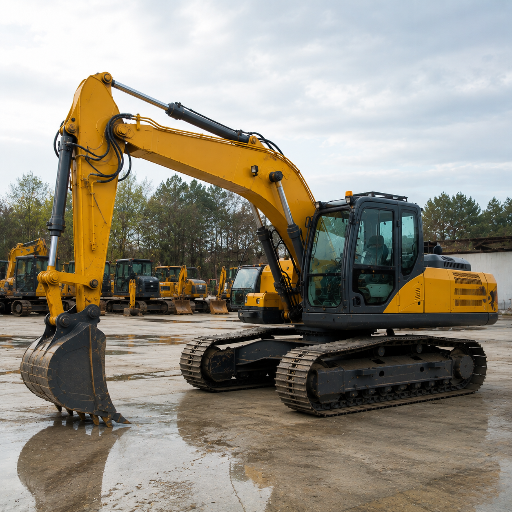
9
major brands resold
(Cat · Komatsu · Volvo · Hitachi · Hyundai · Doosan · Kubota · Kobelco · Sany)
0–50t+
crawler excavators
mini, medium & heavy
12-Point
pre-export inspection
scorecard per machine
30+
countries supplied
FOB Qingdao / Shanghai
Trackhoe vs Excavator: What You Are Actually Buying
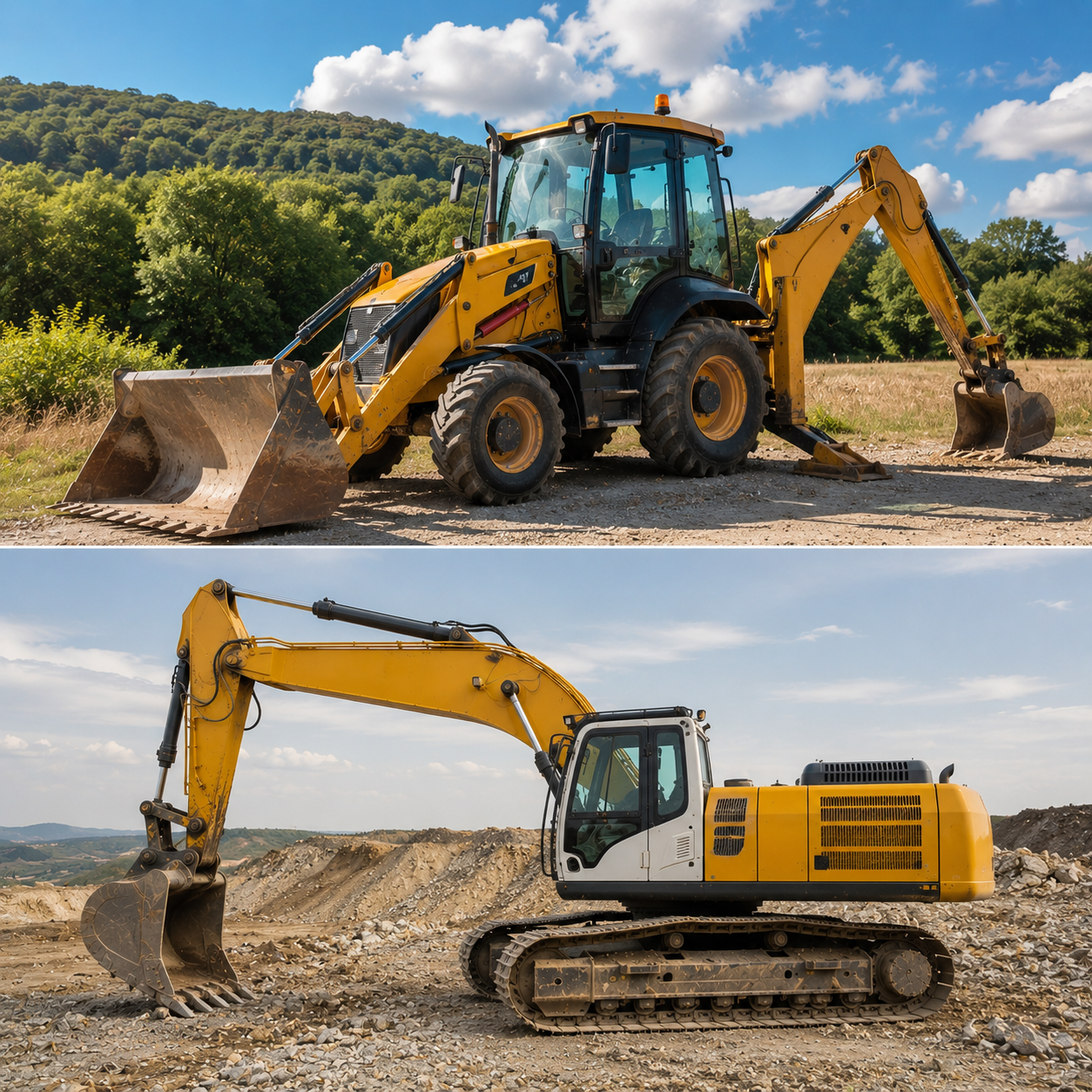
The fastest way to overpay is to treat a low hour-meter reading as proof of condition, it’s the least trustworthy number on a used machine. A “trackhoe” and an “excavator” are the same machine: trackhoe is the North American term for a tracked, or crawler, hydraulic excavator that rides on rubber or steel tracks instead of wheels. (It isn’t a backhoe, which is a wheeled loader with a rear digging arm.) So whether you search trackhoe for sale, trackhoes for sale, or used excavators for sale, you’re buying the same class of crawler digging machine, and the same set of risks. Unlike a wheeled backhoe, a crawler’s value lives in its undercarriage: get the size class wrong and you can lose 10–20% of the machine to wear you never measured, and a low hour-meter reading isn’t always the bargain it looks like.
For a global importer those risks are sharper than for a local contractor. You’re often committing to a machine from photographs and a video, across an ocean, on a deposit. Independent inspectors are blunt about what that means: as one heavy-equipment lender put it, “if you can’t inspect it yourself or get a trusted pre-purchase inspection by a 3rd party, just walk on by.” That single sentence is the reason this page exists, and the reason every machine we export is documented, not described.
Used Excavators by Size Class: Mini, Medium & Heavy
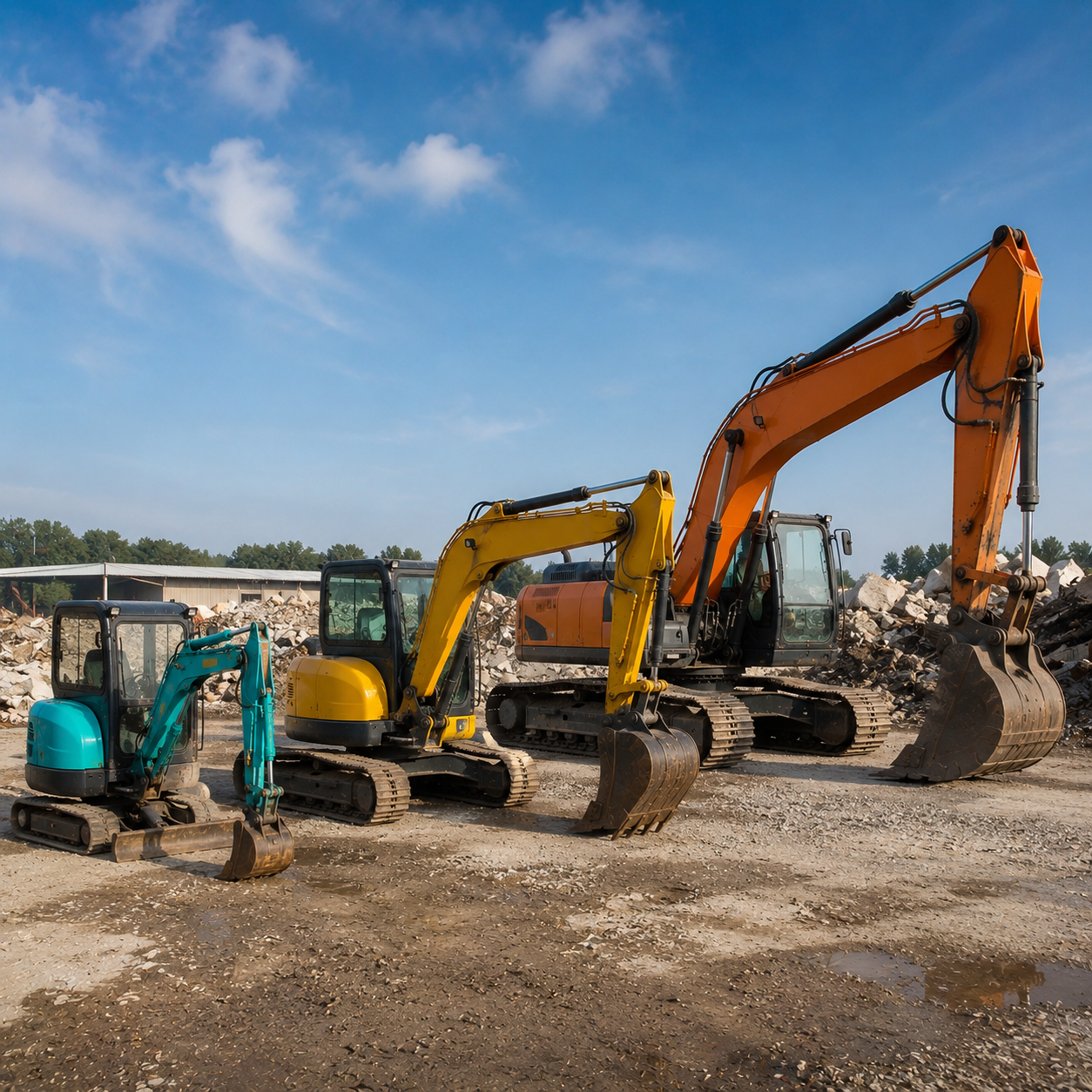
Brand prestige matters less than whether you can get parts and service for that brand in your own market, so we organize inventory by size class first, then brand, and we publish the four numbers that actually decide a purchase: price band, production year, working hours, and operating weight. Mini machines (0–10t) such as the Kubota KX series or a small Komatsu track hoe for sale handle urban work, landscaping and trenching; medium crawlers (10–30t) carry general construction; heavy excavators (30t+) take on mining and demolition. We stock everything from a one-ton mini excavator to a long reach trackhoe configured for dredging and slope work, and we list each unit by production year, a 2019, 2021 or 2023 build, alongside its hours and tonnage. Most medium and heavy crawlers ship in their LC (long-crawler) configuration, such as the Komatsu PC200LC or Hitachi ZX350LC, for added stability.
9-Brand × 3-Class Used Excavator Selection Matrix
| Size class | Weight | Representative models we export | Best application | Indicative FOB used price band* | Verify first |
|---|---|---|---|---|---|
| Mini / compact | 0–10t | Kubota KX/U, Cat 303–308, Komatsu PC30–78, Hitachi ZX33–55, Bobcat-class minis | Urban builds, landscaping, trenching, indoor demolition | $8,000–$60,000 | Rubber tracks, swing boom, hours under ~5,000 |
| Medium | 10–30t | Cat 320/323, Komatsu PC200–210LC, Volvo EC210–250, Hitachi ZX200, Hyundai R210, Doosan DX225, Kobelco SK210 | General construction, road & infrastructure, utilities | $30,000–$95,000 | Undercarriage % wear, hydraulic pump, engine emission tier |
| Heavy | 30t+ | Cat 336/349, Komatsu PC360–400, Volvo EC380, Hitachi ZX350–470, Sany SY365 | Mining, bulk earthworks, heavy demolition | $65,000–$180,000 | Undercarriage, structural welds, final drives, slew ring |
*Indicative FOB ranges reflect published industry used-price bands by tonnage and vary with year, hours, brand and configuration. Exact pricing is quoted per unit.
Engineering Note, Why the engine is rarely the problem
On a crawler excavator the engine is usually the last major component to wear out. A Kubota diesel runs a tested 4,500–10,000 hours and frequently beyond; operators report a well-built excavator engine reaches 15,000–25,000 hours before a rebuild. What wears first is the undercarriage, rubber tracks, sprockets, rollers and idlers, followed by hydraulic seals, hoses, and boom pins and bushings. That’s why a “high hours” fear is often misplaced, and why our inspection weights the undercarriage and hydraulics, not the hour meter. Caterpillar’s own undercarriage-wear model (a 2025 patent application, US 2025/0137885 A1) flags a sprocket at 70% volume loss as near-failure, the measured threshold our 12-point inspection applies.
Used Brand-Name vs New Budget vs Local Dealer: A Real Cost Comparison
That low sticker price stops meaning anything the moment one unplanned breakdown puts the machine down, idle crews, hire commitments and missed deadlines erase the saving fast. That’s the real trade-off, purchase price versus total cost of ownership, and purchase price is only 25–35% of the five-year picture, so the cheapest machine isn’t always the cheapest to own. Buyers ask how much does a Chinese excavator cost; the honest answer is that it depend on tonnage, year and hours, which is why we quote per unit rather than post a single number. What matters isn’t “new vs used” in the abstract; it’s how four real sourcing options trade off against each other.
Read Analysis
| Sourcing Option | Price vs Equivalent New | Machine Proof | Inspection & Records | Recourse if it Fails | Best For |
|---|---|---|---|---|---|
| Used Brand-Name from Us (China Export) | Often 20–50% Less | Cat/Komatsu/Volvo etc., Serial-Verified | 12-Point Report + Cold-Start Video + Service History | 1-Yr Parts + Clear-Title Guarantee | Importers/Distributors Wanting Proven-Brand Value at Scale |
| New Budget Chinese-Brand Mini | Lowest Sticker | Unbranded / Own-Brand | Factory CE/EPA Certificate | Warranty Often China-Only | Light-Duty, Low-Budget, Buyers Handy with Repairs |
| Local Dealer Used (Your Market) | 0–20% Less | Brand-Name, Local | Dealer Inspection | Dealer Warranty | Buyers Who Need Zero Import Risk and Pay for It |
| Online Auction (As-Is) | No Price Floor | Brand-Name, As-Is | Little or None | None — Sold As-Is | Experts Who Inspect in Person and Accept the Gamble |
20–50%
Lower acquisition cost than an equivalent new machine. A new excavator loses 20–25% of its value in year one and roughly 5–10% per year after; buy a 3–5-year-old inspected unit and someone else has already absorbed the steepest depreciation.
Source: Published Heavy-Equipment Dealer & Finance Data (Used Priced 20–50% Under New; ~20–25% First-Year Depreciation). Figures Are Industry Rules of Thumb, Not a Guaranteed Quote. See IRS Pub. 946 (MACRS) For the Tax-Depreciation Schedule.
There’s a second reason used brand-name beats both new-budget and auction for a distributor: resale. Well-maintained name-brand machines recover an estimated 35–70% of their value at year five depending on brand tier, while values drop off sharply only after about 6,000 hours. When you resell downstream in your market, a documented Caterpillar or Komatsu protects your margin in a way a no-name unit can’t.
How Every Machine Is Inspected, Refurbished & Tested
Here’s the honest version: a machine that passes a quick “it runs” check can fail weeks later under real load, because internal wear is invisible without measurement, refurbishers routinely strip used final drives sold as “tested” and find advanced wear that would have failed in the field. So we don’t describe condition; we document it.
China’s used-machinery export trade has a real reputation problem, tampered hour meters, a 2019 machine sold as a 2021, frames welded and repainted, engines tuned up just for the test video, and at its worst, Chinese machines rebranded as “Cat” or “Komatsu” and sold as original.
Our entire process exists to take each of those tricks off the table for you. Our team won’t claim a machine is mint when the gauge reads 60% undercarriage wear; unlike an as-is listing, the honest version goes straight into the report.
“We measure undercarriage wear with a track gauge and time every hydraulic cycle against the factory spec, because on a used excavator the hour meter is the least reliable part of the story. The wear, the welds and the oil tell the truth.”
Buyer Advisory, independent inspection welcome
You do not have to take our word for it. Independent pre-shipment inspection is welcome, by SGS, TÜV Rheinland, Bureau Veritas or Intertek, and we recommend a payment structure (escrow or a Letter of Credit, with a 10–20% deposit and the balance on inspection or against the bill of lading) that keeps you in control until the machine is verified. A demand for a 30–50% deposit to “reserve” a machine is the classic scam pattern, we don’t operate that way. For destination compliance you can independently verify any engine’s certification against the U.S. EPA nonroad engine records (epa.gov), and our refurbishment quality management follows ISO 9001 principles.
Delivered to 30+ Countries: Importer & Distributor Partnerships
Demand behind this business is structural, not seasonal. Global used construction equipment was valued at about USD 22.5 billion in 2024 and is projected to reach USD 35.8 billion by 2030, and earthmoving machines led by excavators are the largest segment. Asian Development Bank figures put developing Asia’s infrastructure need at roughly USD 1.7 trillion a year through 2030, and import-reliant, price-sensitive markets across Southeast Asia and Africa treat inspected Chinese-sourced machines as the practical middle ground between expensive new units and hard-to-source Japanese or European secondhand stock. For trade and market data you can confirm those export flows through national trade authorities such as the U.S. International Trade Administration (trade.gov).
Importers can lose up to 100% of cargo value when a machine fail a destination inspection, so what our importer and distributor partners actually buy is risk removal. Unlike a private seller who isn’t concerned with your resale, and whereas an auction lot ship as-is, we document provenance across 30+ countries and years of export shipping. A first-time buyer typically starts with a trial order, a single unit or a small mix of tonnages, confirms the inspection report and on-arrival condition, then scales to repeat container orders. Much of what intimidates new importers, we take on: production scheduling, supervised loading, export documentation, the GACC used-equipment export licence, and the bill-of-lading paperwork your customs broker needs. Buyers consistently say the single document they fixate on is the engine’s emission certification for their model year, so it’s in every file we send.
Excavator Attachments: Buckets, Breakers, Grapples & Couplers
Trackhoe Purchasing & Evaluation Resources
Used Excavator Size-Class & Model Selector
Match your job to the right tonnage class and example brand models.
Access Tool
FOB-to-Landed Cost Estimator
Add ocean freight and destination duty to an FOB price for an indicative landed cost.
Access Tool
Used vs New Savings & Depreciation Calculator
See the acquisition saving and the first-year depreciation a used machine has already absorbed.
Access Tool
FAQ, Buying Used Excavators & Trackhoes from China
Yes, a trackhoe is a tracked (crawler) hydraulic excavator, and the two words describe the same machine. "Trackhoe" is mainly North American usage; "excavator" is the international term. It's different from a backhoe, which is a wheeled loader with a smaller rear digging arm, so when you compare a trackhoe vs excavator you're really comparing two names for one crawler digging machine.
Yes, when you buy a used name-brand machine that has been verified, and that distinction is everything. Buyers often ask is it worth buying a Chinese mini excavator, when the sharper choice is a verified used name-brand crawler. The reliability concerns buyers raise online almost always attach to new no-name Chinese-brand machines, not to a used Caterpillar, Komatsu or Volvo. A documented, inspected brand-name unit gives you proven engineering at 20–50% below new; the risk isn't the country of origin, it's buying an unverified machine.
They're cheaper because of inventory turnover, lower handling cost and a large supply of machines retired from Asian fleets, not because quality is cut. The savings are real, but a price far below market usually signals a tampered, hidden-fault or misrepresented machine, which is why we publish verified hours and a 12-point report rather than just a low number.
We verify the serial/PIN plate against the ownership documents, confirm true hours from the ECU and physical wear rather than the dash meter, and send a cold-start video and walkaround tied to that exact machine. You're also free to commission an SGS or TÜV inspection before payment, and we supervise and film container loading and sealing so the unit you approved is the unit that arrives.
A well-maintained crawler excavator commonly delivers around 10,000+ usable hours, with the engine usually the last component to wear; minis run lower. More important than the raw number is documentation, a 6,000-hour machine with full service records is a better buy than a 2,000-hour unit with none, because the undercarriage and hydraulics, not the engine, drive real cost.
We export nine major brands, Caterpillar, Komatsu, Volvo, Hitachi, Hyundai, Doosan, Kubota, Kobelco and Sany, across mini (0–10t), medium (10–30t) and heavy (30t+) crawler excavators, plus attachments. We match the brand to the parts and service available in your market so downtime stays low.
The minimum order is one unit, and we ship by container (smaller machines, sometimes partly disassembled) or RORO (20t and up) from Qingdao or Shanghai. Transit runs roughly 15–25 days to Southeast Asia and 30–60 days to Africa, and we prepare the full customs packet, invoice, packing list, certificate of origin, bill of lading and the emission-tier label your broker needs.
Every machine ship with a one-year parts warranty and a clear-title guarantee, which is a different standard from a typical China used-export deal where after-sales can mean little more than a wash and a coat of paint. Because the bulk of failures are generic hydraulic and engine parts, we can pre-load common wear parts in the container so a breakdown in your market doesn't become a months-long wait.
We confirm the engine's emission tier (EPA Tier, EU Stage, or pre-DEF Tier 2/3 for low-infrastructure markets) against your destination's rules before you pay. We also check age limits, for example Vietnam's 10-year cap, and classify the HS code correctly, because a misclassification or a missing emission document is the most common cause of a customs hold.
Payment protected by staged delivery proof
Pay the balance after machine proof, not on blind trust.
Used excavator buyers need more than a product photo. Liehuang uses a staged payment workflow: deposit to reserve the machine, inspection evidence before balance, and export documents plus shipment tracking before release.
Verified machine videoLoading and customs filesBalance paid after confirmation
Quote & machine selectionChoose the model, hours, attachments and export destination before we reserve stock.
Deposit to lock stockA deposit holds the exact machine while inspection media and documents are prepared.
Inspection proof sentReceive walkaround video, hour-meter photos, serial details and loading plan.
Balance after confirmationPay the remaining balance only after you confirm the machine condition and export evidence.
Shipment & customs trackingWe share loading photos, bill of lading progress and customs support until release.
For high-value used equipment, trust is built by evidence. Ask for the current stock list, payment schedule and export document sample before you decide.Request stock proof