Get in Touch with Liehuang Company

Excavator Buckets
Excavator Buckets, OEM-Compatible Buckets, Teeth & GET for Every Machine Class
Factory-direct, durable excavator buckets engineered to fit your machine, your ground, and your budget, with the steel grades, coupler dimensions and ground-engaging tools spelled out, not glossed over.
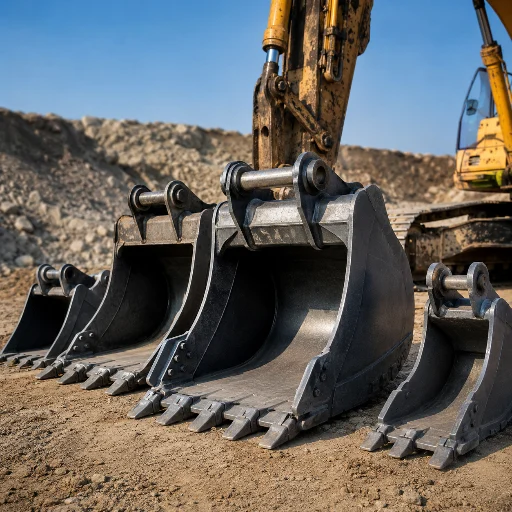
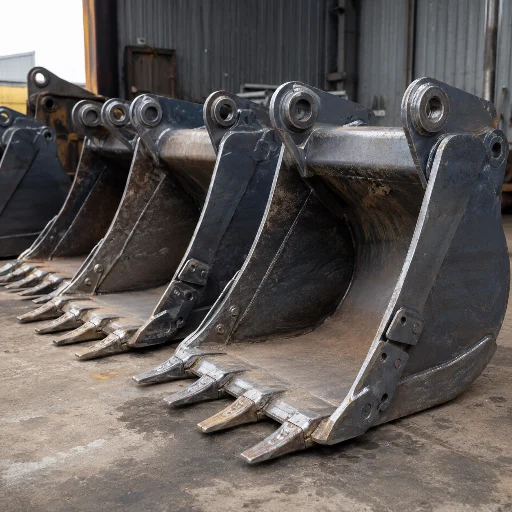
Excavator buckets are the single attachment that decides whether a machine move dirt profitably or burns fuel scraping it. We supply the full range, digging, ditching/grading, rock and severe-duty, skeleton/screening, tilt, trenching and mini excavator buckets, in Hardox 400–500 and AR-grade steel, sized to carriers from 0.5 to 85 tons, and matched to your quick coupler and pin geometry before anything ships.
10+ types
Dig · Ditch · Rock · Skeleton · Tilt · Trench0.5–85 t
Carrier weight range covered9″–84″
Bucket width rangeHardox 400–500
Shell & wear-zone steel options9 brands
OEM coupler/pin fitment mapped+80–100%
Wear life, Hardox 400→500 (SSAB WearCalc)Match the Right Bucket to Your Job: Types & Applications
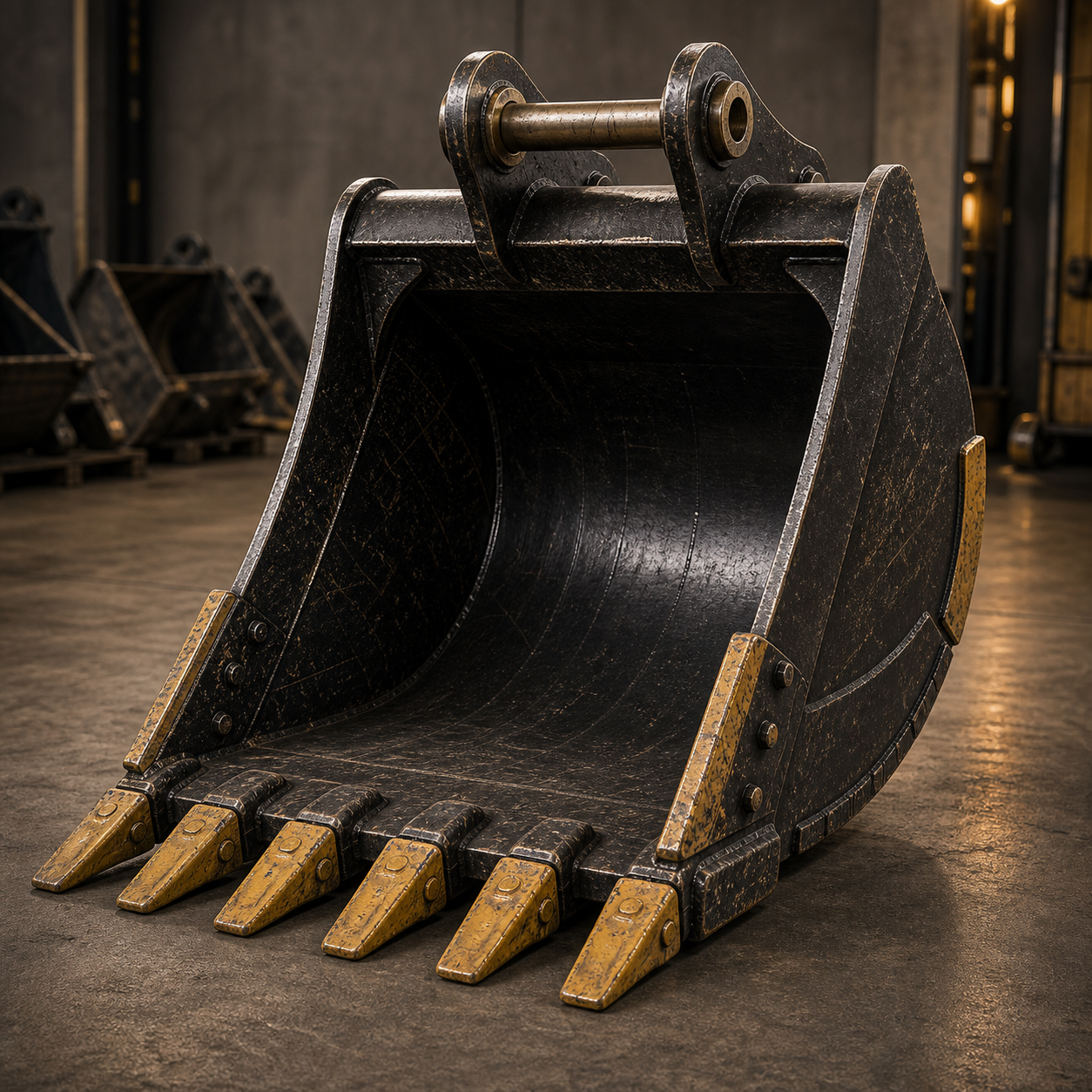
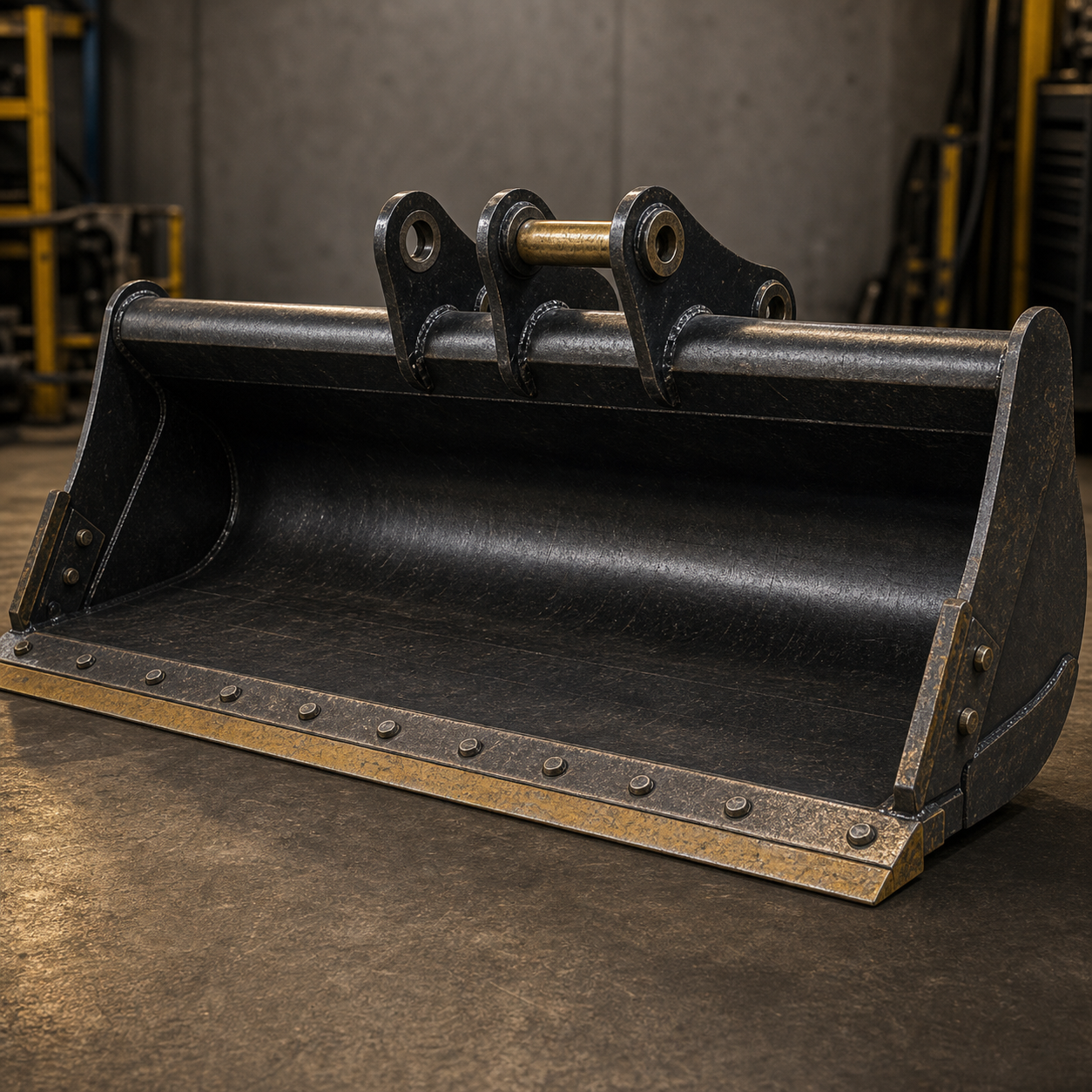
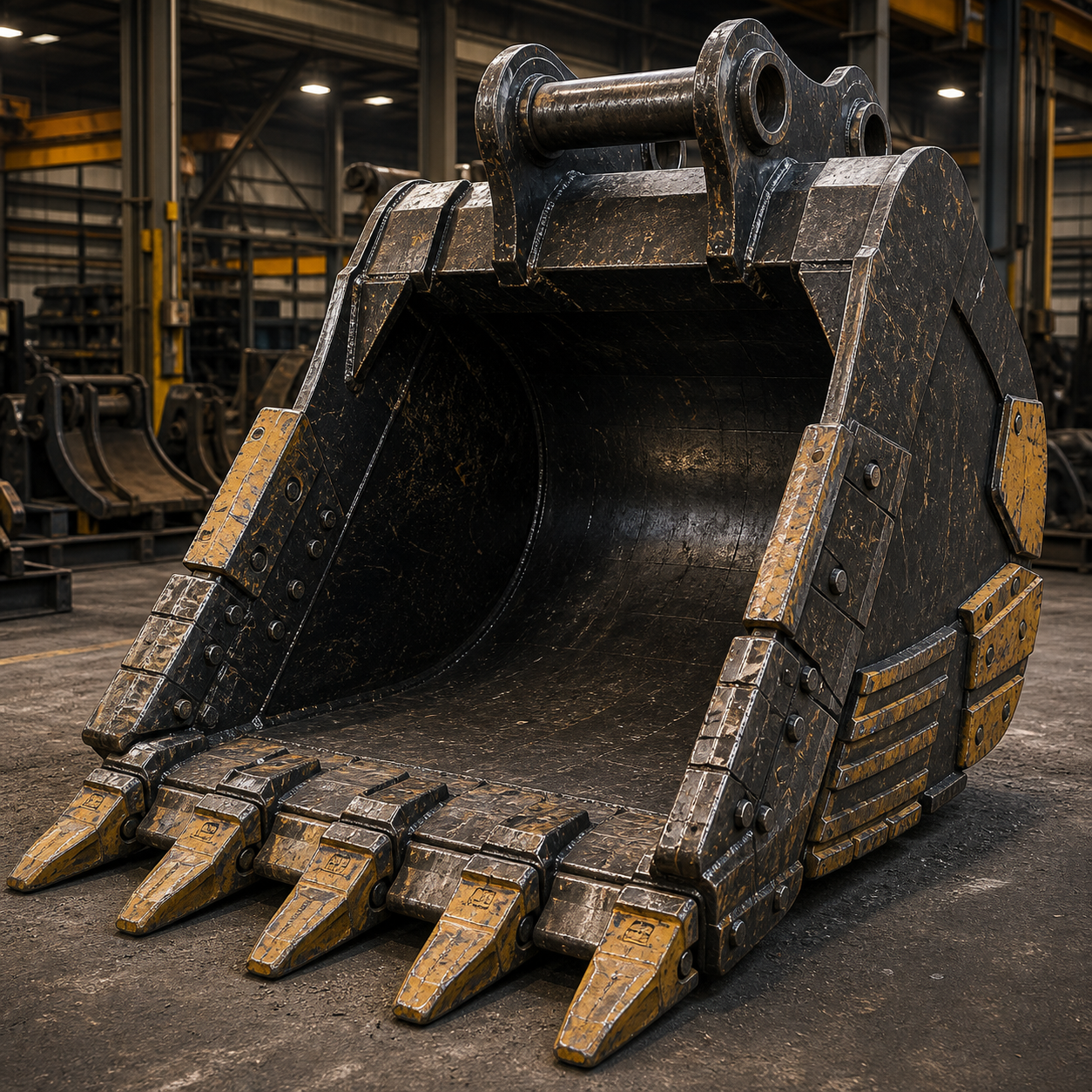
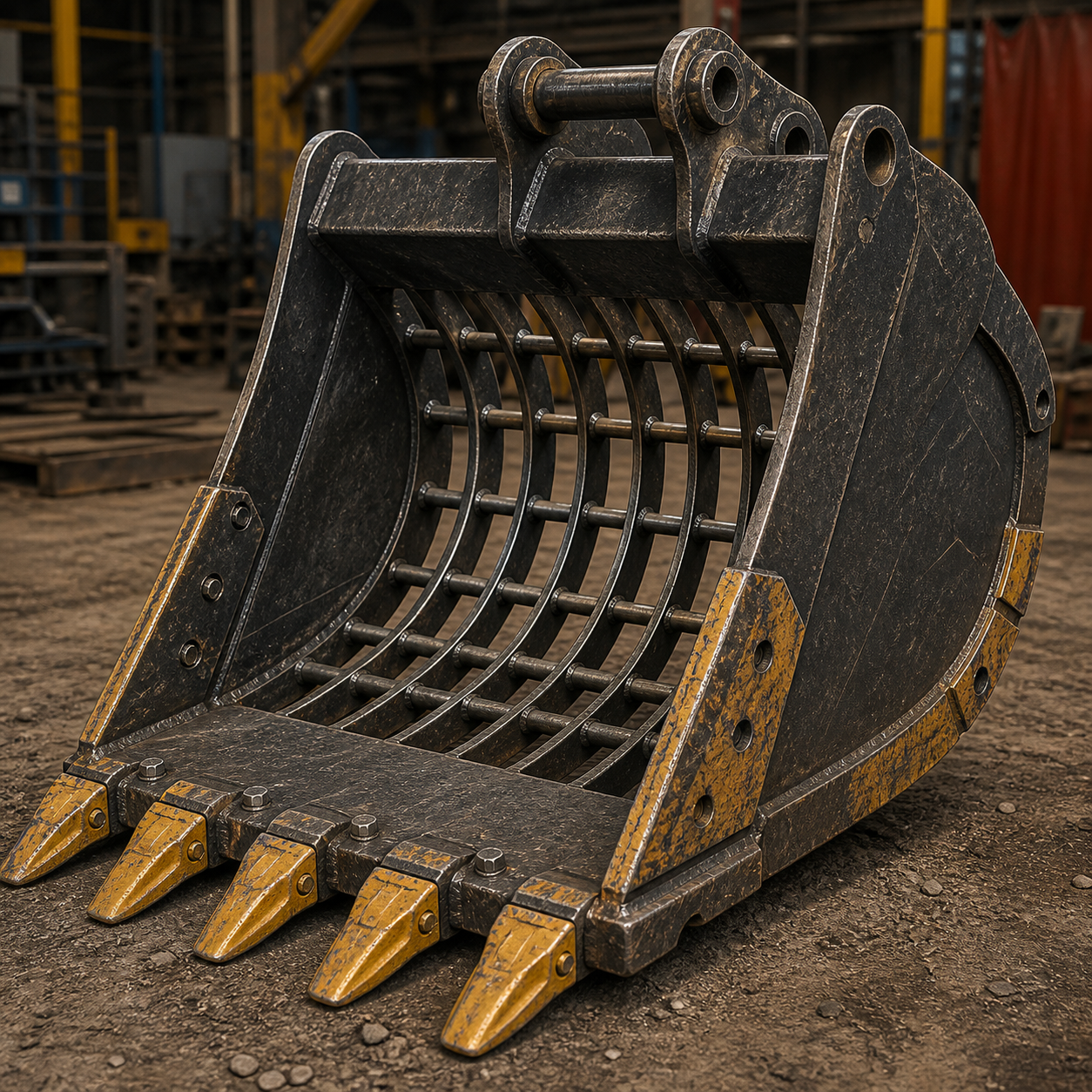
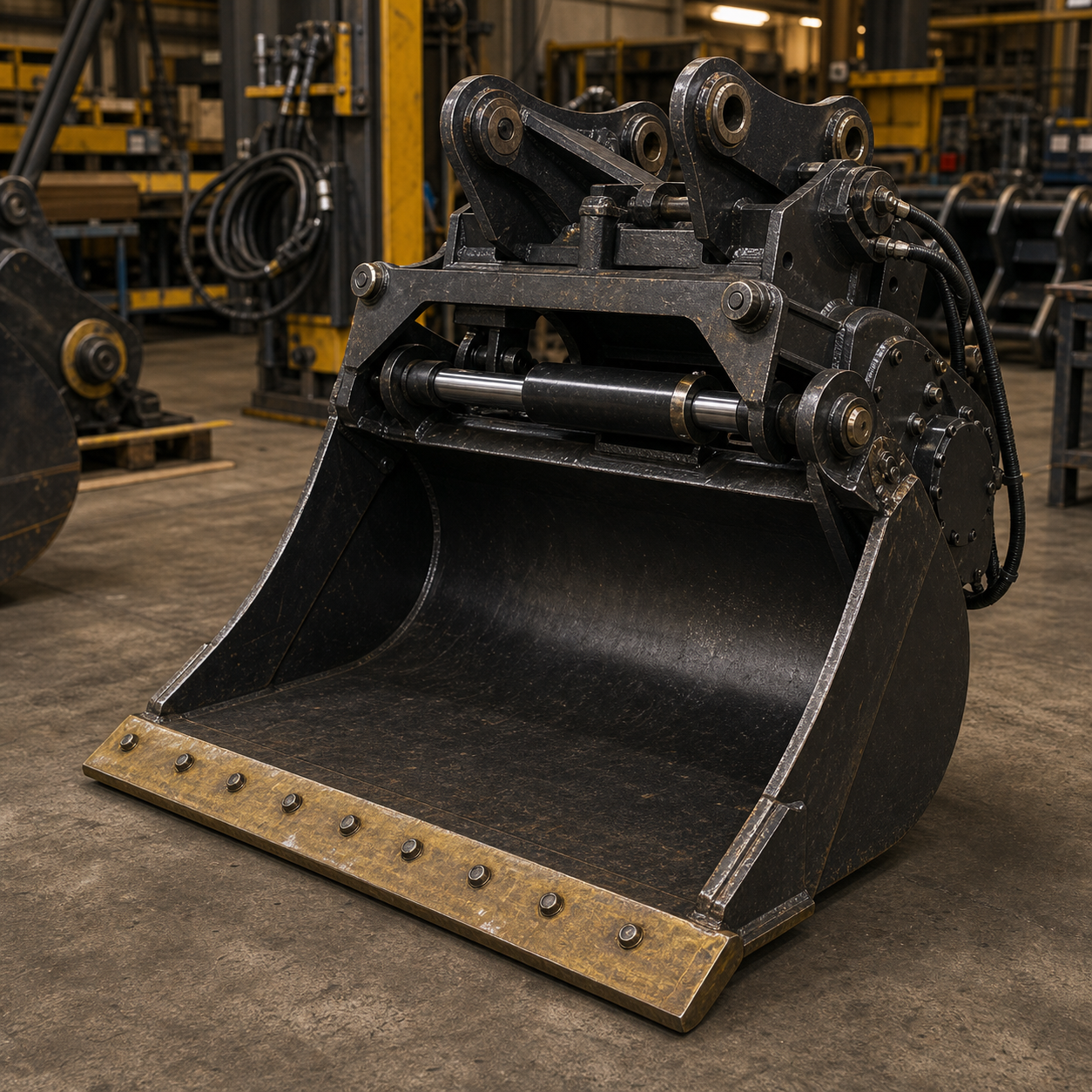
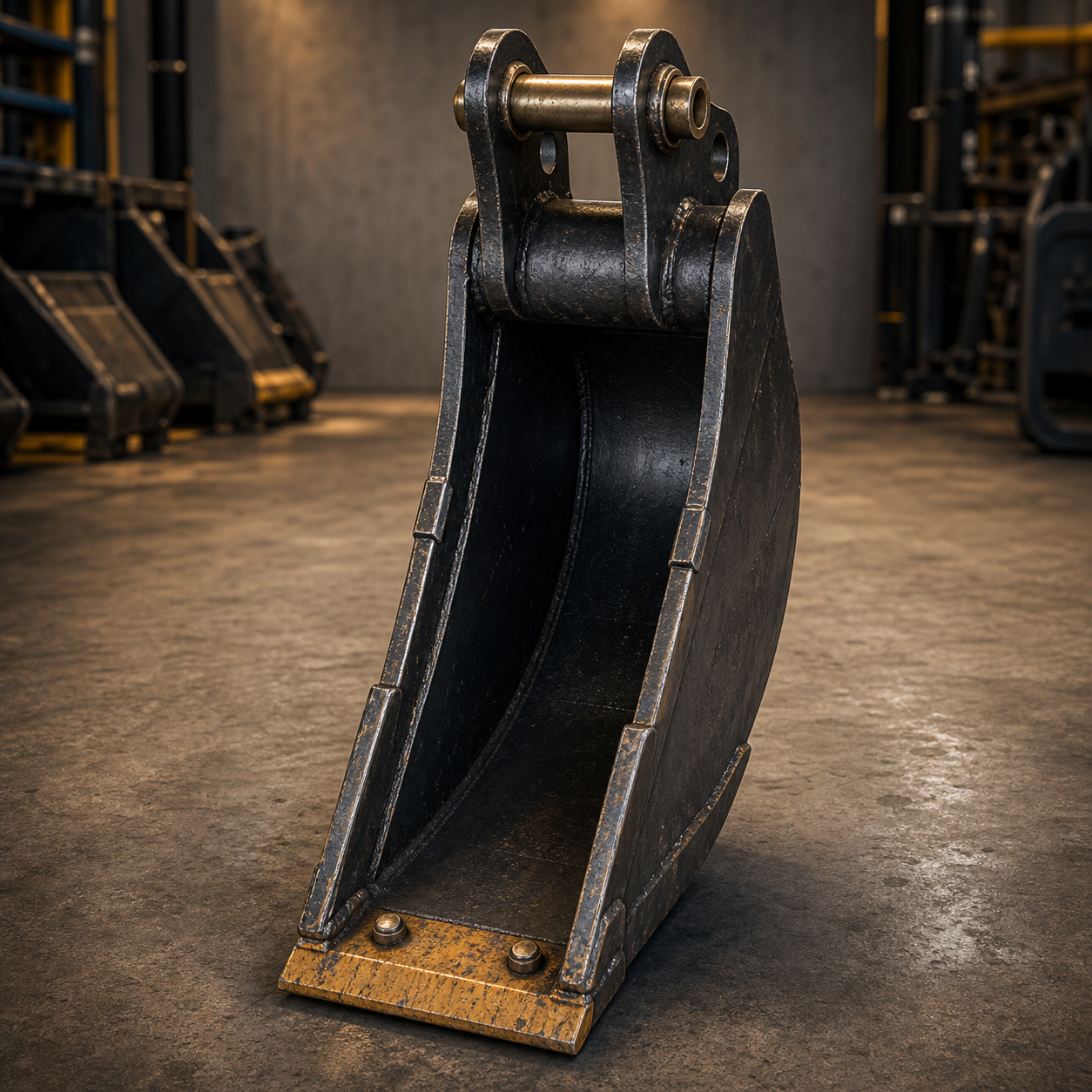
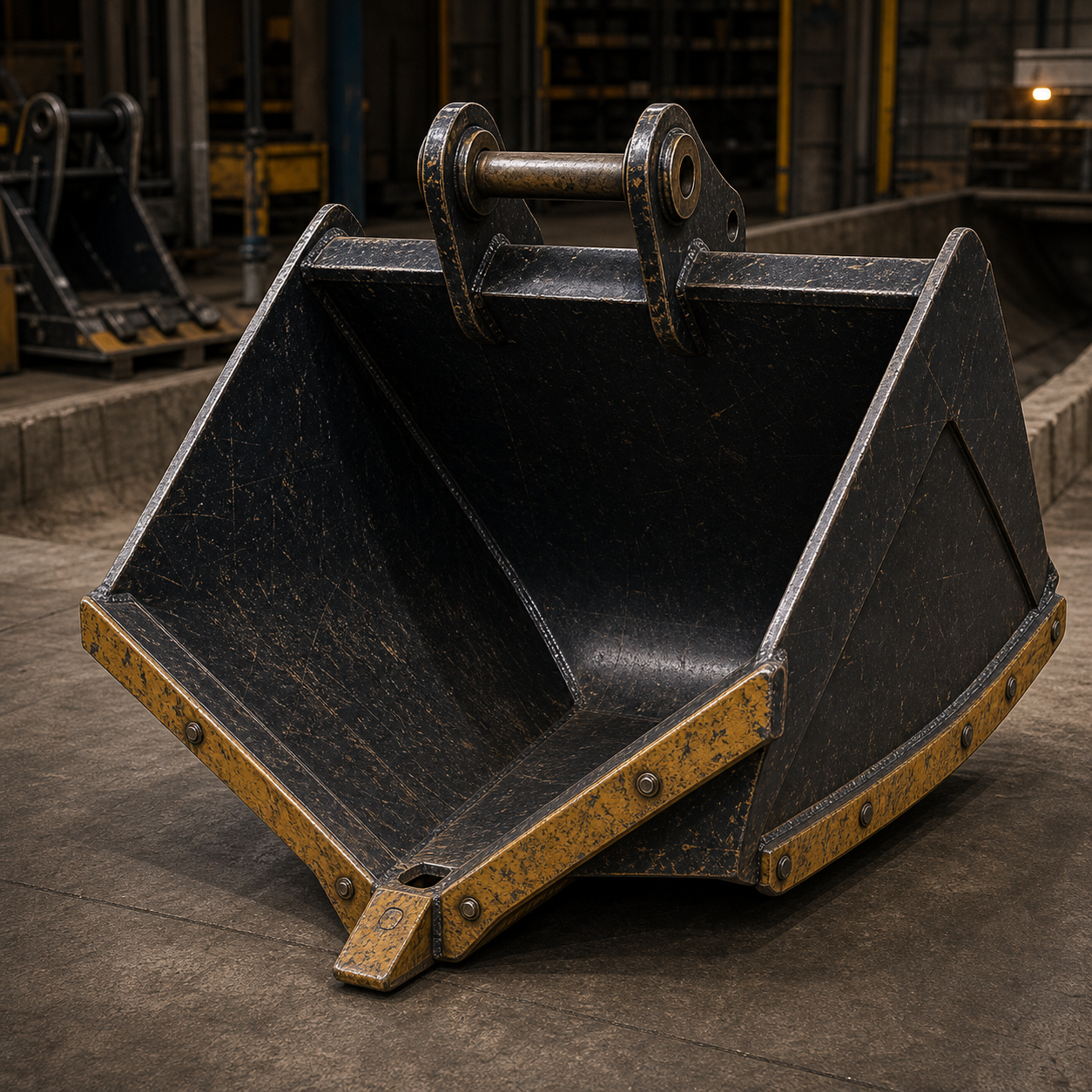
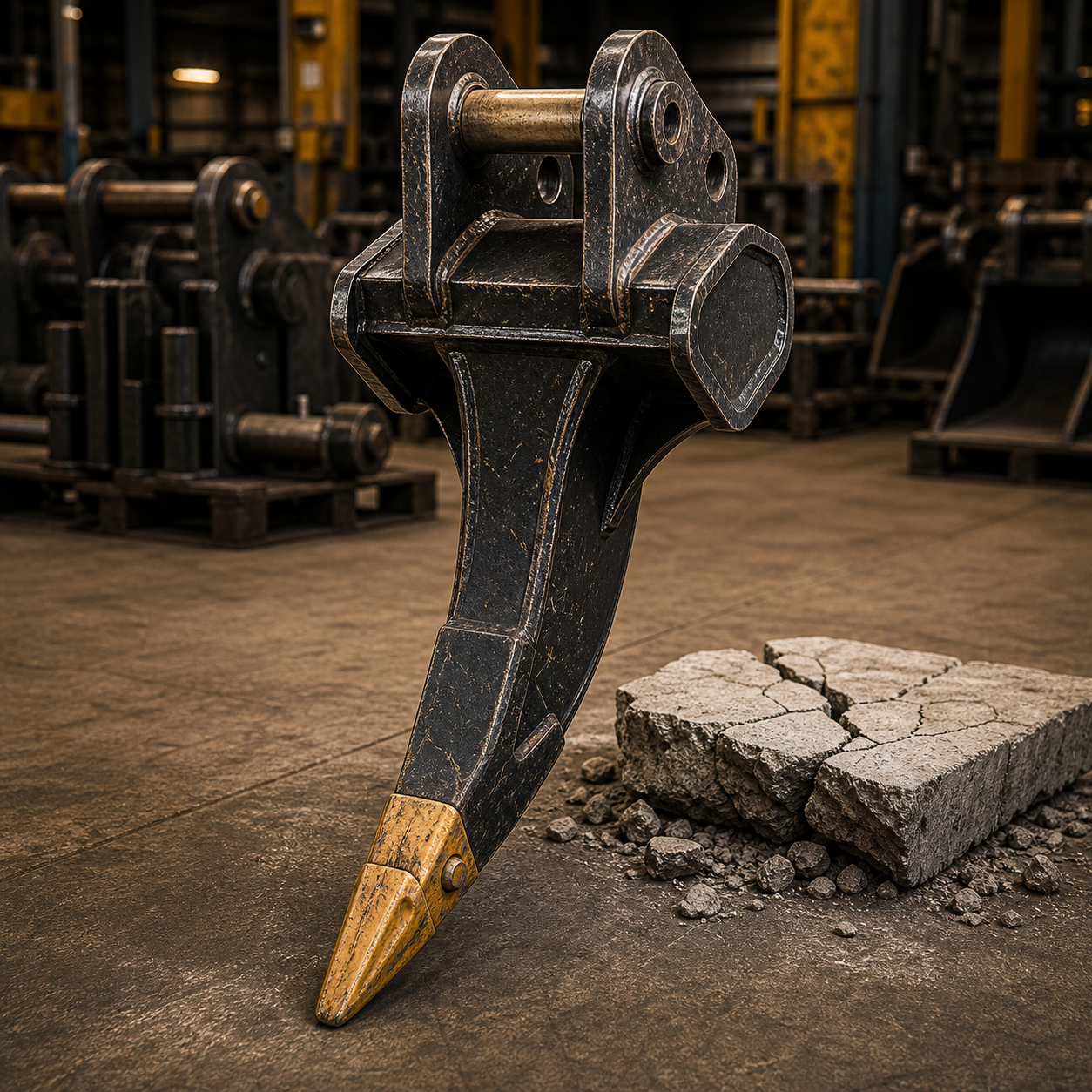
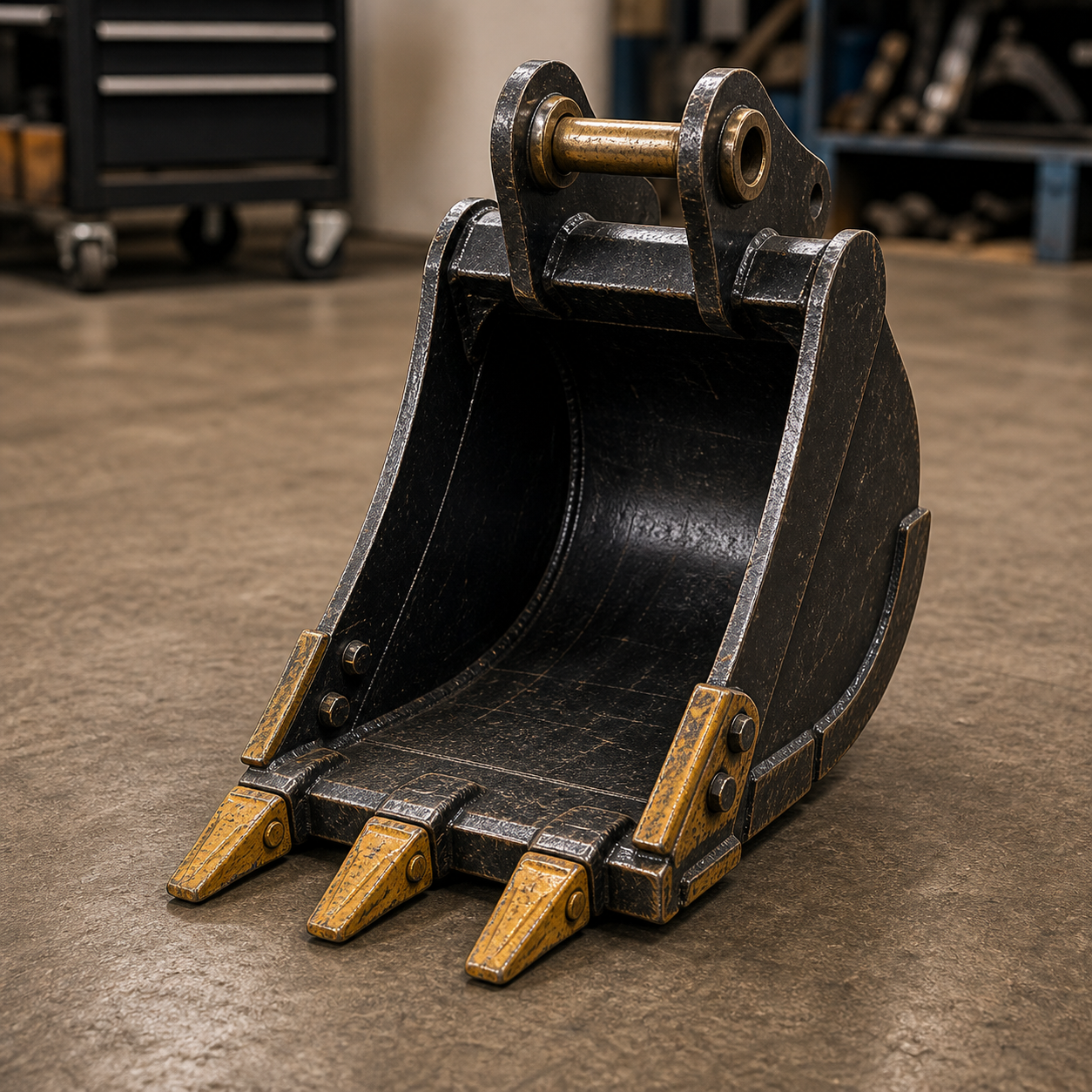
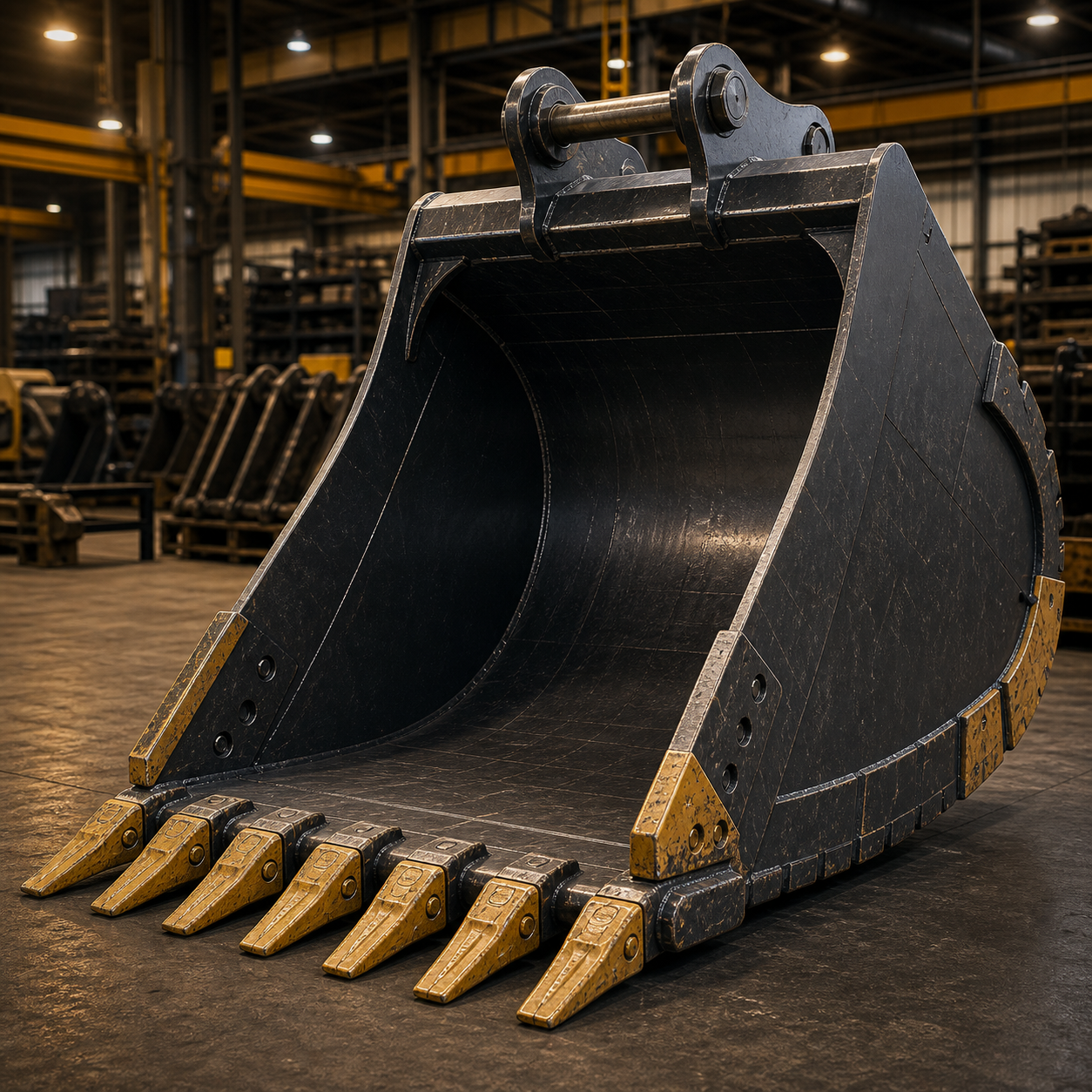
A bucket is a wear part with a job description. Pick the wrong profile and you pay twice, once in slow cycles, again in premature wear. Most catalogs show you a digging bucket and a ditching bucket and stop there; the jobs that actually destroy buckets (rock, frozen ground, demolition, screening) need geometry and steel those two profiles don’t have. Below is the working taxonomy we build to, with the alias names buyers actually search and the ground each profile is meant for. These excavator bucket types run from a narrow trenching bucket to a wide grading profile, and the right call is the difference between one clean pass and three.
Active Profile Specifications
General-purpose Digging
Carrier class0.5–85 t
Typical width12″–60″
Best forLoam, soil, mixed dirt
Steel / GET noteHardox 400 shell, weld-on teeth
Ditching / Grading / Clean-out (mud)
Carrier class1–40 t
Typical width40″–84″
Best forSlope finishing, ditch clean-out, backfill
Steel / GET noteBolt-on reversible edge, no teeth
Rock / Severe-duty (XHD)
Carrier class3–85 t
Typical width24″–60″
Best forBlasted rock, quarry, shot-rock
Steel / GET noteAR450/500 + side plates ~40% thicker
Skeleton buckets / Riddle / Screening
Carrier class0.5–20 t
Typical width24″–60″
Best forSorting rock from soil, demolition cleanup
Steel / GET noteBar grid 2–8″ spacing
Tilt Ditching / Grading
Carrier class1–14 t
Typical width40″–78″
Best forCrowning, profiling on an angle
Steel / GET note45° each way off aux hydraulics
Trenching (narrow / micro)
Carrier class0.75–14 t
Typical width6″–24″
Best forPipe & cable trenches, drainage
Steel / GET noteWidth = pipe dia + 4–6″
V-Ditch
Carrier class1–10 t
Typical widthProfile
Best forDrainage swales, water channels
Steel / GET noteSingle-piece formed V
Frost / Ripper
Carrier class1.5–30 t
Typical widthNarrow + shank
Best forFrozen / cemented ground, hardpan
Steel / GET noteReverse ripper shank for break-out
Mini Excavator Digging
Carrier class0.8–8 t
Typical width9″–36″
Best forUrban, landscaping, utilities
Steel / GET noteTwin-radius for clean release
Hi-Capacity / Light-material
Carrier class14–85 t
Typical width48″–84″
Best forLoose soil, mulch, light bulk
Steel / GET noteDeep throat, low fill resistance
Two selection rules cut most mistakes. First, the duty class is set by abrasion, not by what looks tough on a spec sheet: a widely used field convention from major GET makers rates tip life by run-hours, General >800 h, Heavy 400–800 h, Severe 200–400 h, Extreme ≤200 h, and when the ground is unknown, a Heavy-Duty digging bucket is the safe default. Second, profile geometry is purpose-built: a power/rock bucket’s spike teeth and reinforced corners do not suit clay, where you want penetration and clean release instead. Earth-moving machine and bucket terminology is standardized in ISO 6165, which is why a “grading bucket” and a “ditch-cleaning bucket” describe the same tool to an engineer even when two sellers name them differently.
Size by Machine Class: Mini, Midi, Standard & Heavy Buckets
Bigger is not more productive. Fitting the widest bucket the boom will carry is the most expensive sizing mistake on a jobsite, because payload is density × fill factor, not nominal volume. A wider bucket lowers breakout force, drops fill factor below 100%, and slows cycle times until you move less per hour at higher fuel burn and faster edge wear. The right call is the largest bucket your machine can still fill and curl in one clean pass.
Capacity is not a number a seller gets to invent, because excavator and backhoe buckets are rated to a defined method, SAE J296 and ISO 7451. Struck capacity is the volume to the strike plane through the back-top edge and the cutting edge; heaped capacity adds the material that heaps at a 1:1 angle of repose for excavator buckets (loaders use 1:2). Real fill factor is driven by the material, moist loam heaps over 100%, dry blasted rock fills only 75–90%. So the honest sizing question is not “how many cubic yards” but “how many cubic yards of your material, at your breakout force, per pass.” We size production buckets to that with the Carrier-Class Sizing Ladder.
Carrier-Class Sizing Ladder
Class
Carrier weight
Common bucket width
Heaped capacity (SAE)
Design priority
Mini
0.8–8 t
9″–36″
0.02–0.20 yd³
Penetration, low weight
Midi
8–14 t
24″–48″
0.20–0.50 yd³
Balance reach vs fill
Standard
14–40 t
36″–72″
0.50–2.5 yd³
Cycle throughput
Heavy / HD-XHD
40–85 t
48″–84″
2.5–7+ yd³
Structure & abrasion life
Engineering note: Tip radius & quick-hitch trade-off
Two geometry facts move real output more than width. A short tip radius raises breakout force and penetration but lowers capacity; a long tip radius does the reverse, so unlike the catalog assumption, a “bigger” long-radius bucket can lose to a smaller short-radius one in hard digging. Mounting any bucket on a quick coupler also costs roughly 5–10% of breakout force versus pin-on. Material density compounds the trade-off: bank clay runs ~3,400 lb/yd³, dry sand ~2,700, crushed stone ~4,500, the same bucket is a different machine in each. For OEM applications we confirm the chosen width against your carrier’s rated breakout force with precision, in-house, before production.
Will It Fit My Machine? OEM Coupler & Pin Compatibility
An excavator bucket fit your machine only when four measurements line up, pin diameter, ear (boss) spread, pin-center distance, and coupler family. There’s no universal bucket standard, so “fits your excavator” isn’t an answer: a pin-grabber coupler only needs the ear spread matched, while a wedge or dedicated coupler is brand-locked to one make. Send your machine make, model and serial, and we confirm the fit with a drawing before the bucket is cut.
“I thought there would be a standard for buckets like skid-steer attachments. I WAS SO WRONG.”
— excavator owner, public equipment forum (fitment thread)There’s no universal excavator-bucket standard, and that’s exactly why “fits your excavator” isn’t an answer, it’s a risk. Fitment is decided by four measurements, because the interface is purely mechanical: pin diameter, ear (boss) spread, pin-center distance, and the coupler family. Get any one wrong and the bucket either won’t hang or, worse, over-rotates into the arm and linkage. Unlike a “fits your model” promise, we confirm against all four before a bucket is cut, in our production line, not after it lands at your port.
Read the table the right way: a pin-grabber coupler only needs the ear spread matched, but a wedge or dedicated coupler is brand-locked, a Cat wedge fits no other brand, and even within one model line a 320L and a 320CL are not interchangeable. This is a safety problem, not just a fit problem, because a wrong pin-center distance causes interference and over-rotation that can damage the arm and linkage, and a worn coupler with slop can drop a pin and fail entirely. Coupler interfaces are governed by ISO 13031, and the industry keeps engineering the failure mode out, US Patent 11,261,577 B2 (2022) adds a spring-loaded anti-drop safety plate, and EP 4,237,632 A1 a captive lock pin. Send your machine’s make, model and serial, or the four measurements, and our team returns a confirmed-fit drawing with the machined tolerance called out.
OEM Fitment Crosswalk — confirm 4 dimensions, not a brand name
| Machine (example) | Class | Pin dia | Ear spread | Pin-center | Coupler family |
|---|---|---|---|---|---|
| Takeuchi TB035 | 3.5 t mini | 40 mm | ~5.0″ | by model | Pin-on / pin-grab |
| Kubota KX121-3 | 4 t mini | 40 mm | 5.375″ | 9.25″ | Pin-on / pin-grab |
| Bobcat E-series | mini | by model | by model | by model | Pin-on / X-change |
| Cat 305–308 | 5–8 t | by model | by model | by model | Cat wedge / pin-grab |
| Cat 320 / 320L | 20 t | by model | by model | 320L ≠ 320CL | Cat wedge (brand-specific) |
| Komatsu PC130–210 | 13–21 t | by model | by model | by model | Pin-grab / hydraulic |
| Volvo EC140–220 | 14–22 t | by model | by model | by model | S-type / hydraulic |
| Hitachi ZX / Doosan-Develon | 20–36 t | by model | by model | by model | Pin-grab / hydraulic |
| JCB / Hyundai / Sany | various | by model | by model | by model | Pin-grab / dedicated |
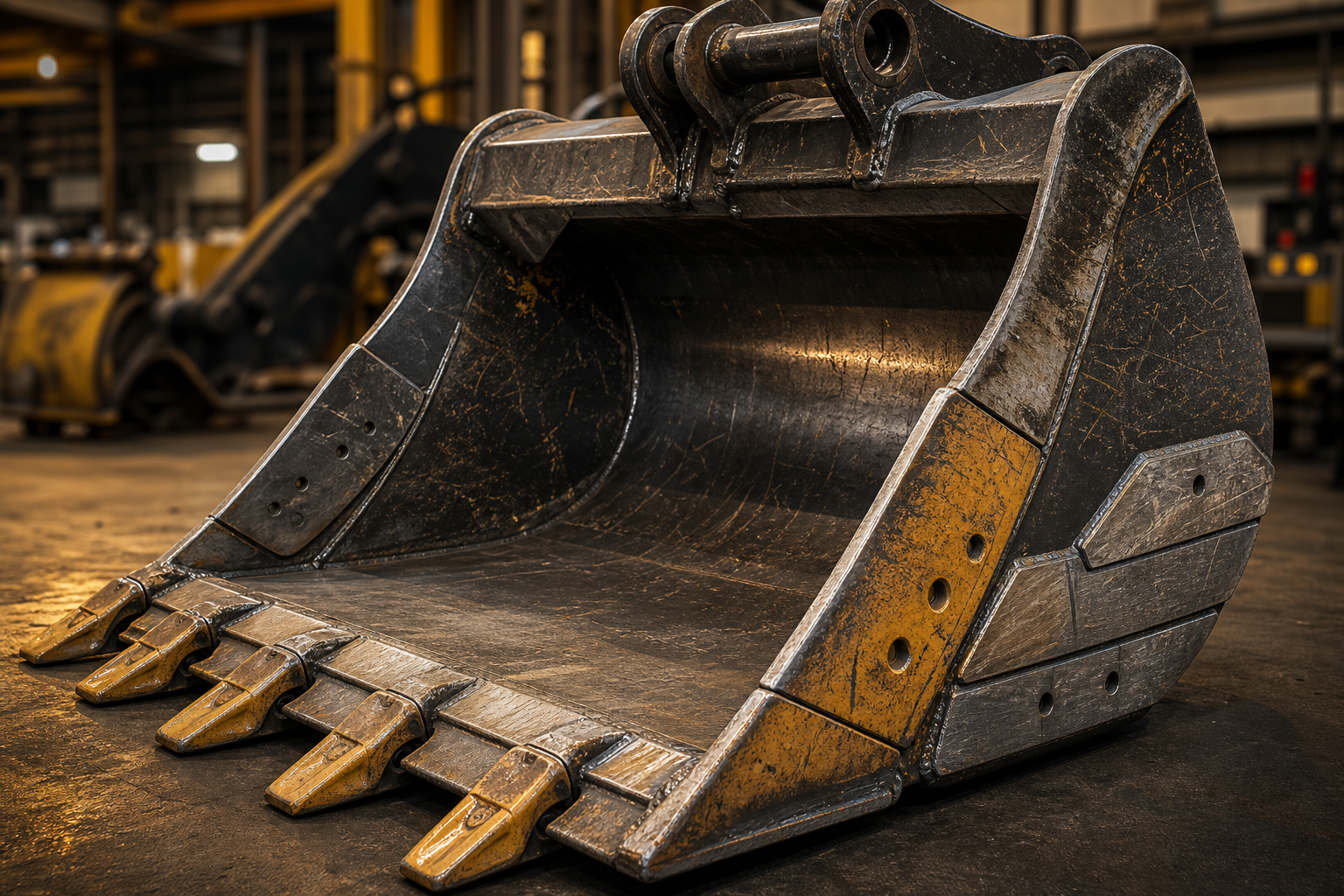
Hardox wear plate zones on an excavator bucket: shell, side wear plates, wear strips and cutting edge.
Steel grade matched by zone: Hardox 400 shell, AR/Hardox 450–500 strips/edge.
Steel, Wear & Build Quality:
What Actually Lasts
Harder steel is not automatically tougher — or even longer-wearing. Peer-reviewed abrasion testing has measured a 500-grade plate at 47.1 HRC wearing faster than a softer grade in wet, high-stress abrasion, because toughness falls as hardness climbs and impact starts chipping the edge. Brinell is one input, not the answer. (Applied Sciences, 2024, peer-reviewed)
“we just bought a new bucket for 10k, wore through it in 3 months.”
The fix is to match grade to ground rather than chase the biggest number, which is the logic of the Ground-to-Grade Steel Selector. A buyer’s own words frame the stakes. That’s what a 36 ksi mild-steel bucket does in rock, A36, grade-50, S355 and even A514/T-1 alone are inadequate for sustained abrasion, which is why wear zones need quench-and-tempered AR plate. Through-hardness is the part the price tag hides: a genuine Hardox plate is hardened through its thickness with core hardness at least 90% of the surface value, so it keeps resisting wear as it thins, a “HB450” stamp on an unknown plate doesn’t promise that.
Ground-to-Grade Steel Selector
WEAR PLATE, PER EN ISO 6506-1 BRINELL| Grade | Hardness (HBW) | Use in the bucket | Wear-life vs 400 |
|---|---|---|---|
| Hardox 400 | 400 nom (370–430) | Shell, sides, mild/loam digging | baseline |
| Hardox 450 | 450 nom (425–475) | Mixed soil + scattered rock; first-named app = excavator buckets | +30–40% |
| Hardox 500 | 500 nom (470–530 for ≤32 mm) | Rock / severe-duty wear zones, cutting edge | +80–100% |
| AR400 / AR450 | ~400–450 | Wear strips, side cutters, runners | step per grade |
| T-1 / A514 (Q&T) | structural Q&T | Lip / cutting edge plate, adapters | strength, not abrasion |
Those wear-life steps are not marketing, they come from the steel maker’s own wear model: upgrading 400→450 returns 30–40% more life, and 400→500 returns 80–100%, measured by SSAB WearCalc. The build then has to honor the steel: weld procedures qualified to AWS D1.1 and weld-quality management to ISO 3834, with no preheat needed on Hardox 400 up to 20 mm. Breakout-force ratings follow ISO 6015, so the numbers we quote are defined the same way an OEM defines them.
We don’t quote a single ‘AR450’ number and walk away. We call out the grade and Brinell range for the shell, the wear strips, and the cutting edge separately, because buckets fail at the edge, not in the middle, and that is the part a soft-steel importer can’t put in writing.
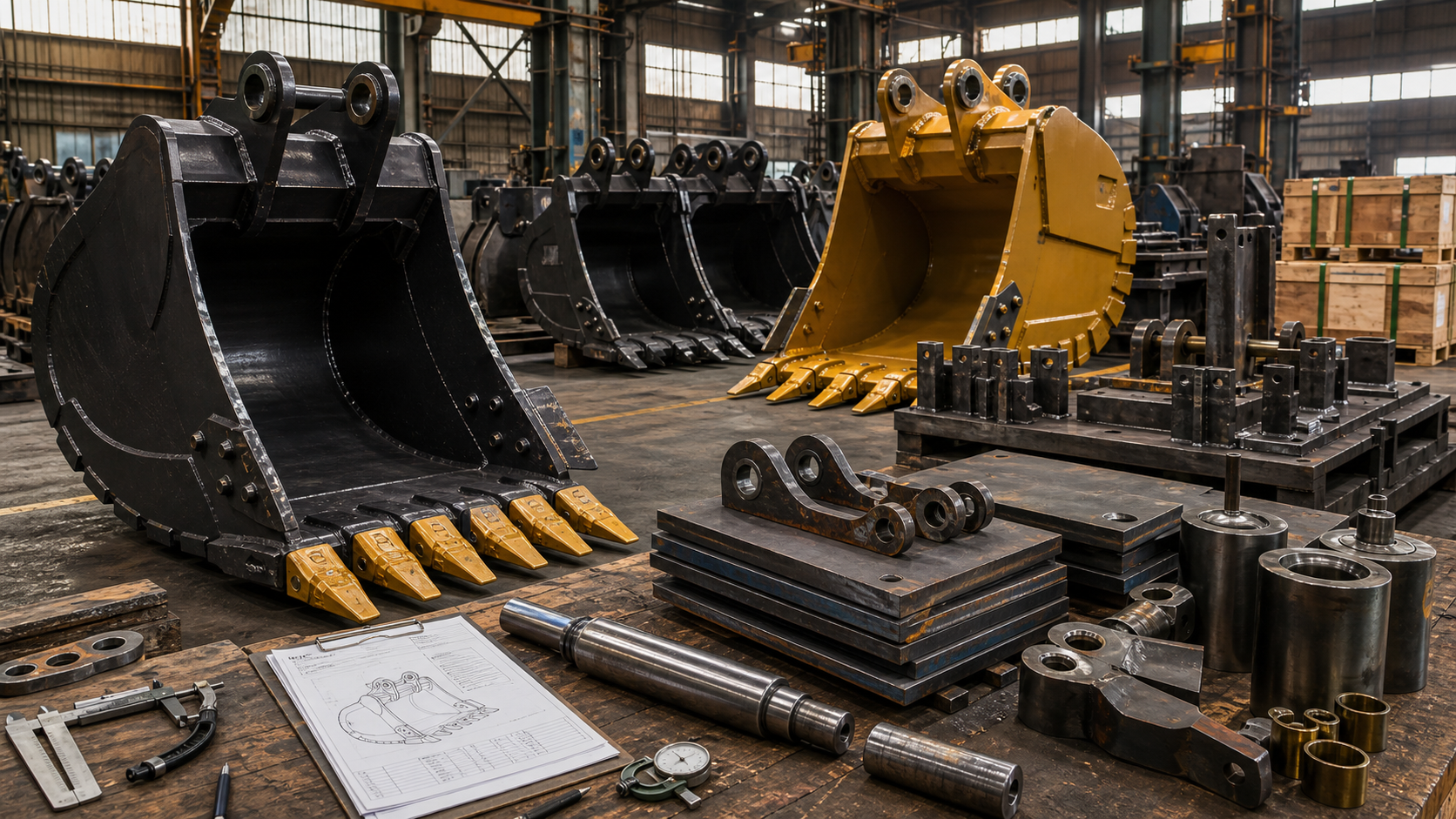
Factory-Direct Without the Risk: How We Compare to Western Suppliers
The honest objection deserves an honest answer: “I’ve bad experience with Chinese companies using soft steel or very brittle steel that just doesn’t hold up.” That experience is real, and we don’t argue with it, we remove it from the table with specifications instead of slogans.
Here’s the part most sellers won’t tell you: buyers who actually evaluate buckets rank country of origin last. What ranks first is provable fitment and provable steel. As one fabricator put it, “if the seller can only say ‘fits your excavator’ but can’t give dimensions or photos, I would pass.”
So we lead with the four fitment dimensions, the named steel grades and Brinell ranges, and the mill-cert basis, the things a soft-steel importer can’t produce.
Landed-Cost Crosswalk
Cost / risk line
Factory-direct (us)
Western distributor
Unit price basis
FOB factory, no broker markup
Retail + distributor margin
Steel grade disclosed
Yes — grade + Brinell + mill cert
Often “hardened steel” only
OEM fitment confirmed
Drawing before production
Catalog fit by model
Landed cost (FOB → door)
+20–35% (freight, duty, clearance)
Built into shelf price
Lead time
Build + 8–12 wk ocean (planned)
Off-the-shelf, higher price
Best for
Importers, dealers, fleets buying volume
One-off, need-it-tomorrow
Quality Assurance & Certifications
Certifications only count when the numbers behind them are real, and a logo with no certificate behind it’s the trap that fail a vendor audit. So we tie each standard to what it governs on the bucket, because that’s what survives an inspection on the production floor. Welds are qualified with no preheat up to 20 mm, hardness is measured to a stated HBW range, and the certificates for your order are issued on request, unlike a wall of badges, a certificate you can audit beats a logo you can’t.
ISO 9001:2015
Quality management systemISO 14001 / 45001
Environmental & OH&SAWS D1.1 / ISO 3834
Weld procedure & weld QAEN 10025-2
Structural steel, mill certsEN 1090 + CE
For EU-bound structural partsEN 474-5 / ISO 20474-5
Earth-moving machine safetyCapacity is rated to SAE J296 / ISO 7451, hardness verified per EN ISO 6506-1, and welds qualified to AWS D1.1, the same reference frame an OEM uses, which is the point.
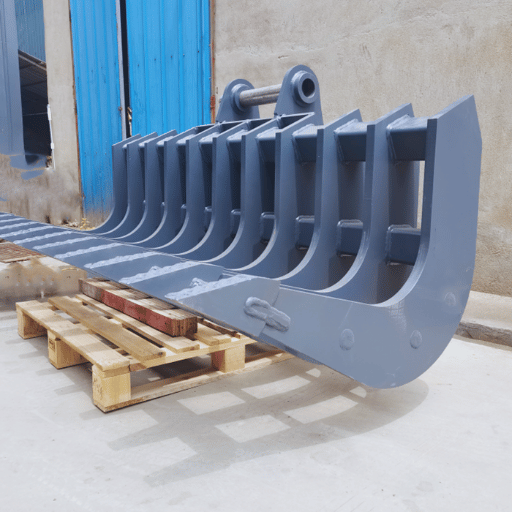
Excavator bucket teeth and ground-engaging tools: tooth, adapter and lock pin matched GET system.
GET as a matched set, so a worn adapter doesn’t quietly drop a tooth.
Bucket Teeth & Ground-Engaging Tools (GET)
The teeth are where a bucket earns or loses money daily, and where buyers get burned:
“for some reason I’m forever replacing the teeth, they fall off… then the holder is worn enough it won’t fit a new tooth tight.”
That failure is almost never the tooth or the brand, it’s a worn adapter and locking pin no longer holding the tooth, so the real spec to control is the GET system, not the loose tooth. Lost GET isn’t trivial either: broken ground-engaging tools account for roughly 1–5% of mining production lost per year industry-wide.
GET Interchange Map — tooth systems, profiles & what they’re for
| System / series | Carrier range | Profiles | Lock | Best ground |
|---|---|---|---|---|
| ESCO Ultralok | 6–75 t | A / AP / APV / C / K / H / F / P / R / T | Hammerless pin | General → extreme |
| Cat J / K series | mini → large | Spike, Penetration, A.R.M., Double-Spike, Wide, Long | Pin + retainer | Clay (spike) → rock (double-spike) |
| Hensley XS / X-series | mini → large | Tiger, standard, rock | Flex pin | Mixed → abrasive |
| Tiger / long teeth | mini → midi | Penetration | Pin-on / weld-on | Hard, compacted |
| Side cutters / edges | all | Reversible edge, wear runners | Bolt-on | Edge & corner protection |
Two engineering notes save the most cost. First, a self-sharpening / carbide-armored tip (Cat’s A.R.M. style) can roughly double tip life in abrasion versus a plain cast tip, and premium GET like ESCO Ultralok is independently measured above 530 BHN. Second, retention is being engineered hard right now: patents such as US 2023/0287661 A1 (displaceable abutment lock) and Caterpillar’s US 2022/0383469 A1 (tooth-loss detection) exist precisely because the lock, not the tooth, is the weak link. We supply tooth, adapter and pin as a matched set with the lock spec called out. If you’re not sure how to identify bucket teeth, the series is stamped on the top of the tooth, send us the number and we match the adapter and lock.

Sourcing Guide: MOQ, Lead Time, Freight & Used vs New
Importing attachments has predictable friction, and the suppliers who pretend it doesn’t are the ones who hit you with a hidden cost at the port. The expensive mistake is budgeting FOB and forgetting the rest, because landed cost runs well above it. We plan production and shipping in-house around the real numbers, not the brochure ones, and unlike a one-line quote, we show you the whole stack.
One real importer’s ledger makes the point: a $5,500 unit carried about $1,900 in clearance, tax and paperwork on top, none of it hidden if you plan for it, all of it painful if you don’t. We quote FOB and an estimated door cost together so the number you approve is the number you pay.
Request a Quote →
📦 Planning an import? FOB plus an estimated landed-cost breakdown and lead time for your port and machine.
What to budget and expect
01 Landed cost
figure 20–35% over FOB once you add ocean freight, duty and customs clearance. A 40-ft FCL runs roughly $2,500–$5,000 depending on lane; LCL $1,200–$3,500.
02 Duty
excavator attachments classify under HTS 8429.52 at 0% base duty, but Section-301 tariffs (currently 7.5–25%) stack on top for China-origin goods, so model it in.
03 Lead time
realistic build + transit is 8–12 weeks, not the 3–4 some sellers quote; ocean transit alone is ~12–16 days to the US West Coast, 25–32 to the East. File ISF at least 72 hours before loading.
04 New vs used
we supply both, new factory buckets to spec, and inspected/refurbished used buckets and machines where budget leads. Used inventory is tested before it ships; the trade-off is condition vs price, stated up front.
05 MOQ
single units for proven fitments; mixed-container volume pricing for dealers and fleets.
Equipment Solutions
Excavator Bucket Planning & Sizing Solutions
Fitment Tool
OEM Fitment Crosswalk Checker
Pick a machine brand and class to see the four dimensions every bucket swap depends on, plus brand-specific coupler notes. This is a planning guide — not a final spec sheet.
Access Checker
Calculator
Carrier-Class Sizing Ladder Calculator
Enter your machine’s operating weight and the material you dig. The tool maps your ton class to a recommended bucket width range, an SAE J296 heaped capacity range, and the effective load you can expect per pass after the material fill factor.
Open Calculator
Material Guide
Ground-to-Grade Steel Selector
Pick the ground you dig and see the recommended steel grade for the bucket shell and wear zones, with Brinell hardness (HBW) and expected wear life against a Hardox 400 baseline.
Launch Selector
Job Matcher
Bucket Type Selector
Pick the job your machine has to do. Get the bucket type built for it, what it’s best at, and the key spec to size against.
Find Bucket TypeFAQ, Excavator Buckets
Is there a standard size or mount so any bucket fits any excavator?
No, there’s no universal bucket standard, which is why fitment is confirmed by four measurements: pin diameter, ear (boss) spread, pin-center distance, and coupler family. A pin-grabber coupler only needs ear spread matched, but wedge and dedicated couplers are brand-locked. Send your make, model and serial and we confirm fit with a drawing before production.
Why do my bucket teeth keep falling off?
Almost always a worn adapter and locking pin, not the tooth or the brand, that’s the common mistake. Because the adapter nose wear, a new tooth won’t seat tight and works loose, which risks losing teeth in production. The right call is to replace tooth, adapter and pin as a matched system with the correct lock, rather than swapping teeth onto a worn nose. We supply GET as a matched in-house set with the lock spec called out.
One field check tell you which it’s: a correctly pinned tooth has slight up-and-down play but no side-to-side movement, if it rattles sideways, the adapter is shot, so replace the adapter, not just the tooth.
What’s the difference between Heavy, Severe and Extreme duty?
Duty class tracks abrasion by tip-life run-hours: General over 800 h, Heavy 400–800 h, Severe 200–400 h, Extreme 200 h or less. Severe and extreme add ~40% thicker side plates and harder AR450–500 wear zones; Heavy-Duty is the safe default.
How do I choose the right bucket size?
Size to payload, not to volume. Payload is material density times fill factor, capped by your machine’s breakout force. A bucket too wide loses breakout, fills below 100%, and slows cycles, moving less per hour. Pick the largest bucket your excavator can still fill and curl in one clean pass for your specific material.
Are Chinese-made excavator buckets reliable?
Reliability depends entirely on disclosed specs, not on the country of origin. The “soft, brittle steel” reputation is real, and it traces back to sellers who won’t name a grade or show a weld. So ask for the exact steel grade and Brinell range, the mill certification, weld photos, and a dimensioned fitment drawing. Modern Chinese wear plate meets import-grade specs, what matters is whether the supplier put grade, cert and fitment in writing, which we do.
Can you supply used excavator buckets, or only new?
Both. We export new buckets built to spec and inspected, refurbished used buckets and machines. Used inventory is tested before shipping; you trade some condition for a lower price, and we state the condition honestly so there are no surprises on arrival.
Payment protected by staged delivery proof
Pay the balance after machine proof, not on blind trust.
Used excavator buyers need more than a product photo. Liehuang uses a staged payment workflow: deposit to reserve the machine, inspection evidence before balance, and export documents plus shipment tracking before release.
Verified machine videoLoading and customs filesBalance paid after confirmation
Quote & machine selectionChoose the model, hours, attachments and export destination before we reserve stock.
Deposit to lock stockA deposit holds the exact machine while inspection media and documents are prepared.
Inspection proof sentReceive walkaround video, hour-meter photos, serial details and loading plan.
Balance after confirmationPay the remaining balance only after you confirm the machine condition and export evidence.
Shipment & customs trackingWe share loading photos, bill of lading progress and customs support until release.
For high-value used equipment, trust is built by evidence. Ask for the current stock list, payment schedule and export document sample before you decide.Request stock proof