Get in Touch with Liehuang Company

How Much Does a Used Excavator Cost in 2026?

Used excavator buying guide
How Much Does a Used Excavator Cost refers to the full ready-to-work budget: machine price, freight, duty, inspection, and repair reserve. In 2026, serious buyers can expect a used excavator price range from under $25,000 for small older mini units to more than $500,000 for large late-model machines.
Quick Answer
- Mini excavators (0-10 tons): Generally in the ballpark of $15,000-$80,000 used, though small old China-export units can be cheaper and late-model premium units more expensive.
- Medium excavators (10-30 tons): Mostly in the range of $50,000-$200,000 used; 20-ton units vary widely by brand, hours, and undercarriage condition.
- Heavy excavators (30 tons+): This can range from around $150,000 up to far over $500,000 for late-model, low-hour units from premium manufacturers.
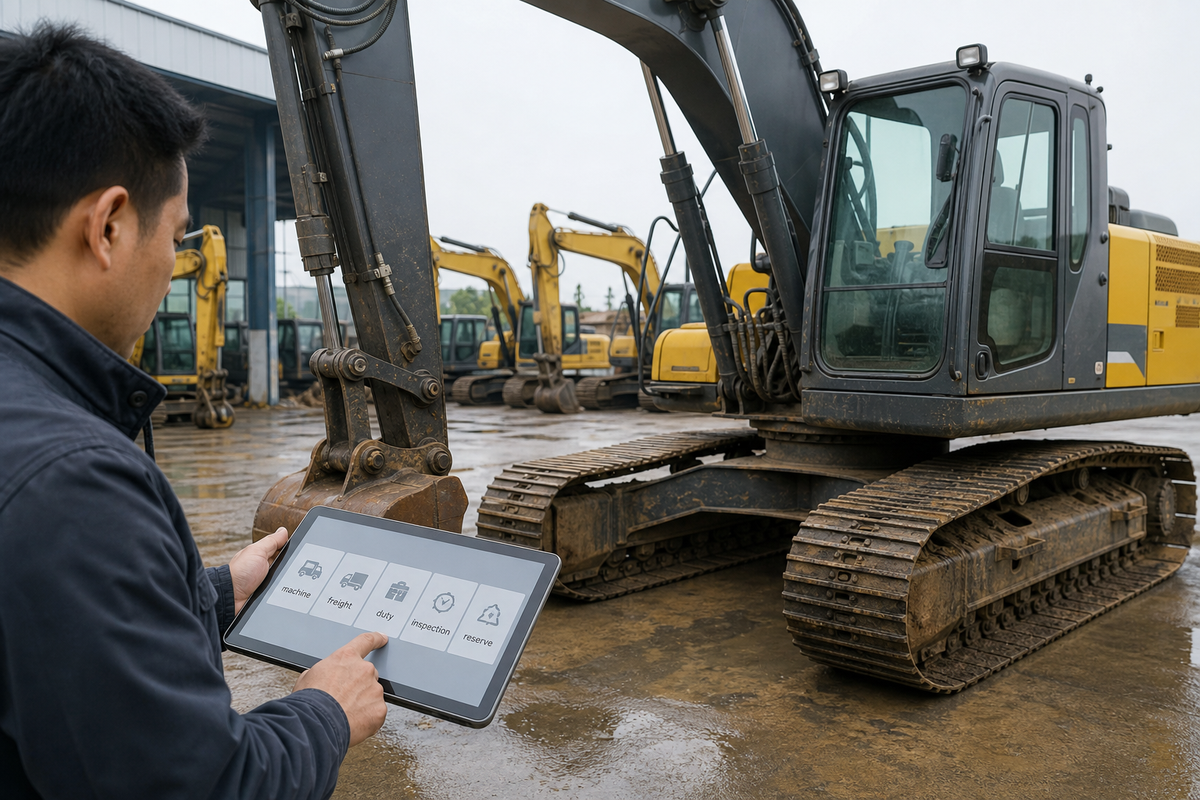
- Imported landed cost: FOB price is just the start. Add ocean freight, port fees, customs, import duties, local transport, any attachments, and a reserve fund for repairs.
For U.S.-bound importers, CBP guidance on off-road engines, equipment, and vehicles is the reason this quick answer separates machine price from compliance, entry documents, and clearance risk.
If you’re comparing Caterpillar, Komatsu, Sany, Volvo, Hyundai, Doosan, Kubota, Hitachi, Kobelco, and other trackhoe type machines, there’s no one useful average answer. That band is tied to machine class, condition, hours, paperwork, and destination-country import cost, so this guide looks at price as a stack, not a sticker.
Honest version: price is only the first cost. A listing at about $58,000, about $105,000, or about $175,000 is only the machine number; the real buying decision starts once you know what it costs to get that machine to your yard and working. Hours without service records should make you slow down. Cheap machines become expensive when low bids hide track wear, hydraulic drift, missing import documents, or a seller unable to provide condition evidence.
Liehuang technical review note: treat every used excavator quote as three numbers: the machine price, the landed price, and the ready-to-work price. If one of those numbers is missing, the quote is not ready for a buying decision.
Used Excavator Cost by Type/Class
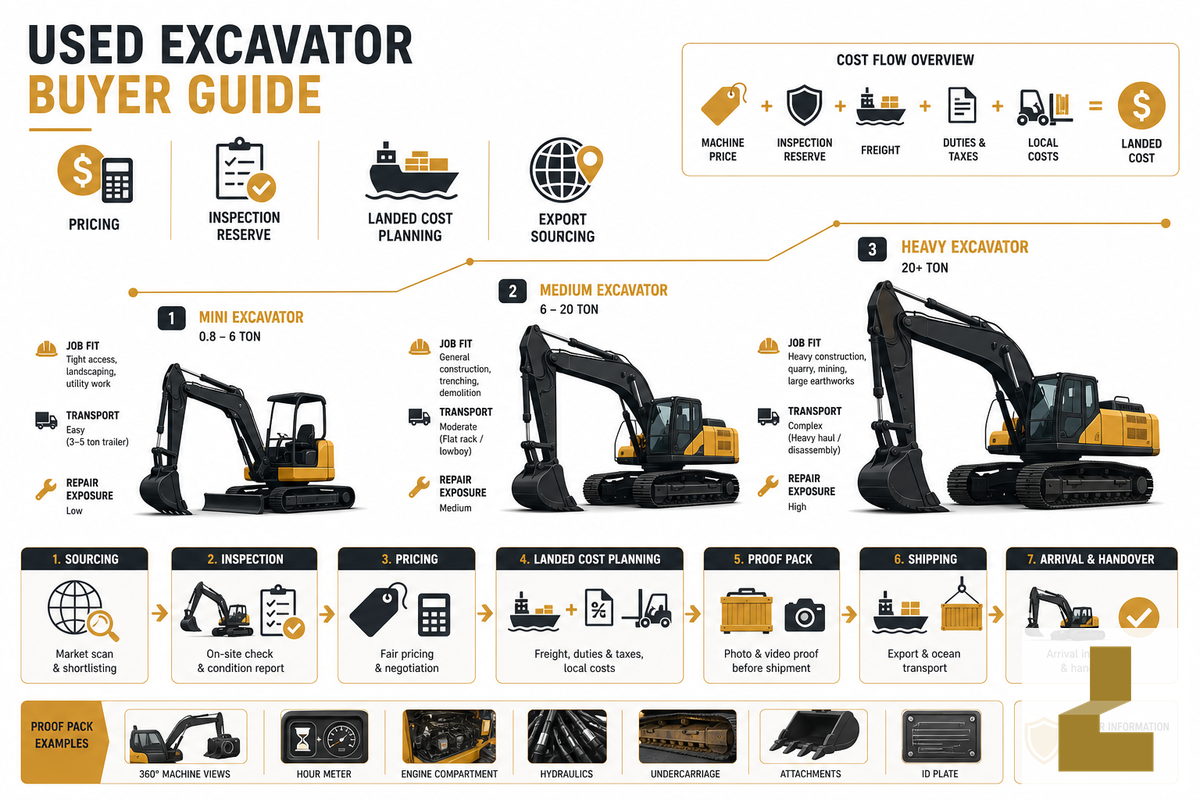
Operating weight is a useful filter. Smaller excavators are simpler to transport and deploy into urban areas but can’t match the output of a 20 or 35 ton unit in quarry, mining, heavy construction or deep trenching. Output capability increases with size, and so does the expense of repairing wear items such as tracks, hydraulic pumps, cylinders, and structures.
This table provides a planning range, not a firm quote, drawing on live marketplace observations, industry price references, and Liehuang Used Excavators’ own export experience. Always verify the model, hours, serial plate, photos, attachment set, and destination.
For a formal valuation reference, the California Board of Equalization Assessors’ Handbook Section 581 uses equipment index and percent-good factors, which is a useful reminder that age, condition, and class change value instead of one average price explaining the market.
| Type/Class | Typical used price band | Best fit | Watch point |
|---|---|---|---|
| 1-3 ton mini | approximately $8,000-$35,000 | landscaping, small trenching, tight sites | rubber tracks, boom pins, cheap grey-market parts |
| 3-6 ton mini | approximately $18,000-$60,000 | rental fleets, utility work, residential projects | hours vs pedal wear, blade wear, hydraulic thumb use |
| 6-10 ton compact | approximately $35,000-$100,000 | roadside work, small contractors, urban jobs | travel motors, swing play, final drive leaks |
| 10-15 ton medium | approximately $45,000-$130,000 | general construction and drainage | undercarriage percentage and service records |
| 15-22 ton medium | approximately $60,000-$180,000 | mainstream earthmoving and infrastructure | hydraulic pump, boom cylinder, track chain stretch |
| 22-30 ton medium-heavy | approximately $80,000-$250,000 | roadbuilding, quarry support, deep trenching | work history: demolition and rock work change value |
| 30-40 ton heavy | approximately $120,000-$350,000 | large civil projects and mass excavation | undercarriage and swing bearing reserve |
| 40-60 ton heavy | approximately $180,000-$500,000+ | mining, quarry, heavy production | transport, permits, boom/stick configuration |
| 60 ton+ mining class | approximately $300,000-$1,000,000+ | mine sites and large quarry fleets | component history and job-site support ability |
| Special long-reach or demolition unit | varies by boom, tool, and certification | dredging, demolition, slope work | structural inspection and attachment fit |
Equipment World’s 2025 excavator trend article gives a useful market anchor: used excavator price peaked at about $159,000 in July 2025, used excavator sales increased by 5.3 percent year over year, and large late-model Cat auction units commanded hundreds of thousands of dollars. This doesn’t mean your target excavator has to cost about $159,000. It means the article’s price band has to account for brand, model, age, and auction-grade condition.
Why the Same Used Excavator Can Have a $50,000 Price Spread
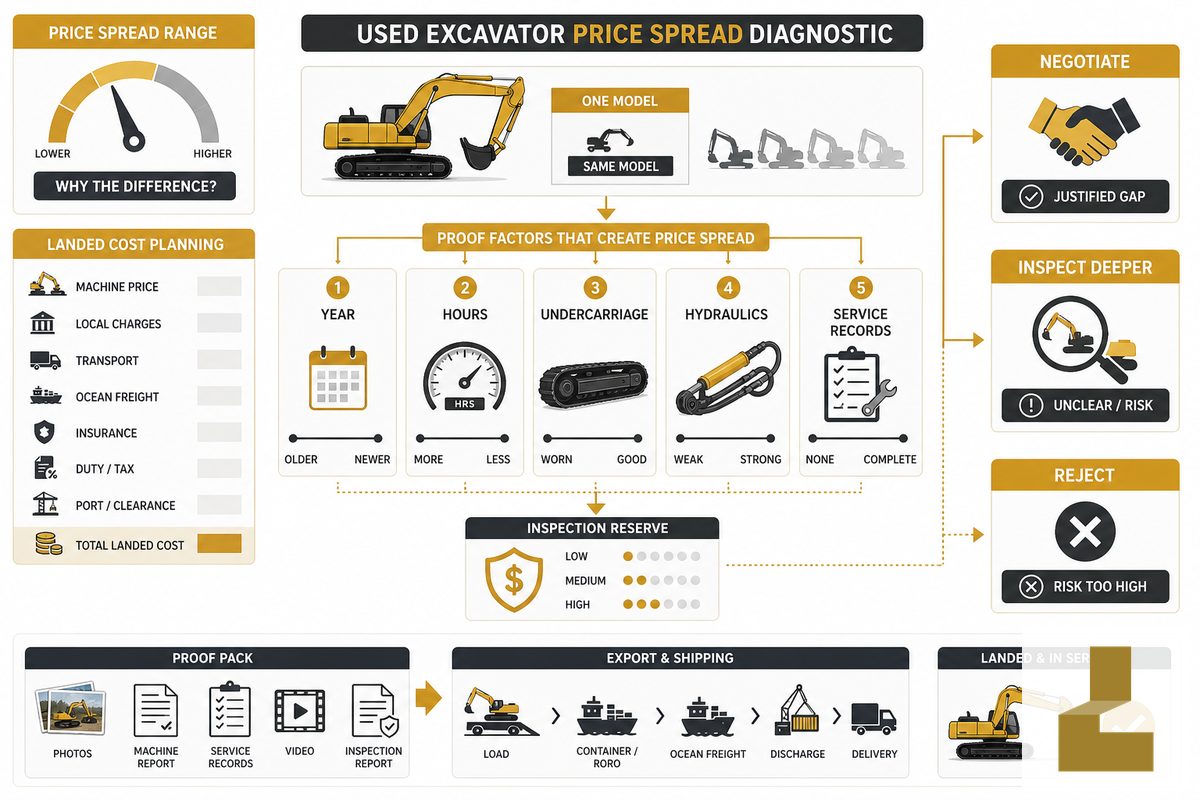
Two excavators can be the same brand and model, but differ widely on price. One machine has 2,400 hours, dealer service records, tight tracks, and a hydraulic system that moves smoothly under load. Another shows 6,800 hours, no maintenance records, slack tracks, and oil on the boom cylinder. Model badge is the same, but the risk isn’t.
Start with five inputs: year, hours, condition, brand support, and proof quality. Premium brands with strong support hold value, but support means nothing without proof of machine condition. Lower-priced machines from brands like Sany, Doosan, Hyundai, or XCMG can offer a stronger commercial deal when inspection evidence is better and the parts route is clearer.
Questions come in about “how to value a used excavator”. One good practical answer: compare price against at least three nearby machines of the same weight, and discount against obvious repair cost reserves. Don’t use the price if undercarriage work seems imminent. Don’t use FOB as the budget when you’re not sure about shipping costs and duties.
That is also how formal equipment valuation logic works: the BOE AH 581 equipment valuation handbook separates equipment cost trends from remaining value, so two machines with the same badge can sit far apart when wear, evidence, and remaining service life diverge.
5-Part Excavator Cost Stack
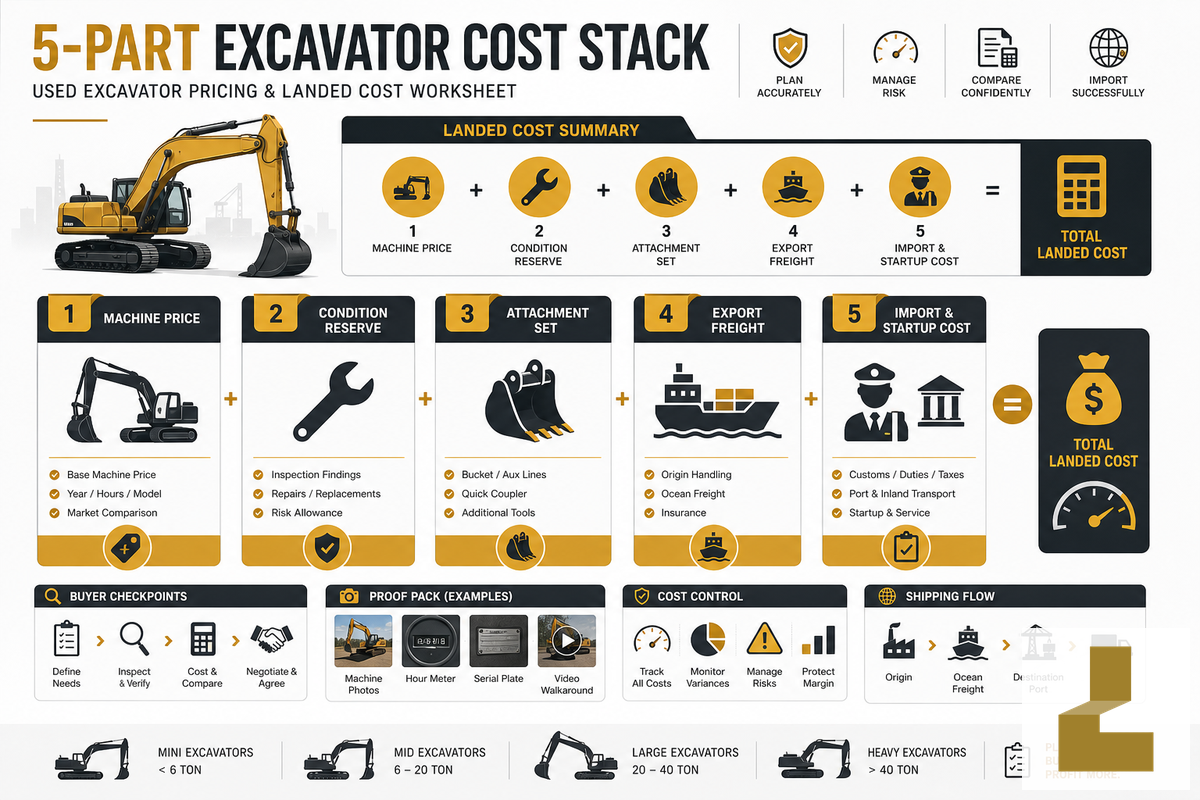
Use the 5-Part Excavator Cost Stack as the cleanest method for comparison of an auction unit vs. local dealer vs. broker vs. exporter. This will help you avoid the error of comparing FOB price with a delivered or serviced price.
| Cost layer | What it includes | Typical budget signal | Evidence to request |
|---|---|---|---|
| 1. Machine price | base excavator, standard bucket, listed condition | approximately $15,000-$500,000+ | serial plate, hour meter, current photos |
| 2. Condition reserve | tracks, rollers, pins, bushings, leaks, filters, fluids | approximately 5%-20% of machine price | inspection report and wear photos |
| 3. Attachment set | bucket, breaker, thumb, grapple, quick coupler | approximately $1,000-$30,000+ | pin size, hydraulic flow, tool photos |
| 4. Export and freight | inland transport, cleaning, loading, ocean freight | route-dependent | shipping mode, port pair, loading plan |
| 5. Import and delivery | clearance, duty, taxes, bond, local delivery | country-dependent | HS code, customs broker estimate |
| 6. Startup service | fluids, filters, grease, first maintenance, operator check | $500-$5,000+ | service kit and startup checklist |
| 7. Downtime reserve | parts delay, repair labor, lost production days | project-dependent | local parts route and backup machine plan |
| 8. Finance cost | interest, bank fees, currency cost, payment timing | buyer-dependent | proforma invoice and payment terms |
| 9. Compliance cost | emissions label, EPA or local forms, cleaning, quarantine | country-dependent | EPA Form 3520-21 or local equivalent |
| 10. Resale value | expected resale after project use | brand and hours dependent | market comps and maintenance log plan |
A medium-weight $68,000 excavator can become an $82,000 landed asset after adding $5,000 freight, $2,000 port clearance, $4,000 duty/tax exposure, and a $3,000 start-up reserve. In this situation, it may be better to buy a $105,000 inspected unit instead of a cheaper, unknown $92,000, especially if it requires $18,000 repair on the undercarriage and hydraulics.
Always run a used excavator landed cost estimate before you begin to compare any offers. If you haven’t decided on the size, consult an excavator tonnage selector.
Hours-to-Reserve Risk Ladder
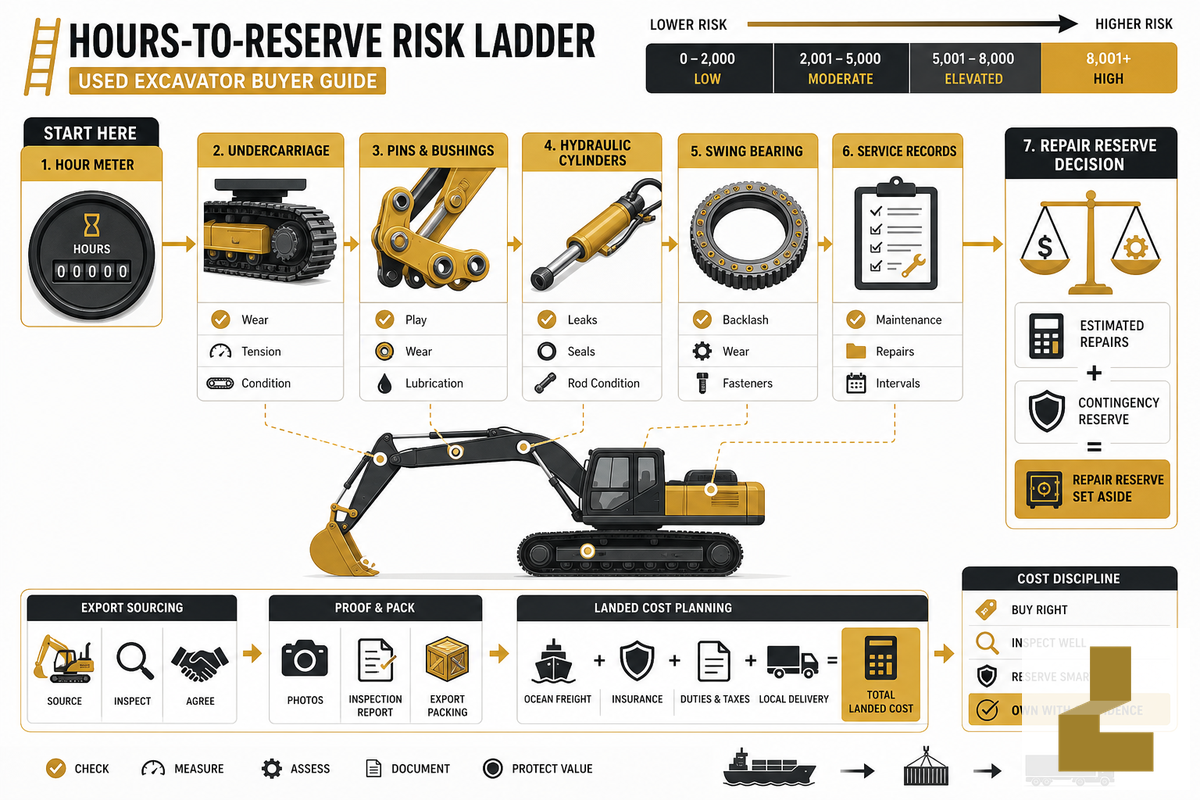
Use the Hours to Reserve Risk Ladder to discourage overconfidence in engine hours or the hour meter. A lower meter reading is not the machine. A machine with 3,000 hours but little to no maintenance can compare poorly against a machine with 6,000 hours, complete service records, and tight components.
It may sound counter-intuitive, but the lowest hour excavator isn’t always the safest. And the cheapest excavator isn’t always the best. It’s an assumption that can go awry when hours aren’t verified by actual wear or documentation.
- Under 2,000 hours: verify meter, check for paint touch-up, test controls under load, ensure boom/stick and undercarriage pins aren’t excessively worn and, when available, inspect machine telemetry.
- 2,000-5,000 hours: normal purchase range for most fleets, pay attention to service records, track life remaining, any play in the boom and stick, and engine/hydraulic temperatures.
- 5,000-8,000 hours: budget money for pins, bushings, hoses, cylinders, rollers, and drive parts. Request videos of a cold start and load test.
- 8,000-10,000 hours: purchase only with excellent proof or a price discount that accounts for high service costs.
- 10,000+ hours: plan for a project asset rather than low-risk expansion unless engine, pump, undercarriage, and hydraulics histories are crystal clear.
For shipment into the United States, CBP guidance states that off-road engines, vehicles and equipment must meet US emission standards and that commercial imports must have valid import documents and bond. This isn’t a pricing matter until the equipment is delayed or rejected.
FOB Price vs Landed Cost for Importers
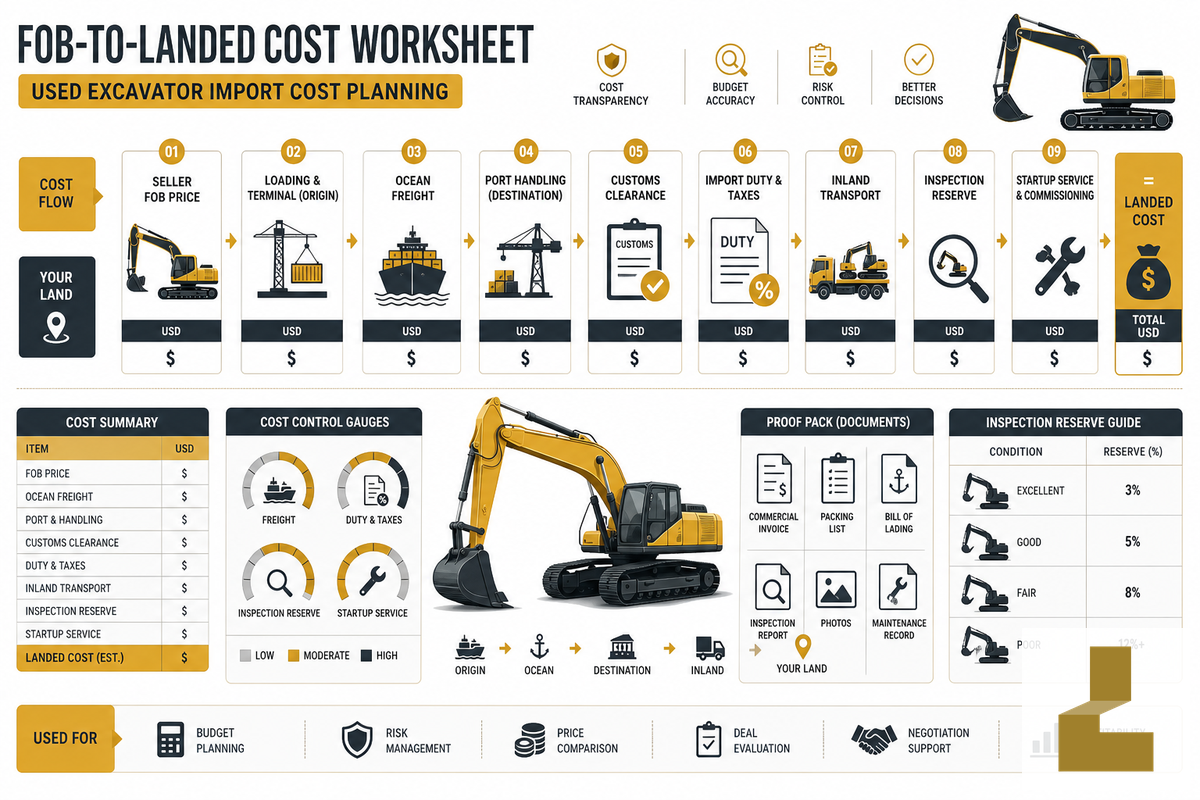
FOB price only answers what the seller gets for a machine before all international freight and destination costs. Importers pay landed costs, which include ocean freight, port handling, broker fees, duty, inland transportation, inspection, and startup services.
Use the FOB-to-Port Decision Gate for three checks:
- Seller evidence: request serial plate, up-to-date videos, inspection report, close-up photos, and information about included attachments.
- Logistics evidence: verify shipment type (container, flat rack, bulk or ro-ro), port pair, and expected transit time.
- Importer evidence: verify the HS Code, duty in destination country, any emissions standards or age limits, any required cleaning processes, and any local broker fees.
Liehuang Used Excavators can support you in this process with inspection, refurbishment, testing, shipping arrangement and buyer support services for mini, medium and heavy machines. You can get estimates of destination costs using the CIF landed cost calculator or the container fill landed cost planner.
For import buyers, the hidden problem is delay risk. Root cause is comparing an FOB seller price with a different cost boundary. Liehuang Used Excavators inspects documents, provides port-pair shipping guidance, and checks broker details before loading so a buyer can tie a $2,000 clearance line and duty estimate to proof rather than a guess. This is the honest version of FOB vs landed cost: FOB is useful, but it is not industry truth for budgeting.
Supplier Channels: Auction, Dealer, Broker, or Inspected Exporter
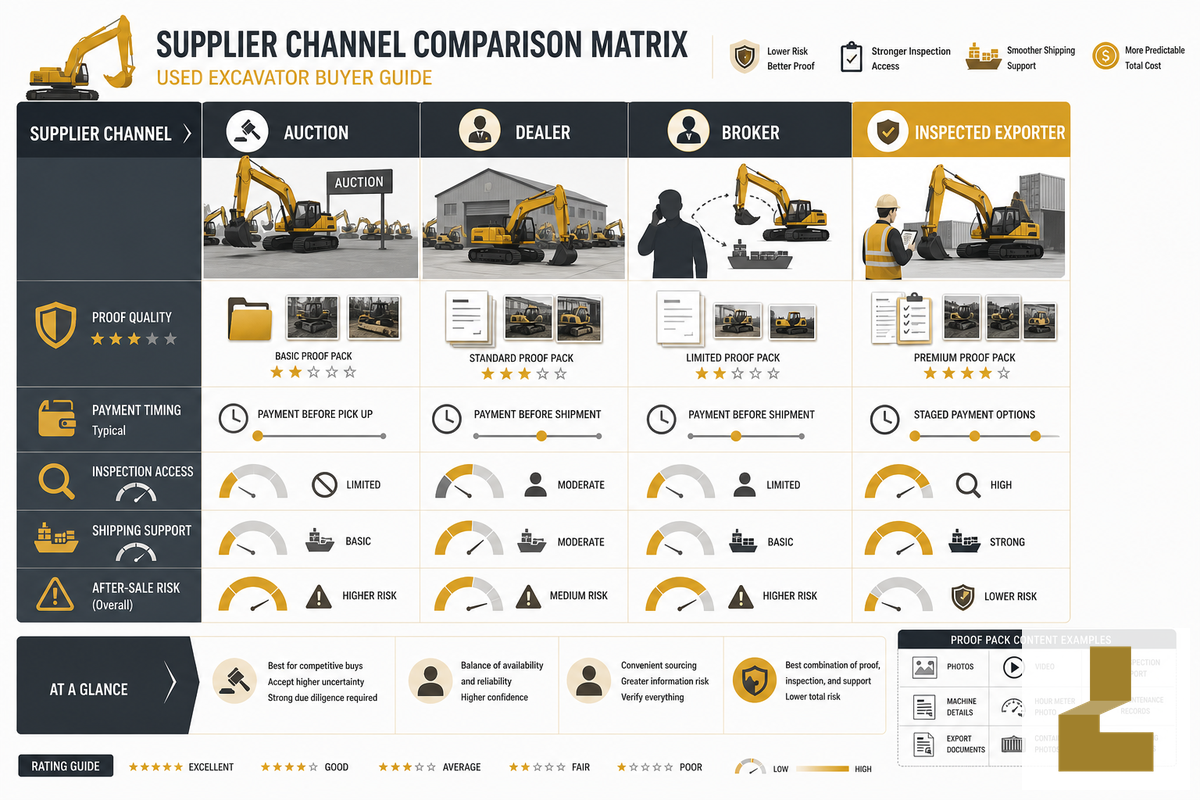
Supplier channel affects the proof you receive. Auctions are good for understanding market prices but can create after-sale support risk. Dealers can offer service history, warranties, or financing but charge more. Brokers can help you locate a machine quickly, but verify the broker controls inspection and loading. An inspected exporter should provide current condition proof, shipping support, and clear payment terms.
Equipment Trader’s website notes that information on its site is from sellers or third parties and must be verified. That warning matters because seller-supplied marketplace data can hide a problem until the buyer has already wired a deposit. If a seller can’t provide proof of the machine’s current condition, factor a risk discount into the price.
Liehuang’s procedure emphasizes quality control, with all machines inspected, refurbished as necessary, and tested before shipment. You can find out more about how to inspect used excavators and review the used medium excavator inspection checklist before sending your request.
Attachments, Shipping, and Reserve Budget
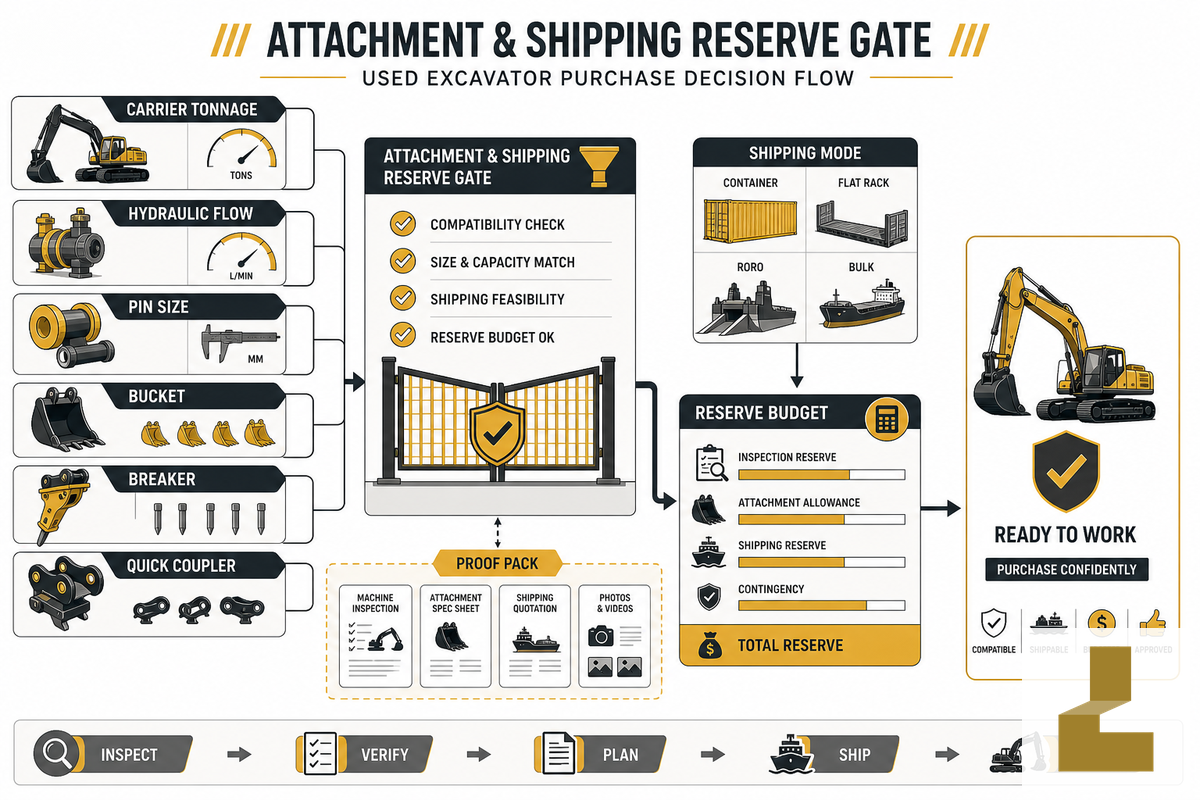
Attachments can significantly impact the price and value. A machine without any attachments will cost and perform differently than one with a hydraulic breaker, thumb, grapple, quick coupler, or several different buckets. Attachment choice has to match the pin size, hydraulic flow, machine weight, and the task it’s meant to perform.
Examples of common reserve items include $1,000-$5,000 for general service and wear parts for many smaller and medium machines and $3,000-$15,000 for undercarriage work on many compact and medium models, with higher reserves needed for major undercarriage, pumps, cylinders, or swing parts on large track machines. These are approximate figures to use in your planning.
Mismatch risk is the problem: a $5,000 breaker can become expensive rework if hydraulic flow, pin size, and carrier weight don’t match. Root cause is buying the attachment as a separate price line instead of checking it as one working system. Liehuang checks attachment fit, hydraulic flow, pin size, and machine weight before export, so a buyer in construction, demolition, or utility work buys a tool set rather than another repair problem.
See Liehuang’s inventory of excavator attachments, including hydraulic breakers, excavator buckets, quick couplers, and thumb attachments, prior to making your final purchase decision.
When a Used Excavator Is Not the Cheaper Option
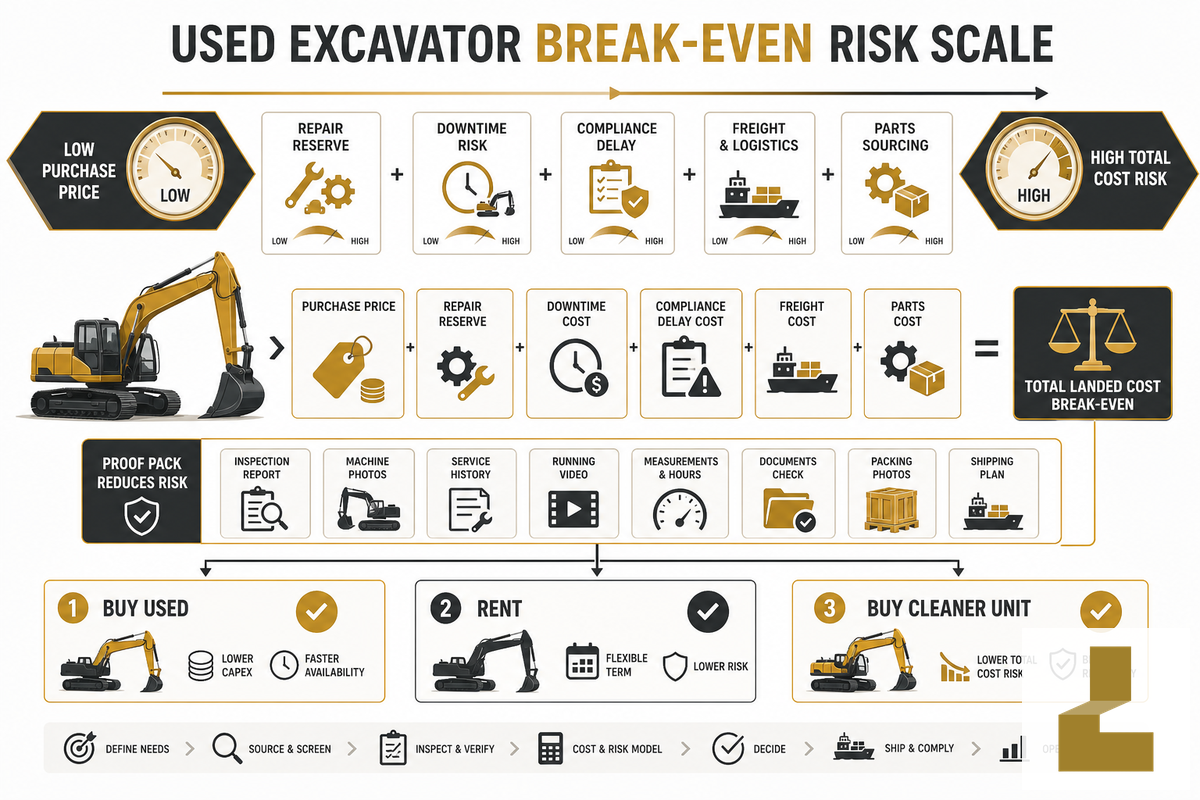
Used equipment isn’t cheaper once repair risk, downtime, freight, duty, and compliance costs strip away the entry price savings. A bargain purchase price becomes a poor value if major hydraulic work, undercarriage replacement, engine repair or regional emissions compliance needs to be done prior to the start of a job.
For U.S. entry, CBP’s off-road equipment import guidance makes compliance a cost factor, not just paperwork, because a machine delayed over emissions or entry documents stops earning while storage, broker, and repair costs keep rising.
Common assumption says used is always cheaper; it is not always true. Because downtime, leak repair, compliance delay, and parts sourcing can move the real cost above a cleaner unit, Liehuang inspection checks focus on an approximate $18,000 repair risk before the buyer commits. That is why the cheapest number is not always the best number.
How much does it cost to buy a used excavator? Price plus proof. How much is a fairly used excavator? Proof of equipment in condition ready to work that can perform the intended job. How much does an average excavator cost? Average price is less useful than the machine class, hours band, and repair reserve.
Savvy buyers do not just find the lowest dollar. They find the lowest landed cost to be ready to work on their job.
2025-2026 Used Excavator Price Trend Signals
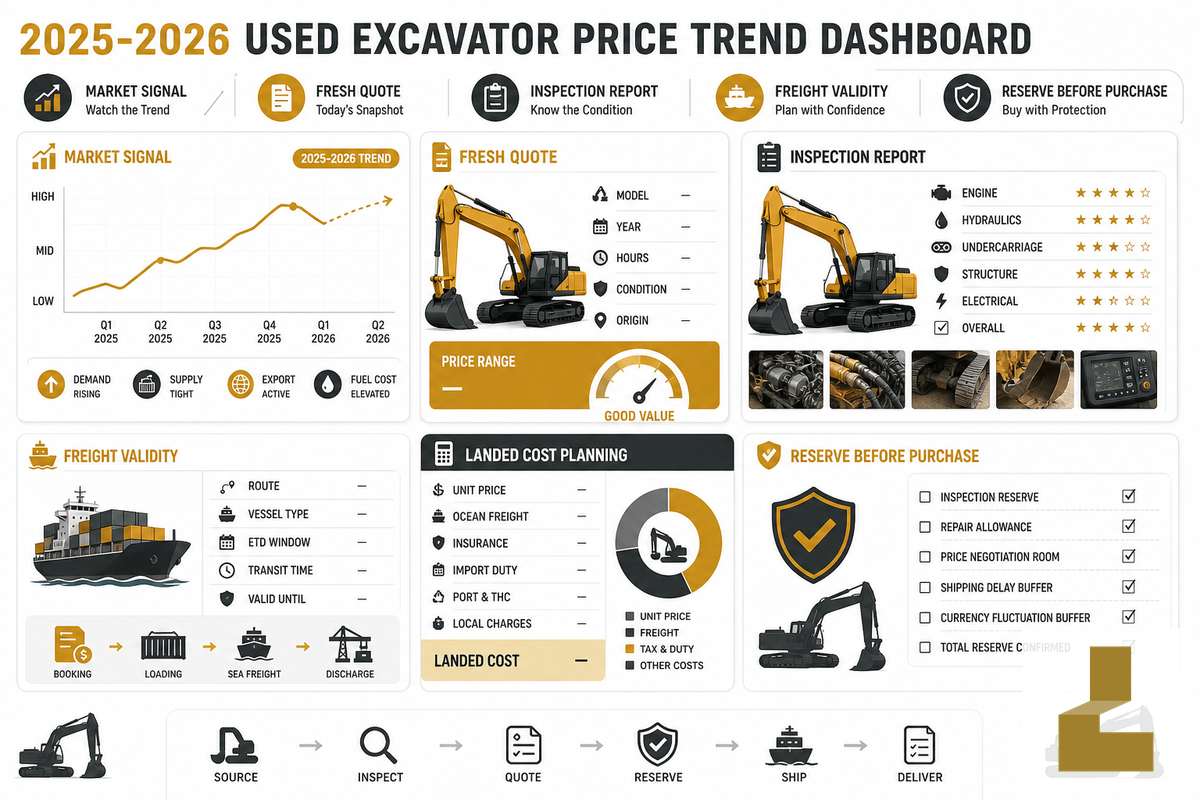
Used market signals for mid-year 2025 are mixed. Equipment World reported excavator prices increased through mid-2025, peaked in July near $159,000, then settled back in the fourth quarter. Sandhills Global data show that heavy construction equipment prices dropped in July 2025 while medium equipment asking values rose sequentially month-over-month, though remain slightly below year-ago levels.
This can translate into important purchasing windows for buyers, though it’s critical to know that trends can’t replace individual inspections. A soft market does not automatically make a good-condition, low-hour machine a bargain. Likewise, a strong market can mask a worn, high-risk machine that represents a bad investment.
Recent features also play a role in value perception. Cat Used lists include technology features like product-link, payload, e-fence, grading and others, while Google Patents searches surface excavator sensor and collision-detection systems. Treat these technology elements as part of the inspection, not as automatic value boosters.
How Liehuang Used Excavators Helps Buyers Control Cost
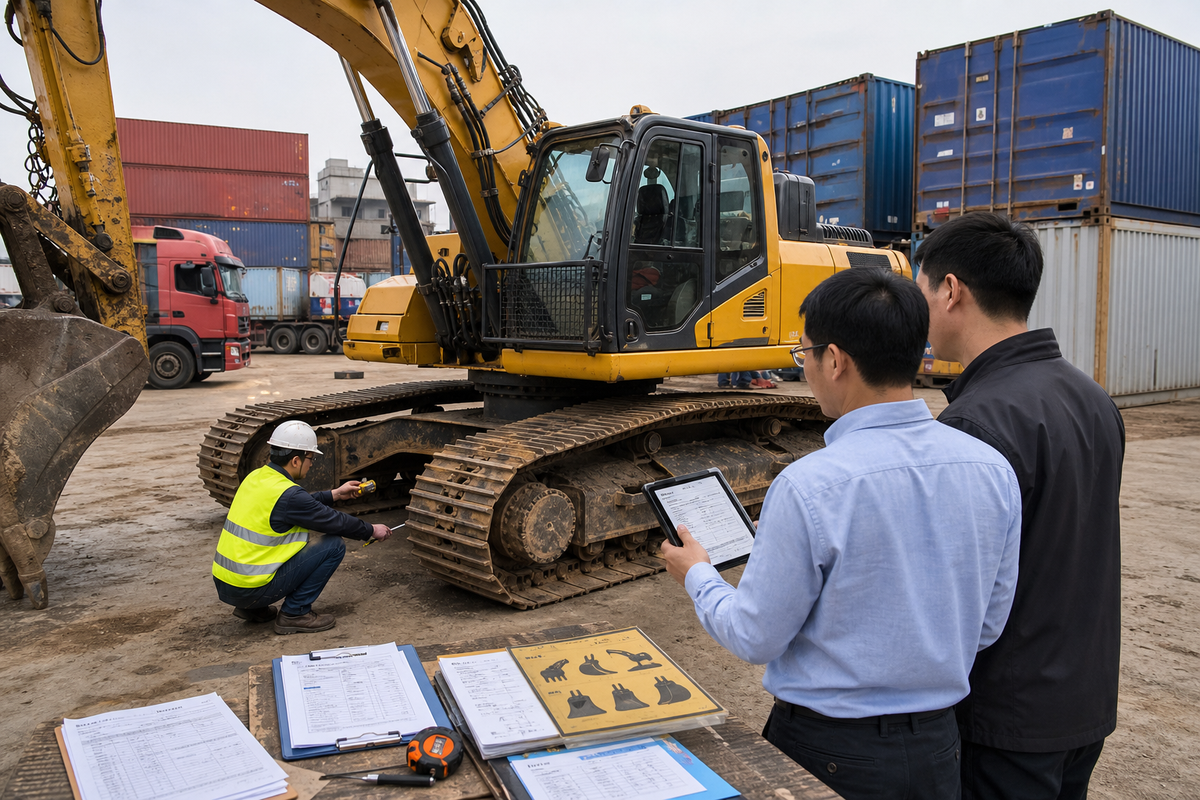
Liehuang Used Excavators exports mini excavators, medium excavators, heavy excavators, and excavator attachments from China to overseas buyers, importers, and dealers globally. Its inventory includes Caterpillar, Komatsu, Sany, Volvo, Hyundai, Doosan, Kubota, Hitachi, Kobelco, and other major brands.
Beyond the ability to find machines in inventory, the practical benefit of buying used also comes in the form of cost control by combining equipment matching, machine inspection, repair and refurbishing, shipping planning, and document support. Buyers can begin with used excavators for sale, search and compare mini excavators, view 10-30 ton medium excavators, or review heavy excavators.
Request a used excavator quote
FAQ
How much does a used mini excavator cost?
Used mini excavators typically range in cost near $15,000-$80,000, although exact pricing depends on the machine’s tonnage, age, make, tracks, cab type, attachments, and readiness to operate. An older 1-3 ton mini can sit much lower on the pricing scale than a later-model premium 6-8 ton unit. Freight, port charges, duty, and a reserve for first service must be factored in before comparing.
How much does it cost to buy a used excavator?
To aid planning, the price of a used excavator can start under $25,000 for a small, old mini unit and climb higher than $500,000 for a large, late-model, premium machine. In the mid-range, particularly with 10-30 ton excavators, prices can often be found between roughly $50,000 and $200,000, prior to any import-related expenses and repair reserves. Comparing list price to list price will never tell you the true value. Compare landed, inspected, ready-to-work cost.
How do I know if a used excavator price is fair?
Fair pricing starts with machine evidence. Ask for the serial plate, a photo of the hour meter, videos of the engine and hydraulics, undercarriage pictures, photos of the boom and stick, service records, the attachment list, and a shipping plan. Then cross-check the asking price against comparable machines in the same weight class and subtract the repair reserve from the price. If the seller can’t document the machine, assume the price is risky, even if it appears low.
Is buying used better than renting?
Buying used is usually better if the machine will be used frequently enough to be more cost-effective than renting, your team can maintain it, and resale value is important to you. Renting is better if the project is short, the required machine size could change later, or you don’t want to assume downtime risk. Many buyers search “how much does it cost to rent a mini excavator” first, but long-term buyers should look at monthly cost, transportation, operator cost, maintenance, and resale value.
Can Liehuang help choose the right used excavator?
Yes. Send Liehuang Used Excavators your target tonnage, destination, budget, desired brand, and required attachments.
Related Articles
References & Sources
- Equipment World: Excavator Sales Trends 2025
- Sandhills Global: Used Heavy-Duty Construction Equipment Values
- U.S. Customs and Border Protection: Importing off-road engines, equipment, and vehicles
- U.S. EPA: Publications and Forms for Importing Vehicles and Engines
- California Board of Equalization: Assessors’ Handbook Section 581
- Google Patents: Collision detection and mitigation systems and methods for excavator
- Cat Used: Used Excavators for Sale
- Boom & Bucket: Used Excavators for Sale
- Equipment Trader: Excavators For Sale
Why We Write This
About Liehuang
Liehuang is a China-based used excavator supplier focused on verified machines, inspection records, and export-ready documentation. Our blog is written for buyers who need more than a model name and a low price before sending a deposit.
We publish practical guides on used excavator cost, machine hours, inspection points, import paperwork, attachments, and brand selection so contractors and equipment buyers can compare machines with fewer blind spots.
Inspection FirstEngine, hydraulics, undercarriage, serial-number photos, hour-meter photos, and machine video can be prepared before shipment.
9 Brands In StockCaterpillar, Komatsu, Volvo, Sany, Hyundai, Doosan, Kubota, Hitachi, and Kobelco excavators across common tonnage classes.
Export SupportContainer and RoRo shipping support with destination-focused quote details, Incoterm discussion, and paperwork coordination.
SYS.PROFILE
Contact Profile
NameLiehuang Used Excavators Team
CompanyHefei Liehuang Machinery Co., Ltd.
Product FocusUsed Excavators / Attachments / Export Supply
Buyer RequestInspection report, video, price, freight, and delivery timeline
Websitehttps://lhusedexcavator.com/
![Excavator Bucket Manufacturers: Buyer Evidence [Guide]](https://lhusedexcavator.com/wp-content/uploads/2026/08/excavator-bucket-manufacturers-r2-featured-768x512.png)

Payment protected by staged delivery proof
Pay the balance after machine proof, not on blind trust.
Used excavator buyers need more than a product photo. Liehuang uses a staged payment workflow: deposit to reserve the machine, inspection evidence before balance, and export documents plus shipment tracking before release.
Verified machine videoLoading and customs filesBalance paid after confirmation
Quote & machine selectionChoose the model, hours, attachments and export destination before we reserve stock.
Deposit to lock stockA deposit holds the exact machine while inspection media and documents are prepared.
Inspection proof sentReceive walkaround video, hour-meter photos, serial details and loading plan.
Balance after confirmationPay the remaining balance only after you confirm the machine condition and export evidence.
Shipment & customs trackingWe share loading photos, bill of lading progress and customs support until release.
For high-value used equipment, trust is built by evidence. Ask for the current stock list, payment schedule and export document sample before you decide.Request stock proof