Get in Touch with Liehuang Company
![Used Volvo Excavators Buying Guide [2026]](https://lhusedexcavator.com/wp-content/uploads/2026/08/how-to-choose-used-volvo-excavator-featured.png)

Reviewed by the Hefei Liehuang Machinery Co., Ltd. technical team. Updated August 2026.
Used Volvo Excavators are second-hand Volvo excavator units that should be matched to job fit, condition proof, seller documents, and landed cost before quote approval. For export and fleet buyers, a Volvo excavator can be a good used equipment purchase when the model class, hours, hydraulic condition, bucket setup, seller documents, and landed cost all point to the same machine story.
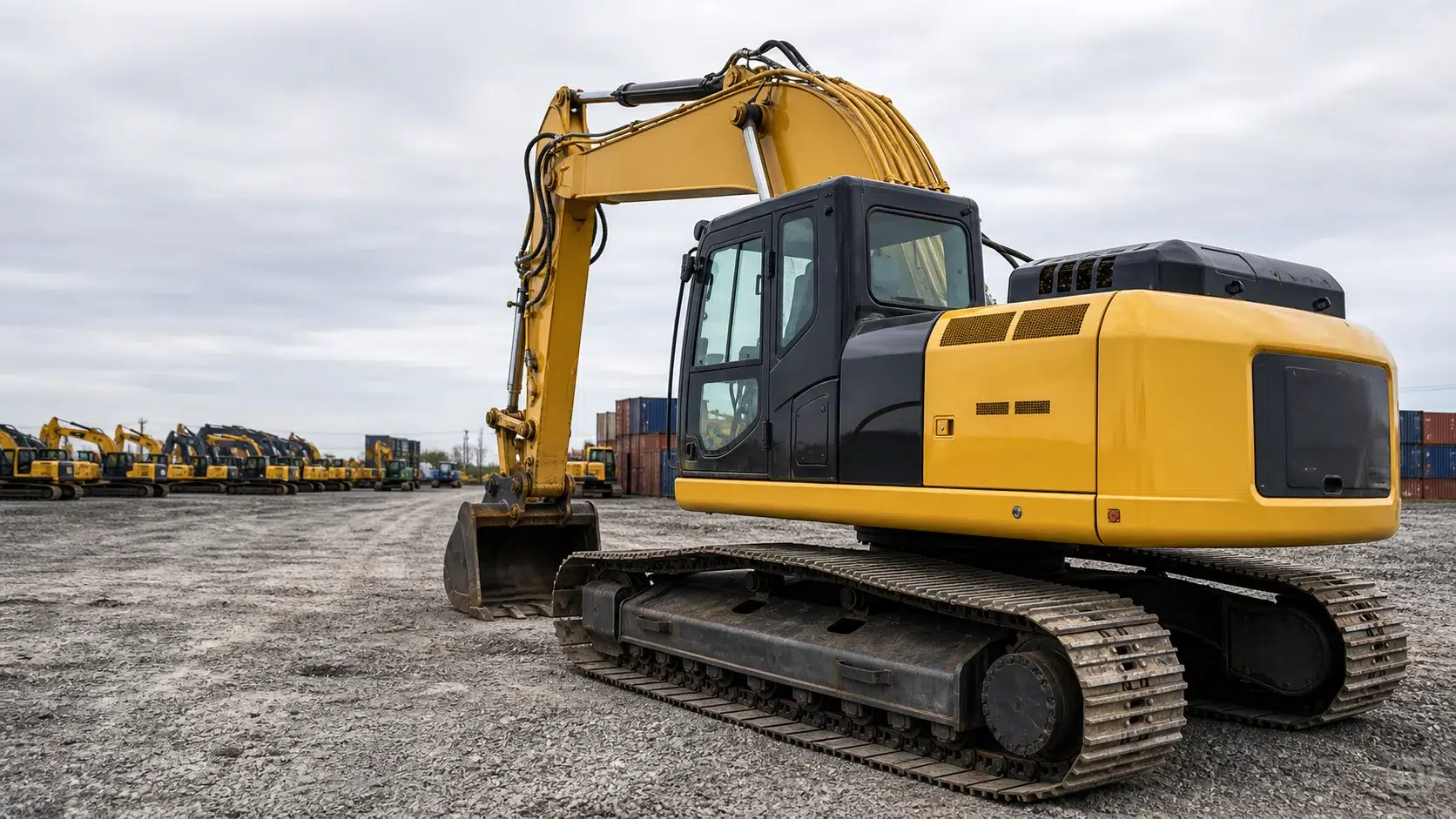
This guide is written for buyers comparing used Volvo excavators for sale, especially export buyers who need proof before deposit, balance payment, port booking, or funding approval. It uses Liehuang’s public Volvo EC-series pages, Volvo CE official material, inspection sources, market data, and safety guidance. It does not replace customs-broker, duty, local-charge, emissions, funding, or freight-coverage advice.
Key takeaway
Quote comparison is ready only after job fit, condition proof, seller identity, importability, and landed-cost timing have all been checked against the exact stock unit.
Buying a Used Volvo Excavator: Is It the Right Choice?

For a buyer with repeat work, a used Volvo excavator is the right choice when the machine has documented condition, expected annual use, parts access, and a landed cost that still leaves cash for repairs. Brand name alone is weaker proof when work is short term, local service is thin, or the quote depends on trust instead of documents.
Start by deciding whether ownership beats rental or a new excavator for this workload. Jobsite access, transport plan, and capital timing should guide that decision before a buyer compares second-hand Volvo quotes. Heavy equipment buyers often skip this step because a clean repaint and a low FOB number feel easier to compare than duty cycle.
| Option | Best fit | Proof needed | When to avoid |
|---|---|---|---|
| Used Volvo | Repeat excavation, loading, trenching, quarry, demolition, or fleet replacement work | Hours, service records, test video, hydraulic cycle, undercarriage, serial and shipping terms | One-off work, unknown import rules, or no repair reserve |
| Rental | Short project, uncertain schedule, or no maintenance staff | Rental day count, delivery cost, attachment access, damage terms | Predictable 200+ working days per year |
| New excavator | Warranty certainty, dealer support, emissions paperwork, long holding period | Dealer quote, warranty scope, delivery timing, funding terms | Budget cannot absorb depreciation or long delivery |
Are Volvo excavators a good choice for buying?
Used Volvo excavators can be a sound construction equipment choice when the buyer checks the exact machine, not only the sales photos. Long service life depends on duty history, maintenance, parts access, and the right bucket for the work. Volvo CE used-equipment total cost guidance points buyers toward ownership cost, operating cost, fluid analysis, vehicle history, parts availability, warranties, and telematics rather than a simple brand answer. Used-equipment TCO guidance supports that method.
Fleet owners should decide what failure would stop the deal. Procurement may worry about seller identity, the budget owner may worry about deposit and balance timing, and operators may worry about visibility, balance, cabs, bucket response, and service access. Strong used Volvo offers answer all three groups before price negotiation, including durability, productivity, loader support, and total cost of ownership questions.
Choosing the Right Volvo Excavator With the EC-Series Job-Fit Card
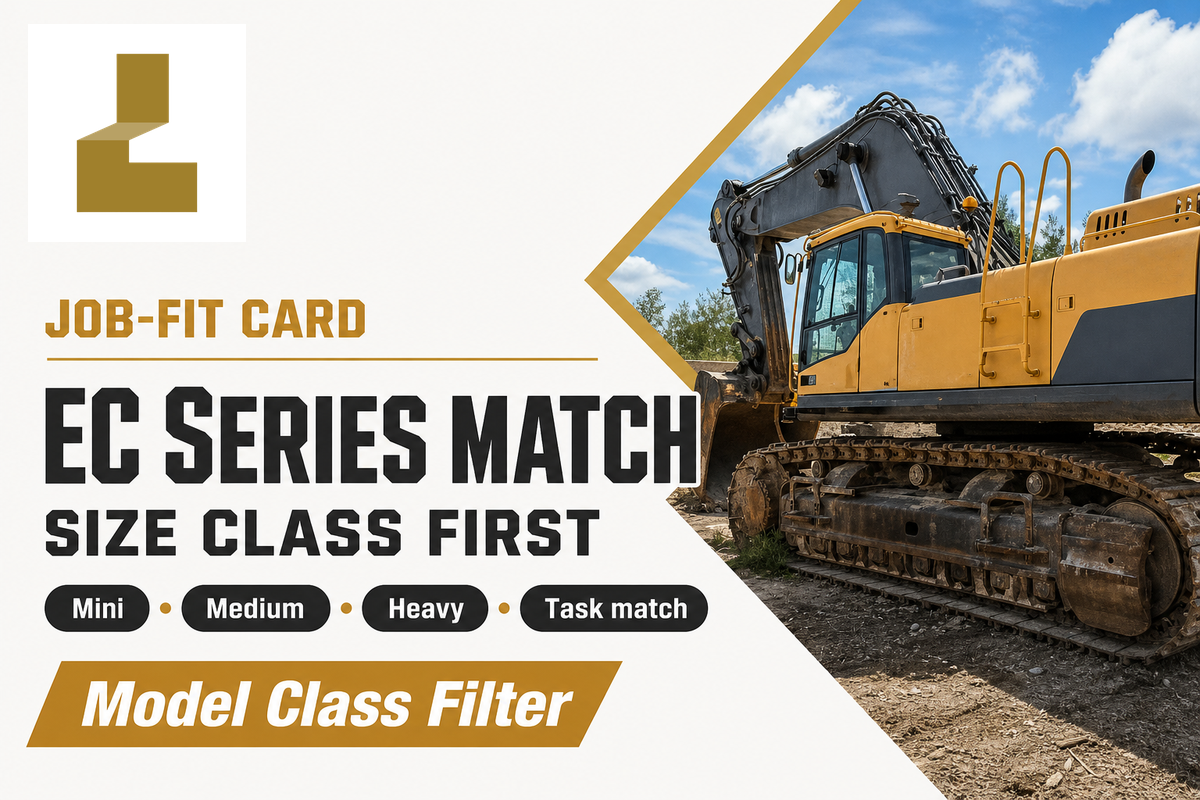
The EC-series shortlist should match tonnage, digging depth, truck loading, attachment plan, transport limits, and parts support before any buyer asks for a final quote. Choosing the right Volvo excavator also means separating mini excavators and compact excavators from heavy production machines. Liehuang’s current used Volvo category shows EC55, EC60, EC140, EC210, EC300, EC380, EC480, EC750, and EC950 stock paths, but exact specs still belong to the actual unit.
Generation suffix matters. Official EC210 pages from Volvo CE show different weights, power, and bucket capacity between current and B Prime examples, which is enough to prove that EC210 is not a single fixed specification. Apply the same rule to EC480 and EC950 comparisons: treat model names as a starting point, then ask for the machine’s year, generation, configuration, and serial plate.
| Model group | Typical buyer use | First inspection focus | Quote question | When not to buy |
|---|---|---|---|---|
| EC55 / EC60 compact excavators | Limited space, small excavation, utility work | Pins, bucket, rubber tracks, hydraulic seepage | Which bucket and quick coupler are included? | Work needs long reach or heavy lifting capacity |
| EC140 | General construction, road work, lighter earthmoving | Undercarriage, swing, pump response | Can you show current hours and undercarriage percentage? | Truck loading or quarry work needs a larger size class |
| EC210 / EC220 | The common 20-24 ton class for digging, loading, site prep | Hydraulic pump, final drives, control valves, swing bearing | Is this EC210 generation B, C, D, E, or another market variant? | Buyer assumes EC210 and EC220 are interchangeable without proof |
| EC300 / EC380 / EC480 | Heavy digging, production loading, stone, demolition support | Boom and arm cracks, pump noise, track frame, cooling system | Which boom, arm, shoe width, bucket and counterweight are installed? | Transport, permits, or repair reserve cannot support the class |
| EC750 / EC950 | Mining, quarry and high-volume earthmoving | Car body, final drives, cooling, bucket wear package, structural welds | Can you provide actual-machine video, year, hours, undercarriage and port quote? | Mining buyers need to avoid this class when shipping and repair risk are too high |
Liehuang’s public EC210 listing gives a 22-24 ton crawler excavator class and an estimated FOB reference of US$26,000-48,000. For EC950, treat the listing path as a mining-class quote request that needs current stock confirmation for operating weight, bucket package, digging depth, and FOB price before budget approval. These are seller reference values for stock context, not global Volvo OEM specifications or market prices.
Read Hours as Context, Not a Pass-Fail Number
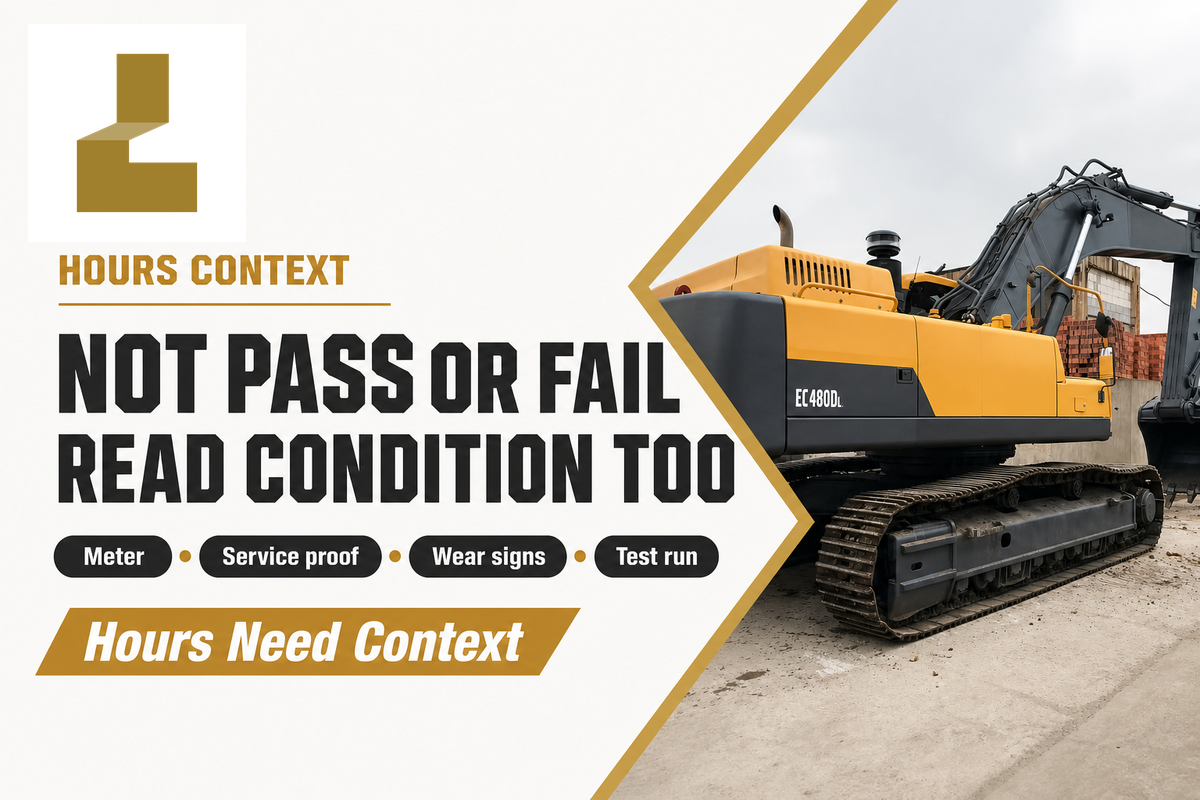
Excavator hours should filter risk, not decide the purchase alone. Low-hour units with poor oil, harsh breaker work, and loose pins can be worse than higher-hour machines with service records, clean hydraulics, stable final drives, and undercarriage measurements.
Treat hour bands as screening context, not a verdict. MWTM frames under 3,000 hours as low, 3,000-6,000 as mid-life, 6,000-10,000 as high but workable, and 10,000-15,000+ as condition-first. AGRORIG adds another useful point: engine hours and working hours can tell different stories, and service records should line up with both.
| Model class | Public reference value | Type of work | First inspection focus | Quote question | When not to buy |
|---|---|---|---|---|---|
| EC55 visible stock card | Compact class, exact current-stock specs must be verified | Limited-space excavation, utility trenches, small jobsites | Rubber tracks, pins, bucket, engine start, cab controls | Which bucket, coupler, hours and shipping dimensions are attached to this unit? | Project needs long reach, heavy lifting capacity, or rock production |
| EC60 visible stock card | Compact class, exact current-stock specs must be verified | Small construction machinery support, landscaping crews, light excavation | Track wear, boom foot, blade function if equipped, hydraulic seepage | Can the seller show current hours, attachment list and transport width? | Buyer needs a 20 ton class machine or high-volume truck loading |
| EC140 B/C/D listing class | 14 t class, about 31,000 lb, listing reference about US$12k-US$28k | General construction, road work, lighter earthmoving | Undercarriage, swing, pump response, bucket pins | Can you show current hours and undercarriage percentage? | Truck loading or quarry work needs a larger size class |
| EC210 / EC220 | Liehuang EC210: 22,000-24,400 kg, 123-129 kW, 6.60-6.80 m dig depth, 0.80-1.20 m3 bucket, US$26k-US$48k FOB reference | 20-24 ton digging, loading, site prep, utility work | Hydraulic pump, final drives, control valves, swing bearing | Is this EC210 generation B, C, D, E, or another market variant? | Buyer assumes EC210 and EC220 are interchangeable without proof |
| EC300 visible stock card | Mid-heavy class, exact current-stock specs must be verified | Heavier excavation, truck loading, demolition support | Pump noise, boom and arm welds, track frame, cooling package | Which boom, arm, shoe width and bucket package are installed? | Transport route or repair reserve cannot support the class |
| EC380 visible stock card | Heavy class, exact current-stock specs must be verified | Earthmoving, quarry support, heavy truck loading | Boom, arm, bucket linkage, final drives, cooling system | Can the seller provide undercarriage percentage and working video under load? | The job needs easier transport or low ground impact |
| EC480 D/E | Liehuang EC480: 48,000-51,000 kg, 270 kW, 7.70-7.80 m dig depth, 2.10-3.00 m3 bucket, US$55k-US$95k FOB reference | Heavy digging, stone, production loading, large demolition support | Primary pumps, swing motor, final drives, boom cracks, track frame | Which boom, arm, shoe width, bucket and counterweight are installed? | Permits, port costs, or repair reserve cannot support 48-50 ton class |
| EC750 visible stock card | Large mining class, exact current-stock specs must be verified | Mine loading, quarry benches, high-output earthmoving | Car body, swing, final drives, track frame, cooling and bucket wear package | Can the seller quote RORO/loading path, destination port and spare parts plan? | Buyer needs a cost-effective general construction hoe |
| EC950 listing class | 90-ton mining class; verify operating weight, 450 kW / 603 hp power class, dig depth, bucket package, and current FOB quote against the actual stock unit | Mining, quarry and high-volume earthmoving | Car body, final drives, cooling, bucket wear package, structural welds | Can you provide actual-machine video, year, hours, undercarriage and port quote? | Mining buyers need to avoid this class when shipping and repair risk are too high |
Is 3000 hours a lot for an excavator?
Three thousand hours is not usually high for a used excavator, but it still needs context. During review, ask whether the machine dug soil, handled rock, carried a breaker, sat idle, or worked long shifts. Clean hour readings should match service intervals, fluids, undercarriage wear, cylinder seals, bucket pins, and engine start behavior.
Procurement teams should write hours into the proof pack, not into a one-line reject rule. The budget owner can accept a higher-hour unit when the price, expected workload, and reserve cash explain the risk. Maintenance should get the same proof before shipment, not after a container or RORO booking.
Ask for the Volvo Proof-to-Price Ladder
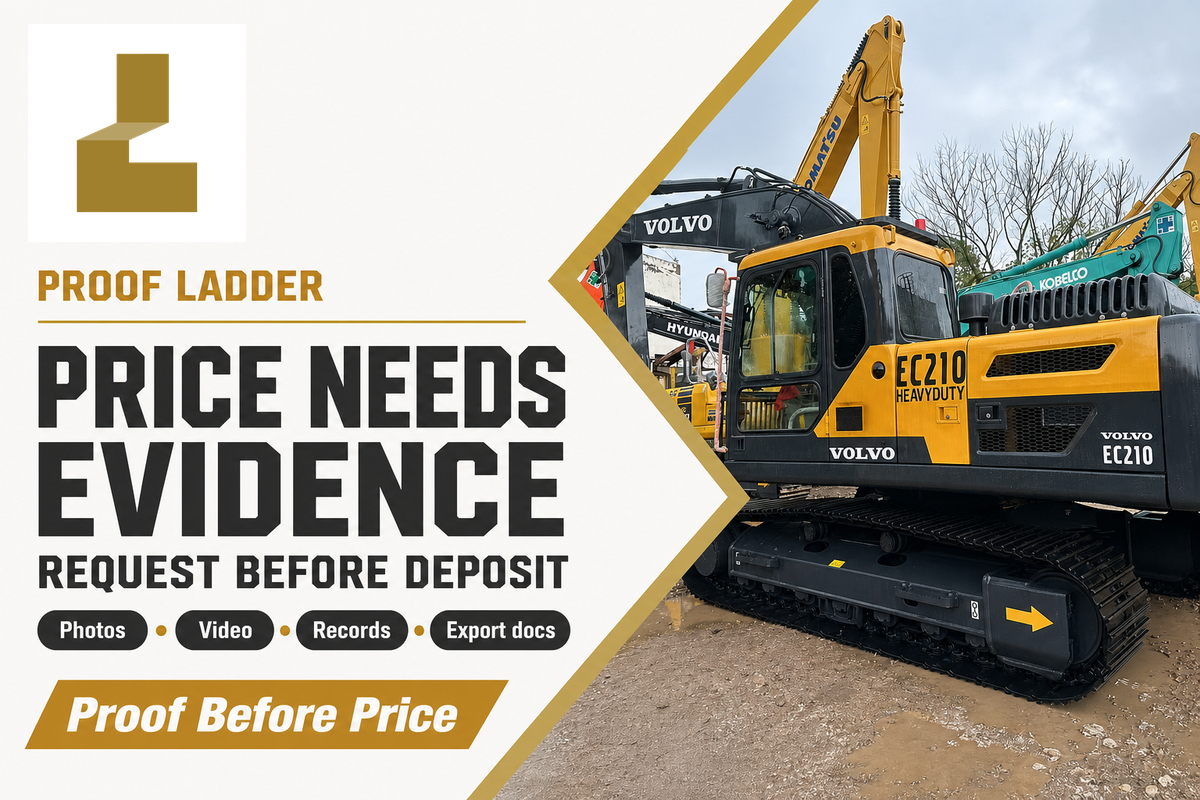
Price proof for a Volvo quote works best as a ladder: job fit, condition, seller identity, export readiness, and landed cost. It keeps a used Volvo excavator quote from becoming a beauty contest between repaint quality and the lowest FOB number.
Liehuang’s category page already pushes the right buyer behavior with stock-proof and landed-cost CTAs. Better buyer control comes from treating those requests as stages. If a seller cannot show the exact machine, test operation, service evidence, document consistency, or port quote, the price should carry more risk or the buyer should walk away.
| Stage | Proof required | Price risk if missing | Buyer action |
|---|---|---|---|
| 1. Model-class proof | EC55/EC60 compact, EC140, EC210/EC220, EC480, or EC950 shortlist | Wrong size class for transport, reach, or truck loading | Match the model class to the job before deposit |
| 2. Generation proof | Year, suffix, serial plate, market variant, and actual configuration | Two EC210 offers may not carry the same weight, power, or bucket setup | Ask for the serial plate and actual-machine spec sheet |
| 3. Hours proof | Hour meter, service records, 4,000-8,000 hour context, and 8,000-10,000 hour risk notes | Clean hours can hide breaker work or poor maintenance | Compare hours with service interval and duty history |
| 4. Hydraulic proof | Cold start, cycle video, pump response, cylinder views, and two-way travel | Repair reserve may erase the FOB discount | Request video and inspection report before balance |
| 5. Undercarriage proof | Track links, rollers, idlers, sprockets, shoe wear, and percentage estimate | Arrival repairs can consume the first cash reserve | Price the repair reserve before approving shipment |
| 6. Attachment proof | Bucket m3 range, pin diameter, pin spacing, S60/S70 interface, and coupler family | A good carrier can still fail the attachment plan | Verify bucket and quick-coupler fit before quote approval |
| 7. Seller proof | Stock photos, current test date, invoice name, document match, staged terms | Payment and identity risk | Pay balance after machine proof, not blind trust |
| 8. Export readiness proof | HS code, port path, RORO/container choice, broker view, and Form 3520-21 context where relevant | The unit may miss import or loading requirements | Verify importability before deposit or port booking |
| 9. Landed-cost proof | FOB-to-Landed-Cost Worksheet with freight, port, local charges, reserve cash, and timing | A US$26k-US$48k or US$55k-US$95k FOB reference can become a weak delivered deal | Approve the purchase only after the worksheet fits the target port |
Volvo CE’s demonstration guidance tells buyers to prepare owner, fleet manager, operator, and service manager questions before evaluating a machine. That idea matters for remote export buying because one buyer’s missing question can become another buyer’s repair invoice. Demonstration guidance from Volvo CE supports a multi-stakeholder proof review.
Inspect Hydraulic, Undercarriage, and Final Drive Risk
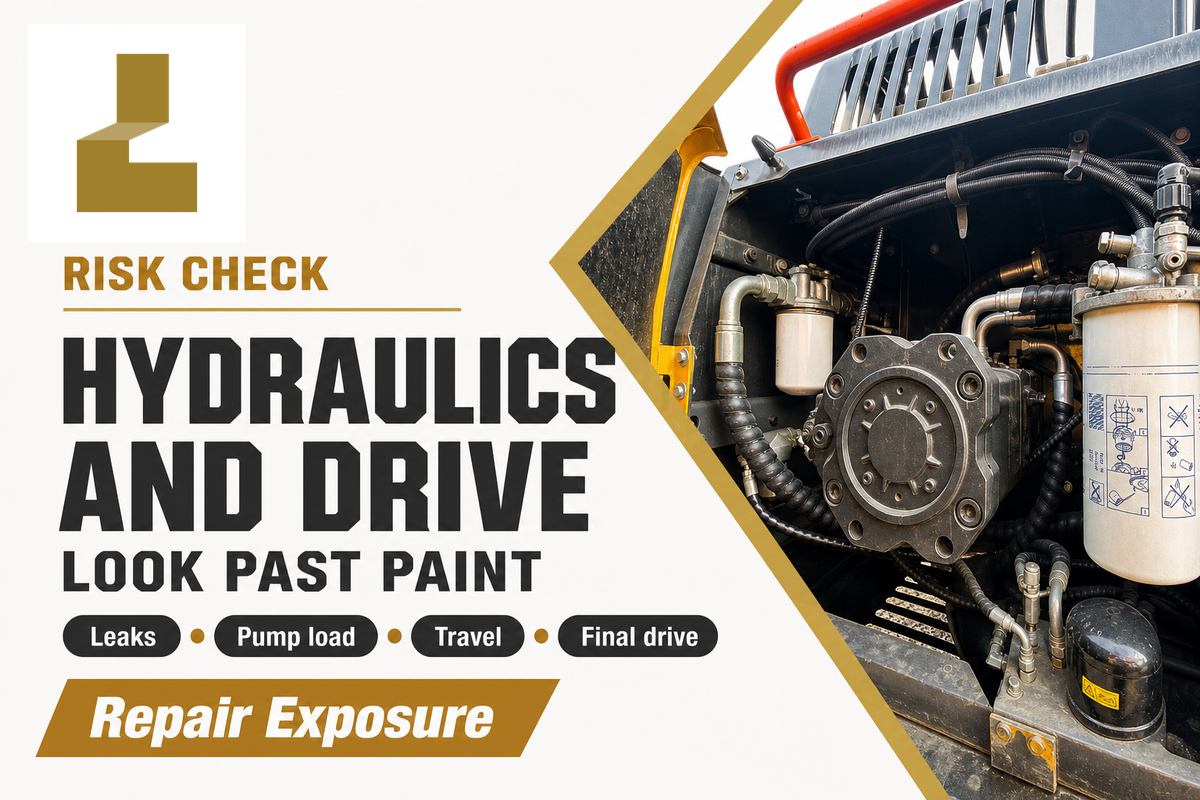
Expensive hidden failures usually sit in hydraulics, undercarriage, final drives, swing parts, cooling, structural welds, and attachment pins. Repainted low-price machines can still be poor purchases when paint hides pump weakness, track-frame damage, loose pins, or final-drive warning signs.
Practical inspection starts with proof media. Request cold start video, idle sound, hydraulic cycle, boom and arm movement, travel in both directions, swing function, bucket curl, cylinder seal views, track tension, sprocket and roller condition, and close-ups of welded areas. Heavy Equipment College’s checklist covers work area, walkaround, undercarriage, fluids, hydraulic system, cab, and test operation, which maps well to remote review. Excavator inspection checklist.
| Risk zone | What to see | Warning sign | Go/no-go action |
|---|---|---|---|
| Hydraulic system | Pump response, cylinders, hoses, oil condition, control valves | Slow cycle, visible leak, foamy or dirty oil | Ask for pressure test or third-party inspection |
| Undercarriage | Track links, rollers, idlers, sprockets, shoe wear, track frame | Uneven wear, loose track, cracked frame, missing rollers | Put repair reserve into landed-cost worksheet |
| Final drives and travel | Both-side travel, oil leaks, case drain clues, noise | One side weak, metal debris, cracked cover, abnormal sound | Stop blind balance payment until inspected |
| Structure and pins | Boom, arm, bucket, pins, bushings, swing bearing | Fresh paint over welds, loose bucket, visible crack | Request close-up media and repair disclosure |
What to look for when buying a second hand excavator?
Start with identity and condition proof: serial plate, hour meter, engine start, hydraulic cycle, boom and arm cracks, undercarriage wear, final drive sound, bucket pins, oil leaks, cab controls, and test video. Then check seller documents, payment schedule, shipping plan, and repair reserve so the quoted price reflects real buyer risk.
One Heavy Equipment Forums thread about cracked Volvo EC460B final drive covers cannot predict every Volvo machine, but it illustrates why final-drive warning signs deserve early attention. Forum evidence belongs in the inspection file, not in a universal Volvo failure claim.
Check Bucket, Coupler, and Attachment Fit Before Quote
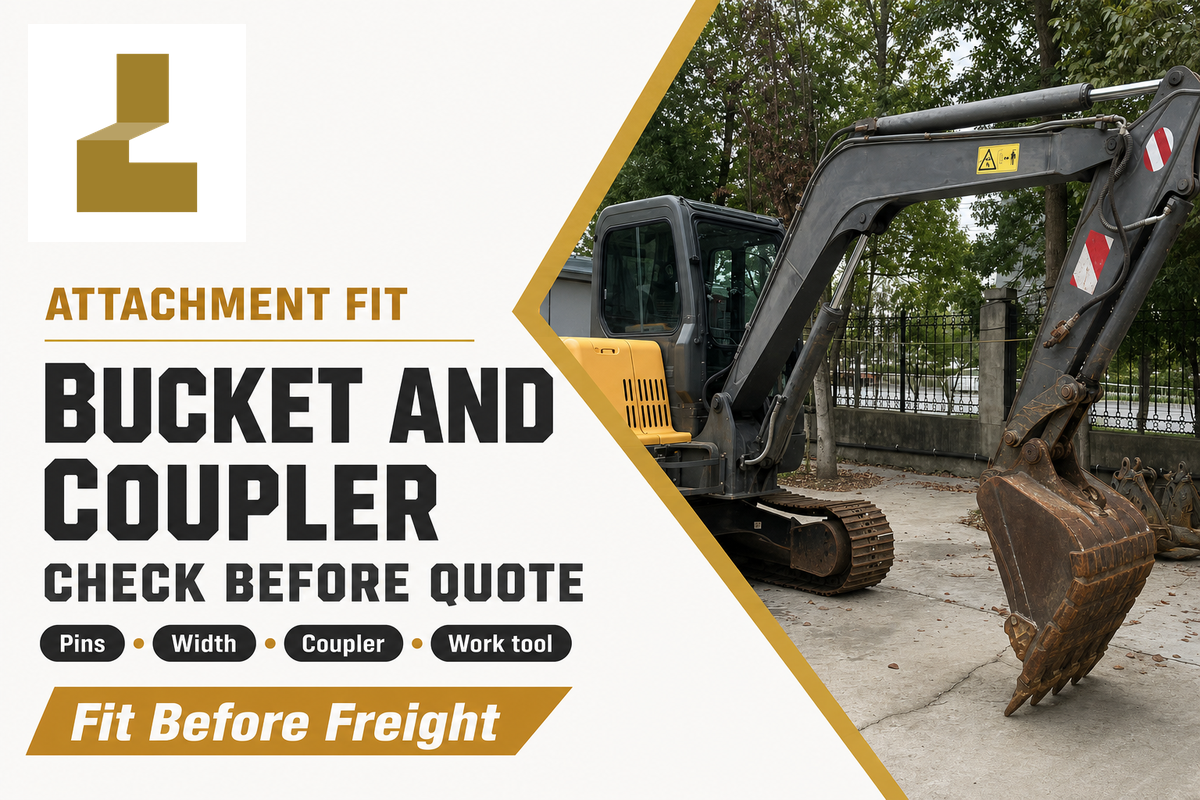
Attachment fit can defeat an otherwise good used Volvo purchase. Before quote, the buyer needs proof of bucket size, pin diameter, pin spacing, quick-coupler family, hydraulic flow, breaker or thumb needs, transport width, and connection-test procedure.
Earthmoving equipment safety still depends on the exact machine and attachment setup.
OSHA 1926.602 gives the jobsite safety context for material handling and earthmoving equipment. Quick-coupler pages from Volvo CE show why attachment proof matters: universal, Steelwrist Symmetrical, and S-type couplers use different interface logic, and compatibility can depend on pin sizes, pin spacing, S60/S70 interface, or a dedicated coupler and bucket.
| Proof item | Ask the seller | Why it matters |
|---|---|---|
| Coupler family | Universal, Steelwrist Symmetrical, S-type, or another unit? | One bucket that locks on one family may not fit another |
| Pin and spacing data | What are the pin diameter, pin center distance, and ear width? | Pin mismatch stops the attachment plan |
| Hydraulic needs | What flow and pressure are needed for breaker, thumb, or compaction wheel? | Carrier strength can be enough while hydraulic plumbing is not |
| Connection test | Can the seller show the approved safety check and lock indicator? | Operator and site safety depend on engagement proof |
Normalize FOB, Port, Repair Reserve, and Cash Timing
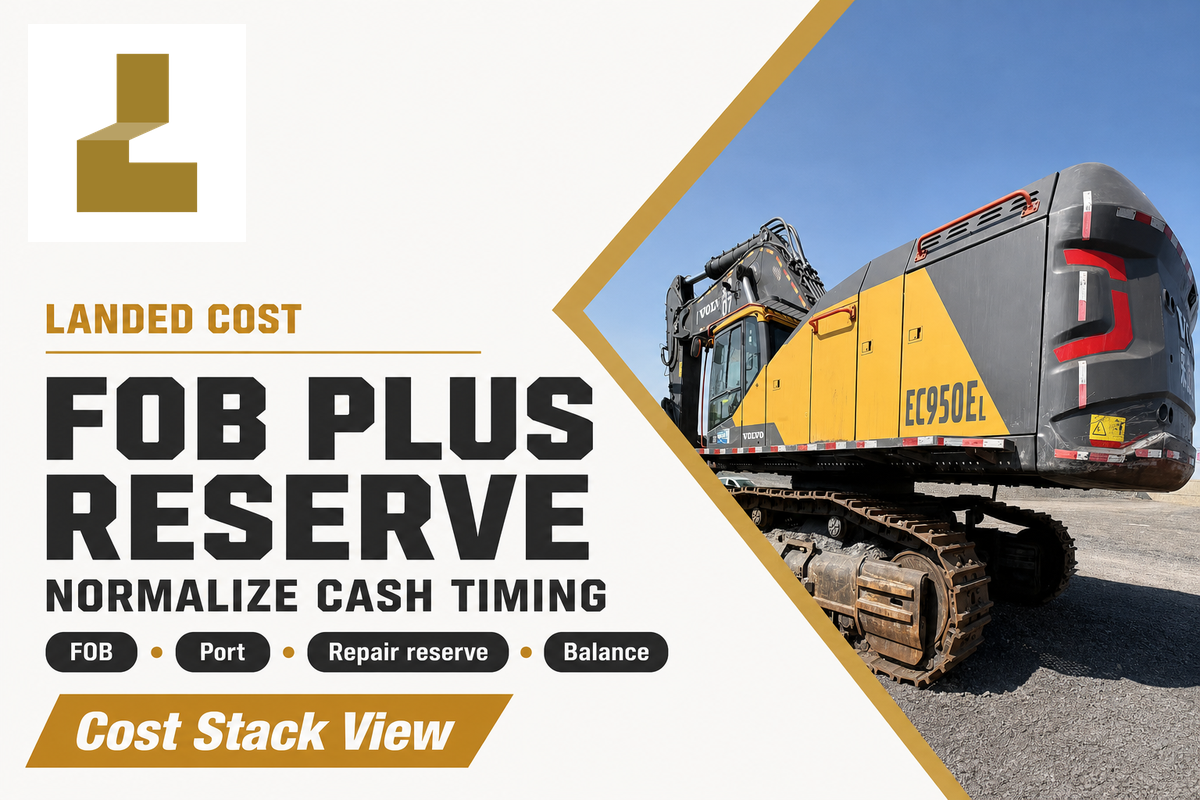
Compare a used Volvo excavator quote by landed cost, not FOB price alone. Often, the hidden bottleneck sits outside the machine: freight, port handling, broker fees, duty and local charges, import admissibility, emissions rules, inspection cost, repair reserve, and cash tied up during delays.
For U.S. import checks, EPA material covers nonroad engines and equipment and points to Form 3520-21 context for heavy-duty and nonroad engines. China Customs public declaration-form guidance supports commodity name, specification/model, and HS-code fields, but this run did not find an official China Customs page saying engine number, chassis number, and serial number are mandatory in the exact way some commercial export sources describe. Request those three IDs as buyer proof, then verify current rules with your exporter and customs broker.
Do
- Ask for a port-specific landed-cost estimate.
- Check destination-country admissibility before deposit.
- Hold reserve cash for undercarriage, fluid, hose, bucket, or final-drive work.
Don’t
- Compare one seller’s FOB price with another seller’s CIF or delivered quote.
- Treat commercial blog cost numbers as duty or local-charge advice.
- Release balance payment without matching machine identity and shipping documents.
| Cost or gate | Data to request | Bottleneck if ignored | Owner/cash action |
|---|---|---|---|
| FOB machine price | Exact machine quote, year, hours, included bucket, payment terms | Wrong price basis | Compare only with same quote basis |
| Freight and port | RORO/container path, origin port, destination port, inland transport | Low FOB becomes high delivered cost | Get a port-specific seller or broker estimate |
| Duty, local charges, emissions, customs | HS code, broker opinion, destination importability, EPA or local rule check | Machine cannot clear or needs extra process | Verify with broker or authority before payment |
| Inspection and proof | Third-party report, video, serial, engine/chassis/serial proof where relevant | Payment dispute or wrong-unit shipment | Tie balance to proof delivery |
| Repair reserve and delay cash | Undercarriage, fluids, hoses, bucket teeth, pins, timeline | Cash gap after arrival | Approve purchase only with reserve cash |
A simple worksheet is: landed cost = machine price + freight + port and clearance costs + inland transport + inspection + repair reserve + cost of delay. Use Liehuang’s used excavator cost structure for the internal link, then validate live charges with the seller, broker, and current port quote.
Choose the Seller Path for Second-Hand Volvo Excavators for Sale

Seller type changes proof access more than many buyers expect. Marketplaces may show many used excavators for sale, an equipment dealer may provide local support, and exporters may be better at port paperwork. Choose the seller that can prove the exact machine and the exact delivery path, because buying quality used construction machinery is mostly a proof problem.
For export buyers, communication speed and document discipline can matter as much as the listed price. Procurement should ask who owns the stock, who issues the invoice, who controls inspection access, who arranges loading, and when the balance payment is due. Sellers unwilling to show stock identity create bigger risk than sellers with slightly higher prices and cleaner proof.
Marketplace or auction
- Good for price discovery and broad equipment market signals.
- Inspection access and export support vary by seller.
- Payment terms may be less flexible for overseas buyers.
Exporter or stock dealer
- Better when the buyer needs stock proof, loading media, and port quote support.
- Quality depends on actual machine access and document discipline.
- Request serial proof, test video, staged terms, and shipping path.
Seller comparison can start from current used Volvo excavators in stock, then ask for the same proof from every seller. Equal proof makes price comparison cleaner; unequal proof means the lower quote carries hidden risk.
Decide Whether the Best Volvo Path Is to Buy, Rent, or Fund the Purchase
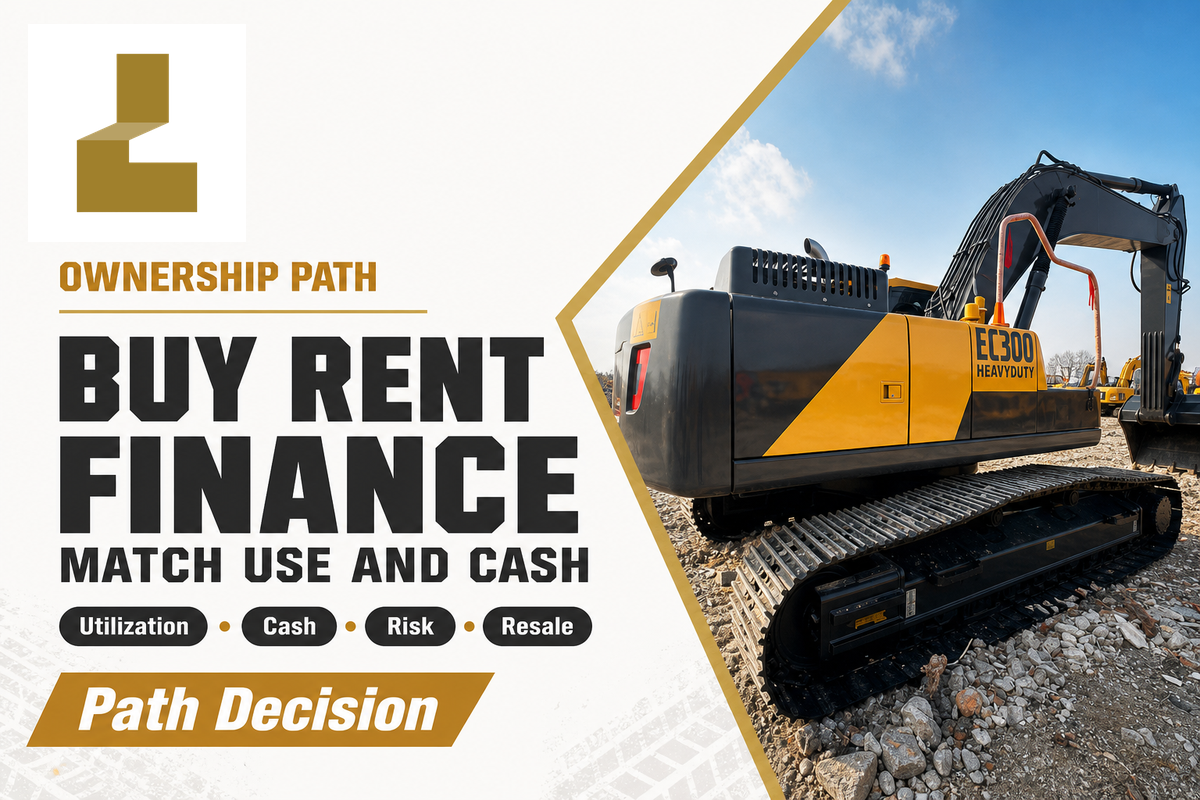
Buying a used Volvo makes more sense when annual use is predictable, rental access is costly, the repair reserve is funded, and the buyer can keep the machine working. Renting deserves a full comparison when the job is short, intermittent, or outside the buyer’s maintenance comfort zone.
$719/dayDOZR 2026 average excavator rental
$5,108/moDOZR 2026 average monthly rental
200+ daysbuying threshold signal in DOZR guide
DOZR’s 2026 rental guide lists average excavator rental values of $719 per day, $2,021 per week, and $5,108 per month. It frames renting as stronger below 150-180 days per year and buying as stronger near 200+ predictable days per year. A 2026 Volvo CE buy-or-rent article uses utilization and a 60-70% ownership tipping point as another decision lens; see the buy/rent source.
| Scenario | Annual work signal | Stronger path | Funding question |
|---|---|---|---|
| Short project | Under 150 days or uncertain schedule | Rent first, price purchase later | Would storage, transport and idle time waste cash? |
| Repeat work | 150-200 days, stable operator, repair reserve available | Compare used purchase with rental and funding | Can the machine earn while reserve cash stays available? |
| Fleet replacement | 200+ predictable days, known workload, maintenance staff | Used Volvo can be a strong candidate | Do deposit, balance, port delay, and repair reserve fit cash timing? |
Can buying an excavator make a strong business case?
Buying can make a strong business case when use is steady, job revenue is tied to machine availability, and the buyer controls maintenance. It is weaker when the machine sits idle, attachment fit is uncertain, import checks are unresolved, or funding payments leave no cash for repairs after arrival.
What Is Changing for Volvo Buyers in 2026?
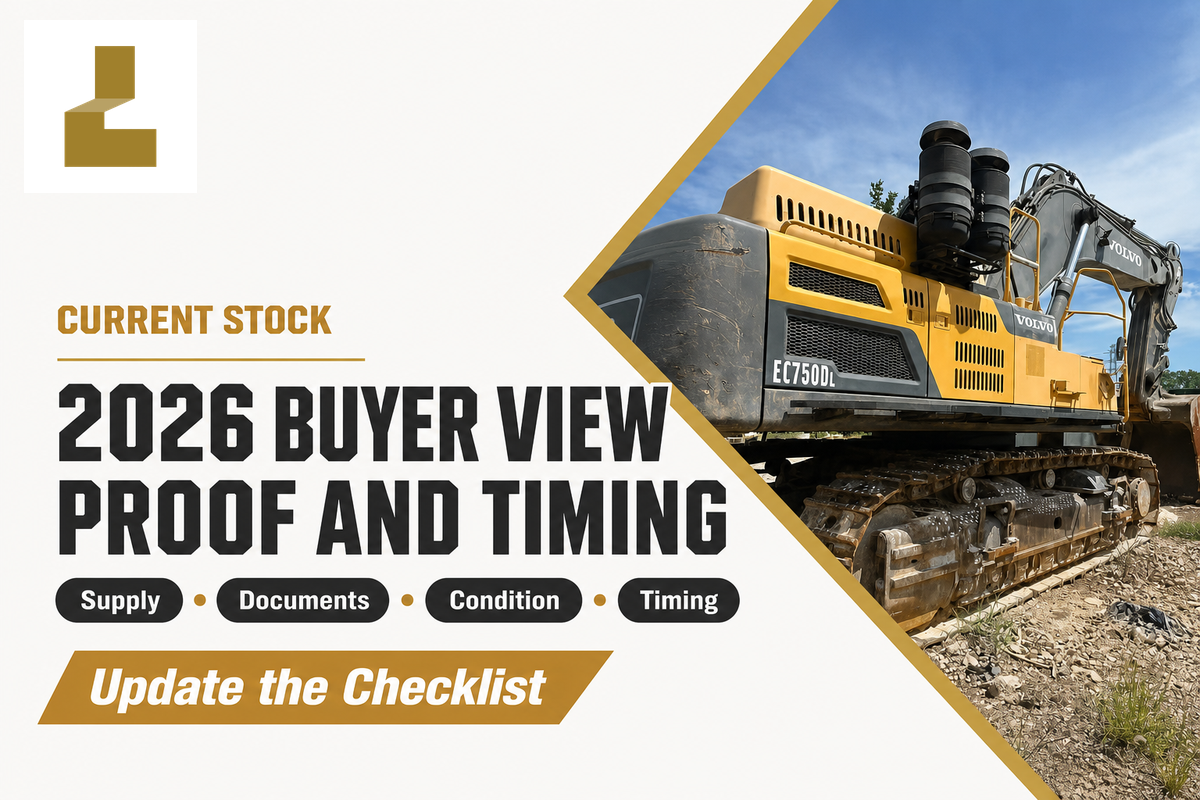
In 2026, the picture is mixed, so buyers should not treat market headlines as proof that every used Volvo price is rising. Broad equipment activity, crawler-excavator inventory shifts, new-machine Volvo data, and small regional used-program signals can guide questions, but they do not replace machine-level inspection.
Ritchie Bros.’ May 25, 2026 market report described earthmoving strength in the United States and Canada, while Sandhills’ June 4, 2026 report said used crawler excavator inventory was down 1.41% month over month and 11.55% year over year, with asking values down 1.75% month over month and 3.02% year over year. Those numbers are useful background, not a Volvo-specific forecast.
On July 17, 2026, Volvo CE’s Q2 release reported Volvo-branded machine deliveries up 14%, order intake up 8%, and service sales up 9%. On June 16, 2026, a Volvo Region Asia release also described the first Approved Used Equipment Program deliveries in Malaysia, involving two EC350DL units. These are company and program signals, not guarantees for independent used/export stock.
- Check importability first – confirm destination rules, emissions status, HS code, and broker view before landed-cost math.
- Treat listings as stock evidence – use model pages to form questions, then verify actual machine data.
- Demand proof before balance – tie payment to videos, serial, condition, documents, and shipping readiness.
- Keep the 2026 market view balanced – use broad market signals as timing context, not as price proof for a single unit.
In 2026, Volvo buyers should be more careful about proof, not more willing to guess. Strong offers explain model generation, condition, attachment fit, import path, and landed cost before the buyer has to defend the purchase to budget owners or operations.
Model-Match Notes: Mini Excavators, Landscape Work, and Versatility
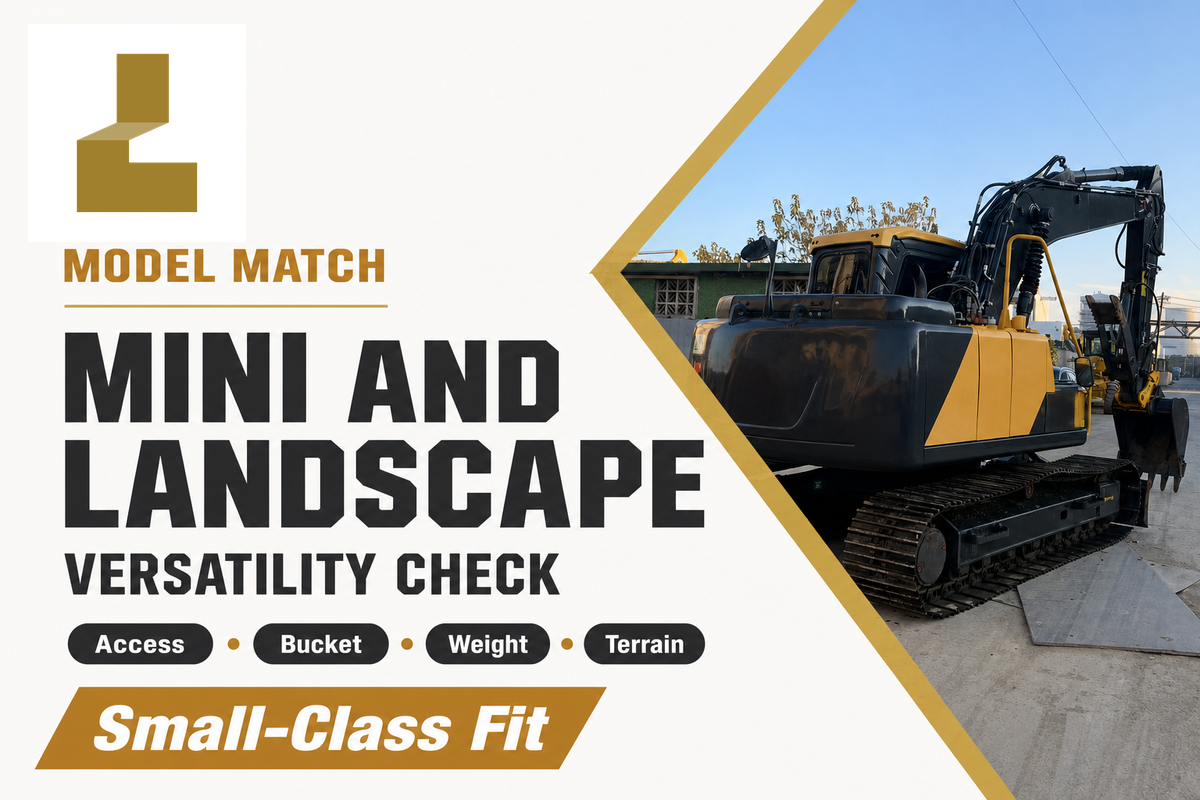
Use this final screen when the buying team is comparing Volvo with Caterpillar equipment, rental, or another used equipment path. The best Volvo choice is not a generic model name; it is the best fit for your business, your operator, and your specific applications. Compact work, utility repair, and landscape jobs may value maneuverability, a smaller operating footprint, and a machine that is easier to transport more than raw horsepower, torque, or digging power. Quarry, demolition, and mass excavation work push buyers toward large models, stronger attachments, and a repair plan that protects uptime and machine lifespan.
A high-quality used unit can help upgrade your excavator fleet only when the proof packet supports the claim. Volvo cabs, visibility, attachment versatility, fuel costs, less fuel use, and downtime risk should be checked against the actual machine video, service record, bucket and coupler data, and expected duty cycle. If the project needs to excavate deep trenches, load trucks all day, or shift between tools, ask Liehuang’s team of knowledgeable experts to compare the current stock unit with the workload before treating price as the deciding factor.
FAQ
What is the best year to buy a used Volvo?
Best-year selection depends on service, configuration, and inspection proof.
Newer used Volvo machines can still be risky if the seller cannot show hours, service records, hydraulic function, undercarriage condition, serial identity, and export documents. Older EC-series units can be stronger when the duty history is clear, the bucket and coupler match the job, the repair reserve is funded, and the price basis is honest. Model year matters after proof, not before it, because heavy-duty excavation history can age two machines in different ways.
Are Volvo excavators a good choice for buying?
Used Volvo excavators can be a good used-equipment choice when the exact machine is documented, inspected, priced by landed cost, and matched to the work.
Decision quality depends on condition, job fit, parts support, hydraulic response, operating costs, and landed cost. Request engine start, hydraulic cycle, undercarriage media, bucket and coupler details, service history, serial proof, and quote basis. Machine-level evidence is what makes the Volvo name useful for procurement, especially when fuel efficiency or fuel consumption claims appear in a seller pitch.
What to look for when buying a second hand excavator?
Look for identity proof, hydraulic and structural condition, undercarriage wear, attachment fit, seller documents, and landed-cost proof before price comparison, port booking, or deposit approval.
Start with serial plate, hour meter, cold start, smoke, oil condition, hydraulic speed, cylinder leaks, final drive sound, travel in both directions, swing function, boom and arm cracks, bucket pins, coupler interface, undercarriage wear, cab controls, invoice name, export documents, and port quote. Clean paint is not a proof category.
What are common problems with Volvo equipment?
Used-machine risks are system risks, not automatic Volvo flaws.
Check hydraulic leaks, worn tracks, loose pins, final drive noise, cooling issues, electrical faults, swing play, cracked welds, and inconsistent service records. Use warning signs to guide inspection.
What are the most reliable used Volvo models?
Reliable used Volvo units are the ones whose history, condition, configuration, parts access, and workload fit are proven for the target job before shipment approval.
Public sources in this run do not prove one used Volvo model is always the most reliable. EC210, EC480, and EC950 examples serve different workloads. Reliability should be judged through maintenance history, actual hours, duty cycle, hydraulic condition, undercarriage, final drives, and parts access.
Is it smart to buy a used Volvo?
Buying a used Volvo is smart when use is steady, proof is strong, landed cost leaves repair cash, and the seller can document the machine.
It is less smart when the buyer needs warranty certainty, fast local dealer support, short rental-like use, or a machine that has not passed document and condition checks.
Request Current Volvo Stock Proof
Share your model class, target port, attachment needs, and expected work. Liehuang can reply with current stock proof, quote basis, machine photos, video, and landed-cost discussion for available used Volvo excavators.
Related Articles
References & Sources
- Used Volvo Excavators category page – Liehuang Used Excavators
- Volvo EC210 used excavator listing – Liehuang Used Excavators
- Volvo EC950 used excavator listing – Liehuang Used Excavators
- Volvo EC480 used excavator listing – Liehuang Used Excavators
- Volvo EC210 official specification example – Volvo Construction Equipment
- Volvo EC210 B Prime past product page – Volvo Construction Equipment
- Used-equipment total cost guidance – Volvo Construction Equipment
- Excavator demonstration tips – Volvo Construction Equipment
- Excavator inspection checklist – Heavy Equipment Colleges of America
- Material handling and earthmoving equipment rule – OSHA
- Crawler excavator quick couplers – Volvo Construction Equipment
- Importing vehicles and engines – U.S. Environmental Protection Agency
- China Customs declaration-form guidance – General Administration of Customs of China
- Excavator hours explained – MWTM Group
- Machine hours on excavators explained – AGRORIG
- Excavator rental cost guide – DOZR
- Buy or rent construction equipment – Volvo Construction Equipment
- May 2026 market trends report – Ritchie Bros.
- June 2026 used heavy-duty construction equipment report – Sandhills Global
- Volvo CE Q2 2026 release – Volvo Construction Equipment