Get in Touch with Liehuang Company
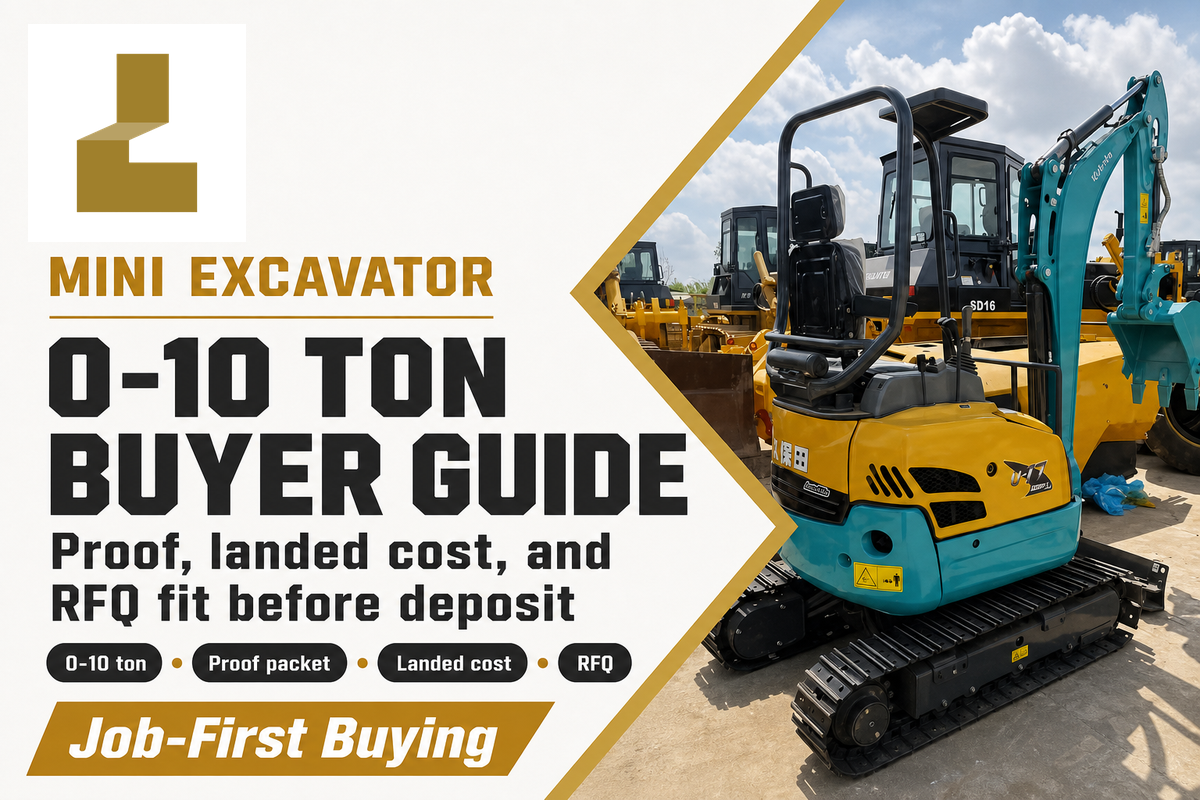

Mini Excavator Buyer Guide is a job-first framework for matching a used 0-10 ton excavator to access, depth, hydraulic flow, inspection proof, quote terms, and shipping plan. Good buying decisions start with the work, not the badge on the counterweight.
Bottom line: choose the smallest machine that can prove the work, not the cheapest machine on the list.
For international buyers, the best used mini excavator is the unit that fits access, transport, depth, attachments, operator comfort, local support, and documentation. If the seller can’t show proof before deposit, the quote isn’t ready.
Quick Specs and Evidence Boundaries
| Buyer Question | Use This Evidence Carefully | Practical Action |
|---|---|---|
| What counts as a mini excavator? | Use 0-10 tons as a practical buyer range, not a universal formal definition. Liehuang’s mini excavator page is scoped to used machines from 0-10 tons. | Confirm actual operating weight, width, dig depth, and transport limits. |
| What does price mean? | Liehuang lists example FOB ranges such as CAT 303.5 at US$16,000-28,000 and Kubota U17 at US$16,000-22,000. These are estimated page examples, not a guaranteed current quote. | Ask for current stock, year, hours, condition, and route-specific freight terms. |
| What is the main safety citation? | NIOSH Publication 2024-102 warns that quick-coupler failure can allow an attachment to fall suddenly. | Verify coupler, pins, locking, bucket fit, and auxiliary hydraulic lines. |
Table of Contents
- Why the Job Comes Before the Brand
- Mini vs Compact Excavator: 0-10 Ton Range
- 0-10 Ton Hidden Bottleneck Map
- Used vs New vs Rent
- Inspection Checklist Before Deposit
- FOB, CIF, Freight, Duties, and Landed Cost
- Attachments, Couplers, and Hydraulic Flow
- Brand and Model Shortlist
- Red Flags That Should Pause a Purchase
- How Liehuang Structures the Buying Process
- Mini Excavator Buyer Checklist and RFQ Scorecard
- FAQs
Why a Mini Excavator Buyer Guide Starts With the Job, Not the Brand
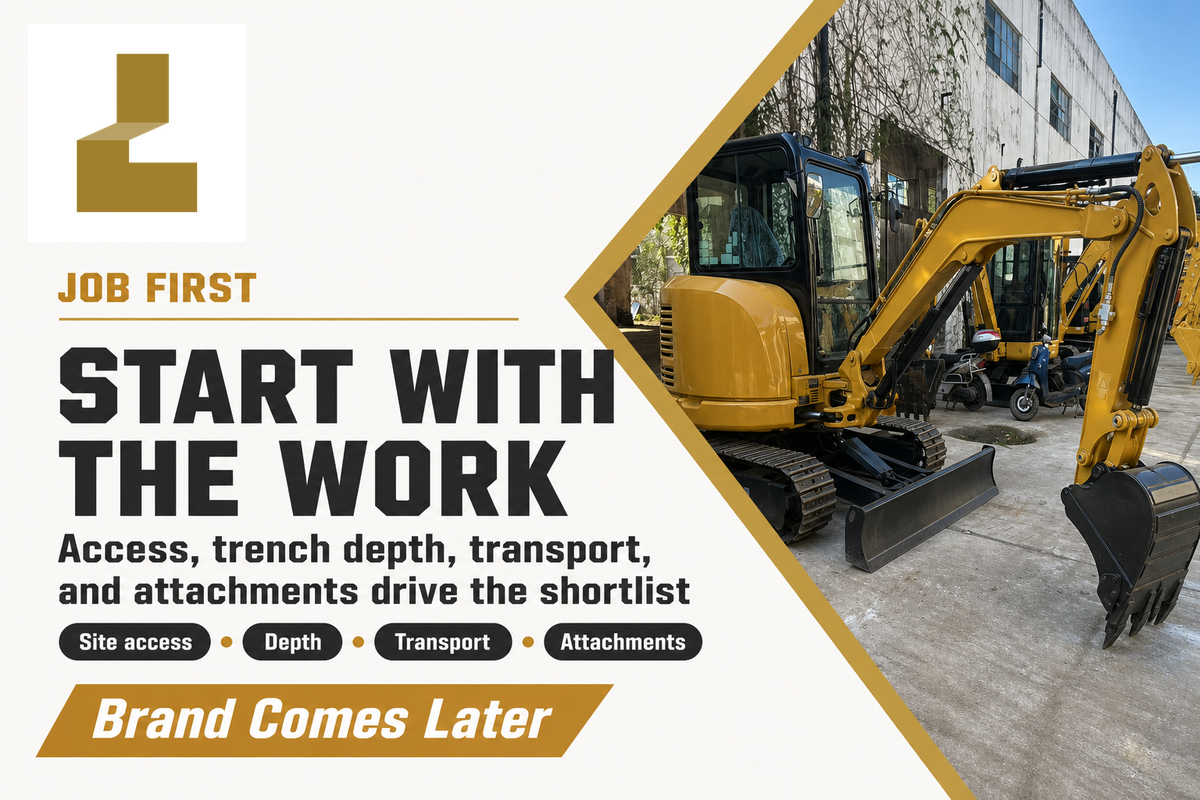
Start with this mini excavator question: “What work must this compact excavator do every week?” Landscape contractors, utility crews, rental yards, farms, small demolition teams, and export dealers may all say they need a mini ex, but they often need different operating weight, cab setup, boom swing, auxiliary hydraulics, blade width, transport width, and bucket package.
Terminology note: ISO earth-moving machinery terminology is a category reference only; job-fit proof still comes from the machine’s dimensions, hydraulics, and inspection package.
A brand-first search also hides the cost of mismatch. Famous machines that can’t pass through the job site gate are too large. A low-hour compact machine that lacks the hydraulic flow for a breaker or auger are too limited. Cheap used mini excavators with no cold-start video, undercarriage proof, or documents aren’t yet real offers. In construction equipment buying, the right machine is the one whose project requirements, depth and reach, hydraulic excavator setup, and maintenance points can be verified before money moves.
Use the job as the first filter: access width, ground condition, dig depth, reach, lift capacity, attachment demand, operator comfort, downtime tolerance, and local parts support. Then compare Kubota, Cat, Bobcat, Komatsu, Hitachi, JCB, Yanmar, John Deere, and other excavator models inside that fit window.
Mini vs Compact Excavator: What the 0-10 Ton Range Really Means
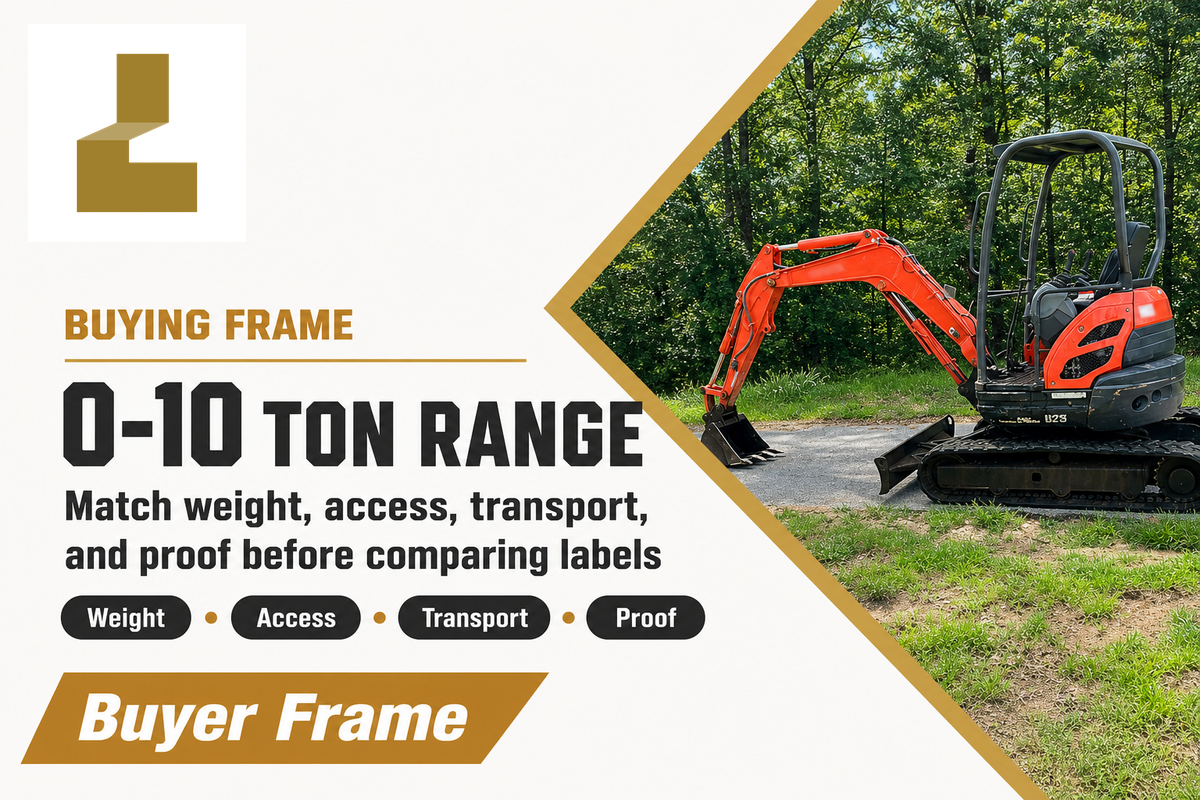
In buyer language, mini excavator and compact excavator often overlap. Liehuang’s public mini excavator category covers used mini excavators from 0-10 tons and lists brands such as Kubota, Caterpillar, Komatsu, Volvo, Hyundai, Doosan, Hitachi, Kobelco, and SANY. Treat that 0-10 ton range as a practical shopping frame for international buyers, not as a universal formal standard.
Definition boundary: ISO 6165 terminology is used only to keep mini/compact excavator language grounded; Liehuang’s 0-10 ton page remains a buyer scope, not an official standard.
Machine class still needs exact specs. For example, a 1.7 ton Kubota U17 and a 3.5 ton class CAT 303.5 can both be compact machines, but they don’t solve the same work envelope. Liehuang’s Kubota U17 page lists 1,650 kg operating weight, 10.1 kW engine power, 2.31 m maximum dig depth, and 0.04 m3 bucket capacity. Liehuang’s CAT 303.5 page lists 4,475 kg operating weight, 45 hp power, and 3,510 mm maximum dig depth.
That’s why operating weight, maximum dig depth, machine width, tail swing, horsepower, hydraulic flow, bucket size, cab condition, and auxiliary lines matter more than the word “mini” by itself.
0-10 Ton Hidden Bottleneck Map: Match Size to Access, Transport, Depth, and Attachments
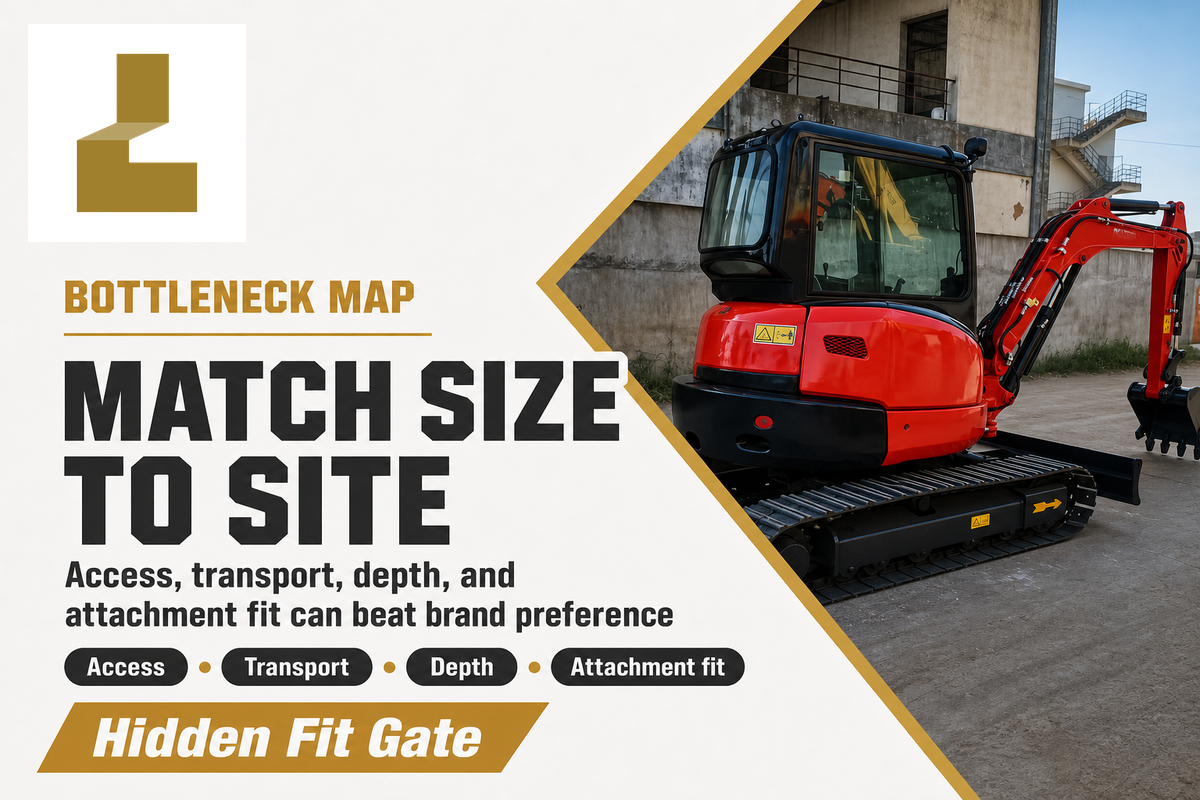
Useful size charts should show what can go wrong. Choosing the wrong small excavator may let the machine fit the lane but miss production targets. Choosing the wrong larger machine may bring better lift capacity but create transport, unloading, and confined spaces problems. Use the map below before asking for a quote, especially if you’re purchasing your first mini excavator model and need to choose the right mini excavator for mixed jobs.
Safety boundary: when the map reaches buckets, couplers, and attachments, NIOSH quick-coupler guidance is the reason to request coupler proof instead of relying on an attachment name.
| Machine Type / Size Band | Good Fit | Hidden Bottleneck | Proof to Request |
|---|---|---|---|
| Micro / under 1.5 ton | Very narrow access, light landscape touch-up, indoor demolition cleanup | Low lift capacity and limited additional reach | Width, track condition, blade play, trailer loading width |
| 1-2 ton | Landscaping, tight yards, light trenching, confined spaces | Limited lift capacity, slower cycle time, small bucket | Width, blade, tracks, dig depth, bucket fit, hydraulic cycle video |
| 2-3.5 ton | Utility laterals, small foundations, drainage, rental fleet core use | Compact machines can still be underpowered for breaker work | Horsepower, auxiliary hydraulics, swing radius, bucket and coupler photos |
| 3.5-5 ton | Utility work, drainage, residential construction, small site prep | Attachment demand can outrun auxiliary flow | Auxiliary flow, coupler, breaker lines, undercarriage and swing check |
| 5-6 ton | General contractor work where output matters but space is still limited | Transport width and loading height start to matter more | Spec sheet, maximum dig depth, loading video, cab condition |
| 6-8 ton | Roadside work, heavier trenching, small commercial sites, loading support | Transport width, loading height, ground pressure, repair cost | Transport dimensions, boom/stick proof, final-drive noise, leak video |
| 8-10 ton | Higher productivity where site access still favors compact construction equipment | May no longer behave like a small excavator for shipping or access | Exact operating weight, route plan, loading plan, service history |
| Electric mini excavators or electric models | Indoor, emissions-sensitive, or noise-sensitive work where charging support exists | Power and economy claims depend on duty cycle and support | Battery condition, charger, runtime, service support, reliable performance proof |
If the machine will work beside a skid steer, loader, truck, or trench crew, include that workflow in the RFQ. Right-fit mini excavators match the crew’s sequence, not just the best standalone spec sheet.
Used vs New vs Rent: When Buying a Mini Excavator Does Not Pencil Out
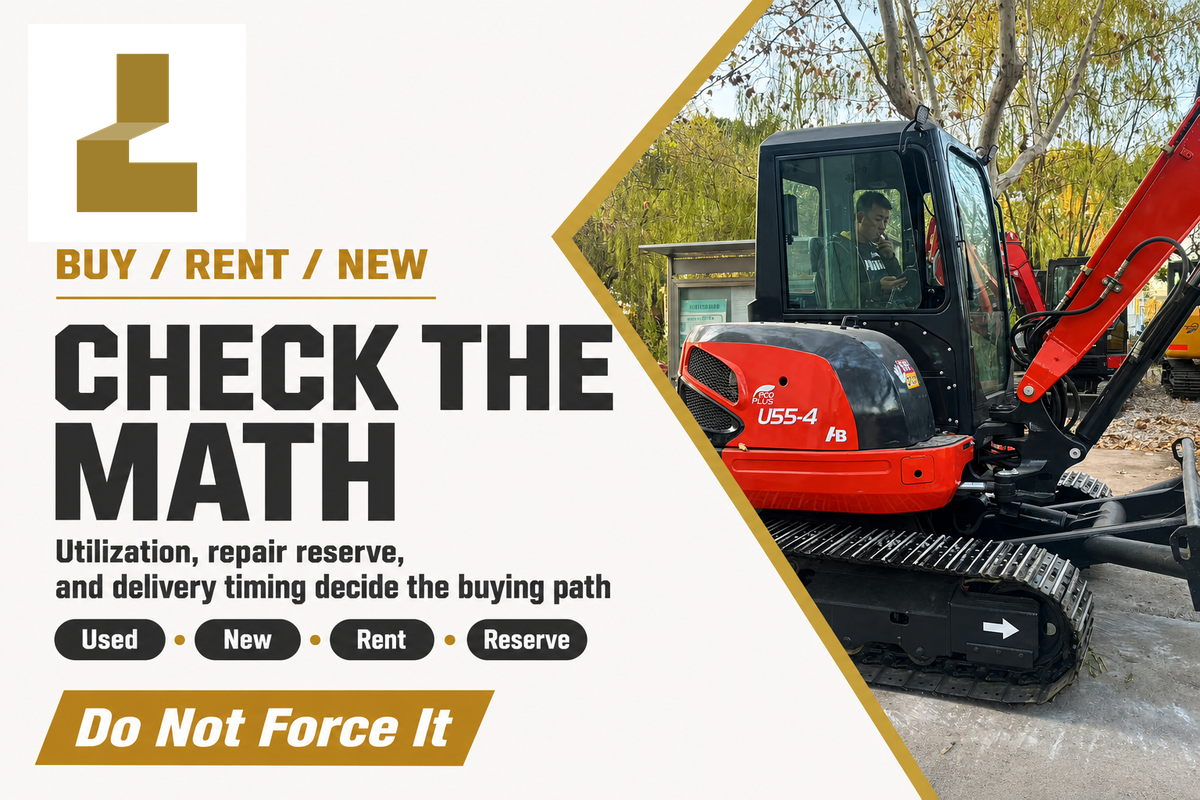
Buying a mini excavator makes sense when the machine will serve repeated jobs, when schedule control matters, when rental availability is unreliable, and when the buyer can verify condition before payment. Buying a used machine can also make sense for dealers and rental fleets that know their repair support and resale channel.
Risk boundary: used-versus-new math should not dilute safety proof; NIOSH quick-coupler guidance keeps coupler and attachment evidence on the buying checklist.
Renting may be better for a one-off job, an unfamiliar attachment, a special ground condition, or a project where the operator will only need the machine for a few days. New machines may be better when warranty coverage, emissions package, local dealer support, 500 hours of low-risk early service, or exact configuration matters more than purchase price. Used buyers must stay on top of maintenance, routine maintenance records, and wear evidence because downtime can erase the savings.
Do
- Define repeated work before choosing the machine.
- Reserve budget for service, attachments, and wear parts.
- Compare landed cost, not only FOB price.
- Ask for inspection proof before deposit.
Don’t
- Buy only because the machine is cheap.
- Ignore transport and unloading limits.
- Assume low hours means good condition.
- Accept vague freight terms as a final quote.
Used Mini Excavator Inspection Checklist Before Any Deposit
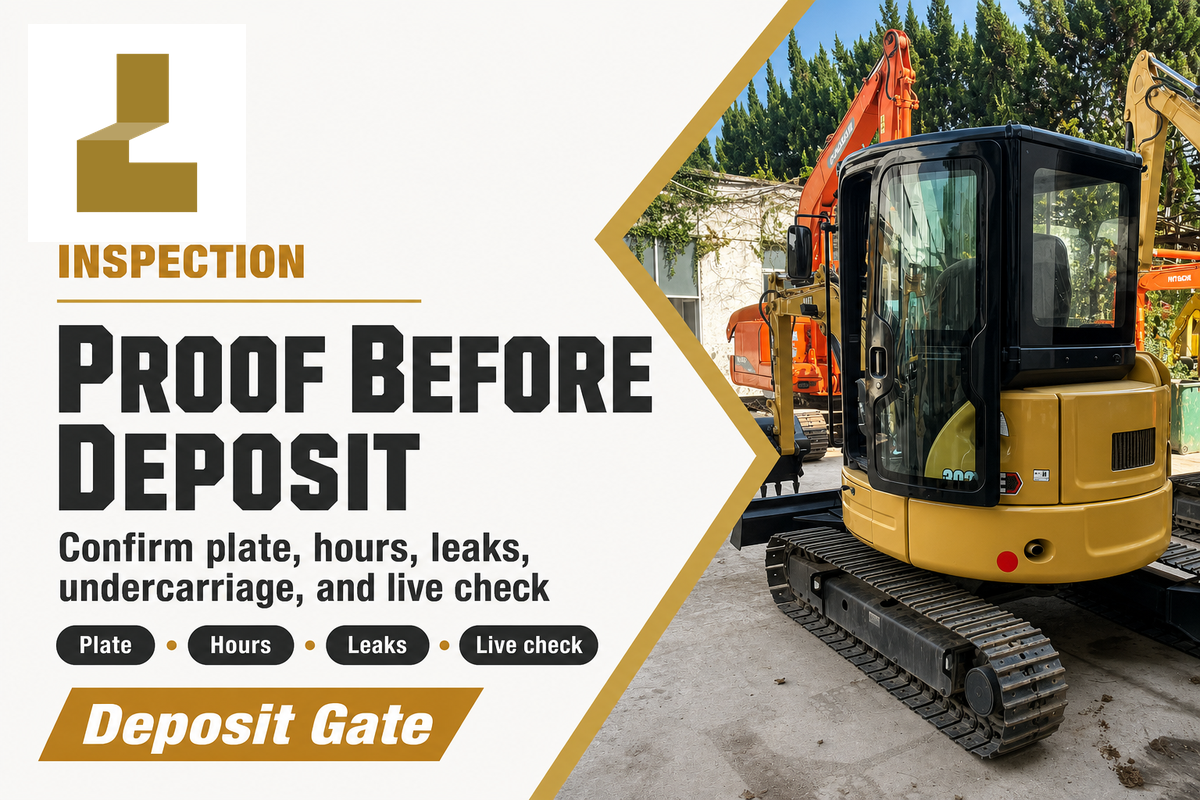
Serious used mini excavator inspection checklists need a sequence. First confirm identity: model, year where available, serial plate, engine plate, hour meter, and seller ownership path. Then confirm startup: cold-start video, idle sound, smoke, warning lights, and display panel. Then test work functions: boom, arm, bucket, blade, swing, travel, auxiliary circuit, and drift. Finally inspect wear: tracks, rollers, idlers, sprockets, pins, bushings, cylinders, hoses, pump response, leaks, welded repairs, and fresh paint over cracks.
Inspection boundary: NIOSH quick-coupler guidance is not a used-equipment price source, but it justifies treating coupler, pins, locks, and bucket fit as safety-critical proof.
Final-drive and track maintenance sources reinforce why undercarriage proof matters. Track tension that’s too tight or too loose can increase wear and damage risk around final drives, pins, bushings, idlers, rollers, and seals. Use those sources as inspection context, not as a statistic about every used machine.
“Steel doesn’t have much mercy.”
Howard Abell, cited by Equipment World in used excavator inspection guidance
For Liehuang stock examples, the CAT 303.5 page lists checks such as hydraulic pump response, final drives, swing play, undercarriage percentage, boom pins, engine smoke, and oil leaks. Liehuang’s Kubota U17 page asks buyers to look at tracks, blade play, slew looseness, hydraulic hose leaks, engine start, bucket fit, trailer loading width, cold-start footage, hydraulic cycle video, swing and travel video, undercarriage close-ups, and meter-panel photo.
Proof-Before-Balance Checklist
- Identity proof: model, serial plate, engine plate, hour meter, and current photos.
- Cold start: smoke, idle sound, display warnings, throttle response.
- Hydraulic cycle: boom, arm, bucket, blade, auxiliary line, and holding power.
- Travel and swing: forward and reverse travel, final-drive howl, slew play, and straight tracking.
- Undercarriage: track pads, chain, rollers, idlers, sprockets, leaks, tension.
- Attachments: bucket, coupler, pins, and any breaker or auger circuit by request.
- Loading proof: container or truck loading picture, shipping documents before payment.
Quote Math: FOB, CIF, Freight, Duties, and Landed Cost Without Guesswork
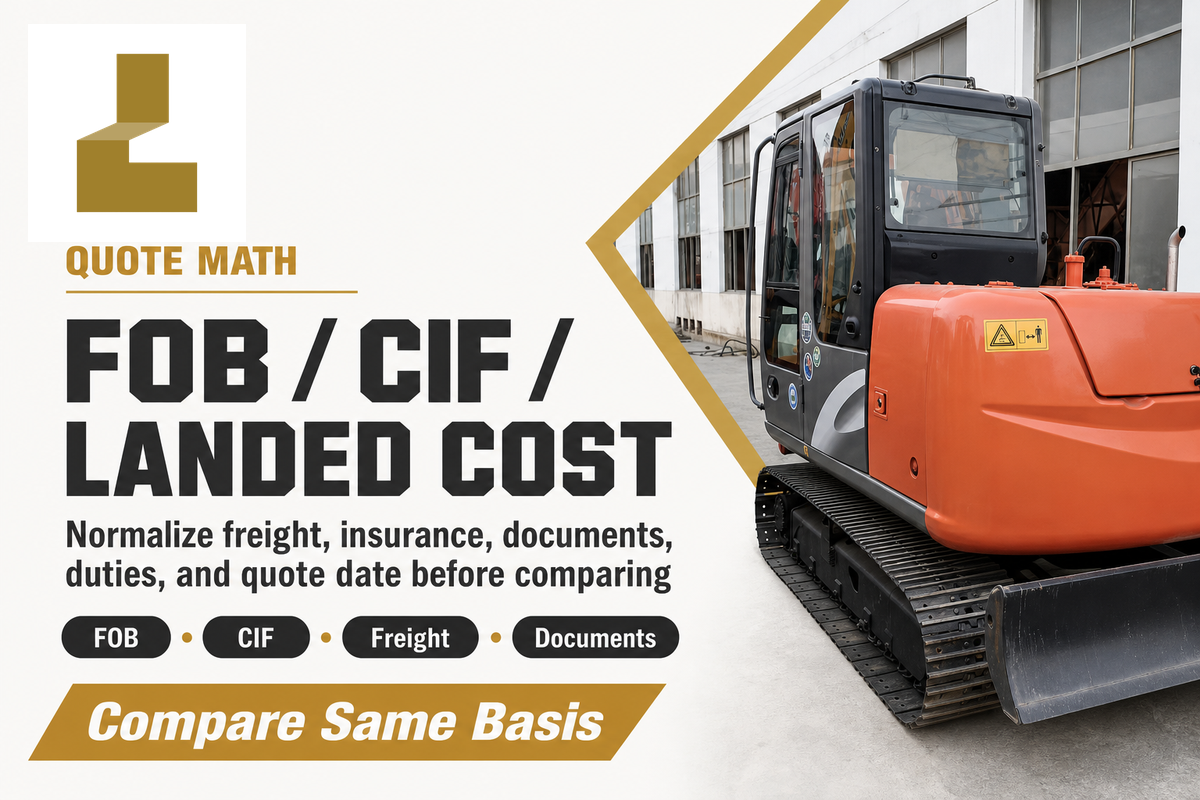
Mini excavator pricing can look simple until shipping is added. FOB isn’t landed cost. Landed cost can include FOB price, ocean freight, insurance, filing, broker fees, duties or tariffs where applicable, destination handling, clearance, and last-mile delivery. Toolio and iContainers both support the principle that landed cost is the total expense of buying and getting goods to the destination, not only the product price.
Scope boundary: landed-cost explainers price the transaction; ISO terminology is referenced only so the article does not turn a cost quote into a machine-definition claim.
Liehuang’s 0-10 ton category page gives rough cost-planning language and buyer tools, but the final number still depends on stock, year, hours, condition, accessories, container plan, destination, route, freight date, insurance, duties or tariffs where applicable, port fees, inland delivery, and current exchange assumptions. Don’t reuse old freight estimates as if they’re live quotes.
RFQ checklist — copy these into your quote request:
| Parameter | Recommended input | Why it matters | How to verify |
|---|---|---|---|
| Model/year/hours | Exact stock unit | Avoids generic price quotes | Serial, plate, hour-meter photo |
| Tonnage/job fit | Access, depth, reach, lift | Prevents wrong size | Spec sheet and work video |
| Inspection proof | Cold start, hydraulics, undercarriage | Separates value from cosmetic cleanup | Photo/video proof pack |
| Attachment/coupler | Bucket, breaker, auger, thumb, coupler | Changes hydraulic and safety checks | Pins, hoses, coupler and flow proof |
| FOB/CIF/landed cost | State requested delivery term | Prevents false price comparison | Line-item quote with date |
| Payment-document evidence | Deposit, balance, loading, documents | Controls transaction risk | Loading photos and shipping papers |
Attachments, Couplers, and Hydraulic Flow: The Safety Check Buyers Miss
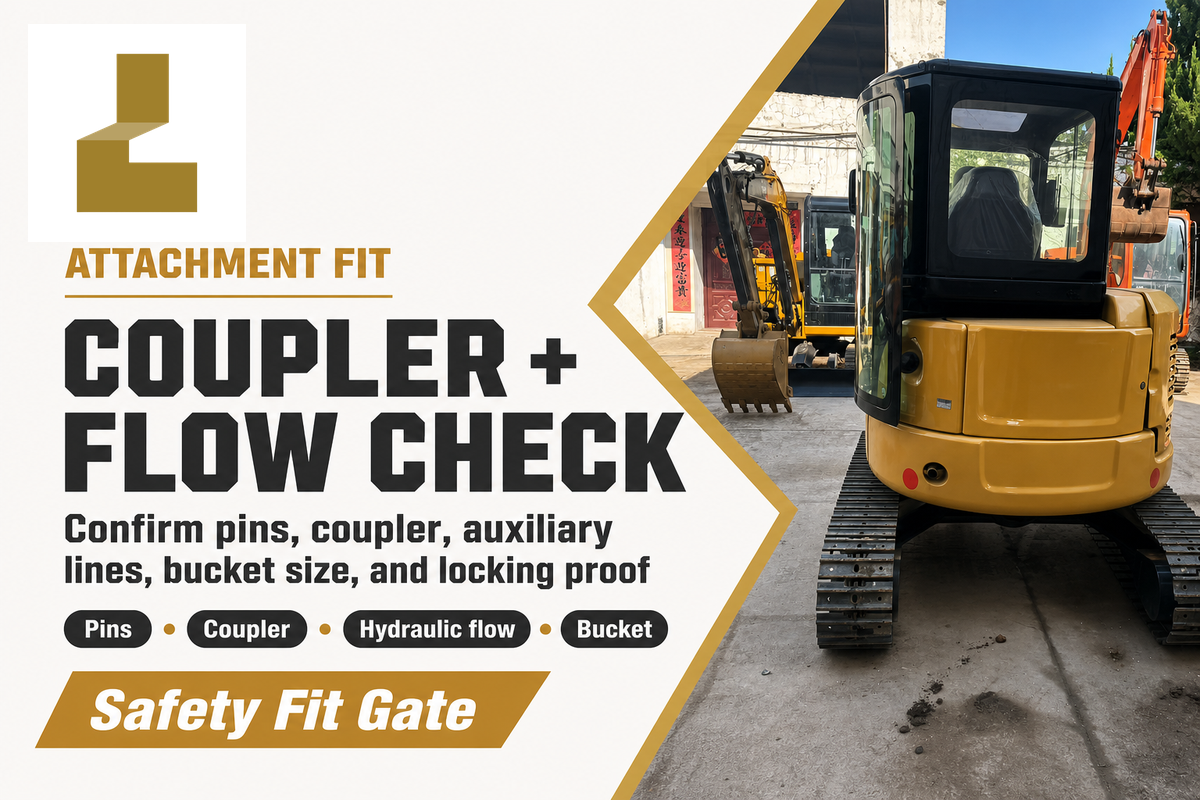
Mini excavator attachments can include buckets, breakers, thumbs, augers, grapples, compactors, and specialized tools. Attachment lists aren’t enough. Buyers need to verify pin size, coupler type, auxiliary flow, auxiliary hydraulics, line condition, control setup, weight, and whether the operator can use the attachment safely on the job site.
Safety boundary: NIOSH quick-coupler guidance and the ISO quick-coupler page support the proof request for pins, locks, bucket fit, auxiliary lines, and coupler condition.
NIOSH Publication 2024-102 is the safest buyer-facing external citation here. It describes fatality and injury risk from excavator quick coupler failures and recommends prevention steps for employers, supervisors, equipment operators, and suppliers. Buyer takeaway: ask for coupler and attachment proof, not just an attachment name in the listing.
ISO 13031:2016 is titled Earth-moving machinery, Quick couplers, Safety, and the ISO page lists Amendment 1, Edition 2025. Use that as standards-status context only; most buyers will not have the standard text. For practical purchasing, request photos and video of the coupler, locking condition, pins, bucket ears, auxiliary lines, and any breaker or auger operation.
Brand and Model Shortlist: How to Compare Kubota, Cat, Bobcat, Komatsu, Hitachi, JCB, and Yanmar
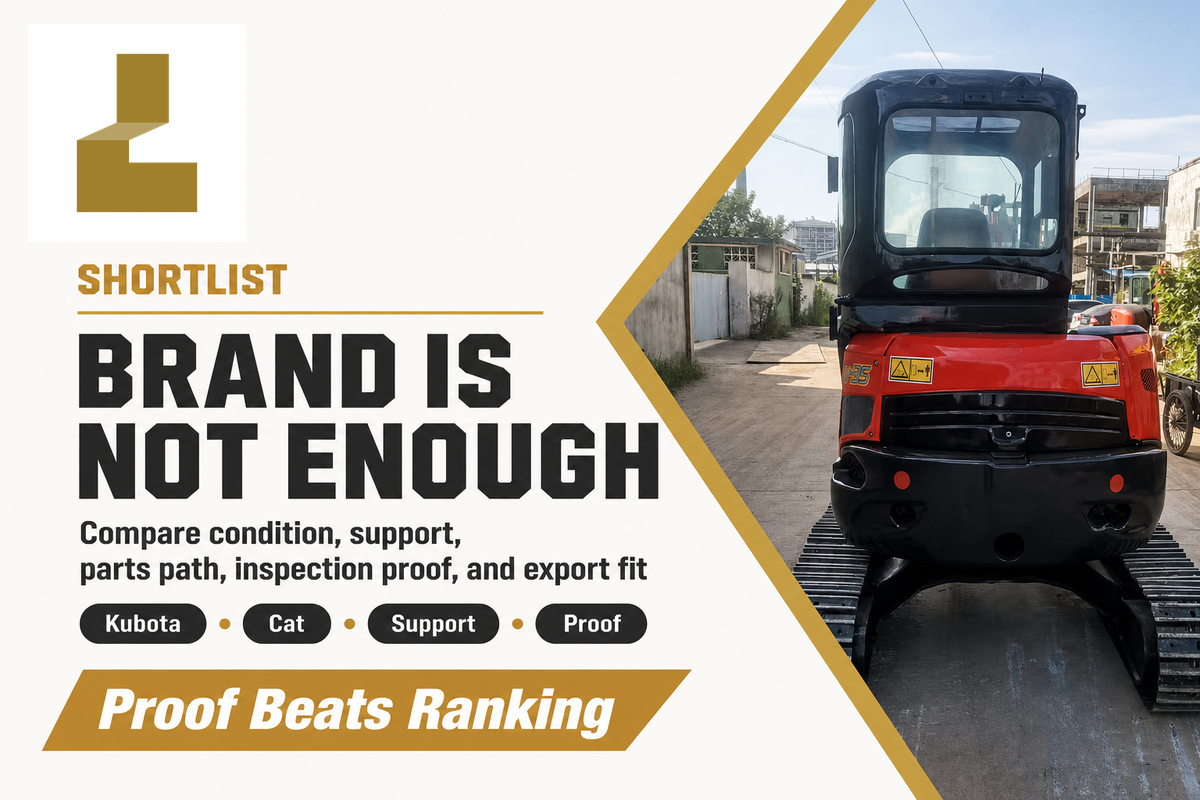
Brand reputation matters because parts, resale, operator familiarity, and dealer support matter. But there’s no universal best mini excavator for every buyer. Kubota U17 units may fit tight access. CAT 303.5 class machines may give more dig depth and power. Bobcat Company, Komatsu Limited, Hitachi, JCB as a heavy equipment manufacturer, Yanmar, John Deere, Volvo Construction Equipment, Case Construction Equipment, Develon, Takeuchi, SANY, Hyundai, and Doosan models can all be reasonable in the right condition and support context.
Comparison boundary: brand names are shortlisted only after job fit; ISO terminology is a category reference, not a ranking source for Kubota, Cat, Bobcat, or other brands.
Use a four-layer shortlist: job fit, condition proof, support confidence, then price. If a machine fails the first two, the logo shouldn’t rescue it. If two machines pass the first two, compare parts supply, operator comfort, enclosed cab or canopy condition, suspension seat condition where fitted, service points, service intervals, diesel engine condition, hydraulic system response, transport size, and resale expectations. Top mini excavators for one buyer may be the wrong machine for another because project requirements change.
For Liehuang stock examples, start with the used mini excavators for sale 0-10 ton page, then ask for exact stock proof rather than assuming the page examples are still available.
Red Flags That Should Pause a Used Mini Excavator Purchase
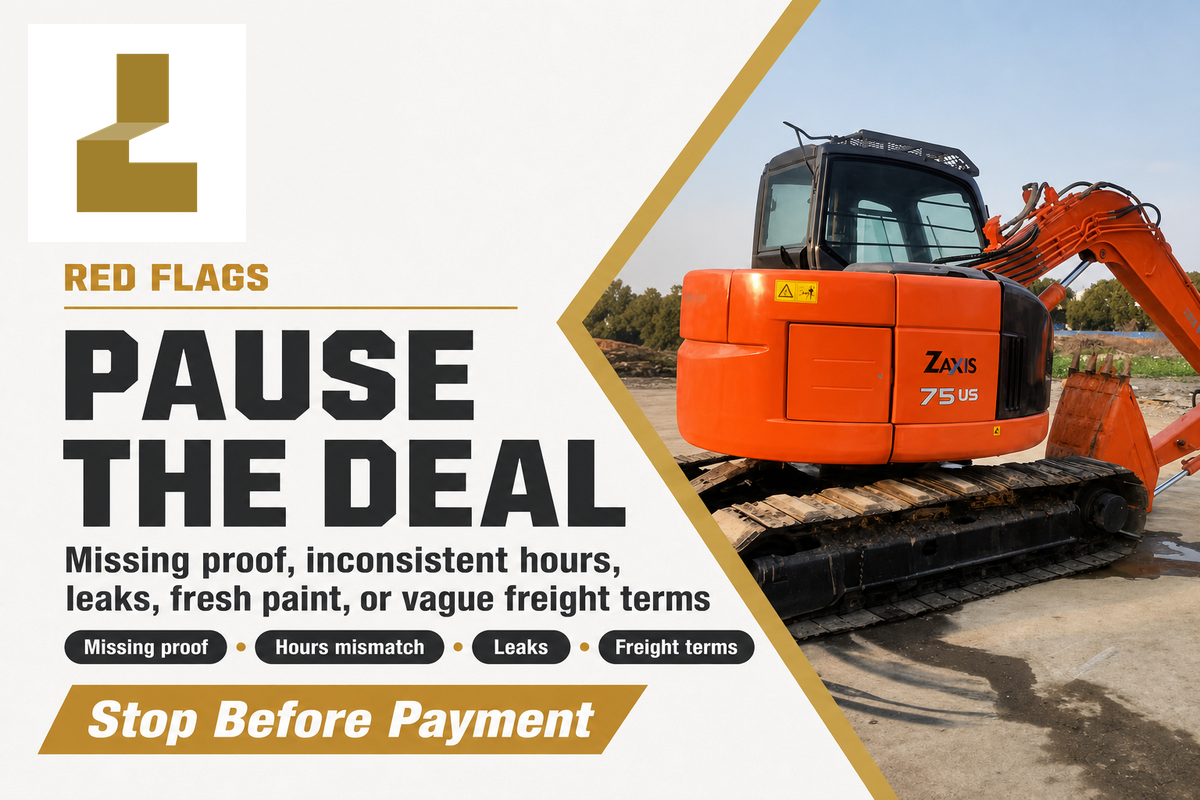
Red flags don’t always mean “walk away.” They mean stop moving money until the seller resolves the risk. Missing nameplate, no live video, inconsistent hours, hidden serial details, slow hydraulics, final drive noise, hydraulic leaks, hot-start problems, fresh paint over cracks, heavy undercarriage wear, vague attachment claims, unclear freight terms, or no loading-document process should slow the purchase.
Safety boundary: NIOSH quick-coupler guidance supports pausing any deal where coupler, pin, lock, or bucket evidence is missing.
Forum and operator discussions often mention hydraulics, pins, bushings, slew ring, undercarriage, final drives, and cold start because those are the problems buyers feel after delivery. Use that buyer language as a checklist prompt, not as a hard statistic.
Pause the purchase if the seller cannot show:
- Clear serial plate, engine plate, hour-meter photo, and current machine photos.
- Cold-start, warm operation, swing, travel, and hydraulic cycle video.
- Undercarriage and final-drive close-ups with visible wear points.
- Attachment and quick-coupler compatibility details.
- Line-item quote separating FOB, freight, destination assumptions, and validity date.
- Loading photos and shipping document process before final balance.
How Liehuang Structures a Safer Used Mini Excavator Buying Process
Liehuang Used Excavators is the export brand of Hefei Liehuang Machinery Co., Ltd., focused on inspected used excavators and worldwide shipping support. Treat all brand claims as attributed first-party claims unless another source independently verifies them. Buyer value comes from the process: stock selection, inspection proof, video proof, quote clarification, loading evidence, and export-document coordination.
Process boundary: Liehuang’s proof pack is a first-party process claim; NIOSH quick-coupler guidance explains why coupler and attachment proof belongs in that process.
For mini excavator buyers, that means the RFQ shouldn’t be “Send your cheapest 3 ton.” Better wording is: “Send current 3-5 ton stock for utility trenching, with year, hours, operating weight, maximum dig depth, auxiliary hydraulic details, undercarriage proof, cold-start video, bucket/coupler photos, FOB price, CIF estimate to my port, quote date, and loading-document process.”
Request current stock and a proof pack
Send your target tonnage, job type, destination, attachment plan, and inspection-proof requirements. Ask Liehuang Used Excavators for matching stock and a current quote with route/date assumptions.
Mini Excavator Buyer Checklist and RFQ Scorecard
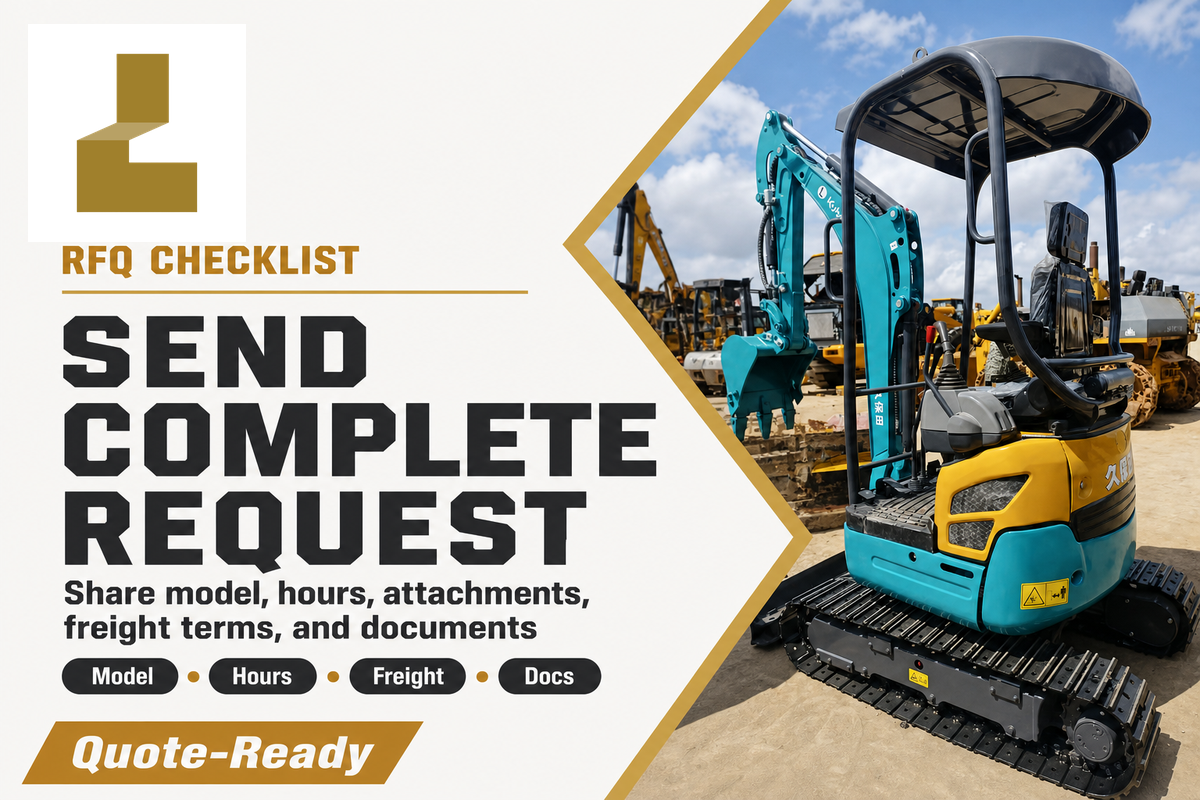
Use this 7-field scorecard to compare suppliers. High scores don’t guarantee the best machine, but they make weak quotes visible before the deposit.
Scoring boundary: the attachment/coupler field should be checked against NIOSH safety context and ISO quick-coupler terminology, while price fields remain quote-specific.
| Field | Score 0-2 | What Good Looks Like |
|---|---|---|
| Model/year/hours | 0 unknown, 1 partial, 2 proved | Clear stock unit, plate, hour meter, current photos |
| Tonnage/job fit | 0 mismatch, 1 possible, 2 matched | Operating weight, width, dig depth, reach, lift, bucket match |
| Inspection proof | 0 none, 1 photos, 2 photo plus video | Cold start, hydraulics, swing, travel, undercarriage, leaks |
| Condition risk | 0 unclear, 1 visible, 2 explained | Wear, repairs, repaint, final-drive noise, service notes disclosed |
| Attachments/coupler | 0 vague, 1 listed, 2 verified | Pins, coupler, hydraulic flow, auxiliary lines, bucket/breaker proof |
| FOB/CIF/landed cost | 0 sticker only, 1 FOB, 2 line-item quote | Machine, freight, destination, document, validity date separated |
| Payment-document evidence | 0 none, 1 promised, 2 process shown | Loading photos, shipping documents, balance-stage proof process |
Scores below 10 out of 14 don’t automatically kill the deal, but they tell you where to ask for more proof. Scores below 7 usually mean the quote is too early for payment.
Key takeaway
The safest used mini excavator quote is not the lowest FOB price; it is the quote where job fit, machine condition, attachment setup, landed-cost assumptions, and payment-stage proof are all visible.
FAQs
Is buying a used mini excavator worth it?
It can be worth it when you have repeated jobs, can verify the machine’s condition, and compare landed cost instead of sticker price. It isn’t worth it for a one-off job with no inspection access, no repair reserve, no local parts support, or no proof pack before deposit. For export buyers, documentation should carry the decision.
What should I look for in a used mini excavator?
Look for year where available, hours, serial plate, cold-start behavior, smoke, hydraulic system response, swing, travel, final drives, undercarriage, bucket, pins, leaks, repaint, nameplate, mini excavator attachments, cab or canopy condition, and payment-stage documents. Follow a sequence instead of a random checklist: identity first, startup second, working functions third, wear points fourth, and quote documents last. For cross-border purchasing, ask the supplier to organize those proof points into one dated package before you compare offers, because missing evidence changes the real price. This mini excavator buyer’s guide uses that order because a pretty machine with no serial proof or operating video is still only a sales claim.
What size mini excavator do I need?
Match size to access width, transport limits, dig depth and reach, lift capacity, soil, attachment demand, operator comfort, and support. Use 1-2 ton, 2-3.5 ton, 3.5-5 ton, 5-6 ton, 6-8 ton, and 8-10 ton bands as a planning map, then confirm the exact machine specs, trailer limits, and working room around walls or foundations.
What mini excavator has the best resale value?
Major brands can hold value better, but final resale depends on condition, hours, service history, local parts support, documents, attachment setup, mini excavator market timing, and whether the next buyer trusts the proof pack. A well-proved used machine can be easier to resell than famous but poorly documented machines.
Should I buy or rent a mini excavator?
Rent for short, uncertain, or one-off work. Consider buying when the same machine will serve repeated landscaping, utility, trenching, demolition, farm, or rental-fleet work and when downtime control matters. Buying used adds inspection risk, so request proof before deposit and keep a repair reserve. This buyer’s guide can narrow the choice, but only your job count, operator availability, service access, and cash-flow plan decide whether owning beats renting.
What attachments can be used on a mini excavator?
Buckets, breakers, thumbs, augers, grapples, compactors, and other tools may fit, but pin size, coupler, weight, hydraulic flow, auxiliary hydraulics, and operator safety must be verified before shipping. Ask for attachment photos, pin measurements, hose routing, and a short working video. Don’t buy the attachment list first and the machine second.
How much does a used mini excavator cost after shipping?
Final landed cost is FOB price plus freight, insurance, destination fees, duties or tariffs where applicable, clearance, inland transport, and any inspection or parts work. Every route needs a current quote and date-stamped assumptions. Liehuang can give directional tools and current-stock quotations, but old freight numbers shouldn’t be reused as live landed cost. Ask for the quote date, destination port, delivery term, loading assumption, and documents before comparing suppliers.
References & Sources
- Liehuang Used Excavators about page used for attributed brand and process claims only.
- Liehuang 0-10 ton used mini excavator category used for buyer scope, proof language, and internal tool context.
- Liehuang CAT 303.5 page and Liehuang Kubota U17 page used as current public stock/spec examples, not universal market pricing.
- CDC/NIOSH Publication 2024-102 used for quick-coupler safety context.
- ISO 13031:2016 quick coupler page used only for standards-status context.
- Toolio landed-cost explainer and iContainers landed-cost explainer used for general landed-cost components, not mini-excavator-specific freight rates.
- Final Drive Parts track-maintenance article used for undercarriage/final-drive inspection context.
![Excavator Bucket Manufacturers: Buyer Evidence [Guide]](https://lhusedexcavator.com/wp-content/uploads/2026/08/excavator-bucket-manufacturers-r2-featured-768x512.png)