Get in Touch with Liehuang Company

Reviewed by the Hefei Liehuang Machinery Co., Ltd. technical team
A used excavator supplier guide is a buyer checklist for judging machine-level proof, export-document readiness, and total landed-cost clarity before comparing the final FOB number. Low-priced used excavator offers can become expensive when the serial plate, inspection media, hydraulic system evidence, undercarriage condition, and import paperwork plan arrive too late.
This guide is written for contractors, fleet owners, import managers, and used equipment traders who need to buy a used excavator from an overseas supplier without treating every dealer, auction listing, or inventory page as equal evidence.
Short Answer: Vet the Proof Packet Before the Price
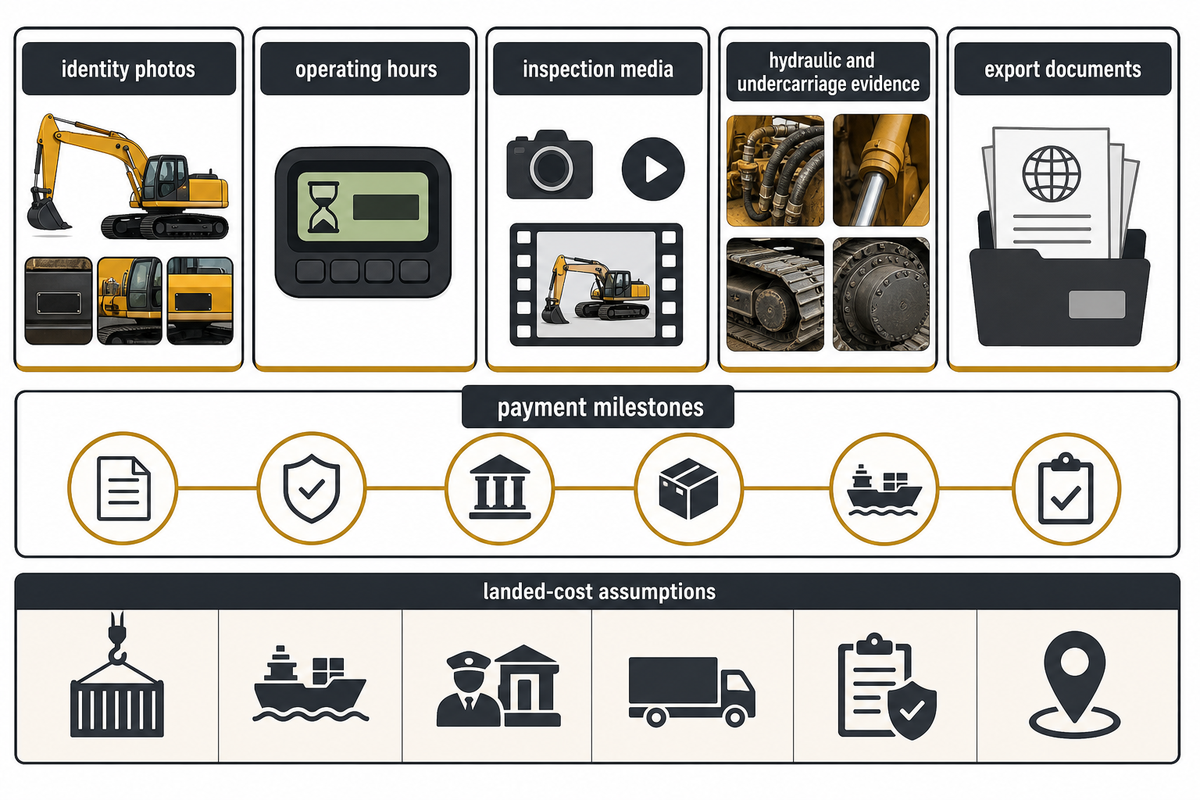
Reliable used excavator suppliers connect one real machine to one clear proof packet: identity photos, operating hours, inspection media, hydraulic and undercarriage evidence, export documents, payment milestones, and landed-cost assumptions. Buyers aren’t trying to find a perfect used machine; they’re avoiding payment for a machine whose condition, ownership trail, or import path is still vague.
Search-demand data supports this split. The exact guide query showed a guide-like result pattern, while high-volume variants such as used excavator dealer and used excavator for sale were mostly transactional inventory or dealer pages. That means this article should help buyers make a supplier decision, then point ready buyers to real stock through the used excavators for sale inventory.
For overseas buyers, the first filter is evidence timing. Suppliers who give machine proof before the balance payment are usually easier to audit than sellers who give a price first and proof later. Staged payment doesn’t eliminate fraud or quality risk, but it gives the buyer a control point before money moves.
Decision rule
Ask for the proof packet first, compare the FOB quote second, and calculate landed cost third. If any one of those three steps is missing, pause the deal instead of negotiating a lower price.
Supplier, Dealer, Auction, or Marketplace: What Are You Really Buying?
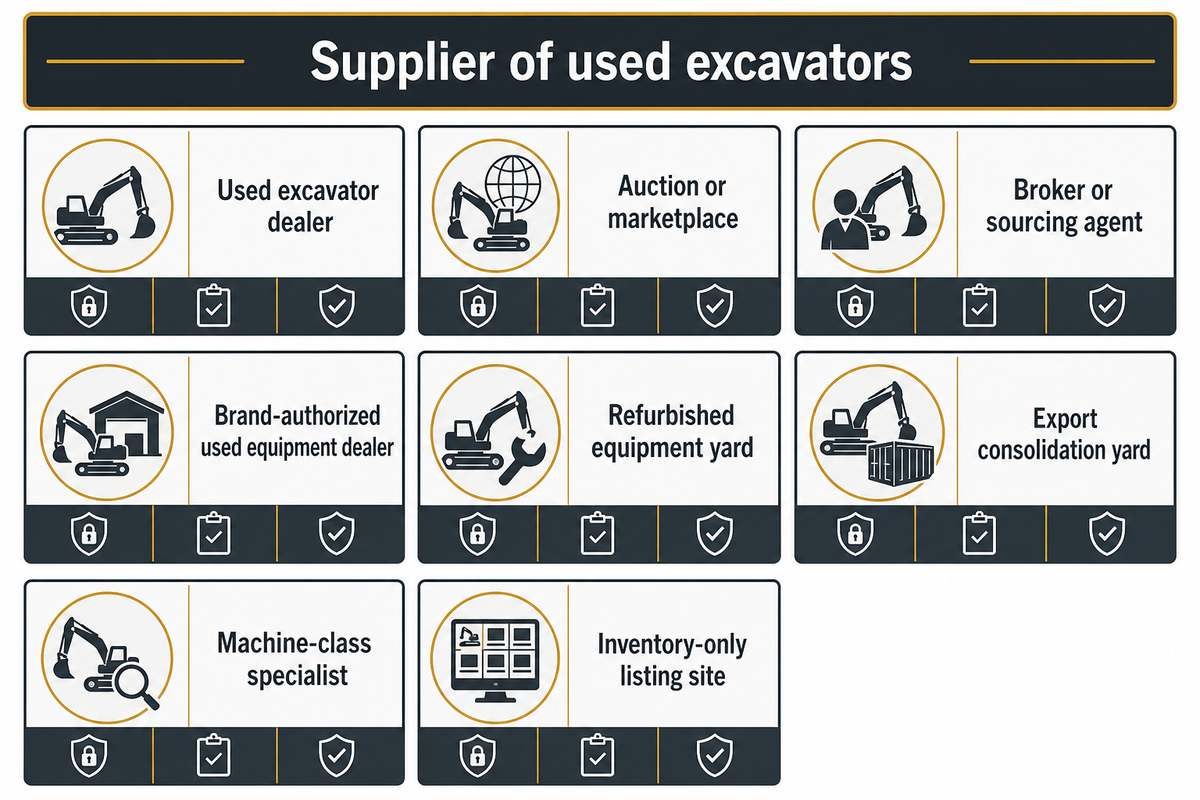
Used excavator buyers often compare a supplier, a dealer, an auction result, and a marketplace listing as if they’re the same type of offer. They aren’t. Seller type changes more than brand choice. It’s who controls the machine, who can inspect it, who can answer document questions, and who carries the communication load after deposit.
Dealer networks may offer parts and service benefits. An auction can expose market pricing, but unreserved public auctions may leave buyers with less time for inspection or export planning. Global suppliers of used excavators should be judged by proof depth, stock access, shipping support, and whether they can explain the machine’s condition in enough detail for a remote buyer.
This distinction matters more in international procurement. Liehuang Used Excavators describes itself as an exporter of inspected used excavators and attachments from China, with machine checks, quote support, logistics documentation, and worldwide shipping. The buyer still has to verify the individual used machine, but a supplier process gives you more checkpoints than a one-line listing.
| Supplier type | Useful when | Evidence to request | Buyer guardrail |
|---|---|---|---|
| Supplier of used excavators | Export buyer needs stock access, inspection media, and shipping coordination. | Machine identity, video, photos, inspection reports, document plan, payment terms. | Ask whether serial-linked proof can be sent inside a buyer-defined 24 hours before deposit. |
| Used excavator dealer | Local buyer wants after-sales support, dealer network, parts and service access. | Service records, warranty wording, local support scope, stock inspection window. | If warranty is offered, write the covered parts and whether it means 30 days or 90 days. |
| Auction or marketplace | Buyer is tracking price ranges, availability, and machine types. | Terms of sale, inspection rights, buyer fee, export support, payment deadline. | Set the inspection decision clock in hours, not vague phrases like soon or later. |
| Broker or sourcing agent | Buyer needs help finding stock across yards but still wants supplier accountability. | Original yard contact, commission basis, media source, and who controls the machine. | Require one named owner for each file before any 48 hours inspection window starts. |
| Brand-authorized used equipment dealer | Buyer values service support, parts history, and local warranty administration. | Dealer certificate, inspection scope, service records, warranty boundary, parts lead time. | Confirm whether support applies to the destination market for 30+ ton heavy equipment. |
| Refurbished equipment yard | Buyer accepts cosmetic repair but needs to separate paint from mechanical work. | Before-and-after photos, repair list, replaced parts, test video, and paint disclosure. | Treat fresh paint as neutral until hydraulic, engine, and undercarriage proof is dated. |
| Export consolidation yard | Buyer is combining machine, attachments, spare parts, and loading support. | Packing list, loading photos, bucket or breaker list, insurance decision, document owner. | For U.S. shipments, ask the broker about the 15 days entry-filing context before sailing. |
| Machine-class specialist | Buyer is comparing mini, medium, and heavy crawler excavators for one work type. | Model range, class fit, bucket match, hydraulic line setup, and parts availability. | For a 36-38 ton class example, compare FOB and landed cost before choosing the model. |
| Inventory-only listing site | Buyer wants a broad market scan before contacting the real seller. | Listing date, seller identity, proof source, fee policy, and whether export support exists. | Do not compare one FOB example with an all-in landed price. |
Use a sharper supplier question than “Are you trusted?” It’s “Which files can you send before I release the next payment?”
The 7-File Supplier Evidence Scorecard
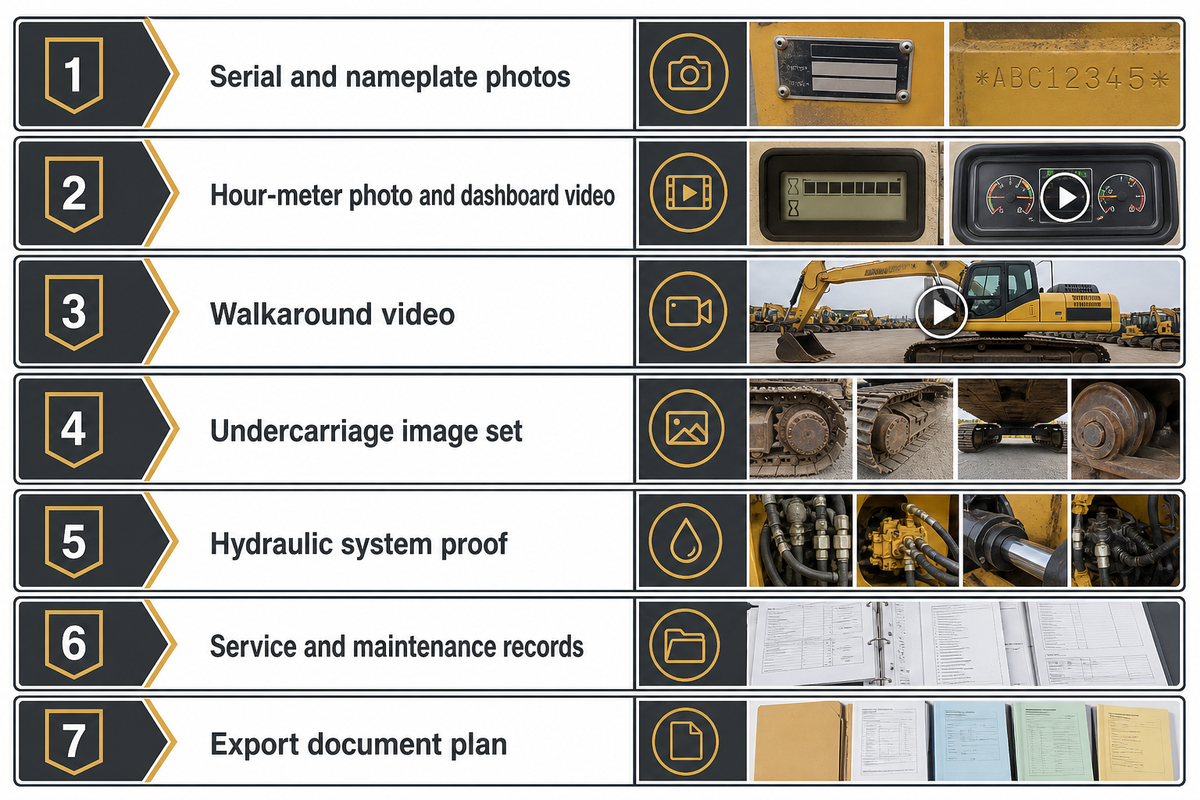
With the 7-File Supplier Evidence Scorecard, supplier trust becomes a document request. It’s built from first-party Liehuang process pages, product-page inspection cautions, and third-party inspection categories such as walk-around, undercarriage, fluids, hydraulic system, cabin, and equipment testing.
Use this table before you buy used equipment from an overseas supplier. Each file should connect to the same serial number and the same machine. Mixed photos, unclear dates, or generic stock videos weaken the file even when the seller’s price looks attractive.
| File | What it should prove | Buyer action |
|---|---|---|
| 1. Serial and nameplate photos | The quoted Caterpillar, Komatsu, Volvo, Hitachi, Sany, Doosan, Kobelco, Hyundai, or Kubota machine is the same unit shown in later media. | Reject a quote where the serial identity is delayed until after deposit. |
| 2. Hour-meter photo and dashboard video | Operating hours and basic instrument status match the quote. | Ask for a same-day video that starts at the exterior and moves into the cabin. |
| 3. Walkaround video | Boom, arm, counterweight, house, cabin, panels, bucket, and visible leaks can be checked remotely. | Look for uninterrupted footage and the same serial plate in the same clip. |
| 4. Undercarriage image set | Track chain stretch, rollers, sprockets, idlers, pads, and final drive exposure are visible enough to discuss wear. | Request left and right side photos, close-ups, and a repair estimate if wear is material. |
| 5. Hydraulic system proof | Hydraulic oil clarity, pump behavior, cylinder leakage, hose condition, and attachment function are reviewed. | Ask for function video under load, not only idle startup. |
| 6. Service and maintenance records | Past maintenance records, rebuild notes, or repair receipts explain condition and resale value more clearly than age alone. | Treat missing records as a price and inspection issue, not automatic rejection. |
| 7. Export document plan | Commercial invoice, packing list, bill of lading, certificate of origin, and destination-specific import needs are discussed before loading. | Confirm who prepares each document and what the importer must file locally. |
Suppliers don’t need to present every file in a polished brochure. Plain evidence is fine when it’s consistent. Simple file format isn’t the warning sign. Unmatched proof is the warning sign: a file that can’t be tied to the machine you’re paying for.
Scorecard accountability is practical: finance can hold payment, the equipment manager can request extra inspection, and the import manager can identify missing documents before the machine leaves the yard.
Balance-Payment Release Gate
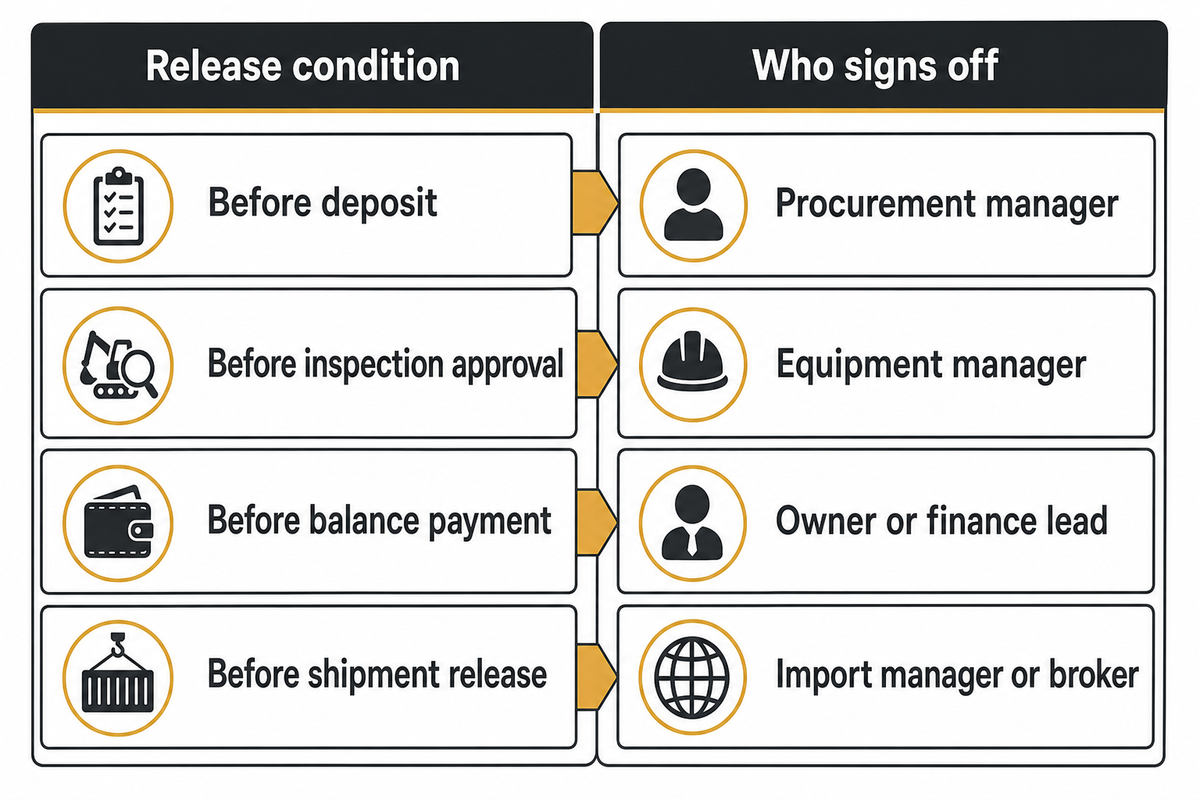
Balance-payment release is a procurement control, not a promise that risk disappears. Liehuang’s public process references staged payment and balance after confirmation; that structure is useful because the buyer can request proof before the final release.
For U.S. imports, CBP’s public article also shows why document timing matters. CBP says formal and informal entries “must be filed within 15 days” of the goods arriving. That quote is a U.S. context point, not a worldwide rule. Other destination countries have their own import and emissions requirements.
“must be filed within 15 days” – U.S. Customs and Border Protection, Article 1180.
| Payment stage | Release condition | Who signs off |
|---|---|---|
| Before deposit | Serial identity, model, year or stated age basis, operating hours, FOB quote, and seller company details received. | Procurement manager |
| Before inspection approval | Walkaround, undercarriage, hydraulic system, cabin, engine startup, attachment operation, and maintenance records reviewed. | Equipment manager |
| Before balance payment | Loading plan, export document plan, agreed accessories, attachment list, and destination compliance responsibilities confirmed. | Owner or finance lead |
| Before shipment release | Bill of lading path, commercial invoice details, packing list, certificate of origin, insurance decision, and importer filing plan checked. | Import manager or broker |
Write the gate into the purchase conversation. Staged-proof suppliers are easier to manage than sellers who ask for trust as a substitute for evidence.
Export Landed-Cost Cross-Check
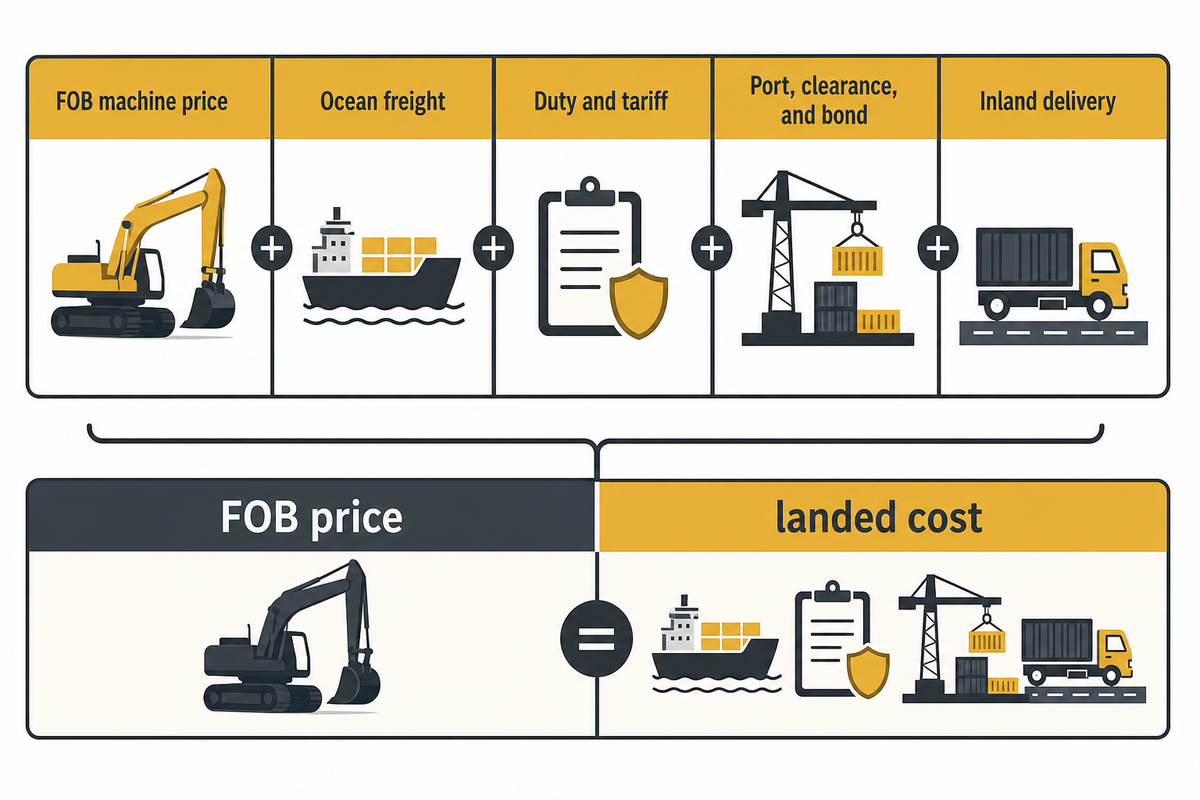
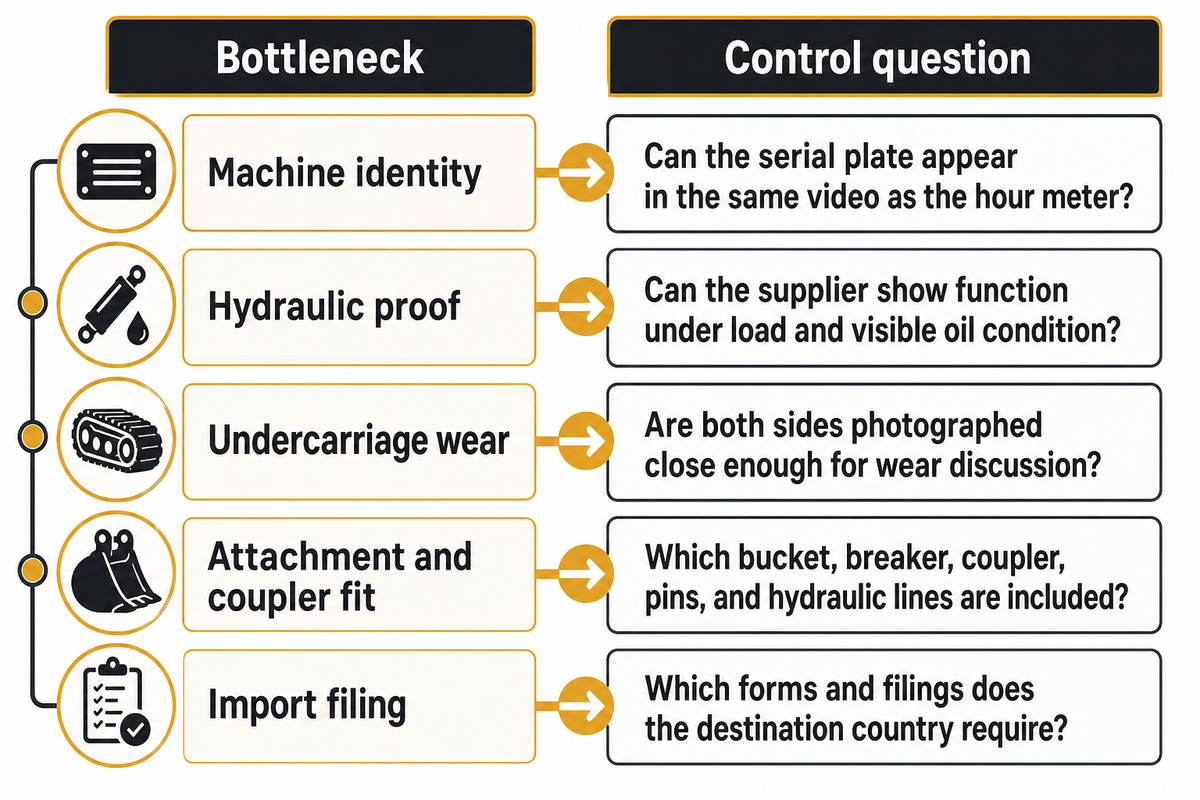
Supplier quotes for used excavators should separate the machine price from the cost of getting the machine into service. Liehuang’s landed-cost tools expose the right buckets: FOB price, destination region, shipping method, import duty, ocean freight, port and clearance, marine insurance, and inland delivery.
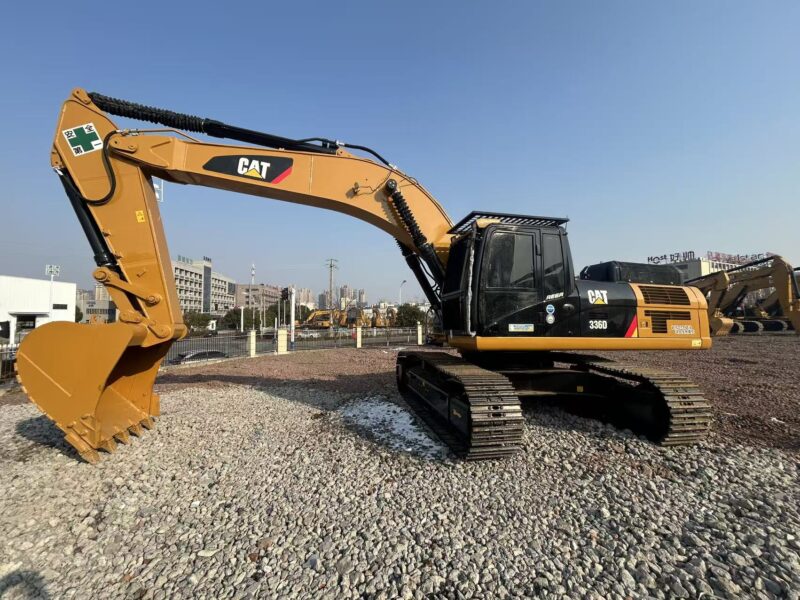
Here’s the practical difference. Liehuang’s CAT 336 page may show a 36-38 ton class and an estimated FOB range of US$48,000-85,000. That FOB range is useful, but it isn’t the landed cost for a contractor in a specific port, with a specific duty rate, shipping mode, insurance decision, and inland haul.
| Cost field | Question to ask | Risk if missing |
|---|---|---|
| FOB machine price | What machine, attachment list, and loading condition are included? | Accessories, bucket, breaker, or loading terms may be assumed but not priced. |
| Ocean freight | Which port, shipping mode, and expected sailing window are quoted? | Freight can shift by port, season, and machine size. |
| Duty and tariff | Who confirms the HS code and destination duty rate? | A buyer may compare FOB quotes without comparing import exposure. |
| Port, clearance, and bond | Which local broker or importer handles entry documents? | Customs delays can erase the savings of a cheaper machine. |
| Inland delivery | How far is the jobsite or yard from the arrival port? | Oversize haul, permits, or local transport can change the final budget. |
EquipmentWorld’s 2025 market context also shows why buyers should keep price in scope: it reported U.S. financed used excavator sales up 5.3% year over year while new financed sales fell 4.1%, with average used pricing around US$155,000-159,000 in the covered period. This is U.S. financed activity only, not a global price rule, but it reinforces the need to compare total cost rather than one quote line.
A buyer’s landed-cost sheet should separate at least 5 lines: FOB machine price, ocean freight, duty rate, port and clearance, and inland delivery. If finance uses a contingency line, label it as an internal buffer, not a supplier quote. If the supplier offers a 7 days quote lock or a 72 hours inspection hold, put those timing limits in writing before deposit.
Brand and Model Fit Still Matter
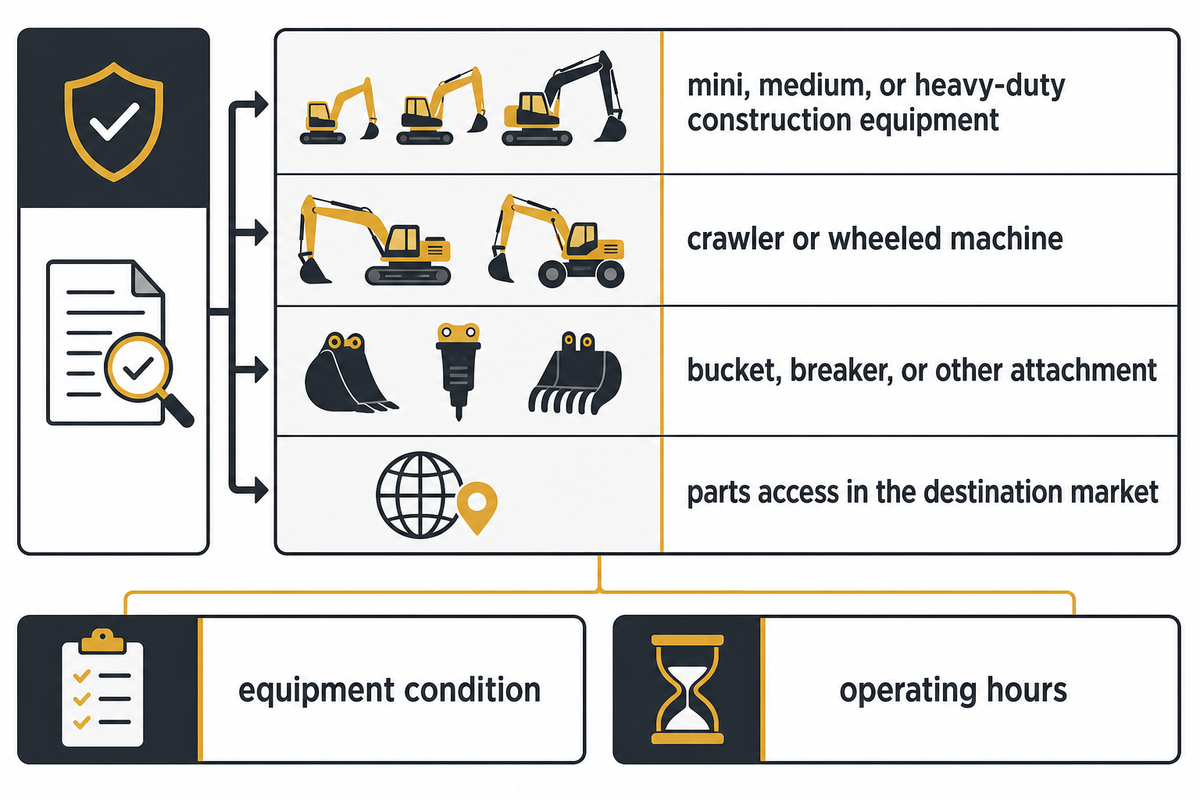
Supplier vetting doesn’t replace model selection. A good supplier process still has to lead to the right excavator for the work: mini, medium, or heavy-duty construction equipment; crawler or wheeled machine; bucket, breaker, or other attachment; and parts access in the destination market.
Common used excavator brands include Caterpillar, Komatsu, Volvo, Hitachi, Sany, Doosan, Kobelco, Hyundai, and Kubota. Brand reputation for durability can matter, and some trusted brands may hold their value over time better in certain markets. But resale value isn’t a universal property of a logo. It depends on equipment condition, operating hours, local parts availability, model demand, maintenance records, and whether the buyer can prove the machine is what the listing says it’s.
Buyers comparing top brands like Caterpillar and Komatsu excavators should still ask the same evidence questions. For example, a certified used label, a refurbished paint job, or a clean set of photos is weaker than specific project requirements tied to inspection reports and maintenance records. Certified used can be meaningful when the warranty, inspection scope, and issuing organization are clear. It isn’t meaningful when it’s only a marketing adjective.
Use Liehuang’s used excavator solutions page to match machine class and export support, then check active stock on used excavators for sale. Buyers comparing parts, breakers, buckets, and couplers can also review excavator attachments before finalizing the RFQ.
Search Language Buyers Should Translate Before Comparing Suppliers
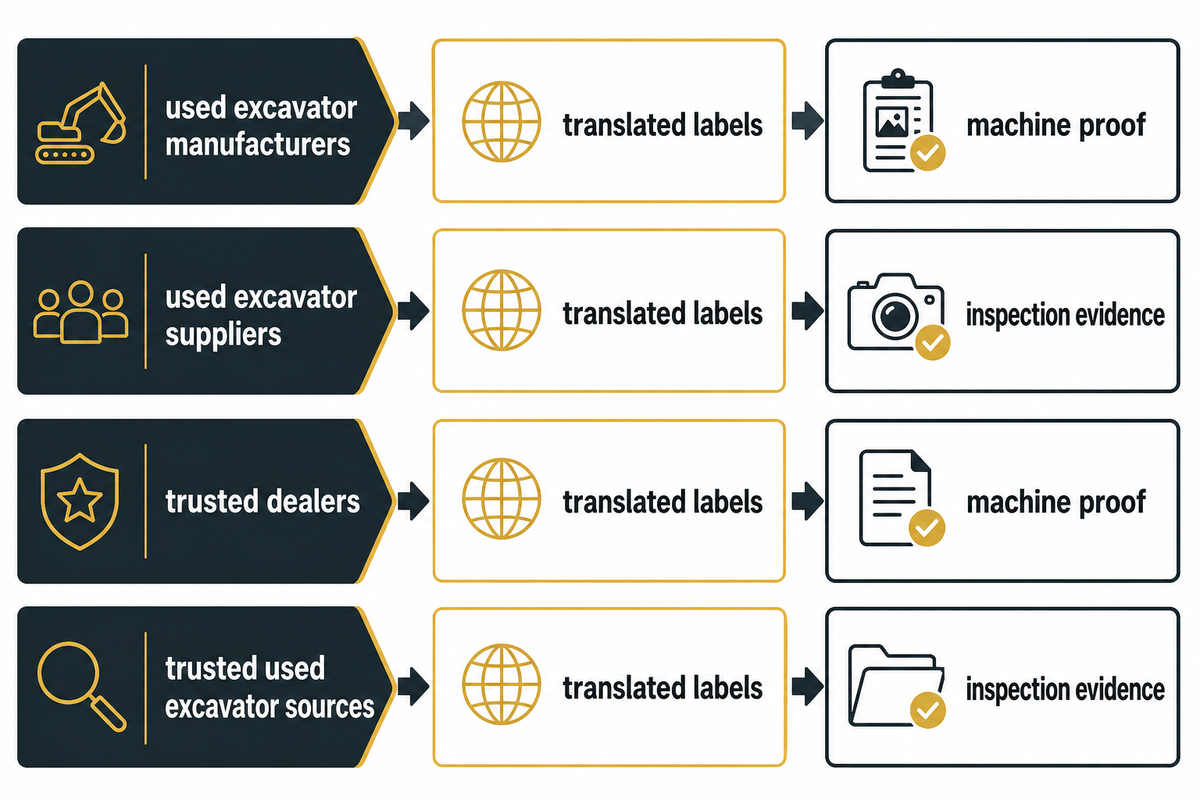
Different buyers use different phrases for the same sourcing problem. Used excavator manufacturers, used excavator suppliers, trusted dealers, and trusted used excavator sources can all appear in search results, yet the buyer still has to decide whether the company controls the machine, only brokers the lead, or acts as the right used excavator manufacturer contact for a specific export project.
Procurement teams may search for a second-hand excavator, pre-owned excavators, pre-owned construction equipment, or a quality used machine when the real goal is to avoid costly mistakes. Phrase differences matter less than proof quality: high-quality used listings, quality used stock, and used excavators from reputable sources should still provide the same seven evidence files before payment.
Market language also needs translation. The used market, used excavator market, market for used construction equipment, used construction equipment market, used equipment market, and broader equipment market can point to different data sets. Some articles compare machines compared to new models; others focus on benefits of buying from reputable sources, strong resale value, fuel efficiency, operator comfort, or known for durability claims. Treat those as topics to verify, not automatic proof.
For buyers buying used excavators across borders, search language can mix English, brand names, and translated labels. Lieferant, Maschine, Liste von Baumaschinen und Baugeräten, and Bagger translate back to supplier, machine, construction equipment list, and excavator. Do not let translated labels replace machine proof. Advanced technology, ergonomics, reliability engineering, accuracy and precision, manufacturing origin, original equipment manufacturer background, investment logic, and market economics are useful research prompts only when tied to inspection evidence. Caterpillar Inc., Komatsu Limited, Rhinox Group, and Rhinox-style guide pages can help build a shortlist, but they cannot prove the condition of one export unit or its global logistics support. Ignore false friends such as landing gear; excavator undercarriage is the relevant inspection area.
Auction searches create another split. IronPlanet and Ritchie Bros can help buyers read auction activity, while cat excavators, Volvo Construction Equipment, equipment manufacturers, and brand pages can help with parts fit and model background. A construction equipment guide can inform the shortlist, but inspection tips, telematics records, maintenance evidence, and supplier document discipline decide whether to choose a manufacturer contact, dealer, auction, or export supplier for the final purchase.
Walk-Away Supplier Signals
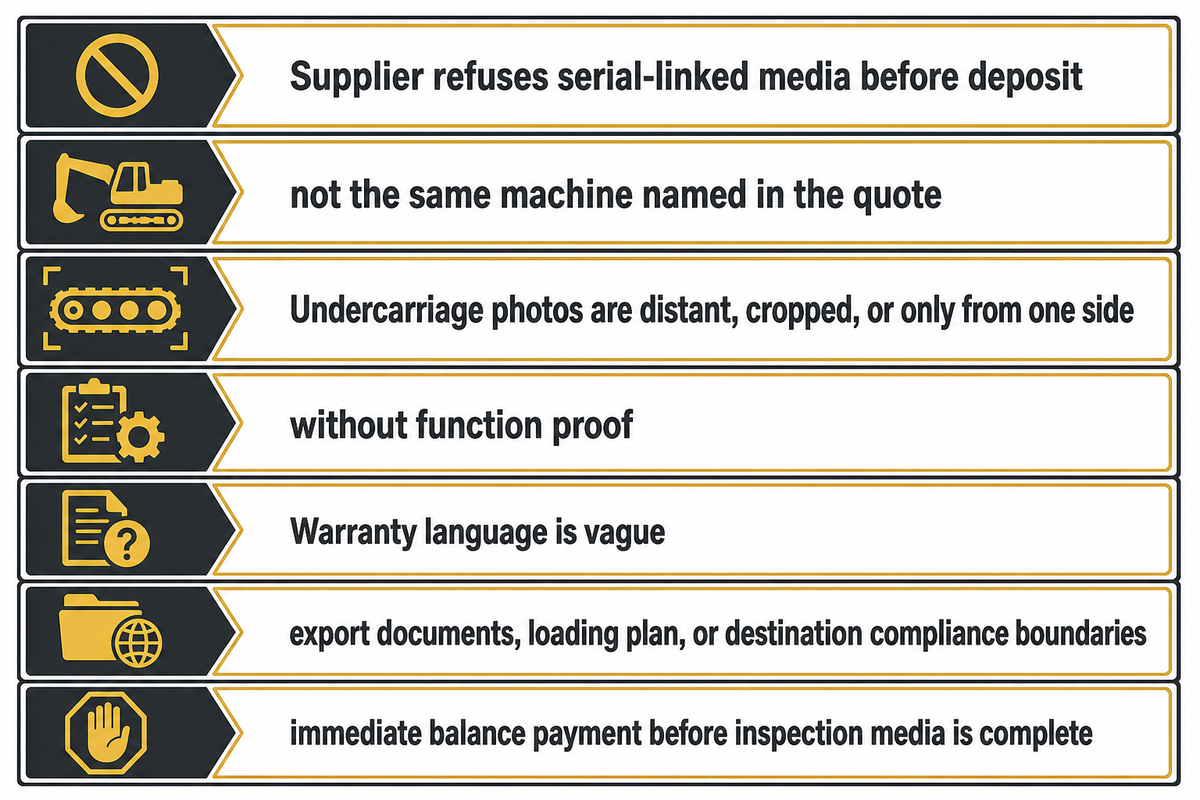
Supplier-guide rejection rules should be plain. Buyers do not need a dramatic warning story to pause a used machinery purchase. If the supplier cannot provide the proof needed for the next payment stage, the buyer has enough reason to stop and request clarification.
- Supplier refuses serial-linked media before deposit.
- Videos show a machine running, but not the same machine named in the quote.
- Undercarriage photos are distant, cropped, or only from one side.
- The hydraulic system is discussed only as “good condition” without function proof.
- Warranty language is vague: no duration, no covered parts, no claim process, no location boundary.
- Seller can’t explain export documents, loading plan, or destination compliance boundaries.
- The quote pushes immediate balance payment before inspection media is complete.
These signals don’t prove bad intent. They prove the buyer lacks enough evidence to move safely. A reliable used supplier should understand why serious buyers ask for machine identity, proof media, and document clarity.
Buyers who want a broader machine-selection view can compare this supplier guide with Liehuang’s used excavator buying guide and used excavator inspection guide. Import process questions belong with how to import an excavator from China.
What to Send in the First RFQ
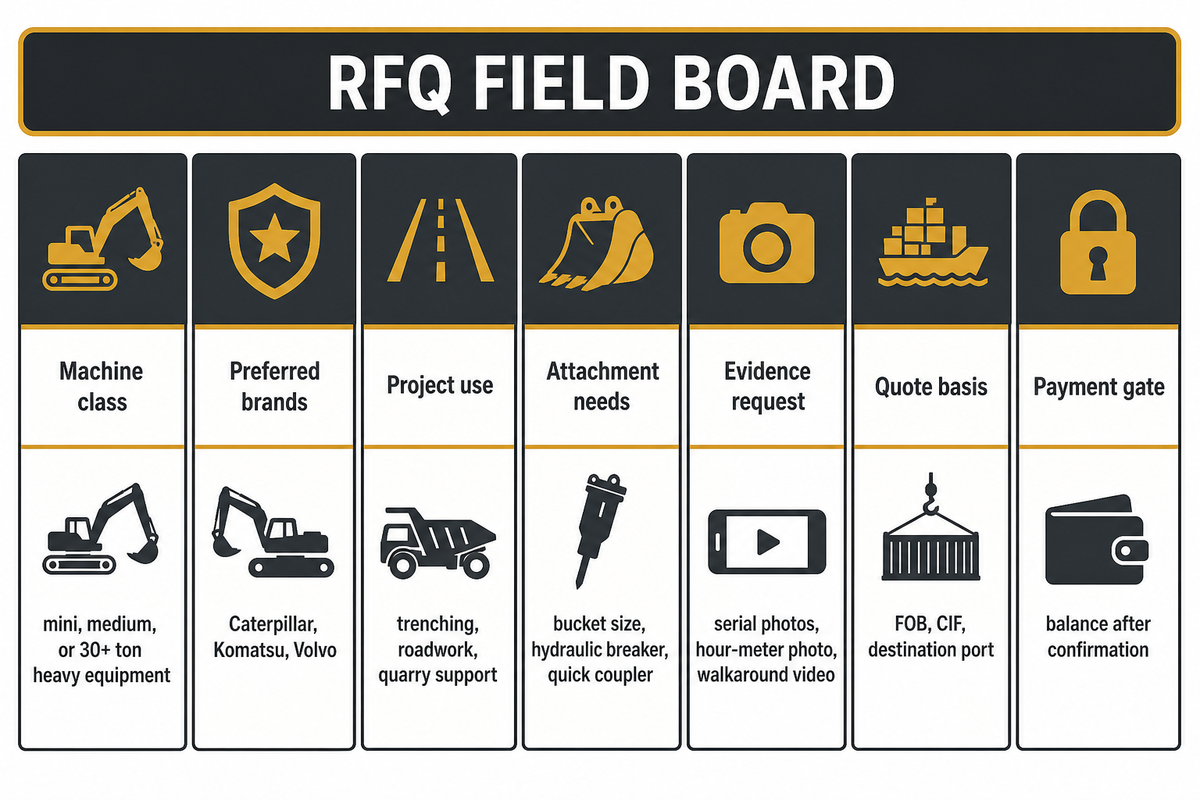
Better first RFQs make the supplier easier to test. Instead of asking only “best price?” send a short requirement sheet that forces a machine-specific answer. This helps separate a real excavator supplier from a seller who’s forwarding vague stock photos.
RFQ fields to include
- Machine class: mini, medium, or 30+ ton heavy equipment.
- Preferred brands: Caterpillar, Komatsu, Volvo, Hitachi, Sany, Doosan, Kobelco, Hyundai, Kubota, or other trusted brands.
- Project use: trenching, roadwork, quarry support, demolition, foundation work, or rental fleet.
- Attachment needs: bucket size, hydraulic breaker, quick coupler, lines, pins, and spare parts.
- Evidence request: serial photos, hour-meter photo, walkaround video, undercarriage close-ups, hydraulic function video, inspection report, and maintenance records.
- Quote basis: FOB, CIF, destination port, shipping mode, insurance, duty assumption, and inland delivery if needed.
- Payment gate: deposit terms, inspection review step, balance after confirmation, and document release timing.
Add buyer-defined numeric fields where they matter: maximum hour-meter reading such as 5,000 hours, minimum startup video length such as 2 min, walkaround video length such as 3 min, hydraulic function clip length such as 5 min, attachment test such as 2 min, cab control check such as 1 min, loading clip such as 1 min, inspection review window such as 48 hours, quote validity such as 7 days, and warranty wording such as 30 days or 90 days if offered. These are comparison thresholds set by the buyer, not universal industry rules.
This RFQ protects both sides. Buyers get comparable evidence. Suppliers avoid vague back-and-forth and can show commitment to quality through files, not slogans.
Request a Machine-Level Proof Packet
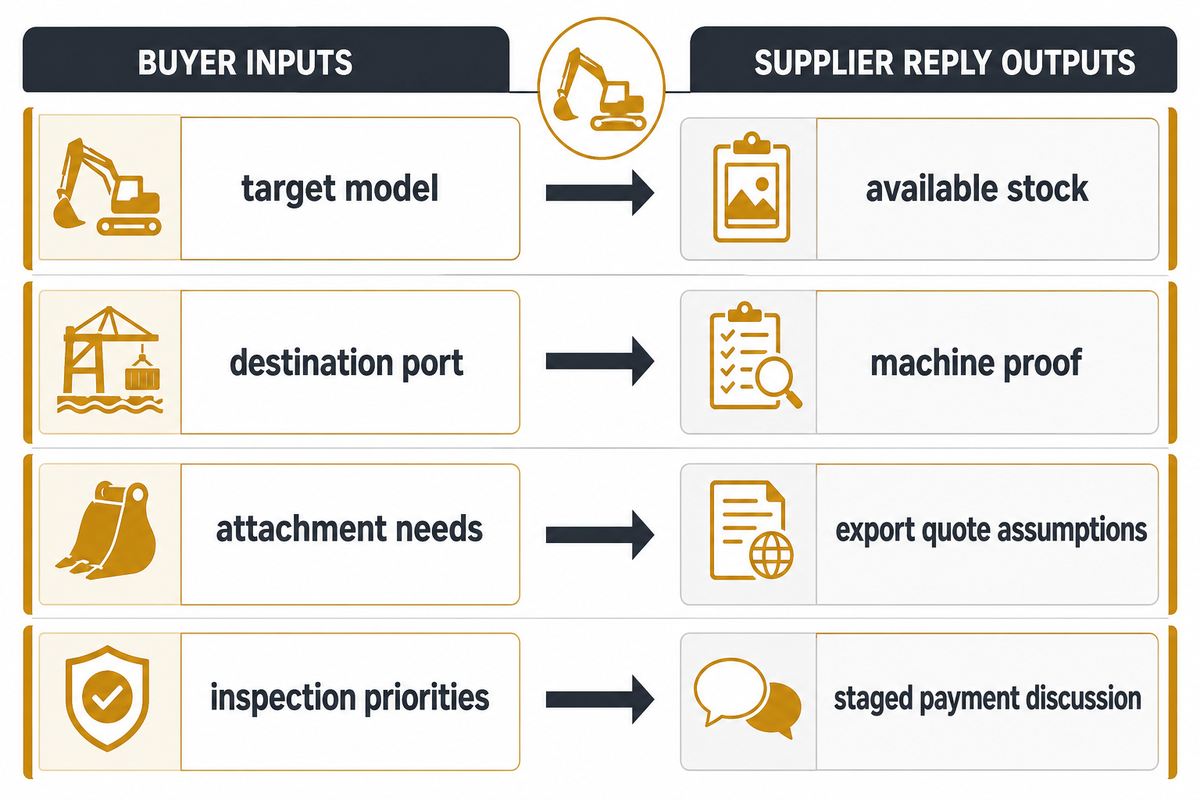
Send your target model, destination port, attachment needs, and inspection priorities. Liehuang Used Excavators can reply with available stock, machine proof, export quote assumptions, and a staged payment discussion.
Frequently Asked Questions
How do I know if a used excavator supplier is reliable?
Reliable supplier screening starts with one specific machine, not a company slogan. Request serial photos, operating hours, inspection media, undercarriage evidence, hydraulic system proof, export documents, and payment-stage clarity, then check whether every file points to the same unit. Reputation helps, but evidence timing matters more. Before deposit, before inspection approval, and before balance payment, ask exactly what the supplier can provide and who signs off internally. Keep the exchange tied to the quoted serial number from the first message.
Should I buy from a dealer, auction, or overseas supplier?
Dealer, auction, and overseas supplier channels solve different problems. Dealers help when local service matters. Auctions support price discovery. Export suppliers matter when stock access, global logistics, and documents are central. Choose by inspection rights, import path, support needs, and condition uncertainty.
What documents should I check before importing a used excavator?
Start with the commercial invoice, packing list, bill of lading, certificate of origin, loading evidence, and destination-specific import or emissions paperwork. For the United States, CBP Article 1180 discusses EPA Form 3520-21, CBP 7501, bill of sale or lading, customs bond, and emissions conformity context. Importer responsibility varies by country, so confirm local off-road construction equipment rules with a licensed broker before payment release.
Is a lower FOB price always better?
No. Compare machine proof, freight, duty, port and clearance cost, insurance, inland delivery, inspection risk, warranty wording, and parts availability before choosing the lower FOB. A higher FOB can still win when the supplier gives clearer loading support and import assumptions.
References and Sources
- Liehuang Used Excavators About Us
- Liehuang Used Excavator Solutions
- Used Excavators for Sale
- Used CAT 336 Excavator Product Page
- Used Excavator Landed Cost Estimator
- CIF Landed-Cost Estimator
- Heavy Equipment College Excavator Inspection Checklist
- U.S. Customs and Border Protection Article 1180
- ISO 13031:2016 Quick Coupler Safety
- EquipmentWorld/Fusable 2025 Excavator Sales Trends
![Excavator Bucket Manufacturers: Buyer Evidence [Guide]](https://lhusedexcavator.com/wp-content/uploads/2026/08/excavator-bucket-manufacturers-r2-featured-768x512.png)