Get in Touch with Liehuang Company
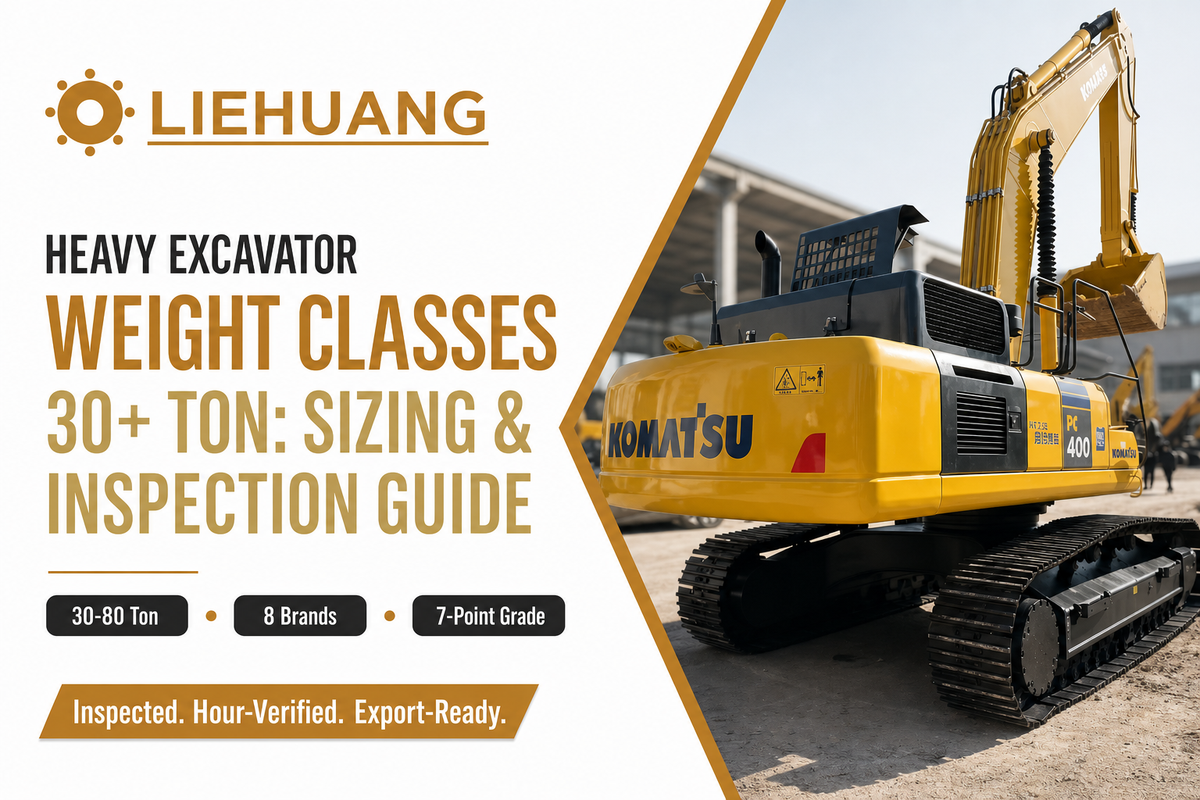

When you’re looking to buy an excavator, a major consideration to take into account is weight class, as this determines a lot of things, like what kind of equipment you can use, what trailer you would need and if the excavator can even be used at your construction site. The differences in specifications when you’re looking at excavators of similar size, like a 30 ton versus a 36 or 50 ton crawler excavator can seem to blend together, but this is understandable, as there isn’t one agreed upon classification of “heavy.” In reality, each excavator manufacturer draws the line somewhere different.
Under most classification schemes used in importing and exporting and related to OSHA guidelines, a 30-ton plus excavator falls under the category of “heavy,” although many manufacturers use a classification for “large” starting at about 35 metric tons and up to about 45 metric tons. In this guide, you’ll learn to determine the right class for your machine, analyze the hour meter fairly, perform a thorough field inspection and include other associated costs beyond just the sticker price. We’ll also review U.S. customs procedures if you plan on purchasing the machine overseas.
Key Takeaways
- A 30 ton excavator does not mean there’s an official industry standard, but rather a functional benchmark
- While low hours may indicate fewer use cycles, wear isn’t always reflected solely by the hour meter, as data from wear-testing research suggests
- Approximately 40-50% of the maintenance and repair costs associated with a used excavator are usually for its undercarriage components
- An EPA compliance check can be part of the importation process into the U.S. and can result in your shipment being detained at the port
- The increase in the used-machine sales for 2025, even while new-machine sales decreased, indicates a favorable buyer’s market that needs careful consideration
Quick Specs
| 30-36 ton class | ~19-24 ft dig depth, ~1.0-1.6 m³ bucket, general/mass dig duty |
| 36-50 ton class | ~24-27 ft dig depth, ~1.0-2.5 m³ bucket, quarry/mass excavation duty |
| 45-85 ton class | ~27-32 ft dig depth, up to ~3.3 m³ bucket, hard-rock/mining-support duty |
What “Heavy” Actually Means: Excavator Weight Classes Explained
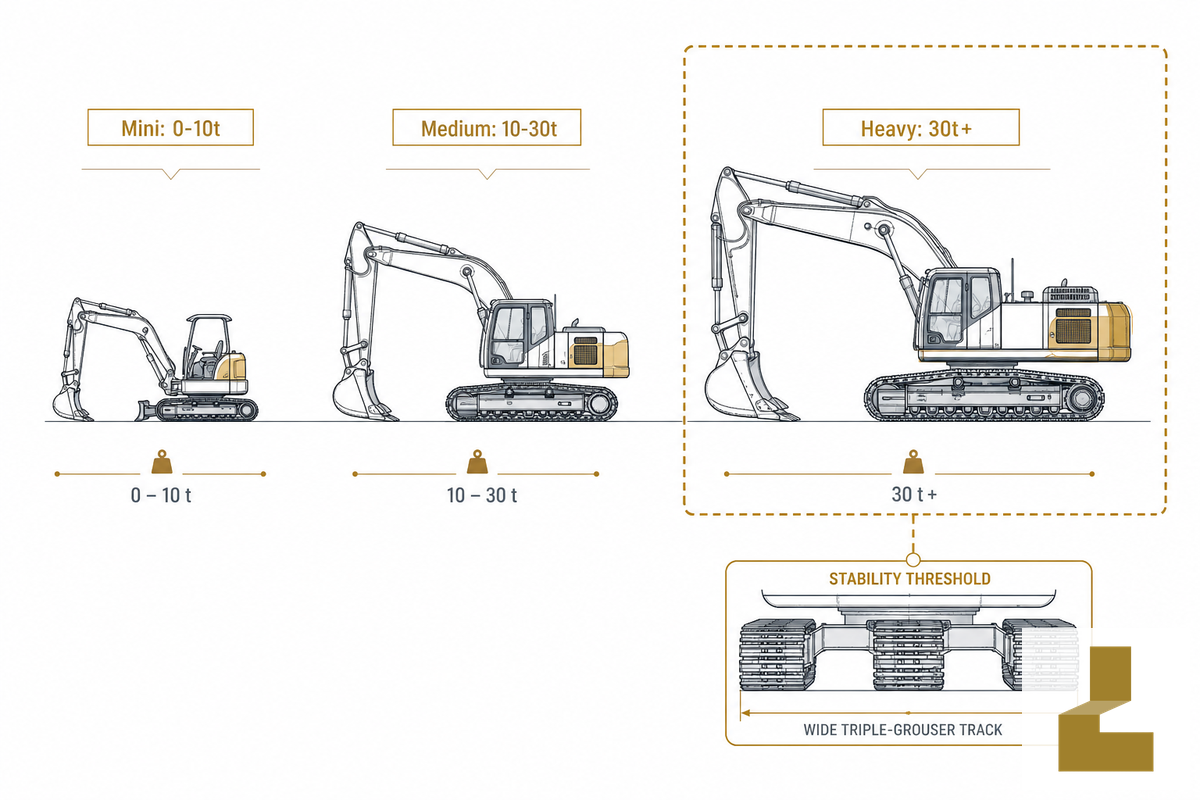
The classifications for excavator weight can be traced back to ISO 6165, an international standard for basic earth-moving machinery types, but it doesn’t define the exact boundaries of the classifications. For instance, some of the common boundaries are: BigRentz puts heavy or large excavators above 80,000 lb, which is approximately 36 metric tons; Gregory Poole defines the heavy category above 45 metric tons; H.O. Penn’s large excavator category starts at 77,000 lb, about 35 tons; and Equipment World features an entirely separate category and productivity guide specifically for machines weighing 45 to 50 metric tons. There is no single classification that is technically correct; they all represent valid working definitions, not the absolute truth.
The standard we’re using of 30 tons in this guide is generally the starting point for the heavy classification under almost all international shipping and mining classifications. We’re not making arbitrary divisions; there’s a good physical reason for it.
Why 30 Tons Is the Real Dividing Line
Let’s call this the Stability Threshold Model: beyond a operating weight of roughly 30 tons, ground pressure distribution rather than digging force is the dominant design driver. A three-grouser track system puts a greater amount of mass on the ground, across a wider contact area. That’s what holds a 30+ ton excavator in place on a soft, uneven or rubble- strewn job site where a smaller machine with narrower tracks would start to dig in or overbalance.
Undercarriage engineering is in active patent territory in this size range – recently published applications like US Patent 12,000,107 B1 (2024) propose “collapsible track-undercarriage tensioning mechanisms,” to get a grip on this trade-off, and Australian Patent AU2015307037B2 claims to sense track link wear in a similar pursuit.
Wheeled excavators are all but excluded from this weight range for a similar reason-the ground pressure-per-point contact for wheels starts to play against the math of stability once the machines exceed 30 tons (and it’s why all-or nearly all- wheeled excavator offerings top out below that mark anyway. And “scaling up” doesn’t fully do it justice either, in that a big 30+-ton class machine really isn’t just a scaled-up version of a mid-size model; it’s the engineering in the undercarriage (not just counterweight) that actually change when a platform reaches this tier.
Excavator Size Guide: Where 30+ Tons Fits
The market isn’t just a single size excavator chart. A 3-ton compact or mini-excavator and small excavators to 10 tons are used on trenching and close-quarters work where maintaining machine operating weight (rather than brute breakout force) is the primary objective. Typical mid-sized, conventional 10 to 30-ton machines perform general site work-a excavator weight and equipment size chart that a salesman hands you begins at around this size.
This excavator size chart below pertains to those large and heavy class machines starting around 30 tons to the super-heavy 50-to-85-toners and the beyond 100-ton ultra-class mining shovels where dig depth and breakout force are the main factors rather than tight-access maneuverability.
Still more variability exists within classes in the heavy tier – you won’t compare the same factors when looking at a 30-36 ton rig capable of a 24-foot dig depth for general excavating versus an 45-85 ton beast equipped with a much longer boom and significantly greater breakout force for quarry work. And size variations exist for good reason – the key concept of this guide is matching excavator class and weight to the task at hand, not assuming bigger is safer. No matter which category you’re analyzing, consult the full excavator specs list (dig depth, operating weight, bucket size, etc.), not just the leading figure presented on the product listing.
Terms such as ‘large excavator’ and ‘standard excavator’ are often used rather loosely online — some buyers also search trackhoe vs excavator, but the two terms describe the same machine; “trackhoe” is just older backhoe-industry slang for a crawler excavator. When buying an excavator, just focus on the specs and see how the largest machines in each size category measure up against each other. You can rest assured that you’re choosing the best type of Cat excavator in a group by shopping the largest excavator Cat offers but always be certain the weight make sense for the job.
Matching Weight Class to the Job: A Decision Framework
What Size Excavator Do I Need?
Selecting your excavator size begins with what you plan to use it for, not the spec sheet. Choosing your excavator size is about picking an excavator size that matches your heaviest expected lift for your specific work sites – and once you’ve picked out the excavator for your job, think about how much weight all the added equipment (attachments, buckets, breakers, etc.) contribute to the base machine’s operating weight. Whichever one can clear the biggest lift you expect for the job by a significant margin – not whichever looks the largest in the yard – is your excavator.
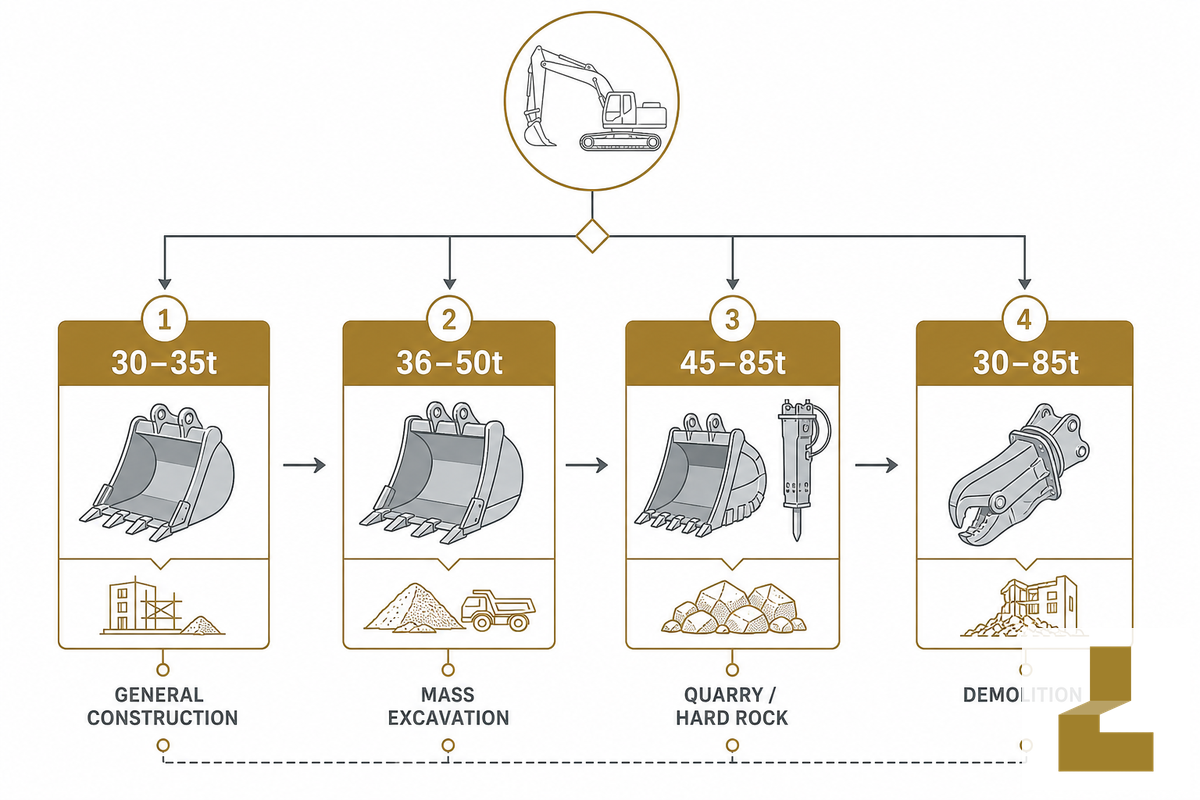
Choose tonnage that can accommodate the biggest workload your site ever is likely to throw at your machine-not your typical workload. The bulk of construction and site prep work can be handled in the 30-35 ton size; mass excavation, deeper civil work, and sustained truck loading may merit 36-50 tons for additional hydraulic muscle and faster cycle times; quarry and hard-rock work will typically require 45-85 tons as breaker and bucket force is dictated more by rock hardness than simply volume. Demolition work is a category unto itself: on-the-ground demolition using a shear or pulverizer often fits the 30-36 ton category, while high-rise demolition for high structures necessitates 36-85 tons with a high-reach boom-in this instance, the boom itself (its length, geometry, and the weight of attachment) defines the class more than the digging job.
Make sure you know what excavator size you need before seeking estimates-at least three sizes are now clustered in the class of 30-ton excavators (30-36 tons, 36-50 tons, and 45-85 tons) that all fit this range.
| Job Type | Tonnage Band | Typical Attachment |
|---|---|---|
| General construction / site prep | 30-35 t | GP bucket + hydraulic thumb |
| Mass excavation / deep civil | 36-50 t | Heavy-duty digging bucket |
| Quarry / hard rock | 45-85 t | Rock bucket / hydraulic breaker |
| Ground-level demolition | 30-36 t | Shear / grapple / pulverizer |
| High-reach demolition | 36-85 t + HR boom | High-reach boom + shear |
| Bulk material / scrap handling | 30-50 t | Grapple / material-handling bucket |
| Large-diameter pipeline corridor | 36-50 t | Long-reach boom + trenching bucket |
| Slope / mass grading | 30-36 t | Grading bucket / tilt bucket |
| Pond, lake & reservoir excavation | 36-50 t | Wide mass-excavation bucket |
| Land clearing / site mulching | 30-36 t | Mulcher head / brush cutter |
But there’s actually a “36-ton” weight class – media coverage about Komatsu’s new PC360LCi-11 calls out the “popular 36-ton weight class,” which means it’s being referenced as a real classification of machines, and not simply a number falling between round tiers.
Which Brands Hold Up at 30+ Tons
Cat, Komatsu, Volvo, Hitachi, Kobelco, Doosan, Hyundai, and Sany are the excavator brands that actually run factory 30+ ton models, and all but one are excluded from just about any written buying guide out there. At this size, reliability usually shows up in undercarriage design and the richness of parts networks more than in mere numbers on thespec sheet-and it’s the stuff to balance against your service and resale concerns-not to mention raw power.
Caterpillar (Cat) remains the most searched name in the category: shoppers considering new and used Cat excavators for sale often look for Cat excavator size and Cat excavator model before they check other factors. The 336, a popular excavator model, represents the bulk of those Cat searches, but a Cat excavator suitable for quarry work won’t necessarily be the one you need on a general construction site – see the job type chart above before assuming a larger Cat model is inherently the more prudent purchase. Resale value on a Caterpillar excavator generally exceeds that of lesser known brands, an element that may be worth consideration even if it’s not a compelling argument on its own. (Just be careful not to confuse this class with Cat mini excavators or other Cat mini and compact mini models – Cat’s excavator line extends from under 10 tons well above 85, so verify the operating weight for your specific model and don’t rely on just the name.) For tight urban job sites, some manufacturers offer limited- or zero-swing variants in this class – the tradeoff is decreased counterweight capacity.
⚠️ Important
Any excavation site selection criteria will need to comply with any applicable site safety regulations. Under OSHA 29 CFR 1926.651, you will be required to have a warning system when a mobile vehicle comes close to an excavation and you cannot get a clear view of the excavation as you’re working. Additionally, your team will not be able to work directly under a load carried by digging machinery. these rules may preclude a specific size class from working safely at certain jobsites, regardless of how reach and digging bucket size meet the requirements for other job activities.
The Hour-Meter Trap: Reading Wear Signals Correctly
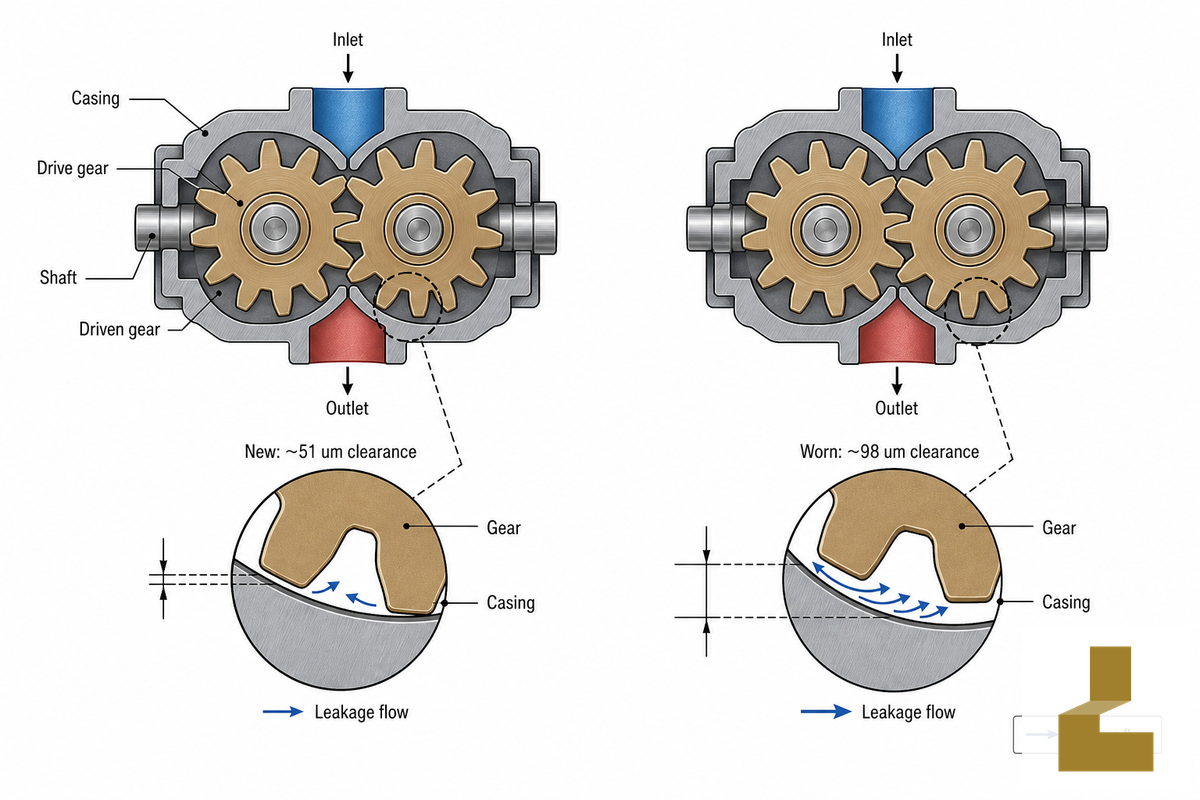
An hour meter, built to the specification in ISO 12511, indicates the amount of time the engine has been running. What it doesn’t explain is the nature of that time; academic research into the wear of excavation machines confirms that using “low hours” to estimate the risk involved is unreliable, to put it lightly. A peer-reviewed study examining wear on the hydraulics system of a gear-driven excavator (rated at 20 MPa working pressure, running at 1,470 rpm) tracked radial wear clearance climbing from 51.3 μm to 98.5 μm as volumetric efficiency slid from 85% down to 70% — with measurable reductions in output flow and shifts in pressure characteristics showing up well before that 70% mark was reached. Wear accumulates from operating conditions and the quality of maintenance practices used.
This isn’t to say that the hour meter isn’t useful – just the opposite, in fact. A review of cost data for maintenance on construction machinery over a 10-year period concluded that operating hours were the most accurate parameter in predicting the maintenance cost that would be incurred in the future in models based on fleet history data. Taken at face value, the lesson learned is somewhere between these extremes: While hour meter readings do mean something, without the supporting evidence of maintenance records or an inspection, hour meter readings can be deceiving, either way. A machine with 12,000 hours on it with records of maintenance will often be a safer investment than a machine with 6,000 hours that’s undocumented.
Adding an hour meter to an independent condition signal is more likely to prove reliable. An ASTM D6595-22-an active standard method for wear metals and contaminants in used lube and hydraulic oils via rotary disc electrode spectroscopy-can catch component wear and contamination (as small as 10 μm particles), long before any performance issue manifests itself-a lab test that will cost only a sliver of a failed transmission and, blessedly, doesn’t care how many hours the machine has run.
~9,800 h
typical primary-production retirement point
15,000 h+
achievable with documented maintenance history
The Any-Supplier Verification Checklist
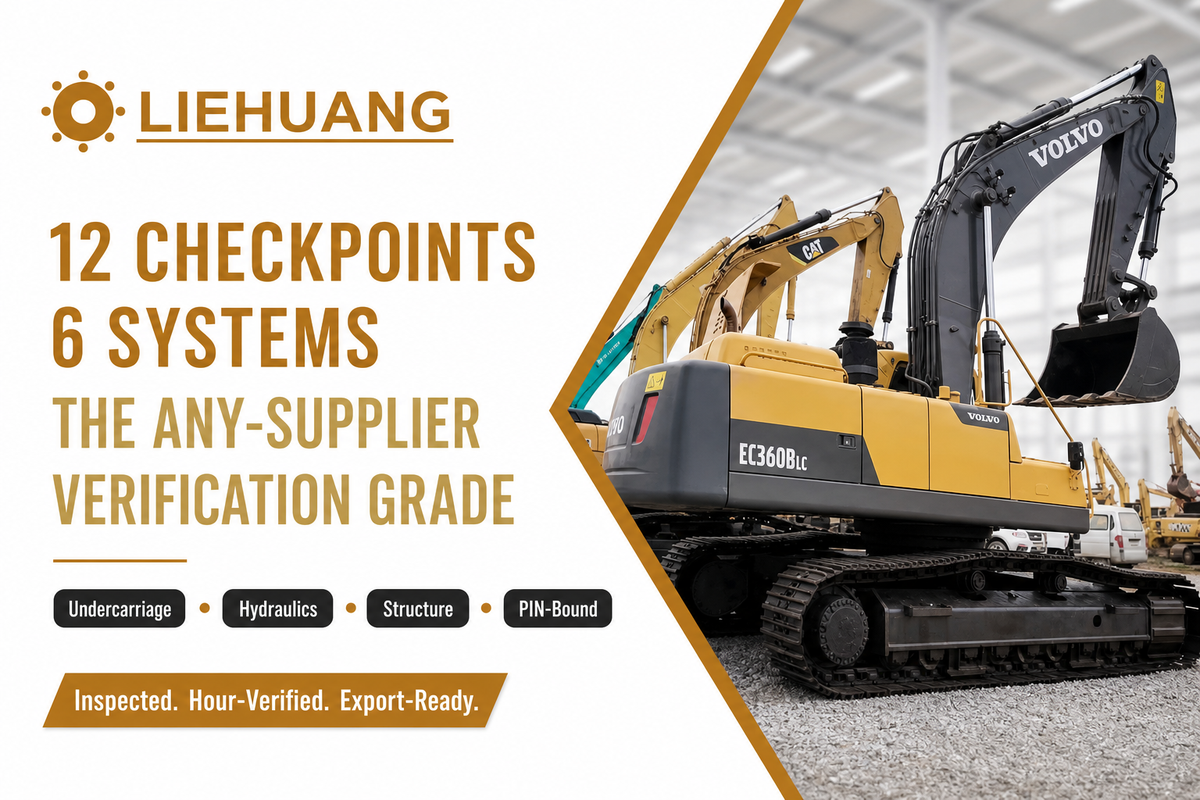
No matter what price tag and what brand’s grading scale the seller applies to it, these 12 checkpoints spanning six systems — starting with the excavator undercarriage — are what separate a solid, over-30-ton machine from an expensive disappointment. Worn excavator track rollers and excavator idlers are where most of that cost hides, and buying excavator undercarriage parts piecemeal in the field always costs more than catching the wear during a pre-purchase inspection. If you came here looking for an excavator inspection checklist pdf or an excavator inspection checklist template you can print, the table below covers the same 12 checkpoints — no download required.
“Choosing the wrong size machine is one of the most common, and most expensive, mistakes buyers make. Bigger isn’t always better. Neither is smaller. Oversized equipment can increase fuel consumption and transport cost for no productivity gain.”
| System | Check | Failure Signature |
|---|---|---|
| Engine (1-2) | Cold-start smoke color, oil pressure hot/cold | Blue smoke = oil burning; black = fuel system fault |
| Hours vs. records (3) | ECM reading cross-checked against mechanical meter + service log | Mismatch = possible meter rollback |
| Hydraulics (4-5) | Cylinder drift test, hose/valve condition under load | Slow or drifting function = pump/valve wear |
| Undercarriage (6-8) | Track tension, roller/idler wear, triple-grouser shoe condition | 40-50% of maintenance/repair cost lives here |
| Structure & welds (9-10) | Boom/stick/frame joints, fresh paint over repair areas | Reinforcement plates = prior structural damage |
| Pins, bushings & live test (11-12) | Linkage/slew-ring play, full function test under load | Slew-ring play = one of the costliest repairs on the machine |
Buyers of used excavators who check undercarriages first (and who have stood on the tracks and felt for solidity before so much as looking up), agree: the odds of buying a compact track loader in good undercarriage condition without a professional inspection are, as one such buyer put it, “1 to 1,000,000.” For a recent r/Heavy_Equipment post, four things are standard fare on buyer’s lists when asking for a proper pre-purchase inspection: a serial number to match the VIN plate; an hour meter photograph; a cold start video; and a full walkaround. These four happen to align precisely with the documentation set experienced sellers provide. Indeed, when ordering them by the costs they avoid, undercarriage components constitute 40-50% of all maintenance costs on excavators of this size-a single undercarriage can cost upward of $100,000 to replace on a large machine.
Budgeting Beyond the Purchase Price: True Cost of Ownership
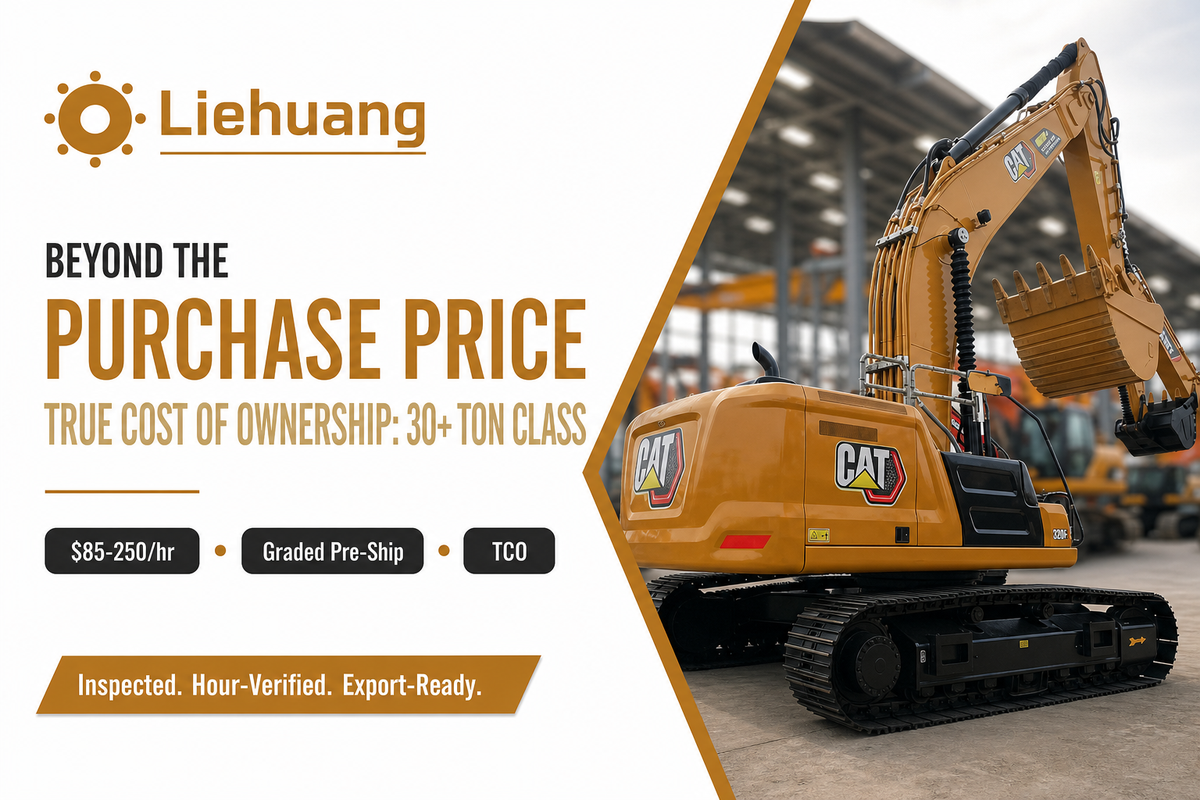
The sticker price is just the first part of how much a 30+ ton excavator actually costs to use. For a better idea of an ownership-plus-operation estimate of how much an hourly rate could look, consider FEMA’s public Schedule of Equipment Rates. This isn’t a quote for sale but provides a non-partisan, base estimate of ownership and operational costs for equipment in this size category. Using real data from independent contractors: the range for a total hourly rate (all in) is typically $85-$250 an hour, depending on utilization for a machine of this size, and even the next-two size classes down for mini-excavators carry a real-world operating-only cost of $8-$17 an hour (roughly $4,000-$9,000 a year at 500 hours of annual use) — a good place to start if you’re considering this size class. That hourly range above is the real answer to the excavator cost per hour question; sticker price alone never tells you that number.
- Fuel and consumables adjusted for usage cycles, not just engine size.
- Undercarriage wear reserve – largest ongoing expense
- Insurance and financing for the acquisition cost.
- ✔ Operator wages and any certification/training overhead
The 2025 list prices for new machines vary widely from roughly $20,000 for smaller equipment up to over $1.5 million for special-purpose large units-making a generic “excavator price” discussion, without weight class and configuration specified, pointless in this regard (as of this date, though steel and shipping prices change and you’ll need to reconfirm if planning a purchase).
Buying From Overseas: What Changes in the Process
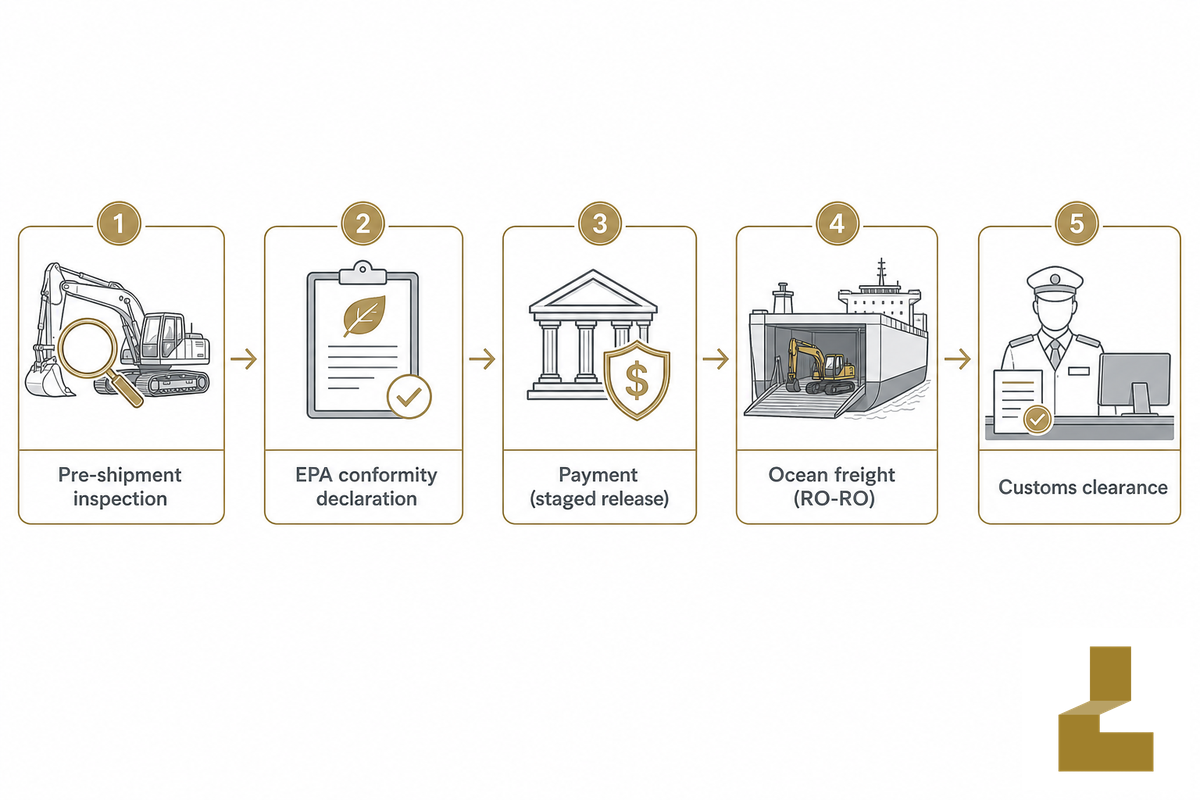
When buying more than 30-ton class machinery internationally, there’s an additional step a local dealer sale never involves: admissibility. Imported nonroad engines and machinery typically require an EPA conformity coverage declaration in order to be cleared for legal entry, as mandated under 40 CFR Part 1068 Subpart D; without the appropriate filing, U.S. Customs and Border Protection can deny entry – this isn’t mere red tape that a customs broker can easily clear retroactively.
That filing gap has a real cost attached, because the risk doesn’t stop at a denied entry. When paperwork is missing or wrong, the container can simply sit at the port while customs sorts it out, and demurrage charges typically start accruing once the carrier’s free-time window expires — commonly $75-$150 per day for the first five days, climbing to $200-$350 per day past day 11. On a 30+ ton machine already tied up in a shipping container, that’s an expensive mistake that a complete, verified document package is meant to prevent before it starts.
- Pre-shipment inspection (SGS/BV-style or from the supplier, linked to serial/PIN)
- EPA conformity declaration ( verify the engine tier and documents prior to shipping )
- Payment structure ( staged releases )
- Ocean freight ( RO-RO for self-propelled units; flat-rack / break-bulk for oversize machines )
- Customs clearance ( BoL, invoice, packing list, certificate of origin, EPA declaration )
A relevant JustAnswer discussion question gets to the core issue of purchasing used excavators sight unseen overseas: How to verify quality and price of a used excavator being exported and sold overseas without seeing it prior to the purchase? Your only reliable answer for either country of origin is to get from a legitimate dealer a PIN-bound condition report, dated photos of the hour meter, and a cold start video before you hand over any cash – and also to independently verify that the engine’s emissions tier complies with import standards. When equipment origin concerns arise (e.g., on Reddit’s r/ChineseMiniExcavators), they usually stem from the exact same documentation deficit as those raised about used machines from other countries.
Industry Outlook: Is 30-Ton Demand Rising or Falling?
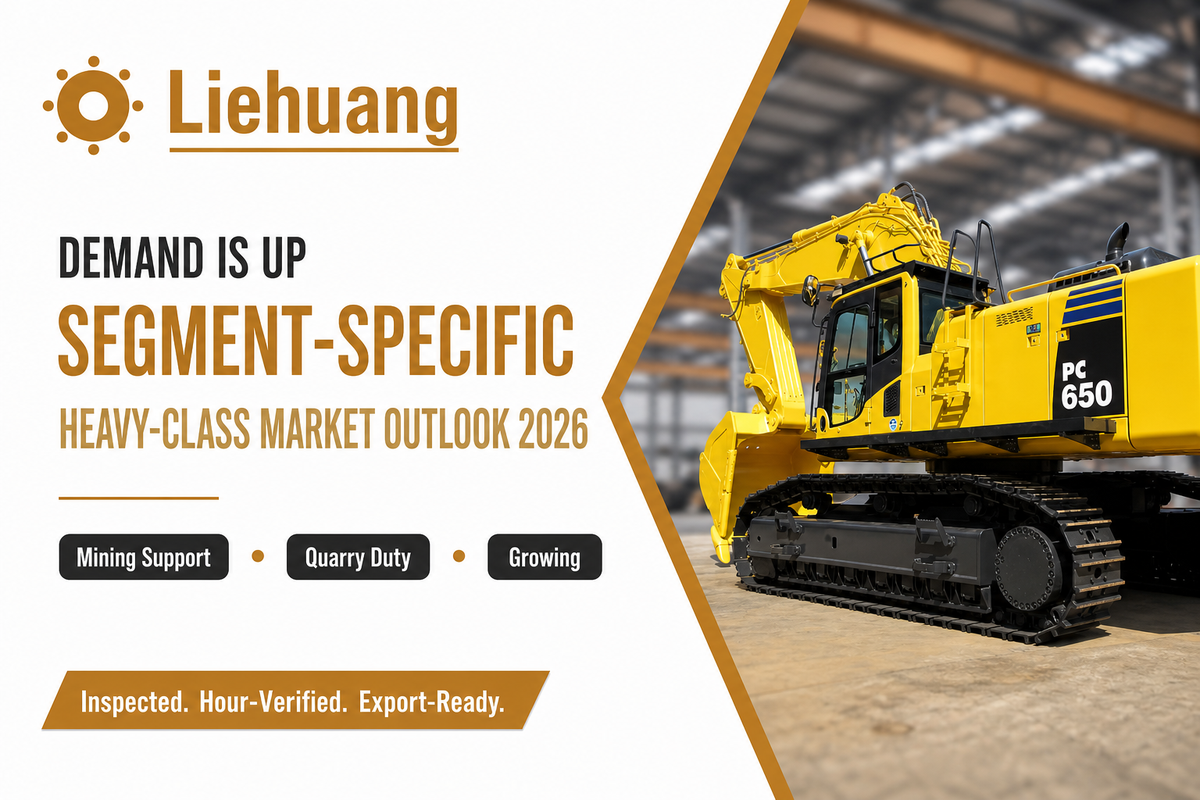
While the 2025 data paints a bifurcated market, you’ll want to read it clearly rather than optimistically. New excavator sales dropped 4.1% in 2025 relative to 2024 according to U.S. equipment finance data, whereas used excavator sales were up 5.3% over the same period. However, increased sales of used machines aren’t always an indicator of scarcity; the increase can also reflect ample inventory, with Deere’s 2025 results, for example, noting the continued issue of a significant supply of used equipment. Instead, you’ll need to focus on more granular and reliable drivers. For instance, import data indicates steady, real-world mining-support demand growth within the 30-ton crawler excavator segment through 2025 – a sector-specific signal, not a market-wide one, and it matters most for buyers in the mining-support application specifically. The risk for a buyer is treating the two numbers as the same signal: reading rising used-sales as a market-wide shortage would be a costly mistake, because the more specific mining-segment demand is the trend actually worth acting on.
What it means to you, the buyer, the short answer is: Don’t use headline-driven use growth to assume you need to buy yesterday, but use sustained 30-ton mining demand to recognize this class may tighten sooner than the used-equipment market indicates in general. If you’re looking at a purchase in the 30-45 ton mining/quarry-support space to be placed in service sometime in 2026, it’s this class to track, not used-equipment demand overall. On a longer horizon, electrification is very real, though sizing it precisely is not: market research firms take very different views on how fast the electric-excavator segment will grow, since estimates shift heavily with how broadly “electric construction equipment” gets defined and which years are covered — anyone quoting one specific growth-rate figure as the number is oversimplifying a genuinely unsettled forecast. What’s consistent across the estimates is direction, not magnitude: every major forecast points toward continued growth through the early 2030s as machine electrification advances. It’s background and context, not a factor to drive a diesel 30+ ton machine purchase today.
FAQ: Excavator Weight Classes & Buying at 30+ Tons
Q: What size excavator do I need for a 30-ton class job?
View Answer
Try to match your purchase tonnage with your heaviest-ever demand, not your daily average. General construction and site prep often don’t demand much beyond 30-35 tons. Mass excavation and ongoing truck loading warrant 36-50 tons. Mining, quarrying, and rock work that involves frequent breaking with an attachment will demand 45-85 tons as breaking force, rather than solely dig volume, pushes the requirement upward. If you’re between classes, then consider the attachments that you use most, not the machine’s standard bucket capacity.
Q: How many hours are too many on a used 30+ ton excavator?
View Answer
It’s not that simple: A 12,000-hour machine with fully verified service history may be a better choice than a 6,000-hour machine without. Most hydraulically driven excavators come to the end of their primary production lives somewhere around 9,800 hours but routinely exceed 15,000 hours if well-maintained. In fact, an academic study on maintenance costs actually found hours to be the best predictor of future maintenance costs – so don’t ignore hours, but you must look at it in the context of the available service records and physical condition of the equipment.
Q: Is a Cat 320 considered a 30-ton excavator?
View Answer
No. Operating weight for the Cat 320 sits in the range of 20-22 metric tons and would be categorized in the medium (10-30 ton) class, not the heavy-class machines discussed in this guide. Cat’s entry into this 30-plus-ton range is their 330 model, weighing in at about 31.4 tons. The 336, at about 36.8 tons, is next, as are larger Caterpillar models like the 349 (43-49 tons) and 374 (74-84 tons) which both fit squarely within the mass-excavation and quarry duty class defined in this guide. Other brands assign their own models, with comparable ranges to Caterpillar, such as Komatsu’s PC360-PC490 models or Hitachi’s ZX350-ZX670 machines. If your project truly demands 30-plus tons of operating weight, confirm the operating weight on the original equipment manufacturers (OEM) specification sheet.
Q: What’s the biggest hidden cost when buying a used heavy excavator?
View Answer
Undercarriage – usually 40-50% of total maintenance and repair costs and one of the easiest things to mask with fresh paint.
Q: Should I rent an excavator or buy for a short-term 30+ ton job?
View Answer
Buying your excavator will probably come out cheaper for one-time projects, where you don’t have storage, maintenance, or depreciation expenses. Renting is a much more practical and economical solution when you can plan for continuous, ongoing usage on different job sites, because a breakeven point can only be reached once local rental rates – which are considerably higher on a per hour basis, especially after accounting for the contractor’s markup.
Q: What documents should a legitimate overseas excavator supplier provide?
View Answer
The very minimum you’d want is: a PIN bound condition/inspection report, a picture of the hour-meter with the date showing, a video of it starting cold and a legible bill of sale, showing whether the title has a lien. To import to the U.S. you’ll also need an EPA emissions-conformity declaration before you pay a deposit – or customs will hold the machine no matter what the pictures of it looks like.
Why We Write This
This information is based on the ISO 6165/9249 classification guidelines, as well as the OSHA and EPA import restrictions, research from academic journals covering hydraulic wear testing, and real buyer opinions from heavy-equipment discussion forums that we’ve then corroborated with our internal 8-brand inventory data that Liehuang tracks across our own 30+ ton inventory. Note: exact boundaries for weight classes and dollar values vary as OEMs make changes to their product lines, and freight rates fluctuates. Please be sure to check for current specifications and rates with your supplier before making an informed decision.
References & Sources
- ISO 6165:2022, Earth-moving machinery, Basic types — International Organization for Standardization
- ISO 9249:2007, Earth-moving machinery, Engine test code — International Organization for Standardization
- ISO 12511:1997, Earth-moving machinery, Hour meters — International Organization for Standardization
- 29 CFR 1926.651, Specific excavation requirements — U.S. Occupational Safety and Health Administration
- 40 CFR Part 1068, Subpart D, Importation — U.S. Environmental Protection Agency
- Schedule of Equipment Rates — Federal Emergency Management Agency
- Hydraulic Pump Wear Degradation Sensing Study — Sensors (MDPI, peer-reviewed)
- ASTM D6595-22, Wear Metals and Contaminants in Used Lubricating Oils — ASTM International
- US Patent 12,000,107 B1, Collapsible Track Undercarriage — USPTO / Google Patents
- Excavator Sales Trends 2025 — Equipment World (Fusable EDA equipment finance data)
- Undercarriage Maintenance for Heavy Machinery — Heavy Vehicle Inspection
Related Articles
- Hydraulic Breakers Explained: Operation, Tools & Maintenance — sizing a breaker to your carrier class
- Excavator Buckets: What They Cost, How to Size Them, and When to Replace — bucket wear ties directly into the inspection checklist above
- Hydraulic Breaker Attachments for Sale
- Browse All Used Excavators for Sale