Get in Touch with Liehuang Company

Refurbished vs Used Excavator: How to Compare Condition, Repairs, and Risk

Buyer proof guide
Refurbished vs Used Excavator is a buyer decision between a documented refurbishment scope and a used machine sold on current condition evidence. The comparison should not start with paint, a low asking price, or a seller’s label. It should start with proof: what was inspected, what was repaired, what was replaced, what was tested under load, and what documents are ready before shipment.
Buyer rule: pay for verified repair scope, not for the word refurbished.
Here is the practical difference. Used/as-is means a previous-owned machine sold in its existing condition. Verified used means inspection and test evidence are available, while original components may still remain in place. In a refurbished excavator offer, the written scope should name components rebuilt, replaced, adjusted, resealed, repainted, tested, or left untouched.
Used or as-is Best when original condition, service records, lower price, and a planned repair reserve are stronger than a vague refurbishment claim.
Verified used Best when inspection reports, photos, videos, hour checks, and seller process reduce uncertainty without implying major rebuilt parts.
Refurbished Best when the repair scope proves meaningful work on major components such as hydraulics, undercarriage, engine items, cab systems, attachments, or leaks.
Refurbished vs Used Excavator: The Short Definition
The safest definition is buyer-centered: a used machine is sold based on present condition, while a refurbished machine should be sold based on present condition plus a documented refurbishment scope. That scope may include hydraulic repairs, undercarriage work, engine service, replacement parts, hose changes, cab repairs, repainting, attachment-fit checks, or performance testing. If the seller cannot state what was done, the machine should be evaluated as used equipment with uncertain repair history.
| Label | What it should mean | What to ask for | Main buyer risk |
|---|---|---|---|
| Used excavator | A previous-owned excavator sold after normal inspection or visual review. | Hours, serial plate, service records, inspection photos, working video, fault-code status, and price basis. | Hidden wear, weak service history, and repairs that move to the buyer after purchase. |
| Verified used excavator | A used excavator with inspection and test evidence before shipment. | Inspection report, load test video, undercarriage photos, hydraulic leak check, engine start video, and shipping timeline. | Inspection may confirm condition without proving major components were rebuilt. |
| Refurbished excavator | A used excavator with named repairs, replacements, resealing, repainting, testing, or adjustments. | Component-level repair list, replaced-part records, before-and-after images, test report, and exclusions. | The word refurbish can hide cosmetic work if the scope is not documented. |
International buyers should go beyond the simple question of whether to buy new or used. The useful question is whether the machine’s evidence reduces downtime risk enough to justify its price, freight, duty, and repair reserve. That is why this guide separates a refurbished unit from a well-maintained used machine instead of treating every repainted machine as closer to new.
9-Type Refurbish-Scope Evidence Matrix
9-Type Refurbish-Scope Evidence Matrix uses a simple rule: the more a component can stop production, the more proof you need. Heavy Equipment College’s inspection guidance points buyers toward undercarriage, hydraulic system, engine compartment, boom, stick, bucket, cylinders, tracks, and safety systems. Liehuang Used Excavators also describes a pre-shipment process for inspected and refurbished used excavators, including video walkthroughs and shipment support. Those process claims are useful, but the buyer still needs machine-level evidence.
| Component type | Used/as-is proof | Refurbished proof | Decision meaning |
|---|---|---|---|
| Undercarriage | Track pads, rollers, idlers, sprockets, chain, frame photos, and wear estimate. | Itemized replacement or adjustment record, dated photos, and post-work travel test. | Undercarriage wear can turn a cheap excavator into a higher-cost machine quickly. |
| Hydraulic system | Leak check, pump sound, cylinder rod condition, hose age, pressure response, and operating video. | Hydraulic pumps, seals, hoses, valves, cylinders, or filters named in a repair list. | Hydraulics affect digging power, breaker fit, heat, speed, and downtime. |
| Engine and cooling | Cold start video, idle stability, smoke check, oil leaks, coolant condition, and service history. | Compression tests where available, replaced filters, belts, gaskets, injector work, radiator service, or engine condition report. | Claims about a new engine need invoices or shop records. Without that, treat it as a used engine. |
| Cab and electrical | Display panel, warning lights, air conditioning, seat, controls, lights, and fault codes. | Repaired harnesses, switches, monitors, air conditioning parts, or cab panels listed by part and date. | Cab issues may not stop a sale, but they can frustrate operators and hide fault-code history. |
| Boom, stick, bucket | Pin play, cracks, welds, bucket teeth, bushings, and swing movement. | New bushings, pins, bucket teeth, welding disclosure, or attachment rebuild details. | Visible wear patterns matter more than a clean repaint. |
| Paint and appearance | Original paint photos, panel condition, decals, and rust points. | Repaint scope, areas masked or replaced, before photos, and confirmation that paint did not cover leaks or cracks. | Repaint improves presentation; it does not prove mechanical refurbishment. |
| Attachments and coupler | Bucket size, hydraulic line match, pin diameter, coupler type, and auxiliary flow. | Replaced coupler parts, tested quick coupler operation, auxiliary line service, or attachment-fit video. | Even after base-machine refurbishment, the wrong coupler or attachment setup can make the purchase wrong for the job. |
| Travel motors and final drives | Travel speed, steering response, oil leaks, abnormal noise, and uphill movement video. | Service note for final drives, travel motors, oil change, seals, or post-work travel test. | Weak travel components raise repair costs and can delay site mobilization after delivery. |
| Safety and basic controls | Horn, lights, monitor, alarms, seat belt, mirrors, steps, handrails, and emergency shutdown where fitted. | Repaired switches, lighting, cab controls, monitor issues, safety labels, or replacement parts noted in the scope. | Small safety and control defects can become inspection, operator, or resale problems. |
This matrix also protects sellers. With a defined scope, a buyer can compare a Komatsu, Cat, Volvo, Hitachi, Kubota, Bobcat, or other model by work performed instead of only by year, engine hours, or model number. The buyer gets a better purchase process, and the seller avoids promising like-new condition where only selected components were rebuilt.
When a Regular Used Excavator Can Be the Better Buy
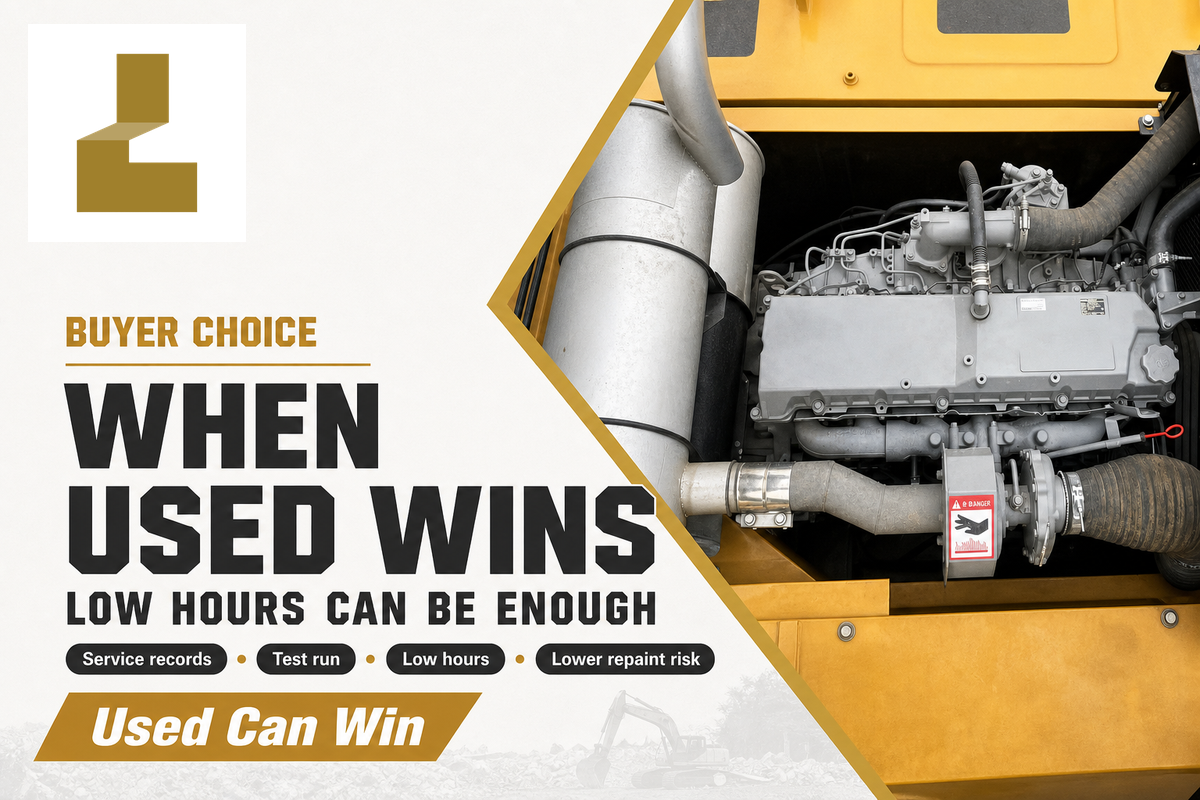
A regular used excavator can be the right choice when its original condition is transparent. Original paint can show real wear patterns. Service history can show how the machine was maintained. Lower pricing can leave room for planned hose, seal, track, bucket, or final drive work after arrival. Contractors with their own mechanics may find that value proposition stronger than paying a higher cost for an unclear refurbished machine.
The risk ladder below is useful for owners, budget teams, mechanics, and procurement managers who need to defend the decision internally.
As-Is-to-Refurbished Risk Ladder
| Risk ladder | When it can work | When to reject it | Best buyer role to review |
|---|---|---|---|
| Low-price as-is used machine | Your team can inspect, repair, and absorb downtime; the asking price leaves a real repair reserve. | No service records, no working video, no serial details, no inspection photos, and no room in budget. | Owner plus mechanic. |
| Well-maintained used machine | Hours, service records, visible wear, and test video are consistent. | Hour range is attractive but wear patterns do not match the meter. | Mechanic or quality inspector. |
| Verified used machine | The seller provides inspection evidence and loading proof before balance payment. | Inspection is generic and does not show hydraulics, undercarriage, engine condition, or attachments. | Procurement manager. |
| Refurbished machine | Components rebuilt or replaced are named, photographed, tested, and excluded items are stated. | The only visible change is repaint or new decals. | Finance team plus site manager. |
Language that often hides risk
Paint is not proof. Old paint can be useful because it shows wear patterns instead of hiding them. No proof, no premium.
When buying used excavators, watch for phrases that sound reassuring but do not show work: better resale value, peace of mind, new and used choices, new or used machinery options, new machines available, cost of new avoided, new machinery alternative, purchasing used with no service file, bought a used unit with no inspection trail, or buying new equipment compared with a vague refurbished machine. A local market may even call the same compact machine a digger, but the name does not change the proof needed.
Grey market concerns should be handled separately from condition. Confirm model number, destination support, parts and service access, emissions paperwork where relevant, and whether the unit was built for the market where it will work; otherwise a machine that looks like a cost-saving purchase can become difficult to register, repair, support, or resell after it reaches the port.
The counterintuitive point is simple: refurbished vs used is not a moral ranking. Clear records can make a used machine stronger than a vague refurbished one. Proper refurbishment can beat both when repair scope and test proof reduce breakdown risk more than the price premium.
Inspection Evidence: Photos, Videos, Test Runs, and Documents

Before buying a used excavator or refurbished excavator, ask for a proof packet. The packet should not be a gallery of polished exterior photos. It should let a remote buyer see the machine start, swing, travel, dig, lift, idle, and shut down. It should also show the parts that are expensive or difficult to inspect after loading.
Repair Scope Proof Gate
- Serial plate and model number photos, with the machine shown in the same inspection set.
- Hour meter photo plus dashboard warning-light or fault-code status.
- Cold start, idle, throttle response, travel, swing, boom, arm, bucket, and load movement video.
- Undercarriage close-ups: track pads, rollers, idlers, sprockets, chains, guards, and frame.
- Hydraulic system proof: cylinder rods, hoses, pump area, valve area, leaks, heat symptoms, and pressure response where available.
- Engine bay, cooling system, oil leaks, smoke, filters, belts, and service tags.
- Boom, stick, bucket, welds, pin play, bushings, teeth, and attachment interface.
- Cab functions, monitor panel, air conditioning, lights, horn, safety labels, and seat belt condition.
- Repair scope list for every refurbished machine, including what was not repaired.
Proof timing for remote buyers
Use the timing below as a control point, not as a universal rule. Ask for the first proof packet within 24 hours after shortlisting, request missing close-ups within 48 hours, finish commercial review at least 7 days before loading, and keep a 30 days arrival-inspection window in your internal plan. When the machine is a 5 tons mini excavator, a 20 tons general construction machine, a 30 tons production unit, or a 50 tons heavy excavator, the same label can carry very different repair exposure.
When a machine is sold as refurbished, ask whether the seller ran at least 1 hour of function checks and whether a longer 2 hours operating video or staged work demonstration is available. Parts planning should also cover whether high-wear items can be supported for 6 months, 12 months, or 24 months through local stock, exported spare parts, or third-party service channels.
| Evidence source | Timing target | Risk reduced | Buyer decision use |
|---|---|---|---|
| Serial plate photo set | Within 24 hours of shortlist | Wrong identity, mismatched records, or unclear ownership trail. | Confirm the same machine appears across photos, videos, and the quote. |
| Missing close-up request | Within 48 hours of the first packet | Hidden undercarriage, hydraulic, engine bay, or cab issues. | Decide whether the seller can answer machine-level questions quickly. |
| Commercial file review | At least 7 days before loading | Late freight, inspection, payment, and document surprises. | Approve only after quote terms and evidence match. |
| Arrival inspection reserve | Keep a 30 days internal window | Delayed discovery after overseas delivery. | Plan mechanic time, spare parts, and dispute documentation. |
| Mini excavator use case | Check around 5 tons machines separately | Compact machines can still carry heavy hydraulic and track wear. | Match size, trailer limits, bucket work, and local service access. |
| General construction use case | Check around 20 tons machines separately | Medium units often face mixed digging, lifting, and breaker stress. | Compare hours, pressure response, undercarriage, and attachment fit. |
| Production use case | Check around 30 tons machines separately | Higher output work can magnify downtime cost and final drive risk. | Require stronger test proof before accepting a refurbishment premium. |
| Heavy excavator use case | Check around 50 tons machines separately | Transport, quarry stress, fuel cost, and major repair exposure rise fast. | Escalate review to budget, mechanic, and site manager together. |
| Wear-part support source | Map 6 months, 12 months, and 24 months support paths | Parts delay after the machine reaches the destination market. | Separate a good machine from a machine your team cannot keep working. |
Use Liehuang’s used excavator inspection guide for the deeper mechanical walk-through. This article keeps the focus narrower: does the evidence justify the label and the price?

Hours and Service History: Why the Label Is Not Enough
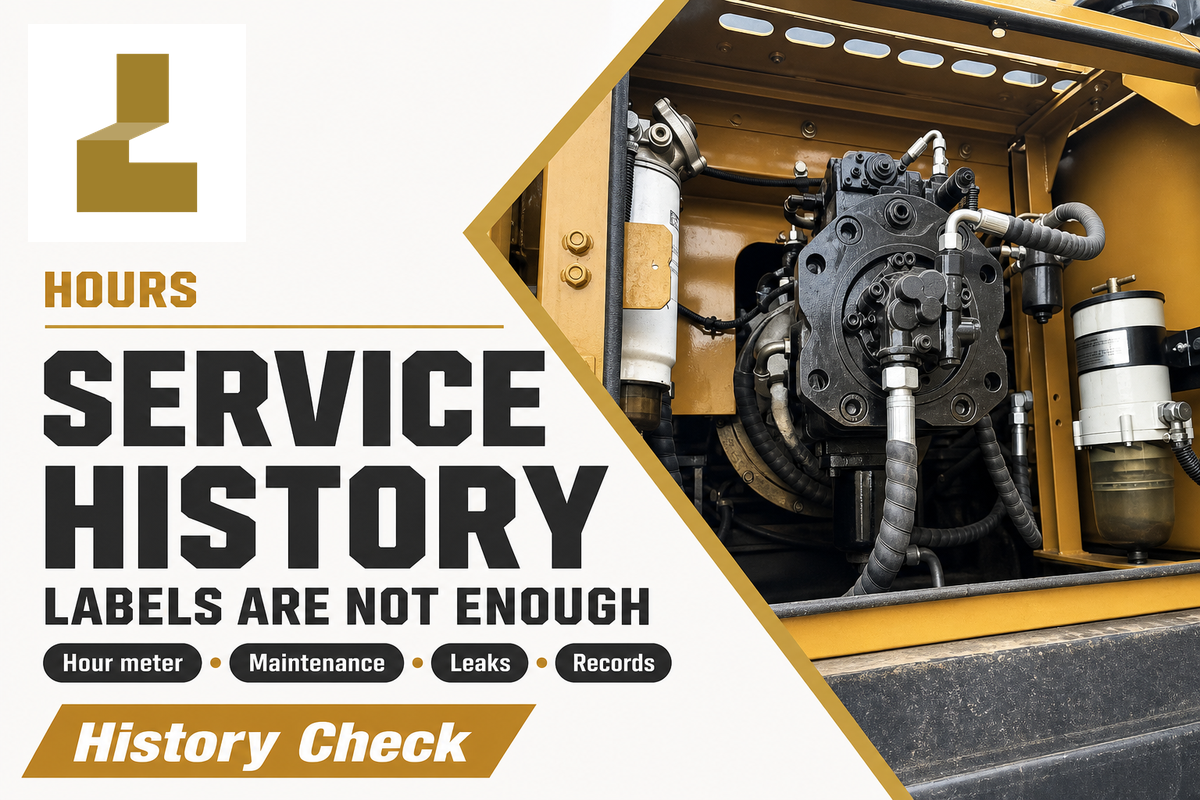
Engine hours are useful, but they are not a full condition report. Consider a 4,500-hour excavator used gently and serviced on schedule; it may be a better purchase than a lower-hour unit that spent its life with poor maintenance, constant hydraulic breaker work, overheating, or missed filter changes. Likewise, a refurbished unit with high hours can still be attractive if the replaced components and test proof are strong.
Liehuang’s public hours guide gives a practical framework: machines under 3,000 hours often sit in a premium zone, 3,000 to 6,000 hours can be a strong value range, 6,000 to 10,000 hours may still be viable with service evidence, and 10,000 or more hours require a closer rebuild and repair-cost discussion. Those ranges are not a guarantee. They are a starting point for comparing stress, maintenance, and current condition.
Use the true hours sanity checker when the meter, year, wear, and seller story do not match. Then ask whether the refurbishment scope actually addresses the hour-related risk. If the seller says the machine has a new engine, ask for engine condition evidence and records. If the seller says it has a full service record, ask to see dates, fluids, filters, and major repairs.
Price and Repair Reserve: Compare Total Risk, Not Paint
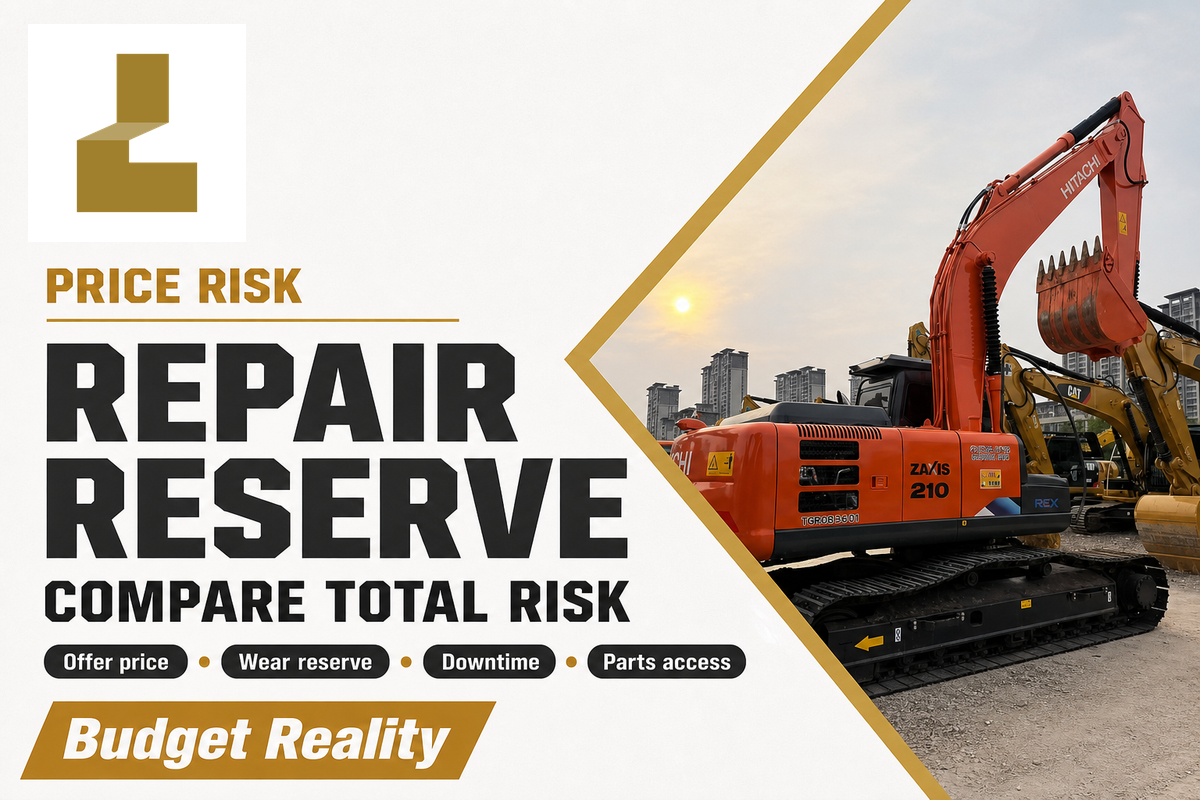
The right comparison is not refurbished price versus used price. It is landed machine cost plus expected repair reserve plus downtime exposure. Lower pricing can be rational when your team can repair the machine and parts are available. Paying more for refurbishment can be rational when the repair scope removes a likely near-term failure and avoids job-site downtime.
Older EquipmentWorld inspection guidance illustrates the scale of repair-risk decisions with historical examples such as a $2,500 hydraulic cylinder reseal, $12,000 to $15,000 hydraulic pump replacement, and $12,000 undercarriage replacement. Current costs will depend on country, brand, ton class, part source, labor, freight, exchange rate, and whether OEM, used, aftermarket, or rebuilt components are used. Treat old dollar figures as a warning about magnitude, not as a current quote.
| Cost bucket | Used/as-is comparison | Refurbished comparison | Buyer action |
|---|---|---|---|
| Machine price | Often lower, especially with visible wear or higher hours. | Often higher if repairs, parts, repaint, testing, and preparation are included. | Compare by model, year, hours, ton class, condition, and included work. |
| Repair reserve | Should be larger if hydraulic, undercarriage, engine, or final drives are uncertain. | Can be smaller only when major components are documented and tested. | Ask your mechanic to price the top three likely repairs before payment. |
| Downtime | Higher if the machine goes straight to a job after arrival. | Lower only when refurbishment matches the work application. | Separate cosmetic improvements from production-critical repairs. |
| Freight and import | Same machine can become uneconomical if repairs are discovered after overseas delivery. | Preparation can reduce surprises, but documents still matter. | Add shipping, duties, port charges, inspection fees, and local repair labor. |
Use Liehuang’s used excavator cost guide for price context. In this decision, the quote should separate base machine price, repair or refurbishment scope, attachments, freight, and document support.
Hydraulics, Undercarriage, and Attachment Fit
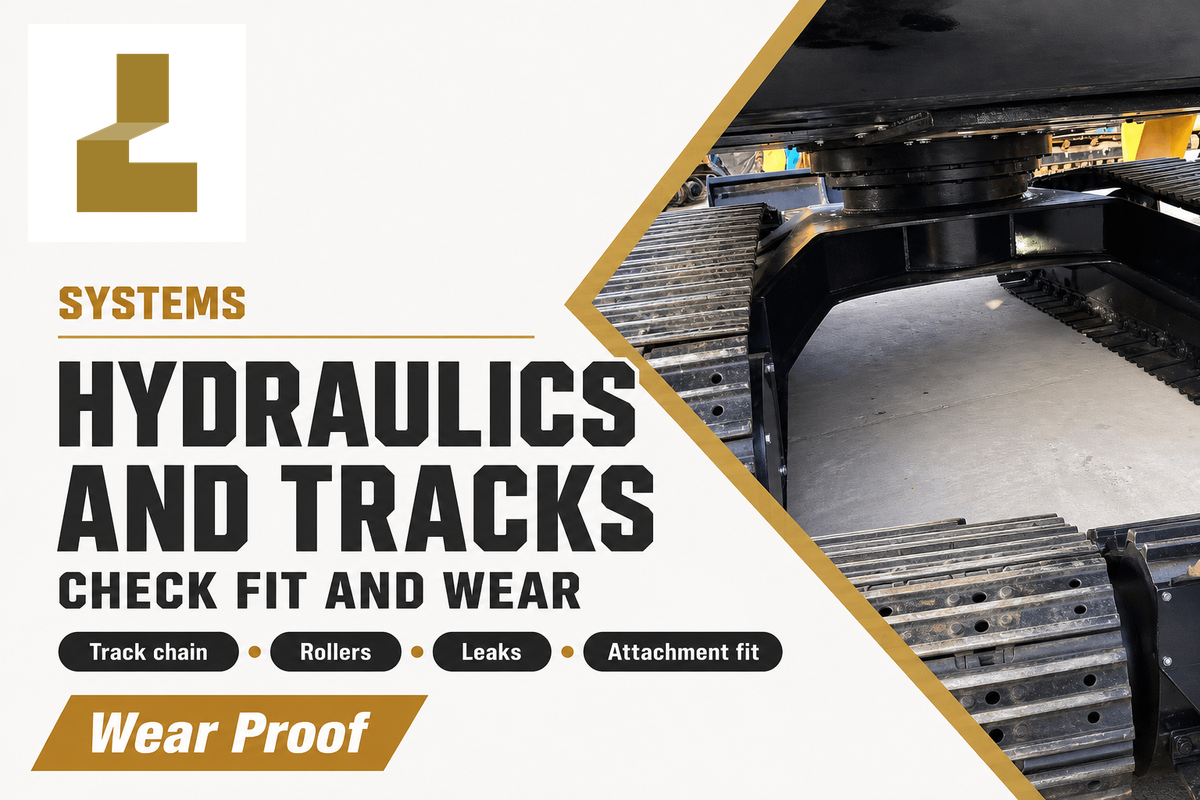
Hydraulics and undercarriage usually decide whether a used excavator feels like a bargain or a breakdown waiting to happen. Ask for hydraulic pressure behavior, pump sound, cylinder drift, hose condition, oil leaks, final drives, travel motors, track tension, sprocket wear, idlers, rollers, and pads. Polished paint with weak hydraulic response is not a good refurbishment signal. By contrast, a scratched used unit with honest wear, strong pressure, and service records may be a better choice.
Attachment fit deserves the same attention. If the excavator will run a hydraulic breaker, auger, grapple, thumb, or special bucket, the auxiliary hydraulics, coupler, pin size, flow, pressure, and return line must match. ISO’s earth-moving machinery catalogue includes quick-coupler safety and hydraulic excavator safety standards, and ISO 13031 has a 2025 amendment listed for quick couplers. That does not certify any individual used machine as refurbished. It does show why a buyer should treat coupler and attachment proof as a serious safety and productivity item.
Use Liehuang’s excavator attachments page when you need bucket, breaker, or coupler matching support. In your RFQ, list the attachment you plan to use, working material, required hydraulic lines, and any brand preference before comparing quotes.
Brand, Ton Class, and Application Fit

Brand matters, but it should not replace condition evidence. One buyer may prefer a well-maintained Komatsu excavator; another may need a Cat excavator, Hitachi excavator, Volvo excavator, Deere excavator, Kubota compact excavator, Bobcat compact machine, wheel loader, roller, or other used machinery category that fits the project better. Parts and service availability, operator familiarity, resale value, and local mechanic knowledge all matter.
Start with application fit. Mini excavators often fit landscaping, utilities, rental yards, narrow urban work, and container-friendly export. Medium-class machines often suit general construction. Heavy machines are usually judged by production volume, quarry or mining stress, fuel cost, transport limits, and working depth. If you buy new equipment, you may get warranty coverage and newer models. If you purchase used construction machinery, cost savings and shorter lead time may improve payback. Neither path is automatically better.
The important comparison is specific: ton class, bucket size, hydraulic system, engine condition, service history, hour range, attachment needs, parts source, and job-site downtime tolerance. That is how buyers and sellers avoid turning a new vs used question into a brand-only debate.
Hydraulic machinery does not forgive vague checks. A loader equipment purchase, a wheel loader comparison, and an excavator comparison all need their own proof path; do not borrow landing gear language from another asset class when the expensive excavator evidence is really undercarriage, travel, hydraulic pressure, final drives, engine condition, compression tests, and service records.
Export Buyer Proof: Shipping, Documents, and Payment Gates
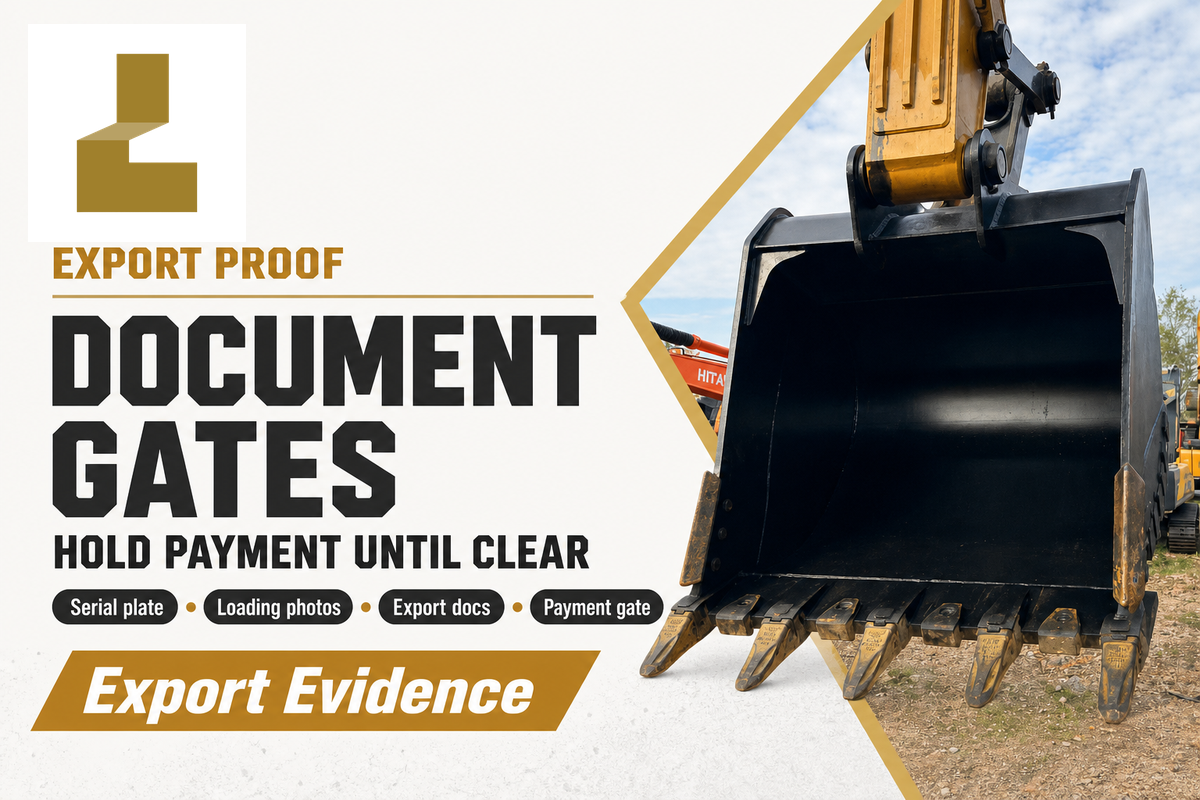
For overseas buyers, machine condition and export paperwork must move together. Your quote should not stop at price. It should show what proof you will receive before final payment, what shipping method is planned, what documents are included, and who handles each step.
Liehuang describes support for global buyers, including inspected and refurbished used excavators from mini to heavy classes, multi-brand sourcing, pre-shipment inspection, video walkthroughs, payment timing after satisfactory inspection, and shipping documentation support. Treat that as a process promise, then ask for the machine-level proof packet before balance payment.
For US-bound off-road construction equipment, CBP public guidance says import clearance may involve documents such as EPA Form 3520-21, CBP Form 7501, a bill of sale or lading, and a customs bond for commercial imports. That is an import-document boundary, not a statement that any used equipment is refurbished. In other countries, check local customs, emissions, engine, port, and safety requirements before paying.
If you need a deeper process checklist, read Liehuang’s guide on how to import excavator from China. Then connect the import plan to your inspection gate: no clear serial details, no condition evidence, no shipping document plan, no final payment.
Market Signal for 2026: Used Demand Is Rising, But Refurbishment Still Needs Proof
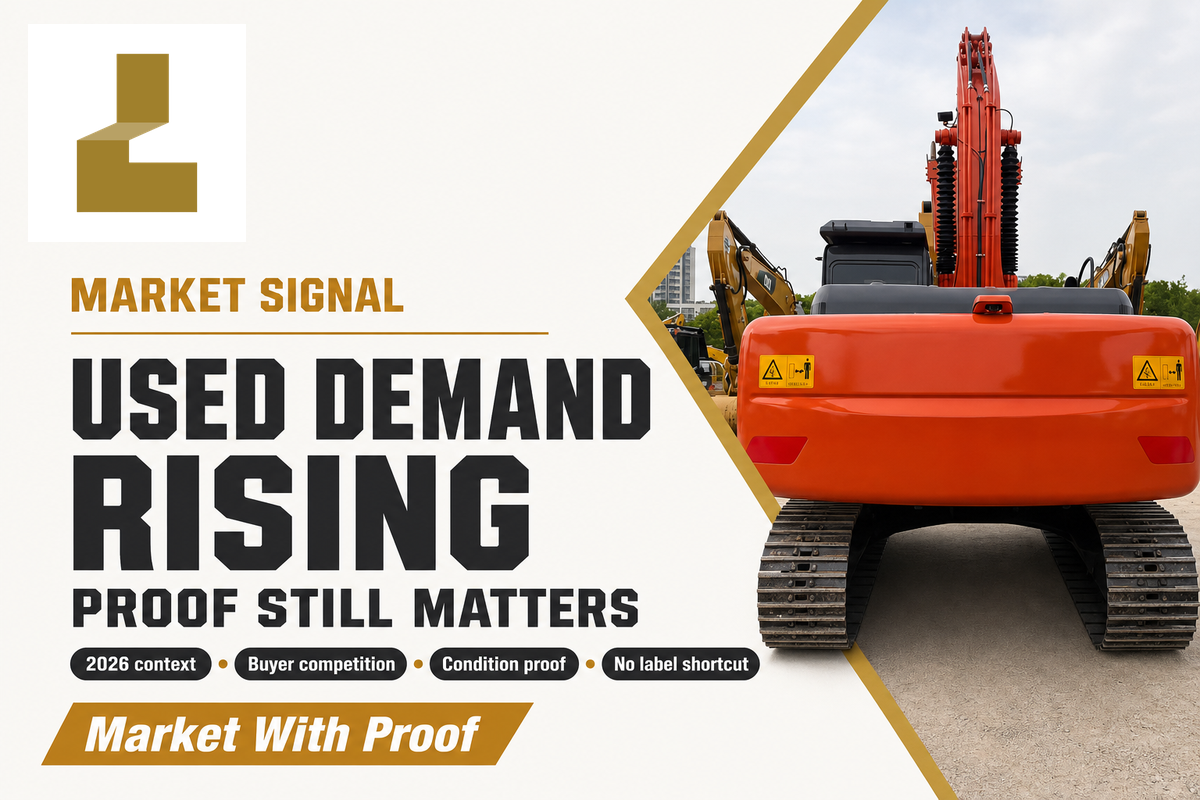
After the export proof gate, market context explains why buyers are asking more questions before payment. Used excavator demand has become more visible. EquipmentWorld, using Fusable data, reported that U.S. used excavator sales rose 5.3% year over year in 2025 while new excavator sales fell 4.1%. The same report put used units at 12,548 and described average used prices around the mid-$150,000 range, with average age rising from 7.1 years to 7.7 years. It also referenced a large EquipmentWatch resale-listing base.
That is useful market context, especially for buyers watching depreciation, purchase timing, and resale. It does not prove that every refurbished excavator is in stronger demand, and it does not prove any individual machine is reliable. Rising used demand can make clean machines move faster, but the final decision still comes back to condition, repair scope, documentation, and application fit.
Quote Checklist for Liehuang Used Excavators

Liehuang Used Excavators is the buyer-facing brand of Hefei Liehuang Machinery Co., Ltd., a China-based supplier focused on used excavators and attachments for global buyers. When you request a quote, make the request specific enough for the team to compare used, verified used, and refurbished machine options without guessing.
Send this RFQ brief
- Target ton class, brand preference, model range, and budget.
- Work type: trenching, roadwork, quarry, farm, demolition, rental, landscaping, or general construction.
- Attachment needs: bucket size, breaker, quick coupler, thumb, grapple, auger, hydraulic lines, or special tooling.
- Preferred condition: as-is used, verified used, or refurbished with component-level repair records.
- Required proof: serial photos, hour meter, service records, undercarriage photos, 1 min hydraulic test-run video, and repair scope list.
- Destination port, Incoterms preference, document needs, inspection timing, and payment gate.
Browse used excavators for sale or review Liehuang’s used excavator solutions before sending the RFQ. If you are comparing a refurbished machine against a regular used excavator, ask for the repair scope first and the beauty photos second.
Get a machine-level proof packet before you pay

Share your ton class, job type, destination port, attachment needs, and whether you want used, verified used, or refurbished options. Ask Liehuang Used Excavators to include inspection evidence, repair scope, video walkthrough, quote, and export document plan.
FAQ
What is better, refurbished or used?
Refurbished is better when the seller proves exactly what was repaired, replaced, tested, and excluded. Used is better when the original condition is transparent, the service history is credible, the price leaves a repair reserve, and your team can handle planned maintenance. Do not choose by label. Choose by inspection evidence, repair scope, hours, hydraulic condition, undercarriage wear, attachment fit, and landed cost.
How many hours is too many for a used excavator?
There is no single hour limit. Under 3,000 hours often commands a premium, 3,000 to 6,000 hours can be a strong value range, 6,000 to 10,000 hours can still work with service records, and 10,000+ hours needs deeper rebuild discussion. Hours must be checked against wear patterns, engine condition, hydraulic response, service history, application stress, and repair reserve.
What should I check before buying a used excavator?
Check the serial plate, hour meter, service records, cold start, smoke, leaks, hydraulic power, cylinders, hoses, undercarriage wear, boom and stick cracks, bucket teeth, pins, cab functions, warning lights, travel, swing, attachment fit, shipping documents, and seller identity. For a refurbished unit, add a repair-scope list that names replaced or rebuilt components and shows test proof after the work.
Is a refurbished excavator always worth the higher price?
No. Refurbishment is worth more only when the documented repair scope reduces near-term repair risk, downtime, or uncertainty more than the premium you pay.
Does repainting a used excavator prove it was refurbished?
No. Repaint can improve appearance, protect surfaces, and support resale presentation, but it does not prove hydraulic, engine, undercarriage, electrical, or attachment repairs.
What proof should an exporter provide before final payment?
Before final payment, ask for serial-number photos, hour meter, inspection report, working video, undercarriage and hydraulic close-ups, repair-scope list, quote terms, loading plan, shipment method, and document plan. If the machine is sold as refurbished, the proof should identify which parts were repaired, replaced, rebuilt, resealed, adjusted, repainted, tested, or left untouched. Import compliance also depends on the documents required in your destination market.
Can Liehuang help with shipping and export documents?
Liehuang describes worldwide export, logistics, pre-shipment inspection, video walkthroughs, and shipping documentation support. Buyers should still confirm machine-level evidence and destination-specific document needs for each order.
References & Sources
- Liehuang Used Excavators About Us – brand identity, used excavator and attachment export scope, inspection and shipment positioning.
- Liehuang Used Excavator Solutions – first-party process evidence for verified refurbished used excavators, inspection, video walkthrough, and shipping support.
- Liehuang Used Excavator Inspection Guide – internal deeper checklist for hours, service records, undercarriage, hydraulics, engine, cab, boom, bucket, and performance testing.
- Liehuang Excavator Hours Guide – public hour-range framework and warning that hours alone do not measure machine stress.
- Heavy Equipment College Excavator Inspection Checklist – third-party inspection categories for undercarriage, hydraulics, cylinders, engine compartment, and safety items.
- ISO 13031:2016 Quick Couplers – quick-coupler safety context; not a refurbishment certification.
- ISO 53.100 Earth-moving Machinery Catalogue – machinery vocabulary, hydraulic excavator safety, quick-coupler, and lowering-control-device standards context.
- U.S. Customs and Border Protection Article 1180 – U.S. off-road equipment import-document context; destination rules vary.
- EquipmentWorld / Fusable 2025 Excavator Sales Trends – U.S. equipment-sales market context.
- EquipmentWorld Used Excavator Inspection Checkpoint – older repair-risk examples used with date and scope caveat.
- Makana Used Excavator Buying Guide – competitor-context evidence for repair-scope documentation and buyer risk.
- Umachinery Original Used vs Refurbished Comparison – competitor-context evidence for appearance versus actual condition.
- CYQ Used Excavator Comparison – competitor-context evidence from Wenzhou Youji Hui Technology Co., Ltd. that original used condition can beat vague refurbishment when evidence is stronger.
- Google Patents US9880075B2 – technical context for measured wear evidence; not a buying standard.
Why We Write This
About Liehuang
Liehuang is a China-based used excavator supplier focused on verified machines, inspection records, and export-ready documentation. Our blog is written for buyers who need more than a model name and a low price before sending a deposit.
We publish practical guides on used excavator cost, machine hours, inspection points, import paperwork, attachments, and brand selection so contractors and equipment buyers can compare machines with fewer blind spots.
Inspection FirstEngine, hydraulics, undercarriage, serial-number photos, hour-meter photos, and machine video can be prepared before shipment.
9 Brands In StockCaterpillar, Komatsu, Volvo, Sany, Hyundai, Doosan, Kubota, Hitachi, and Kobelco excavators across common tonnage classes.
Export SupportContainer and RoRo shipping support with destination-focused quote details, Incoterm discussion, and paperwork coordination.
SYS.PROFILE
Contact Profile
NameLiehuang Used Excavators Team
CompanyHefei Liehuang Machinery Co., Ltd.
Product FocusUsed Excavators / Attachments / Export Supply
Buyer RequestInspection report, video, price, freight, and delivery timeline
Websitehttps://lhusedexcavator.com/
![Excavator Bucket Manufacturers: Buyer Evidence [Guide]](https://lhusedexcavator.com/wp-content/uploads/2026/08/excavator-bucket-manufacturers-r2-featured-768x512.png)

Payment protected by staged delivery proof
Pay the balance after machine proof, not on blind trust.
Used excavator buyers need more than a product photo. Liehuang uses a staged payment workflow: deposit to reserve the machine, inspection evidence before balance, and export documents plus shipment tracking before release.
Verified machine videoLoading and customs filesBalance paid after confirmation
Quote & machine selectionChoose the model, hours, attachments and export destination before we reserve stock.
Deposit to lock stockA deposit holds the exact machine while inspection media and documents are prepared.
Inspection proof sentReceive walkaround video, hour-meter photos, serial details and loading plan.
Balance after confirmationPay the remaining balance only after you confirm the machine condition and export evidence.
Shipment & customs trackingWe share loading photos, bill of lading progress and customs support until release.
For high-value used equipment, trust is built by evidence. Ask for the current stock list, payment schedule and export document sample before you decide.Request stock proof