Get in Touch with Liehuang Company

Updated August 2026
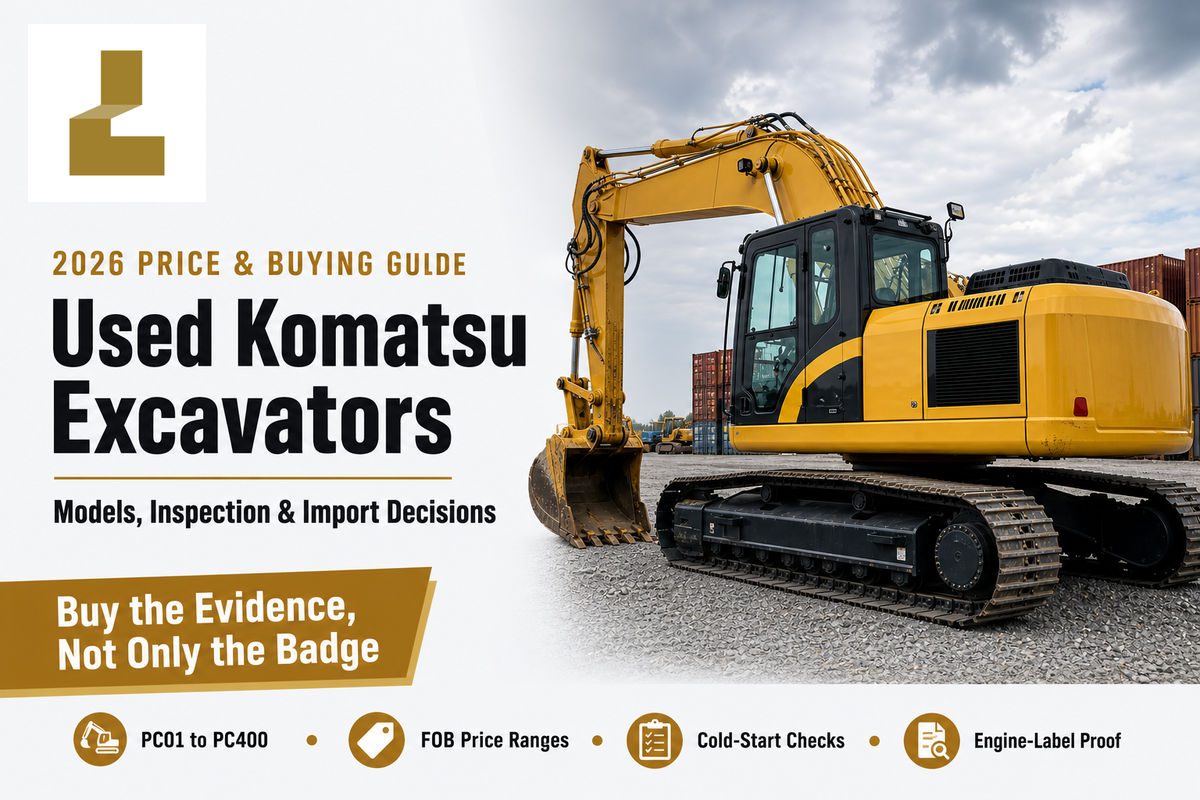
Used Komatsu Excavators are pre-owned Komatsu machines spanning compact, crawler, construction, quarry, and mining classes. They cover jobs from landscaping and utility work to heavy civil construction. The badge on the counterweight is only the start of the decision. A sensible purchase also has to match the machine class, exact configuration, hydraulic condition, undercarriage wear, documentation, and rules in the destination country.
This guide gives you a practical way to narrow the model range, interpret an asking price, inspect a candidate machine, and decide whether the evidence is strong enough to move forward. It is a buying guide rather than an inventory page. When you are ready to compare available units, use Liehuang’s Komatsu excavator inventory as the commercial next step.
The short version: choose the smallest class that can safely meet your reach, lift, production, and attachment requirements. Then buy the best-documented machine in that class—not simply the one with the lowest hours or newest-looking paint.
For a US-bound unit, do not treat a dash number such as “-8” or “-11” as proof of emissions eligibility. Verify the engine label, model year, engine family, certificate or exemption route, and import declaration before paying a deposit.
Quick Specs: Komatsu Excavator Sizes at a Glance
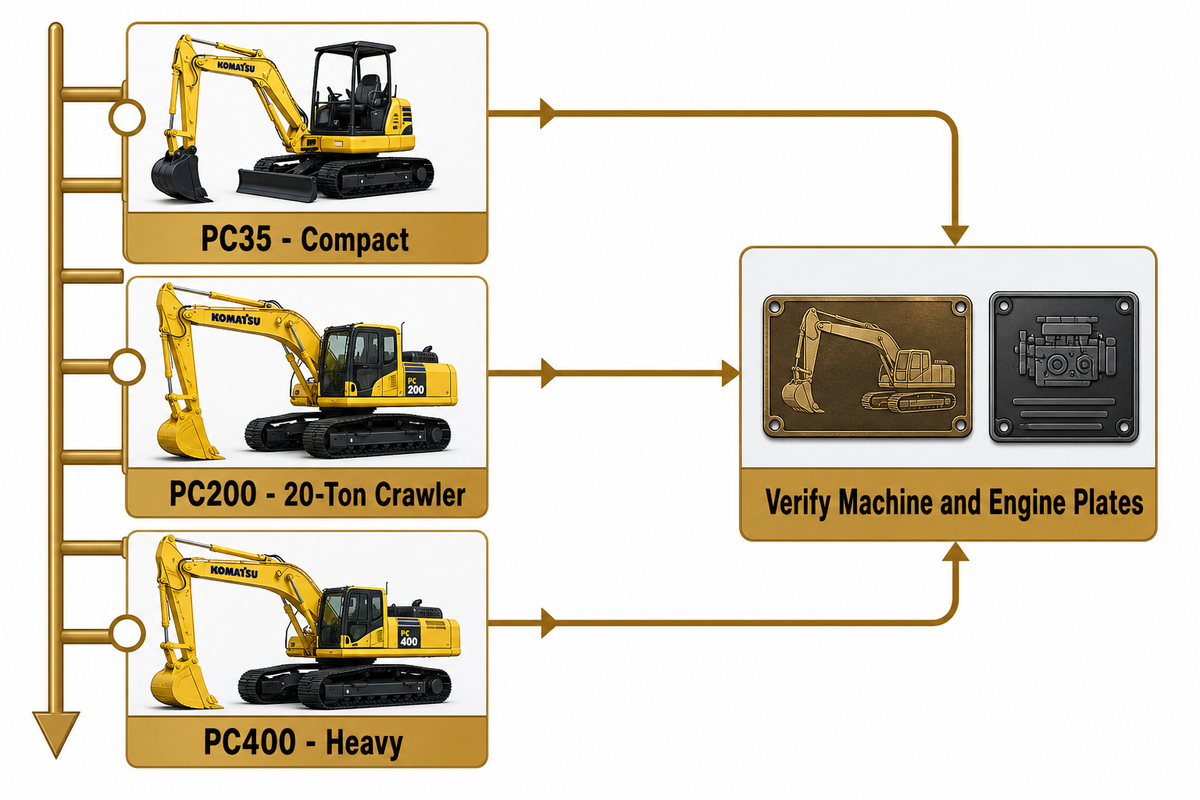
Komatsu’s PC naming usually gives a rough clue to size class: a PC35 is a compact machine, a PC200 is in the familiar 20-ton crawler class, and a PC400 is a heavy excavator. It is not an exact operating-weight code, and suffixes vary by generation and market. Letters such as LC, US, MR, or additional configuration codes can describe long-carriage, compact-radius, or other variants.
That is why the Komatsu PC Naming Decoder has one important rule: use the model name to shortlist, then use the machine and engine plates to verify. A marketplace listing that says only “PC200-8” is incomplete. Ask for the full model, serial number, plate photos, boom and arm configuration, shoe width, bucket or coupler details, auxiliary hydraulics, and destination-market documents.
Komatsu Excavator Top Models: From PC01 to PC400
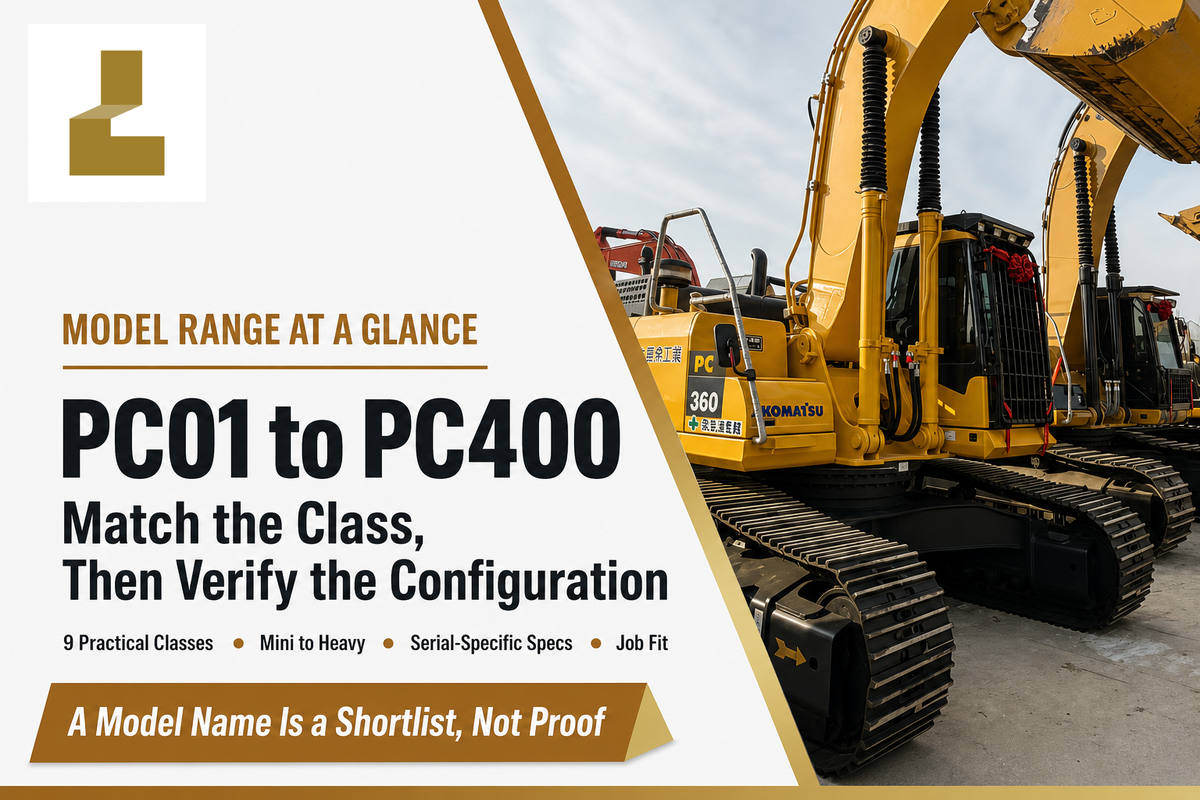
The table below summarizes nine practical classes represented in Liehuang’s published lineup. It is not a complete global Komatsu catalog. Actual specifications differ by dash generation, undercarriage, boom, arm, bucket, guarding, and regional configuration, so confirm the specification sheet for the serial-numbered machine.
| Model | Practical class | Published example data | Good fit | Main limitation to check |
|---|---|---|---|---|
| PC01 | Micro | Verify exact plate data | Gardens, indoor access, very light trenching | Reach, lifting reserve, and transport stability |
| PC35 | About 3.5-ton mini | Verify exact plate data | Landscaping, utilities, residential work | Tail swing, auxiliary circuit, blade wear |
| PC60 | 6-ton midi | 6,260 kg; 40 kW; 4.69 m dig depth | Utility trenches and compact construction sites | Transport width and hydraulic attachment demand |
| PC78 | 8-ton compact | 8,250 kg; 51 kW; 4.66 m dig depth | Roadside, urban, and confined-site work | Compact-tail damage and service access |
| PC130 | 13-ton crawler | 13,000 kg; 72.5 kW; 5.52 m dig depth | General earthwork without a 20-ton transport burden | Lift chart, counterweight, and ground conditions |
| PC200 | 20-ton crawler | Configuration-dependent | General construction, loading, and mass excavation | Large condition and price spread between generations |
| PC300 | 30-ton crawler | 33,400 kg; 186.43 kW; 6.54 m dig depth | Heavy earthmoving and quarry support | Transport, fuel, and undercarriage replacement cost |
| PC360 | 36-ton crawler | 35,600 kg; 192 kW; 7.38 m dig depth | High-production excavation and quarry work | Haulage permits and site utilization |
| PC400 | 40-ton crawler | 41,200 kg; 214.02 kW; 9.26 m dig depth | Mining, quarry, and heavy civil production | Mobilization cost and job continuity |
Dealer and auction listings may also show variants such as PC170LC-11, PC240LC-11, PC290LC-11, PC30MR-5, PC88MR-10, or PC88MR-11. Their presence does not mean they are interchangeable with the nine models above—or that Liehuang has one in stock. Treat every listing as a serial-numbered configuration.
What sizes does Komatsu make?
Komatsu makes excavators across compact, mid-size, large, and mining classes. The useful buying question is not the full catalog range; it is which weight and geometry class fits your site. For tight residential access, a PC35-type mini may be logical. A contractor who needs stronger production without moving to the full 20-ton class may prefer a PC130-type machine. Quarry and mining work can justify PC300–PC400 machines only when transport, utilization, and support are already planned.
How to Choose the Right Size Class
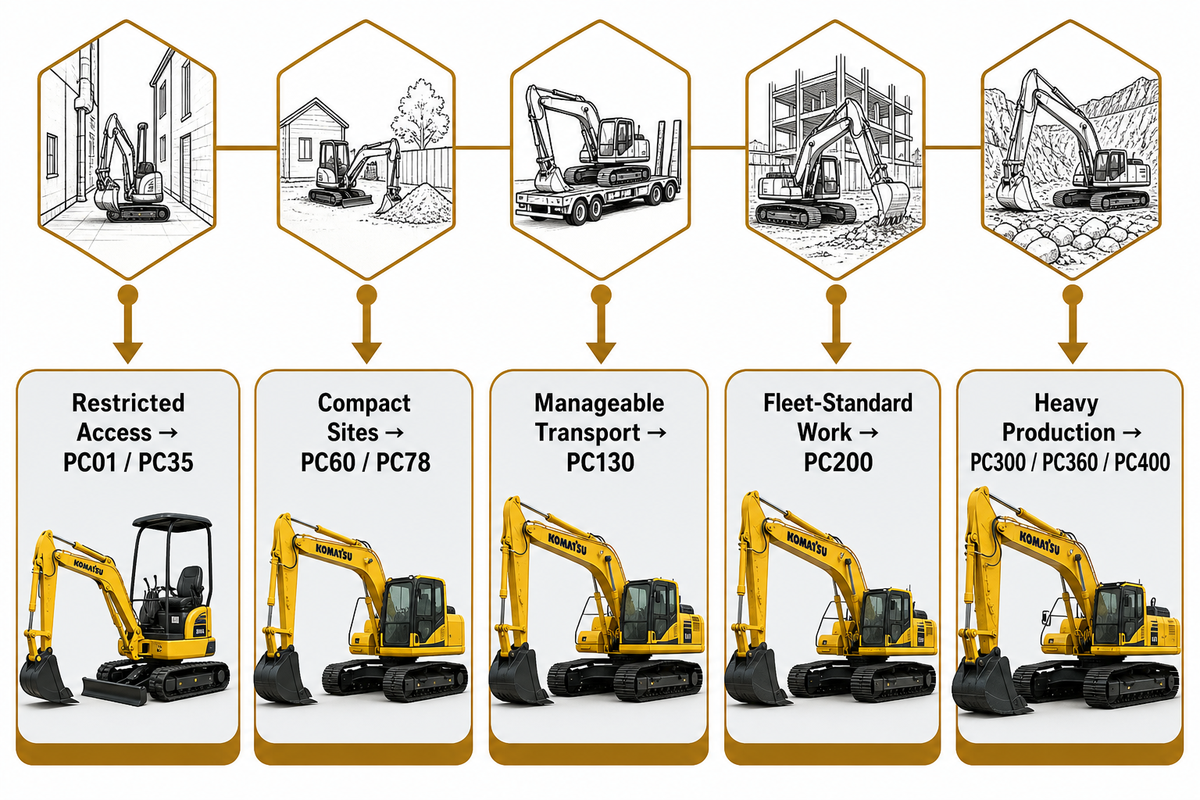
Start with the hardest task the machine must perform regularly—not the rare maximum. Write down required digging depth, dumping height, working radius, lift at radius, material density, bucket target, and daily production. Then add the limits: gate or road width, overhead clearance, ground bearing pressure, trailer capacity, local axle rules, and available service support.
| If your priority is… | Shortlist | Verify before choosing |
|---|---|---|
| Restricted access and light utility work | PC01 / PC35 | Minimum width, tail swing, blade, reach, auxiliary flow |
| Compact sites with more digging reserve | PC60 / PC78 | Transport weight, bucket choice, breaker circuit |
| General earthwork with manageable transport | PC130 | Lift chart, boom/arm combination, shoe width |
| Fleet-standard general construction | PC200 | Generation, hydraulic performance, tool compatibility |
| Heavy production, quarry, or mining support | PC300 / PC360 / PC400 | Utilization, haulage, fuel, parts, undercarriage budget |
Oversizing can be just as expensive as undersizing. A heavy crawler that spends most days idling on small jobs adds mobilization, fuel, track wear, and capital cost without creating proportional output. On the other hand, a machine that is constantly operated at its lift or hydraulic limit can lose productivity and accelerate wear. Use the Komatsu model guide to narrow the class, then validate it against the actual job data.
Komatsu vs. Volvo, Hitachi, Kobelco, and Cat
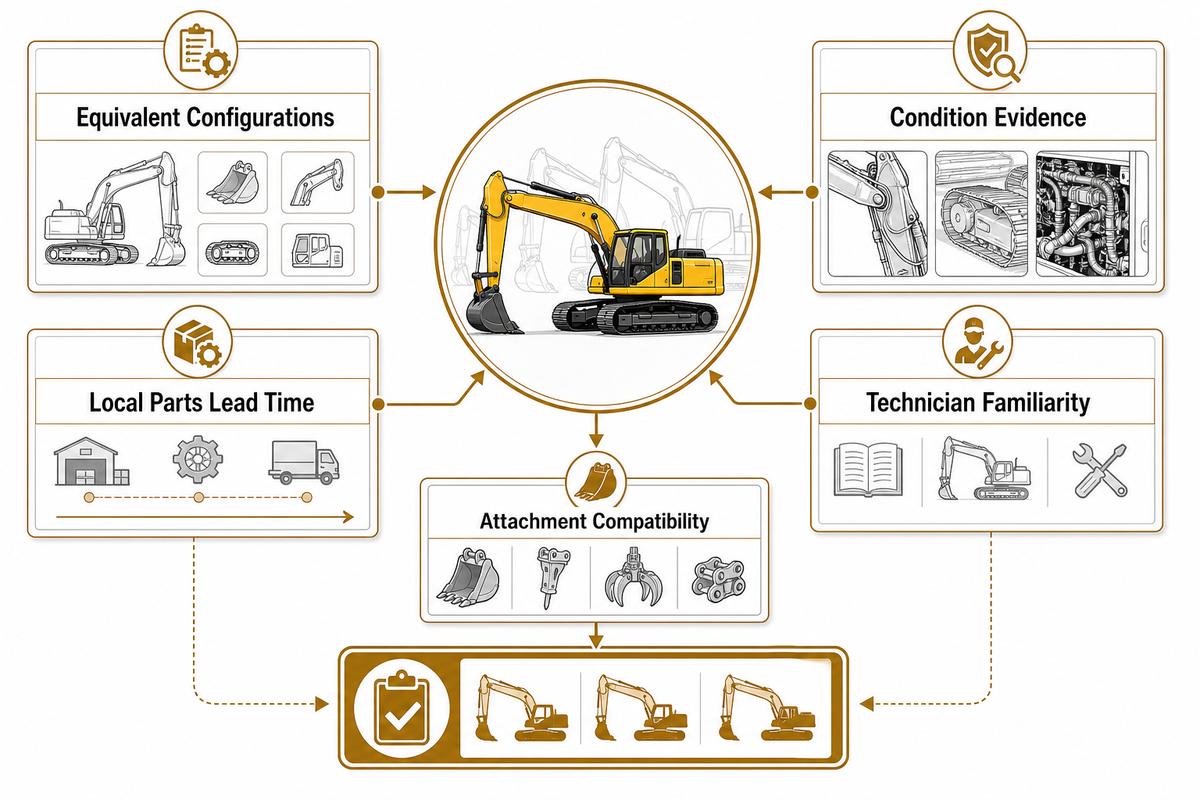
A used-equipment comparison should begin with equivalent configurations, not brand stereotypes. Match production year, operating-weight class, boom and arm, bucket, auxiliary hydraulics, guarding, emissions market, and hours. Then compare condition evidence, local parts lead time, technician familiarity, diagnostic access, and attachment compatibility.
For example, Komatsu’s North American PC360LC-11 page lists 192 kW and an operating-weight range of 35,627–36,535 kg. Hitachi publishes different numbers for the ZX350LCH-5A and ZX350LC-6, while Kobelco’s SK350LC-11 and Volvo’s older EC360 sit in a broadly comparable heavy class but come from different production periods and markets. Those official figures are useful for building a shortlist; they do not predict the condition or lifetime cost of a used unit.
- Choose Komatsu when the exact machine is well documented and your region has suitable parts, service, and diagnostic support.
- Choose an alternative when a comparable Volvo, Hitachi, Kobelco, or Cat has materially better condition evidence, local support, or attachment fit at the same total landed cost.
- Do not pay only for brand preference. A worn premium-brand machine can be a worse purchase than a properly maintained alternative.
Is Komatsu better than Cat for excavators?
Neither brand is automatically better in every fleet. A clean comparison needs equivalent models, configuration, emissions market, support, and condition. Liehuang already has a detailed Caterpillar vs. Komatsu excavator comparison, so this guide avoids repeating its PC200-versus-Cat-320 analysis before you choose a fleet standard.
What Does a Used Komatsu Excavator Cost in 2026?
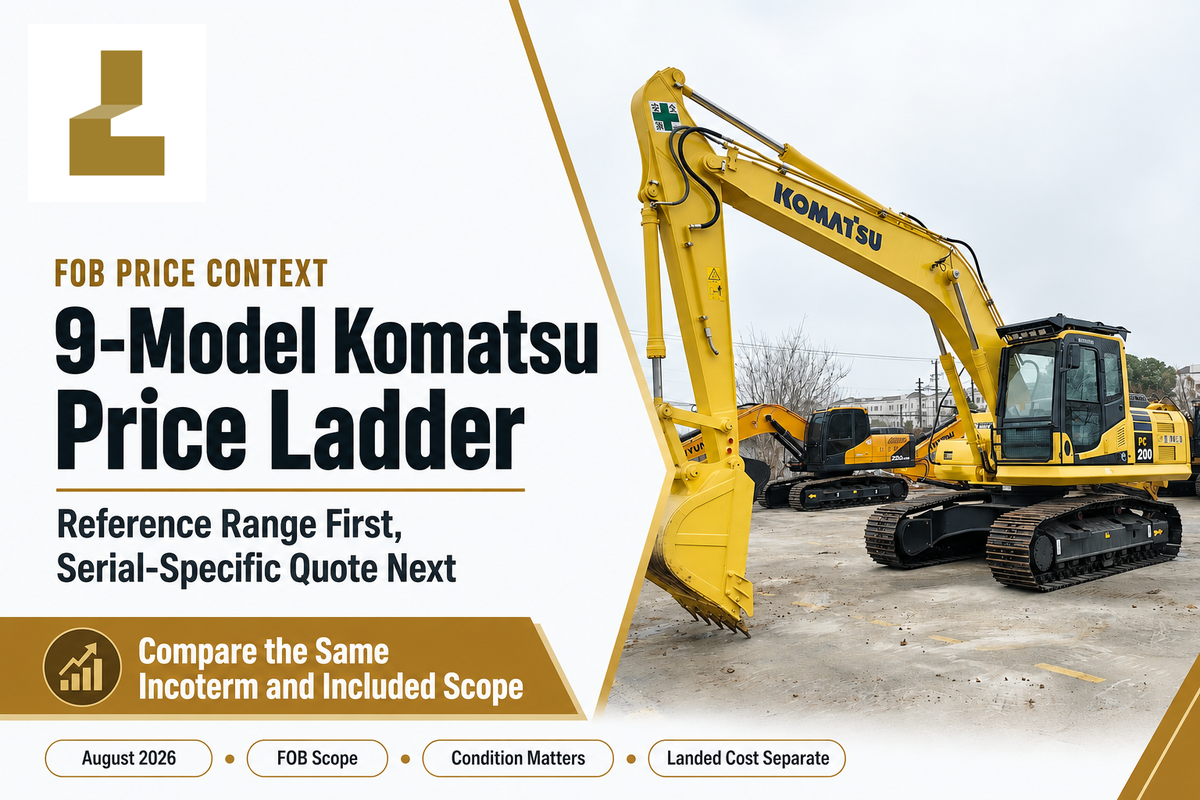
The table below is the 9-Model Komatsu FOB Price Ladder. These are Liehuang’s client-published FOB reference ranges captured on August 7, 2026. They are not an independent market appraisal, a guaranteed selling price, or a landed-cost quote. Currency, machine condition, generation, configuration, included bucket or quick coupler, refurbishment scope, loading port, and availability can change the number.
| Model | Published FOB reference (USD) | Context |
|---|---|---|
| PC01 | $13,000–$16,000 | Micro class |
| PC35 | $9,000–$15,000 | 3.5-ton mini class |
| PC60 | $15,000–$26,000 | 6-ton midi class |
| PC78 | $18,000–$30,000 | 8-ton compact class |
| PC130 | $28,000–$45,000 | 13-ton crawler class |
| PC200 | $25,000–$58,000 | 20-ton crawler class |
| PC300 | $38,000–$60,000 | Confirm current page and quote |
| PC360 | $42,000–$75,000 | Confirm current page and quote |
| PC400 | $48,000–$84,000 | 40-ton heavy class |
Data note: the PC300 and PC360 source pages showed inconsistent price blocks when captured. The table uses the range repeated in the page’s primary data, but the current serial-numbered quotation controls. This inconsistency should be corrected on the product pages.
Ask every seller to separate the machine price from the landed-cost estimate. Freight, marine insurance, inspection, cleaning, port handling, broker charges, duty or tax, inland transport, and compliance work can materially change the budget. Compare quotations using the same Incoterm and the same list of included items. Liehuang’s broader used excavator price guide explains the other cost layers.
Attachment and Quick Coupler Compatibility
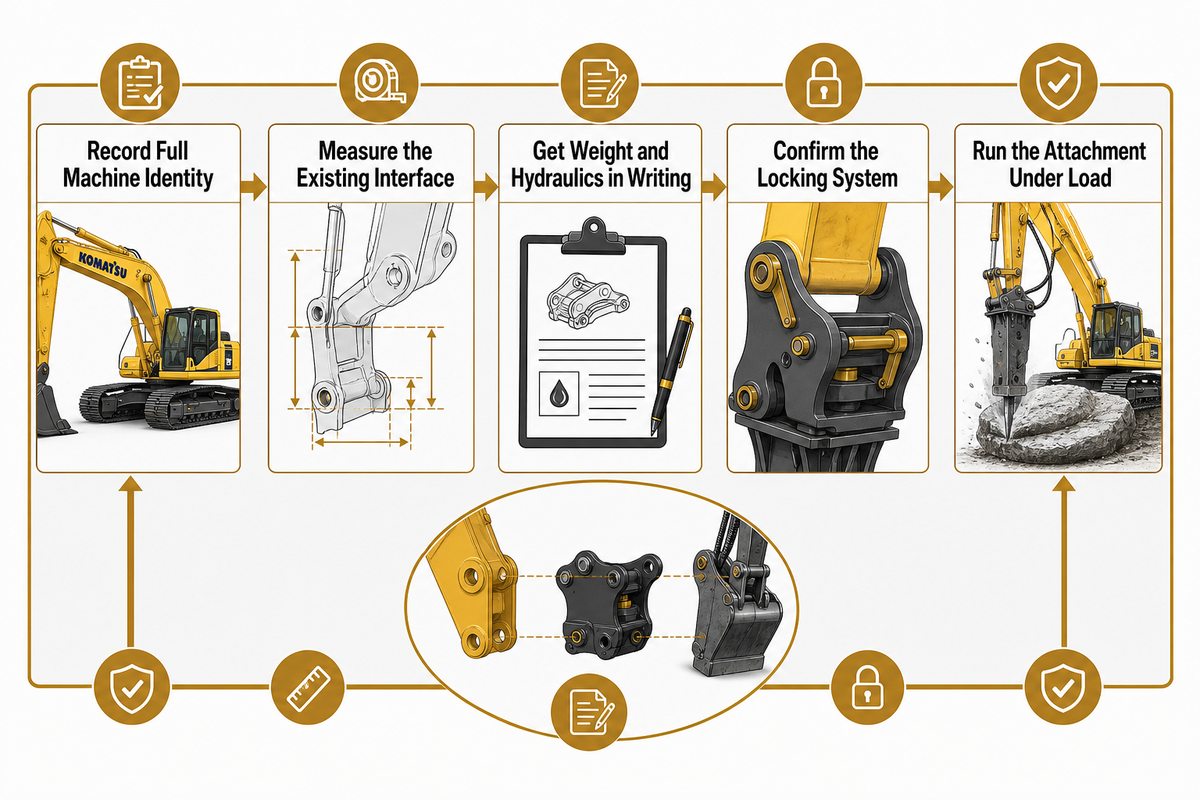
A bucket described as “for a Komatsu PC200” may still be wrong for your machine. Pin diameter, ear spacing, pin-center distance, bucket width and capacity, coupler geometry, arm end, and intended material all matter. For a hydraulic thumb, breaker, shear, or rotating grapple, you also need auxiliary flow and pressure, return-line requirements, case drain where applicable, control wiring, and the machine’s safe lift capacity.
- Record the full machine model, serial number, boom and arm configuration.
- Measure the existing attachment interface instead of relying on a model label.
- Get the attachment weight and hydraulic requirements in writing.
- Confirm that the quick coupler has the correct locking system and a usable inspection record.
- Run the attachment under load and check temperature, leaks, speed, noise, and control response.
A blade, backup camera, cab with AC, tooth bucket, or EROPS-style enclosure may improve suitability, but each item needs a function test. Accessories should never distract from the condition of the diesel engine, hydraulics, slew system, final drives, and track components.
Inspecting a Used Komatsu Excavator Before You Buy
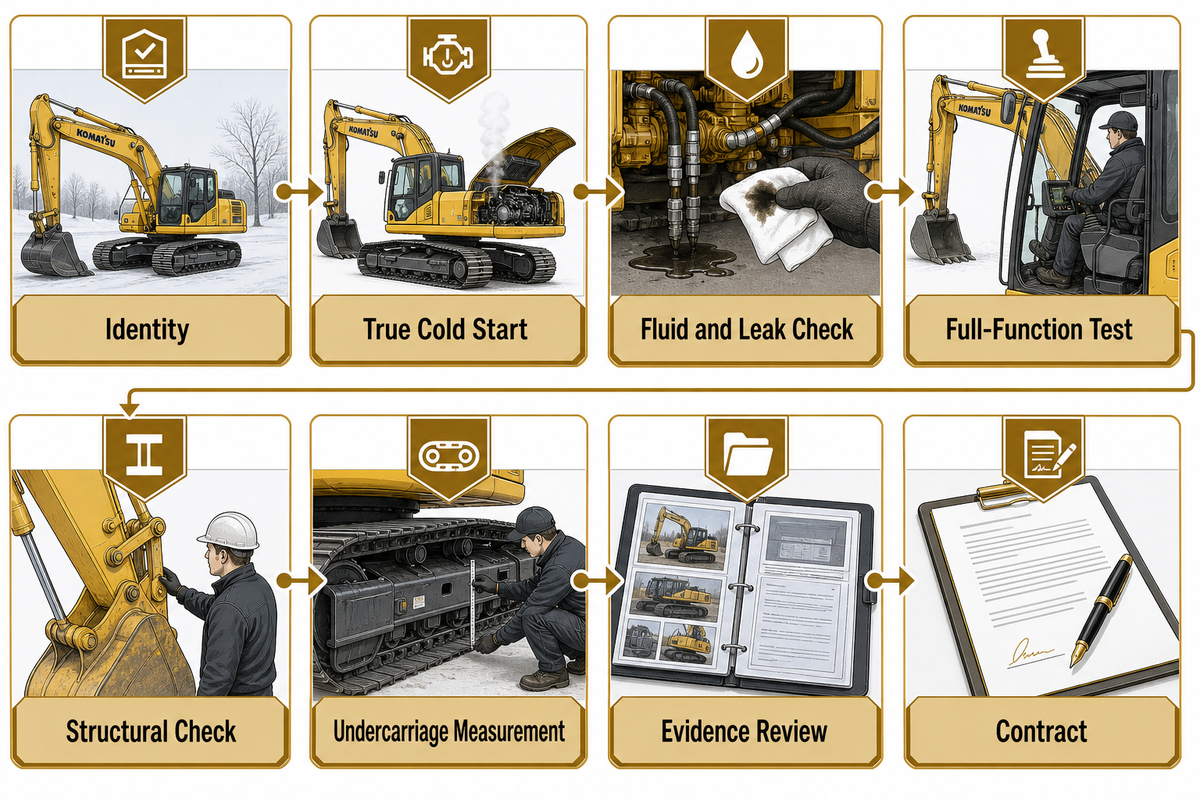
The best inspection starts before the engine is warm. Komatsu’s own used-equipment material covers the engine, electrical system, hydraulics, chassis and undercarriage, attachments, safety, and appearance. Its certified and condition-monitoring programs add service history, performance evaluation, diagnostic operations, oil analysis, and undercarriage reporting. That is a useful model for any purchase, even when the machine is not sold under a Komatsu program.
Cold-Start-to-Contract Checklist
- Identity: match the model and serial plates to the quotation, inspection report, and export documents. Photograph the engine and emissions labels.
- True cold start: touch-check the engine before start. Record cranking time, smoke, idle stability, abnormal noise, warning lamps, and blow-by indicators.
- Fluid and leak check: inspect engine oil, coolant, hydraulic oil, final drives, swing drive, cylinders, hoses, pumps, and belly guards before and after operation.
- Full-function test: cycle boom, arm, bucket, swing, travel, blade, auxiliary circuit, and installed attachment. Check drift, hesitation, chatter, heat, and weak combined movements.
- Structural check: look for cracks, fresh welds, distorted panels, loose pins, excessive bushing movement, boom-foot damage, counterweight impact, and inconsistent paint.
- Undercarriage measurement: measure chain, bushing, sprocket, idler, roller, shoe, and track-tension condition. Do not accept “70% remaining” without the measurements and reference limits behind it.
- Evidence review: compare hours with service records, controller data if available, component dates, wear, oil samples, and the seller’s condition report.
- Contract: identify the exact machine, included equipment, inspection evidence, acceptance standard, Incoterm, loading method, payment milestones, and remedy for material mismatch.
There is no universal “too many hours” number. A higher-hour machine with traceable maintenance, measured undercarriage, stable hydraulics, and clean oil evidence can be easier to price than a low-hour machine with no records. Conversely, a replaced hour meter or attractive repaint can create false confidence. For a fuller procedure, see the used excavator inspection guide.
Reliability, Common Risks, and When Not to Buy
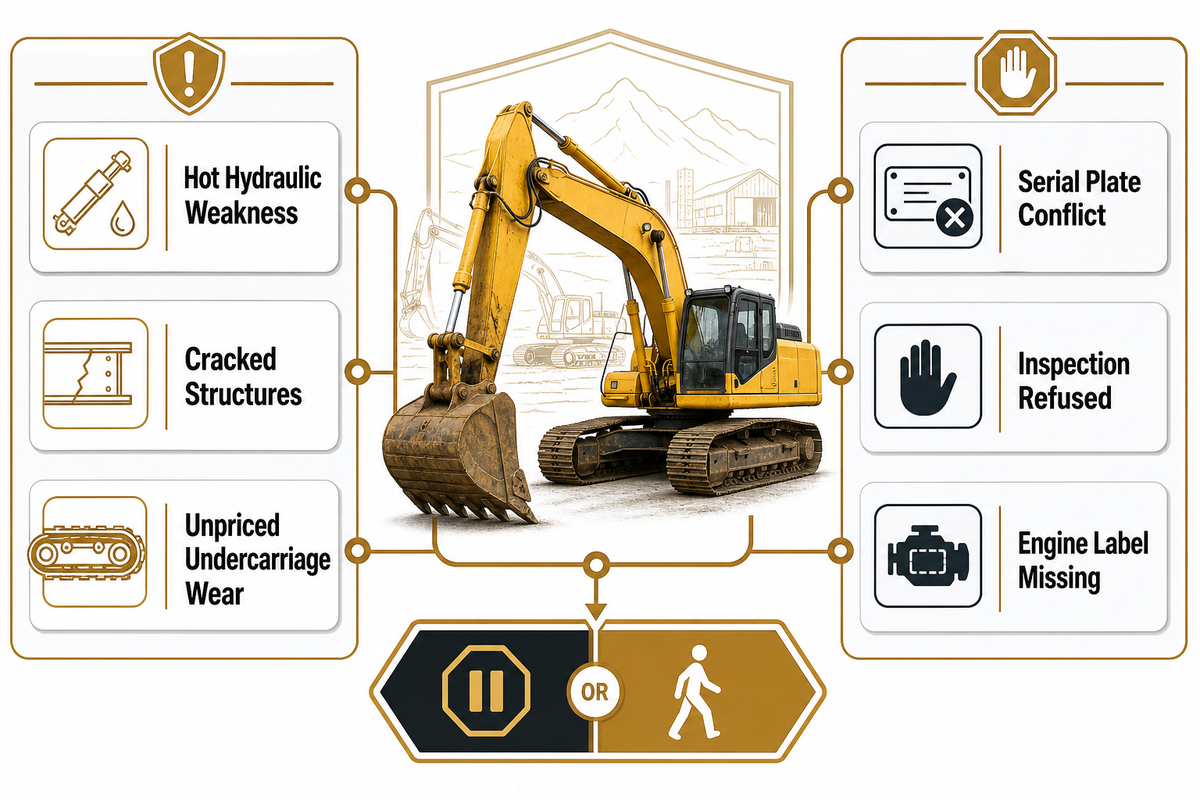
Komatsu has a strong presence in construction equipment, but reliability is not transferable from the brand to an unknown individual machine. Maintenance history, duty cycle, operator behavior, climate, previous repair quality, and component condition decide the risk you are actually buying.
Watch for slow or uneven hydraulics after the oil is hot, excessive cylinder drift, pump noise, play at pins and bushings, swing-bearing movement, weak travel, final-drive noise, contaminated fluids, cooling-system neglect, cracked structures, missing guards, electrical faults, and undercarriage wear that is not reflected in the price. On compact machines, inspect the blade, slew area, boom offset, and damage caused by tight-site operation. On quarry or mining machines, look harder at guarding, structural repairs, bucket linkage, track wear, and high-load heat history.
Walk away or pause the purchase when the serial plate is unreadable or conflicts with the documents; the seller refuses a cold start or third-party inspection; the engine label required for your destination is missing; major welds are unexplained; oil shows coolant or heavy contamination; multiple functions weaken when hot; undercarriage measurements are withheld; or the contract does not bind the advertised condition to the delivered machine.
A warranty can reduce some risk only if its provider, territory, covered components, exclusions, claim process, and duration are written and usable in your country. Never assume that a manufacturer’s certified-used program or dealer warranty automatically follows an unrelated export machine.
Emissions Compliance: The Engine Label Matters More Than the Dash Number
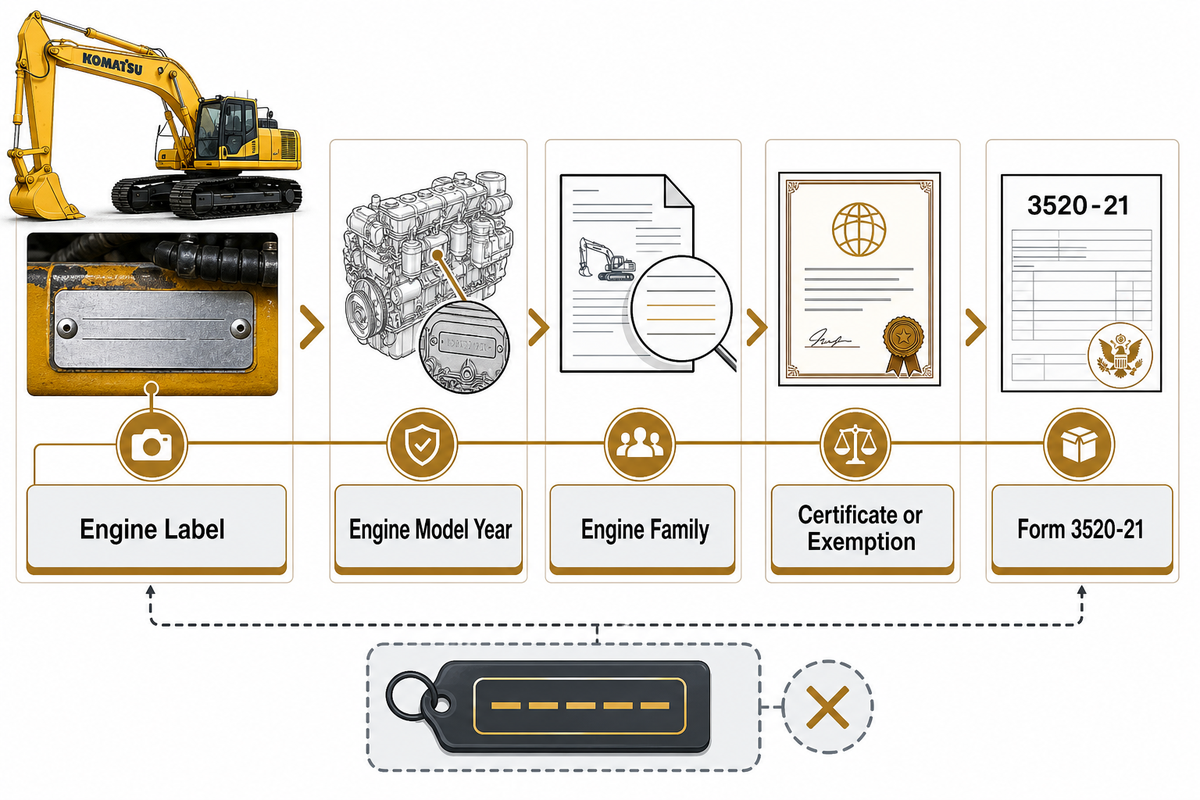
For the United States, EPA states that Clean Air Act requirements can apply to used nonroad engines and equipment as well as new units. A machine must conform to the applicable requirement or qualify for a valid exemption. EPA’s certificate guidance points to the engine model year and engine-family number shown on the emissions label, and its forms page identifies Form 3520-21 for nonroad engines and equipment containing them.
This changes the buying sequence. Before paying, get a clear, unedited photo of the full engine label and record the engine manufacturer, model, serial number, model year, engine family, and certification wording. Check the appropriate certificate record or establish the exemption route with a qualified broker or compliance specialist. Make sure the declaration and supporting documents match the same machine and engine.
A newer suffix such as LC-11 may indicate a later product generation, and a North American model page may show a Tier 4 Final configuration. It still does not prove that a particular used machine in another region has the same engine or is importable. Likewise, an older dash generation is not a complete legal conclusion by itself. The serial-numbered equipment and its documentation control.
Rules differ outside the US. Ask the destination authority or an experienced importer about emissions, safety, cleaning or biosecurity, age limits, road-use restrictions, and required conformity documents. This section is an operational checklist, not legal advice.
Importing a Used Komatsu Excavator from China
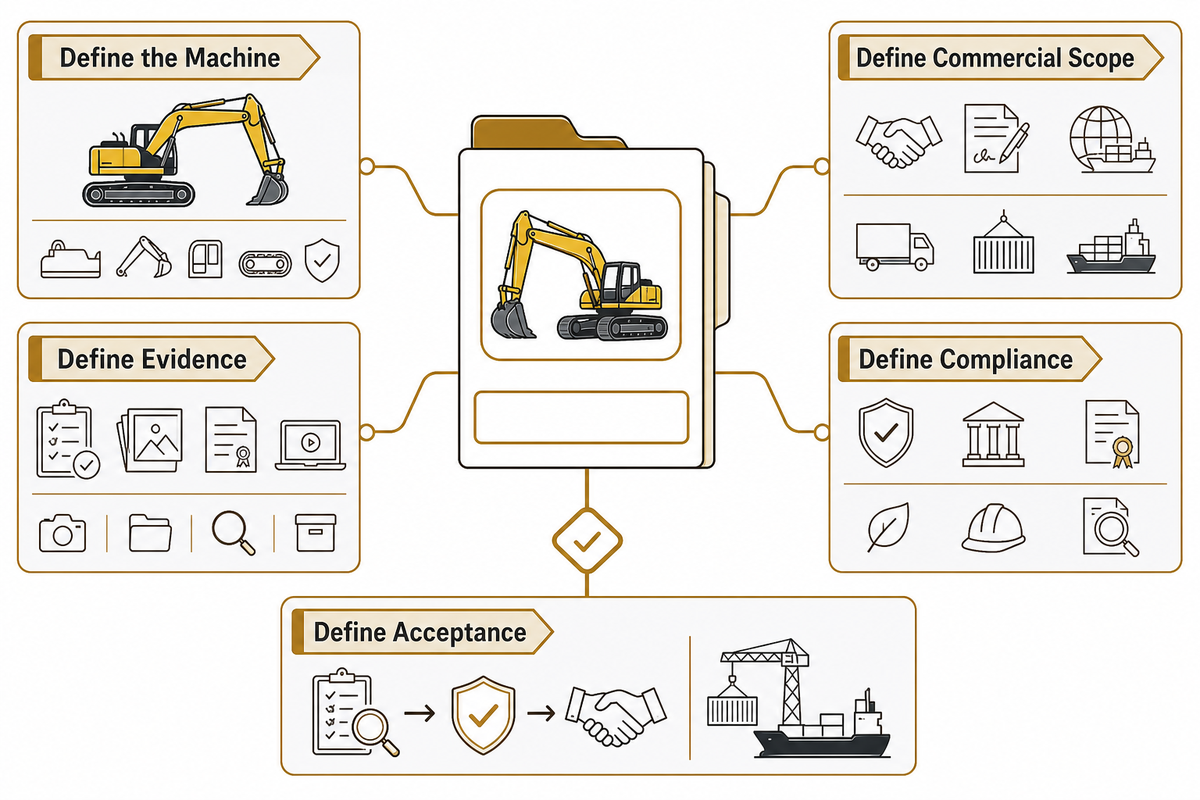
An auction, private-owner advertisement, marketplace listing, dealer, and direct exporter create different evidence and remedy paths. An auction may offer price discovery but limited inspection time or post-sale recourse. A private listing can expose the machine’s operating history but requires careful identity and payment controls. A direct exporter can coordinate inspection, refurbishment, loading, and shipping, but those services must be defined rather than assumed.
- Define the machine: model, serial number, configuration, bucket and attachments, cabin, guarding, shoe width, and any refurbishment.
- Define evidence: cold-start video, full function video, plate photos, emissions label, undercarriage measurements, fluid or oil reports, diagnostic data, and third-party inspection access.
- Define commercial scope: Incoterm, port, currency, validity date, included spares, dismantling, cleaning, loading, marine insurance, and expected shipping dimensions.
- Define compliance: destination-specific engine, customs, safety, and biosecurity documents before booking freight.
- Define acceptance: which conditions are material, when inspection occurs, who pays for corrections, and what happens if the delivered unit does not match the contract.
Do not send a deposit based only on a polished walk-around video. The quotation, inspection report, plates, contract, and loading evidence should all point to one machine. Liehuang’s excavator import guide covers the wider freight and transaction process.
Frequently Asked Questions
Can I safely buy a used Komatsu excavator on Craigslist?
Yes, but only if you can verify the seller and the serial-numbered machine independently. Inspect it cold, confirm ownership and plate data, review service and condition evidence, and use a written sale agreement. Do not send irreversible payment because an advertisement looks local. A private listing provides less process control than a seller that supports third-party inspection, export documents, and loading evidence.
Is Komatsu better than Cat for excavators?
Not in every situation. Compare equivalent models and consider the actual machine’s condition, local dealer or independent service, parts lead time, diagnostics, operator familiarity, attachments, and total cost. A well-maintained Komatsu may be the better purchase in one market, while a Cat with stronger support and evidence may win in another. Use the dedicated brand comparison for a fuller model-level analysis.
How much does a used Komatsu PC200 cost?
Liehuang’s published August 2026 FOB reference range is $25,000–$58,000, but the real quote depends on dash generation, configuration, condition, hours and service evidence, undercarriage, bucket or coupler, refurbishment, and availability. Compare a serial-numbered quotation, not only a model-wide range, and add inspection, freight, insurance, port, tax, compliance, and inland-delivery costs.
Should I buy from a private owner instead of a dealer or exporter?
Buy from the channel that provides the best verifiable machine, contract, and remedy—not the most reassuring label. A private owner may have useful operating history. A dealer or exporter may handle inspection, preparation, finance options, or logistics. Verify every claim and compare the total landed scope on the same basis.
What sizes does Komatsu make?
Komatsu spans compact excavators through large construction and mining machinery. In this lineup, the practical range runs from PC01 and PC35 compact classes through PC60, PC78, PC130, and PC200 to PC300, PC360, and PC400 heavy crawlers.
Which Komatsu dash generation should I buy for emissions compliance?
Do not choose compliance by dash generation alone. For a US import, verify the actual engine label, engine model year, engine family, applicable certificate or exemption, and Form 3520-21 path. Other countries use different rules. Get destination-specific confirmation before deposit and freight booking, even when a listing describes the machine as Tier 4 or shows a newer suffix.
A Better Buying Decision
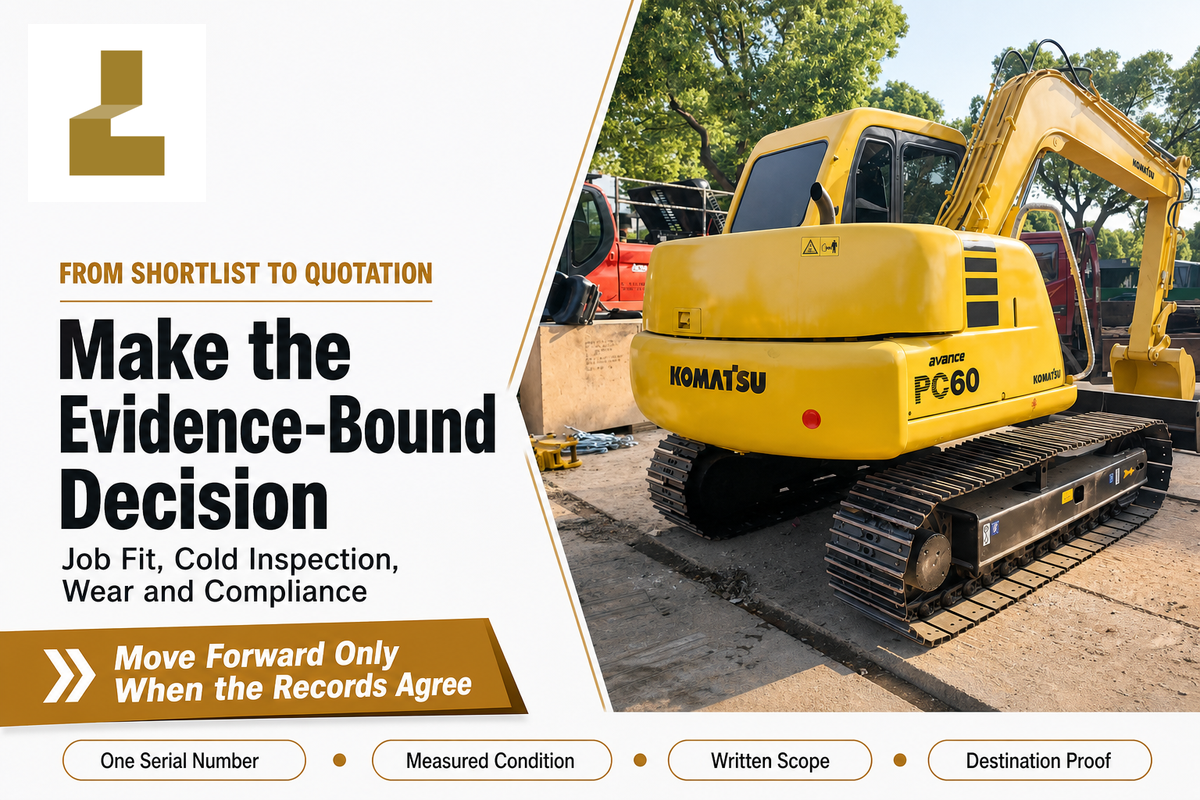
The right used Komatsu is not necessarily the newest, cheapest, or lowest-hour listing. It is the machine whose size fits the work and whose identity, condition, attachments, service history, documents, price scope, and destination compliance can all be verified before the contract becomes irreversible.
Shortlist by job class, inspect from a true cold start, quantify expensive wear, and bind the evidence to one serial number. If those checks hold, move from research to the current Komatsu category and request a machine-specific quotation and inspection package.
References & Sources
Source and scope note: Technical and inspection points were checked against current Komatsu product, used-equipment, certified-program, and KOWA materials. US import points were checked against EPA guidance. Liehuang price ranges are dated first-party FOB references and must be confirmed in a current quotation.
Primary references: Komatsu used equipment; Komatsu KOWA; Komatsu PC360LC-11; Komatsu PC138USLC-11; EPA import overview; EPA certificate guidance; EPA import forms.
![Excavator Bucket Manufacturers: Buyer Evidence [Guide]](https://lhusedexcavator.com/wp-content/uploads/2026/08/excavator-bucket-manufacturers-r2-featured-768x512.png)