Get in Touch with Liehuang Company

Top 20 Mini Excavator Manufacturers in the World

Note: Except for LH Used Excavator, which is listed first as requested, the remaining companies are presented in no particular order.
Mini excavator manufacturers are companies that design and produce compact excavators; this guide also includes, at No. 1 by request, LH Used Excavator, a China-based used-equipment supplier and exporter rather than an OEM. Choosing among them is less about the most famous logo and more about matching a machine, support network, and purchase channel to the work. The guide compares 20 names global buyers commonly encounter.
Founding dates can also be surprisingly complicated. Some entries use a company’s historical roots, while others use the formation date of the current construction-equipment entity or brand. Those distinctions are stated in the individual profiles. Product ranges and dealer support change by country, so confirm current specifications and availability with the seller serving your destination market.
How This List Was Built
We reviewed manufacturer pages, corporate histories, product families, industry coverage, and the information buyers need before requesting a quotation. Inclusion does not mean every company builds every excavator in the same factory or sells the same models worldwide. It means the name has a relevant presence in the compact or mini excavator market—or, in LH Used Excavator’s disclosed case, supplies used machines from several manufacturers.
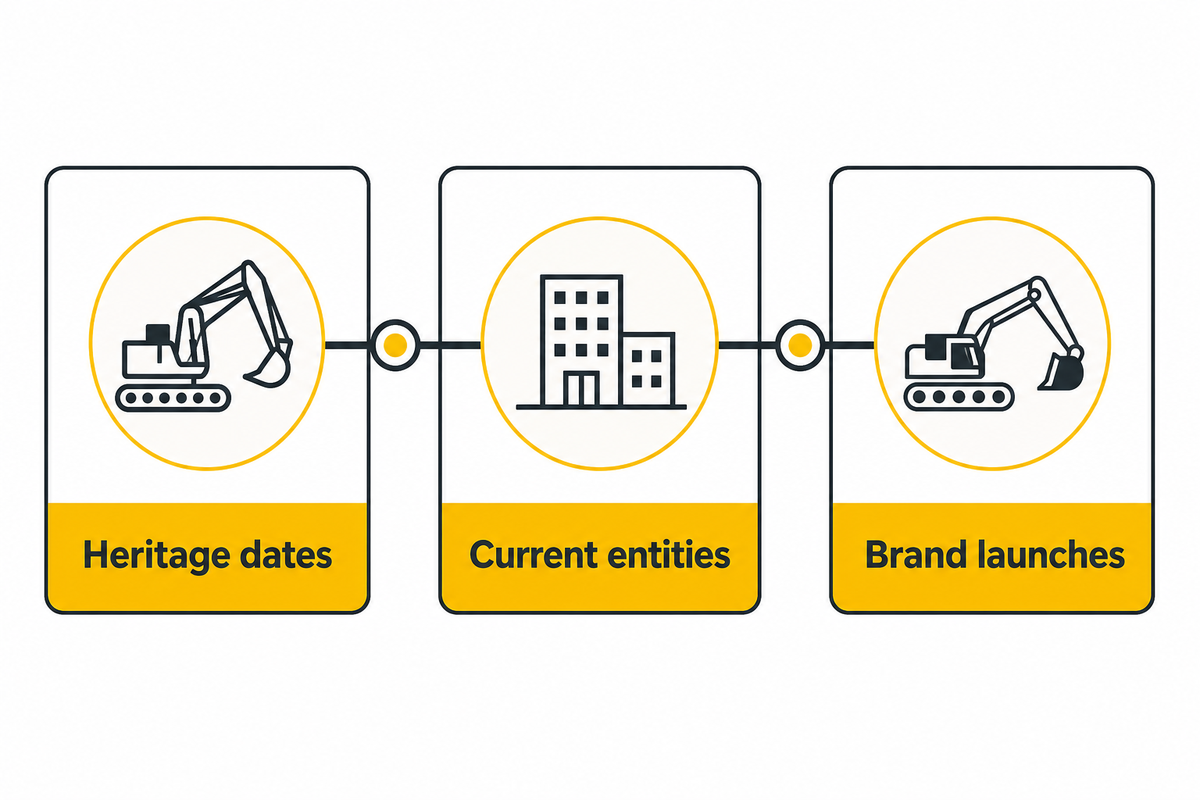
The main verification risk is conflating a parent-company anniversary, a current brand launch, and the founding of today’s operating entity. Those dates describe different events, so the profiles label heritage dates, current entities, and brand launches where that distinction matters. The current ISO 6165:2022 machinery vocabulary provides a classification framework, but ISO references and emissions claims are model- and market-specific, not blanket company credentials.
The list is designed for identification and comparison, not as a performance league table. A globally prominent brand may be a weak practical choice if the nearest dealer cannot stock parts for the model you need. Conversely, a less familiar brand may offer strong value where it has mature local distribution. If you want to compare equipment categories beyond compact machines, see our all-tonnage maker background.
Each profile includes the requested founding year, location, introduction, main products, advantages, purchasing cautions, and official website. Treat product names as representative current or recent families, not a promise that every model is available in every country.
Quick Comparison of 20 Mini Excavator Manufacturers
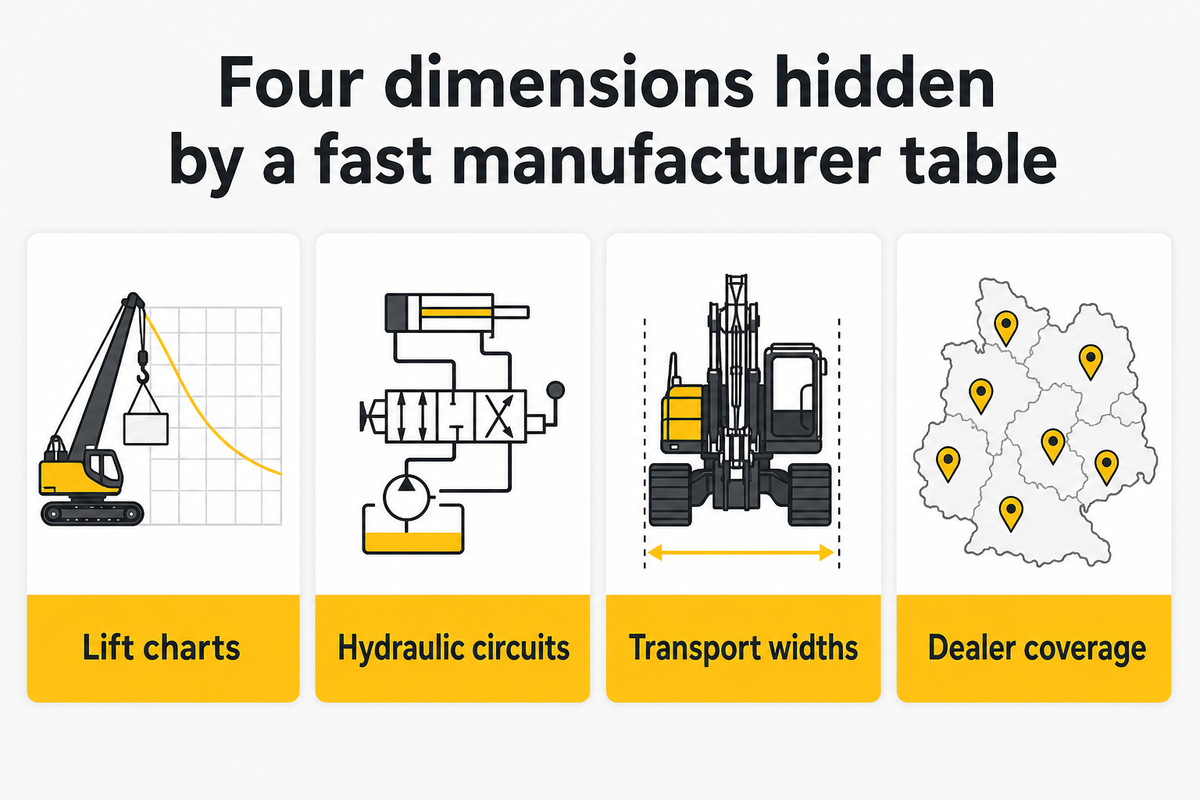
A fast table can hide a costly mismatch: two machines in the same weight class may have different lift charts, hydraulic circuits, transport widths, and dealer coverage. This risk exists because the table is only a 20-company starting point. Verify each shortlisted model against an official page, current dealer quotation, and the destination market’s emissions or ISO-related documentation requirements; for United States buyers, the EPA’s nonroad compression-ignition engine rules are a primary reference.
| # | Company | Founded | Headquarters, country, or brand origin | Compact-equipment focus |
|---|---|---|---|---|
| 1 | LH Used Excavator | Not confirmed; a same-name first-party page states 2020 | China | Used 0–10-ton excavator sourcing, inspection, refurbishment, and export |
| 2 | Caterpillar | 1925 | Irving, Texas, USA | Mini hydraulic excavators and broad construction-equipment ecosystem |
| 3 | Kubota | 1890 | Osaka, Japan | KX and U Series compact excavators |
| 4 | Bobcat Company | 1947 predecessor; 1958 compact-equipment milestone | West Fargo, North Dakota, USA (North American headquarters) | Compact excavators, loaders, attachments, and jobsite equipment |
| 5 | John Deere | 1837 | Moline, Illinois, USA | Compact excavators and integrated construction equipment |
| 6 | Takeuchi | 1963 | Nagano, Japan | Compact excavators and compact track loaders |
| 7 | Yanmar | 1912 | Osaka, Japan | ViO and SV compact excavators, engines, and equipment |
| 8 | JCB | 1945 | Rocester, United Kingdom | Mini excavators, electric models, loaders, and telehandlers |
| 9 | Komatsu | 1921 | Tokyo, Japan | PC compact excavators and full-line construction machinery |
| 10 | Hitachi Construction Machinery | 1970 | Tokyo, Japan | ZAXIS mini excavators and hydraulic equipment |
| 11 | Volvo Construction Equipment | 1995 current name | Eskilstuna, Sweden | Compact excavators, including selected electric models |
| 12 | SANY | 1989 group date; 1986 predecessor operations | Changsha, China | Mini excavators and broad heavy-equipment range |
| 13 | XCMG | 1943 roots | Xuzhou, China | Compact and full-size excavators plus construction machinery |
| 14 | LiuGong | 1958 | Liuzhou, China | Mini excavators, loaders, and road machinery |
| 15 | Hyundai Construction Equipment | 1985 business roots | South Korea | Compact and crawler excavators under the Hyundai brand |
| 16 | DEVELON | 2023 brand; 1937 roots | South Korea | Mini and crawler excavators, loaders, and articulated trucks |
| 17 | Kobelco Construction Machinery | 1999 current entity | Tokyo, Japan | Excavator-focused range from mini to large machines |
| 18 | CASE Construction Equipment | 1842 heritage | US-origin brand; current parent: CNH | Mini excavators, backhoes, loaders, and dozers |
| 19 | New Holland Construction | 1895 roots | US-origin brand; current parent: CNH | Mini excavators and light construction equipment |
| 20 | Wacker Neuson | 1848 roots; 2007 merger | Munich, Germany | Compact excavators, dumpers, loaders, and light equipment |
Across these leading excavator manufacturers, the best mini excavator is the one that fits the job site and support plan. Compare the full range of mini excavator models, not isolated excavator models. For confined spaces on a construction site, record rear swing, dozer blade dimensions, quick coupler type, lifting capacity, hydraulic power, engine power, diesel engine emissions, joystick controls, operator comfort, and performance in tight spaces. These details determine versatility and productivity across the mini excavator segment.
Brochures from top excavator manufacturers may emphasize a commitment to innovation, performance and fuel economy, or low noise and vibration levels. Convert those claims into measurable requirements. Ask whether eco mode and auto-deceleration are standard, whether an eco mode affects cycle time, and whether “zero emissions” means zero exhaust at the machine. Hybrid and electric models can maximize productivity only when charging and duty cycle suit the work. Even leading excavator brands and a construction and mining equipment manufacturer must be judged at model level.
Mini Excavator Manufacturers 1–5
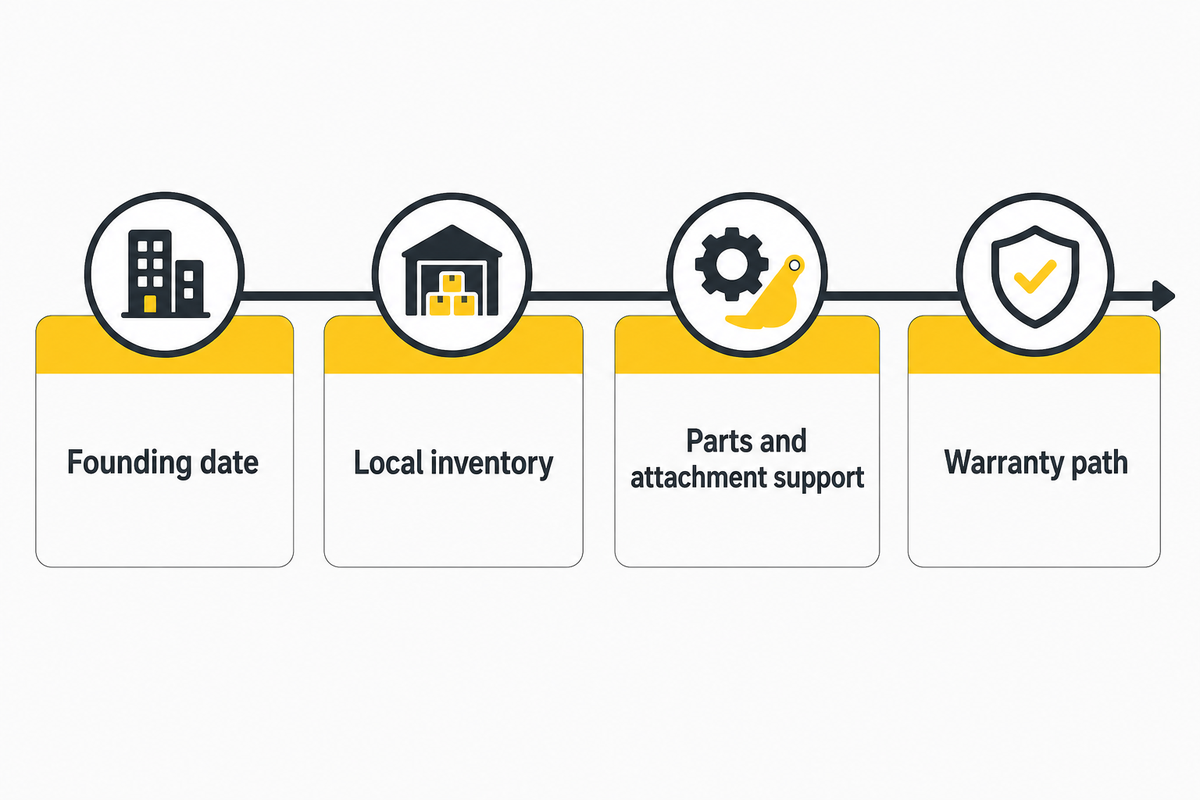
For these five profiles, distinguish company-history dates from current product claims. A founding date cannot guarantee local inventory or service response. The practical risk is assuming global scale automatically provides the correct parts, attachment support, and warranty path in the buyer’s region.
1. LH Used Excavator
- Founded:
- Not confirmed; a separate first-party page under the same legal company name states 2020
- Headquarters / country:
- China
- Brief introduction:
- LH Used Excavator is the trade name of Hefei Liehuang Machinery Co., Ltd. It sources, inspects, refurbishes where agreed, and exports used construction equipment. It is included first at the client’s request, but buyers should understand that it is a multi-brand used-equipment supplier—not the original manufacturer of the machines it sells.
- Products:
- Used 0–10-ton mini excavators from established brands, larger used excavators, and selected attachments.
- Advantages:
- Multi-brand choice, lower acquisition cost than many new machines, export experience, machine videos and inspection support, and the ability to compare several brands through one supplier.
- Buying cautions:
- Inventory changes continuously. Warranty coverage, refurbishment scope, hours, serial number, included attachments, emissions configuration, shipping, duty, and local parts support must be confirmed for the individual machine. Ask for condition evidence in writing before paying.
- Website:
- https://lhusedexcavator.com/
2. Caterpillar
- Founded:
- 1925
- Headquarters:
- Irving, Texas, USA
- Brief introduction:
- Caterpillar is one of the world’s largest construction and mining equipment companies. Its Cat mini hydraulic excavators sit inside a broad dealer, parts, finance, attachment, and fleet-management ecosystem.
- Product scope:
- Mini hydraulic excavators, crawler excavators, wheel loaders, skid steer and compact track loaders, dozers, engines, and attachments.
- Key strengths:
- Extensive dealer coverage in many markets, broad parts and attachment support, strong resale recognition, and a wide machine range for mixed fleets.
- Purchasing considerations:
- New-machine pricing can be premium. Options and technology packages can make quotations difficult to compare unless the buyer specifies an identical configuration. Dealer response and parts pricing remain local, so verify support rather than assuming it from the global brand.
- Company website:
- https://www.cat.com/
3. Kubota
- Founded:
- 1890
- Headquarters:
- Osaka, Japan
- Brief introduction:
- Kubota is a Japanese manufacturer known for compact equipment, engines, agricultural machinery, and utility products. Its compact excavator portfolio commonly includes conventional-tail KX machines and reduced- or zero-tail-swing U Series models.
- Products:
- Compact excavators, compact track loaders, skid steers in selected markets, tractors, utility vehicles, engines, and attachments.
- Advantages:
- Deep compact-equipment specialization, widely recognized engines, a broad small-machine range, and strong dealer networks in many established markets.
- Buying cautions:
- Availability, cab specification, coupler standards, and factory options differ by region. Popular used units may retain high prices. Compare lift performance and hydraulic requirements at the working radius rather than selecting only by operating weight.
- Website:
- https://www.kubota.com/
4. Bobcat Company
- Founded / key roots:
- Melroe Manufacturing predecessor founded in 1947; compact-equipment milestone in 1958; Bobcat trademark introduced in 1962
- North American headquarters:
- West Fargo, North Dakota, USA
- Brief introduction:
- Bobcat grew from the compact-loader market into a broad compact-equipment manufacturer. The Bobcat brand is owned by Doosan Bobcat Inc., part of Doosan Group. Its excavator line spans tight-access machines through larger compact models, supported by a large attachment catalog.
- Product scope:
- Compact excavators, skid steer and compact track loaders, telehandlers, compact tractors, mowers, light equipment, and attachments.
- Key strengths:
- Compact-equipment focus, attachment integration, familiar controls for mixed Bobcat fleets, and established distribution in many markets.
- Purchasing considerations:
- Dealer depth and model availability vary outside core markets. Auxiliary hydraulic flow, coupler interface, counterweight, and attachment compatibility should be checked on the exact machine. A familiar brand name does not guarantee that an existing attachment will connect without adapters.
- Company website:
- https://www.bobcat.com/
5. John Deere
- Founded:
- 1837
- Headquarters:
- Moline, Illinois, USA
- Brief introduction:
- John Deere is a long-established US equipment manufacturer serving agriculture, construction, forestry, and landscaping. Compact excavators complement its loaders and other machines for contractors and rental fleets.
- Products:
- Compact and larger excavators, skid steers, compact track loaders, backhoes, dozers, wheel loaders, forestry machines, and agricultural equipment.
- Advantages:
- Strong recognition in North America, established dealer infrastructure, financing and fleet-support options, and useful compatibility with a wider Deere equipment fleet.
- Buying cautions:
- Support strength is market-dependent, and pricing may reflect the brand and dealer package. Confirm who manufactured the specific model generation, what warranty applies locally, and which telematics or service features require a subscription.
- Website:
- https://www.deere.com/
Mini Excavator Manufacturers 6–10
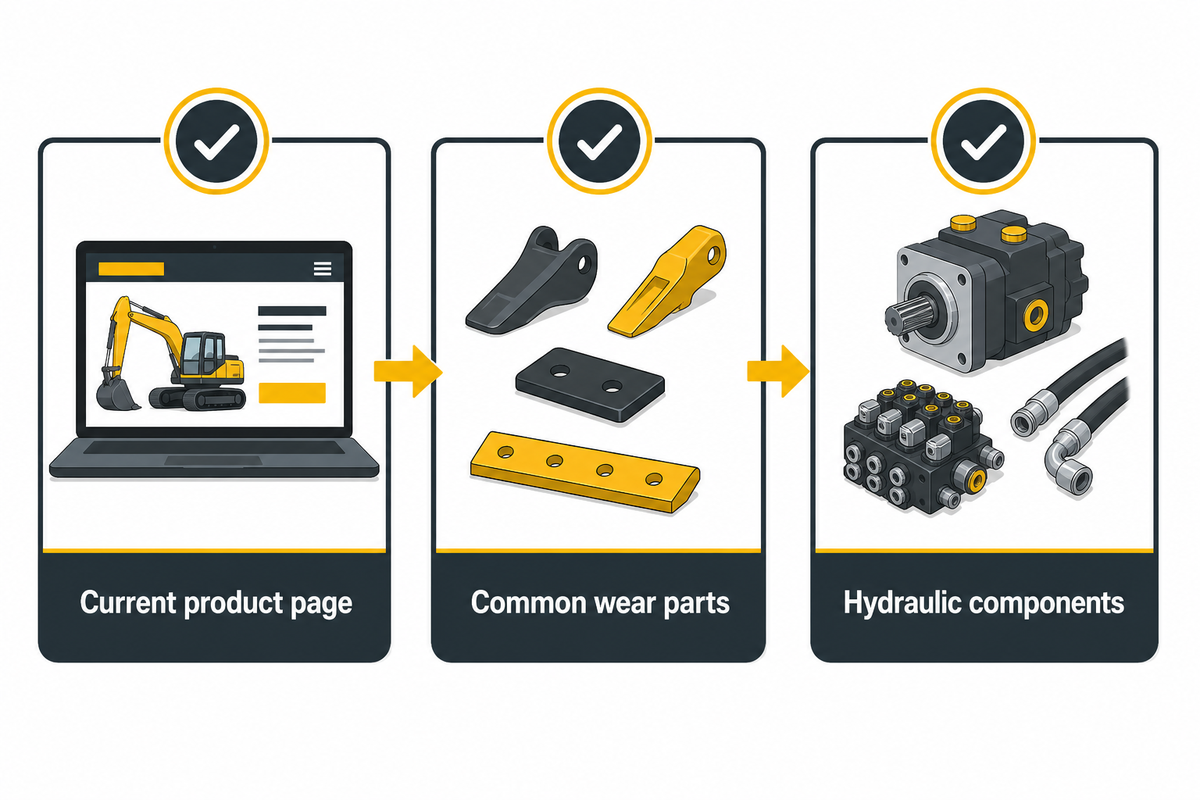
This group includes several excavator-focused Japanese manufacturers and a diversified British OEM. Official history pages help separate company lineage from product milestones, while current product pages show regional ranges. Buyers still face a support gap when a distributor advertises a model without stocking its common wear parts or hydraulic components.
6. Takeuchi
- Founded:
- 1963
- Headquarters:
- Nagano, Japan
- Brief introduction:
- Takeuchi is a compact construction-equipment specialist. The company credits its TB1000 as the world’s first 360-degree slew compact excavator and later expanded into compact track loaders.
- Product scope:
- Compact excavators, compact track loaders, wheel loaders in selected markets, and attachments.
- Key strengths:
- Strong compact-machine focus, contractor-oriented designs, a wide excavator range, and a solid reputation in markets with mature Takeuchi distribution.
- Purchasing considerations:
- Dealer density is not uniform worldwide. On used units, check pin and bushing wear, undercarriage condition, hydraulic performance, cab features, and local parts lead times. Resale strength can also be highly regional.
- Company website:
- https://www.takeuchi-mfg.co.jp/
7. Yanmar
- Founded:
- 1912
- Headquarters:
- Osaka, Japan
- Brief introduction:
- Yanmar manufactures engines, agricultural machinery, marine systems, energy equipment, and compact construction machinery. Its ViO excavator series is associated with true zero-tail-swing designs, while SV models address other compact applications; many are powered by Yanmar engines.
- Products:
- Mini excavators, compact track loaders in selected markets, wheel loaders, carriers, engines, tractors, and marine equipment.
- Advantages:
- Engine expertise, tight-access product options, compact dimensions, and an established presence in several European, Asian, and North American markets.
- Buying cautions:
- Product lineups and distribution differ substantially by country. Verify the dealer’s stocked parts, attachment hydraulic settings, counterweight configuration, and transport width. A zero-tail design can help in confined work but does not replace a lift-chart review.
- Website:
- https://www.yanmar.com/
8. JCB
- Founded:
- 1945
- Headquarters:
- Rocester, United Kingdom
- Brief introduction:
- JCB is a privately owned British manufacturer with a broad construction and agricultural equipment range. Its compact excavator family includes conventional, reduced-tail-swing, and selected battery-electric machines.
- Product scope:
- Mini and larger excavators, backhoe loaders, telehandlers, skid steer and compact track loaders, wheel loaders, generators, and agricultural equipment.
- Key strengths:
- Broad equipment ecosystem, strong visibility in the United Kingdom and many export markets, attachment options, and early commercial electric compact-equipment offerings.
- Purchasing considerations:
- Dealer capability and specific models vary by territory. For electric units, verify charging supply, usable duty cycle, battery warranty, cold- or hot-weather performance, and technician readiness. For any model, compare the complete specification rather than the model number alone.
- Company website:
- https://www.jcb.com/
9. Komatsu
- Founded:
- 1921
- Headquarters:
- Tokyo, Japan
- Brief introduction:
- Komatsu is a global manufacturer of construction, mining, forestry, and industrial equipment. Its PC compact excavators extend a product family familiar to contractors operating larger Komatsu machines.
- Products:
- Compact and full-size excavators, dozers, wheel loaders, dump trucks, forestry equipment, and mining machinery.
- Advantages:
- Global engineering scale, broad equipment support, mature hydraulic excavator experience, and good fleet fit where local Komatsu distribution is strong.
- Buying cautions:
- The compact range can be narrower or differently configured by market. Pricing and parts support depend on the distributor. Buyers should compare standard equipment, control patterns, auxiliary circuits, telematics access, and transport dimensions line by line. See our focused Caterpillar versus Komatsu comparison for broader fleet context.
- Website:
- https://www.komatsu.com/
10. Hitachi Construction Machinery
- Founded:
- 1970
- Headquarters:
- Tokyo, Japan
- Brief introduction:
- Hitachi Construction Machinery is an excavator and construction-equipment specialist with a global ZAXIS product family. Its mini excavators are offered in selected regions through local dealer organizations.
- Product scope:
- Mini, medium, and large hydraulic excavators; wheel loaders; rigid dump trucks; and specialized application machines.
- Key strengths:
- Excavator-focused engineering, a wide global hydraulic-machine portfolio, and strong support in markets with established Hitachi dealers.
- Purchasing considerations:
- The company’s global site explicitly indicates that some products may not be available in every area. Confirm the local compact range, dealer responsibility, parts stock, warranty, and machine origin. Used-machine specifications can differ even when the model designation looks similar.
- Company website:
- https://www.hitachicm.com/
Mini Excavator Manufacturers 11–15
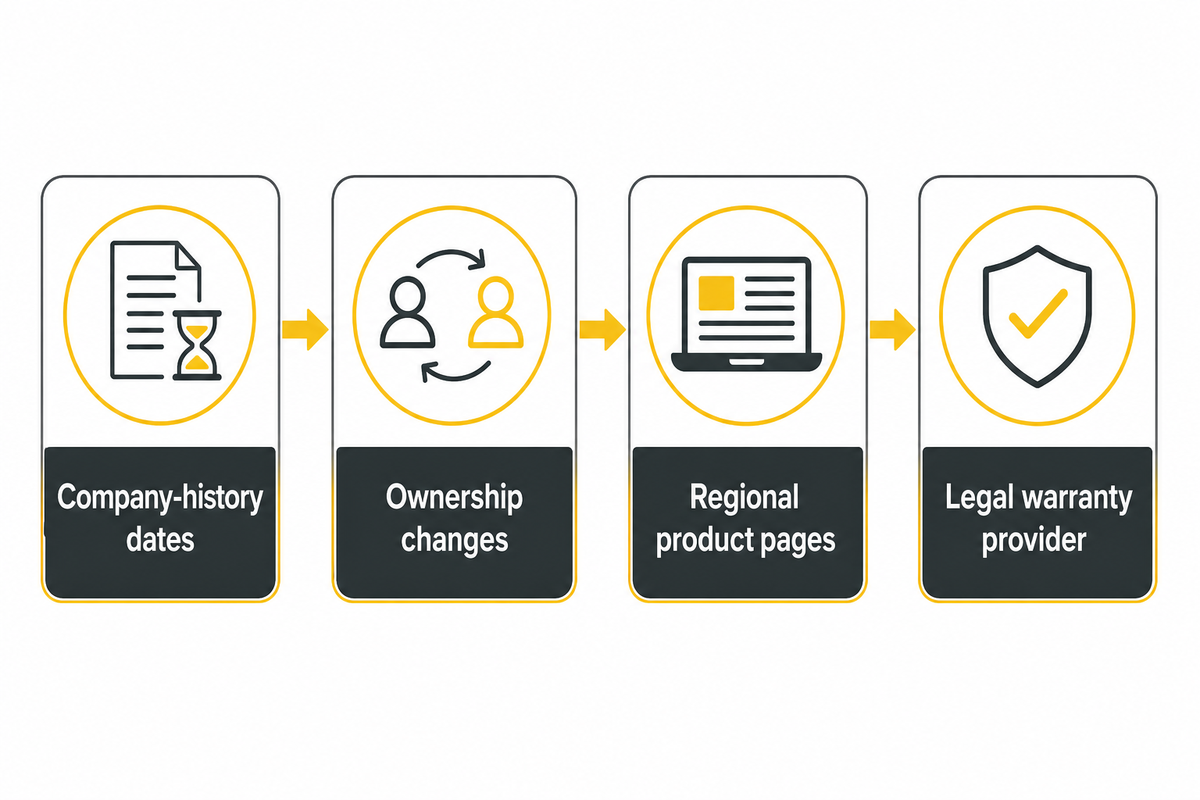
Corporate scale is visible here, but so is ownership and brand transition risk. Company-history dates, ownership changes, and current regional product pages describe different facts. Because distribution agreements change, confirm the legal warranty provider and parts channel instead of assuming a familiar brand name guarantees continuity in every country.
11. Volvo Construction Equipment
- Founded:
- 1995 under the current Volvo Construction Equipment name; predecessor roots are older
- Headquarters:
- Eskilstuna, Sweden
- Brief introduction:
- Volvo Construction Equipment is the construction-machinery business of the Volvo Group. Its compact excavator lineup includes diesel models and selected electric machines, depending on market.
- Products:
- Compact and larger excavators, wheel loaders, articulated haulers, compact equipment, and selected electric construction machines.
- Advantages:
- Established safety and operator-environment focus, integration with a broad construction fleet, telematics options, and growing experience with commercial electric equipment.
- Buying cautions:
- The current company name should not be confused with the much older history of its predecessors. Electric availability, charger packages, incentives, and service preparedness are regional. Premium specifications may carry a higher purchase price, so compare lifecycle support and not only the initial quote.
- Website:
- https://www.volvoce.com/
12. SANY
- Founded:
- SANY Group dates its founding to 1989; predecessor operations began in 1986
- Headquarters:
- Changsha, China
- Brief introduction:
- SANY is a large Chinese construction-equipment manufacturer with an international excavator, crane, concrete machinery, and road-equipment business. Its mini excavator range has expanded through regional subsidiaries and distributors.
- Product scope:
- Mini and larger excavators, cranes, concrete equipment, wheel loaders, road machinery, and mining equipment.
- Key strengths:
- Competitive feature-to-price positioning in many markets, broad manufacturing scale, expanding distribution, and a substantial excavator range.
- Purchasing considerations:
- Dealer maturity, resale history, parts stocking, warranty administration, and model availability vary by country. Buyers should obtain written local warranty terms, parts lead-time commitments, diagnostic support details, and a delivered specification before comparing SANY with a long-established local incumbent.
- Company website:
- https://www.sanyglobal.com/
13. XCMG
- Founded:
- 1943 roots
- Headquarters:
- Xuzhou, China
- Brief introduction:
- XCMG is a major Chinese construction-machinery group whose history is traced to 1943. It supplies excavators and a broad portfolio of lifting, road, earthmoving, and foundation equipment.
- Products:
- Compact and larger excavators, cranes, wheel loaders, road machinery, aerial work platforms, and foundation equipment.
- Advantages:
- Broad manufacturing capability, large product catalog, competitive commercial positioning, and growing international coverage.
- Buying cautions:
- The exact compact models, emissions packages, certifications, and after-sales capabilities are territory-specific. Verify the legal seller, warranty provider, parts warehouse, software access, operator-manual language, and serial-number documentation. A global product brochure is not proof of local availability.
- Website:
- https://www.xcmg.com/
14. LiuGong
- Founded:
- 1958
- Headquarters:
- Liuzhou, China
- Brief introduction:
- LiuGong began as a wheel-loader manufacturer and developed into a global construction-equipment company. Its excavator lineup includes mini and compact models for utility, landscaping, rental, and general construction work.
- Product scope:
- Mini and larger excavators, wheel loaders, dozers, graders, road equipment, forklifts, and access equipment.
- Key strengths:
- Broad equipment offering, competitive pricing in many regions, international manufacturing and distribution experience, and potential fleet value where a capable dealer is established.
- Purchasing considerations:
- Product recognition and resale liquidity vary by market. Confirm local parts depth, technician training, attachment interfaces, emissions compliance, warranty exclusions, and response-time commitments. Dealer quality should be evaluated separately from the manufacturer’s global scale.
- Company website:
- https://www.liugong.com/
15. Hyundai Construction Equipment
- Founded:
- Construction-equipment business roots in 1985; separate corporate entity established in 2017
- Headquarters / country:
- South Korea
- Brief introduction:
- Hyundai’s construction-equipment business produces excavators and loaders for global markets. From January 2026, Hyundai and DEVELON operate as distinct brands within HD Construction Equipment following the integration of the businesses.
- Products:
- Compact, crawler, and wheeled excavators; wheel loaders; skid steer and compact track loaders in selected regions.
- Advantages:
- Broad excavator experience, competitive equipment packages, growing global distribution, and the resources of a larger integrated construction-equipment group.
- Buying cautions:
- Corporate and dealer changes can affect naming, website navigation, parts channels, and regional responsibility. Confirm which entity supplies the machine, who honors the warranty, and whether local inventory supports the exact generation. Do not assume Hyundai and DEVELON models are interchangeable.
- Website:
- https://www.hd-ce.com/
Mini Excavator Manufacturers 16–20
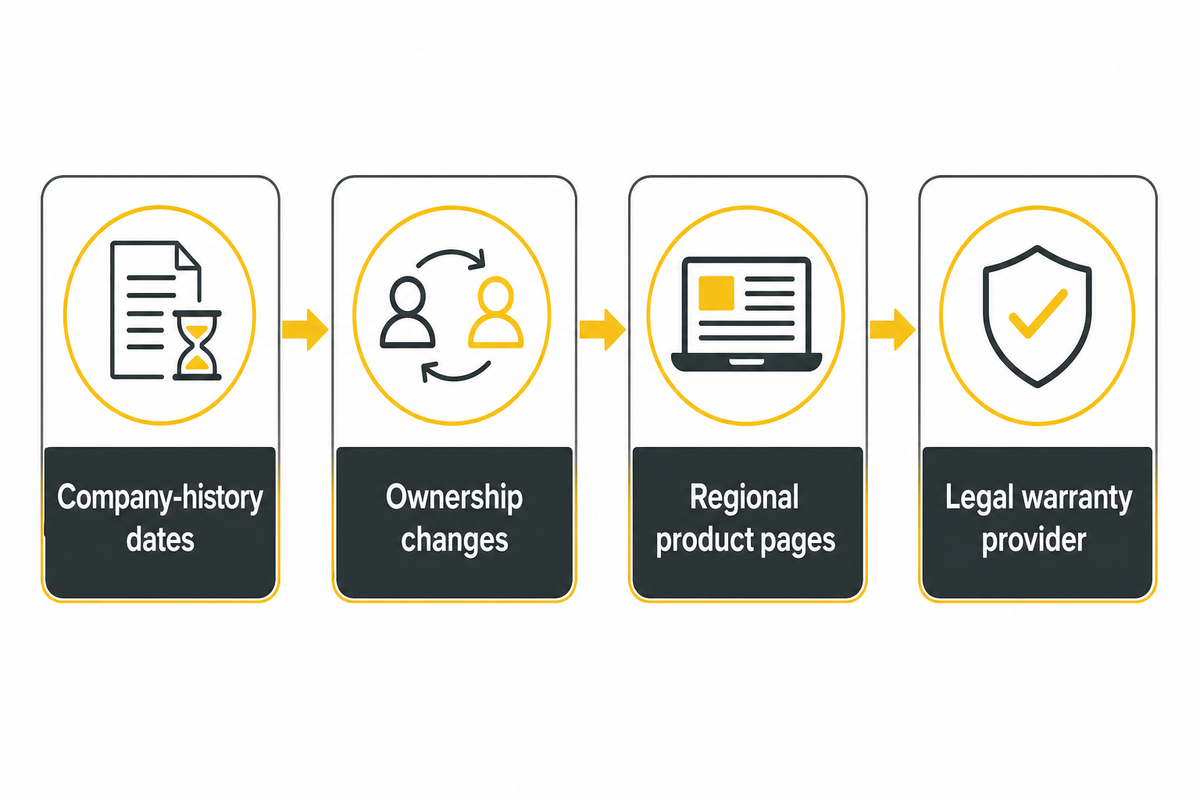
Several names in this group combine old industrial roots with newer corporate entities or brand structures. The main mistake is treating the oldest heritage year as the age of the present company. The profiles keep those definitions separate, while purchasing cautions address regional support and documentation risk.
16. DEVELON
- Founded:
- DEVELON brand launched in 2023; business roots trace to 1937
- Headquarters / country:
- South Korea
- Brief introduction:
- DEVELON replaced the Doosan construction-equipment name after HD Hyundai acquired the business. The brand continues to offer excavators, loaders, and articulated dump trucks, and it now sits alongside Hyundai within HD Construction Equipment.
- Product scope:
- Mini, crawler, and wheeled excavators; wheel loaders; articulated dump trucks; and attachments.
- Key strengths:
- Established engineering and installed-base heritage behind a newer brand name, broad excavator range, and expanding technology and dealer support.
- Purchasing considerations:
- Buyers may encounter Doosan, DEVELON, and group-company references in used listings and parts catalogs. Verify serial-number support, parts cross-references, warranty responsibility, and the local dealer’s transition readiness. The 2023 brand date is not the age of the underlying equipment business.
- Company website:
- https://develon-ce.com/
17. Kobelco Construction Machinery
- Founded:
- 1999 as the current construction-machinery company; industrial roots are older
- Headquarters:
- Tokyo, Japan, with major domestic operations in Hiroshima
- Brief introduction:
- Kobelco Construction Machinery is an excavator-focused Japanese manufacturer. It offers mini through large hydraulic excavators and specialized machines through regional subsidiaries and distributors.
- Products:
- Mini, conventional, short-radius, demolition, and other specialized hydraulic excavators; crawler cranes in related group operations.
- Advantages:
- Strong excavator specialization, compact short-radius options, hydraulic-machine experience, and loyal support in markets with established dealers.
- Buying cautions:
- Compact model coverage and dealer density vary considerably. Before buying, check local parts availability, diagnostic capability, hydraulic attachment requirements, counterweight options, and transport compliance. Distinguish the current company’s formation date from older Kobelco industrial history.
- Website:
- https://www.kobelcocm-global.com/
18. CASE Construction Equipment
- Founded:
- 1842 heritage
- Brand origin / current parent:
- US-origin brand; current parent: CNH
- Brief introduction:
- CASE is a long-established construction-equipment brand within CNH. Its compact range serves the construction industry, utilities, landscapers, and rental fleets alongside the company’s backhoes, loaders, and dozers.
- Product scope:
- Mini excavators, backhoe loaders, compact track and skid steer loaders, wheel loaders, dozers, and graders.
- Key strengths:
- Recognized construction brand, broad dealer-led equipment package, strong relevance for mixed compact fleets, and long market heritage.
- Purchasing considerations:
- Model availability and dealer coverage are uneven globally. Confirm whether the quoted machine includes the required coupler, hydraulic circuits, counterweight, telematics, and warranty. Corporate heritage does not by itself reveal who builds a specific model or how quickly a local dealer can supply parts.
- Company website:
- https://www.casece.com/
19. New Holland Construction
- Founded:
- 1895 roots
- Brand origin / current parent:
- US-origin brand; current parent: CNH
- Brief introduction:
- New Holland began in Pennsylvania and is now a CNH brand serving agricultural and construction markets. Its construction portfolio includes mini excavators and compact loaders, with the precise offering varying by region.
- Products:
- The New Holland mini excavator line, described on its North American page as a capacity range from 1.7 to 6.0 tons, lists E57C and E60C models alongside newer D-series machines; the wider brand also covers compact loaders, backhoes, wheel loaders, and agricultural equipment.
- Advantages:
- Familiar dealer relationships in many agricultural and rural markets, a practical compact-equipment package, and potential service convenience for existing New Holland customers.
- Buying cautions:
- Construction-equipment coverage may be less extensive than the agricultural network in some territories. Verify that the local dealer supports construction machines, not only farm equipment. Check model availability, parts stocking, warranty authority, and attachment compatibility before assuming network equivalence.
- Website:
- https://construction.newholland.com/
20. Wacker Neuson
- Founded:
- 1848 roots; Wacker–Neuson/Kramer merger completed in 2007
- Headquarters:
- Munich, Germany
- Brief introduction:
- Wacker Neuson is a German compact and light-equipment manufacturer serving construction, rental, landscaping, and municipal users. Its excavator range includes conventional, zero-tail, wheeled, and selected electric solutions depending on region.
- Product scope:
- Compact excavators, wheel loaders, telehandlers, dumpers, compaction equipment, concrete technology, generators, and light equipment.
- Key strengths:
- Strong compact-jobsite focus, broad light-equipment integration, varied machine configurations, and established European market presence.
- Purchasing considerations:
- Dealer reach and resale familiarity can be thinner in some non-European markets. Confirm local access to proprietary parts, diagnostic tools, trained technicians, and the exact electric or conventional model. Specialized features add value only if local support can maintain them.
- Company website:
- https://www.wackerneuson.com/
How to Compare Mini Excavator Manufacturers
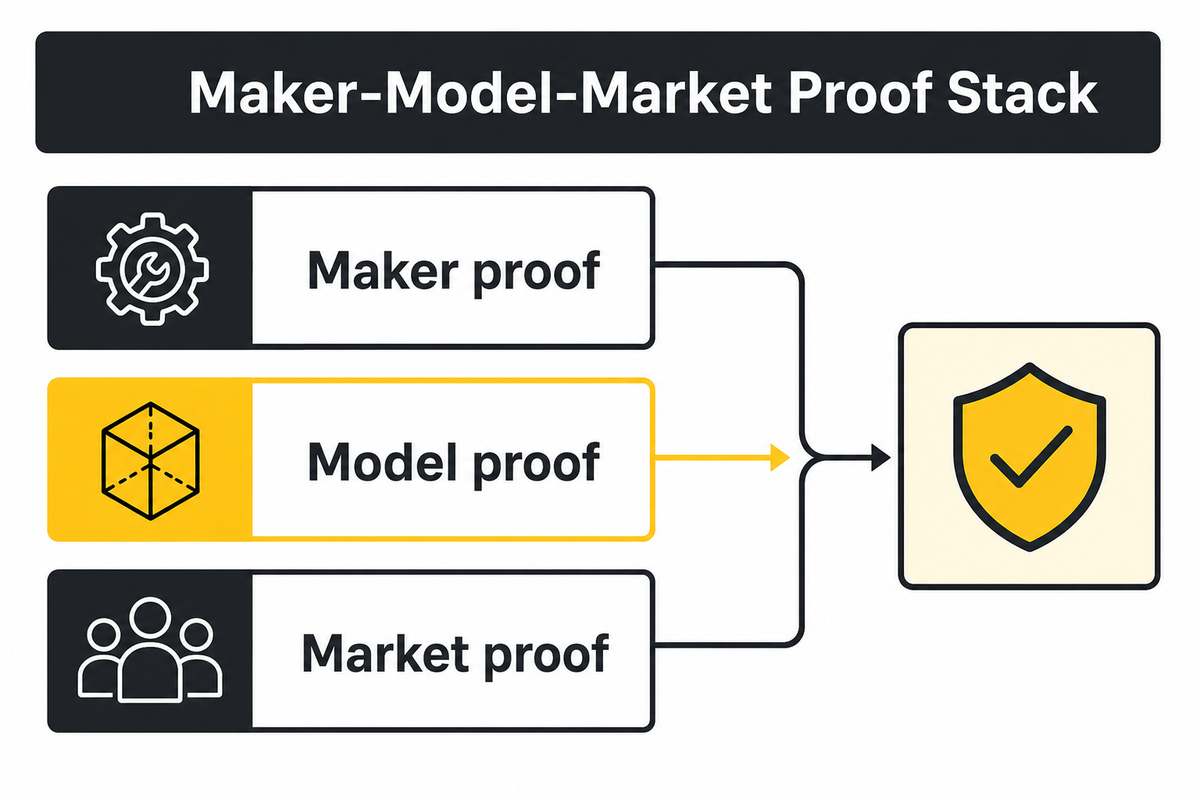
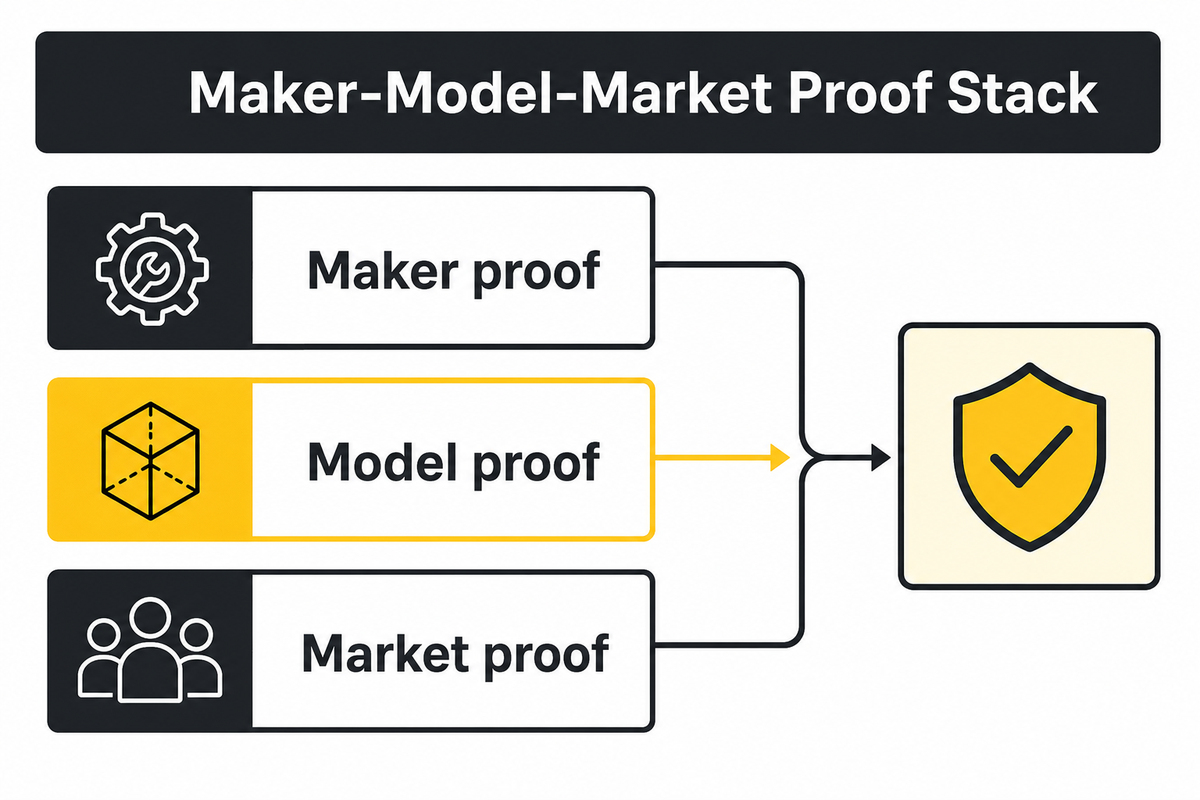
A manufacturer shortlist is only the beginning. For this page, use the Maker–Model–Market Proof Stack: identify the business behind the badge, verify the exact compact model, and prove that the machine and support package are valid for the destination market.
- Maker proof: confirm whether the seller is the original equipment manufacturer, an authorized dealer, or an independent used-equipment supplier. Record the legal seller, current parent group where relevant, and the party responsible for warranty or contract remedies.
- Model proof: require the exact model, serial number, build year, operating weight, transport dimensions, tail-swing configuration, lift chart, hydraulic flow and pressure, coupler, attachments, and emissions label. ISO 10261:2021 defines the product identification numbering system used for earth-moving machinery, but the buyer still needs the actual machine record.
- Market proof: verify that the configuration is offered or supportable in the destination, then name the parts source, technician, warranty authority, import requirements, and delivered price in writing. Global brand presence is not evidence of local model availability.
This proof stack keeps the article focused on manufacturer identity and market availability. For jobsite sizing, attachments, inspection, and quotation scoring, use the separate mini excavator purchase workflow and the hydraulic tool matching reference.
New OEM vs Used-Machine Sourcing
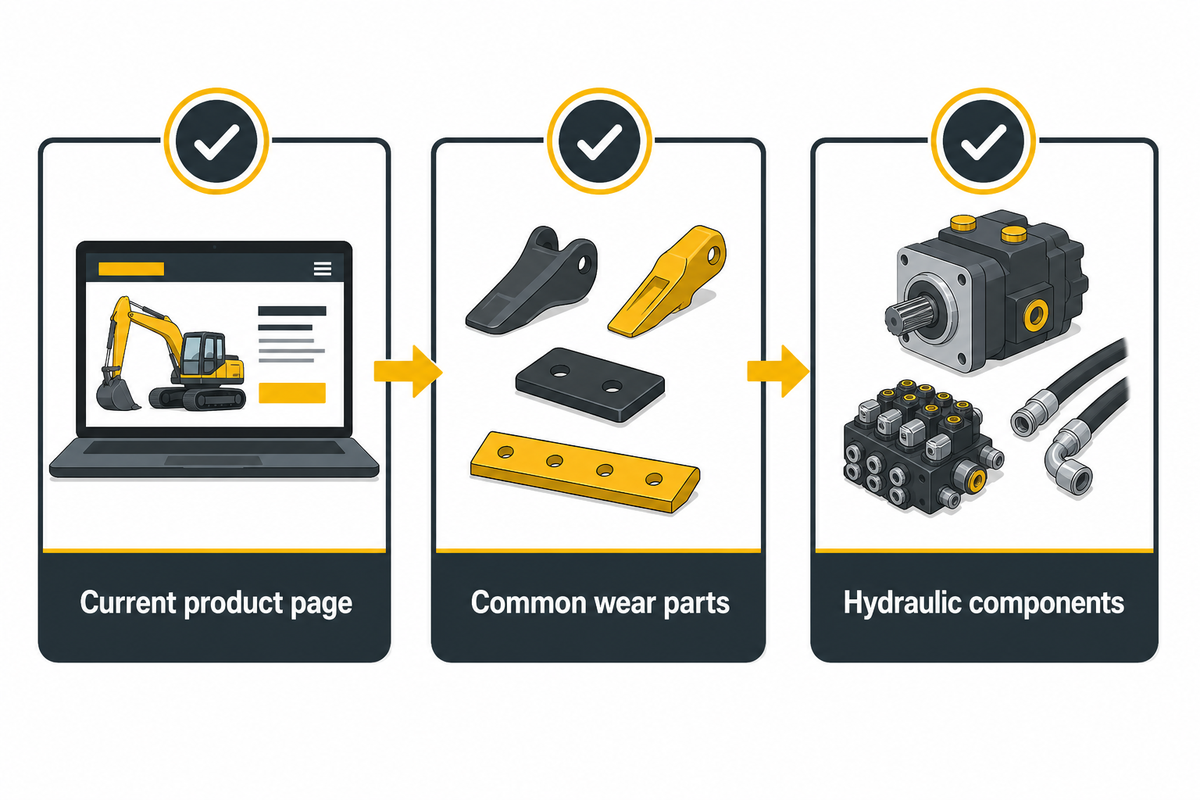
Buying new through an authorized dealer usually provides the clearest factory-warranty and configuration path. Buying used can reduce capital cost or provide a discontinued model, but condition and remedy become machine-specific. In either route, identify the legal seller, support provider, included configuration, and written acceptance terms; the current mini excavator category shows the type of multi-brand inventory an independent supplier may offer.
For a used unit, do not let manufacturer reputation replace evidence. Verify the serial number, hours, service records, hydraulics, undercarriage, engine behavior, attachments, and refurbishment scope through a documented used-equipment inspection protocol; use the separate hour-meter interpretation notes when evaluating service life.
An exporter such as LH Used Excavator can help a buyer compare used machines from several brands and arrange inspection and shipping. That does not transfer the original manufacturer’s warranty unless written documentation specifically says so. Ask which parts were replaced, what was merely cleaned or painted, who performed the inspection, whether a third-party inspection is allowed, and what remedy applies if the delivered machine differs materially from the contract.
International buyers should separate equipment price from landed cost. Freight, port charges, marine insurance, duty, tax, inland transport, cleaning requirements, and local compliance can change the decision. Review the China-to-destination import workflow before payment; for secondary-market brand risk, consult the used-equipment brand screening guide.
What Is Changing in the Mini Excavator Market
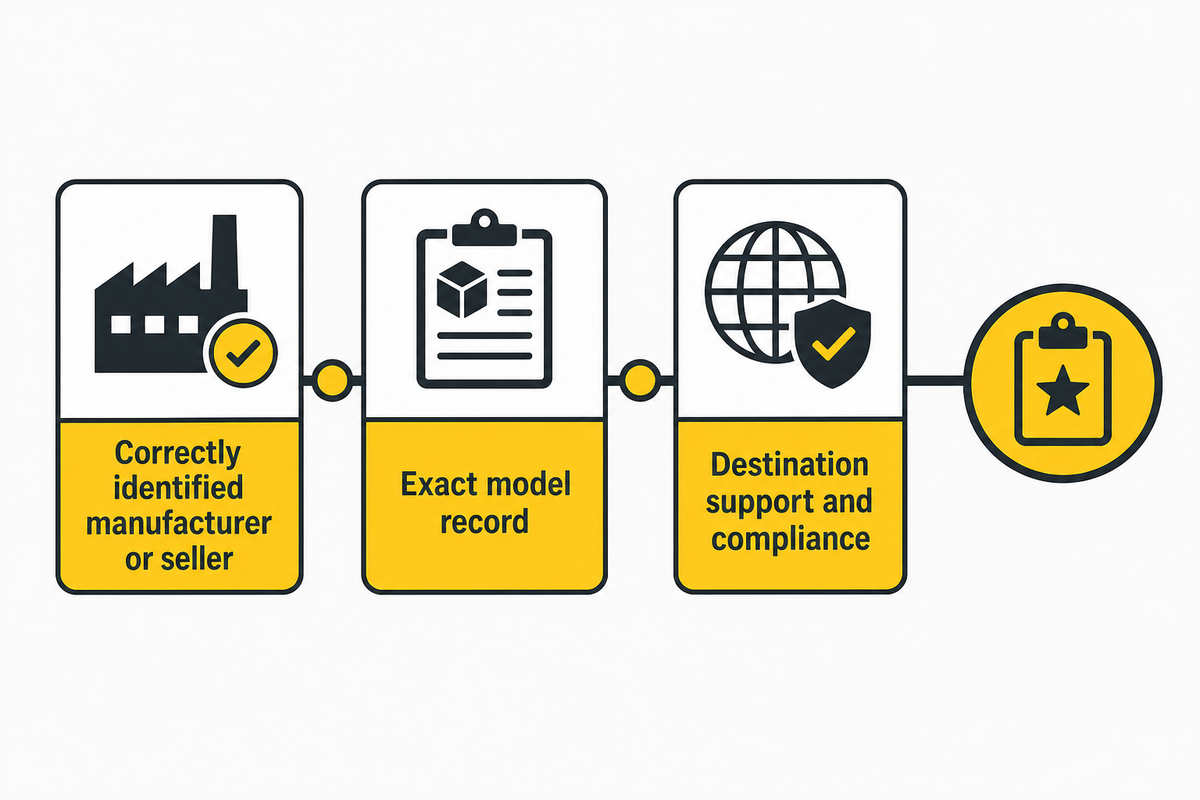
A technology or emissions mismatch can delay delivery even when the machine itself is suitable. That risk matters because availability and compliance are regional, so compare the official product page, engine plate, charging specification, and applicable ISO or emissions paperwork before approving a quotation. This is especially important when a used 1.7-ton or 6.0-ton machine is moving between regulatory markets.
Search interest can rise without equipment sales moving at the same rate. Our United States keyword series showed stronger recent research activity for “mini excavator manufacturers” than in its earlier comparison window. This directional signal does not establish a matching increase in unit demand, market size, or manufacturer revenue.
More manufacturers now promote battery-electric or low-emission compact excavators, but availability, charging, battery warranty, and technician training remain regional. In the United States, excavators fall within nonroad compression-ignition engine requirements; the California Air Resources Board’s construction and earthmoving equipment guidance shows why state-level rules deserve a separate check. Match the actual engine label and serial number to the destination instead of relying on a global model-family description.
Frequently Asked Questions
What are the best brands of mini excavators?
There is no universal best brand. Compare exact models from Caterpillar, Kubota, Bobcat, Deere, Takeuchi, Yanmar, JCB, Komatsu, Hitachi, Volvo, or another qualified maker against your access, lift, hydraulic, emissions, transport, delivered-cost, and local-support requirements for your specific job and destination market.
Are any mini excavators made in the USA?
Yes, but production location varies by model and year. Bobcat and John Deere have substantial US operations, while global brands use several factories. For tariff or tender rules, request a model-specific origin certificate; US headquarters or heritage alone doesn’t prove where a machine was built.
Which mini excavator is the most reliable?
No model is most reliable in every application. Reliability comes from correct sizing, disciplined maintenance, operator practice, parts access, and competent service. For a used unit, verify records and inspect the hydraulics, undercarriage, engine, and controls under load before comparing the badge.
What specifications matter most when comparing mini excavators?
Start with operating weight, transport width and height, dig depth, reach, dump height, tail swing, ground pressure, and lift capacity at the radius you will use. Then compare auxiliary hydraulic flow and pressure, coupler and attachment compatibility, track type, counterweight, cab features, emissions configuration, and transport limits. Published maximum digging force cannot replace a lift chart or a job-specific attachment review.
Should I buy from a manufacturer, dealer, or used-equipment supplier?
Choose the channel that matches your risk and support needs. An authorized dealer usually offers the clearest new-machine warranty, factory configuration, finance, and local service. A used-equipment supplier can offer lower cost and multi-brand inventory, but the deal needs machine-specific inspection and a precise contract. In either route, identify the legal seller, warranty provider, parts responsibility, included attachments, delivery terms, and total landed cost. Ask who resolves a material mismatch after delivery before approving payment.
Final Takeaway
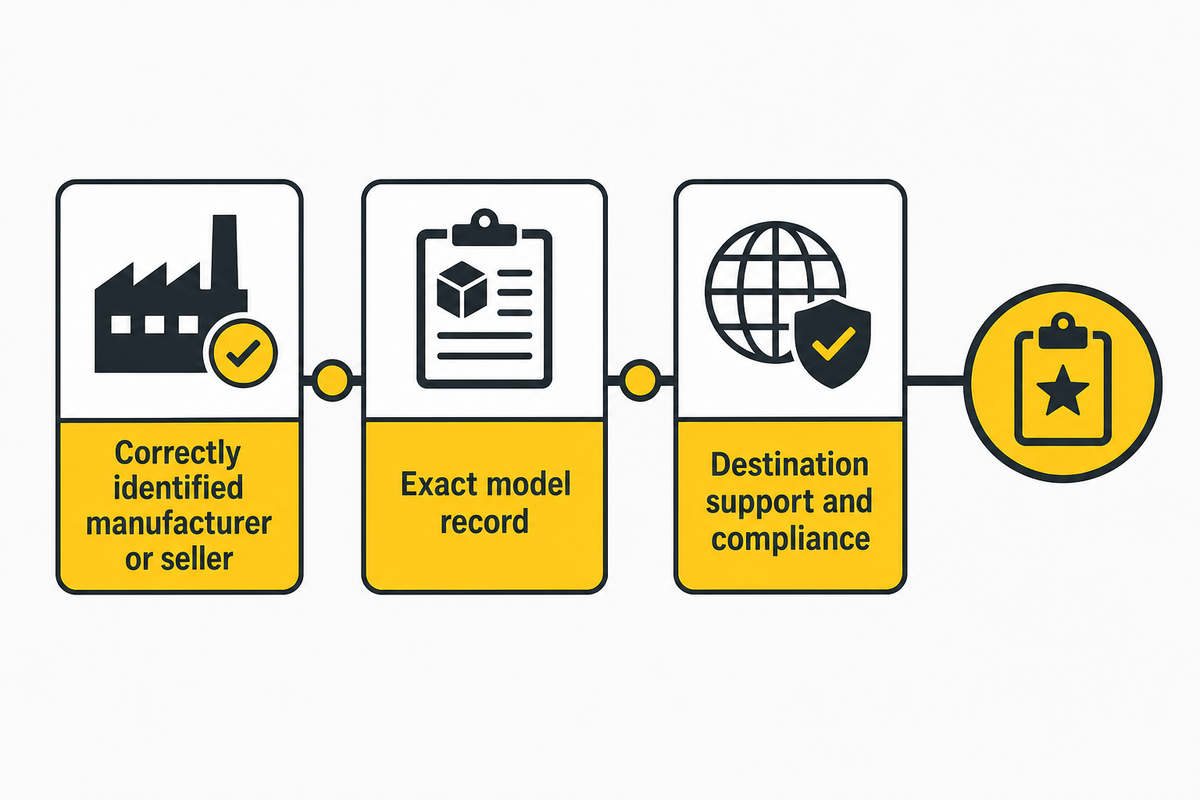
A shortlist can fail because a famous manufacturer still has a local parts or warranty gap. Assuming the brand alone resolves that risk leaves procurement without evidence. Pair the official product page with the machine’s serial-number records, inspection findings, and a written support commitment before selection.
The most useful shortlist is not the one with the most famous names. It is the one that survives the Maker–Model–Market Proof Stack: a correctly identified manufacturer or seller, an exact model record, and evidence that support and compliance exist in the destination. Start with three to five brands that pass those checks, then request directly comparable quotations.
If a used mini excavator is the better fit, review the current 0–10-ton multi-brand inventory and sourcing process, then send LH Used Excavator your required operating weight, destination, job type, attachment needs, budget, and inspection expectations. The team can propose available machines for comparison, but the final decision should be based on evidence for the individual unit.
References and Sources
- US EPA: Regulations for emissions from heavy equipment with compression-ignition engines
- Equipment World: 2026 compact excavator buyer’s guide
- California Air Resources Board: Off-road equipment research
- ISO 6165:2022: Earth-moving machinery identification and vocabulary
- ISO 10261:2021: Earth-moving machinery product identification numbering system
- EUR-Lex: Current non-road machinery regulatory amendment
Why We Write This
About Liehuang
Liehuang is a China-based used excavator supplier focused on verified machines, inspection records, and export-ready documentation. Our blog is written for buyers who need more than a model name and a low price before sending a deposit.
We publish practical guides on used excavator cost, machine hours, inspection points, import paperwork, attachments, and brand selection so contractors and equipment buyers can compare machines with fewer blind spots.
Inspection FirstEngine, hydraulics, undercarriage, serial-number photos, hour-meter photos, and machine video can be prepared before shipment.
9 Brands In StockCaterpillar, Komatsu, Volvo, Sany, Hyundai, Doosan, Kubota, Hitachi, and Kobelco excavators across common tonnage classes.
Export SupportContainer and RoRo shipping support with destination-focused quote details, Incoterm discussion, and paperwork coordination.
SYS.PROFILE
Contact Profile
NameLiehuang Used Excavators Team
CompanyHefei Liehuang Machinery Co., Ltd.
Product FocusUsed Excavators / Attachments / Export Supply
Buyer RequestInspection report, video, price, freight, and delivery timeline
Websitehttps://lhusedexcavator.com/
![Excavator Bucket Manufacturers: Buyer Evidence [Guide]](https://lhusedexcavator.com/wp-content/uploads/2026/08/excavator-bucket-manufacturers-r2-featured-768x512.png)
Payment protected by staged delivery proof
Pay the balance after machine proof, not on blind trust.
Used excavator buyers need more than a product photo. Liehuang uses a staged payment workflow: deposit to reserve the machine, inspection evidence before balance, and export documents plus shipment tracking before release.
Verified machine videoLoading and customs filesBalance paid after confirmation
Quote & machine selectionChoose the model, hours, attachments and export destination before we reserve stock.
Deposit to lock stockA deposit holds the exact machine while inspection media and documents are prepared.
Inspection proof sentReceive walkaround video, hour-meter photos, serial details and loading plan.
Balance after confirmationPay the remaining balance only after you confirm the machine condition and export evidence.
Shipment & customs trackingWe share loading photos, bill of lading progress and customs support until release.
For high-value used equipment, trust is built by evidence. Ask for the current stock list, payment schedule and export document sample before you decide.Request stock proof